You're standing on the lanai after a wet South Florida morning, coffee in hand, and you notice reddish streaks trailing down from a seam on the metal roof. The first question hits fast. Is it dirt, mildew, or is the roof rusting?
That reaction is normal, especially in Palm Beach, Broward, and Miami-Dade neighborhoods where the ocean air never feels far away. Rust on a metal roof can mean anything from a light surface stain to a coating failure that needs attention, and the difference matters. The safest way to read it is calmly, one clue at a time, the way an inspector would.
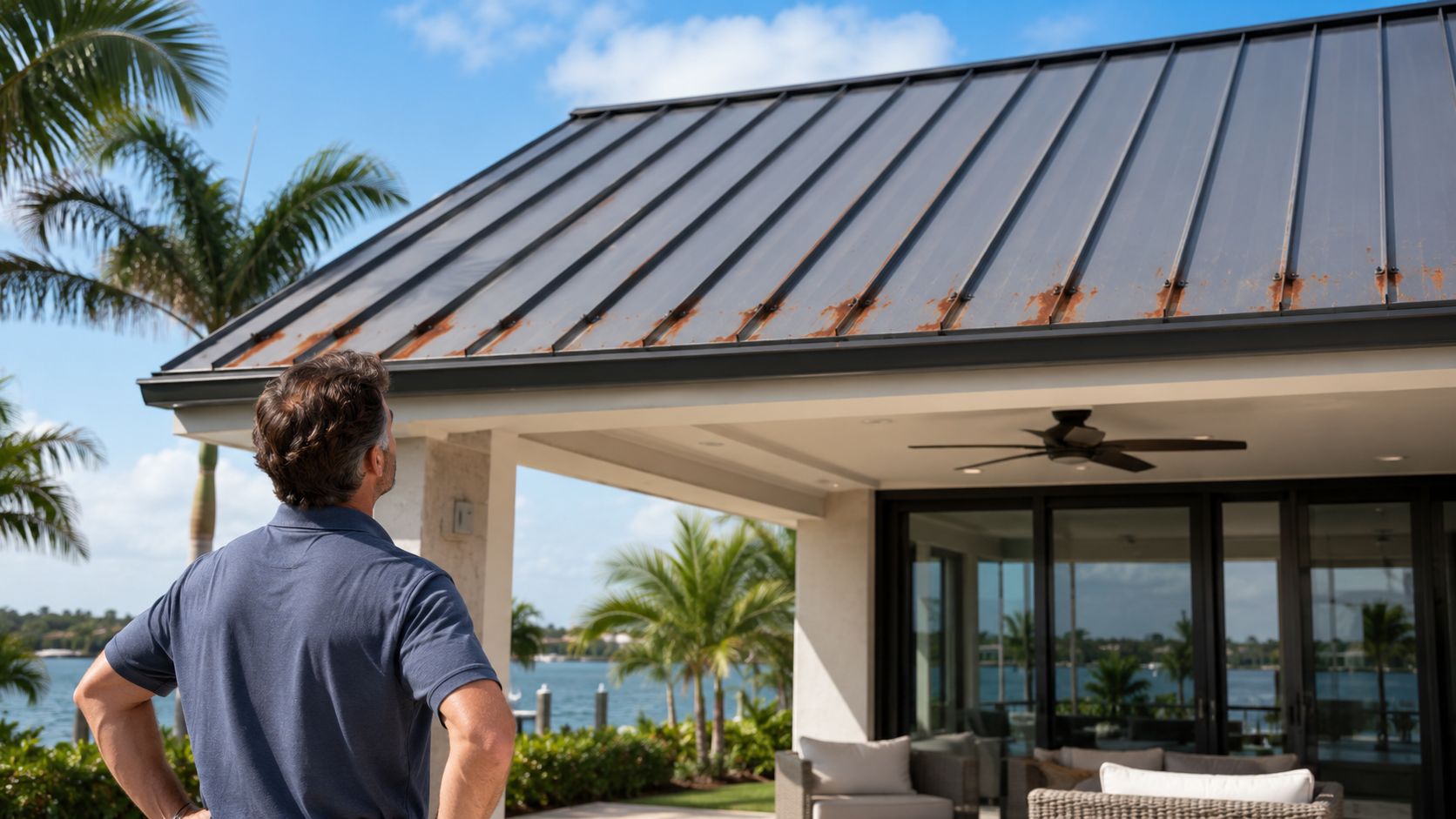
Table of Contents
- Why a South Florida Homeowner Is Looking Up at Rust Right Now
- What Causes Rust on a Metal Roof
- Why Coastal South Florida Makes Rust Worse
- How to Inspect Your Metal Roof and Judge the Damage
- DIY Touch-Ups Versus Calling a Professional Roofer
- Prevention and Maintenance That Lasts
- When Rust Becomes a Real Problem Instead of Cosmetic
- Putting It All Together and Knowing When to Call
Why a South Florida Homeowner Is Looking Up at Rust Right Now
A homeowner in Boca or Fort Lauderdale usually spots rust in the same places first, a ridge cap, a fastener line, or a seam where water likes to sit after a storm. The mark may look small, but it creates a big question. Is this just staining from runoff, or is the coating already gone?
The answer matters because rust on a metal roof is a spectrum, not a single failure point. On one end, you have a thin cosmetic film on intact coating. On the other, you have corrosion that's reaching bare steel, which can change the roof's ability to shed water and hold fasteners.
A lot of homeowners assume the panel brand tells the whole story. In coastal South Florida, that's usually the wrong lens. The marine environment, the roof shape, the amount of trapped moisture, and the condition of cut edges often matter more than the name stamped on the panel.
Practical rule: If the rust stays on the surface and the coating still looks continuous, that's a different problem from rust that's bleeding out of seams, fastener heads, or laps.
The rest of this article keeps that distinction front and center. You'll see what rust is, why salt air speeds it up, how to inspect your own roof safely, and how to decide between a touch-up and a real repair. For a broader material comparison, Superior Home Improvement's comparison is a useful read when homeowners are deciding whether a roof system change makes sense at all.
What Causes Rust on a Metal Roof
A metal roof can look sound while corrosion begins at one small breach. Rust requires steel, oxygen, and moisture to meet. The factory coating normally separates those elements, but a scratch, exposed cut edge, or worn area can open a path to the steel beneath. Moisture then carries the reaction across that damaged spot. GalvInfo guidance on galvanizing and moisture barriers explains why the barrier matters.
The roof does not need standing water. A damp seam, a wet fastener pocket, or leaves holding moisture against the panel can keep corrosion active. In South Florida's marine aerosol zone, salt residue makes those small wet areas more aggressive. It can settle on a roof, dissolve into a thin moisture film, and remain concentrated at seams, fasteners, laps, and cut edges.
Coatings still provide meaningful protection. Painted, stone-coated, galvanized, and Galvalume-style systems can all delay corrosion, but none makes steel immune after the protective film is breached. The finish is a shield, not a permanent cure. For context on how roof metals differ, this roof material comparison offers a useful overview.
What the colors usually mean
Red rust is iron oxide, the familiar reddish-brown corrosion that generally indicates exposed steel. White rust is different. It commonly forms on galvanized surfaces when the zinc coating corrodes, producing a pale or chalky deposit instead of red iron oxide.
Color helps identify the reaction, but location helps judge risk. A thin white film may point to a coating condition that needs cleaning and review. Red rust spreading from a seam, fastener head, or cut edge suggests that the protective layer has failed at a detail where water and salt can stay trapped.
Rust therefore falls on a spectrum. A surface mark on intact coating may remain cosmetic. Corrosion that reaches panel laps, fasteners, or the steel substrate can threaten water-shedding performance and attachment, especially where marine moisture repeatedly returns.
Why Coastal South Florida Makes Rust Worse
A roof near the beach can begin showing rust sooner than a similar roof farther inland, even when both were installed at the same time. South Florida combines salt spray, high humidity, shoreline exposure, temperature changes, and airborne pollutants. Together, these conditions speed corrosion in coastal settings, as described in FEMA's coastal corrosion guidance.
The marine aerosol zone changes the math
Salt does not need to cover every panel. Wind carries marine aerosol inland, where it settles on surfaces and dissolves into a thin moisture film. The film becomes more aggressive when it remains around fasteners, seams, laps, and cut edges, turning a small coating failure into a recurring corrosion point.
Roof shape controls where that film stays longest. Low slopes, debris traps, valley lines, and penetrations can retain moisture and salt residue after the surrounding panel has dried. Those areas often move rust from a cosmetic mark toward pitting, weakened details, or leaks.
| Condition | Inland Broward | Within 1 Mile of Coast | Most Affected Roof Zone |
|---|---|---|---|
| Salt exposure | Lower, unless wind carries deposits | Higher, with more frequent salt film | Fasteners, seams, cut edges |
| Humidity load | High | Very high | Panel laps, under debris |
| Wet-dry cycling | Storm-driven | Repeating coastal cycling | Valleys, flashings, drainage paths |
| Corrosion pressure | Moderate | Higher | Trim edges and fastener heads |
Inland roofs can rust too. The difference is the chemical load and how often the surface is rewetted. A roof may look sound across its broad panel faces while rust develops on the downhill side, beside a vent, or along a seam that catches salt spray.
This creates a useful risk spectrum. A mark on intact paint may remain cosmetic. Corrosion at a fastener, lap, or cut edge deserves closer attention because those details help keep panels attached and water moving in the intended direction.
A technical coating study found that galvanized steel and aluminum performed best among the tested substrates under fresh-water and salt-water exposure. That finding reinforces the need to protect damaged coatings and limit moisture contact in coastal conditions (DAB technical coating study).
How to Inspect Your Metal Roof and Judge the Damage
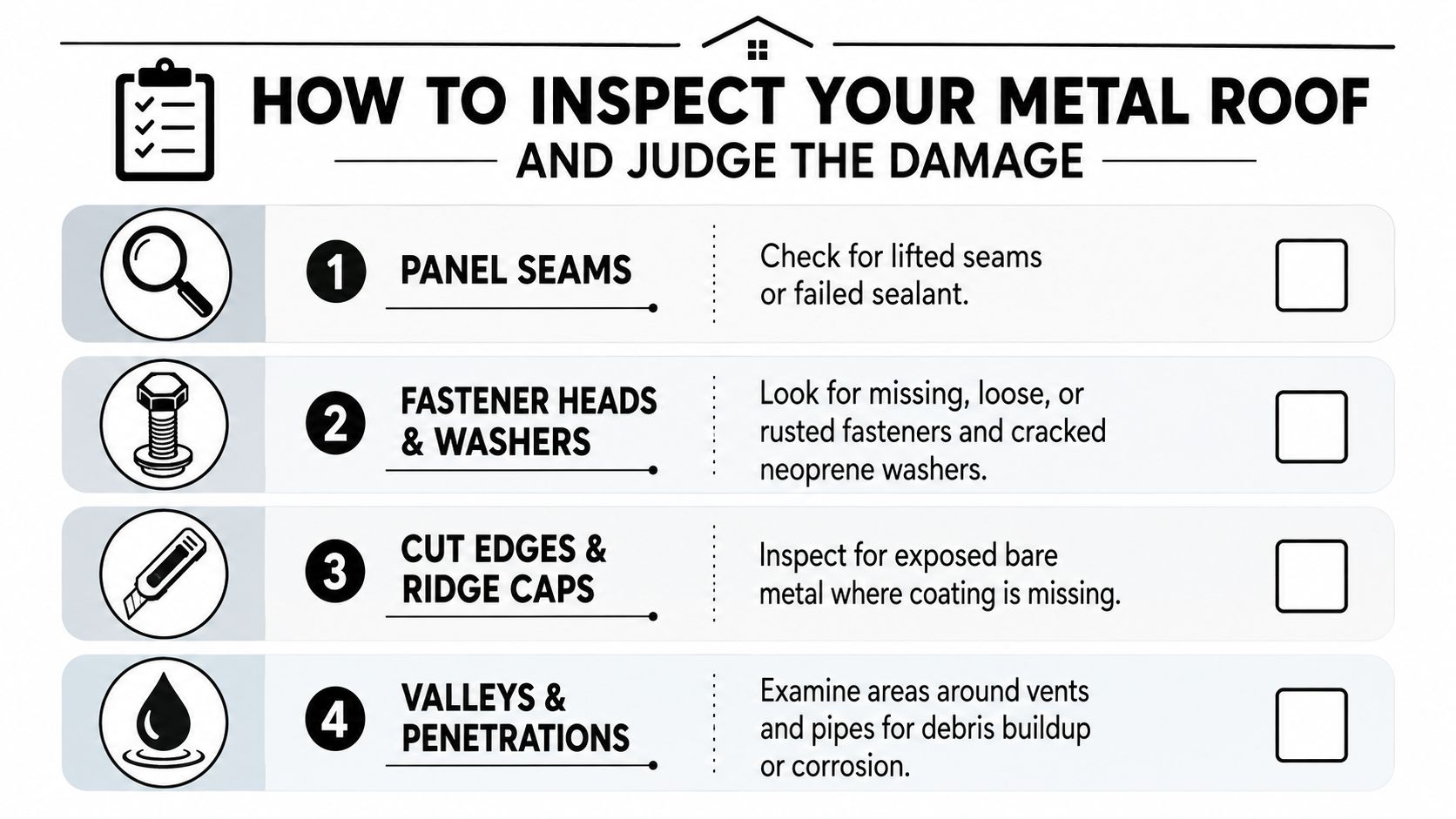
A homeowner may see an orange streak after a storm and assume the entire roof is failing. Start with a safer question: where is the rust, and what is it doing? From the ground, use binoculars to check for streaking, patchy discoloration, lifted seams, and trails beneath fasteners. If the roof is steep, slippery, or high, do not climb it. Call a professional.
South Florida's marine aerosol zone makes small details more informative than broad panel faces. Salt film and repeated wetting often affect seams, fasteners, cut edges, ridge caps, valleys, and roof penetrations first.
What to check first
- Panel seams: Look for lifted edges, open laps, or staining that runs straight down from a seam.
- Fastener heads and neoprene washers: Check for rust rings, missing heads, loose screws, or cracked washers.
- Cut edges and ridge caps: Exposed metal at cuts can begin oxidizing before the painted panel face changes.
- Valleys and penetrations: Vents, skylights, and pipe boots can collect debris and hold moisture longer than open panels.
Separate surface discoloration from active corrosion. Dirt or runoff may wipe away. Orange bleeding that returns after rain points to a coating problem. Rust spreading beneath paint, pitting that catches a fingernail, and lifted fasteners indicate a more advanced stage.
A simple severity scale
- Wipe-off surface bloom. The mark comes off, or nearly does, while the coating remains intact.
- Stable surface rust. Rust stays on the panel face without pitting or leak staining.
- Perimeter rust. Corrosion appears at edges, seams, laps, or fasteners, where the roof's vulnerable details are involved.
- Structural rust. Metal is thinning, fasteners are compromised, or water is reaching the deck.
This scale connects the visible mark to the marine aerosol zone. A cosmetic spot on intact paint may need cleaning and monitoring. Rust at a seam or fastener deserves closer inspection because salt and moisture can keep working beneath the surface.
Debris removal also matters. The example of gutter and roof cleaning Colorado Springs shows how trapped moisture can be addressed, although coastal roofs require salt-focused inspection priorities.
For visual reference, see this roof inspection resource from Paletz Roofing and Inspections.

DIY Touch-Ups Versus Calling a Professional Roofer
A rust mark above the living room can look minor from the ground, yet its location may tell a different story. A spot on intact paint is usually cosmetic. Rust around a fastener, seam, or edge sits closer to the roof's working joints, where South Florida's marine aerosol zone can keep salt and moisture active beneath the coating. The decision depends on depth, location, and how much protective coating remains.
What a DIY touch-up really covers
Home repair is reasonable only for a small, reachable area with superficial rust and no sign of leakage or metal loss. Clean the spot with a non-metallic brush and mild detergent. Feather away loose paint until the edge is sound, then apply a rust-converting primer and a color-matched acrylic or silicone topcoat. The coating is like a sealed bandage: it can protect a minor surface blemish, but it cannot rebuild thinned metal or secure a moving fastener.
Material cost for a typical small repair area is often in the $50 to $150 range. The result is usually temporary, with roughly two to five years of service from a good touch-up when the surrounding coating remains intact. Salt-heavy exposure can shorten that period, particularly where spray settles at laps, edges, and hardware.
Stop the DIY process if rust pits the panel, returns quickly, stains the ceiling, or extends beyond the accessible spot. Walking on a metal roof also creates fall and panel-damage risks, so ground-level observation is safer than reaching a questionable area without proper equipment.
What a professional repair changes
Professional help becomes the better choice when corrosion reaches fasteners, seams, roof edges, penetrations, or multiple panels. A roofer can determine whether the visible rust is only a coating failure or evidence that the metal and fastening system have weakened. Depending on the findings, the work may include replacing damaged panels, upgrading fasteners and gaskets, or applying a recoating system over a wider area.
In South Florida, professional repair commonly runs $8 to $18 per square foot of affected area, depending on scope and access. The figure is a planning range, not a diagnosis. A marine aerosol zone can make a small-looking repair more involved when salt has traveled beneath the coating.
A certified crew can document the condition for warranty or insurance files and check whether fasteners still hold securely. Homeowners comparing coating approaches can review these durable steel roof finish tips before discussing materials with a roofer.
| Factor | DIY Touch-Up | Professional Repair |
|---|---|---|
| Best for | Small, isolated surface rust | Seams, fasteners, edges, broader coating failure |
| Typical cost | $50 to $150 for materials | $8 to $18 per square foot of affected area |
| Expected durability | Roughly two to five years | Often longer, depending on system and scope |
| Risk | Higher if the rust is deeper than it looks | Lower when work is documented and matched to damage |
| Warranty impact | Can be limited if done incorrectly | Better alignment with certified repair practices |
Paletz Roofing and Inspections is one local option for inspecting and repairing metal roofing systems, including corrosion-related damage. An inspection can separate a cosmetic spot from a fastening or coating problem before the marine exposure spreads it.
Prevention and Maintenance That Lasts
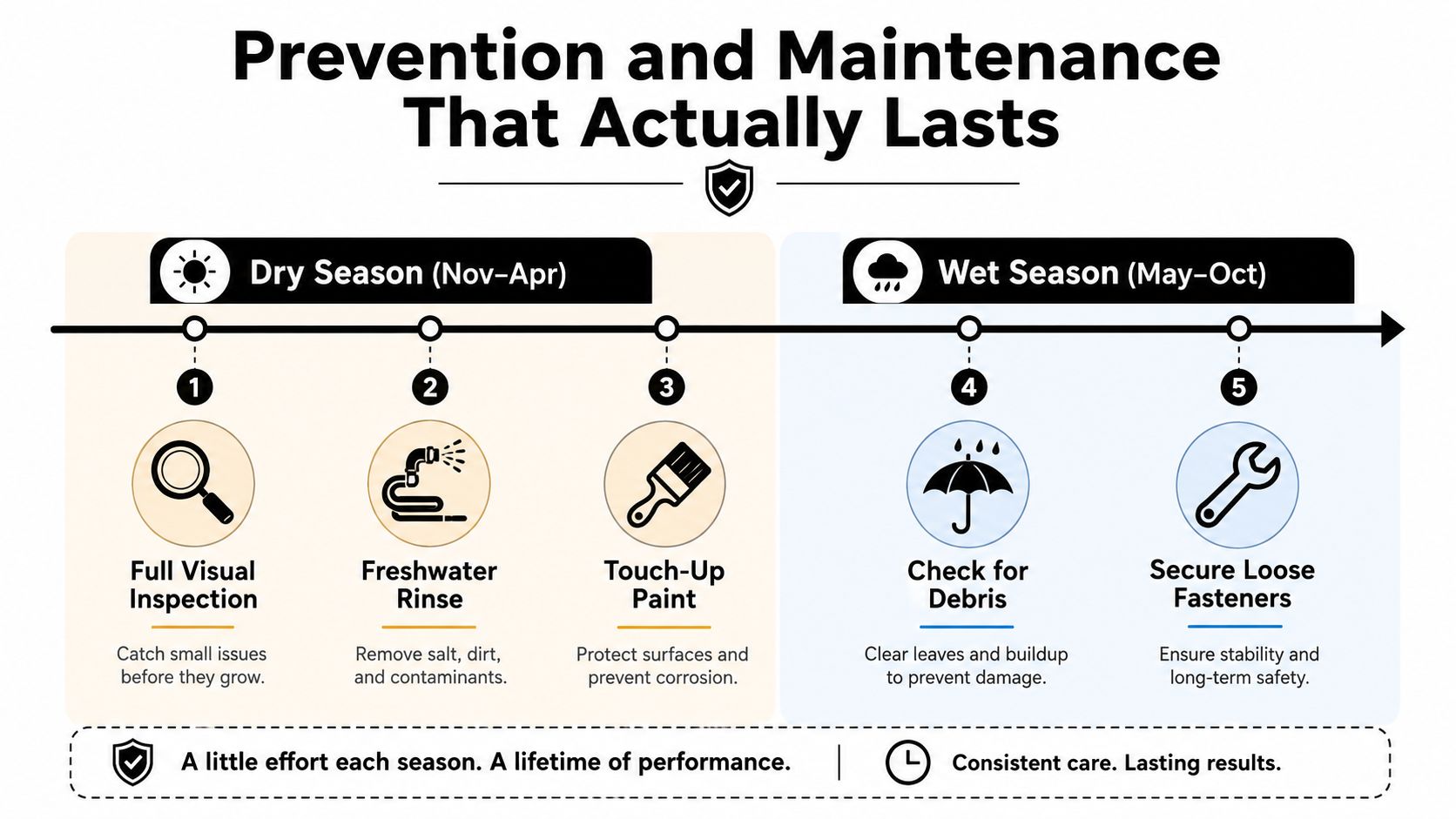
South Florida roof care should follow exposure, not a generic calendar. During the drier months, roughly November through April, inspect the surface, rinse away salt, and record changes. During the wetter months, roughly May through October, check drainage after storm clusters so rainwater, leaves, and marine aerosol residue do not remain against the coating.
Dry season habits
Use safe ground-level access where possible. A metal roof is a system, and a small cosmetic spot can become a coating failure if salt continues reaching the exposed metal.
- Full visual inspection: Check seams, fasteners, ridge caps, and panel edges.
- Freshwater rinse: Remove salt film from panels and fasteners without harsh chemicals.
- Clear gutters and valleys: Take out leaves, sand, and debris that hold moisture.
- Document new spots: Photograph rust so you can compare its size and location after storms.
Wet season habits
Rain helps wash some salt away, but storm debris can hold contaminated water in place. After repeated storms, give the roof a lighter check.
- Check for debris after storm clusters: Remove leaves and branches before they trap water.
- Confirm drainage is open: Gutters, scuppers, and valleys should carry water away.
- Watch for interior staining: Ceiling or soffit marks can reveal a leak path.
- Look for backed-out fasteners: Repeated wet-dry movement can loosen the connection.
Avoid cleaners that strip factory coatings. Trim vegetation that brushes the panels, since scraping creates a fresh path for salt spray. A coastal property should receive a professional inspection every two to three years. An inland roof can often go four to five years between inspections, depending on exposure and condition.
Use this seasonal roof maintenance reference image to organize recurring checks. The marine aerosol zone makes consistency more important near the coast, where rust can progress from a surface stain to coating loss and then to structural concerns.
When Rust Becomes a Real Problem Instead of Cosmetic
Cosmetic rust looks shallow. The coating is still mostly intact, the color is a thin reddish film, and the spot wipes down without exposing bare metal or leaving a visible trail underneath. It can look ugly, but it hasn't necessarily shortened the roof's service life yet.
The line that changes the diagnosis
The problem becomes serious when rust starts changing the metal itself. Flaking or scaling that exposes grey steel, blistering under the coating, pinholes you can feel with a fingernail, and rust creeping from fasteners into panel laps are all stronger signs that the roof is losing its protective layer. Once staining shows up on the soffit, deck, or interior ceiling, the issue has already moved beyond appearance.
That threshold matters because coating failure accelerates corrosion. Pits can turn into leak paths, and fastener rust can compromise the panel's mechanical hold under wind load. The roof may still be standing, but it's no longer behaving like a healthy system.
If the rust wipes off and the coating still bridges the metal, you may be dealing with cosmetics. If the metal has thinned, the fastener spins, or water is already tracking inside, it's a repair issue.
The age of the roof helps, too. A roof with recurring rust at laps or fasteners, especially once it's older and already exposed to multiple storm seasons, deserves a closer look than a brand-new panel with a small isolated stain. That's the kind of judgment call where an inspector can tell you whether the damage is localized or part of a wider coating failure.
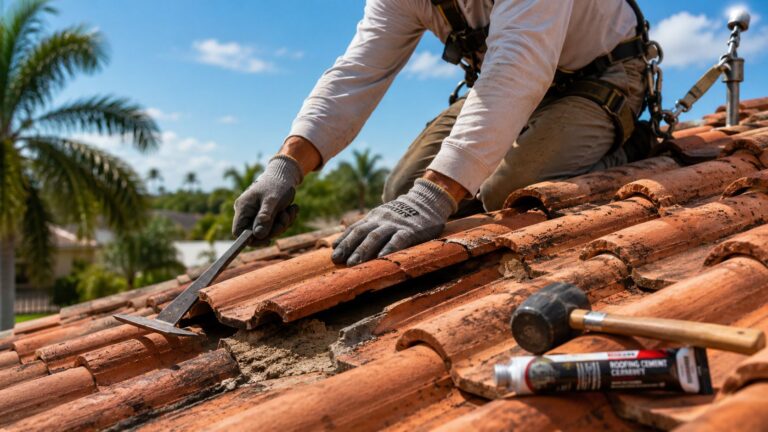
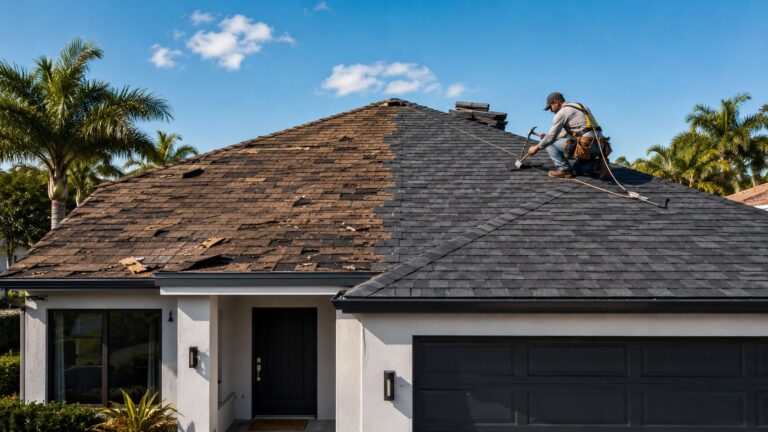
For a visual comparison of roof work categories, this internal reference is useful: https://paletzroofing.com/wp-content/uploads/2026/08/replacing-shingle-roof-roofing-construction-768×432.jpg
Putting It All Together and Knowing When to Call
Use four questions on the lanai before you call anyone. Does the rust wipe off, or does it stay embedded in the coating. Is it on the panel face, or is it concentrated at seams, fasteners, or cut edges. Is the roof draining cleanly, or is debris trapping moisture. Are there any signs inside, like ceiling stains or damp soffits.
If the answer points to surface-only discoloration, keep monitoring and maintain the roof on the South Florida rhythm of rinse, inspect, and touch up. If the answer points to thinning metal, spinning fasteners, repeated leaks, or rust at laps and fasteners, it's time for a professional visit. Rust on a roof that's still under manufacturer warranty also deserves prompt documentation.
A licensed South Florida roofer can check fastener integrity, verify coating failure, and, when needed, document the condition for insurance or warranty records. That kind of inspection is usually cheaper than discovering hidden deck damage after the next storm.
Annual professional inspection is one of the highest-value habits a coastal homeowner can keep. Salt aerosol doesn't pause, and the roof won't either.
If you're seeing rust on your roof and want a calm, documented assessment, Paletz Roofing and Inspections can inspect the damage, explain whether it's cosmetic or structural, and recommend the right repair path for a South Florida metal roof. If you're in Broward, Miami-Dade, or Palm Beach County, reach out before the next storm cycle gives the rust a longer runway.