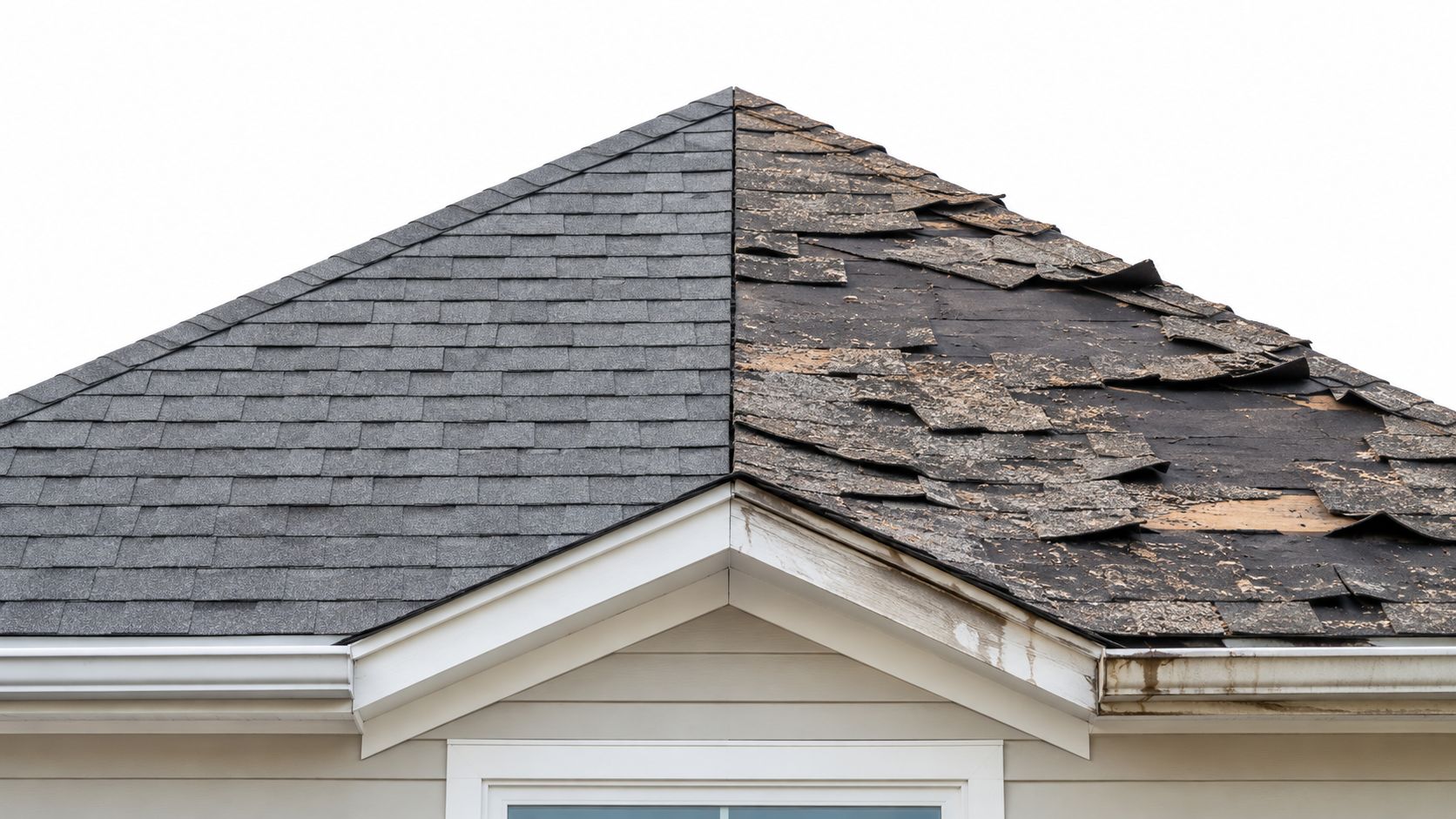
A bad roof may show missing or curling shingles, exposed decking, granule loss, damaged flashing, stains, sagging, organic growth, or failing valleys. Active leaks and structural sagging require immediate professional assessment, even when the roof still looks mostly intact from the street.
So, what does a bad roof look like when failure hasn't yet announced itself with a dramatic collapse? Often, the first clues are subtle: a few bald shingle patches, a dark line around flashing, a roof plane that looks slightly uneven, or a ceiling stain that appears several feet from the actual leak.
This guide uses an image-led inspection approach. For each warning sign, you'll find what to look for, the hidden problem it may indicate, how urgently to respond, and the safest next step. Ground-level observation, binoculars, attic checks, and interior inspections can reveal a great deal, but you shouldn't climb onto a questionable roof.
That caution matters in South Florida, where heat, humidity, heavy rain, and storm exposure can test weak roofing details. Wind and hail accounted for 42.5% of insured homeowner losses in 2023, while older homes reported roof leakage at about 5.5% compared with 3.5% for newer homes, roughly 57% higher incidence. The typical U.S. home is now about 44 years old, according to roof-damage guidance from The Roofing Brief.
Paletz Roofing and Inspections provides damage assessments, inspections, repairs, replacements, and free quotes for residential and commercial properties across Broward, Miami-Dade, and Palm Beach counties.
Table of Contents
- 1. Missing or Damaged Shingles
- 2. Sagging or Uneven Roof Deck
- 3. Visible Mold, Moss, or Algae Growth
- 4. Granule Loss and Bald Spots on Shingles
- 5. Damaged, Cracked, or Missing Flashing
- 6. Water Stains and Interior Ceiling Damage
- 7. Lifted or Improperly Sealed Roof Valleys
- 8. Lifted, Exposed, or Damaged Roof Decking and Underlayment
- 8 Signs of a Bad Roof, Comparison
- Turn Roof Clues Into the Right Next Step
1. Missing or Damaged Shingles
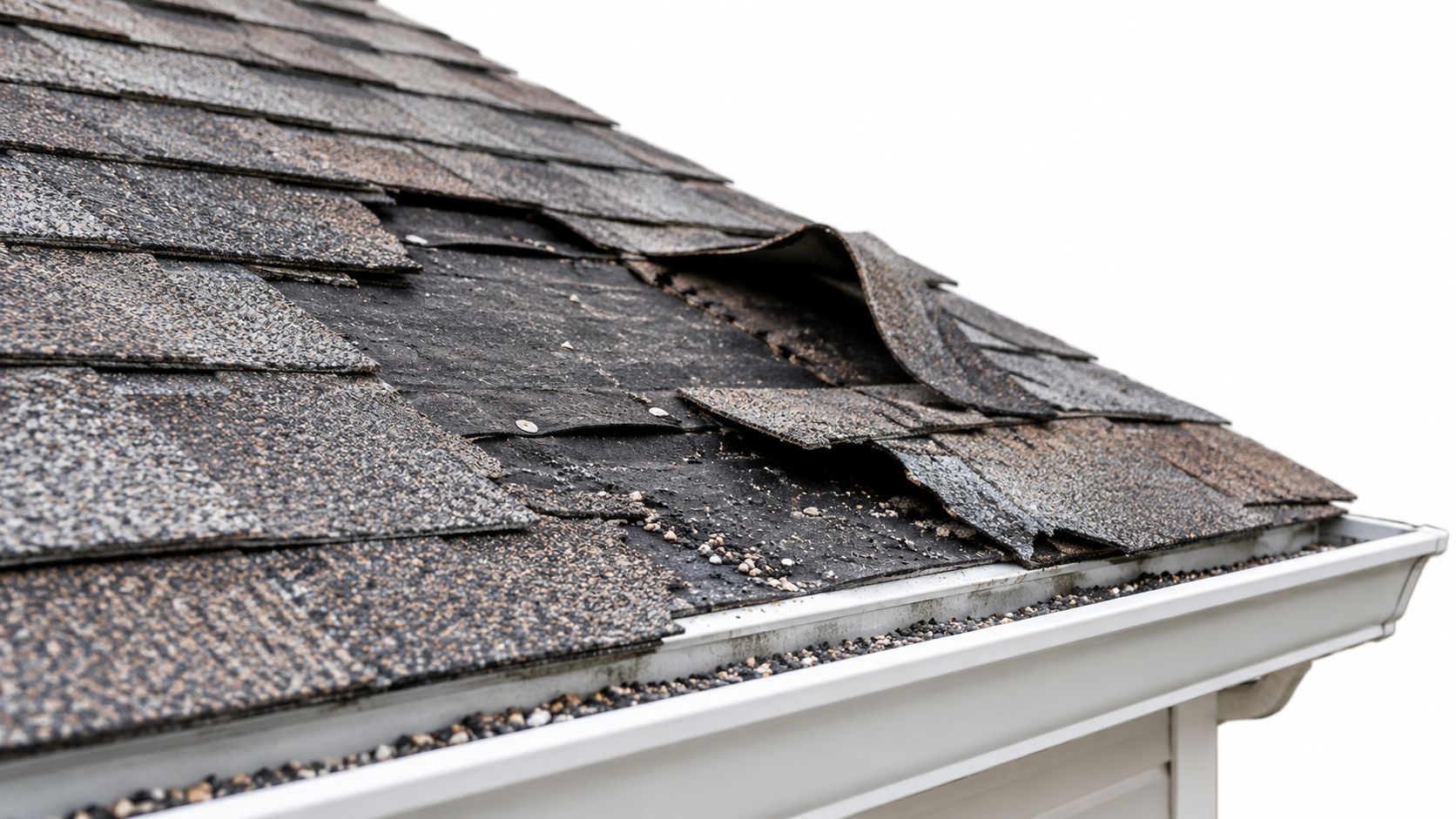
Missing, cracked, split, or curled shingles are usually the easiest roof defects to spot from the ground. Look for irregular patches, exposed underlayment, lifted corners, or shingles that appear darker or lighter than the surrounding field. A pair of binoculars can help you inspect safely without stepping onto the roof.
Shingles form the outer weather barrier. Once one is missing or badly damaged, rain can reach the underlayment and roof deck more directly. In South Florida, intense sunlight, wind-driven rain, and storm debris can turn an isolated defect into a broader leak path.
A post-hurricane roof may show scattered missing shingles across several roof sections. By contrast, a single damaged shingle near a tree could point to debris impact. On older asphalt roofs in Broward County, widespread surface wear and curling often indicate age-related deterioration rather than one isolated event.
What to observe and how fast to act
Treat one questionable shingle as a prompt for closer inspection. Treat multiple missing shingles, exposed underlayment, or damage around roof edges as a high-priority repair issue, especially before more rain.
- Scan from the ground: Walk around the property after storms and look for gaps, lifted edges, and uneven shingle patterns.
- Use photos as records: Photograph the same roof elevations and any debris on the ground before temporary conditions change.
- Check after severe weather: Post-storm observation is more useful than waiting for an interior stain.
- Avoid roof access: A questionable roof may have slippery surfaces or weakened decking beneath apparently sound shingles.
Practical rule: If you can see the underlayment through a missing shingle, arrange an inspection promptly. A patch may be appropriate for localized damage, but repeated failures usually call for a broader roof-system assessment.
2. Sagging or Uneven Roof Deck
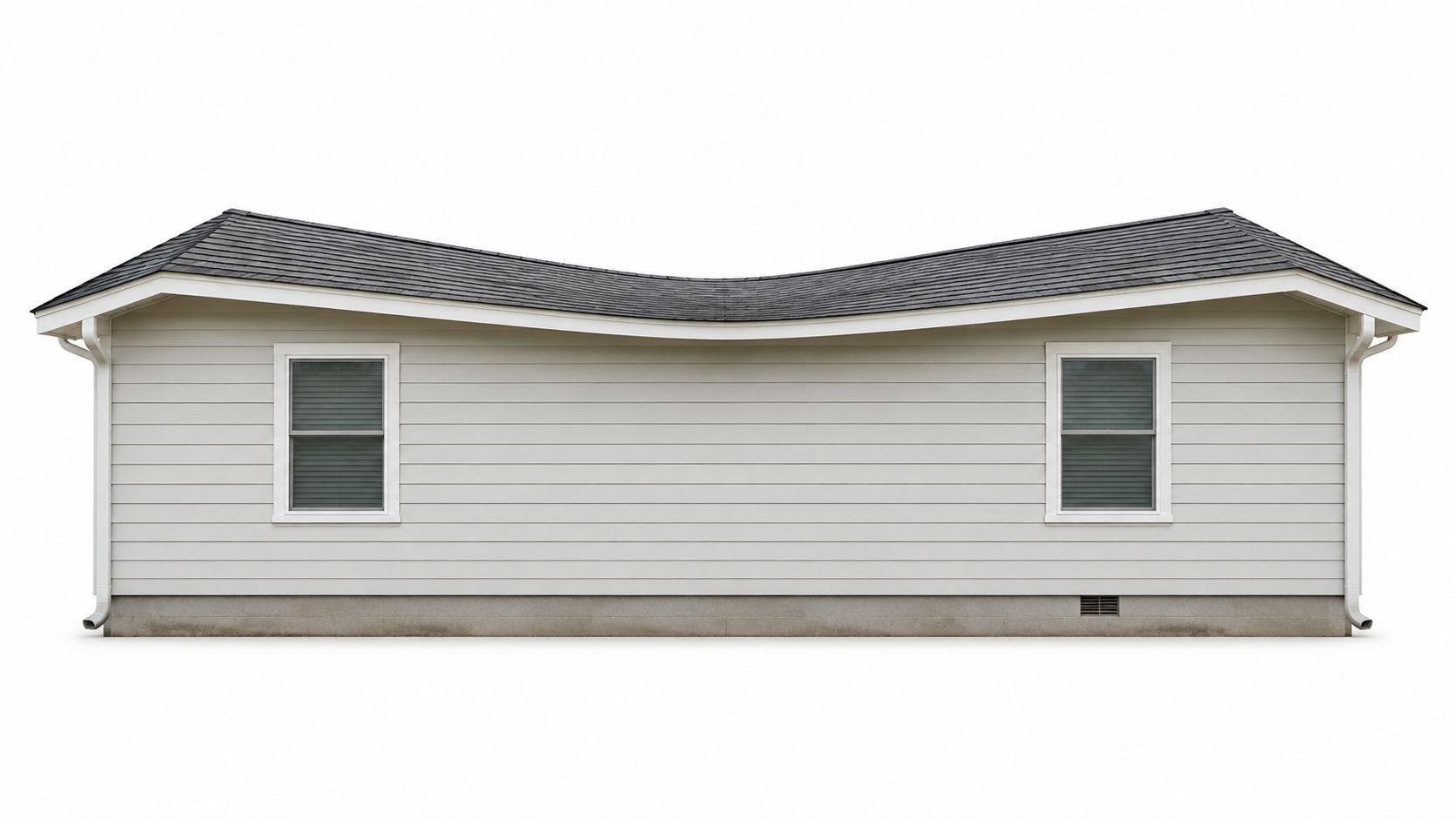
A sagging roofline is more serious than ordinary cosmetic wear. From the street, look along the ridge, hips, and broad roof planes. A dip between rafters, a wavy slope, or a low spot that appears to hold water can indicate weakened decking, framing, or both.
The hidden cause may be prolonged moisture exposure, deteriorated rafters, inadequate ventilation, or ponding on a flat roof. In older Miami-Dade properties, humid conditions can contribute to wood deterioration. On commercial flat roofs, a sagging low spot may coincide with drainage failure and recurring ponding.
This is an immediate-assessment condition. Don't climb up to measure the sag yourself, and don't assume a small dip is harmless. Structural movement can make walking unsafe, while repairs may require more than replacing the visible roofing surface.
Safe documentation before professional assessment
From a safe location, photograph the roofline from more than one angle. Then inspect accessible interior areas for darkened rafters, damp insulation, ceiling discoloration, or a musty odor. These clues can help an inspector connect the visible shape to a moisture or framing problem.
For insurance-related documentation, keep the original images and note when you took them. A roof inspection image for insurance documentation can also help illustrate the type of visual record professionals use during an assessment.

A licensed roofing professional may recommend structural evaluation, and a structural engineer may be appropriate when framing or load-bearing components appear compromised. Commercial owners should restrict access beneath a visibly sagging area until it has been assessed.
3. Visible Mold, Moss, or Algae Growth
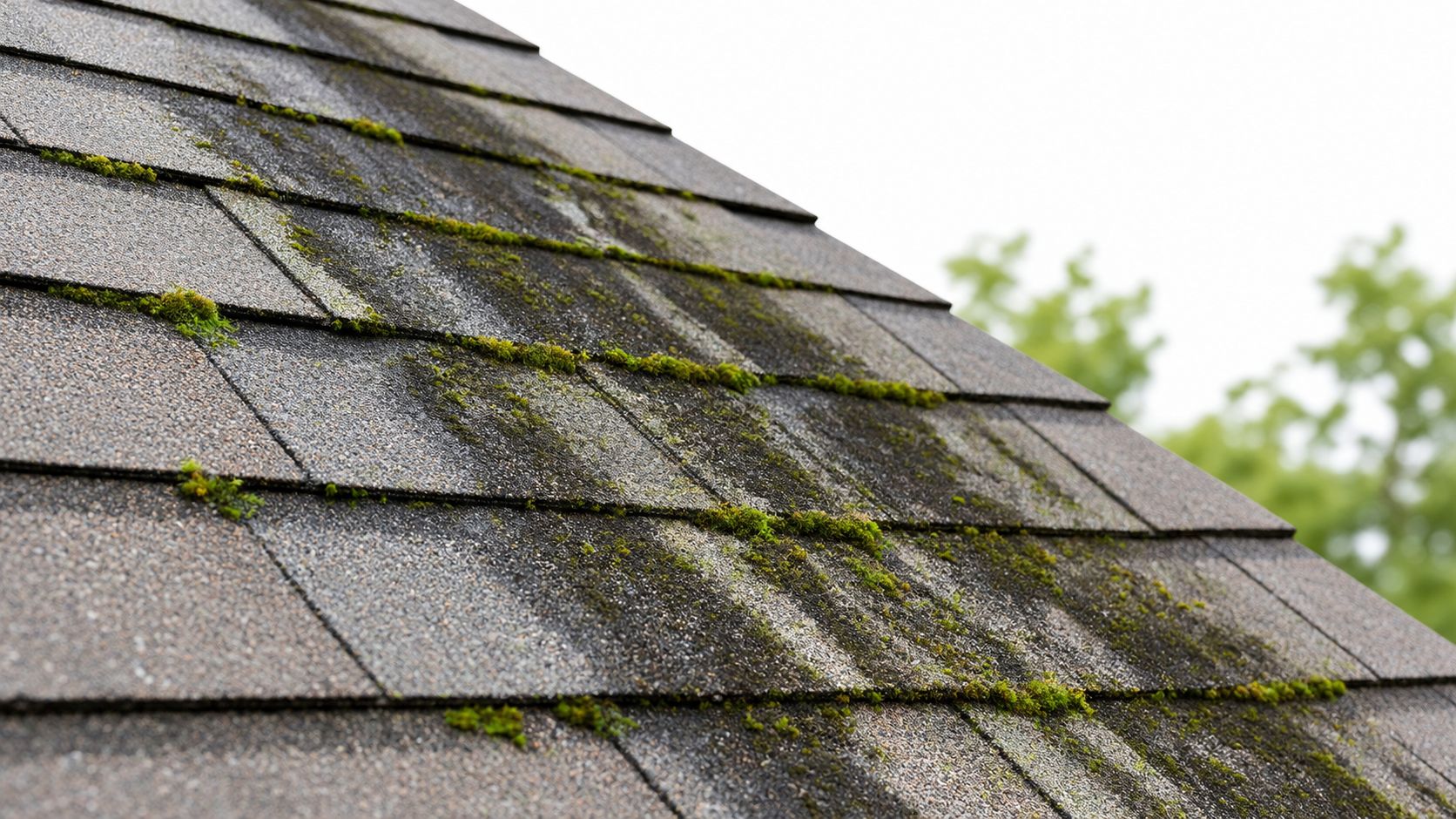
Dark streaks, green growth, moss patches, or mold-like areas on shingles aren't automatically proof that the roof needs replacement. They are, however, evidence that moisture is staying on or near the roofing system. In South Florida's warm, humid conditions, persistent dampness deserves more attention than a purely cosmetic cleaning request.
Algae can appear as dark streaks that follow rainfall and runoff patterns. Moss may lift shingle edges as it grows across the surface. Mold-like growth around roof edges, soffits, or shaded slopes can point to poor drainage, overhanging vegetation, or inadequate ventilation.
A Palm Beach home with growth concentrated on a shaded slope may have a localized moisture problem. A commercial property with recurring streaks after rain may have drainage or airflow issues that cleaning alone won't solve. If growth returns quickly, the roof needs a moisture investigation rather than repeated surface treatment.
What works better than aggressive cleaning
Pressure washing is a poor choice for asphalt shingles because the force can dislodge granules and damage the surface. Professional-grade cleaning methods are safer, but cleaning should accompany an examination of the cause.
- Improve airflow: Trim branches that shade or touch the roof.
- Check moisture sources: Look at gutters, valleys, roof edges, and ventilation pathways.
- Monitor recurrence: Growth that returns is a useful signal that moisture remains.
- Use preventative materials carefully: Zinc or copper strips may help limit future growth when properly installed.
Schedule work during a dry period so the roof can dry fully. If shingles are already curling, brittle, or losing granules, cleaning won't restore their weatherproofing. In that situation, an inspection should come before cosmetic treatment.
4. Granule Loss and Bald Spots on Shingles
Granules are the rough, protective particles covering asphalt shingles. They help shield the asphalt from sunlight and weather. When shingles develop shiny areas, exposed asphalt, or bald patches, the surface has lost part of that protection.
The easiest place to look is the gutter or downspout. Granules may resemble coarse dark sand. A small amount can occur as a roof ages, but widespread accumulation after storms, repeated gutter cleaning, or visible bald patches deserves professional attention.
Industry materials explain why this matters: granules make up about one-third of an asphalt shingle's weight, and a typical 25-square roof covered with three-tab shingles contains about one ton of granules. That context comes from roof-damage information from Elite Roof and Solar. Significant granule loss means the roof is shedding a major protective layer, not merely changing color.
How to track deterioration safely
Take a clear photograph of representative roof areas from the ground and save a photograph of the gutter contents before cleaning. Repeat the same observation after major storms so you can distinguish a stable condition from accelerating loss.
A roof with variable granule loss may have uneven sun exposure, ventilation issues, storm impact, or inconsistent aging. Don't judge the entire roof from one bald patch, but don't dismiss a pattern across multiple slopes either.
Granule loss is often the quiet warning that comes before cracking, curling, and leakage. It deserves a replacement conversation before the roof surface becomes visibly porous.
The right next step depends on distribution and age. A professional can determine whether localized repair is reasonable or whether the roof is approaching replacement-level deterioration. Review available shingle warranty documents, but don't assume a warranty covers normal aging or every form of storm damage.
5. Damaged, Cracked, or Missing Flashing
Flashing is the material that helps direct water around roof penetrations, wall transitions, valleys, vents, skylights, and other vulnerable points. Look for lifted metal, rust, open seams, cracked sealant, gaps between flashing and adjacent materials, or flashing that appears displaced after a storm.
A small flashing defect can create a concentrated leak even when the surrounding shingles look healthy. In coastal Miami-Dade and Palm Beach properties, salt air can accelerate corrosion on exposed metal. Roof-to-wall transitions, chimney-like structures, plumbing vents, and valleys deserve particular attention.
The location of a flashing defect often tells you more than the size of the visible gap. Water can enter at the penetration and travel along rafters or decking before appearing indoors. That's why a ceiling stain may not line up directly with the flashing problem above it.
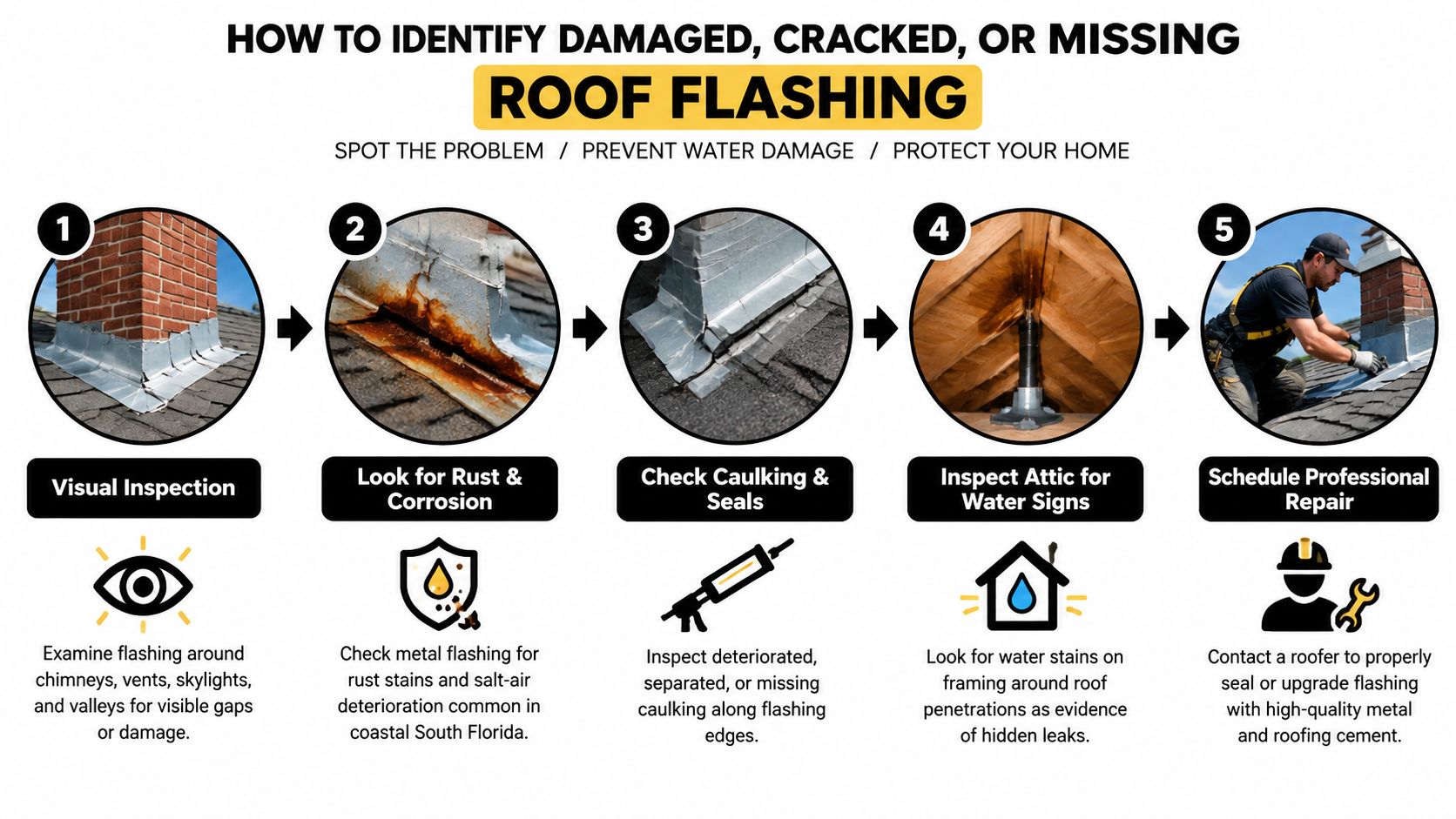
Inspection cues around penetrations
From the ground, inspect metal edges and sealant lines with binoculars. Inside the attic, look around the corresponding roof penetrations for dark wood, damp insulation, staining, or evidence of repeated moisture.
A salt-air corrosion protection image for roof repair illustrates why coastal exposure should be part of the repair discussion. Replacing or upgrading damaged flashing may be more durable than repeatedly applying surface caulk.
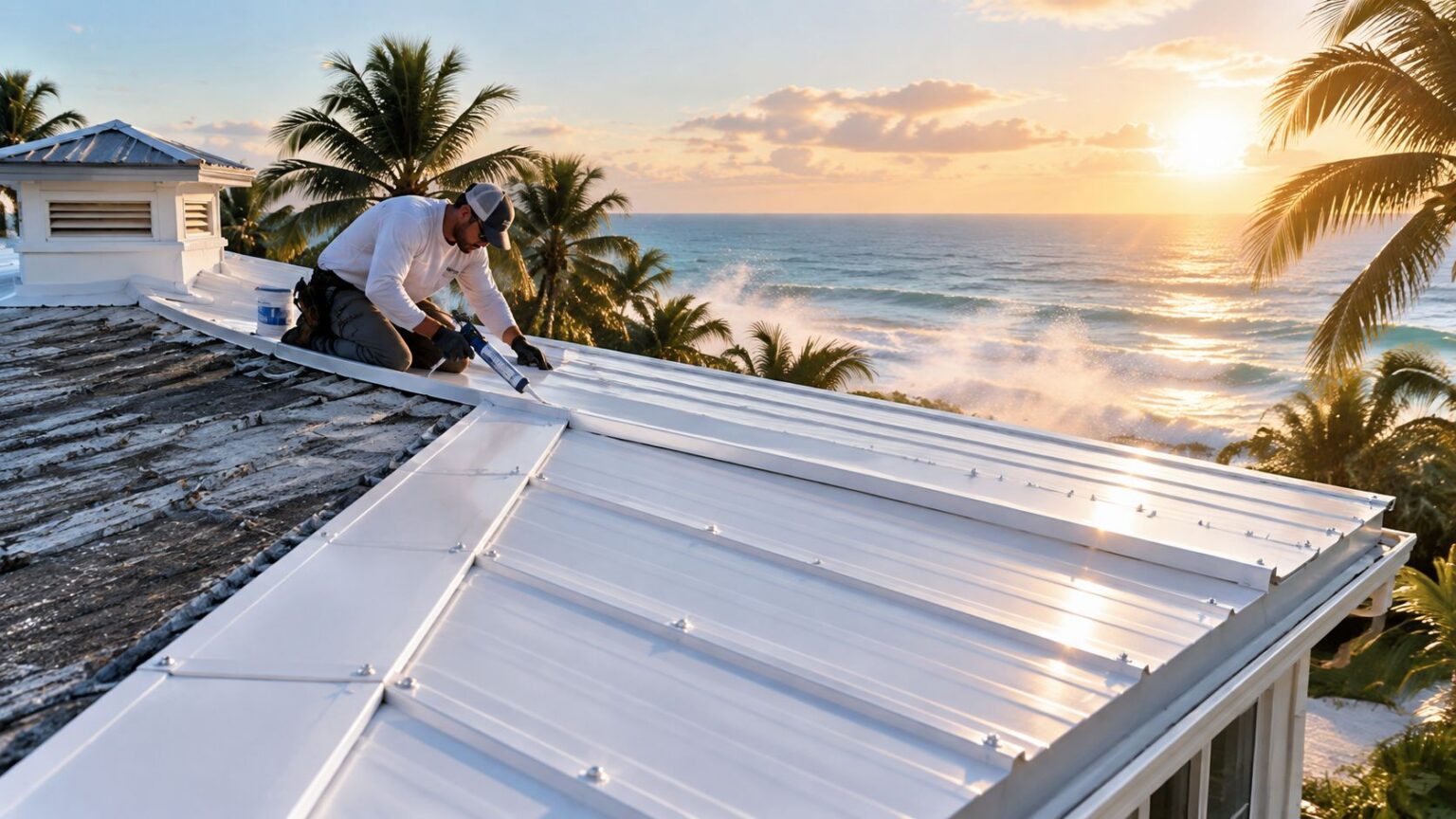
Flashing defects with no interior evidence still warrant timely repair, especially before a storm. Active staining, damp framing, or repeated unexplained leaks raises the urgency to immediate professional assessment. The best repair addresses the flashing design and water path, not just the visible opening.
6. Water Stains and Interior Ceiling Damage
Brown or yellow ceiling stains, peeling paint, bubbling drywall, damp insulation, and visible mold are interior evidence that moisture has entered the building. This is one of the clearest answers to what does a bad roof look like from inside the property.
The hidden source may be damaged shingles, failed flashing, a roof-wall transition, a plumbing vent, or attic condensation. Water often travels along framing, so the stain may appear away from the actual entry point. A slow leak can produce a small ring over time, while storm-driven water may create a larger, newer area.
Treat a fresh stain as an urgent investigation, not a decorating issue. Even an old-looking stain indicates that the roofing system failed at some point and should be evaluated before the next heavy rain.
Protect the interior while tracing the source
Photograph the stain from several angles, including a wider image showing its position in the room. If water is actively entering, place a container beneath the drip where safe, move furnishings away, and keep clear of wet electrical fixtures. Don't cut into a ceiling or handle wet insulation without appropriate safety precautions.
An accessible attic can provide useful clues. Look for damp insulation, darkened rafters, mold growth, or wet nail points, but don't walk across unsupported areas. Use an experienced inspector to determine whether the condition reflects roof leakage, condensation, or both.
A roofer inspection cost reference image can help frame the value of a documented inspection before repair decisions are made. For tracking the direction and progression of ceiling leaks, Upchurch Inspection's moisture-meter guide provides additional context.

7. Lifted or Improperly Sealed Roof Valleys
A roof valley is the V-shaped junction where two roof planes meet. Rainwater from both planes concentrates there, so a lifted shingle edge, open seam, failed seal, or displaced flashing can become a direct water-entry route.
From the ground, valleys may look like dark channels or straight lines running toward the eaves. Use binoculars to look for raised edges, exposed metal, missing shingle overlap, cracked sealant, or debris trapped in the channel. Don't climb up to inspect a valley after rain, because the surface may be slick and the concentrated runoff can conceal a deeper defect.
A valley problem can result from storm movement, poor installation, nail placement, inadequate overlap, or deterioration of the sealing materials. Open valleys with exposed flashing require careful detailing. Closed valleys depend on proper shingle alignment and overlap. A previous patch may look neat while still allowing water to bypass the intended drainage path.
Why valley defects deserve prompt action
Valley leakage may not appear directly beneath the valley. Water can move along the roof deck and framing before staining a ceiling or wall. Repeated staining in the same general area after heavy rainfall is a strong reason to request a full diagnostic inspection rather than another surface patch.
Document the valley from multiple ground-level angles, then arrange professional evaluation. A repair may involve replacing surrounding shingles, correcting flashing, improving overlap, or rebuilding part of the valley. Sealant alone may provide a temporary measure, but it won't correct a design or installation defect.
In South Florida, heavy rain can expose a valley weakness quickly. If you see lifted materials or exposed flashing, address the condition before the next significant storm instead of waiting for an interior stain.
8. Lifted, Exposed, or Damaged Roof Decking and Underlayment
The roof deck, commonly plywood or oriented strand board, supports the roofing layers. Underlayment sits above the deck and helps shed water beneath shingles or other exterior materials. If either layer is exposed, torn, lifted, soft, or visibly deteriorated, the roof's outer protection has already failed.
Look from the ground for sections where shingles or other roof coverings are missing and a darker sheet material is visible. After storm damage, you may see torn underlayment, exposed wood, displaced materials, or a temporary covering. Inside the attic, soft-looking wood, damp insulation, staining, or a musty odor can reinforce the concern.
This is an immediate professional-assessment issue. Exposed decking can absorb rain, and damaged underlayment no longer performs its water-shedding role reliably. In older homes, long-term moisture can also affect framing around the damaged area.
Don't turn a structural repair into a temporary patch
Never walk on visibly damaged decking. A roof covering patch may keep rain out briefly, but it won't restore rotten wood or compromised framing. A professional needs to determine whether the work involves localized deck replacement, broader reroofing, framing repairs, or temporary weather protection.
Commercial flat roofs can present a similar problem when a failed membrane exposes deteriorated deck materials beneath. Residential properties may show the issue after a hurricane, wildlife damage, or years of repeated leakage.
Take photographs from safe locations and preserve any storm-related debris if appropriate for documentation. If rain is entering, temporary covering may be necessary, but it should be installed by someone equipped to work safely. The priority is to stop further water intrusion while the roof assembly is assessed and the replacement scope is established.
8 Signs of a Bad Roof, Comparison
| Condition | 🔄 Complexity | ⚡ Resource Requirements | ⭐ Expected Severity / Outcome | 💡 Ideal Action / Use Case | 📊 Key Advantages / Notes |
|---|---|---|---|---|---|
| Missing or Damaged Shingles | 🔄 Low–Moderate, patch or re-nail repairs possible | ⚡ Low, replacement shingles, basic labor | ⭐ Moderate, localized leaks if untreated | 💡 Quick post-storm repair; quarterly visual checks | 📊 Easily visible; often repairable without full replacement |
| Sagging or Uneven Roof Deck | 🔄 High, structural assessment and engineered repair | ⚡ High, structural repairs, possible deck replacement, engineer | ⭐ Severe, collapse risk; advanced deterioration | 💡 Immediate professional/engineer evaluation; emergency measures | 📊 Highly visible cue prompting decisive corrective action |
| Visible Mold, Moss, or Algae Growth | 🔄 Moderate, cleaning plus moisture/ventilation fixes | ⚡ Low–Moderate, professional cleaning, biocides, ventilation work | ⭐ Low–Moderate, cosmetic to accelerated shingle breakdown | 💡 Clean professionally; fix ventilation and shade sources | 📊 Early intervention slows deterioration and preserves shingles |
| Granule Loss and Bald Spots on Shingles | 🔄 Low, monitoring; spot repairs limited usefulness | ⚡ Moderate, tracking, gutter cleaning, plan for replacement | ⭐ Moderate–High, signals roof near end-of-life | 💡 Document granules, photograph seasonally; budget replacement 2–5 yrs | 📊 Predictive indicator of remaining roof lifespan |
| Damaged, Cracked, or Missing Flashing | 🔄 Moderate, targeted repairs require skilled technique | ⚡ Low–Moderate, flashing metal, sealants, experienced roofer | ⭐ High, common cause of sudden, concentrated leaks | 💡 Inspect penetrations after storms; prioritize professional flashing repair | 📊 Localized repair often prevents major interior damage |
| Water Stains and Interior Ceiling Damage | 🔄 Moderate–High, diagnosis + both roof and interior remediation | ⚡ High, roof repair plus interior restoration and mold remediation | ⭐ Severe, active leaks with interior and health impacts | 💡 Emergency inspection within 24–48 hrs; document for insurance | 📊 Obvious sign that prompts immediate intervention and claims support |
| Lifted or Improperly Sealed Roof Valleys | 🔄 Moderate, precision flashing/shingle work needed | ⚡ Moderate, skilled labor, continuous flashing or upgrades | ⭐ High, valley concentration makes leaks likely and damaging | 💡 Inspect after heavy rain/storms; repair/upgrade valleys promptly | 📊 Localized repairs can significantly extend roof performance |
| Lifted, Exposed, or Damaged Decking & Underlayment | 🔄 High, typically full system replacement required | ⚡ High, deck replacement, new underlayment, possible framing work | ⭐ Severe, structural and waterproofing integrity compromised | 💡 Replace roof system; consult structural engineer; use temporary cover if needed | 📊 Opportunity to upgrade materials, ventilation, and impact resistance |
Turn Roof Clues Into the Right Next Step
A roof doesn't need to look catastrophic to be a meaningful financial and building-safety risk. Recent insurance analysis reports that roofs in moderate-to-poor condition carry about 60% higher loss costs than roofs in good or excellent condition, and about 38% of U.S. residential roofs fall into that weaker condition band, according to Verisk's roofing risk analysis. These figures support a practical point: subtle deterioration deserves attention before it becomes an interior emergency.
Use the visible condition to set the response:
- Monitor carefully: Isolated algae, minor cosmetic staining, or limited early shingle wear may justify observation and routine maintenance when there are no leak or structural clues.
- Arrange a professional inspection: Granule loss, damaged flashing, recurring growth, lifted valleys, repeated shingle failures, or unexplained attic moisture need more than a ground-level guess.
- Seek immediate help: Active leaks, fresh interior stains, exposed decking, damp electrical areas, or a sagging roofline require prompt professional assessment.
- Protect yourself: Don't climb onto damaged roofing, and don't pressure-wash asphalt shingles. Use binoculars, ground-level photos, and safe attic observation instead.
Repair versus replacement depends on distribution, age, underlying deck condition, workmanship, roof geometry, and the source of the damage. Field survey evidence has associated roof failures with poor workmanship at 30.5%, materials inadequacies at 18.6%, design errors at 14.8%, roof geometry at 14.0%, topographical location at 11.8%, and age or environment at 10.3%. The roof-failure survey record helps explain why a recurring leak at penetrations, valleys, or edges may signal a system problem rather than a one-shingle repair.
Water-entry patterns deserve special attention. In one analysis of 801 roof anomalies, flat roofs represented 68.66% of cases, while localized infiltrations and infiltration humidity together accounted for 619 of 801 anomalies, or 77.27%. The roof-anomaly analysis supports prioritizing recurring moisture points, drainage areas, damp insulation, membrane blisters, and interior staining.
Photograph the roof and interior conditions before temporary changes, limit water exposure where it's safe, and keep people away from sagging or visibly unstable areas. If you're managing a property transaction, insurance claim, commercial facility, or post-storm repair, a documented inspection can clarify whether the next step is maintenance, repair, emergency stabilization, or replacement.
A roof that looks mostly fine may still be approaching failure. The combination of curled edges, bald patches, failing flashing, recurring valleys, stains, or a changing roofline is more meaningful than any single cosmetic mark. Roofing replacement costs increased 33% in 2025 compared with the prior four-year average, while repair costs increased 25%, so postponing a known problem can affect the eventual scope and expense, as reported in Verisk's roofing cost and condition analysis. For additional property-marketing context, this real estate SEO guide from ListingBooster.ai discusses how property condition and buyer-facing information can support seller lead generation.
Paletz Roofing and Inspections provides roof inspections, damage assessments, emergency repairs, replacements, and free quotes for homes and commercial properties across Broward, Miami-Dade, and Palm Beach counties. If you've found missing shingles, granule loss, flashing damage, interior stains, exposed decking, or a sagging roofline, visit Paletz Roofing and Inspections to arrange a professional evaluation and choose the safest next step.