
Choosing the best roofing material for Florida homes really boils down to three things: hurricane resistance, energy efficiency, and long-term value. For our climate, metal and tile (both clay and concrete) consistently come out on top. Their sheer durability in the face of Florida's extreme weather makes them the gold standard, though high-quality architectural shingles are a solid, more budget-friendly alternative.
Choosing The Right Roof For Florida's Climate
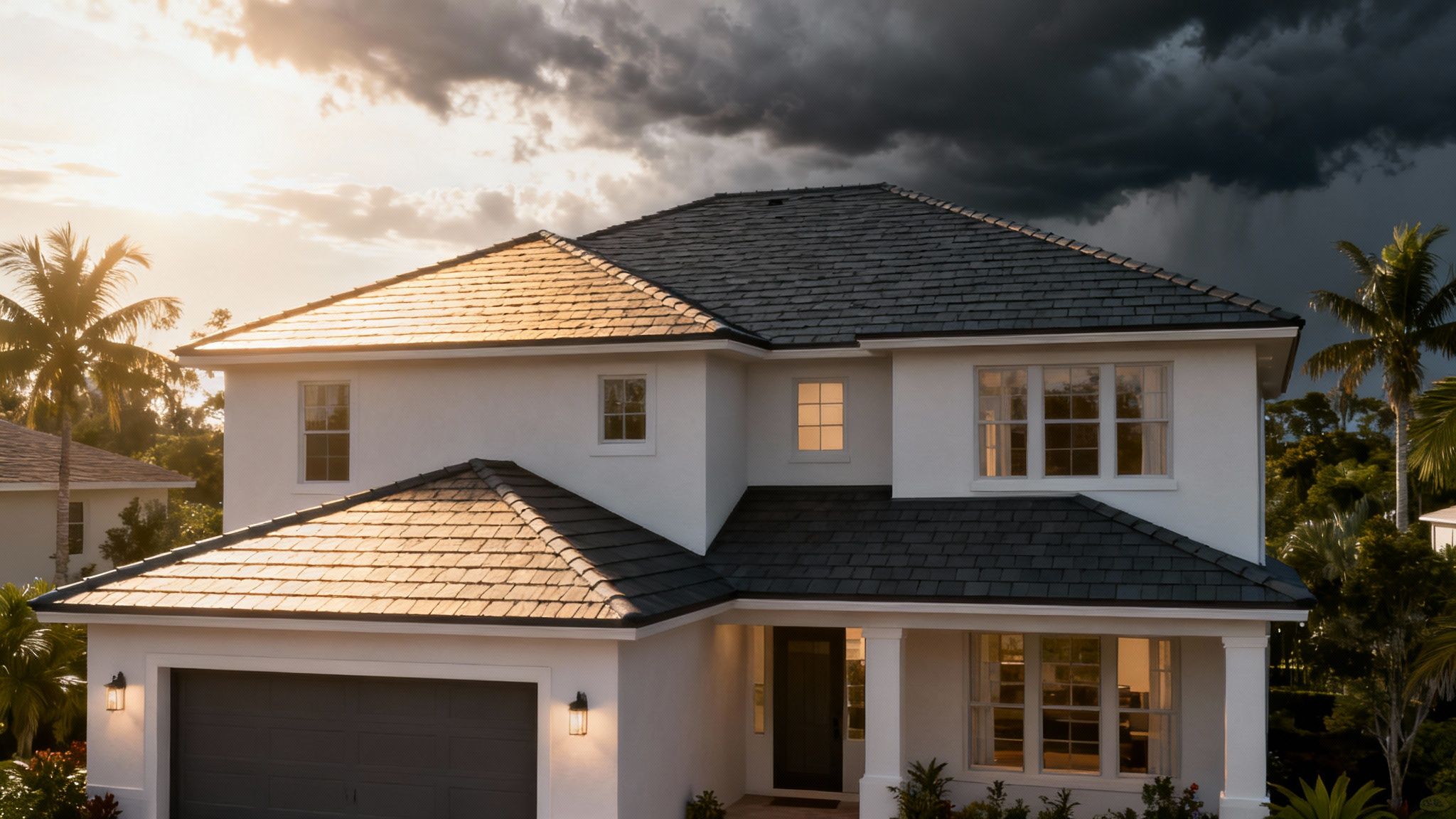
Picking a roof in Florida is so much more than a design choice—it's your home's first line of defense against a relentless climate. You’re up against intense UV radiation, sky-high humidity, torrential downpours, and the constant threat of hurricane-force winds. These elements demand a material that offers uncompromising protection.
Think of your roof as a critical investment in your family's safety and your property's value, not just a covering. This guide will break down the top contenders, focusing on the factors that truly matter for Florida homeowners. We'll evaluate each material against specific criteria to help you make a confident decision.
Key Evaluation Criteria For A Florida Roof
Before diving in, it’s important to know how to compare your options. We'll be analyzing each material through the lens of these essential metrics:
- Hurricane and Wind Resistance: How well does it stand up to wind uplift? This is non-negotiable in High-Velocity Hurricane Zones (HVHZ).
- Long-Term Durability: What is the real-world lifespan when exposed to Florida's sun, salt, and moisture day in and day out?
- Energy Efficiency: Can the material reflect solar heat and lower your cooling bills during our sweltering summers?
- Total Cost of Ownership: This goes beyond the sticker price. We'll look at installation, maintenance, repairs, and even potential insurance savings over the roof's lifetime.
Your roof's performance is a direct result of both the material quality and the installation expertise. A high-end material installed incorrectly will fail long before a standard material installed by a master craftsman.
A Quick Look At The Top Contenders
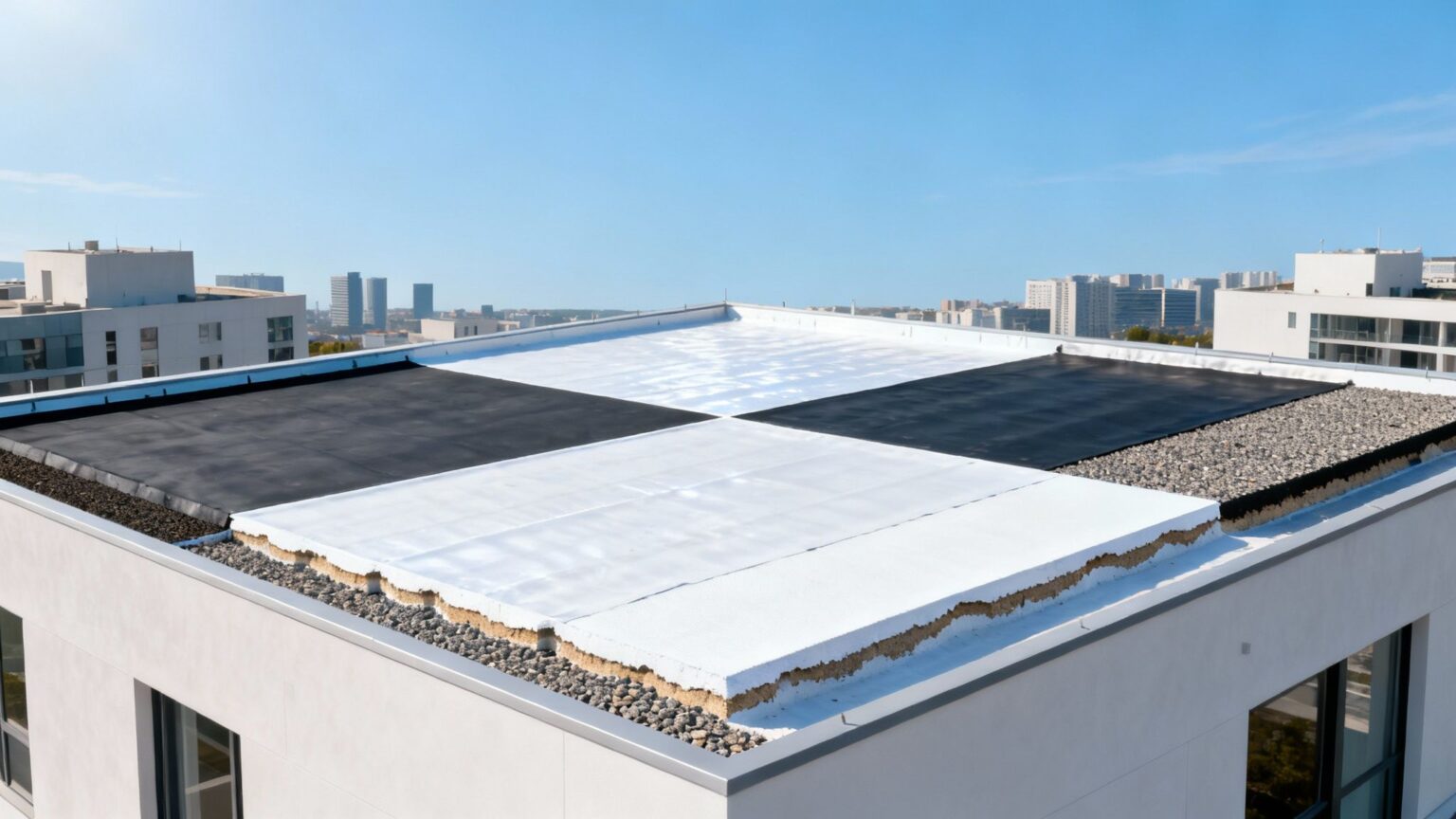
To give you a clear starting point, let's briefly introduce the main players. It helps to visualize the end result, like this beautiful example of a Florida tile roof, which shows what a well-chosen material can look like.
| Material | Best For | Key Advantage | Main Consideration |
|---|---|---|---|
| Metal | Ultimate storm protection and energy savings | Unmatched wind resistance and long lifespan | Higher upfront investment |
| Tile | Classic aesthetic and proven durability | Extremely long-lasting and excellent heat resistance | Heavy weight may require structural reinforcement |
| Asphalt Shingles | Balancing budget and performance | Most affordable option with good versatility | Shorter lifespan and less hurricane resistance |
By equipping you with this foundational knowledge, our goal is to help you confidently select the best roofing material for your home's unique needs right here in Florida.
Florida's Unique Roofing Market and Material Costs
Choosing the right roofing material in Florida is about more than just curb appeal. You have to understand the unique forces that shape our local market—and believe me, they’re unlike anywhere else in the country. Florida’s climate isn't just a weather pattern; it's an active player in the roofing industry, pushing regulations, driving up costs, and ultimately deciding which materials offer real, long-term value.
After decades of getting hammered by powerful storms, our state has developed some of the most stringent building codes in the nation, especially in High-Velocity Hurricane Zones (HVHZ). These aren't just guidelines. They are non-negotiable mandates designed to make sure every new roof can handle extreme wind uplift and impacts from flying debris. This intense focus on resilience has completely changed what homeowners look for in a roof, pushing them toward materials built for strength and longevity.
Economic Realities and Rising Costs
It's not just the weather, though. Economic factors are playing a huge part in every roofing decision these days. The cost of roofing materials in Florida has shot up recently, with some products jumping by as much as 10%. This is largely due to new tariffs that doubled the levies on imported steel and aluminum to 50%.
Metal roofing, a popular choice for its incredible durability, has been hit hard. But the price hikes don't stop there. They affect everything from flashing and gutters to the steel nails needed to secure a hurricane-resistant roof. While construction spending might be growing nationally, Florida’s roofing market is feeling the squeeze from affordability issues, even as the demand for storm-proof repairs skyrockets. You can get a deeper dive into these factors and see what the experts are predicting in our guide to 2025 roofing trends in Florida.
These rising costs, paired with ongoing supply chain headaches, mean you have to think carefully about both the upfront price and the future value of your roof. A cheaper material that fails during the next big storm quickly becomes a very expensive mistake.
In Florida, a roof isn't just a component of your home—it's a system engineered for survival. The true cost must be measured over decades of hurricane seasons, not just by the initial installation quote.
The Shift Toward Durable Materials
This mix of tough codes and economic pressure has created a clear trend: more and more homeowners are choosing durable, high-performance materials like metal and tile. Yes, these options cost more upfront, but savvy homeowners see them as a smarter investment. The logic is simple—paying more now for a roof that can last 50 years or more is way more cost-effective than replacing a cheaper roof two or three times over that same period.
Here’s how this market reality should influence your decision:
- Long-Term Value: A high-quality metal or tile roof can seriously boost your home’s resale value. It might even land you some nice insurance discounts, helping to offset the initial cost.
- Reduced Lifetime Costs: These materials need very little maintenance and are far less likely to need expensive repairs after a storm, saving you a ton of money and stress down the line.
- Peace of Mind: When a hurricane watch is issued, there’s no price you can put on the security of knowing your roof was built to exceed Florida’s demanding codes.
Understanding these market forces is critical context for your decision. It explains why grabbing the cheapest option is rarely the best move here in Florida. The real goal is to pick a material that delivers the best possible protection and financial return over its entire lifespan.
Comparing Florida's Top Roofing Materials
Choosing the right roofing material for a Florida home isn't like picking one anywhere else. It’s a direct battle against our state's most formidable challenges. We need to look past simple pro/con lists and really dig into how architectural shingles, tile, and metal actually perform when the sun is blazing and the hurricane warnings start. The goal here is to understand the real-world trade-offs in storm resistance, cooling costs, and long-term durability to find what truly fits your home.
This infographic gives you a quick snapshot of how these popular options stack up.
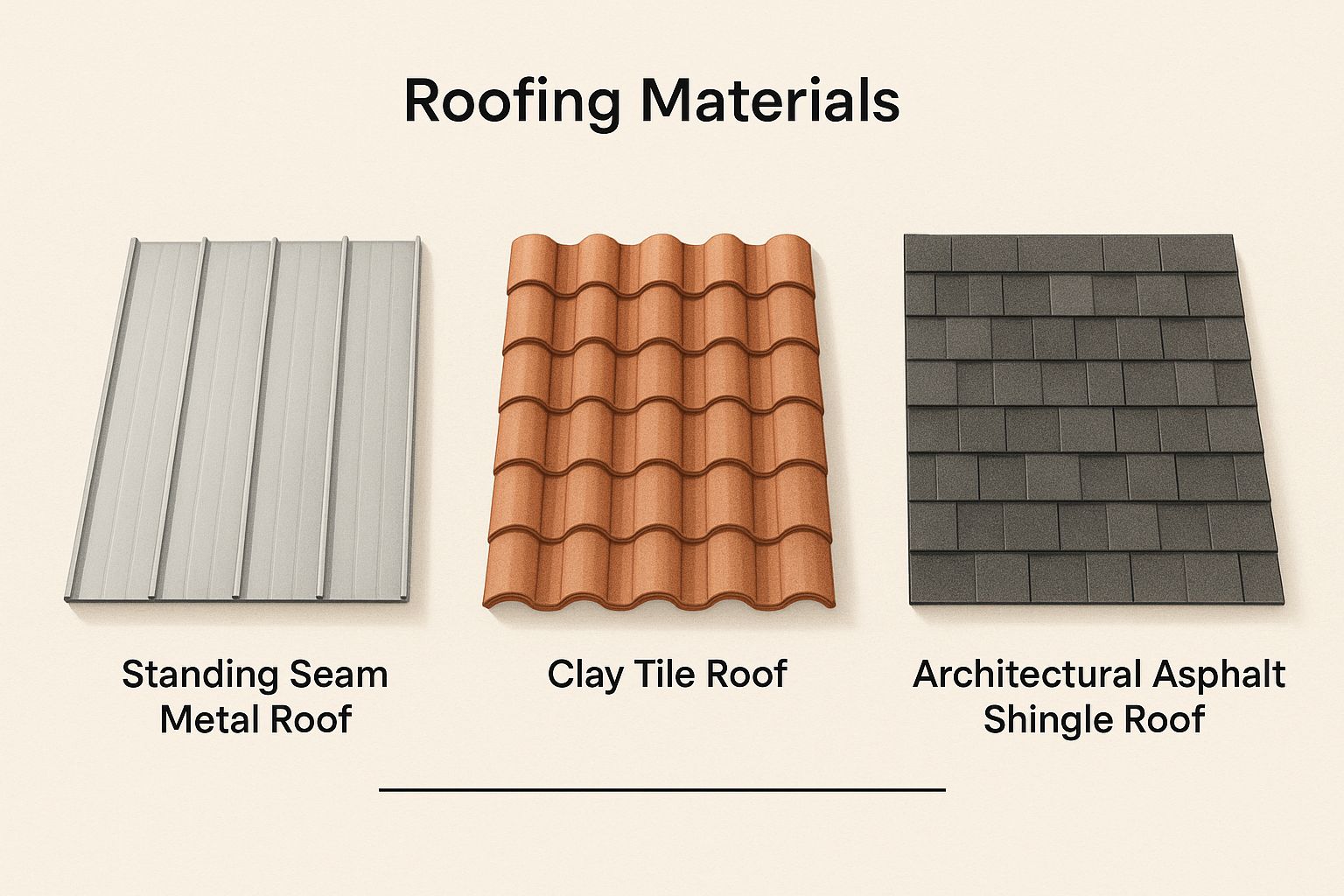
As you can see, while shingles are the most common starting point, both metal and tile are in a different league when it comes to longevity and performance in Florida's climate.
Hurricane and High-Wind Resistance
When hurricane season rolls in, your roof is the single most important barrier standing between your home and the storm. A material's ability to fight off extreme wind uplift and shake off impacts from flying debris is everything.
Architectural Asphalt Shingles: These are a solid step up from the old 3-tab shingles and are often rated for winds between 110-130 MPH. The weak point, however, is their adhesive strips. Under Florida's relentless, year-round heat, that adhesive can degrade, making them much more likely to be lifted and peeled off by sustained, powerful winds.
Tile (Clay and Concrete): With their sheer weight, tile roofs have incredible natural wind resistance. When they're installed correctly with mechanical fasteners like screws and clips—a mandatory requirement in many Florida counties now—they can handle winds well over 150 MPH. Concrete tiles are especially tough against impacts, but a direct hit from heavy debris can still cause them to crack or shatter.
Metal Roofing: If you’re looking for the ultimate lockdown against wind, a standing seam metal roof is in a class of its own. The panels interlock and are fastened securely to the roof deck, creating one solid shield that can resist winds of 160 MPH or more. Their lighter weight also puts less stress on your home's structure, which is a significant advantage during an extreme weather event.
Durability and Lifespan in Florida's Climate
Florida’s climate is a unique cocktail of intense UV radiation, sky-high humidity, and salty air along the coasts. This combination can absolutely shred a roof and drastically shorten its life.
Architectural shingles might last 15-20 years in Florida, if you're lucky. The sun relentlessly bakes the protective granules off, and the humidity is an open invitation for algae to move in, causing those ugly black streaks and speeding up decay.
Tile roofs are legendary for their longevity. Both clay and concrete tiles can easily last 50 years or more because they are completely immune to rot and insects. Clay tiles are amazing at holding their color, while the surface color on concrete tiles might fade a bit after a few decades in the sun.
Metal roofing is another fantastic long-term play, with lifespans hitting 40 to 70 years. The secret is in the finish. A top-tier Kynar 500® paint finish will resist fading and chalking, while Galvalume® coatings offer phenomenal protection against rust, even if you live right on the water. You can see how these advanced materials look in the real world by checking out our gallery of completed roofing projects.
Energy Efficiency and Cooling Costs
In a state where the AC runs almost nonstop, an energy-efficient roof isn't a perk—it’s a financial lifesaver. The right material can make a huge difference in how much heat your home soaks up.
A "cool roof" is simply one that reflects more sunlight and absorbs less heat. Studies have shown this can drop roof surface temperatures by over 50°F, which translates into real energy savings of 7% to 15% on your total cooling bill.
- Asphalt Shingles: Your standard dark shingles are like a sponge for solar heat, pulling it right into your attic. You can get lighter-colored or special "cool-rated" shingles that perform better, but they still generally can't compete with the efficiency of tile or metal.
- Tile Roofing: Tile has natural thermal benefits, but the real magic is the air gap underneath the curved tiles. This creates an insulating buffer that dramatically cuts down on heat transfer. Light-colored clay or concrete tiles are some of the most energy-efficient choices you can make, helping to keep your home cooler from the top down.
- Metal Roofing: Metal is a fantastic solar reflector, especially in lighter shades. Modern metal roofs with special reflective pigments can bounce back up to 70% of solar energy. All that reflected heat means less work for your AC system and lower numbers on your FPL bill each month.
Maintenance Needs and Long-Term Upkeep
Every roof needs some attention, but the amount of work varies wildly, especially in Florida’s climate.
Architectural shingles often need a good cleaning to get rid of algae streaks. You’ll also want to give them a close look after a big storm to spot any missing shingles or areas where the granules have been stripped away.
Tile roofs are incredibly low-maintenance. The main thing is to check for any cracked or slipped tiles, which usually only happens after a major storm or if someone walks on the roof the wrong way.
Metal roofing is about as close to "set it and forget it" as you can get. It doesn’t grow algae, and the interlocking panels don’t give debris much space to build up. A quick annual inspection to make sure the fasteners and sealants look good is pretty much all it needs.
Florida Roofing Material Comparison
To make this even clearer, here's a quick reference table comparing the key attributes of these materials head-to-head.
| Material | Wind Resistance (MPH) | Typical Lifespan (FL) | Energy Efficiency | Maintenance Needs |
|---|---|---|---|---|
| Metal | 160+ | 40-70 Years | Excellent | Very Low |
| Tile | 150+ | 50+ Years | Excellent | Low |
| Asphalt Shingles | 110-130 | 15-20 Years | Fair to Good | Moderate |
This table highlights the clear trade-offs. While asphalt shingles have a lower entry cost, both metal and tile offer superior long-term value, durability, and energy savings tailored for Florida's demanding environment.
A Situational Comparison
To really nail down the right choice, let’s frame it by what matters most to you.
| Your Priority | Metal Roof | Tile Roof | Asphalt Shingles |
|---|---|---|---|
| Hurricane Defense | Best-in-class. Superior wind uplift resistance and fastening system. | Excellent. Great impact resistance and high wind rating. | Good. Meets code but is more vulnerable in extreme events. |
| Long-Term Value | Excellent. High upfront cost but lasts 50+ years with minimal upkeep. | Excellent. Highest longevity but may need structural support. | Fair. Lower initial cost but requires replacement every 15-20 years. |
| Energy Savings | Best-in-class. Highest solar reflectivity, especially in light colors. | Excellent. Natural thermal barrier and ventilation. | Good. "Cool" shingle options help but are less effective. |
| Aesthetic Versatility | Very Good. Multiple profiles and a wide range of modern colors. | Best-in-class. Classic look ideal for Mediterranean or Spanish styles. | Good. Many color options to match various home styles. |
Our state’s climate has absolutely shaped these roofing trends. Florida, known for its hurricanes, has seen a massive shift in what people put on their homes over the last two decades. After Hurricane Andrew flattened thousands of homes in 1992, Florida's building codes were completely rewritten to demand impact-resistant roofing. This has naturally pushed more homeowners toward tougher materials like metal and concrete tile. While they cost more upfront, they offer far better longevity and resilience against our harsh weather. Ultimately, the best roof for your Florida home comes down to a careful balance of your budget, the look you want, and your personal comfort level with risk.
Breaking Down the True Cost of a Florida Roof
When you start getting quotes for a new roof in Florida, it's easy to focus on the bottom line. But that initial number? It’s just the first chapter of a much longer story. To get the real picture, you have to look at the total cost of ownership—that’s the upfront price tag combined with what you’ll spend on maintenance and what you’ll save over the roof’s entire life.
Let’s be honest, a cheap roof that needs patching up after every summer storm or gets shredded in a hurricane is no bargain. The smart move is to treat your roof like a long-term investment. You have to weigh how each material will hold up financially through decades of brutal Florida sun and hurricane seasons.
Upfront Installation Costs: A Snapshot
The initial price is usually the biggest hurdle for homeowners, and the cost difference between materials is pretty stark. Keep in mind, these numbers are for a professional installation and can swing based on where you are in Florida, how complex your roof is, and which contractor you hire.
Here’s a realistic look at what you can expect to pay per square foot:
- Architectural Asphalt Shingles: This is your most budget-friendly starting point, typically running between $4.50 and $7.50 per square foot.
- Concrete Tile: A big jump in both price and toughness, usually landing between $8 to $18 per square foot.
- Metal Roofing (Standing Seam): Often the top-tier choice, with installation costs anywhere from $12 to $25 per square foot.
Florida’s roofing market is a beast, constantly fueled by storm repairs and replacements. This reality has pushed a lot of homeowners toward tougher materials like metal or concrete tile. Even though they can cost $10,000–$20,000 more upfront than shingles, people are willing to pay for better long-term protection. You can find more details on trends like these in roofing industry statistics on ConsumerAffairs.com.
Long-Term Maintenance and Repair Expenses
This is where paying more at the start really begins to make sense. Over 30 years, the money you’ll spend on upkeep for different roofing materials varies wildly.
Asphalt shingles just don't handle Florida's wind, debris, and humidity as well as other options. You’ll need to budget for regular repairs, like replacing shingles that have blown off and getting the roof professionally cleaned to get rid of those ugly black algae streaks. Each service call can set you back a few hundred dollars.
On the flip side, tile and metal roofs are incredibly low-maintenance. Most of their costs come from fixing isolated damage after a major storm, like a cracked tile from a falling tree branch. Because they naturally resist rot, algae, and bugs, you save a ton on routine upkeep.
The real financial drain isn't a single expensive repair; it's the slow, steady bleed of small fixes and premature replacements that comes with a less durable roofing material.
Unpacking Lifetime Value and Hidden Savings
Lifetime value is the ultimate report card for your roof. It doesn't just count the costs; it also tracks the savings a high-performance roof can generate over its lifespan. And in Florida, those savings are huge.
Insurance Premium Discounts:
A brand-new roof that meets modern Florida building codes can seriously lower your homeowner's insurance bill. Insurers give big rewards for wind mitigation features, and durable materials like metal and tile often get you the biggest credits—potentially saving you up to 30% or more on your premium every year.
Energy Cost Reductions:
"Cool roof" options, like light-colored metal or tile, are designed to reflect the sun's heat instead of soaking it up. This one feature can drop your attic’s temperature by as much as 50°F. For you, that means saving 7% to 15% on your annual cooling costs, which is a massive win when the AC is running almost constantly.
Replacement Cycles: A Real-World Scenario:
Think about a standard 2,000-square-foot home in Florida. Over a 30-year span, you could easily end up replacing an asphalt shingle roof twice. In that same timeframe, a single metal or tile roof would still be going strong, with decades of life left.
Even if a metal roof costs double what shingles do upfront, you completely avoid the cost, headache, and inflation of a second full roof replacement in 15-20 years. When you add up the lower maintenance, insurance discounts, and energy savings, the most expensive roof often turns out to be the most affordable one in the long run.
How To Choose The Best Roof For Your Home
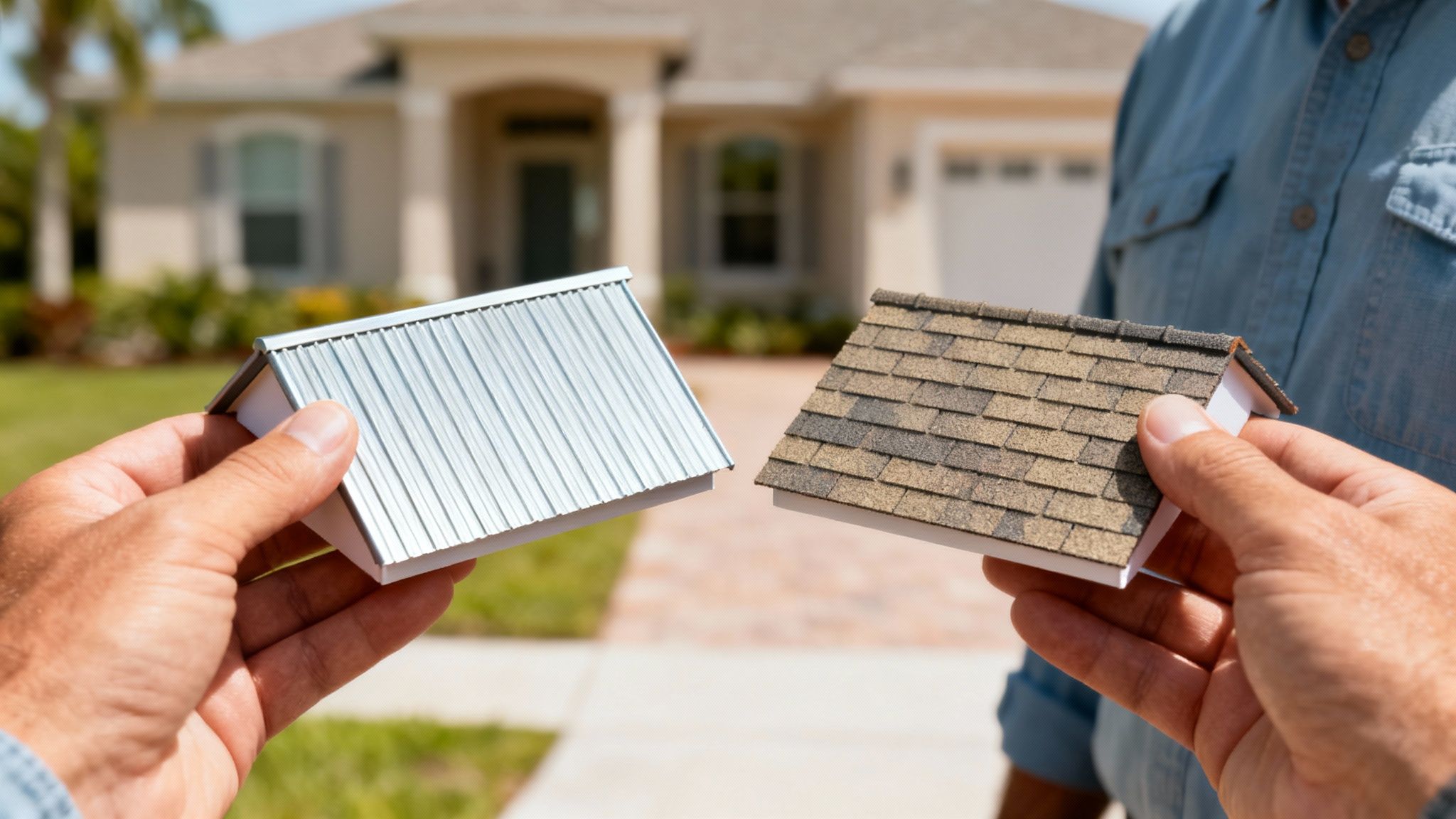
Here's where the rubber meets the road. Picking the best roofing material for a Florida home isn't about finding a single "best" option. It's about finding the right solution for your specific home, your budget, and what keeps you up at night. A roof that makes perfect sense in Central Florida could be a disastrous choice for a coastal property inside a High-Velocity Hurricane Zone (HVHZ).
This final step is all about matching the material to your real-world situation. Let's move from a general comparison to a confident decision that will protect your investment for years to come.
For Homes In High-Velocity Hurricane Zones
If your home is in an HVHZ, like Miami-Dade or Broward County, one factor trumps all others: wind resistance. Your roof isn't just a covering; it's a structural system engineered to fight off extreme uplift forces and impacts from flying debris.
- Top Recommendation: A standing seam metal roof or a mechanically fastened tile system (either clay or concrete).
- Why It Works: Both systems are built for battle. Standing seam metal panels interlock to create a single, unified shield. Modern tile installations don't rely on gravity; they use a combination of screws, adhesives, and clips to lock every single tile securely in place.
- Key Consideration: Installation is everything. The entire system must be installed precisely to HVHZ code, which governs everything from the underlayment to the specific screw pattern. There's no room for error.
Balancing Budget And Durability In Central Florida
Homeowners in places like Orlando or Tampa still have to take hurricanes seriously, but there's a bit more flexibility to balance upfront cost with long-term performance. The goal here is finding a tough, resilient roof that won't completely drain your savings.
This is where a premium architectural shingle roof really shines. It won't have the 50-year lifespan of metal or tile, but a high-quality product rated for 130 MPH winds provides robust protection and a solid 20-year lifespan at a fraction of the initial cost. For many families, it's the perfect middle-ground.
The right roof for your neighbor isn't necessarily the right roof for you. Personal risk tolerance, budget, and long-term plans for the home should always guide your final decision.
For Coastal Homes Facing Salt Spray
Living on the coast brings another destructive element into play: salt spray. That salty, humid air is incredibly corrosive and can eat away at certain materials years ahead of schedule. For these homes, corrosion resistance is just as critical as wind resistance.
- Top Recommendation: An aluminum standing seam metal roof.
- Why It Works: While steel with a Galvalume® coating offers fantastic protection, aluminum is simply immune to rust and corrosion from saltwater. You get elite-level storm protection without the nagging worry of degradation from the coastal air.
- Key Consideration: Make sure your contractor uses aluminum or stainless steel fasteners and flashing. If you mix metals, you can cause galvanic corrosion, a process where the different metals react and cause one to decay rapidly.
When Energy Efficiency Is The Top Priority
If your main goal is to put a dent in Florida's notoriously high cooling bills, your decision should center on materials with high solar reflectivity. A "cool roof" can dramatically cut down on the heat that gets into your attic, giving your AC unit a much-needed break.
Light-colored tile and metal roofs are the undisputed champions of efficiency. A white metal roof can reflect up to 70% of solar energy, while light-colored concrete or clay tiles provide an excellent thermal barrier. Both options can lower attic temperatures and lead to real, tangible savings on your monthly power bill.
Remember, choosing the right roofing material also influences how you'll care for it long-term. It's a smart move to factor your roof's needs into your ultimate yearly house maintenance checklist to protect your investment. A professional inspection can also catch small issues before they become expensive headaches. To get a thorough evaluation from certified experts, you can schedule a professional roof inspection.

Frequently Asked Questions About Florida Roofing
Picking the right roofing material for a Florida home always brings up some very specific questions. As you get closer to making a choice, it’s completely normal to have a few things you're still wondering about. This section tackles the most common questions we hear from homeowners, giving you those final bits of information to feel confident when you talk to a contractor.
Will A New Roof Lower My Homeowners Insurance In Florida?
Yes, a new roof can absolutely translate into significant savings on your homeowners insurance here in Florida. Insurers in our state are known to offer pretty substantial discounts for homes that are better prepared to handle hurricane-force winds. When you install a new roof that meets the latest Florida Building Code, you're essentially making your home a lower risk for them to insure.
To lock in these discounts, you'll need to get a wind mitigation inspection. This report is what officially verifies the key storm-resistant features of your roof. The features that earn the biggest credits include:
- A hip roof shape, which handles high winds much better than a standard gable roof because it's more aerodynamic.
- A secondary water resistance (SWR) underlayment. Think of this as a backup waterproof barrier that protects your home if the primary roofing material gets damaged in a storm.
- Strong roof-to-wall connections, like hurricane straps or clips that anchor the roof structure to the walls.
Upgrading to a fortified system with a material like metal or tile often gets you the largest discounts. We’re talking about potentially saving hundreds, or even thousands, of dollars every year.
What Is The Difference Between Clay And Concrete Tile?
While both clay and concrete tiles are fantastic choices for Florida, they have some distinct differences. Deciding between them really boils down to your budget, the look you’re going for, and your long-term priorities.
Clay tiles deliver that classic, timeless look you see on Mediterranean or Spanish-style homes. The color is literally baked into the tile, which means it will not fade under our intense Florida sun. The trade-off is that they tend to be more brittle and are generally the more expensive of the two options.
Concrete tiles, on the other hand, are incredibly versatile. They can be molded into various shapes and come in a much wider range of colors. They're also more affordable and extremely durable when it comes to impacts. The main downside is that their surface color can fade after a few decades of constant UV exposure.
The choice between clay and concrete tile is a classic balancing act of aesthetics versus economics. Clay gives you superior, permanent color at a premium price, while concrete provides versatile, durable performance for a lower upfront cost.
How Important Is My Choice Of Roofing Contractor?
Let me be blunt: your choice of roofing contractor is just as critical as the material itself. You can spend a fortune on the best roofing material available, but if it's installed incorrectly, it will fail you when a storm hits. A roof's ability to survive a hurricane is almost entirely dependent on the quality of the installation.
A properly licensed and insured Florida roofer knows the local building codes inside and out. They understand the exact fastening techniques for high-wind zones, the right way to install flashing to prevent leaks, and how to properly seal the underlayment. These aren't minor details; they're everything.
Always do your homework before you hire someone. Verify their license and insurance, ask for local references, and make sure they have deep experience installing the specific material you've chosen. In Florida, a great material installed poorly is just a disaster waiting to happen.
Ready to protect your home with a roof built to last through Florida's toughest weather? The team at Paletz Roofing and Inspections has over 30 years of experience installing high-performance roofing systems across South Florida. Contact us today for a free, no-obligation quote and let our experts help you choose the perfect roof for your home. Learn more at https://paletzroofing.com.