
Let's clear up some confusion right away. The debate over "fiberglass shingles vs. asphalt shingles" is a bit of a trick question. Why? Because nearly all modern asphalt shingles use a fiberglass mat as their foundation.
The real comparison isn't between two competing products, but rather between today’s industry-standard shingle and its outdated predecessor: the organic-mat shingle. When you’re shopping for a new roof, you’re almost always choosing a fiberglass-core asphalt shingle.
Understanding Shingle Composition: A Quick Guide
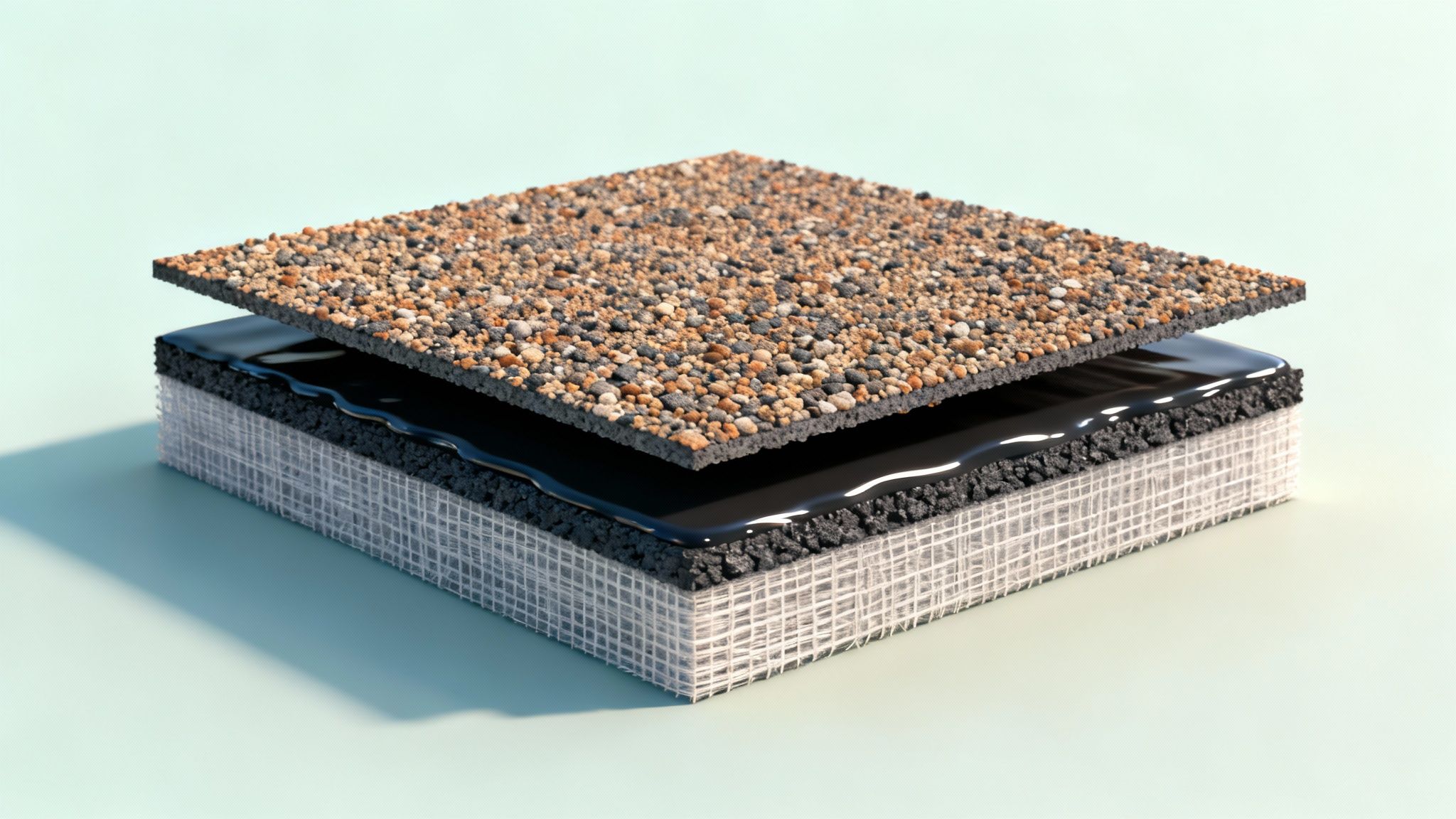
When homeowners start digging into roofing materials, it’s easy to get tripped up by the terms "fiberglass" and "asphalt." They sound like two totally different options, but they're really just two parts of the same whole. The term asphalt shingle refers to the final product you see nailed to the roof. Fiberglass, on the other hand, is the internal mat that gives that shingle its strength and structure.
This distinction is what really matters. The type of mat used inside a shingle dramatically changes its performance, how long it lasts, and how it holds up against fire. For decades, the roofing world has been defined by two kinds of asphalt shingles, and it all comes down to what’s at their core.
The Two Core Types of Asphalt Shingles
Every asphalt shingle starts with a mat. This mat gets saturated with asphalt to make it waterproof, then it’s coated with mineral granules for color and to block out damaging UV rays. The material that mat is made from is the key difference.
- Fiberglass Mat: This is what you'll find in virtually every shingle sold today. Manufacturers weave a mat from glass fibers to create the base. This core is lightweight, has top-tier fire resistance, and won't absorb a drop of moisture, which means it can't rot or warp over time.
- Organic Mat: This is the old-school technology. Organic-mat shingles were built on a base made from recycled paper, wood pulp, and other cellulose materials. This mat was much heavier and soaked up more asphalt, which made it flexible in the cold but also left it vulnerable to moisture damage and far less fire-resistant.
For almost any roofing project you see today, when a roofer talks about "asphalt shingles," they mean the fiberglass-mat kind. Organic-mat shingles have become a niche product and are almost never used for new roofs.
Once you get this, the modern roofing market makes a lot more sense. The choice isn't really between fiberglass and asphalt. It’s about recognizing that fiberglass-core technology has taken over because it's simply a better, more reliable way to make an asphalt shingle. This guide will compare these two core technologies head-to-head to show you exactly why.
Quick Comparison: Key Shingle Differences
To see the fundamental differences between the modern standard and the legacy product, this table offers a quick, at-a-glance breakdown.
| Feature | Fiberglass Asphalt Shingles (Modern Standard) | Organic-Mat Asphalt Shingles (Legacy Product) |
|---|---|---|
| Core Material | Woven fiberglass mat | Recycled paper, wood pulp, and other organic fibers |
| Fire Resistance | Typically Class A (highest rating) | Lower rating (often Class C), more flammable |
| Moisture Resistance | Excellent; fiberglass is inorganic and does not rot | Poor; organic core can absorb water, leading to rot & warp |
| Weight | Lighter, reducing structural load on the roof | Heavier due to higher asphalt content and denser core |
| Primary Advantage | Durability, fire safety, and longevity | Flexibility in cold weather and traditional thickness |
| Market Availability | The dominant type available from all major manufacturers | Limited availability, often considered a specialty product |
As you can see, the shift to a fiberglass core wasn't just a minor change—it was a massive leap forward in safety, durability, and performance for asphalt shingles.
The Material Science Behind Your Roof’s Durability
The real performance of any roofing shingle comes down to what’s inside. While both fiberglass and the older organic-mat shingles look similar on the surface—coated in asphalt and topped with protective mineral granules—their true difference is the internal mat that gives them structure. Understanding the guts of each type is the only way to predict how your roof will actually stand up to blistering summer heat and harsh winter storms.
Modern fiberglass-based asphalt shingles, which are now the industry standard, are built on a woven fiberglass mat. This mat is inorganic, which is just a technical way of saying it can't absorb water. That simple fact is probably the most important advantage in the fiberglass vs. asphalt shingle debate, making the shingle totally resistant to rot, mold, and warping—all common headaches for materials that soak up moisture.
On top of that, fiberglass itself provides incredible dimensional stability. It doesn’t really expand or contract when the temperature swings, helping the shingle keep its shape and integrity year after year. This prevents the kind of cracking and buckling that can create weak spots in a roof's protective barrier.
The Fiberglass Advantage: A Closer Look
The strength of a fiberglass shingle is all about its layers. The process starts with that strong, lightweight mat, which is then saturated in a specially formulated asphalt. This asphalt layer provides the main waterproofing and also holds the protective outer granules in place.
What you get is a final product that isn't just tough, but also surprisingly lightweight. A lighter shingle puts less stress on your home’s framing, a huge plus for both new builds and reroofing jobs. Their superior makeup is exactly why they dominate the market. In fact, fiberglass-based asphalt shingles hold a staggering 78.5% share of the asphalt shingles market, a position earned through their proven resistance to moisture, fire, and extreme weather.
The real magic of fiberglass is its inorganic nature. Since it can't rot or absorb water, it creates a stable, predictable foundation that dramatically boosts a shingle's lifespan and reliability.
Understanding the Old-School Organic Mat
By contrast, organic-mat shingles were built on a core made from cellulose materials like recycled paper, wood pulp, and felt. To make this naturally absorbent core waterproof, manufacturers had to drench it in a massive amount of asphalt—up to 40% more than what’s used in a fiberglass shingle. This created a much heavier, thicker product.
While that extra thickness once offered a slight edge in flexibility in cold weather, it came with a critical flaw. The organic core, despite being saturated in asphalt, was still vulnerable to moisture if the outer layers were ever damaged. Even a small crack from a hailstone could expose the mat to water, leading to absorption, rot, and eventual decay from the inside out.
This fundamental weakness is precisely why the industry has almost completely moved away from organic mats. The risk of water getting in and causing the shingle to fall apart simply isn't worth the minor benefits. Over time, an organic shingle becomes brittle and is far more likely to fail prematurely than its fiberglass counterpart.
How Material Makeup Affects Real-World Performance
The choice between a fiberglass or organic core directly impacts how your roof performs day-to-day. The science behind the materials dictates everything from fire safety to how long the roof will actually last.
Here's a breakdown of how these materials stack up:
- Fire Resistance: Fiberglass is naturally non-combustible. This gives fiberglass shingles a Class A fire rating—the best you can get. Organic-mat shingles, made from paper and wood, are inherently flammable and usually only manage a Class C rating.
- Water Resistance: The non-porous fiberglass mat is impervious to water, stopping rot and algae growth at its core. The organic mat, however, acts like a sponge if it gets exposed, leading to rapid decay.
- Weight and Structural Load: Fiberglass shingles are much lighter. This makes them easier and faster to install while putting less stress on your roof deck and the rest of your house.
- Durability and Lifespan: The stability and moisture resistance of fiberglass give these shingles a longer, more reliable lifespan, which is why manufacturers are willing to back them with much stronger warranties.
Ultimately, the science is crystal clear. The switch from an organic mat to a fiberglass core was a major leap in roofing technology, giving homeowners a safer, lighter, and far more durable product.
Comparing Performance in Harsh Weather
A roof's most important job is protecting your home from the elements. How it holds up in harsh weather is the ultimate test of its worth, and this is where the differences between modern fiberglass shingles and their older, organic-mat asphalt counterparts really become clear. Their reactions to environmental stress couldn't be more different, a contrast that comes down to their core materials.
Modern fiberglass shingles just have a whole suite of advantages, starting with top-notch fire safety. Because their core is made from non-combustible glass fibers, they almost always earn a Class A fire rating—the best you can get. That’s serious peace of mind, especially if you live in an area prone to wildfires or even just a tightly packed neighborhood where a fire could spread.
But it's not just about fire. That inorganic fiberglass core is a rock star when it comes to handling moisture. It simply doesn't absorb water, which means no rotting, no warping, and no algae taking root. For anyone living in a humid or rainy climate, this is a massive win, ensuring the shingle stays structurally sound for its entire lifespan.
This infographic really drives home the durability of fiberglass shingles versus the weak points of the older organic-mat style when the weather gets rough.
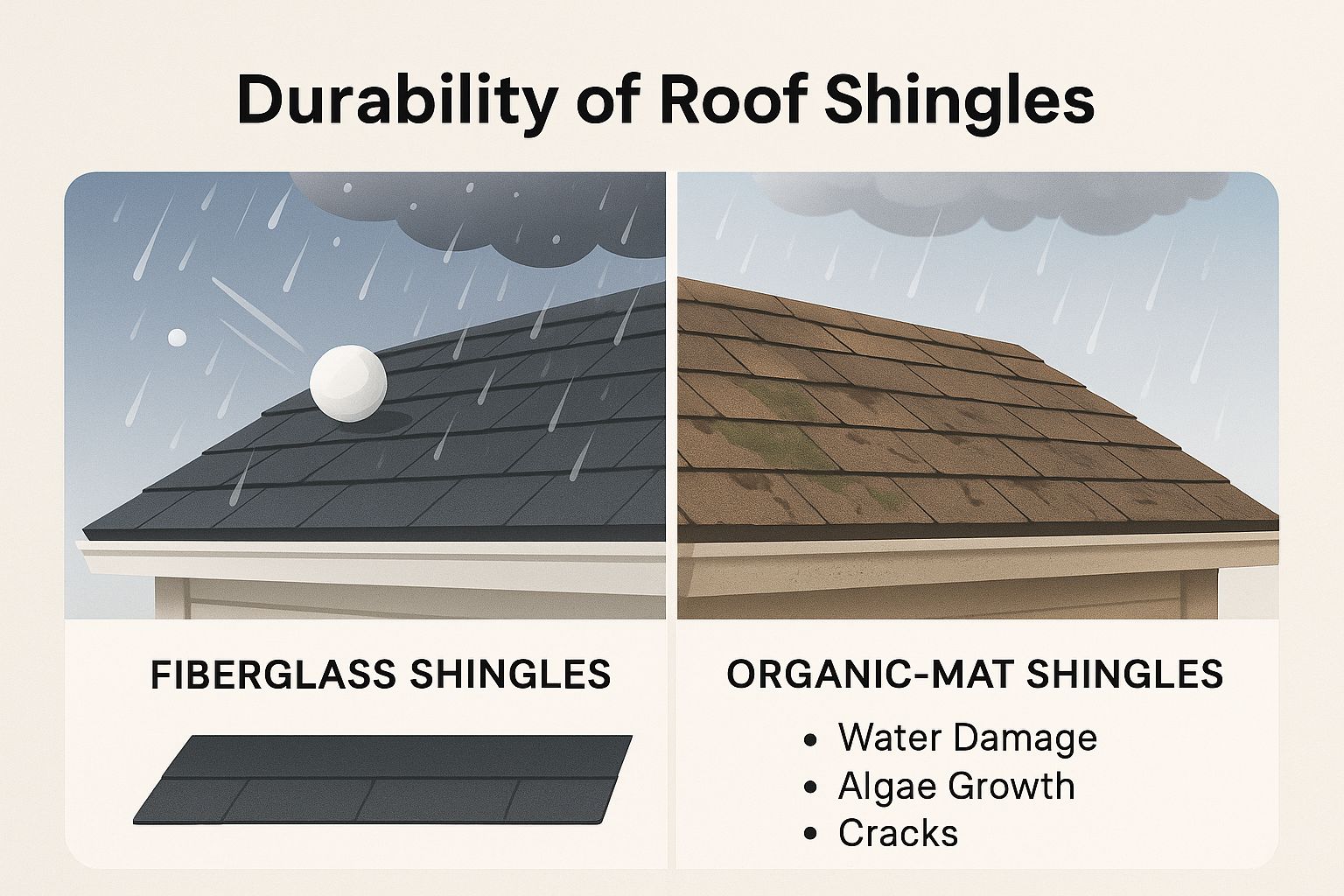
You can see how the modern fiberglass shingle is built to resist severe weather, while the organic-mat shingle just can't handle the moisture-related decay.
Organic Mat Shingles Under Pressure
On the flip side, organic-mat asphalt shingles have some serious vulnerabilities in extreme weather. Their core, made of paper and wood pulp, is naturally absorbent. Sure, it’s saturated with asphalt for waterproofing, but any breach in that protective layer—like a crack from a hailstorm or damage during installation—exposes the mat to moisture.
Once water gets into that organic core, it's game over. The shingle starts decaying from the inside out, becoming saturated and leading to rot, blistering, and a total loss of structural integrity. A roof in this state is wide open to more damage from wind and rain.
The core weakness of an organic-mat shingle is its susceptibility to moisture. Once the asphalt coating is compromised, the shingle's paper-based core can absorb water, leading to rapid deterioration and failure.
What's more, the heavy asphalt content that gives organic shingles their thickness also makes them brittle in the cold. During freeze-thaw cycles, any trapped moisture will expand and contract, causing the shingles to crack and split. This makes them a really poor choice for climates with harsh winters. You can see what this kind of damage looks like over time by reviewing detailed images of roof damage to understand how different materials hold up.
Side-by-Side Weather Resistance
Let's break it down head-to-head to paint a clearer picture of how each shingle type performs against specific environmental challenges. This really highlights the practical differences you'll see on your own roof.
Looking at these factors side-by-side reveals a pretty significant performance gap between the two technologies.
Weather Performance Fiberglass vs Organic Mat Shingles
| Performance Metric | Fiberglass Shingles | Organic-Mat Asphalt Shingles |
|---|---|---|
| Wind Uplift | Excellent resistance, with many options rated for winds up to 130 mph. Their lighter weight and strong sealant strips keep them secure. | Lower resistance. Their heavier weight can be a liability, and they are more prone to tearing in high winds, especially as they age. |
| Hail Impact | Good resistance. The flexible fiberglass mat helps absorb impact without cracking. Higher-end impact-resistant (IR) options are available. | Poor resistance. The brittle nature of older organic shingles makes them susceptible to cracking and granule loss from hail strikes. |
| Freeze-Thaw Cycles | Excellent performance. The inorganic mat is unaffected by freezing temperatures and moisture, preventing cracking and degradation. | Vulnerable. Trapped moisture in the organic core can freeze, expand, and cause the shingle to split and deteriorate over winter. |
| Algae & Rot | Highly resistant. The inorganic core does not support algae growth or rot, ensuring long-term durability in damp environments. | Prone to both. The cellulose core is an ideal food source for algae and is susceptible to rot if moisture penetrates the surface. |
When it comes down to it, homeowners looking for reliable, long-term protection against a whole range of weather conditions will find that fiberglass shingles offer a clear and decisive advantage. Their modern material science simply provides a stronger, safer, and more resilient barrier for your home.
A Financial Breakdown: Cost vs. Long-Term Value
When you’re weighing fiberglass against asphalt shingles, the initial price tag is just the first chapter of a much longer story. A real financial analysis goes way beyond the cost per square foot. You have to look at the total cost of ownership over the entire life of the roof to see the genuine value you're getting for your investment.
The upfront material cost is what most homeowners focus on first. Standard fiberglass-based architectural shingles usually run between $5 to $6 per square foot, installed. If you could even find them today, older organic-mat shingles would probably be in a similar or slightly lower price range, but their scarcity makes a direct price match almost impossible.
But that initial material cost is only one piece of the puzzle. You also have to factor in installation labor, future maintenance needs, and the eventual replacement. That's where the true numbers start to take shape.
Calculating the Total Cost of Ownership
To really get the full financial picture, you need to think about how long each product will actually last on your house. Modern fiberglass shingles are engineered for the long haul, typically giving you a solid 20 to 30 years of service, and some of the premium architectural styles can last even longer. Organic-mat shingles, on the other hand, have a shorter life expectancy, generally around 15 to 25 years, because they’re so much more vulnerable to moisture and environmental stress.
This difference in longevity is a huge deal. A roof that lasts 30 years is far more cost-effective than one you have to replace after only 20, even if the initial installation was a bit more. You're essentially pushing a massive capital expense a full decade further down the road.
Let’s break down what goes into the total lifecycle cost:
- Initial Installation: This covers both materials and labor. While the upfront costs might look similar, the superior durability of fiberglass shingles starts delivering more value from day one.
- Maintenance and Repairs: Fiberglass shingles are pretty low-maintenance. Their built-in resistance to algae, rot, and cracking means you'll be making fewer calls for minor repairs over the years. Organic shingles are known for developing issues that demand more frequent—and costly—attention.
- Replacement Cycle: This is the big one. A full roof replacement is the most significant long-term expense. Because a fiberglass roof lasts longer, it pushes that major cost further into the future, saving you a lot of money over time.
Uncovering Hidden Financial Benefits
Beyond the straightforward costs of installation and upkeep, there are several other financial factors that really tip the scales in favor of fiberglass shingles. These "hidden" benefits can make a significant difference to your bottom line.
One of the biggest is the warranty. Manufacturers offer much stronger and longer-lasting warranties on fiberglass shingles because they know the material is built to last. These warranties protect your investment from premature failure, a level of security you'd be hard-pressed to find with old-school organic products.
The superior Class A fire rating of fiberglass shingles isn't just a safety feature; it's a financial asset. Many insurance companies offer discounts on homeowner's insurance premiums for roofs with the highest level of fire resistance, translating to direct savings every year.
On top of that, the overall return on investment (ROI) is much higher with a modern fiberglass roof. Its durability, sharp looks, and safety features are all big selling points for potential home buyers, which can actually increase your home’s resale value. An old, aging organic-mat roof is often seen as a liability that can drag down a home's market price.
When you add it all up—lower insurance premiums, stronger warranties, and a longer replacement cycle—the lifecycle value of fiberglass shingles becomes crystal clear. For nearly every homeowner, they represent a smarter, more secure financial decision.
Choosing a Style for Your Home's Curb Appeal
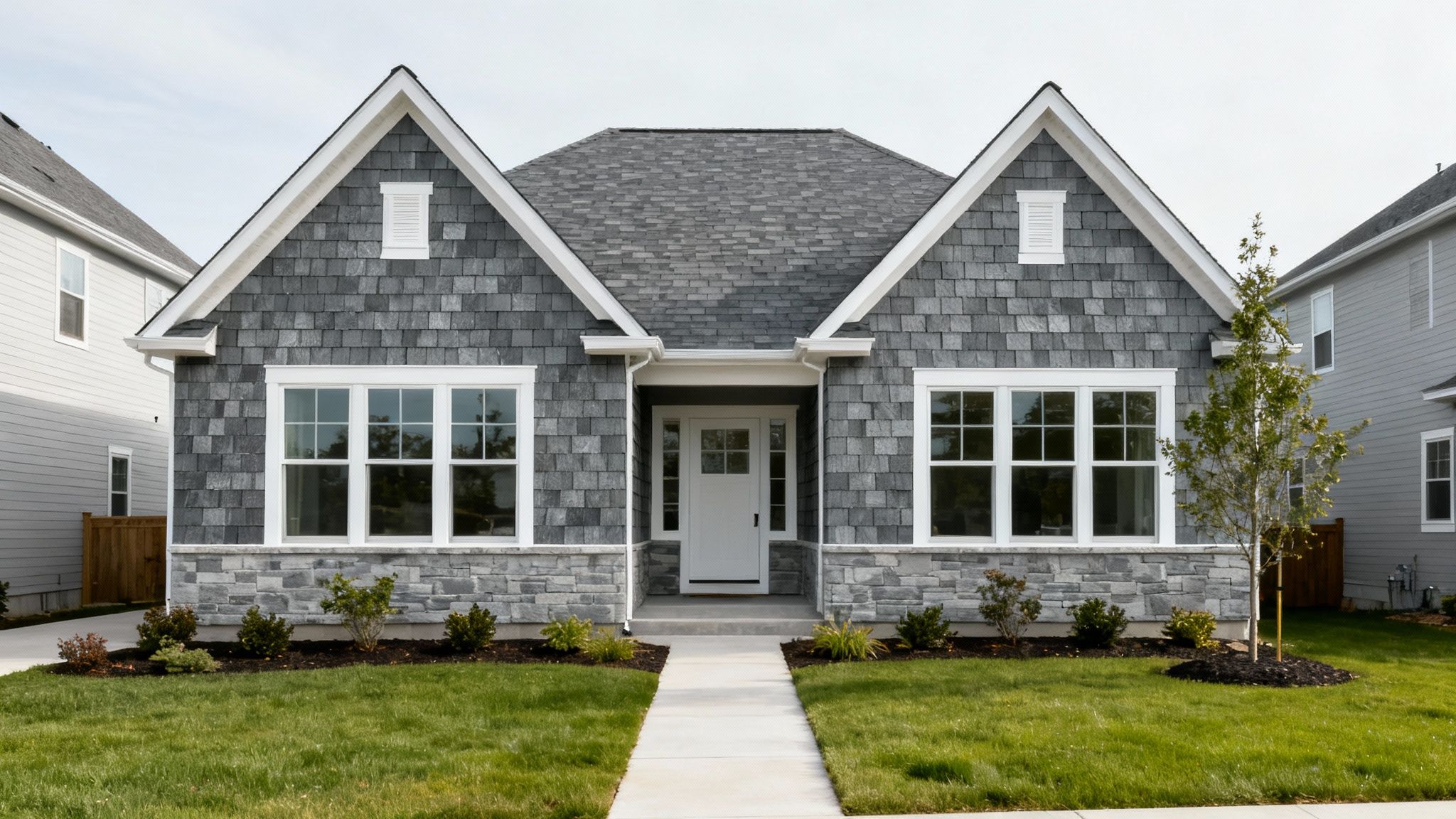
Your roof is one of the biggest visual statements your home makes. It's not just a protective layer; it's a massive part of its curb appeal. So when you're looking at fiberglass shingles vs. asphalt shingles, the conversation quickly moves beyond just performance and into pure aesthetics.
Modern fiberglass-based asphalt shingles have completely changed the game, offering an incredible variety of styles, colors, and textures. No matter your home's architectural design—from sleek and modern to a traditional Craftsman—there’s a shingle profile that will look like it was made just for it.
The Rise of Architectural Shingles
By far the most popular choice today is the architectural shingle, also known as a dimensional shingle. These aren't your basic, flat shingles. They’re built with multiple laminated layers of fiberglass mat and asphalt, which creates a rich, textured look that adds incredible depth and character to a roof.
This layered construction is what allows them to convincingly mimic the appearance of high-end materials like natural slate or classic wood shake. It's a key reason they dominate the market, with architectural shingles—almost all of which are fiberglass-based—holding a 44.2% share of the global asphalt shingle market. Homeowners love that they can get a premium look without the staggering cost and intense maintenance of the real thing.
The beauty of architectural fiberglass shingles is their ability to deliver a premium aesthetic at an accessible price point. You get the rich, textured look of slate or cedar without the associated maintenance headaches and structural demands.
Choosing the right color and style is everything. Imagine a dark, slate-style architectural shingle creating a bold contrast on a home with light-colored siding. Or picture a warm, earth-toned shingle that looks like wood shake, perfectly complementing a rustic ranch-style house.
Of course, the roof is just one piece of the puzzle. Tying it all together with the right siding and trim is crucial; you can find great ideas by exploring different exterior paint color combinations for boosting curb appeal.
The Limited Appeal of Organic-Mat Shingles
Organic-mat asphalt shingles, on the other hand, are a world away in terms of style. Aesthetically, they’re much more limited. They almost always come in the old-school "3-tab" style, which is a flat, uniform pattern that just doesn't have the visual pop of its modern counterparts.
Most people would describe their look as basic or utilitarian. While that simplicity might have a place in certain historical restoration projects where you need a period-accurate look, it doesn't do much for the average homeowner trying to boost their property’s style. Seeing them side-by-side really highlights the difference; you can see examples in our gallery of roofing projects.
A Clear Winner for Modern Aesthetics
When it comes to visual impact, the choice is pretty clear. Fiberglass-based shingles give you the design freedom you need to really make your home's exterior shine.
- Architectural Diversity: They come in styles that complement everything from historic colonials to minimalist modern homes.
- Color Selection: The color palette is massive, ranging from subtle, earthy neutrals to deep, bold hues.
- Enhanced Dimension: That multi-layered construction isn't just for show—it creates texture and shadow lines that turn your roof into a genuine architectural feature.
For any homeowner who sees their roof as a critical design element, fiberglass shingles are the obvious choice. They open up endless possibilities for creating a stunning, personalized look.
So, Which Shingle Is Right for Your Home?
Choosing between fiberglass and organic-mat asphalt shingles really comes down to a straightforward look at your priorities. Once you've compared the materials, performance, cost, and style, the decision gets a whole lot simpler. The right choice hinges on your specific climate, your budget, and how much you value long-term safety and durability.
For the vast majority of homeowners, this debate is already settled. Modern fiberglass shingles simply deliver better performance across nearly every metric that matters. Their design was engineered to fix the core weaknesses of older organic-mat technology, offering a far more resilient and reliable roofing solution for today’s homes.
For the Modern Homeowner Prioritizing Safety and Value
If you live anywhere that gets heavy rain, high winds, or big temperature swings, fiberglass shingles are the undisputed champion. Their inorganic core makes them totally immune to the rot and moisture damage that can plague organic shingles, especially in humid climates like we see in South Florida.
Think about these common situations:
- Storm-Prone Regions: With wind ratings often hitting 130 mph and better resistance to hail, fiberglass shingles provide critical protection when severe weather rolls through.
- Fire-Risk Areas: A Class A fire rating is non-negotiable for safety. This feature not only protects your home but can also lead to lower homeowner's insurance premiums.
- Long-Term Investment: If you plan on staying in your home for years, the longer lifespan and lower maintenance needs of fiberglass shingles offer a much better return on your investment.
The evidence is clear: for performance, safety, and lifecycle value, fiberglass shingles are the superior option for almost every home out there. They are the modern standard for a reason.
A Niche Case for Organic-Mat Shingles
While they are largely a thing of the past, there is one very specific scenario where organic-mat shingles might be considered, but it comes with major warnings. For a historical restoration project in a consistently cold and dry climate, their traditional thickness and look could be valued for period accuracy.
Even in this limited case, the homeowner has to accept some serious trade-offs: a shorter lifespan, a much higher vulnerability to moisture if they get damaged, and a significantly lower fire safety rating. This makes them a tough choice to recommend, even for aesthetics. For all other practical purposes, the advancements in fiberglass-based asphalt shingles make them the clear and responsible choice for protecting your home.
Frequently Asked Questions About Roofing Shingles
Even after weighing the pros and cons, you might have a few lingering questions. That’s completely normal. Sorting out these final details is what helps you move forward with total confidence in your roofing choice.
Let's clear up some of the most common questions homeowners have when it comes to fiberglass and the older organic-mat asphalt shingles.
How Can I Tell Which Type of Shingle Is on My Roof?
Figuring out what’s already on your roof is usually easier than you’d think. The quickest method is to check for any spare shingles left behind from the last installation—they’re often tucked away in a garage or shed.
Flip one over and look at the back. If you see a woven, slightly shiny mat, you’ve got fiberglass. If it looks more like thick, dark felt paper, it’s an organic mat.
No spares? No problem. A close look at your roof can give you some solid clues.
- Look for Blistering: Small, popped bubbles across the shingle’s surface are a tell-tale sign of moisture trapped inside an old organic mat.
- Check for Curling: Organic shingles have a bad habit of curling and warping dramatically as they get older and soak up moisture.
- Assess Thickness: Organic-mat shingles are noticeably thicker and feel more flexible, whereas their fiberglass counterparts are more rigid to the touch.
Honestly, the most reliable way to know for sure is to have a professional roofer take a look. During an inspection, they can instantly identify the material and assess its condition, giving you a clear picture of your roof's health.
Are There Major Differences in Installation?
While the basic steps look similar, the on-the-job reality is quite different, and it absolutely affects labor and cost. Fiberglass shingles are significantly lighter and more rigid, which makes them much easier for roofing crews to carry, cut, and install. This efficiency can often translate to faster project times and lower labor costs for you.
Organic-mat shingles, on the other hand, are heavy and pliable. That extra weight puts more strain on both the installers and the roof's structure. In hot weather, they can become overly soft and difficult to work with. It's no surprise that fiberglass shingles are the preferred choice for nearly all professional roofing contractors today; the installation is just more predictable and efficient.
What Is the Environmental Impact of Each Shingle Type?
When you look at sustainability, fiberglass shingles have a clear edge. They are frequently made with recycled materials and, at the end of their long life, they are 100% recyclable. This keeps a massive amount of roofing waste out of our landfills.
In contrast, organic-mat shingles are manufactured using crude oil and other chemicals. They are almost never recycled and can take hundreds of years to break down. Because they don't last as long, they also contribute to landfills more frequently, making fiberglass the more environmentally responsible choice for your home.
Ready to protect your home with a modern, durable, and stylish roofing system? The experts at Paletz Roofing and Inspections have over 30 years of experience installing high-quality fiberglass asphalt shingles across South Florida. Contact us today for a free, no-obligation quote and discover the perfect roofing solution for your home at https://paletzroofing.com.