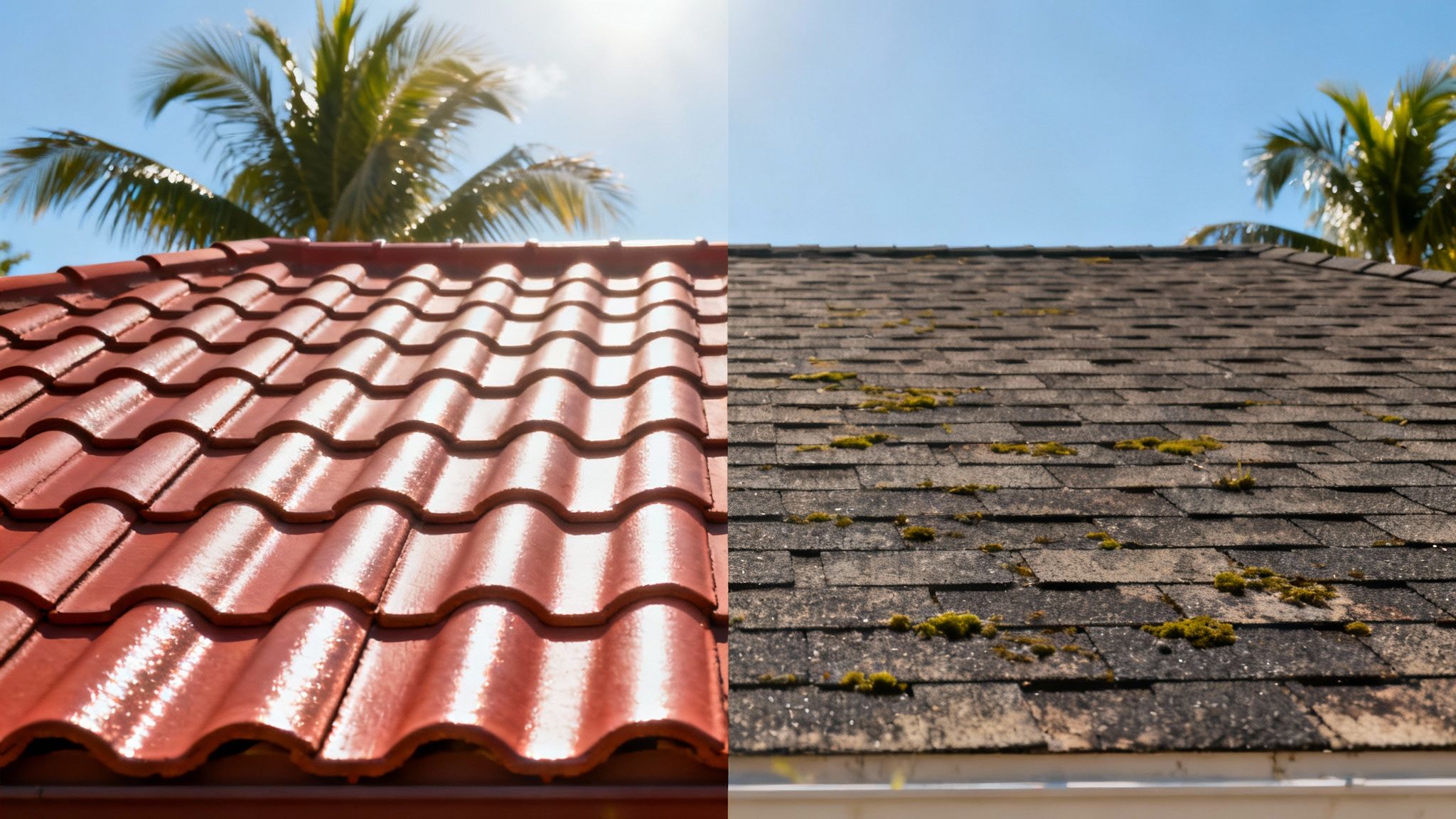
Here in Florida, the question "how long will my roof last?" has a much different answer than it does anywhere else in the country. A roof's lifespan can swing wildly depending on what it's made of, from 15-20 years for standard asphalt shingles to well over 50 years for tougher materials like tile or metal. Our state's trifecta of intense sun, torrential rains, and hurricane-force winds puts a unique kind of stress on any roofing system, which makes your choice of material the single biggest factor in its survival.
Understanding Florida Roof Lifespan by Material
Before we get into all the ways Florida's weather wages war on your roof, we need to set a baseline. Think of it like buying tires for your car. Some are made for simple, around-town driving, while others are engineered for high-performance racing in extreme conditions. Your roof is no different—each material brings a different level of toughness to the fight against our demanding climate.
The material your roof is made of is the number one variable that dictates its service life. A standard asphalt shingle roof, while easy on the wallet upfront, simply isn't built to go the distance like a premium metal or tile system designed to stare down a hurricane. Getting a handle on these differences is the first step to knowing how long your investment will last and what to expect down the road for maintenance and replacement.
A Quick Comparison of Popular Options
To give you a clearer picture of how these materials really perform under pressure, it helps to see their lifespans side-by-side. The chart below lays out the typical durability you can expect from the most common residential roofing types here in the Sunshine State.
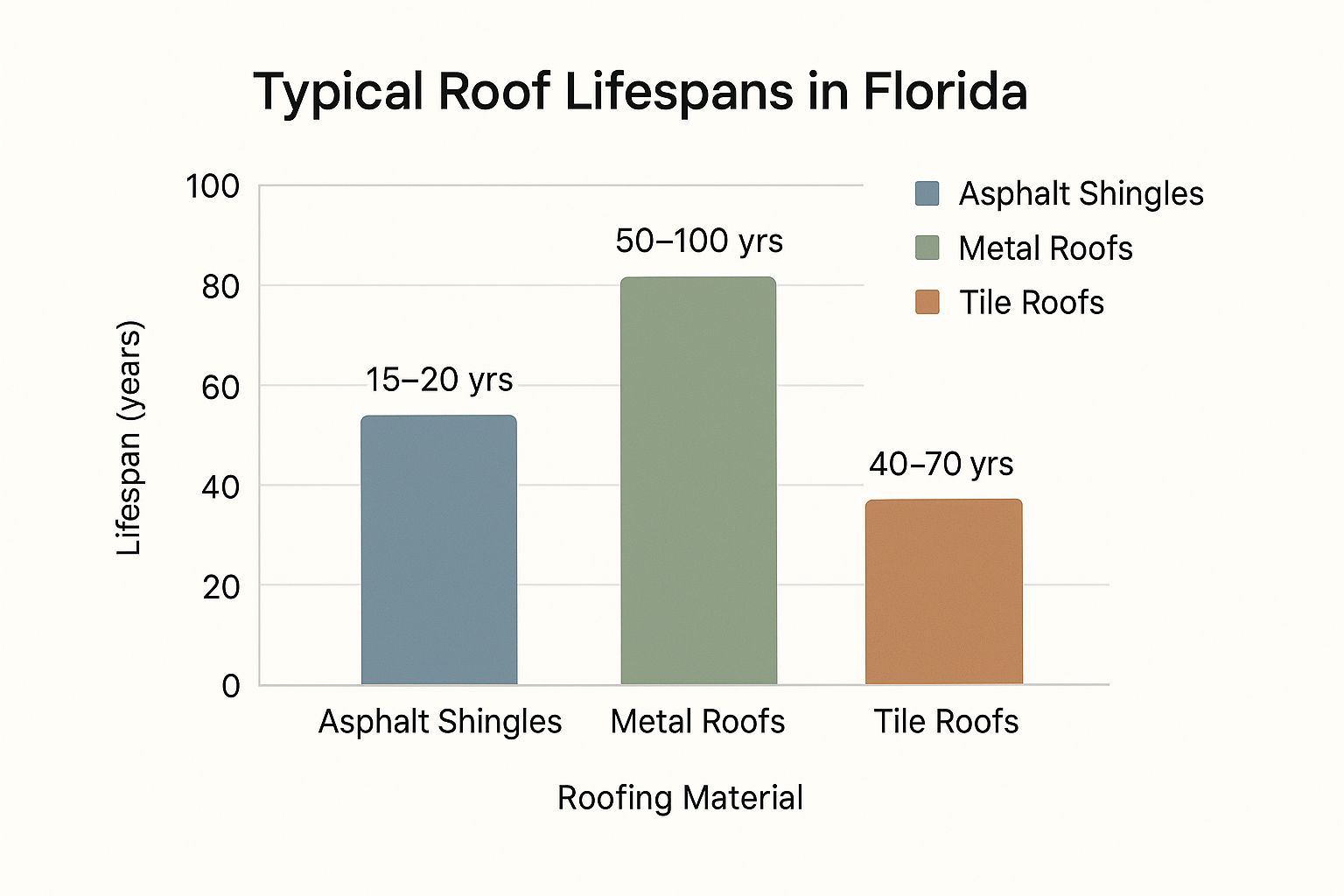
As you can see, asphalt shingles are a popular starting point, but upgrading to metal or tile can easily double or even triple your roof's lifespan.
To make things even easier, here’s a quick-glance table comparing these popular choices head-to-head.
Average Roof Lifespan in Florida by Material
| Roofing Material | Average Lifespan in Florida (Years) | Key Durability Factor |
|---|---|---|
| Asphalt Shingles | 15-20 | Most vulnerable to UV damage and high winds |
| Metal Roofs | 40-70 | Excellent resistance to wind uplift and solar heat |
| Tile (Clay/Concrete) | 50-100+ | Superior resistance to heat, wind, and salt air |
This breakdown really highlights the trade-offs. While shingles are affordable, materials like tile and metal are true long-term investments built specifically for the kind of weather we see every year.
Here’s a little more on what that means for you:
- Asphalt Shingles: They're the most common and affordable choice, but they’ll also need replacing the soonest. The intense UV radiation here in Florida is especially hard on them, often shortening their lifespan compared to what homeowners experience in milder climates.
- Metal Roofs: This is a major upgrade in toughness and longevity. Metal roofs are fantastic at handling high winds and reflecting the sun's brutal heat, making them a smart, long-term play for any Florida homeowner.
- Tile Roofs (Clay or Concrete): These are the undisputed champions of durability. When installed and maintained correctly, a tile roof can literally last the lifetime of the house itself, offering top-tier protection from every weather challenge Florida can throw at it.
Comparing Florida's Most Common Roofing Materials
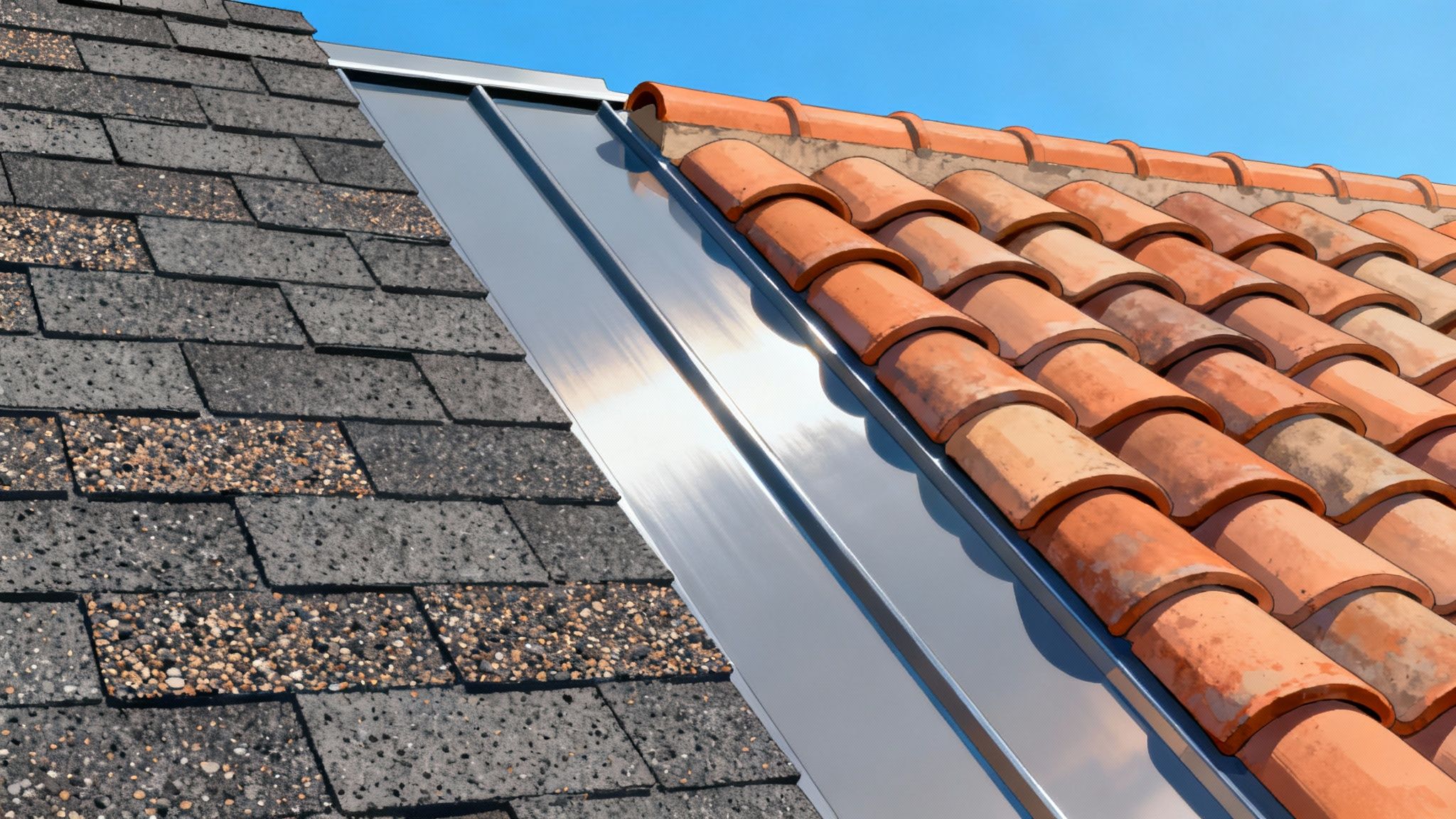
Beyond the general numbers, what truly makes one roof outlast another here in Florida? It all comes down to how each material handles our state's unique and demanding climate. Choosing a roof isn't just about looks or budget; it's about picking the right defender for a relentless battle against sun, wind, and water.
Think of it like choosing a coat. A light windbreaker is fine for a breezy day, but you wouldn't wear it in a blizzard. In the same way, a roofing material that performs well in a mild northern climate might fail prematurely under the intense, year-round punishment of a South Florida summer. Getting to the "why" behind each material's lifespan is the key to making a smart investment.
Asphalt Shingles: The Popular And Economical Choice
Asphalt shingles are the most common sight on residential roofs across the country, and for a simple reason: affordability. In Florida, however, that economic advantage comes with a big trade-off in longevity. The intense, year-round UV radiation is like a constant low-grade oven, slowly baking the essential oils right out of the shingles. This process makes them brittle and prone to cracking.
You'll generally run into two main types:
- 3-Tab Shingles: These are your basic, entry-level option. Their flat, single-layer design makes them much more likely to be lifted and torn off by the high winds we see during tropical storms and hurricanes.
- Architectural Shingles: A definite step up. These are thicker, heavier, and have a laminated, multi-dimensional look. Their extra weight and sturdier construction give them better wind resistance and a longer life than their 3-tab cousins.
Even with the higher-quality architectural shingles, you're looking at a shorter service life in Florida. While some can last up to 30 years with perfect maintenance, the constant barrage from our weather takes its toll.
Tile Roofs: The Durable And Classic Option
Tile roofs, whether made of classic clay or modern concrete, are an iconic part of Florida's architectural landscape for a good reason. They are exceptionally well-suited to our climate, boasting a lifespan that can easily reach 50 years or more. Their main advantage is their built-in resistance to the very elements that wear down other materials.
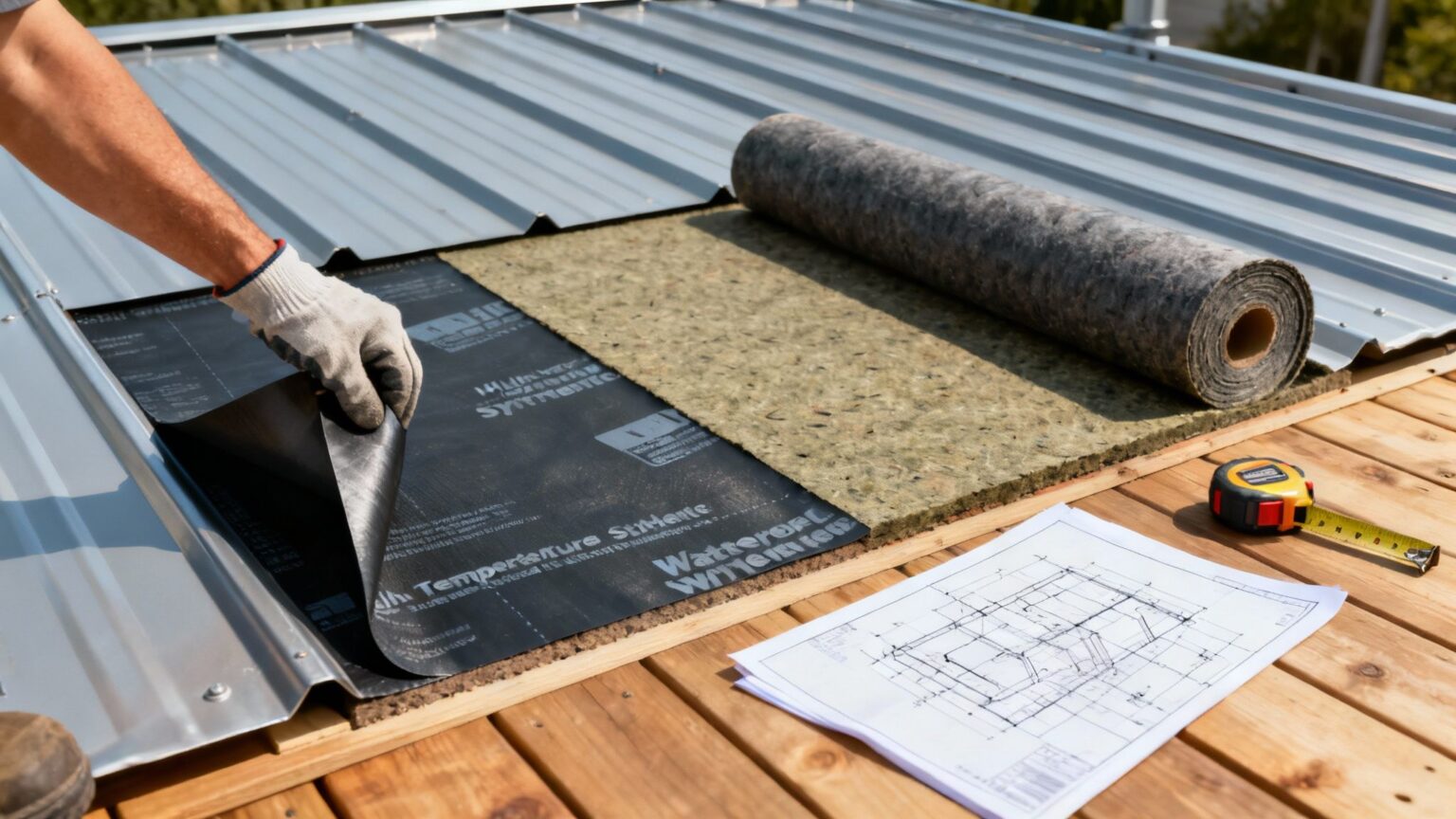
A Critical Weak Point: With tile roofs, the tiles themselves often outlast the house. The real vulnerability lies in the underlayment—the waterproof barrier underneath. Once that underlayment fails, the whole system is compromised, leading to leaks even if the tiles look perfect on the surface.
Clay tiles are fantastic at reflecting solar heat and are completely immune to rot and insect damage. Concrete tiles offer similar toughness and can be shaped to look like other materials, like wood shake. Both are heavy, though, and require a robust roof structure to support their weight. They are a significant upfront investment, but their incredible longevity often makes them the most cost-effective choice in the long run.
Metal Roofs: The Resilient Long-Term Investment
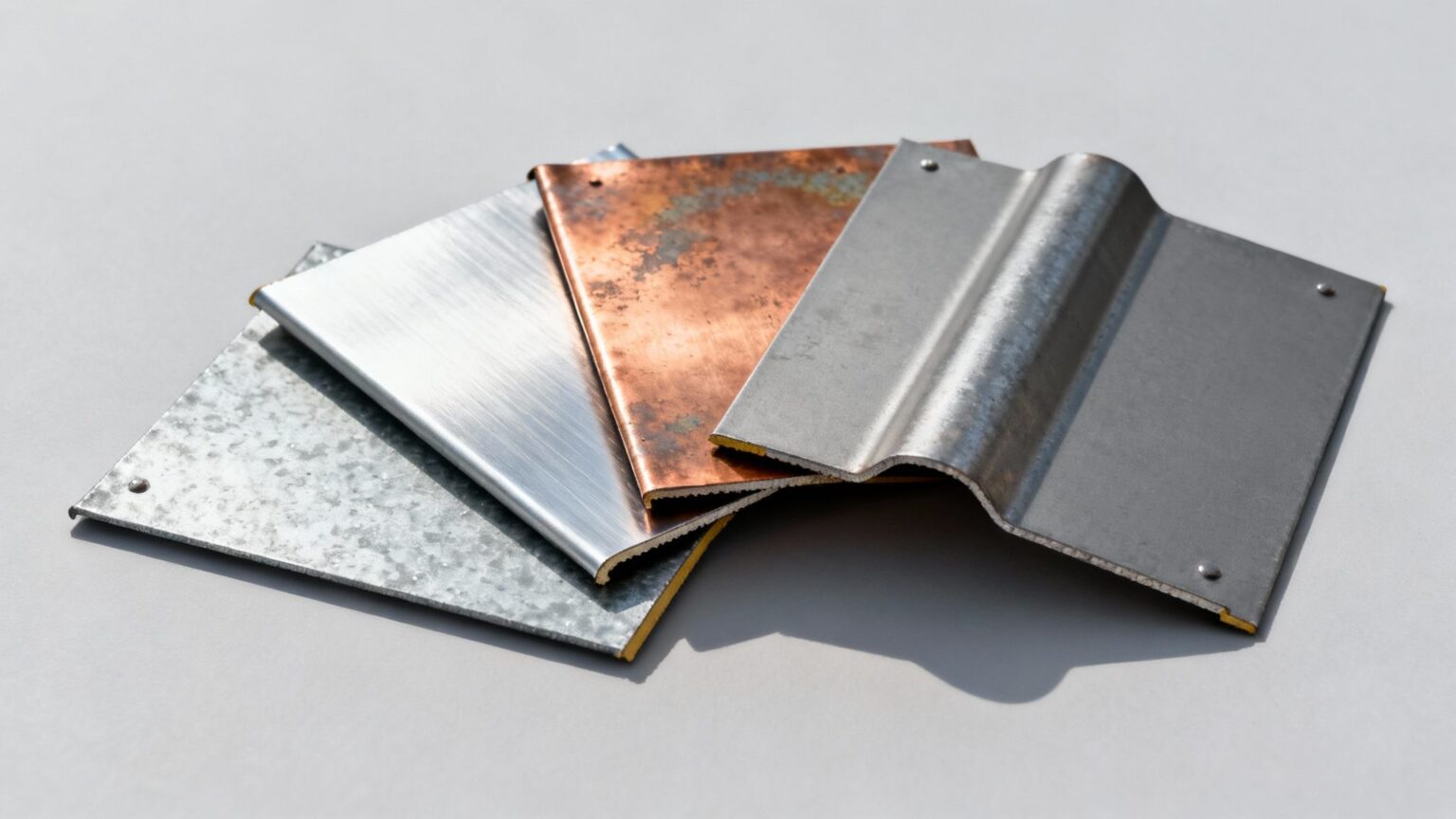
Once reserved for commercial buildings, metal roofing has exploded in popularity for Florida homes. While the initial cost is higher than shingles, its performance and durability make it a powerful long-term investment. Modern metal roofs, typically made of steel or aluminum, are engineered as a complete defensive system.
They are supremely resistant to hurricane-force winds, often carrying the highest wind ratings of any residential roofing material. Better yet, their reflective surfaces bounce a huge amount of solar radiation away from your home, which can help lower your cooling costs—a massive benefit in our sunny climate. They are also impervious to fire, rot, and insects. A modern installation, like this high-quality metal roof, shows just how clean and durable they can be.
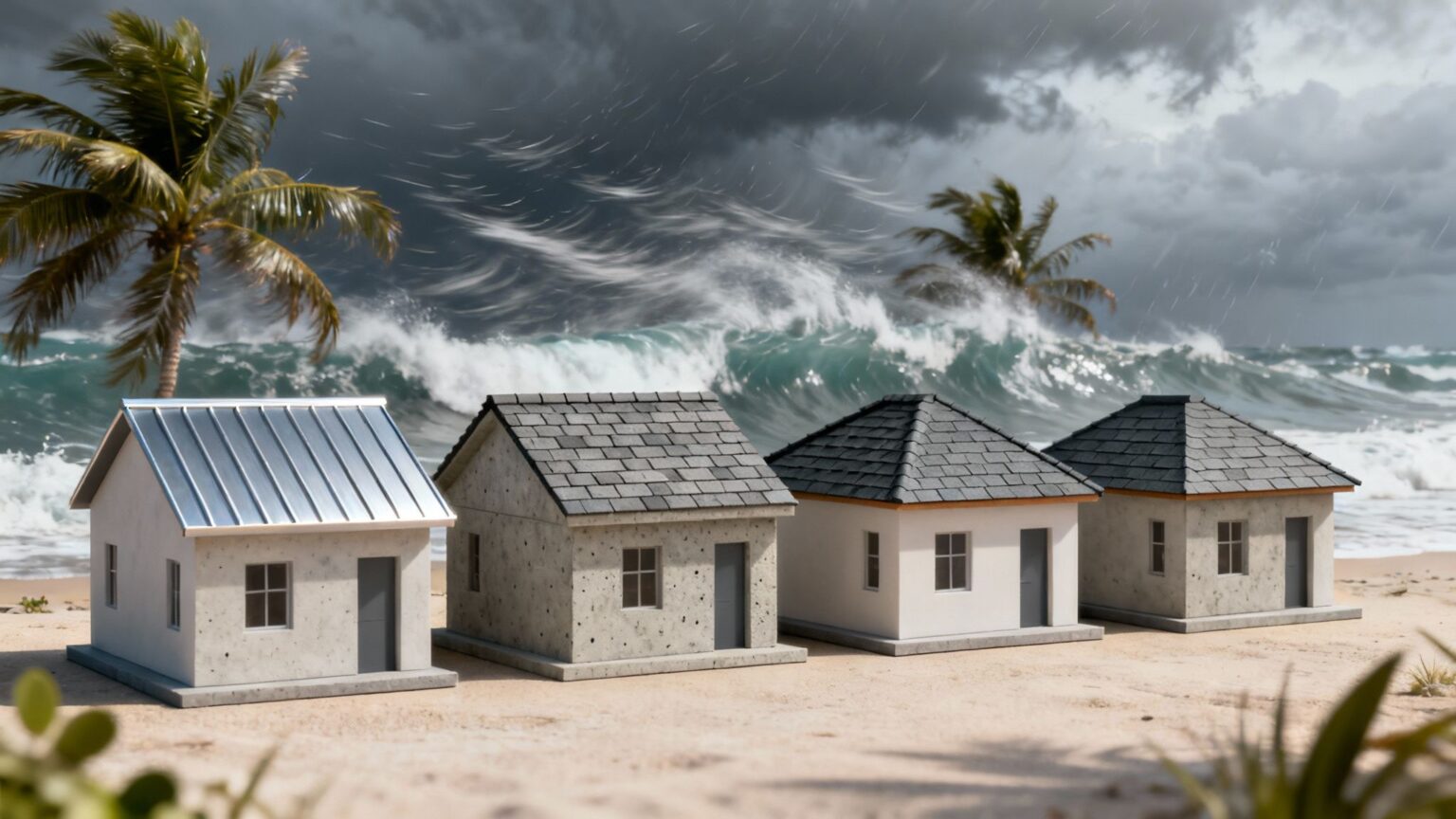
To help you see how these options stack up side-by-side, we've put together a quick comparison table. It breaks down the key differences in how each material handles the specific challenges of a Florida home.
Comparing Florida Roofing Options
| Material Type | Estimated Lifespan (Years) | Pros | Cons for Florida Climate |
|---|---|---|---|
| Asphalt Shingles | 15 – 30 | Most affordable upfront, wide variety of colors. | Prone to UV degradation, vulnerable to high winds, susceptible to algae growth. |
| Clay/Concrete Tile | 50+ | Excellent heat reflection, resists rot and insects, high wind resistance. | Heavy weight may require structural reinforcement, higher initial cost, underlayment is a key failure point. |
| Metal Roofing | 40 – 70+ | Highest wind resistance, energy-efficient (reflects heat), fire and rot proof. | Higher upfront investment, can be dented by severe hail, requires specialized installation. |
Ultimately, the best choice depends on balancing your budget with your long-term goals. While asphalt shingles offer immediate savings, both tile and metal provide superior resilience and a longer service life that can make them a smarter financial decision over the decades you'll spend in your home.
Why Florida's Climate Is Your Roof's Toughest Opponent
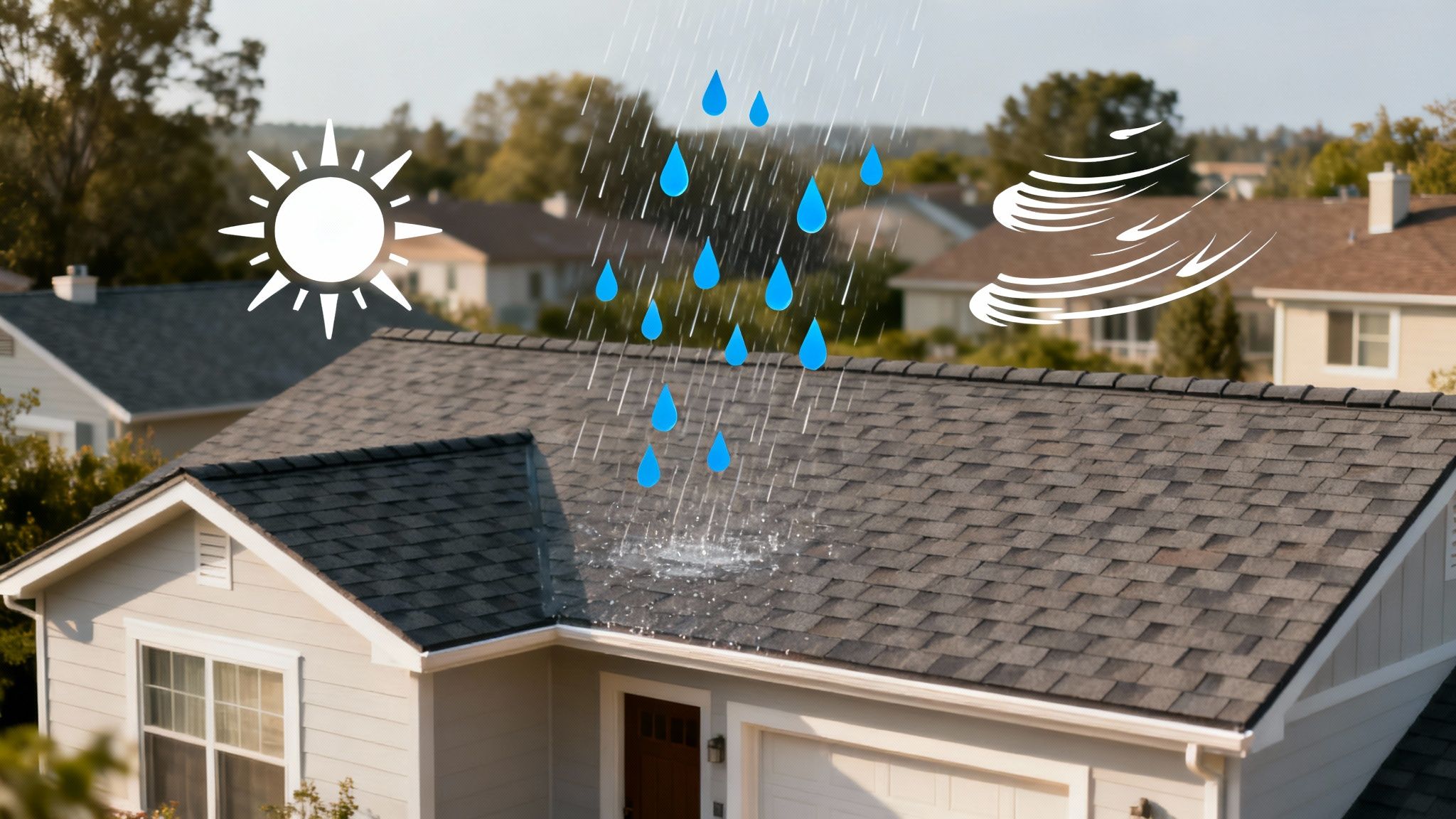
Living in Florida means your roof is in a constant fight for its life. Unlike homes in milder regions that get a seasonal break, a Florida roof faces a year-round assault from a triple threat: intense sun, oppressive humidity, and severe storms. To really understand how long does a roof last in Florida, you first have to understand what it's up against every single day.
Think of your roof as a shield. In other places, that shield might only have to defend against some rain or snow now and then. Here, it’s fighting a multi-front war. This relentless pressure is exactly why even the best materials have a shorter lifespan here than they would somewhere else.
The Slow Bake of Relentless UV Radiation
The Sunshine State’s most famous feature is also one of your roof’s greatest enemies. The sun’s ultraviolet (UV) rays beat down without mercy, acting like a slow oven that gradually cooks the life out of your roofing materials. Asphalt shingles are particularly vulnerable to this.
The intense heat causes the essential oils within the asphalt to evaporate over time. This process leaves the shingles dry, brittle, and far more likely to crack. As this UV degradation continues, the shingles lose their flexibility, making them easy targets for high winds to lift or tear clean off. It’s a quiet, slow-motion attack that compromises your roof’s integrity from the top down.
The Corrosive Power of Humidity and Rain
Florida’s tropical humidity isn’t just uncomfortable—it’s destructive. The constant moisture hanging in the air creates the perfect breeding ground for organisms that literally eat away at your roof.
- Algae: Those ugly black streaks you see on so many roofs? That’s usually Gloeocapsa magma, a type of algae that feeds on the limestone filler in asphalt shingles.
- Mold and Mildew: Moisture gets trapped under shingles or in areas without good ventilation, encouraging mold and mildew growth. This can lead to rot and decay of the underlying roof deck itself.
- Torrential Downpours: Our frequent, heavy rainstorms are experts at finding the weak spots. They test every single seal and piece of flashing, looking for the smallest vulnerability to start a leak.
This tag team of moisture and biological growth doesn't just look bad; it actively shortens your roof's lifespan by breaking down its fundamental components.
When it comes to resilience, tile roofs offer both durability and aesthetic appeal, with an average lifespan ranging from 25 to 50 years in Florida. Their durability, however, is highly dependent on proper maintenance, including clearing debris and preserving water flow to prevent damage to the underlayment. Tile roofs have become popular not only for their style but also for their ability to withstand these extreme weather conditions. You can learn more details about tile roof longevity on Brava Roof Tile.
The Acute Threat of Hurricanes and Hail
Finally, we have the most dramatic threat of all: severe weather. Florida is smack in the middle of hurricane alley, and these powerful storms can inflict catastrophic damage in just a few hours. Hurricane-force winds can rip shingles off, peel back metal panels, and turn loose debris into projectiles aimed right at your roof.
Even a storm that doesn't seem to cause obvious destruction can create thousands of tiny, invisible weak points. Hail can create small dents or cracks that break the protective outer layer of your roofing material. These seemingly minor impacts become entry points for water, setting the stage for major leaks and structural damage long after the storm has passed.
Hidden Factors That Can Shorten Your Roof's Life
Choosing the right roofing material is a huge first step, but it’s far from a guarantee of a long and trouble-free life for your roof. A few hidden factors can quietly slash its lifespan, turning what should be a 30-year investment into a 15-year headache. These issues often fly under the radar until significant damage is already done.
Think of your roof as a complete system. Every single component has to work in harmony with the others. If just one part is off—like a single weak link in a chain—the integrity of the entire system is at risk.
The Critical Role of Installation Quality
The single most important day in your roof's life is the day it’s installed. It's that simple. A flawless installation by a skilled, experienced crew sets the stage for decades of solid performance. On the flip side, a poor job creates immediate vulnerabilities that will shorten your roof's life, no matter how much you spent on the materials.
Something as seemingly minor as an improperly driven nail can create a direct pathway for water. Drive a nail too deep, and you fracture the shingle’s surface. Don't drive it deep enough, and the wind will lift it right up. And don't even get us started on poorly sealed flashing around chimneys, vents, and skylights—that's one of the most common culprits behind major leaks.
A subpar installation doesn't just lead to premature failure; it can also void your manufacturer's warranty. This leaves you, the homeowner, holding the bag for the full cost of repairs and an early replacement.
Why Your Attic Needs to Breathe
What’s happening inside your attic has a direct and powerful impact on the health of the roof right above it. Proper attic ventilation is absolutely essential in the Florida climate, acting as a crucial cooling system for your entire home. It gives the intense heat and moisture that builds up a way to escape.
Without enough ventilation, your attic can turn into a pressure cooker. This trapped heat literally bakes your roofing materials from the inside out, causing shingles to break down and the underlying decking to warp. It's a silent killer that can easily shave years off your roof's life.
Beyond the slow burn of trapped heat, sudden weather events can cause immediate damage. Deepening your understanding of hail and tornado risks can help you spot subtle vulnerabilities before they become big problems.
Environmental and Structural Influences
Beyond the installation and ventilation, a few other factors tied to your property’s specific location and design come into play.
- Overhanging Trees: Large tree limbs hanging over your roof are more than just a nuisance. They constantly drop leaves and debris that trap moisture, encouraging algae and moss to grow. Worse, a heavy branch falling during a storm can cause catastrophic damage in an instant.
- Roof Slope: The pitch, or steepness, of your roof dictates how quickly it sheds water. Lower-sloped roofs drain much more slowly, giving water more time to probe for weak spots and seep underneath your roofing materials.
- Proximity to Saltwater: If you live near the coast, the salty air is a constant threat. The salt spray carried on the breeze is highly corrosive, especially to metal components like flashing, fasteners, and even certain types of metal roofing panels. This relentless exposure speeds up rust and decay.
Proactive Maintenance Your Florida Roof Needs
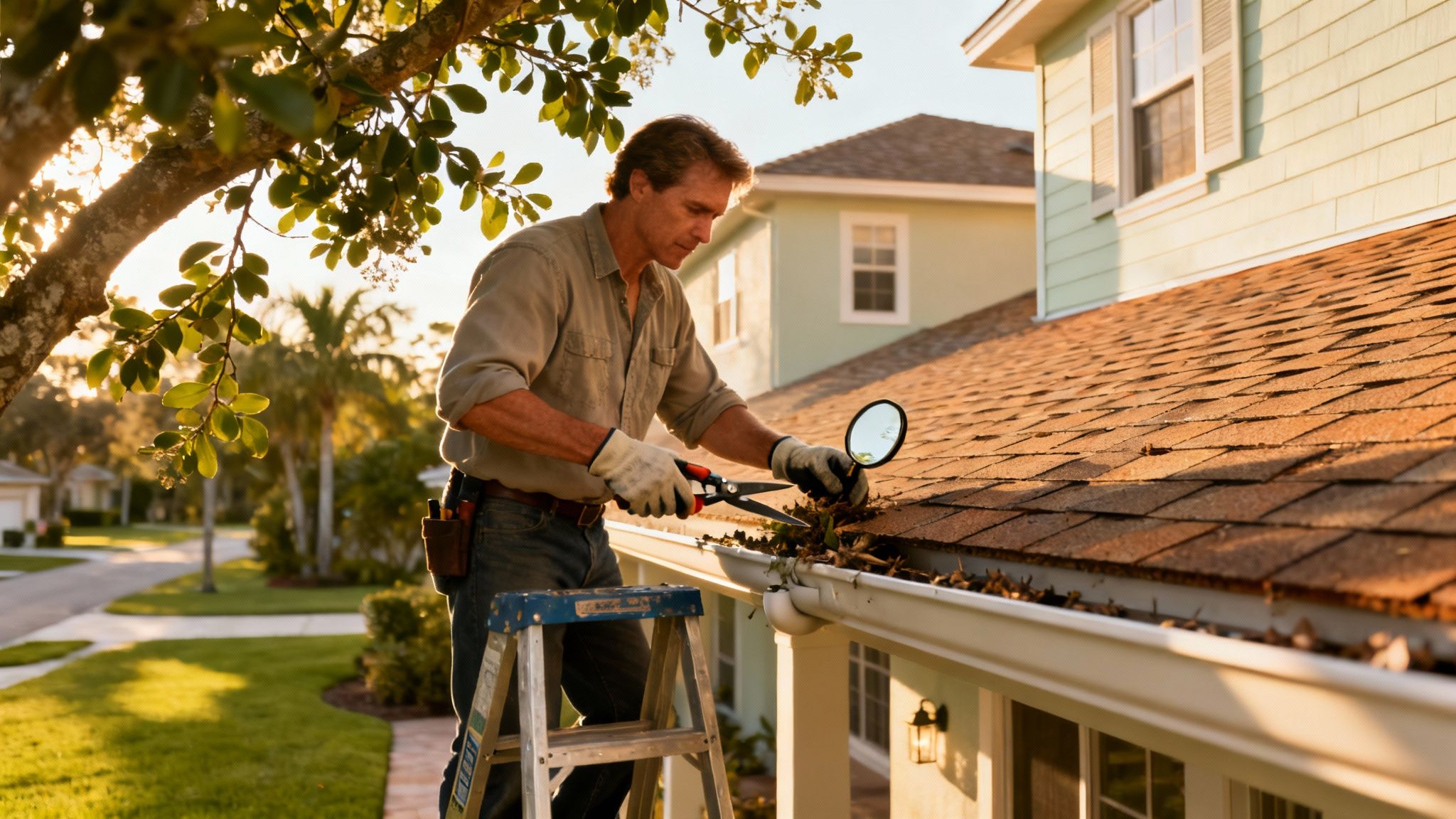
A roof’s lifespan isn’t some fixed number set in stone by its material—it’s something you can actively influence. Think of it like a car. Skipping oil changes will absolutely shorten its life, and the same principle applies directly to your roof. Smart, consistent care is your best weapon against premature failure and those dreaded emergency repair bills.
This proactive mindset is especially vital when asking how long does a roof last in Florida, where our climate works overtime to wear things down. A simple maintenance playbook can add years of healthy life to your investment, saving you thousands. The whole idea is to catch the small stuff before it snowballs into a catastrophe.
Your Essential Maintenance Checklist
The key to effective roof care is building a simple, repeatable routine. You don't need to be a roofing pro to spot developing problems, especially from the safety of the ground. When you pair your own visual checks with a few key tasks, you can make a massive difference in your roof’s durability.
Here are the non-negotiables every Florida homeowner should have on their radar:
- Keep Gutters Clear and Flowing: This is priority number one. Clogged gutters force rainwater to back up and sit right against the edge of your roof. From there, it easily seeps under your shingles and starts rotting the wood decking underneath.
- Trim Overhanging Tree Limbs: Those low-hanging branches aren’t just an eyesore; they scrape against your roof's surface, stripping away the protective granules on your shingles. They also drop leaves and debris that trap moisture. In a storm, a falling limb can cause instant, severe damage.
- Schedule Professional Cleanings: See those dark streaks on your roof? That's not just dirt. It's often Gloeocapsa magma, a type of algae that is literally eating your shingles. A professional, low-pressure cleaning removes this corrosive growth and prevents long-term decay.
A well-maintained roof is a resilient roof. Simple actions like clearing debris and ensuring proper water flow are fundamental to preventing the slow, hidden decay that compromises the entire roofing system, especially the critical underlayment.
Conduct Routine Visual Inspections
You can be your own first line of defense. At least twice a year—and always after a big storm—take a walk around your property and look up. This simple habit helps you spot potential trouble long before it becomes an emergency. It's easy to see how a professional checks for these details during a thorough roof inspection.
Keep an eye out for these warning signs from the ground:
- Curling or Buckling Shingles: This is a clear sign that the shingles are past their prime and have lost their ability to keep water out.
- Missing or Cracked Shingles: Any breach in your roof’s armor is a direct invitation for water to get in. Even one missing shingle is a problem.
- Excessive Granules in Gutters: Your shingles’ granules act like sunblock. Finding a lot of them in your downspouts means your roof is getting old and becoming far more vulnerable to UV damage.
- Dark Streaks or Moss Growth: These are the tell-tale signs of biological growth that needs to be handled before it causes permanent damage to the shingles.
Warning Signs That It’s Time for a Roof Replacement
Knowing when a simple repair just won't cut it anymore is one of the most important things a homeowner can learn. Your roof has a way of sending up distress signals when it’s nearing the end of its life, and catching these red flags early can save you a world of headaches and the high cost of an emergency replacement.
Think of this as a quick diagnostic guide. We'll walk through the clear signs that your roof is ready to retire, helping you plan and budget for a new one on your own terms—not in the middle of a crisis.
Obvious Signs You Can Spot from the Ground
You don’t need to be a roofing pro or even climb a ladder to get a pretty good idea of your roof’s health. Many of the most telling warning signs are easy to spot from the safety of your driveway.
Keep an eye out for these clear indicators:
- Widespread Cracked or Missing Shingles: Sure, one or two damaged shingles can be fixed. But when you start seeing large patches of shingles that are cracked, curled up, or gone altogether, it’s a sign the entire system is becoming brittle and failing.
- Excessive Granules in Gutters: Those little sand-like specks on your asphalt shingles are their first line of defense against brutal UV rays. If you see piles of them in your gutters, it means your shingles are essentially going bald and losing their protective layer.
- Curling Shingle Edges: Shingles that are curling up at the edges or buckling in the middle are screaming "old age." This is a classic symptom of years of heat damage. They've lost their seal and are just waiting for a strong gust of wind to tear them right off. You can see examples of what these worn-out shingles look like in various roofing project galleries.
Subtle Clues Inside Your Home
Not every roofing problem broadcasts itself from the outside. Sometimes, the most urgent warnings are the ones that pop up inside your house, signaling that water has already found a way through. These are the signs you can't afford to ignore.
A small, brownish stain on your ceiling is more than just a cosmetic flaw. It’s the final symptom of a leak that has likely been working its way through your insulation and roof decking for some time, potentially causing unseen rot and mold growth.
Check for these subtle but serious red flags:
- New Water Stains on Ceilings or Walls: Any discoloration, especially after a good rain, is a smoking gun. It’s a direct sign of a leak. Make sure to check the ceilings on your top floor and even around light fixtures.
- A Musty Odor in the Attic: That damp, musty smell in your attic is a dead giveaway for poor ventilation and hidden moisture. This is the perfect breeding ground for mold and wood rot that can compromise your roof's entire structure from the inside out.
- A Sudden Spike in Cooling Costs: If your energy bills are climbing for no apparent reason, your roof could be the culprit. An aging, poorly insulated roof lets heat pour into your attic, forcing your AC unit to work overtime just to keep your home comfortable.
Frequently Asked Questions About Florida Roofs
When you own a home in Florida, you'll eventually have questions about your roof. It's one of the most critical parts of your house, but also one of the most mysterious. Here are some straightforward answers to the questions we hear most often from homeowners trying to get a handle on roof lifespans, insurance, and maintenance.
Does Homeowners Insurance Cover Roof Replacement for Old Age?
This is a big one, and the short answer is almost always no. Think of your homeowner's insurance policy as protection against sudden, unexpected disasters—a hurricane rips off your shingles, a tree falls on your house, or a fire breaks out. It's not designed to cover the slow, predictable process of a roof simply getting old.
Insurance companies see regular maintenance and eventual replacement as part of the homeowner's responsibility. Trying to file a claim for a worn-out roof won't work and could cause problems when you actually need to file a claim for legitimate storm damage.
How Does a Lighter-Colored Roof Affect Its Lifespan?
In a place called the Sunshine State, this makes a huge difference. A lighter-colored or "cool" roof can absolutely last longer here. The concept is simple: dark colors absorb heat, and light colors reflect it. A dark roof can get incredibly hot, essentially baking the materials day in and day out.
This constant high temperature puts a massive amount of thermal stress on shingles, tiles, and underlayment, causing them to break down much faster. A lighter roof reflects a huge portion of that solar radiation, which does two things:
- It keeps the roofing material itself cooler, slowing down the aging process from UV exposure.
- It lowers the temperature in your attic, which protects the decking and underlayment from being cooked from the inside out.
By reflecting heat instead of absorbing it, a lighter roof slows its own wear and tear. It's a simple, energy-efficient choice that directly contributes to a longer life.
Is a Professional Roof Inspection Necessary If I See No Leaks?
Yes, absolutely. Waiting until you see a water stain on your ceiling is like waiting for your engine to start smoking before you change the oil. By then, the damage is already done. Many of the most serious roofing problems start small and are completely invisible from the ground.
A trained professional knows how to spot the subtle warning signs: cracked sealant around vents, slightly lifted flashing, or hidden moisture in the attic that hasn't made its way to your living room yet. A yearly inspection is a small investment that catches these minor issues before they spiral into catastrophic, expensive failures. It’s one of the best ways to extend the life of your roof and save yourself a massive headache down the road.
If you want a clear, honest assessment of your roof's condition, trust the team at Paletz Roofing and Inspections. We'll give you the real story so you can protect your home. Schedule your free quote today.