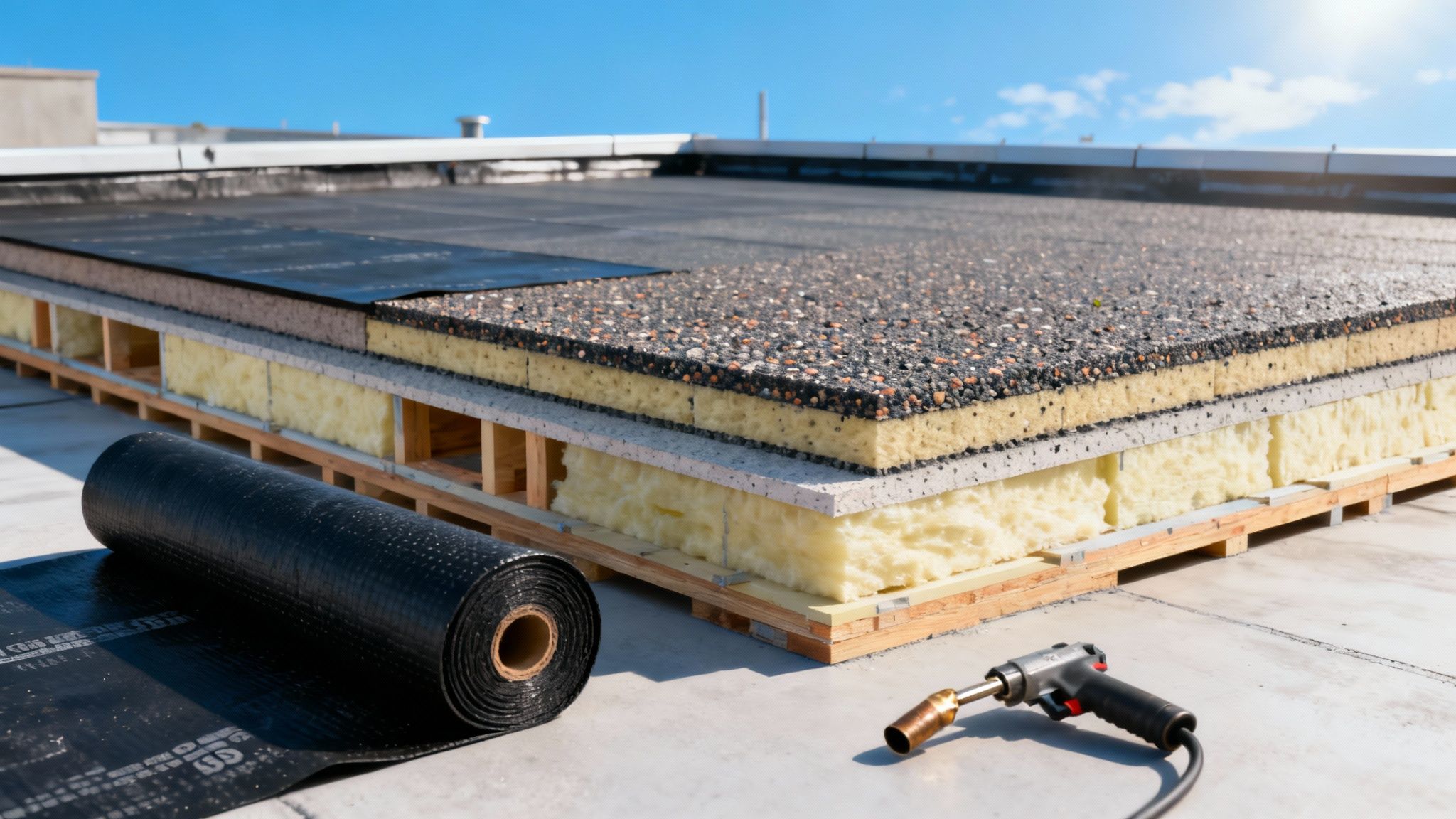
Modified bitumen roofing is an asphalt-based system designed specifically for low-slope or flat roofs. It’s a powerful blend of traditional asphalt and modern polymers that boosts strength and flexibility.
Think of it as a high-performance version of asphalt shingles, but instead of small pieces, it's rolled out in huge, durable sheets. This creates a seamless, multi-layered shield perfect for commercial buildings, offering redundant protection against leaks and harsh weather.
A Modern Take on a Proven Material
Let's cut through the technical jargon. At its core, modified bitumen roofing is a direct evolution of the classic built-up roofing (BUR) systems that have protected buildings for over a century. It takes that time-tested formula and supercharges it by infusing the asphalt with powerful polymer modifiers.
This process gives the material characteristics that standard asphalt just can't match on its own.
Imagine adding rubber to asphalt—that's the basic idea behind one type of modifier. The result? A roofing membrane with far superior elasticity and durability. This is a game-changer for flat roofs, which have to deal with unique challenges like ponding water, intense temperature swings, and the natural movement of the building structure.
Before we dive deeper, here's a quick overview of what makes this material tick.
Modified Bitumen Roofing At a Glance
This table gives you a quick summary of the essential characteristics of modified bitumen roofing, giving you a fast, easy-to-understand reference.
| Characteristic | Description |
|---|---|
| Material Type | Asphalt-based membrane infused with polymers |
| Primary Use | Low-slope and flat commercial or residential roofs |
| Key Benefit | Excellent waterproofing and tear resistance |
| Common Modifiers | SBS (rubber-like flexibility) and APP (plastic-like durability) |
| Installation | Torch-down, cold-applied, or self-adhered methods |
| Typical Lifespan | 15-20+ years with proper maintenance |
This simple breakdown shows why it’s a go-to for so many commercial properties. Now, let’s look at the "modification" part.
The Two Core Types of Modification
The "modification" in its name comes from one of two primary polymers added during the manufacturing process. Each one gives the final product distinct qualities, making it suitable for different performance needs and installation methods.
-
SBS (Styrene-Butadiene-Styrene): This is the "rubber" modifier. It gives the asphalt exceptional flexibility and the ability to stretch. SBS membranes can expand and contract with temperature changes without cracking or damage, making them perfect for buildings that experience a lot of thermal movement.
-
APP (Atactic Polypropylene): This is the "plastic" modifier. It creates a tougher, more rigid membrane with a very high melting point. APP membranes are well-known for their excellent UV resistance and durability against foot traffic and physical wear.
This layered approach, combining proven asphalt waterproofing with advanced polymer science, is why modified bitumen remains a go-to choice for commercial properties. It offers a robust, redundant system designed for longevity and resilience against the elements.
A proper roof inspection can identify which system is best for your structure. You can learn more by checking out our guide on roofing inspections. This introduction provides a solid understanding of what this roofing system is, preparing us to explore its components.

Deconstructing a Modified Bitumen Roof System
To really get what modified bitumen roofing is, you have to look deeper than just the top layer. A modified bitumen system isn't a single material; it's a series of expertly engineered layers all working in concert. Think of it like a suit of armor for your building—each piece offers a specific kind of protection, starting from the structural roof deck and building its way up.
This multi-layer approach is the secret to its incredible strength and waterproofing reliability. Every single component has a critical job, from boosting energy efficiency to providing the final shield against the elements. Let’s peel back these layers and see how they come together to create a powerful, unified defense.
The Foundational Layers
Every modified bitumen system starts with a couple of foundational components that support the main waterproofing membrane.
-
Insulation: This is the first essential layer that goes down over the roof deck. It does a lot more than just control your building's temperature; it creates a stable, even surface for the rest of the roofing system. High-quality insulation can seriously slash energy bills by minimizing heat transfer, which helps keep your building cooler in the summer and warmer in the winter.
-
Base Sheets: Laid directly over the insulation, one or more base sheets act as the bedrock for the waterproofing layers. They provide an initial barrier against water and add significant tensile strength to the whole system, which helps prevent tears and boosts overall durability.
The real magic of a modified bitumen system happens in the core membrane, where advanced polymers transform simple asphalt into a high-performance waterproofing material. This is where the choice between APP and SBS becomes critical.
The Heart of the System: The Waterproofing Membrane
This is where the asphalt gets "modified." Manufacturers infuse it with one of two main polymers, and each one gives the membrane distinct, powerful characteristics.
The infographic below breaks down the two main types of modified bitumen membranes.
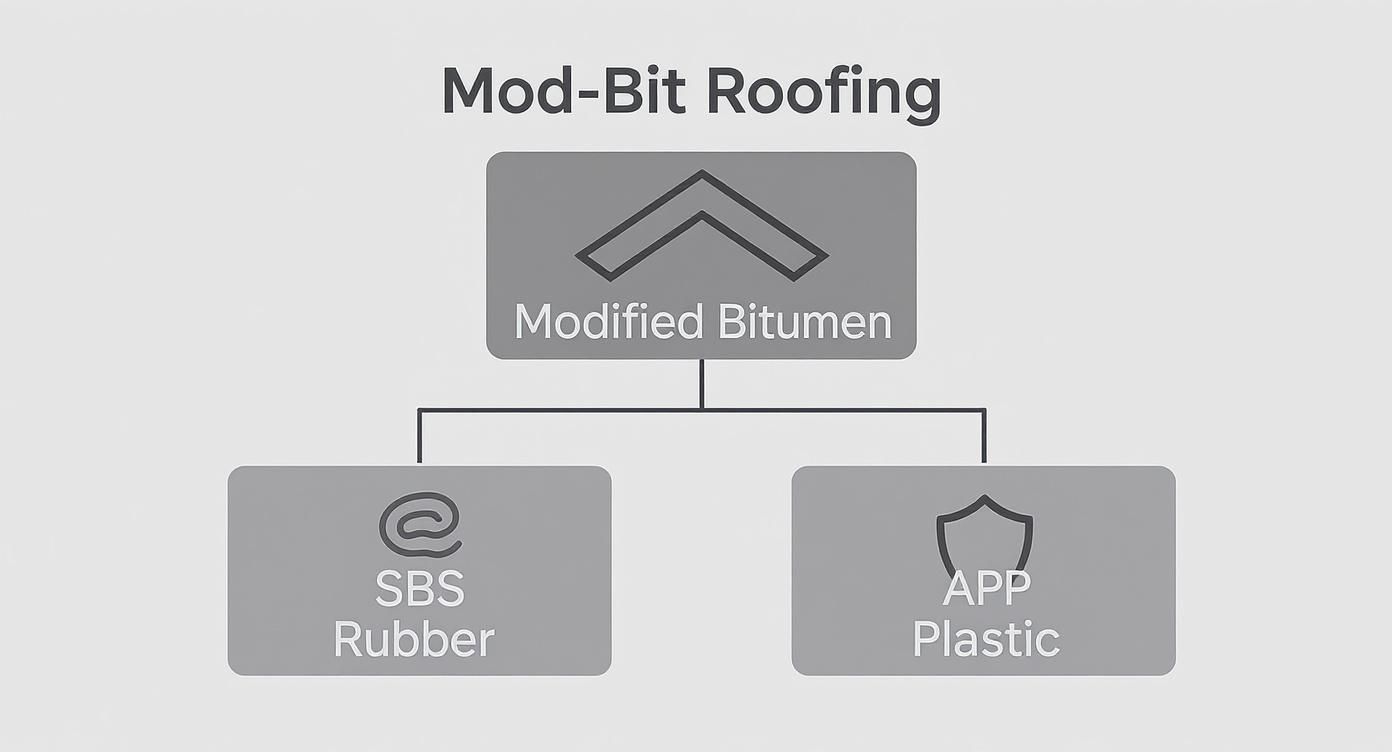
As you can see, this is where modified bitumen branches into either a flexible, rubber-like material (SBS) or a tough, plastic-like one (APP), defining the roof's core performance.
-
APP (Atactic Polypropylene): This is the "plastic" modifier. When applied with a torch, APP creates a remarkably tough, rigid membrane with a high melting point. It's known for its fantastic resistance to UV radiation and physical damage, making it a stellar choice for roofs that get a lot of direct sun exposure. For a visual of this tough membrane, check out this example of a commercial APP roof installation.
-
SBS (Styrene-Butadiene-Styrene): This is the "rubber" modifier. SBS gives the asphalt membrane incredible flexibility and the ability to stretch. It can expand and contract without getting damaged, which is perfect for buildings that experience a lot of movement from thermal changes.
The Protective Top Surface
The last layer is the cap sheet, and it serves as the system's first line of defense. This surface isn't just there for looks; it shields the membrane underneath from damaging UV rays, hail, and any foot traffic.
Common surfaces include:
- Mineral Granules: Just like the ones you see on asphalt shingles, these granules are embedded into the cap sheet to provide UV protection and add a bit of color.
- Reflective Coatings: "Cool roof" coatings are painted on to reflect sunlight. This can drastically lower a building's cooling costs—a huge plus in hot climates.
- Foil Laminates: These offer top-tier reflectivity and a clean, metallic look.
Exploring Modified Bitumen Installation Methods
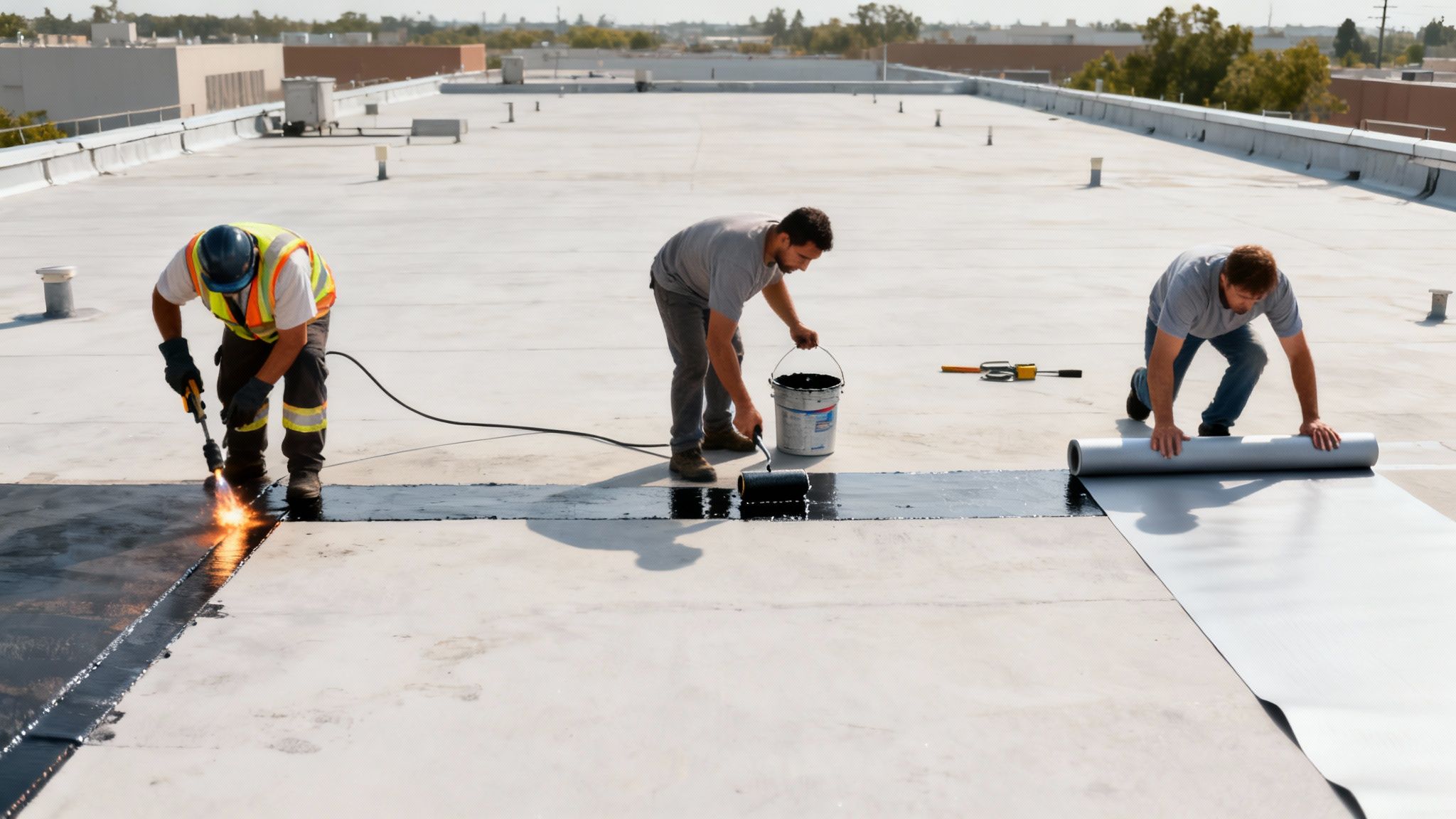
Knowing how a modified bitumen system goes on your roof is a big part of picking the right one for your building. The installation method isn't just a technical detail; it directly affects the project's cost, timeline, and even safety. How the work gets done can also determine whether your business can stay open during the installation.
There are three main ways to install these roofs, and each has its own set of pros and cons. A good conversation with your roofing contractor about these options is the best way to kick off a successful project and ensure your roof performs exactly as it should for years to come.
Torch-Down Application
The classic, time-tested technique is the torch-down method, also known as heat-welding. You’ve probably seen it before. A skilled roofer uses a powerful propane torch to heat the underside of the bitumen roll as it’s laid out. This process melts the asphalt, fusing it directly to the layer below and creating a tough, seamless bond.
This method is especially effective for APP-modified membranes and creates incredibly strong, waterproof seams that are essentially welded together. However, it's not a job for beginners. The use of an open flame on a rooftop demands strict safety protocols and highly trained technicians.
Because of the open flame, torch-down applications require extensive safety measures, including mandatory fire watch personnel and proper handling of flammable materials. This method is often best suited for new construction or unoccupied buildings where safety can be meticulously controlled.
Cold-Applied Adhesives
A more modern and increasingly popular alternative is the cold-applied method. As the name suggests, this technique ditches the open flame in favor of specialized roofing adhesives to bond the membrane layers. A roofer spreads the adhesive across the substrate with a squeegee, and the bitumen roll is then pressed firmly into place.
This approach brings some major advantages to the table, particularly for projects where flames are a no-go.
- Enhanced Safety: It completely eliminates the fire risk that comes with torching, making it a much safer choice for occupied buildings like schools or hospitals.
- Low Odor: This process produces far fewer fumes than torching or hot asphalt, which means less disruption for anyone inside the building.
- Versatility: It works well with both SBS and certain APP membranes, giving you more flexibility in material selection.
Without the intense heat and strong smells, a cold-applied installation is a far less intrusive process.
Self-Adhered Systems
For speed and safety, nothing beats the self-adhered or "peel-and-stick" system. These high-tech membranes come from the factory with a powerful adhesive already applied to the back, protected by a simple release liner. Installers just peel away the liner and roll the membrane firmly into place. It’s that straightforward. To get a better sense of how these layers come together, check out the roofing material examples in our gallery.
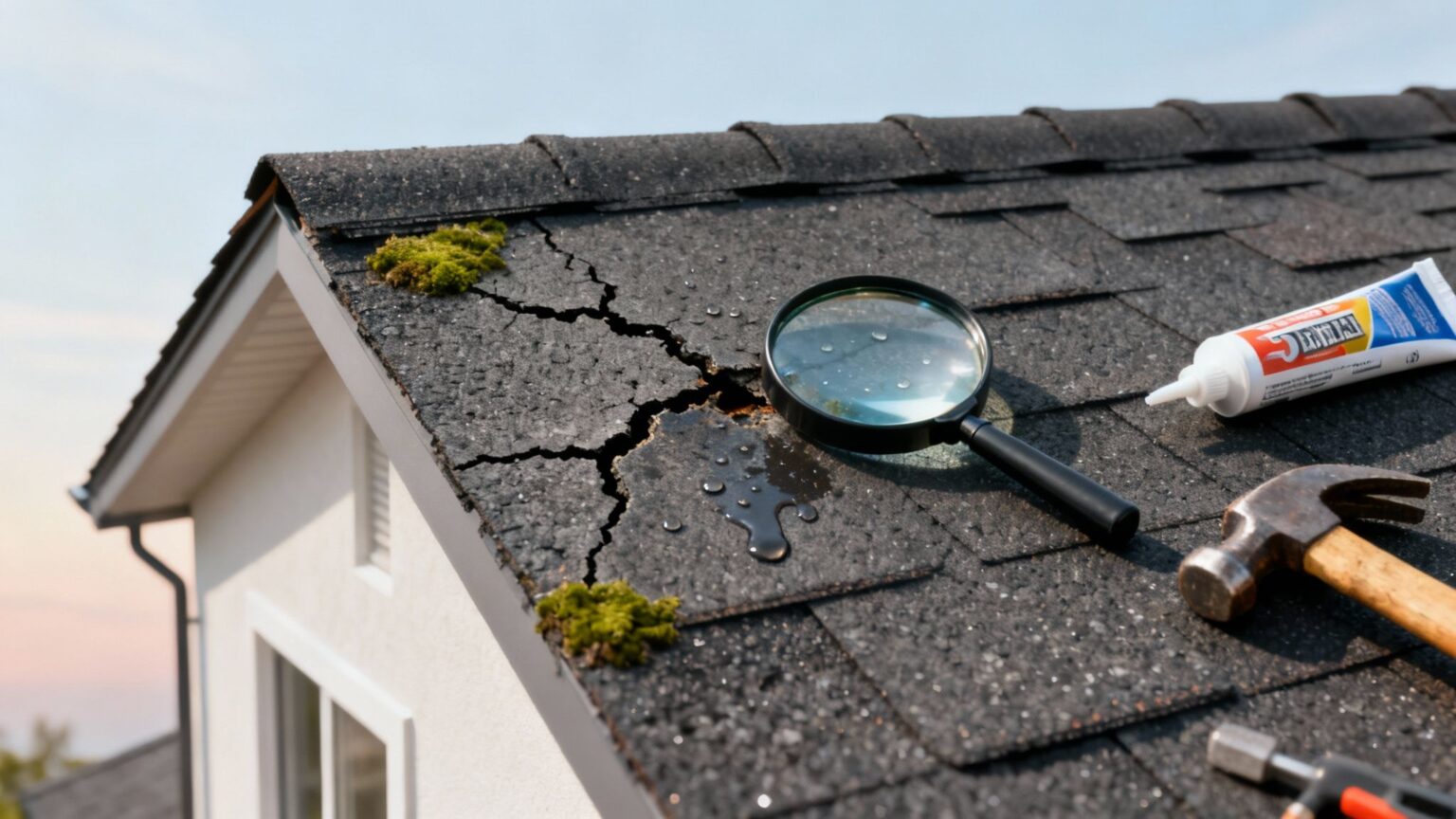
Self-adhered systems are prized for their simplicity and speed, which can dramatically cut down on installation time and labor costs. They are 100% flame-free and produce no VOCs (volatile organic compounds), making them an ideal choice for environmentally sensitive projects or any building where disruptions must be kept to an absolute minimum.
The Key Benefits of a Modified Bitumen Roof
There's a good reason property owners and facility managers put their trust in modified bitumen roofing. It delivers a powerful mix of resilience, longevity, and straight-up practical value that you can count on. This isn't just about checking boxes on a spec sheet; it's about real-world performance that protects your most valuable assets day in and day out. All these advantages stem directly from its smart, multi-layered design.
One of its most celebrated features is its incredible waterproofing. Because it’s installed in overlapping layers that are fused together, a modified bitumen roof forms a seamless, single barrier against any moisture trying to sneak in. Think of it this way: instead of a roof with thousands of potential failure points at every seam, you get one continuous membrane. That redundancy makes water infiltration incredibly difficult.
Unmatched Durability and Strength
A huge advantage of modified bitumen roofing is its sheer toughness. The polymer-infused asphalt creates a membrane with impressive tensile strength, which is a technical way of saying it can handle a lot of pulling and stretching from building movement or thermal expansion without tearing. This quality makes it an absolute workhorse of a roofing system.
That toughness also means it has excellent puncture resistance. The roof can easily handle the routine foot traffic from maintenance crews servicing rooftop HVAC units and other equipment without you having to worry.
- Puncture Resistance: The robust, multi-ply composition stands up to damage from dropped tools, hail, and wind-blown debris.
- Foot Traffic Ready: It provides a durable surface that can support regular maintenance without compromising the waterproofing layer underneath.
- Proven Longevity: With proper installation and just a bit of routine care, these roofing systems are known to perform reliably for 20 years or more.
When you combine seamless waterproofing with high tensile strength, you get a roofing system that isn't just a cover—it's a long-term protective shield for your entire building.
Smart Investment and Energy Efficiency
Beyond its physical strength, a modified bitumen roof offers a strong return on your investment. The global market is projected to hit $17.42 billion by 2034, and that growth is being driven by its reliability. In fact, around 65% of market demand is tied directly to its exceptional durability and waterproofing. You can dig into more of the data on market trends for modified bitumen systems.
This value gets even better when you factor in its potential for high energy efficiency. While traditional black asphalt roofs are known for soaking up heat, modern modified bitumen systems can be topped with highly reflective surfaces.
These "cool roof" options, usually white granules or specialized coatings, reflect a huge portion of the sun's UV rays. This simple feature can drastically lower the roof's surface temperature, leading to cooler indoor spaces and a noticeable drop in air conditioning costs during those hot summer months. This makes it a perfect choice for the demanding South Florida climate, effectively turning your roof into an energy-saving asset. And if damage ever does happen down the road, repairs are often simple and straightforward, extending its service life and maximizing its long-term value.
Understanding Your Investment: Cost and Lifespan
When you're looking into modified bitumen roofing, the numbers are a big part of the conversation. The final cost isn't just one flat figure; it's a mix of several key variables that shape the project's size and complexity. Thinking about these factors upfront helps you build a realistic budget and truly understand the long-term value you're getting.
As a ballpark, you can expect the price for a new modified bitumen roof to land somewhere between $5 and $12 per square foot, fully installed. But what pushes your project toward the lower or higher end of that range? Let's break it down.
Key Factors Driving Your Final Cost
The total investment will really come down to a handful of critical choices you'll make with your roofing contractor.
- Membrane Type: Your choice between the more rubber-like SBS membrane and the plastic-like APP membrane will influence the price, as the raw material costs aren't the same.
- Installation Method: There's a difference in labor costs between a traditional torch-down application and the more modern (and often safer) methods like cold-applied adhesives or self-adhered systems.
- Project Complexity: A simple, wide-open commercial roof is straightforward. One dotted with numerous vents, HVAC units, skylights, and other penetrations? That requires much more detailed flashing work, which adds to the labor bill.
- Labor Rates: The cost of skilled labor varies from one city to another. Local market conditions play a surprisingly big role in your final price tag.
A professional installation is the single most important factor in getting the most out of your roof's lifespan. Cutting corners on labor might look like a win upfront, but it almost always leads to premature failures and expensive repairs down the road.
Maximizing Your Roof's Lifespan
Beyond what you pay on day one, the real value of a modified bitumen roof is measured in how long it lasts. With a professional installation and consistent care, you should expect a service life of 15 to 25 years.
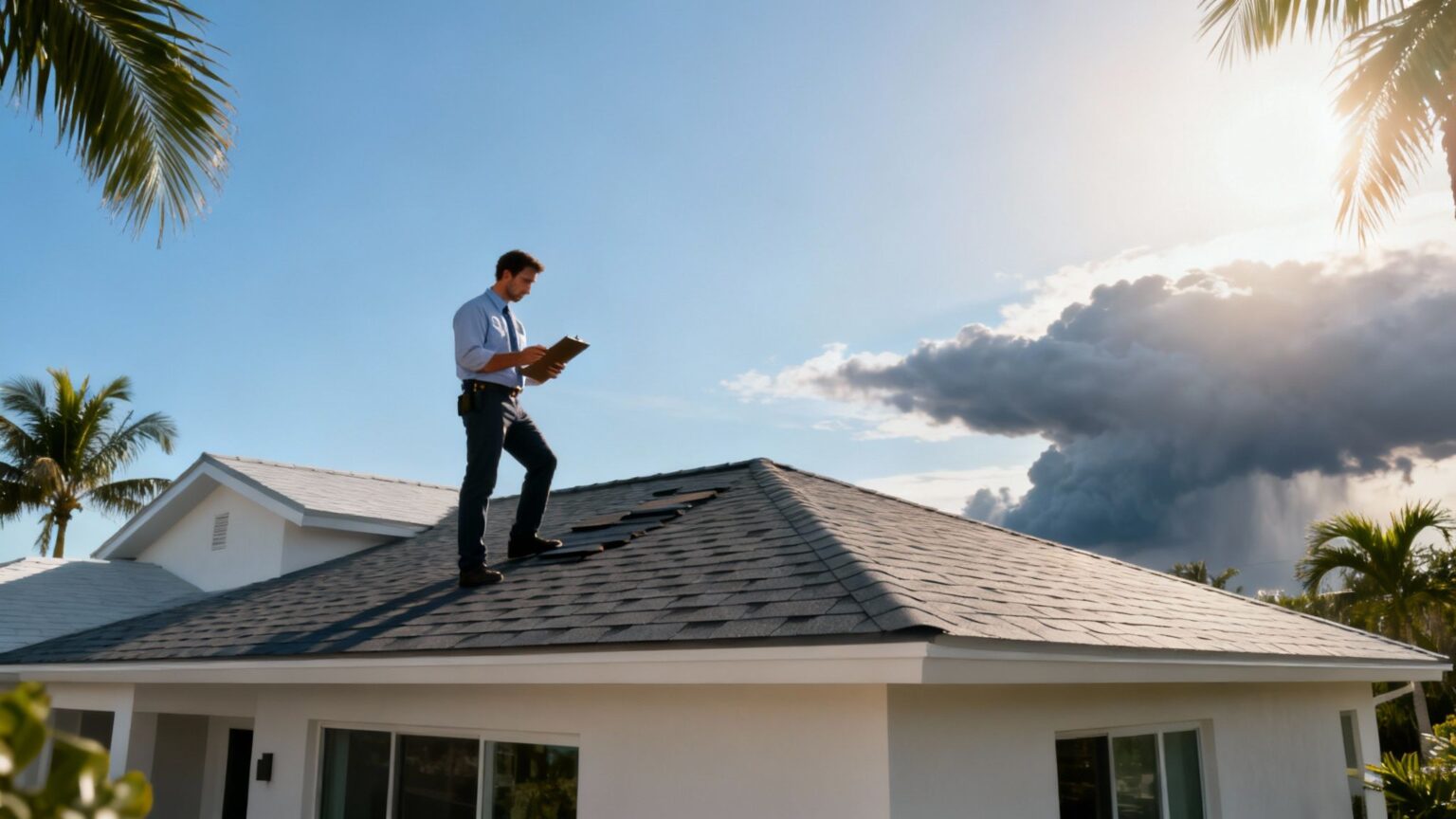
But that timeline isn't a guarantee—it's earned through proactive maintenance. Setting up regular inspections, especially in a demanding climate like South Florida's, is crucial for catching small problems. Things like clogged drains or minor blisters can turn into major leaks if they're ignored.
A simple, consistent maintenance plan is your best bet for making sure your roof not only reaches but even outlasts its projected lifespan, protecting your investment for decades.
A Practical Maintenance Plan for Your Roof
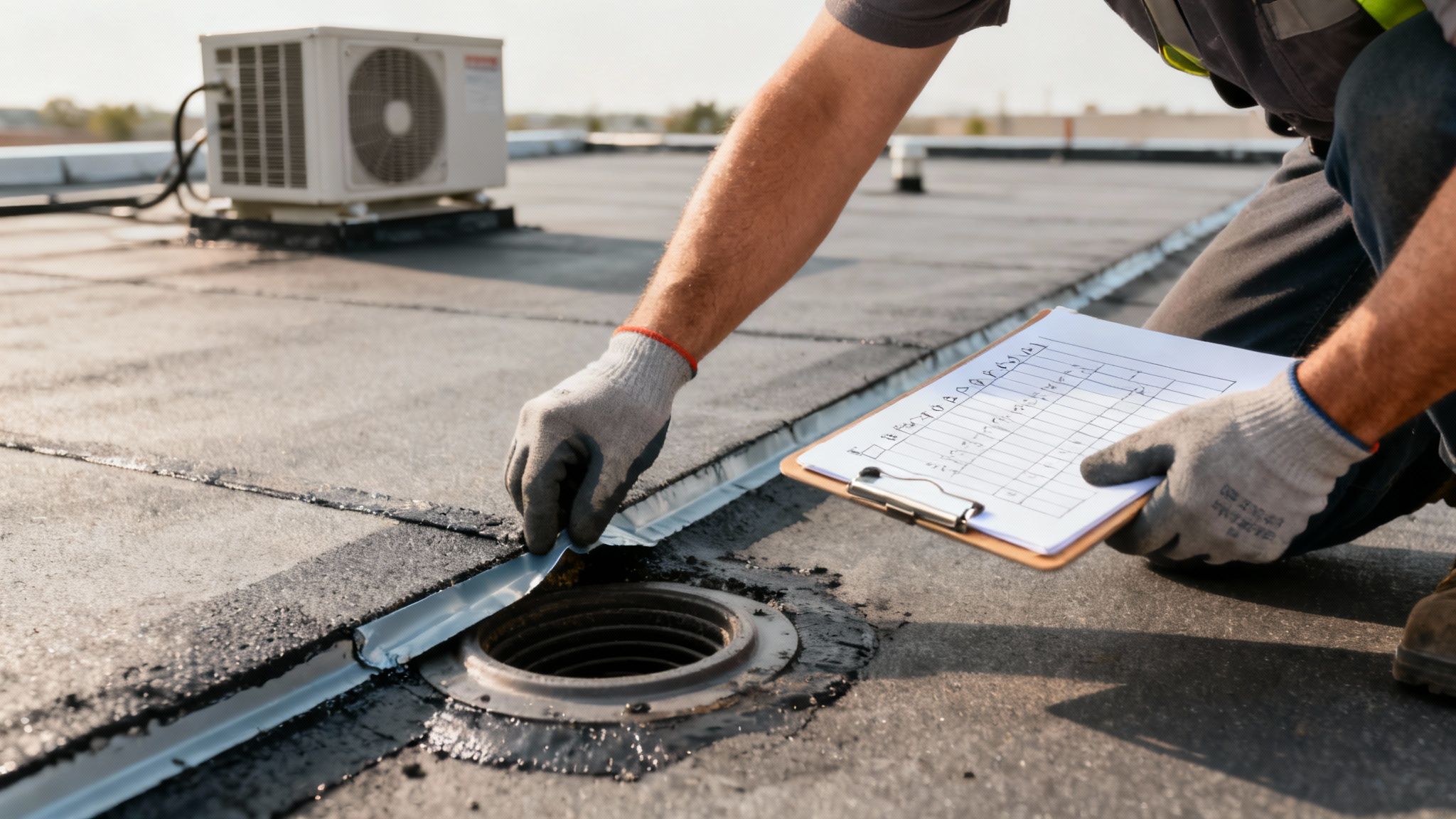
A great roof is a serious asset, and like any valuable investment, it needs protection. The best way to get the most out of your roof is with a proactive maintenance plan. Don't wait for a leak to show up in your ceiling. A simple, consistent inspection routine is the secret to catching small issues before they spiral into expensive, disruptive problems.
Think of it as safeguarding your investment. This approach ensures your modified bitumen system performs reliably for its entire projected life. The most effective strategy is to schedule professional inspections twice a year, once in the spring and again in the fall. These check-ups give a roofer the chance to clear away debris that’s built up and assess the roof after it’s been through the harshest weather of the year.
Your Biannual Inspection Checklist
During these inspections, a few key areas demand close attention. From my experience, these are the most common troublemakers on low-slope roofs.
-
Drainage Systems: Clogged drains, scuppers, and gutters are the number one cause of ponding water. Standing water adds an immense amount of weight and dramatically speeds up how fast the membrane breaks down. Clearing all debris is priority one.
-
Surface Integrity: Get a good look at the membrane itself. You're searching for any signs of blisters, cracks, or deep scratches. Catching these early allows for a simple patch job before water has any chance to get to the layers underneath.
-
Seams and Flashings: The weakest points on any roof are where the membrane meets another surface, like a wall or a vent. Carefully inspect all the seams and the flashing around vents, pipes, skylights, and HVAC units. These spots need meticulous attention to make sure their seals are still completely watertight.
A consistent maintenance plan isn't an expense—it's an investment in longevity. Proactive care is the single most effective way to avoid surprise repairs, prevent interior damage, and ensure your roof delivers its full 20-plus-year service life.
By following this straightforward plan, you put yourself in control, keeping your property protected and your operational costs predictable.
Common Questions About Modified Bitumen Roofing
As we wrap things up, it's natural to have a few questions. Below, we've tackled some of the most common things property owners ask about modified bitumen roofing. These quick answers should clear up any lingering concerns and help you feel confident about your decision.
First, it’s worth noting just how trusted this material is. The global market for modified bitumen, which goes far beyond just roofing, is a huge industry. It’s expected to grow from USD 28.2 billion in 2025 to a staggering USD 44.3 billion by 2035, a testament to its reliability. You can dig into the future of the modified bitumen market if you're interested in the data. That kind of growth only happens with a proven product.
Can Modified Bitumen Be Installed Over an Existing Roof?
In many situations, yes. A "roof-over" or "recover" is often possible, but only if the current roof structure is in good shape and local building codes allow it. This can save you a bundle on the costs of tearing off the old roof and hauling it away.
However—and this is a big one—you absolutely need a thorough inspection from a professional roofer first. They have to verify that the underlying structure is sound. Covering up existing problems is a recipe for disaster and will only compromise the new system down the road.
Is Modified Bitumen Roofing Environmentally Friendly?
It's definitely getting better. While it's an asphalt-based product at its core, the industry has made real strides toward sustainability. The biggest leap forward is the use of "cool roof" reflective surfaces, which bounce sunlight away from the building and can dramatically slash your energy bills.
Manufacturers are also starting to incorporate recycled materials into their products. Plus, the shift toward cold-applied adhesives means fewer VOCs are released during installation compared to the old torch-down methods.
While single-ply systems like TPO and EPDM are excellent waterproofers and often more reflective, modified bitumen's multi-layer design provides a level of redundancy and durability that is highly valued, especially for roofs with high foot traffic or numerous rooftop installations.
How Does It Compare to TPO or EPDM?
This is where modified bitumen really shines: its incredible toughness. Thanks to its multi-layer construction, it’s exceptionally resistant to punctures and physical damage.
- TPO & EPDM: These are single-ply membranes. They're lightweight, fantastic for waterproofing, and highly reflective, which is great for energy efficiency.
- Modified Bitumen: This system is built for resilience. The multiple layers offer built-in redundancy, making it far more durable against foot traffic, falling branches, or dropped tools. It has a track record spanning decades, which gives a lot of property owners peace of mind.
Ultimately, the best choice really boils down to your building's specific needs. You have to weigh the importance of durability, foot traffic, and your budget to make the right call.
Are you considering a modified bitumen roof for your South Florida property? The experts at Paletz Roofing and Inspections have over 30 years of experience installing and maintaining these durable systems. Contact us today for a free, no-obligation quote by visiting https://paletzroofing.com.