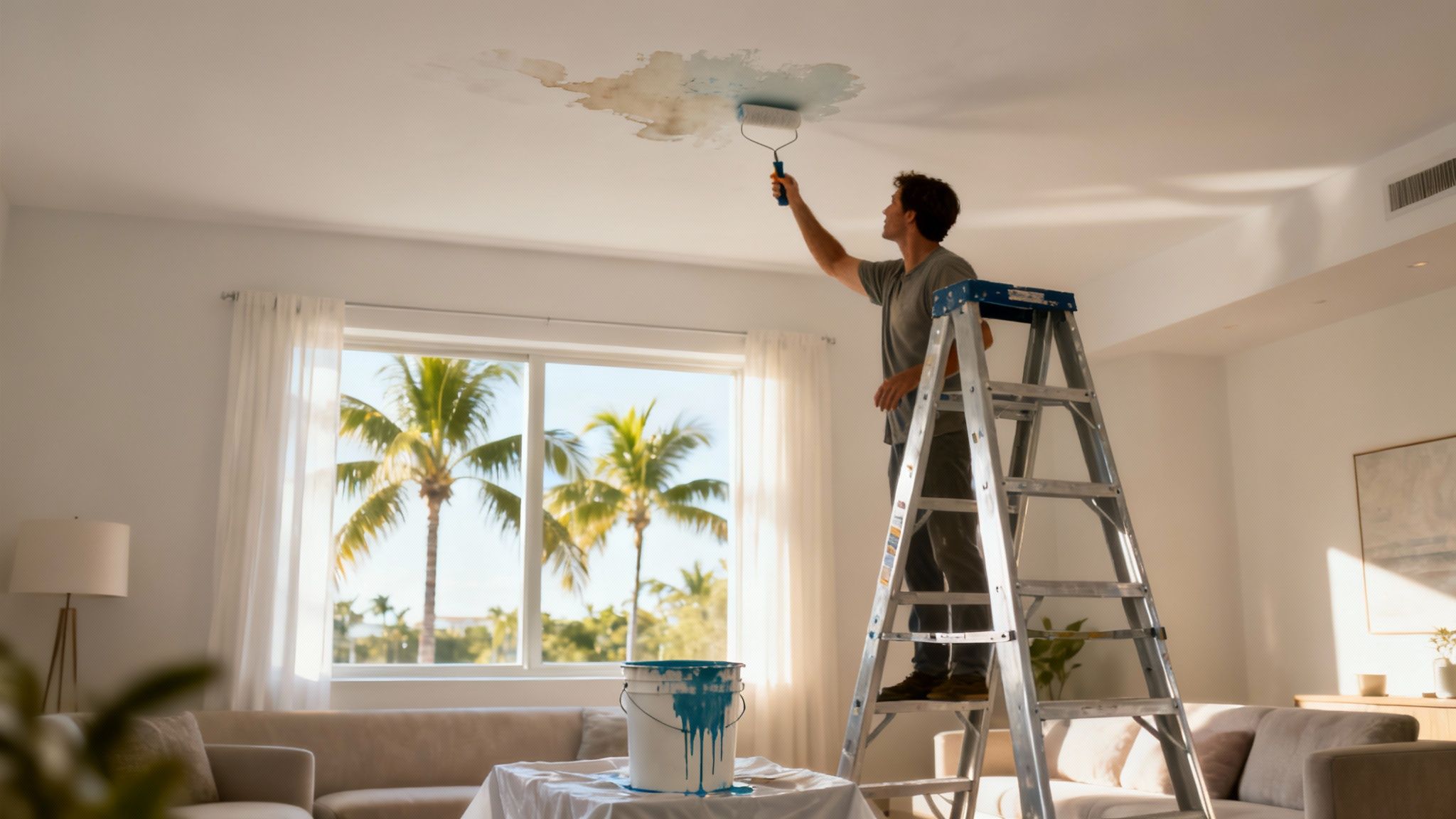
Finding water spots on your ceiling in Fort Lauderdale isn't just an annoyance—it's a direct warning that water is getting in where it shouldn't. This could be from a roof leak, a plumbing problem, or even HVAC condensation. Given our intense storm seasons and year-round humidity, these stains are red flags for rapid mold growth and potential structural damage that you simply can't afford to ignore.
Why Fort Lauderdale Homes Are So Prone to Ceiling Water Spots
That discolored patch on your ceiling is much more than a simple cosmetic flaw; it’s a critical alert from your home. Here in Fort Lauderdale, our unique coastal climate creates the perfect storm for water-related headaches. The constant combination of high humidity, salty air, and seasonal hurricanes puts incredible stress on our homes, especially our roofs and plumbing.
Because of these environmental factors, small issues can blow up into major problems much faster than they would in other parts of the country. A tiny breach in your roof’s flashing or a minor drip from an attic pipe can quickly blossom into a prominent, ugly stain. But the real problem isn't just the water you see; it's the hidden moisture you don't.
The Impact of South Florida's Climate
Fort Lauderdale’s environment plays a huge role in why these spots show up so often. Our persistent humidity means that once moisture gets inside, it has an incredibly hard time drying out on its own. This creates an ideal breeding ground for mold and mildew, which can start to grow in as little as 24-48 hours.
The real danger of a ceiling water spot in a humid climate isn't the stain itself, but the hidden damage it represents. Persistent moisture can quietly compromise your home's structural integrity, leading to wood rot and deteriorating drywall long before you notice a major problem.
This reality is backed by some pretty sobering data. Water spots on ceilings are a significant concern for Fort Lauderdale homeowners, directly tied to the city's high risk of flooding and frequent extreme weather. A 2022 FEMA report highlighted that nearly all buildings in Fort Lauderdale are at high risk of flooding due to our low elevation and proximity to the ocean. That means water intrusion is a constant threat we live with. You can learn more about the early signs of water damage in our area.
On top of that, Fort Lauderdale's coastal environment, much like other seaside cities, can have unique effects on your home's infrastructure. It's important to understand how coastal living impacts plumbing systems to stay ahead of potential issues.
Finding the True Source of Your Ceiling Leak
That ugly brown stain creeping across your ceiling isn't the real problem—it's just the final symptom. Before you even think about reaching for a can of stain-blocking primer, you need to put on your detective hat and trace that water back to its origin. Skipping this step is like bailing water out of a sinking boat without plugging the hole first. The problem will always come back.
The first clue is usually timing. Did the water spots on your ceiling in Fort Lauderdale appear right after one of our famous torrential downpours? If so, your investigation should start on the roof. But if that stain pops up on a perfectly clear, sunny day, you're more likely dealing with an indoor culprit like a plumbing line or your HVAC system.
Think of it like a quick diagnostic checklist—a few simple questions can point you in the right direction right away.
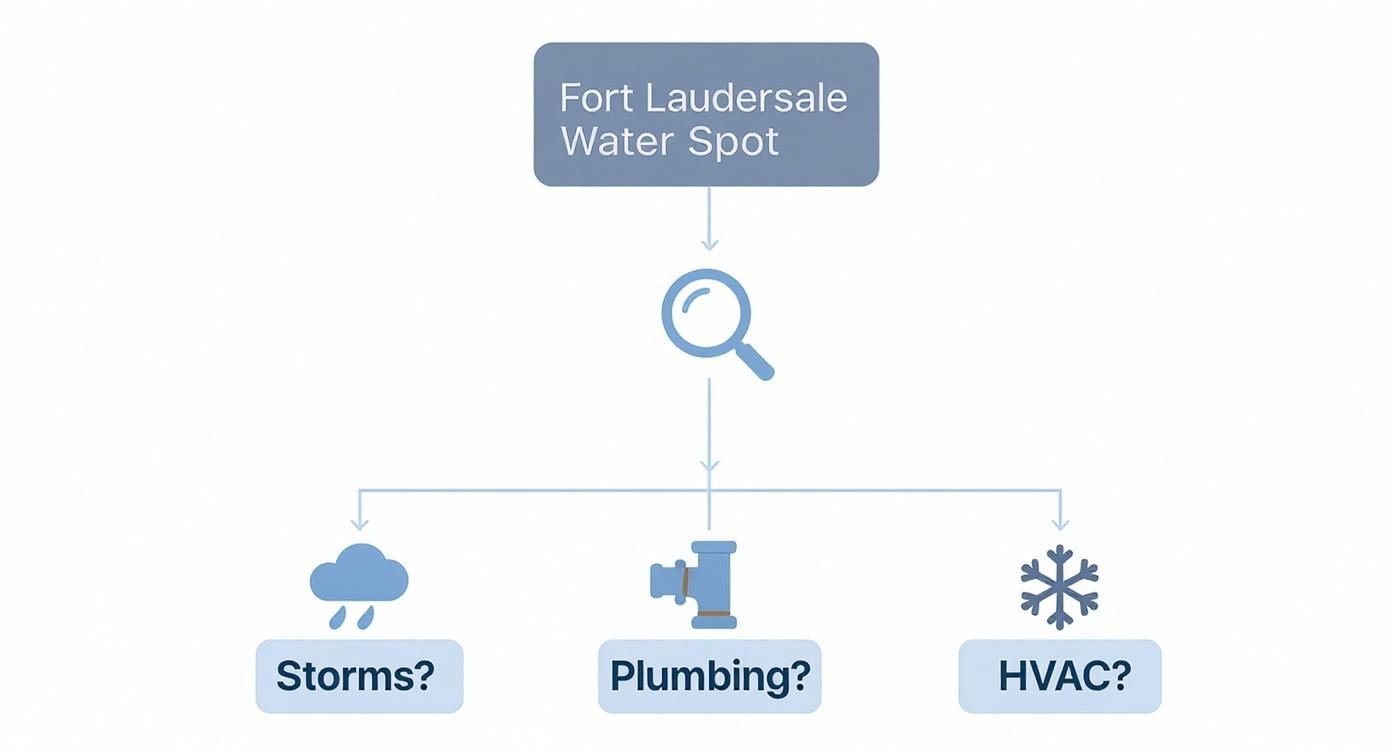
As you can see, figuring this out often comes down to connecting the dots between recent weather and where the stain is located in relation to your home's major systems.
Investigating the Attic
For most ceiling leaks, the attic is ground zero. If you can safely get up there, grab a powerful flashlight and start your search. A common mistake is to only look directly above where the stain appeared on the ceiling below. Water is sneaky; it can travel quite a distance along rafters, pipes, and joists before it finally decides to drip.
You'll need to use more than just your eyes for this part.
- Look for Dampness: Scan the underside of the roof deck. You're looking for dark, wet patches on the wood sheathing.
- Feel the Insulation: Carefully touch the insulation around the suspected area. Dry insulation is light and fluffy. Waterlogged insulation will feel heavy, clumpy, and cold to the touch.
- Check for Daylight: On a bright day, turn your flashlight off. Do you see any slivers of daylight peeking through the roof? It’s a dead giveaway. If light can get in, water definitely can.
Here's something we see all the time: a leak's entry point on the roof is rarely directly above the stain you see inside. Water follows the path of least resistance, often running several feet horizontally along a roof joist or the ceiling drywall before it finds a spot to drip through.
Common Indoor Culprits
If your attic is bone dry, it's time to shift your focus to indoor systems. The HVAC air handler, which is often tucked away in an attic or a closet, is a notorious offender. A key thing to check is its drain pan for standing water. Also, make sure the condensate line isn’t clogged—a very common issue here, thanks to our South Florida humidity.
Plumbing is the other usual suspect. I’ve seen slow, pinhole leaks from a supply line or a drainpipe in a second-story bathroom go unnoticed for weeks, silently soaking the subfloor and ceiling below until that telltale stain finally breaks through.
To help you narrow it down, here’s a quick-reference table based on what we typically find in the field.
Common Leak Sources and Telltale Signs
| Potential Source | Common Location on Ceiling | Appearance of Stain |
|---|---|---|
| Roof Leak | Anywhere, often near roof penetrations (vents, chimneys). | Brown or yellowish with distinct rings. Darkens after rain. |
| HVAC Condensate | Near the air handler or ductwork. Often in a central closet. | Consistent dampness, may look rusty. Often has a musty odor. |
| Plumbing (Supply) | Directly below bathrooms, kitchens, or laundry rooms. | Round, persistent stain that grows steadily. May drip constantly. |
| Plumbing (Drain) | Directly below bathrooms or sinks. | Stains that appear and darken only when a fixture is used. |
This table should give you a solid starting point. By matching the stain's location and look to a potential source, you can focus your investigation and get to the root of the problem much faster.
Immediate Steps to Minimize Water Damage
The second you spot a water stain on your ceiling here in Fort Lauderdale, the clock starts ticking. Your first job is damage control—stopping a minor headache from turning into a major financial nightmare. A few quick, decisive actions can make all the difference in the world.
First thing's first: get everything valuable out from under that spot. Move furniture, unplug electronics, and grab anything else that could be ruined. Even a slow, sneaky drip can destroy a wood finish or fry a laptop. Place a bucket or a deep pan directly under the drip to catch the water.
Here’s a little trick I’ve picked up over the years: to get rid of that constant drip…drip…drip sound that will drive you crazy, just hang a piece of string from the ceiling into the bucket. The water will run silently down the string. Problem solved.
Relieve Pressure on the Ceiling
If you see the drywall starting to bulge or sag, that means water is pooling up and you need to act fast. If that section of ceiling collapses, you’re looking at a much bigger problem than the original leak.
Pro Tip: It feels wrong, but you absolutely should poke a hole in that bulge. A small, controlled puncture prevents the drywall from tearing apart under its own weight, which is a far messier and more expensive fix.
Grab a small screwdriver or even a nail and carefully make a tiny hole right in the center of the sagging spot. Make sure your bucket is in position, because a surprising amount of water is about to come out. Taking this one simple step can literally save your entire ceiling. While you’re managing the immediate issue, it's a good idea to get some professional advice on water damage restoration to understand the next steps.
Finally, get some air moving. Set up fans and point them at the wet area to kickstart the drying process. This is critical for preventing mold, which can start growing in our South Florida humidity in as little as 24-48 hours. If you're wondering what this kind of damage looks like, here's a clear example of water intrusion.

Understanding the Hidden Dangers of Water Damage
That brownish stain creeping across your ceiling is a lot more than just an eyesore. Think of it as a warning sign—the visible tip of an iceberg signaling a much bigger problem hidden from view. Especially here in Fort Lauderdale, our humid climate turns any trapped moisture into a serious threat, making water spots on a ceiling in Fort Lauderdale something you absolutely cannot afford to ignore.
The most immediate and concerning risk is mold. In our warm, muggy environment, mold can explode into a full-blown colony in a shocking 24 to 48 hours after water gets in. This isn't just a scare tactic; it's a real public health issue. The Centers for Disease Control and Prevention (CDC) has long linked mold exposure to persistent allergies and respiratory problems. A 2021 report even found that a staggering 70% of homes in our area with ceiling water spots had measurable mold levels. You can find more of these critical water damage facts online.
Beyond Mold Growth
While mold is a huge concern, the damage definitely doesn't stop there. Persistent moisture is waging a slow, silent war on the very bones of your home.
- Wood Rot: The wooden joists and beams that make up your home's framework can start to rot when they're constantly damp, weakening the entire structure from the inside out.
- Drywall Integrity: That waterlogged ceiling panel isn't just stained; it's structurally shot. Saturated drywall gets soft, heavy, and poses a very real danger of collapsing without warning.
- Electrical Hazards: If water finds its way near light fixtures, junction boxes, or any wiring in your ceiling, you're looking at a serious fire or electrocution risk.
The longer water sits, the deeper it soaks into your home’s building materials. A simple leak quickly becomes a complex structural and safety nightmare. The only way to stop the damage in its tracks is to act fast.
This domino effect of potential problems—from health risks to structural failure—is exactly why that small spot demands your immediate attention. It’s a clear signal that your roof has been breached, and the consequences of looking the other way can be incredibly severe and expensive.
How to Properly Treat and Repair Ceiling Water Stains
Alright, once you're absolutely positive the leak is fixed and that ceiling drywall is bone dry, it's time to deal with the ugly stain left behind. A lot of homeowners make the mistake of just throwing a coat of paint over the discoloration. Don't do it. The mineral deposits from the water will almost always bleed right through the new paint, and that brown spot will be back to haunt you in no time.
To do this right, you need to clean, prime, and then paint.
First up is a simple cleaning mix. For most water stains, a mild bleach and water solution works wonders.
- Mix Your Solution: Get a spray bottle and mix one part regular household bleach with three parts warm water.
- Prep the Area: You'll want to lay down some plastic sheeting or old towels to protect floors and furniture. Goggles and gloves are non-negotiable here.
- Apply and Let It Work: Lightly mist the solution onto the stained area. The key is not to oversaturate the drywall. Let it sit for about 24 hours to do its thing.
This process usually lightens the stain significantly. If you're dealing with a really stubborn one, a second application might be needed. The idea isn't to make the stain vanish completely, but to neutralize it so the primer can take over.
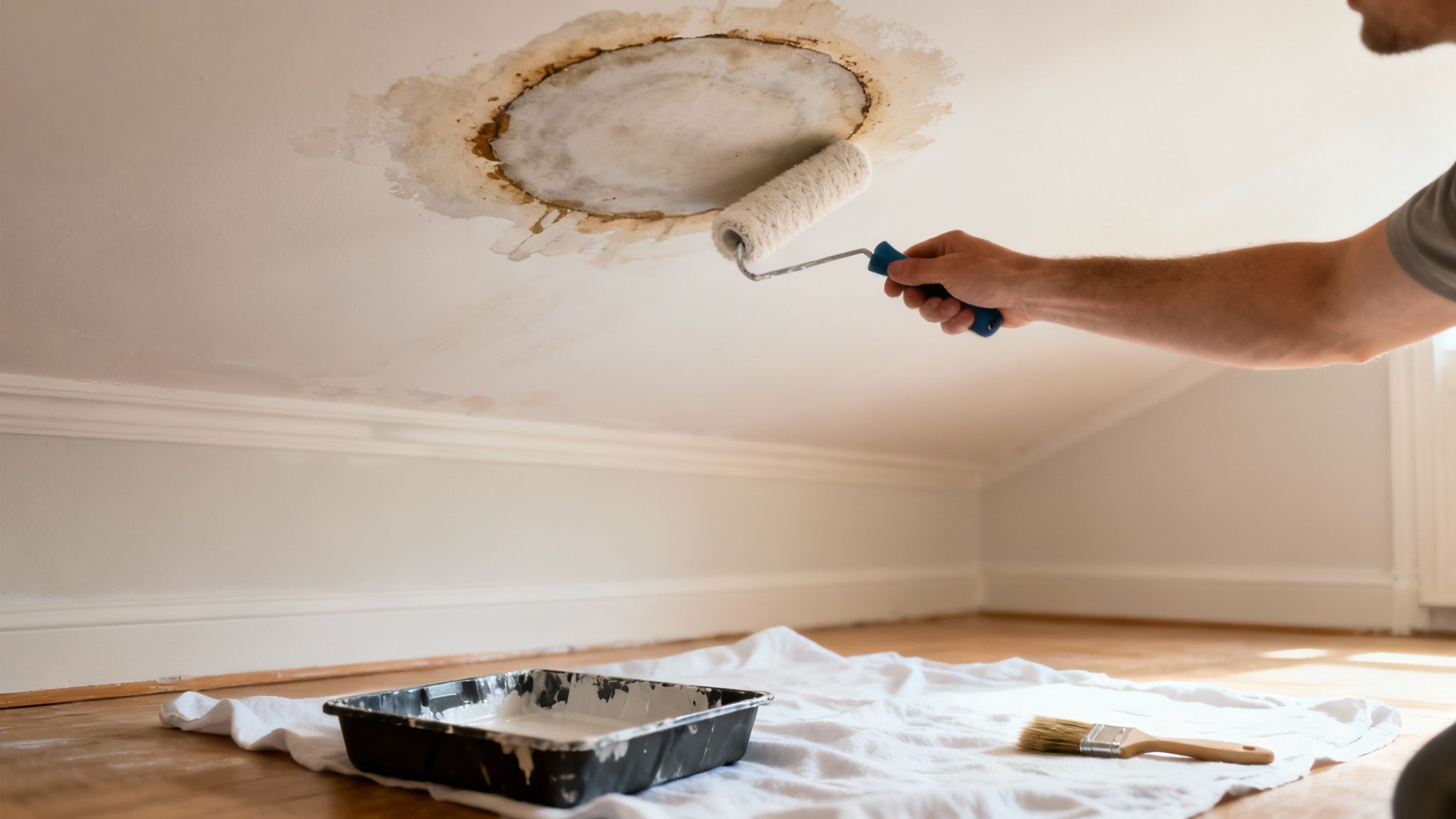
The Critical Priming Step
This is, without a doubt, the most important part of the repair—and the one people skip most often. You can't just use any old wall primer. You need a dedicated stain-blocking primer designed specifically to seal in tough stains.
Apply a thin, even coat of a high-quality, oil-based or shellac-based stain-blocking primer over the entire spot. Make sure to extend the primer at least an inch or two beyond the original stain's edges for full coverage. Let it dry completely based on the manufacturer's instructions, which could take several hours.
This barrier is what keeps that frustrating stain from making a comeback months later. If you want to see what a properly handled repair looks like, check out this example of a water damage repair.
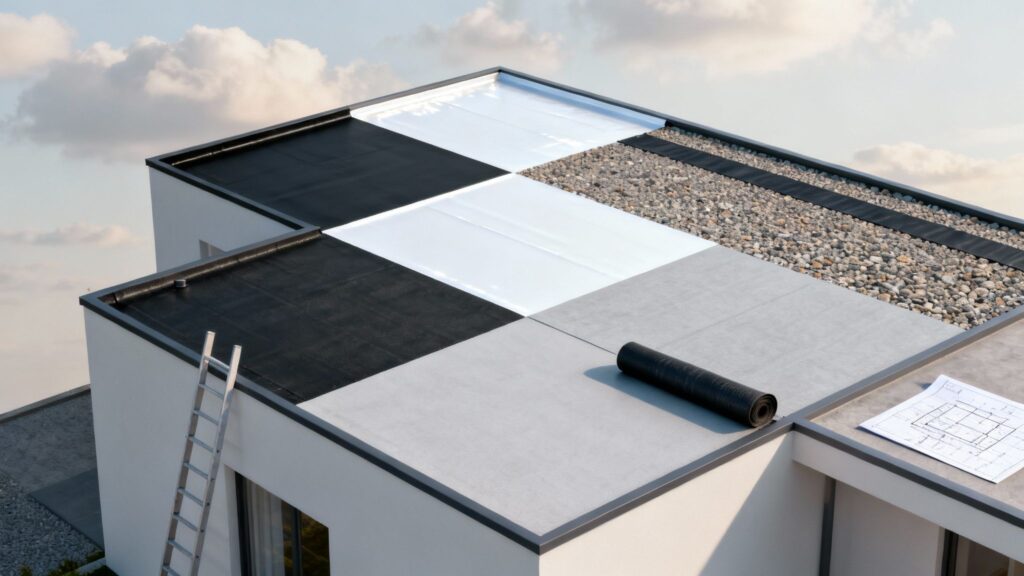
The primer doesn’t just cover the stain; it chemically blocks it. It creates an impermeable seal that the water-soluble minerals in the stain cannot penetrate, ensuring your final paint job looks flawless and permanent.
Finally, you're ready for paint. Grab a high-quality ceiling paint that matches your existing color. Apply two thin coats for the best result, giving it plenty of time to dry between each coat. Feather the edges of the new paint into the old to create a seamless, invisible patch that makes it look like those water spots on your ceiling in Fort Lauderdale never existed.
When to Call a Roofing Professional for Your Fort Lauderdale Home
While tackling a small, isolated stain yourself can feel like a win, knowing when to put down the tools and pick up the phone is the smartest move a homeowner can make. Some warning signs mean the problem has graduated from a simple cosmetic fix to something requiring an expert diagnosis. Trust me, ignoring these red flags is a surefire way to end up with far more extensive and expensive damage down the road.
Your first major clue is a ghost from the past. If you’ve treated water spots on your ceiling in Fort Lauderdale before, only to have them creep back in the exact same spot, the original leak was never really fixed. This is a classic sign of a persistent roofing issue that a simple DIY patch just won't solve. It’s time to stop the cycle and bring in someone who can trace the water all the way back to its true source.
Another non-negotiable is any change to the ceiling's structure. If you notice sagging, bulging, or soft spots around the stain, the situation has become critical. This isn't just a drip anymore; it means a significant amount of water has collected, compromising the integrity of your drywall and potentially the wooden joists holding it all up. A collapse is a very real possibility, making it a serious safety hazard.
Signs That Demand an Expert Eye
Certain scenarios are an immediate red flag and should have you calling a professional roofer right away. These situations often involve complex or dangerous variables that are just not safe for the average homeowner to handle.
- Multiple Stains: Seeing water spots pop up in several different rooms is a strong indicator of a widespread roofing system failure, not just one pesky leak.
- A Large or Rapidly Growing Stain: If a stain is larger than a dinner plate or seems to double in size after a storm, the water intrusion is significant and needs to be addressed immediately.
- Visible Roof Damage: If you can see missing shingles, damaged flashing around your vents, or any other obvious issues from the safety of the ground, the problem is well beyond a simple interior fix.
- Uncertainty About the Source: If your investigation hits a dead end and you can't confidently pinpoint where the water is coming from, a professional has the tools and years of experience to find it.
Calling a professional isn't admitting defeat; it's making a strategic decision to protect your home's value and your family's safety. Experts can identify subtle signs of damage you might miss, ensuring the repair is comprehensive and, most importantly, permanent.
An expert inspection gives you more than just a repair; it offers peace of mind. For a thorough evaluation of your roofing system, you can learn more about the benefits of a professional roofing inspection and how it can prevent future headaches.

If you're facing a stubborn leak or any of the warning signs we've talked about, don't wait for the problem to get worse. The experienced team at Paletz Roofing and Inspections has the expertise to accurately diagnose and repair any roofing issue, protecting your home for the long term. Contact us today for a free quote and professional assessment.