A roof failure in Fort Lauderdale usually doesn’t start with shingles on the lawn. It starts with a missed call, a delayed inspection, a vague estimate, or a contractor who talks confidently but can’t explain how they build for South Florida wind.
That matters more than most owners realize. An audit of 50 local companies found the average Fort Lauderdale roofer loses over $50,000 annually from revenue leaks like missed calls, and 62% miss at least 1 in 4 inbound calls when demand surges after storms. Post-storm call volume can spike by 400%, which means the company you hire may already be overwhelmed before your job even gets scheduled (Fort Lauderdale roofing revenue leak audit).
If you’re looking for a roofing company fort lauderdale property owners can trust, don’t shop this like a commodity. You’re not buying shingles. You’re buying judgment, documentation, code compliance, scheduling discipline, and a repair or reroof that won’t become an insurance fight later.
Why Choosing Your Fort Lauderdale Roofing Company Is Critical

South Florida punishes sloppy roofing work fast. Sun bakes sealants. Wind tests every edge detail. Heavy rain finds the one weak flashing that looked fine on install day. If a contractor is hard to reach before you sign, expect bigger problems once the crew leaves.
A good roofer protects more than the deck and underlayment. They protect your insurance position, your resale value, your interior finishes, and your ability to sleep through the next storm warning without wondering where the first leak will show up.
Fast response is not a luxury
After storms, the first contractor to respond often gets the job. That doesn’t mean the first one is the right one. It means you need a company with systems that can answer, inspect, document, and follow through when the market gets chaotic.
Here’s the practical reality. A contractor can have a nice truck, polished website, and clean sales pitch, then still fail on the basics: missed calls, delayed estimates, poor permit handling, or incomplete scope writing.
Practical rule: Judge a roofing company by how it handles the first contact. Speed matters, but clear communication matters more.
Your roof is a financial asset
Homeowners often focus on the visible surface. Experienced property owners look deeper. They ask who pulls permits, who documents decking damage, who knows local wind requirements, and who can explain why one material makes sense for this building and another doesn’t.
That’s the difference between hiring a labor crew and hiring a contractor.
For older homes, multifamily properties, and commercial buildings, the stakes rise fast. Small mistakes at penetrations, transitions, and perimeter metal don’t stay small in this climate. If your roofer can’t explain the assembly in plain language, keep looking.
Performing a Smart Roof Inspection Before You Call
Before you schedule anyone, do a safe inspection from the ground and inside the building. Don’t climb the roof after a storm. Wet tile, loose shingles, and hidden deck damage turn a simple check into an injury.
A smart first look helps you describe the problem clearly. That saves time and helps separate an urgent active leak from wear that still needs attention but isn’t a same-day emergency.
What to check from the ground
Walk the perimeter slowly and look up from multiple angles. Bring your phone and take wide shots first, then tighter photos of anything suspicious.
Use this checklist:
- Look for displaced material. Missing shingles, slipped tile, bent metal panels, or lifted ridge pieces usually mean wind got under the system.
- Check gutters and downspouts. If you see a heavy buildup of shingle granules, the roof may be aging or may have taken storm abrasion.
- Watch the edges. Fascia trim, drip edge, and perimeter metal tell you a lot. If edges look loose or uneven, ask about that first.
- Inspect penetrations from below sightlines. Vents, pipes, skylight curbs, and chimney areas often fail before open field areas do.
- Scan soffits and exterior walls. Water marks near eaves can point to drainage overflow or edge failure.
What to check inside
Roof damage often shows up indoors before owners notice it outside. Start in the attic if you can access it safely, then move room by room below the roofline.
Look for these signs:
- Ceiling stains that have changed color or spread recently
- Peeling paint near corners or wall tops
- Musty odor after rain
- Damp insulation or visible daylight in the attic
- Cracked sealant around vent penetrations visible from inside access points
A stain doesn’t always sit directly below the leak. Water travels. The entry point and the visible damage may be several feet apart.
Aging versus storm damage
Normal aging usually shows up as general wear across the roof. Storm damage often looks directional or localized. You may see one slope affected more than another, damage clustered around edges, or fresh debris around impact points.
If you want a visual reference from a contractor’s service material, review this Paletz Roofing inspection image and then compare what you’re seeing with your own notes and photos.

Don’t diagnose beyond that. Your job is to observe, document, and avoid making the damage worse with tarps or patch materials unless it’s an emergency and you know exactly what you’re doing.
How to Vet a Roofing Company Fort Lauderdale Trusts
License and price are common starting points. That’s not enough in Fort Lauderdale. You need to know whether the contractor understands local wind requirements, writes a complete scope, and has a track record that holds up after the first heavy rain.
A serious vetting process saves money because it weeds out the contractors who create change orders, delays, and denied claims later.
Ask questions that reveal real field knowledge
Fort Lauderdale sits in the High Velocity Hurricane Zone, and that changes the conversation. Don’t ask only, “Are you licensed and insured?” Ask how they install.
In this market, the wrong edge detail can ruin an otherwise decent roof. Common pitfalls include inadequate edge metal nailing, which causes 40% of post-storm failures, and skipped ventilation, which can cut a roof’s lifespan in half (HVHZ installation pitfalls in Fort Lauderdale).
Ask direct questions like these:
- What fastening pattern are you using for this roof system? A real roofer answers specifically, not vaguely.
- How are you handling perimeter and edge metal attachment? That’s where many failures begin.
- How will you verify ventilation instead of assuming the existing setup is fine?
- What documentation will you provide if hidden deck damage appears after tear-off?
- Who is supervising the crew on permit day and final inspection day?
If the answers feel rehearsed but thin, move on.
Verify local staying power
A contractor with a real local footprint usually leaves a more reliable trail. Look for consistency in address, service area, review history, and project photos over time. You’re trying to confirm that the company will still be around if you need a warranty visit.
Reviews aren’t perfect, but patterns matter. If you want context on why review quality and frequency matter online, this breakdown of the SEO benefits of Google reviews is useful because it shows how active review management reflects an operating business, not just a lead-gen shell.
Here’s another practical step. Ask for recent jobs similar to yours in roof type, building age, and neighborhood exposure. A tile reroof near the coast is not the same job as a basic inland shingle replacement.
Red flags that should end the conversation
Some warning signs are subtle. Others are immediate disqualifiers.
- Pressure to sign today. Storm chasers use urgency to bypass due diligence.
- Large upfront payment demands. Reasonable deposits are one thing. Aggressive collection before materials or permits is another.
- Vague scope language. If the estimate says “replace roof” without listing system components, it’s incomplete.
- No clear permit answer. If they talk around permits, inspections, or code paperwork, expect trouble.
- No discussion of ventilation or flashing. Good roofers talk about details, not just surface material.
If a contractor spends more time talking about financing than flashing, keep your wallet closed.
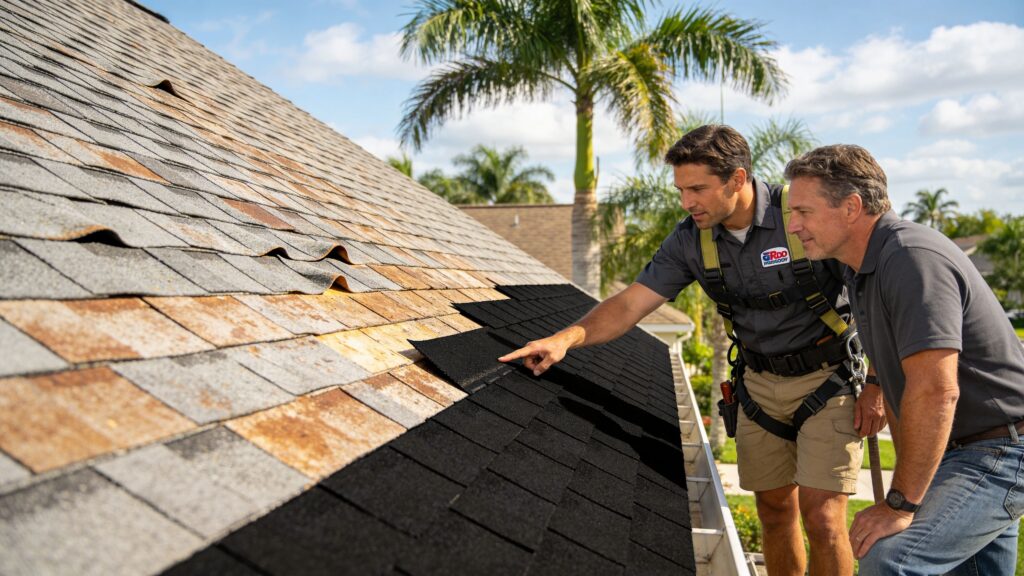
For owners comparing crews visually, this Fort Lauderdale roofing project image is the kind of documentation style you want to see: actual field conditions, not only polished marketing shots.
One final point. In a mature market, scale and professionalism do exist. Best Roofing, founded in 1978 in Fort Lauderdale, reports $41.8 million in annual revenue, $1 million in funding, and 238 employees, showing that roofing companies here can operate at a high level when systems, staffing, and execution are in place (Best Roofing company profile). You may not need a contractor that size. You do need one that operates with that level of discipline.
Navigating Fort Lauderdale Roofing Codes and Materials
More than one roofing job in Fort Lauderdale gets decided by color and price first, then punished later by wind exposure, permit corrections, or insurance pushback after a storm. Local code is not a formality here. It affects what system can be installed, how it must be attached, and whether the work will hold up during inspection and claim review.
That matters even more after storm damage. If your replacement or repair does not match approved assemblies, fastening patterns, or required documentation, the insurance carrier may question scope, cause, or payment. I have seen owners focus on the visible material and miss the paperwork trail that supports the claim.

What local code pressure means in practice
Fort Lauderdale roofing decisions start with the assembly, not the finish. Underlayment, edge metal, flashing, secondary water barrier requirements where applicable, ventilation, and fastening all have to line up with the product approval and the building’s exposure category. The Florida Building Code is updated on a regular cycle through the Florida Building Commission, and local enforcement follows those adopted standards closely (Florida Building Code resources).
For owners, the practical question is simple. Will the system you are buying satisfy permit review, final inspection, and insurer scrutiny if this roof is tied to a storm claim? A contractor who cannot explain that chain clearly is leaving you exposed.
Older unpermitted roof work creates another problem. It can surface during underwriting, resale, or after a loss when the carrier starts asking for permit history and prior repair records. This guide on how to sell unpermitted property in Florida is useful because permit gaps have a way of showing up at the worst time.
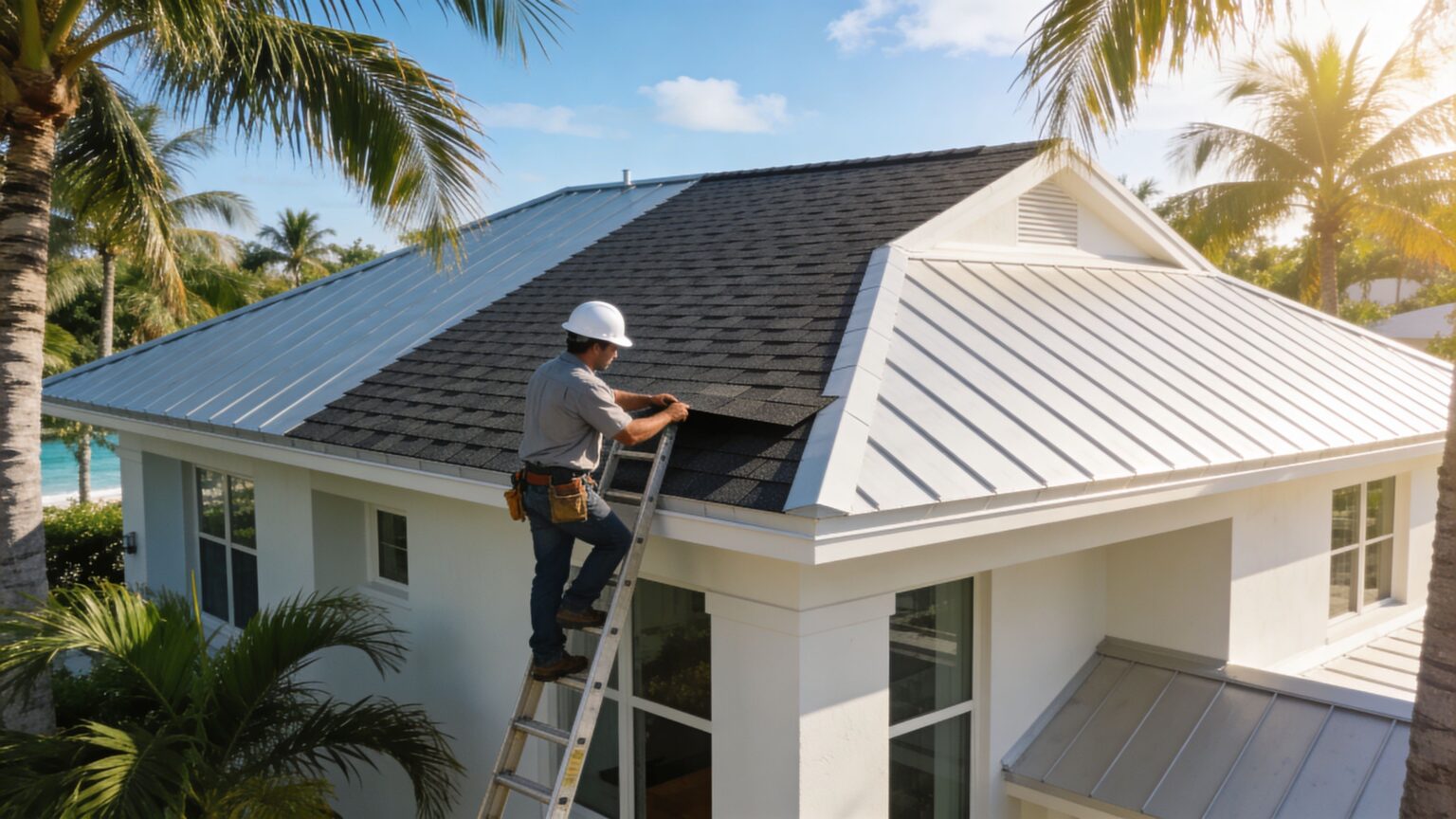
If you want a visual reference while comparing assemblies, this roof systems comparison image shows the kind of system-specific presentation that helps owners ask better questions.
Fort Lauderdale Roofing Material Comparison
| Material | Typical Lifespan | Wind Resistance | Approx. Cost (per sq ft) | Best For |
|---|---|---|---|---|
| Architectural shingles | Shorter service life than premium metal systems | Can perform well, but attachment quality and edge detailing matter | $8-12 | Owners prioritizing lower upfront cost |
| Metal standing seam | Long service life when properly specified and maintained | Strong choice for high-wind areas with the right attachment design | $12-18 | Coastal homes, owners planning to stay long term |
| Tile | Long-lasting system when installed correctly | Can perform well, but weight, fastening, and repair skill matter | Higher upfront cost | Homes where appearance and durability both matter |
Practical Material Comparisons
Shingles remain a valid choice in South Florida when the full system is built correctly. They are easier to budget for, repairs are usually more straightforward, and many homes are designed around them. The weak point is not the shingle itself. It is the low bid that strips out better underlayment, skimps on flashing replacement, or glosses over perimeter attachment.
Metal has a higher upfront cost and often a better long-term argument, especially near the coast. It is lighter than tile, sheds water fast, and usually gives owners a cleaner documentation package for insurance because the system details are easier to define in writing. The trade-off is that material and trim errors are expensive, and not every crew that installs shingles should be trusted with standing seam.
Tile serves a different type of property owner. It delivers the South Florida look many people want and can last a long time, but repairs require patience and skill. Matching older tile can be difficult, breakage during service work is common, and underlayment often reaches the end of its life before the tile does. That detail matters during claims, because an insurer may look closely at whether the problem is storm damage, age-related deterioration, or both.
Choose based on code compliance, service life, repairability, and how the system will be documented if you ever have to defend a storm claim. Water gets in through transitions, penetrations, and edges long before it cares what the roof looks like from the street.
Making Sense of Roofing Estimates and Costs
Roof pricing in Fort Lauderdale can swing hard for the same house, even when each contractor says they are bidding the same job. In my experience, that spread usually comes from scope gaps, not magic savings.
A real estimate lets you compare work line by line. A thin estimate leaves room for shortcuts, change orders, and insurance problems later if storm damage is part of the file.

What a solid estimate should spell out
The estimate should clearly list tear-off or recover, underlayment, flashing replacement, valley details, vent work, perimeter metal, deck re-nailing if required, disposal, permit responsibility, inspection coordination, and cleanup. If you cannot tell what is included, you do not have a usable bid yet.
It should also explain how concealed damage is handled. Rotten decking, wet insulation, and damaged fascia often do not show up until the roof is opened. The right contractor documents that condition with photos, gives a unit price or written approval process, and does not spring the bill on you at the end.
That matters even more after a storm. If a repair or reroof may turn into an insurance claim, the estimate needs language that separates known work from possible supplemental work. That paper trail helps when the carrier asks why the final invoice exceeded the original number.
Where cost differences usually show up
The final price often moves because one roofer included items another left out. Ask direct questions about the gaps that cause the most trouble:
- Flashing replacement. New roof, old flashing is a bad bargain in South Florida.
- Decking repairs. Find out how damaged wood is measured and billed.
- Vent details. Intake, exhaust, and boot replacement should be listed, not assumed.
- Perimeter metal. Drip edge, gravel stop, coping, and edge securement affect both price and performance.
- Permits and inspections. Get it in writing who pulls the permit and who meets the inspector.
- Cleanup and disposal. Dumpster fees, haul-off, and magnet sweep should not be vague.
Commercial owners and homeowners both make the same mistake. They focus on the first number instead of the total cost of owning the roof. A cheaper proposal can become the expensive one fast if it excludes code upgrades, reinspection visits, or replacement of key transition metal.
Good estimating usually tracks with good communication. The companies that answer clearly, document changes, and keep paperwork organized are often the same companies that keep jobs from drifting. That is one reason this piece on boosting home service appointments is relevant here. Fast, clear follow-up is not just sales discipline. It is an early sign of how the job and any insurance paperwork will be handled once work starts.
Expert Tips for Navigating Roof Insurance Claims
Insurance claims are where a lot of owners lose time and money. The roof may be damaged, the policy may cover storm loss, and the claim still gets tangled because the file wasn’t documented correctly from day one.
Florida homeowners feel that pressure. Claim denial rates in the state hover around 25%, and many owners still don’t know how to handle claims with major insurers like Citizens Property Insurance, which handled 40% of local claims after the 2024 storms (Fort Lauderdale roofing claims overview).

What a clean post-storm claim looks like
A typical strong claim starts the same way every time. You document before cleanup changes the scene.
Take wide photos of every slope you can safely capture from the ground, then close-ups of visible damage, fallen material, interior stains, and any damaged personal property below leaks. Save weather-date context from your own timeline. Note when you first saw the leak, where it appeared, and whether the ceiling stain grew after later rain.
Then call your insurer. Open the claim promptly and ask what they want for first-step documentation. After that, schedule a roofing inspection with a contractor who understands claim language, not just repair work. Paletz Roofing and Inspections provides damage assessments, repairs, replacements, and inspections across Broward, Miami-Dade, and Palm Beach, which is the kind of service mix owners often need when a claim moves from emergency mitigation into full scope review.
Where homeowners get tripped up
The most common problem is letting the carrier’s first impression define the whole file. If the adjuster sees only an aging roof with no organized supporting evidence, the claim can shift toward wear and tear instead of storm-caused damage.
Other mistakes are just as costly:
- Cleaning up too much too soon. You can erase evidence.
- Using poor photos. Dark, cropped, or unlabeled images don’t help.
- Skipping the contractor walk-through. A roofer can point out system damage the owner won’t recognize.
- Accepting a short scope without questions. Initial scopes aren’t always complete.
Bring your roofer to the adjuster meeting if the insurer allows it. Technical roof details often decide whether damage gets properly recognized or minimized.
Understand supplements before you need one
A supplement is additional claim documentation submitted when the approved scope doesn’t cover what the roof requires for proper repair or code-compliant replacement. That can happen when tear-off exposes damaged decking, when flashing details were missed, or when code-triggered items weren’t included in the first pass.
Organized documentation excels. Photos, inspection notes, permit-related requirements, and line-by-line scope comparisons all matter. Owners who stay calm, keep records, and insist on detail usually fare better in this process than owners who rely on phone calls and memory.
Your Partner in Protecting Your Fort Lauderdale Property
Hiring a roofing company in Fort Lauderdale isn’t about finding the lowest number or the fastest promise. It’s about choosing a contractor who can inspect carefully, explain the assembly, build to local wind demands, write a complete estimate, and help you keep the insurance process on track.
That means asking tougher questions. It means paying attention to edge details, ventilation, permits, documentation, and scope language. It also means choosing a roofer with real South Florida experience, not just a sales operation that appears after storms and disappears after final payment.
If you protect the process, you protect the property.
If you need a clear roof inspection, emergency leak help, or a detailed review of a repair or reroofing scope, contact Paletz Roofing and Inspections. They handle residential and commercial roofing across Broward, Miami-Dade, and Palm Beach counties, including inspections, repairs, replacements, and storm-damage assessments.