
When you see warped shingles on your roof, it's easy to feel a little uneasy. What does it really mean for your Miramar home? More often than not, curling shingles on a roof in Miramar are the first real sign of aging and heat damage. They're a clear signal that your roof is starting to lose its protective edge, a common problem thanks to South Florida's relentless sun and humidity.
What Every Miramar Homeowner Should Know About Curling Shingles
Imagine leaving a piece of paper outside in the thick Florida air. It soaks up the moisture, gets baked by the sun, and before long, it starts to warp and lose its shape. That's almost exactly what happens to the asphalt shingles on your roof. What starts as a small cosmetic flaw can quickly turn into a major weak spot for your entire home.
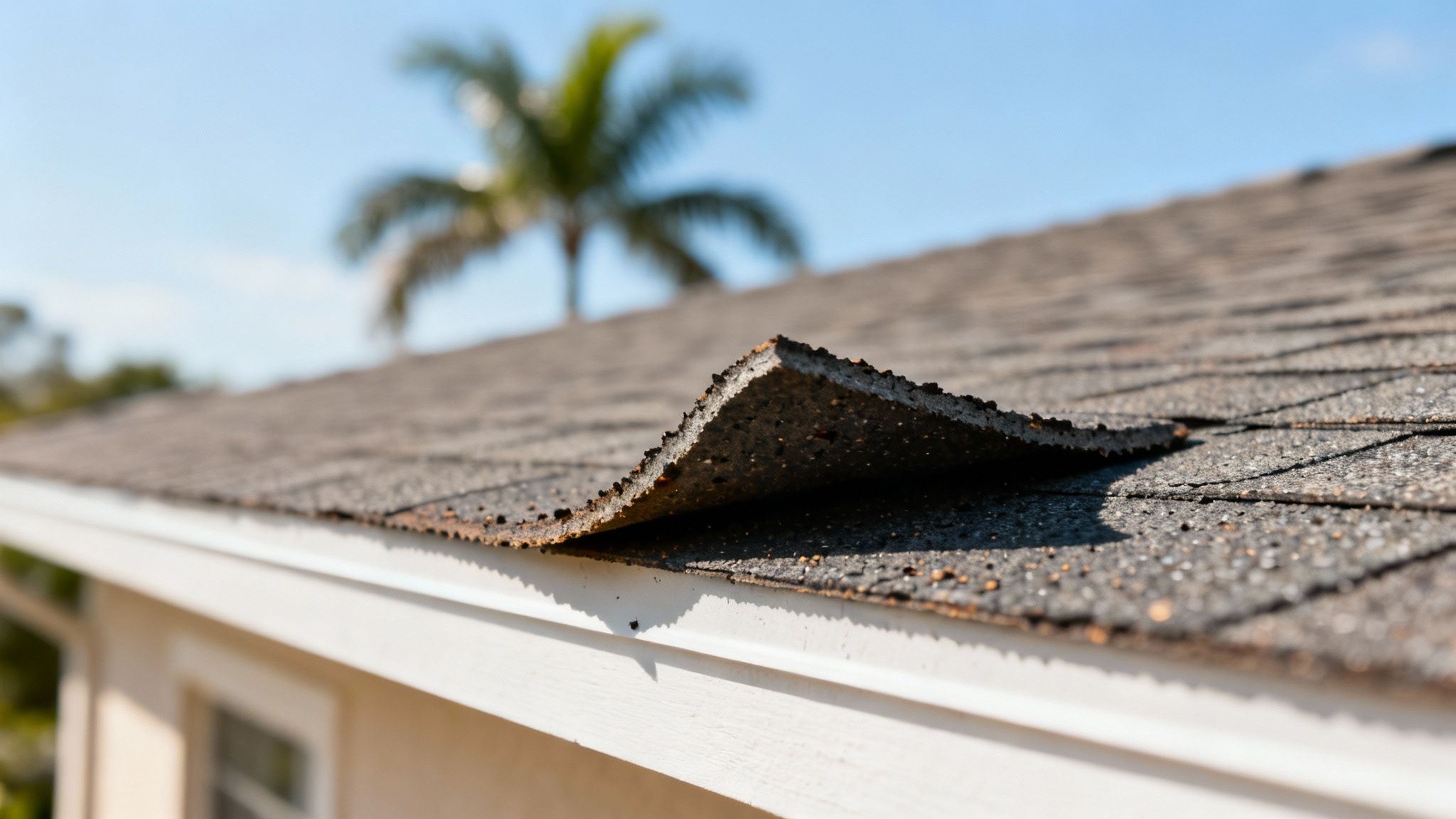
This warping process isn't random; it typically happens in two very specific ways. Knowing the difference between them will help you have a much clearer conversation with a roofing professional about what's going on with your roof.
The Two Types of Shingle Curling
When you get a chance to look at your roof, you'll probably spot one of two distinct patterns. Each one points to different root causes, ranging from simple old age to a more serious problem like poor attic ventilation.
- Cupping: This is when the edges of the shingle stay flat against the roof, but the center starts to dip down, creating a concave or "cupped" look. It's often a sign that the bottom of the shingle is absorbing more heat or moisture than the top.
- Clawing: Clawing is the opposite. Here, the corners and edges of the shingle lift upward, while the center stays put. This is a classic symptom of an overheating roof, where the top surface is shrinking faster than the material underneath.
To help you tell the difference at a glance, here’s a quick breakdown.
Quick Guide to Shingle Curling Types
| Curling Type | Visual Appearance | Common Cause |
|---|---|---|
| Cupping | The center of the shingle dips inward, creating a concave shape. | Moisture buildup or excessive heat on the shingle’s underside. |
| Clawing | The corners and edges of the shingle curl upward, like a claw. | The top surface of the shingle is shrinking from intense sun exposure. |
Paying attention to which type you have can give your roofer important clues about your roof's health right away.
In Miramar's intense climate, it's not uncommon for up to 40% of homes with asphalt shingle roofs to show some curling within just 10 years. The problem gets much worse when an attic can't breathe. Poor ventilation traps super-heated, moist air that essentially slow-cooks the shingles from the inside out. You can find more details on roofing trends and stats over at RoofersGuild.com.
Shingle curling is more than just an eyesore; it's a distress signal from your roof. It indicates that the shingle's structural integrity is compromised, making it less resistant to wind, rain, and impacts.
Catching these signs early is your best defense. A few curled shingles might not seem like a big deal, but each one exposes the layers underneath to the elements. This is how leaks, wood rot, and much bigger structural problems get their start. This guide will walk you through exactly why this happens, the risks involved, and what you can do about it.
The Top Reasons Your Miramar Shingles Are Curling
When you spot curling shingles on a roof in Miramar, it's almost never a single problem. It’s usually a combination of factors working together, with our intense South Florida climate acting as the main catalyst. Think of your roof like a paperclip being bent back and forth—eventually, the constant stress from sun and rain causes it to weaken.
Pinpointing the real reason your shingles are failing requires looking beyond the surface. Let's break down the most common culprits, from simple aging to hidden problems inside your attic.
Natural Aging and Granule Loss
Every roof has an expiration date. Asphalt shingles are covered with a layer of ceramic-coated granules, which act like a powerful sunscreen, shielding the asphalt from damaging UV rays. Over the years, the sun, wind, and rain slowly strip these granules away.
Once that protective layer is gone, the asphalt underneath is exposed. It starts to absorb more heat, dry out, and shrink. This shrinkage is what forces the edges of the shingle to pull upward, creating that classic "clawing" look. While it's a natural process, Miramar's relentless sun can speed it up dramatically. If your roof is hitting the 15 to 20-year mark, age is almost certainly a major factor.
The Hidden Menace of Poor Attic Ventilation
One of the most destructive—and most overlooked—causes of curling shingles is a poorly ventilated attic. Your attic isn't just for storage; it’s a critical part of your home's breathing system. It needs a steady flow of air: cool, dry air comes in through soffit vents, and hot, moist air gets pushed out through exhaust vents near the peak.
When that airflow is blocked or just isn't enough, your attic essentially becomes an oven. On a typical South Florida summer day, attic temperatures can easily rocket to 130°F or higher. This extreme heat literally bakes your shingles from the bottom up, causing them to warp and curl long before their time.
A poorly ventilated attic doesn't just damage your shingles; it also traps moisture. This condensation can lead to wood rot, mold growth, and decreased insulation effectiveness, driving up your energy bills as your AC works overtime.
This one-two punch of trapped heat and moisture is a recipe for disaster, and it can slash years off your roof's lifespan. Fixing ventilation problems is often the first step toward a lasting roofing solution.
Shortcuts and Errors During Installation
A brand-new roof can be destined for failure from day one if it wasn't installed correctly. The roofer's skill is just as vital as the quality of the materials. Unfortunately, a few common installation mistakes are notorious for causing curling shingles down the road.
- Improper Nailing: If nails are driven too deep, they tear right through the shingle mat. If they're too high, the shingle is left loose and vulnerable to wind. And if they're in the wrong spot, they create stress points that cause the shingle to pull and warp.
- Misaligned Shingles: Shingles have to be laid out with precision. When they're installed crooked or too tight, they don't have room to expand and contract with temperature changes, which leads to buckling and curling at the seams.
- Inadequate Underlayment: The underlayment is the last line of defense between the shingles and your roof deck. Using a cheap or improperly installed underlayment allows moisture to seep through, causing the wood deck to swell and push the shingles up from below.
These kinds of errors create built-in weak spots that our Miramar weather will find and exploit in no time.
Layering New Shingles Over an Old Roof
Putting a fresh layer of shingles right on top of an old one might sound like a smart way to save money. But this shortcut, often called a "roof-over," usually creates more problems than it solves.
The old shingles are rarely flat, and they may have moisture trapped underneath. The new shingles can't form a proper seal, leaving gaps and bumps that are easily caught by the wind. Worse, the heat trapped between the two layers supercharges the aging process for both, causing the new shingles to curl far sooner than they should. A complete tear-off is almost always the better long-term investment.
Occasional Manufacturing Defects
While it's less common, sometimes the problem isn't with the weather or the installation—it's with the shingles themselves. A bad batch can have flaws in the asphalt mix or issues with the fiberglass mat, resulting in shingles that just don't hold up.
If you see widespread, uniform curling on a roof that's only a few years old, it’s worth looking into a potential product defect. This situation might even be covered by the manufacturer’s warranty.
The Hidden Dangers of Ignoring Curling Shingles
It's easy to look at a few curling shingles and write them off as a minor cosmetic flaw. But for any Miramar homeowner, treating them as just an aesthetic issue is a serious mistake. Those lifted edges are a huge vulnerability, basically rolling out the welcome mat for wind and rain to get where they absolutely don't belong.
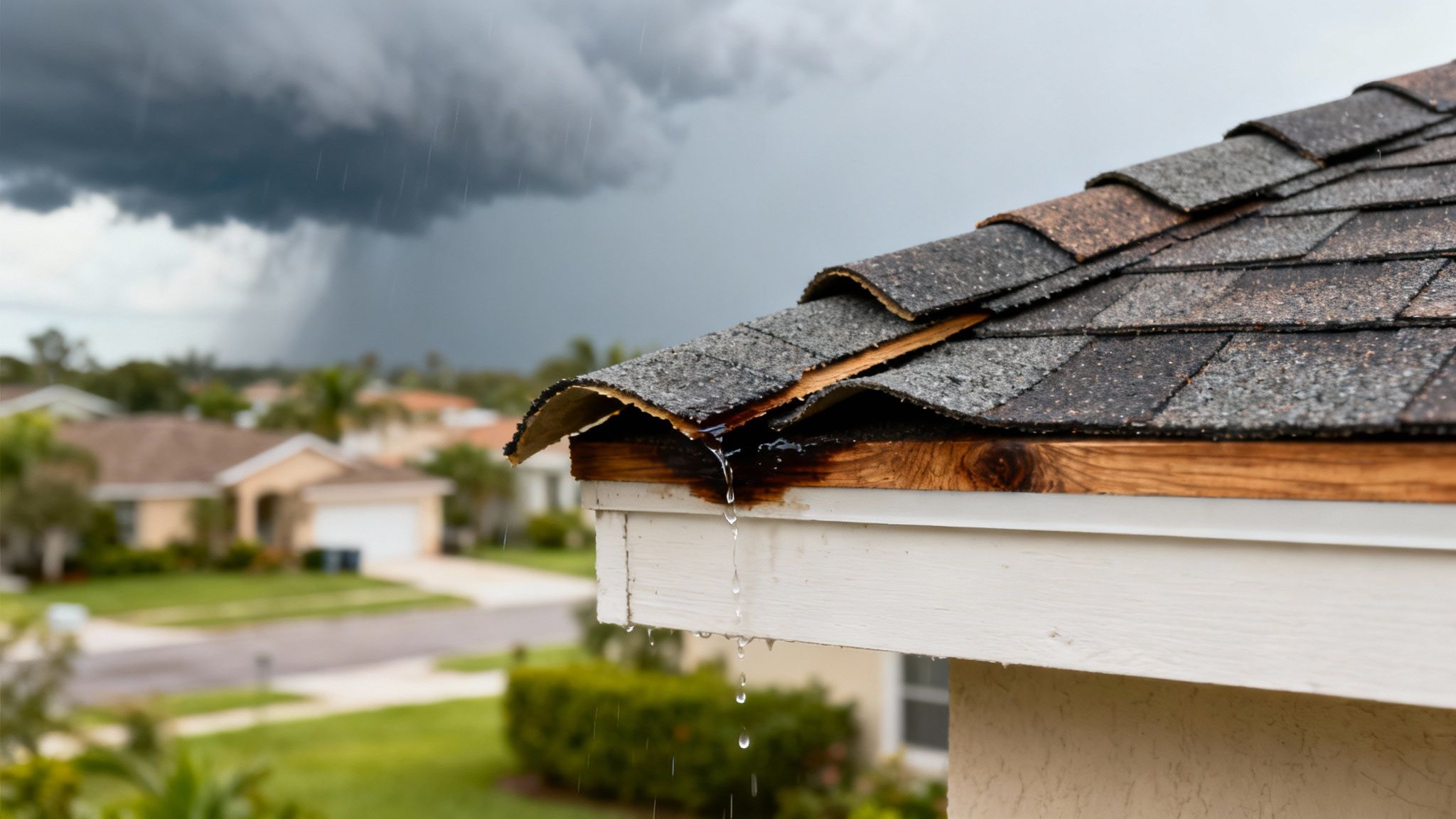
Think of a healthy shingle as a sealed shield, locked down tight. The moment it starts to curl, that seal is broken. Each upturned edge becomes the perfect little scoop, catching and funneling water underneath the shingle instead of letting it run safely into your gutters.
This isn't just a tiny drip; it's a direct pipeline for moisture to start attacking your roof's core structure.
The Slow Creep of Water Damage and Rot
Once water slips beneath the shingles, it kicks off a slow but relentless cycle of destruction. The wooden roof deck—the very foundation of your roofing system—begins to soak up this moisture like a sponge. Over time, this constant dampness leads to wood rot, turning sturdy decking soft, spongy, and weak.
This hidden damage silently compromises the structural integrity of your entire roof. Eventually, what started as a few curled shingles can escalate into major leaks inside your home, showing up as ugly dark stains on your ceilings and walls. Ignoring them makes it critical for homeowners to understand effective roof leak prevention strategies.
On top of the wood damage, that trapped moisture creates the perfect dark, damp breeding ground for mold and mildew in your attic and behind your walls. This doesn't just create musty odors; it can release harmful spores into your home's air, creating a real health risk for your family.
Increased Vulnerability During Storms
Here in Miramar, the threat of hurricanes and severe thunderstorms is a fact of life. A roof with curling shingles on roof Miramar is dangerously unprepared for high winds. Those lifted edges act like little sails, perfectly positioned to catch a strong gust.
A powerful gust can easily get under a curled shingle and rip it right off the roof, triggering a chain reaction. Once one shingle is gone, its neighbors are left exposed and even more vulnerable. A small area of damage can quickly spiral into a catastrophic failure during a big storm, which is why a well-maintained roof is your single most important line of defense against severe weather.
A single missing shingle can expose over three square feet of your roof deck to direct rainfall. During a heavy South Florida downpour, this can translate into gallons of water pouring into your home in just a few minutes, leading to massive interior damage.
The Financial Fallout of Neglect
The dangers of ignoring curling shingles go far beyond physical damage to your home. The financial consequences can be just as severe, and they often pop up in places you wouldn't expect.
- Higher Energy Bills: When the insulation in your attic gets waterlogged, it loses its ability to regulate temperature. Your home becomes much harder to cool, forcing your HVAC system to work overtime and driving up your monthly utility costs.
- Pest Infestations: Rotting wood is an open invitation for termites, carpenter ants, and other wood-destroying pests to set up shop in your roof structure. This leads to expensive extermination and repair bills down the road.
- Insurance Complications: Most homeowners insurance policies have clauses that exclude damage caused by neglect or poor maintenance. If your insurer finds that you ignored curling shingles, they could deny your claim for a leak or storm damage, leaving you to foot the entire bill for repairs yourself.
At the end of the day, putting off a minor shingle repair almost guarantees you’ll be facing a much bigger, more expensive disaster later on. Acting quickly isn't just about fixing your roof—it's about protecting your home's structure, your family's health, and your financial well-being.
How to Safely Inspect Your Roof for Curling Shingles
You think you might have a problem with your roof, but how can you be sure without putting yourself at risk? The good news is you can get a surprisingly clear picture of what’s going on up there with both feet planted safely on the ground. Your safety comes first, always. A simple walk-around inspection often gives you more than enough information to have an intelligent conversation with a professional roofer.
The idea here isn’t to diagnose the problem like a pro. It's about gathering some real visual evidence so you can explain exactly what you're seeing. This simple step puts you in control, helping you understand the situation and protect your home.
Your Ground-Level Inspection Toolkit
You don't need a truck full of fancy equipment for this first look. In fact, your most powerful tool is a basic pair of binoculars. They’ll let you get a close-up view of every shingle without ever leaving the safety of your yard.
Take a slow walk around the entire perimeter of your house. Stop at a few different spots to get a good look at each section of the roof from various angles.
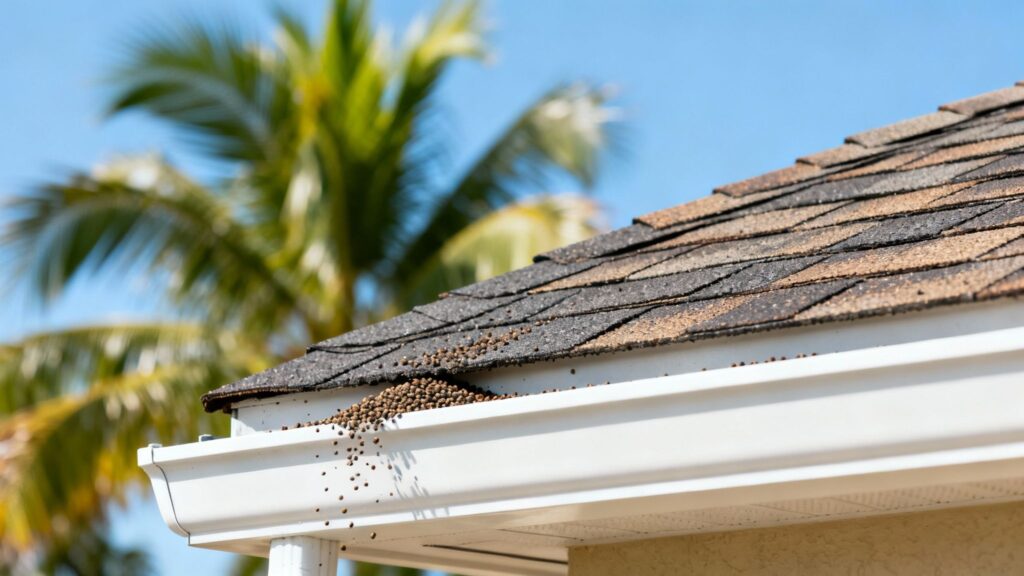
Be methodical. You're looking for specific red flags that scream "trouble." Keep a sharp eye out for any shingles that look warped or uneven, especially where the corners and edges are lifting up. This is the classic sign of the curling shingles on a roof Miramar homeowners know all too well. Also, make sure to check your gutters and the ground around your downspouts for little black, sand-like granules. That's the protective top layer of your shingles washing away, which is a major sign of wear.
What to Look For From the Ground
As you're scanning the roof, make a few notes—either mentally or on paper—of what you find. This information will be pure gold when you eventually call a contractor.
- Visible Curling or Clawing: Can you actually see the edges of the shingles peeling up? Take note of which parts of the roof seem to be the worst, like the sections that get blasted by the intense afternoon sun.
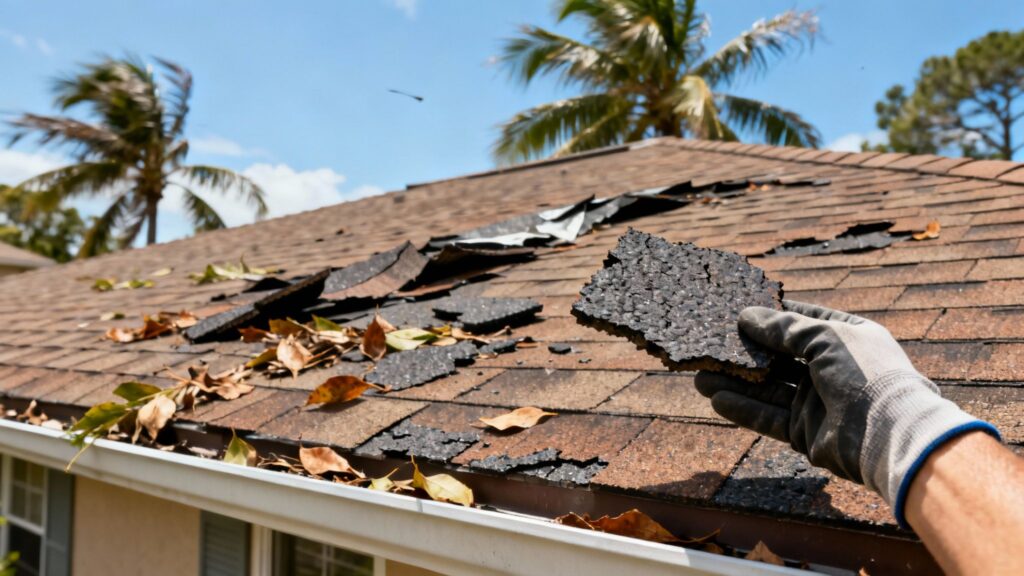
- Missing or Damaged Shingles: Look for any shingles that are obviously cracked, have pieces broken off, or are gone completely. These are wide-open invitations for water to get in. You can see examples of what severe shingle damage looks like to help you spot these problems.
- Dark Streaks or Stains: Those long, ugly dark streaks running down your roof are usually algae. While it might just seem like a cosmetic issue, algae can trap moisture and cause your shingles to break down much faster.
- Debris Piling Up: Pay close attention to the valleys where different roof sections meet. If you see a buildup of leaves, pine needles, or other gunk, it can act like a dam, trapping water and forcing it to back up under your shingles.
Remember, this ground-level check is all about observation, not diagnosis. You're just a detective gathering clues about your roof's health. Finding any of these signs is your cue to bring in a professional for a much more detailed look.
When a Ladder Inspection Is an Option
If you're someone who is completely comfortable and experienced with working at heights, a closer look from a ladder can give you more details. But let's be clear: safety has to be your absolute number one priority. Whatever you do, never step onto the roof itself. If you suspect there’s damage, the wood decking underneath could be soft and unsafe.
If you do decide to use a ladder, you need to follow safety protocols to the letter:
- Use a Sturdy Ladder: Make sure it's in great shape and placed on solid, level ground. No wobbling.
- Maintain Three Points of Contact: Always keep two hands and one foot, or two feet and one hand, on the ladder.
- Don't Overreach: It’s tempting to lean way out to see something, but don't. Climb down and move the ladder.
- Have a Spotter: Always have another person there to hold the base of the ladder steady.
From a stable position on the ladder, you can get a better angle on the lower parts of the roof, peek into your gutters, and check the flashing around your chimney or vents. But if you feel even slightly uneasy or unsafe, get down immediately. No piece of information is worth a trip to the emergency room.
To give you a better idea of what to look for while staying safe, here's a simple checklist you can use.
Roof Inspection Safety Checklist
This checklist will help you perform a safe visual inspection from the ground or a properly secured ladder. Remember, the goal is to gather information, not perform repairs.
| Inspection Area | What to Look For | Safety Tip |
|---|---|---|
| Shingles (Overall) | Curling, clawing, buckling, or lifting edges. | Use binoculars from the ground for the safest view of the entire roof surface. |
| Shingles (Individual) | Cracks, missing pieces, or bald spots with missing granules. | Never step on a potentially damaged roof; the decking could be compromised. |
| Gutters & Downspouts | Buildup of shingle granules, blockages from leaves/debris. | From a ladder, only reach what you can comfortably access. Don't lean. |
| Roof Valleys | Piles of leaves, branches, or other debris trapping water. | A clear view from the ground is often sufficient to spot major blockages. |
| Flashing | Rust, cracks, or gaps around chimneys, vents, and skylights. | Use a ladder for a closer look, but maintain three points of contact at all times. |
| General Surface | Dark streaks (algae), moss growth, or sagging areas. | Have a spotter hold your ladder if you choose to go up for a closer inspection. |
In the end, this initial check-up is all about arming yourself with knowledge. It helps you understand the severity of the problem so you can hire the right professional and know exactly what you're paying for.
Repair Or Replace Your Roof In Miramar
When you're staring up at curling shingles on a roof in Miramar, you eventually hit the big question every homeowner dreads: Do you patch the problem, or is it time for a full-blown replacement? Getting this call right is a big deal, impacting everything from your home's safety to your bank account.
Think of it like the plumbing in your house. A single pipe springing a small leak under the sink? A targeted repair makes perfect sense. But if all the pipes are old, corroded, and threatening to fail, patching that one leak is just putting off the inevitable flood. Your roof operates on the very same principle.
Evaluating the Scope of the Problem
The first step is an honest assessment of how bad the curling really is. If you've just got a few isolated shingles acting up on one section of a relatively new roof, it might just be a localized problem—maybe a few defective shingles or a small installation mistake. In that case, a professional repair is usually the smart move. A roofer can carefully remove the damaged shingles, check the wood underneath for any moisture, and seamlessly install new ones.
However, if you're seeing those curled edges across multiple areas of your roof, on both the sun-blasted and shaded sides, you're likely looking at a systemic issue. Widespread curling is the classic sign that your roof has simply reached the end of its service life. Trying to patch one spot won't stop another from failing next month, and you'll get stuck in a frustrating and expensive cycle of band-aid fixes.
Roofing pros often use the 30% rule as a guide. If more than 30% of your roof's surface is showing signs of damage—curling, granule loss, missing shingles—a full replacement is almost always the smarter, more protective choice for the long haul.
Key Factors in Your Decision
Beyond just how much damage you see, a few other factors will point you toward the right answer. A professional inspection is the only way to get a definite diagnosis, but you can get a pretty good idea of which way you’re leaning by considering these points.
- Roof Age: In South Florida, a typical asphalt shingle roof has a lifespan of 15 to 20 years. If your roof is getting close to that age or has already passed it, curling is a tell-tale sign of old age. Pouring money into major repairs on a senior-citizen roof is often a bad investment, as other parts are bound to fail soon.
- Previous Repairs: Has the roof been patched up before? A roof with mismatched shingles from different repair jobs can be a problem. Adding yet another patch can compromise the roof's overall integrity, creating weak points at the seams where old and new materials meet.
- Underlying Issues: Curling shingles are often just a symptom of a deeper problem, like poor attic ventilation. If your attic is trapping heat and moisture, simply replacing the curled shingles won't fix the root cause. The new shingles will just start curling in a few years, too. A full replacement gives a contractor the chance to correct these foundational ventilation problems for good.
- Future Plans: Thinking of selling your home in the next few years? A brand-new roof is a huge selling point that boosts curb appeal and property value. On the flip side, a roof covered in patches and curled shingles can be a major red flag for buyers and can complicate the home inspection. You can see the difference a well-maintained roof makes in this gallery of roofing examples.
This decision tree infographic can help you visualize the best course of action based on what you're seeing on your roof.
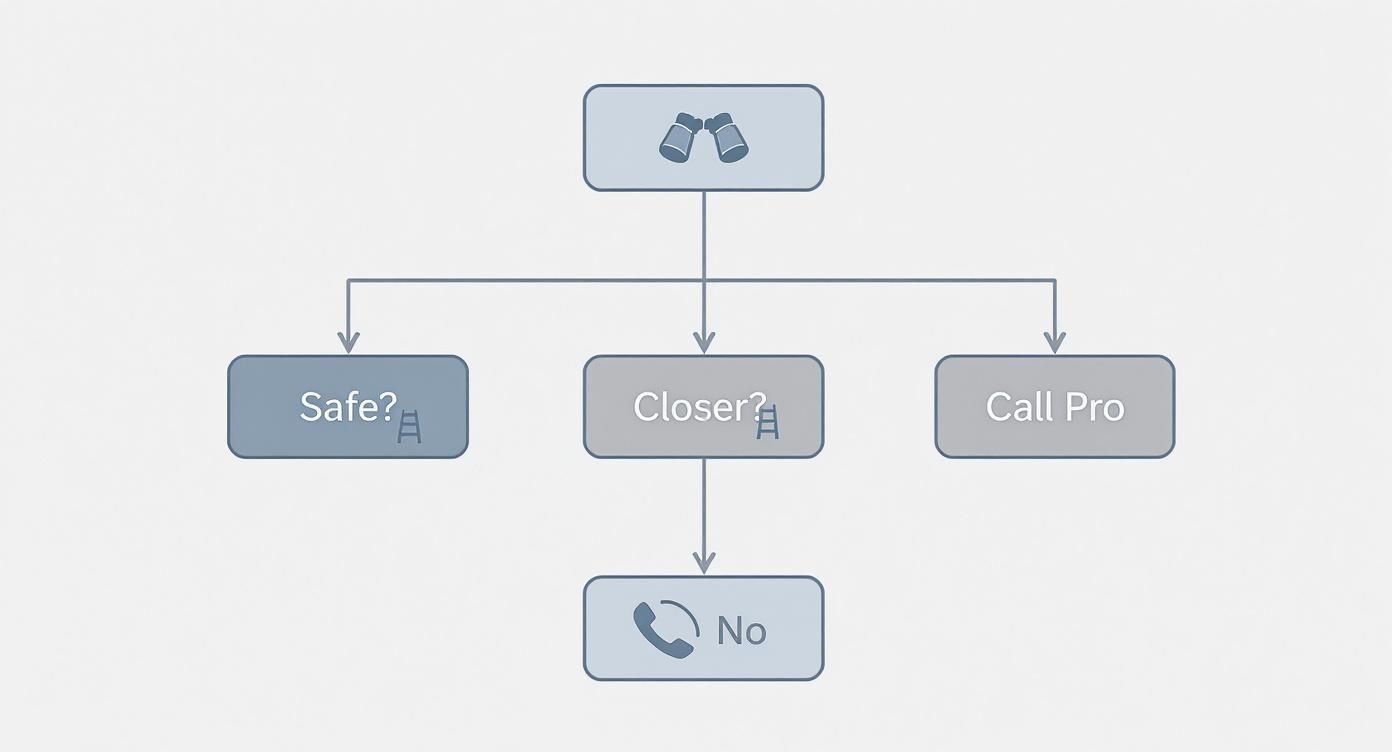
As the guide shows, any uncertainty or sign of widespread damage means it's time to call in a professional for a definitive look.
Comparing Costs: Repair vs. Replacement
Sure, a full replacement comes with a higher upfront cost, but for a roof with widespread problems, it's often the most financially sound decision. A constant stream of small repair bills can add up surprisingly fast, and those repairs never truly bring your roof back to 100%.
A new roof, on the other hand, comes with a fresh warranty and delivers total peace of mind—especially when hurricane season rolls around. When you get a quote, make sure it’s comprehensive, covering not just the shingles but also the underlayment, flashing, and any ventilation fixes. This ensures you're getting a complete, lasting solution, not just another temporary patch.
Finding a Miramar Roofing Contractor You Can Trust
Choosing the right professional is just as critical as the decision to repair or replace your roof. Once you've spotted curling shingles on a roof in Miramar, the next step is finding a skilled contractor who will protect your home and your investment. This isn't just about hiring someone to nail down shingles; it’s about finding a partner you can trust to fortify your home against South Florida's brutal weather.
The process of vetting a roofer can feel overwhelming, but it really just boils down to a few non-negotiable checks. Think of it like a job interview where you’re the hiring manager. Your goal is to verify their credentials, check up on their past work, and make sure they’re the right fit for such a critical project. A few simple steps can help you separate the true pros from the rest.
Verifying Credentials Is Non-Negotiable
In Florida, a roofing contractor absolutely must be licensed and insured. This is your first and most important checkpoint, period. A valid license proves they’ve met the state's tough requirements for knowledge and experience. More importantly, proper insurance—specifically liability and worker's compensation—protects you from any financial fallout if an accident happens on your property.
Never just take a contractor's word for it. You should always ask for their license number and copies of their insurance certificates. This simple verification step is your number one safeguard.
The Power of Local References and Reviews
Once you've confirmed their credentials, it's time to dig into their reputation. Online reviews are a decent starting point, but local references are pure gold. A reputable Miramar contractor will be proud to give you a list of recent projects right in your area.
Driving by these homes gives you a firsthand look at their workmanship. Better yet, if you can actually speak with a past client, ask them some direct questions:
- Did the crew show up on time and keep the job site clean every day?
- Was the final bill consistent with the initial estimate?
- How did the company handle any unexpected issues that came up during the project?
This kind of feedback gives you a real-world picture of what it’s like to work with them, going way beyond a simple star rating.
Deconstructing the Written Estimate
A professional estimate is so much more than just a final price. It should be a detailed, itemized document that clearly lays out every single aspect of the job. A vague or handwritten quote is a massive red flag.
Your estimate should include:
- A full scope of work, detailing the tear-off of old materials, any necessary decking repairs, and the installation of all new components.
- Specific materials to be used, including the brand and type of shingles, underlayment, and flashing.
- Labor and permit costs, broken down so you know exactly where your money is going.
- Projected start and completion dates, setting clear expectations for the timeline.
This level of detail ensures everyone is on the same page and prevents those dreaded surprise costs later on. To get a better idea of what a professional assessment involves, you can see how a comprehensive roofing inspection is structured.

A detailed contract protects both you and the contractor. Vague terms often lead to disputes, so insist on clarity before signing anything. Any hesitation to put all agreements in writing should be considered a serious warning sign.
Finally, be wary of high-pressure sales tactics or anyone demanding a large payment upfront. A trustworthy contractor will give you the time and information you need to make a confident decision without trying to force your hand.
Your Curling Shingle Questions Answered
Even when you know what causes curling shingles and the risks they pose, it's natural to have more specific questions. Here are some straightforward answers to the things we hear most from homeowners dealing with a curling shingles on roof Miramar property.
How Long Should An Asphalt Shingle Roof Last In Miramar?
In Miramar's tough climate—think high heat, relentless humidity, and intense sun—a standard asphalt shingle roof will typically give you 15 to 20 years of service.
You might get a bit more out of premium architectural shingles, but our severe weather really speeds up the wear and tear process. The two biggest things you can do to get the most life out of your roof in South Florida are ensuring you have proper attic ventilation and keeping up with regular maintenance.
Can I Fix Curling Shingles Myself?
It’s tempting to try a DIY fix, but we strongly advise against it. Just slapping some sealant on a curling shingle is like putting a band-aid on a deep cut—it’s a temporary patch that often traps moisture, making the real problem even worse.
Even more importantly, walking on a damaged, brittle roof is incredibly dangerous.
A professional can safely figure out what's really going on—whether it's poor ventilation, old age, or a bad installation job—and give you a solution that actually lasts. This protects your home and keeps any existing warranties intact.
Will My Homeowners Insurance Cover A Roof With Curling Shingles?
Whether your insurance will cover the damage really comes down to why the shingles are curling. Here’s how it usually breaks down:
- Probably Not Covered: If the curling is just from old age, normal wear and tear, or lack of maintenance, your insurance company will see it as a homeowner's responsibility. These issues are almost never covered.
- Maybe Covered: If you can prove the damage was a direct result of a specific, covered event like a hurricane or a severe named storm, you might have a valid claim.
Before you even think about calling your insurer, have a professional roofer inspect and document everything. This paperwork is absolutely critical for getting your claim processed smoothly and successfully.
If you're starting to see signs of wear on your roof, don't wait for a small headache to turn into a huge disaster. The experts at Paletz Roofing and Inspections have spent over 30 years protecting homes just like yours in South Florida.
Contact us today for a free, no-obligation inspection and get the peace of mind that comes with knowing your home is in good hands. Visit us at https://paletzroofing.com to schedule your appointment.