
Don't let those puddles on your flat roof in Royal Palm Beach fool you—it’s a serious red flag that demands immediate attention. When water stops draining, it's not just a minor annoyance; the sheer weight and constant moisture start a countdown, degrading your roofing materials and potentially threatening your building’s entire structure. In Florida's tough climate, ignoring it is a recipe for a very expensive disaster.
Why Ponding Water Is a Major Risk for Royal Palm Beach Roofs
A flat roof isn't just a simple cover; it's an engineered system designed to move water off quickly and efficiently. When that system breaks down, you get more than just a puddle. Here in Royal Palm Beach, where the sun is intense and the rain comes down in sheets, that standing water becomes a destructive force, rapidly aging your roof and setting it up for a total failure.
It’s not just about a leak finding its way inside. The real immediate danger is the weight. Water is heavy—a puddle just one inch deep over a 10×10 foot area adds more than 500 pounds of stress to your roof. That constant load forces the roof deck to sag, which in turn creates deeper ponds. It's a dangerous cycle of more water, more weight, and more sagging.
The Impact of Sun and Moisture
Here in South Florida, the combination of standing water and our relentless UV radiation is a brutal one-two punch. The sun's rays heat the trapped water, turning it into a corrosive "soup" that literally cooks and breaks down the protective membranes of your roof. This process creates a host of specific, and costly, problems:
- Material Degradation: The constant dampness softens materials like modified bitumen and TPO, leaving them vulnerable to blistering, cracking, and splitting open.
- Algae and Mold Growth: Standing water is the perfect breeding ground for algae and mold. It’s not just ugly; these organisms can actually eat away at your roof’s surface.
- Accelerated Aging: A roof that was meant to last 20 years can fail in less than half that time under the constant stress of ponding water.
This destructive combination quickly turns what seems like a minor drainage problem into a major financial liability.
A lot of people think a little water is no big deal. The reality is, any water that sits on a flat roof for more than 48 hours is officially defined as "ponding water." It signals a critical drainage failure that absolutely needs a professional assessment.
From Puddles to Structural Damage
The danger of ponding water escalates faster than you might think. What starts as a cosmetic issue can quietly lead to severe structural damage that's both disruptive and incredibly expensive to fix. The progression from a simple puddle to a full-blown crisis usually follows a predictable, and damaging, path.
At first, the water's weight causes tiny deflections in the roof deck. But over time, those small sags get worse, allowing even more water to pool. This cycle repeats until the roof's structural supports are compromised, leading to extensive repairs that go far beyond just the roofing material. Eventually, this leads to interior water damage—threatening your ceilings, walls, and inventory, and turning a manageable problem into a financial nightmare.
Diagnosing the Cause of Your Flat Roof Ponding
Before you can even think about repairs, you have to play detective. Pinpointing exactly why water is pooling on your flat roof is the first, most critical step. Usually, it's a process of elimination, starting with the easy stuff before digging into more complex structural problems.
First things first: get up on the roof (safely!) and do a thorough visual check. You're looking for the simplest explanation, which is often a blocked drain. Here in Royal Palm Beach, it’s incredibly common for palm fronds, leaves, and other debris carried by the wind to clog up scuppers and internal drains. It only takes one clogged drain to trap hundreds of gallons of water after a classic Florida downpour, creating a serious ponding issue almost instantly.
This infographic really drives home the escalating risks of ignoring even small puddles, which can quickly spiral from minor weight stress to major structural failure.
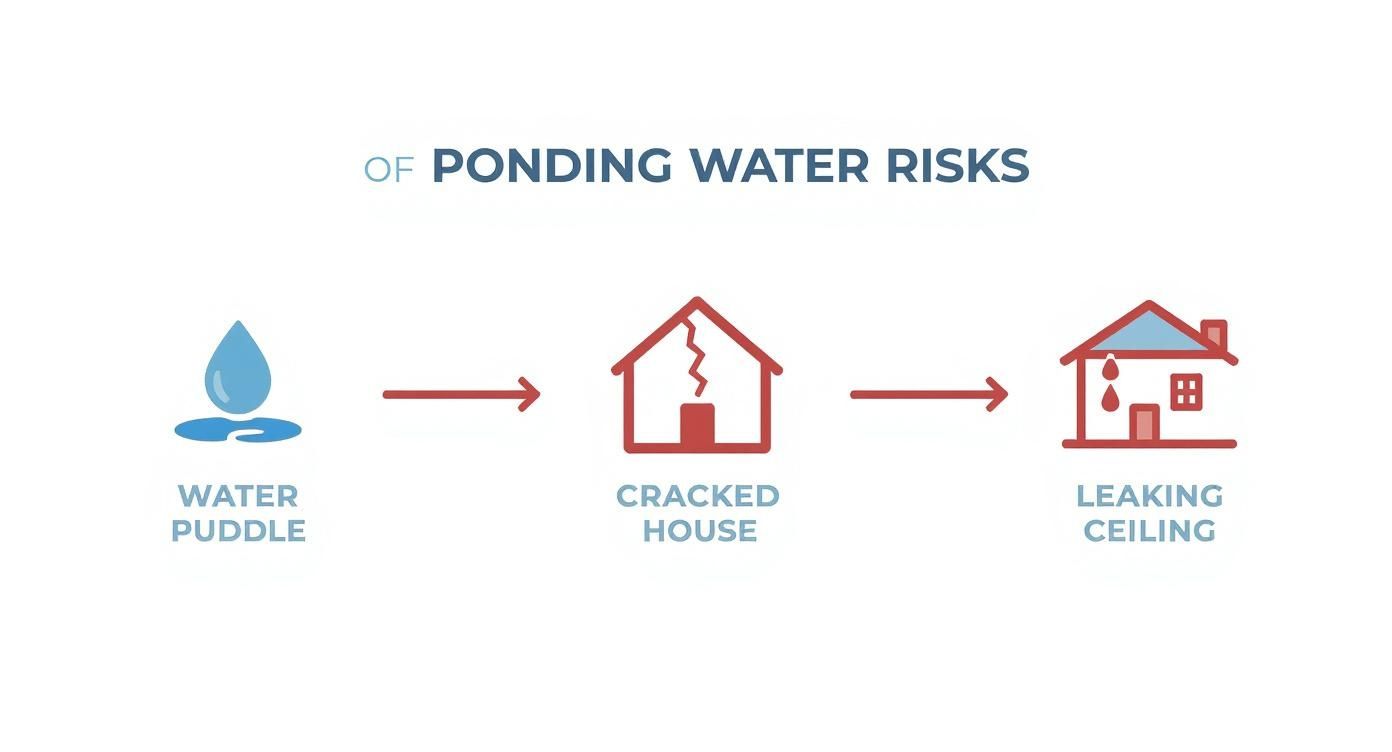
As you can see, what starts as a seemingly harmless puddle adds an immense amount of weight. That weight leads to sagging, and sagging eventually leads to those dreaded—and costly—interior leaks.
Looking Beyond Clogged Drains
If your drains are clear but the water's still sticking around, the problem runs deeper. Your next move is to inspect the roof deck itself for any signs of sagging or deflection. These low spots become natural swimming pools for rainwater.
- Feel for Depressions: Walk the roof and pay attention to how it feels under your feet. Do you notice areas that dip or feel a bit spongy? Those are tell-tale signs of a structural sag.
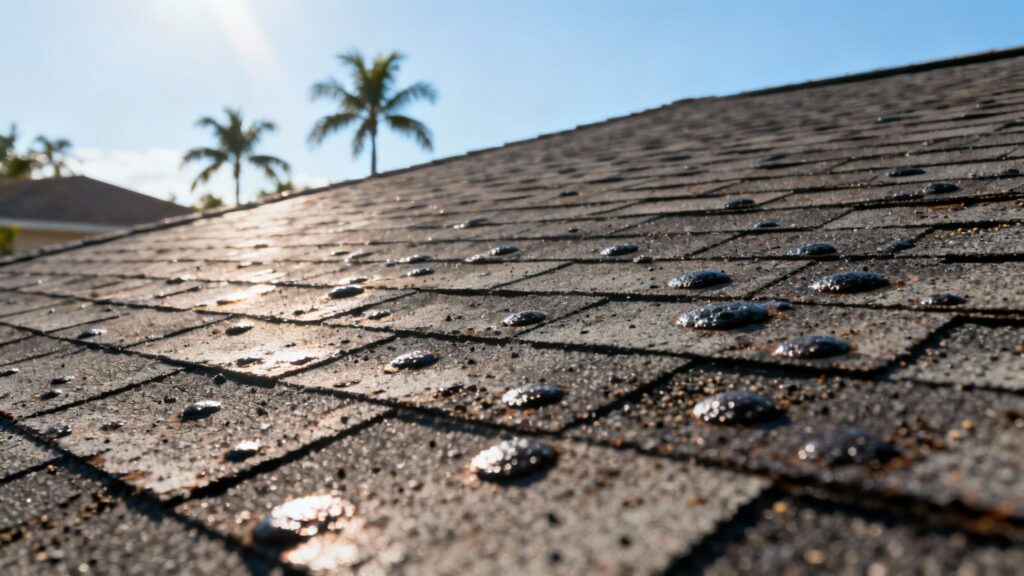
- Check the Membrane: Look closely at the roofing material. Blisters, cracks, or "alligatoring" (a pattern of cracks that looks like alligator skin) are all red flags that the material is breaking down from relentless sun and water exposure.
- Inspect Heavy Equipment: Don't forget to check around heavy equipment like your air conditioning units. Over time, the constant weight can cause the roof deck to settle, creating the perfect basin for water to collect.
This kind of structural sag is a frequent culprit behind ponding water on a flat roof in Royal Palm Beach. I've seen it many times on older buildings that weren't originally designed to support the heavier HVAC systems we use today. You can see how these issues progress by looking at these examples of common flat roof problems.
The Challenge of Improper Slope
Sometimes, the root of the problem is in the roof's original design. A "flat" roof isn't supposed to be perfectly flat. It needs a subtle pitch—the industry standard is 1/4 inch per foot—to guide water toward the drains. If that slope isn't there, the water has nowhere to go.
This is a huge challenge locally. Engineering studies have confirmed that our region’s minimal natural slope makes proper roof drainage absolutely critical. In fact, a Village of Royal Palm Beach assessment found that nearly 65% of local flat roofs showed signs of ponding water, often because they simply lacked the necessary pitch to begin with. You can read more about it in Palm Beach County's flood study.
Identifying the true cause is key. Covering a sagging area with a coating is just a temporary patch. A proper diagnosis ensures you invest in a permanent solution that protects your property for the long term.
Proven Solutions for Fixing Roof Drainage Problems
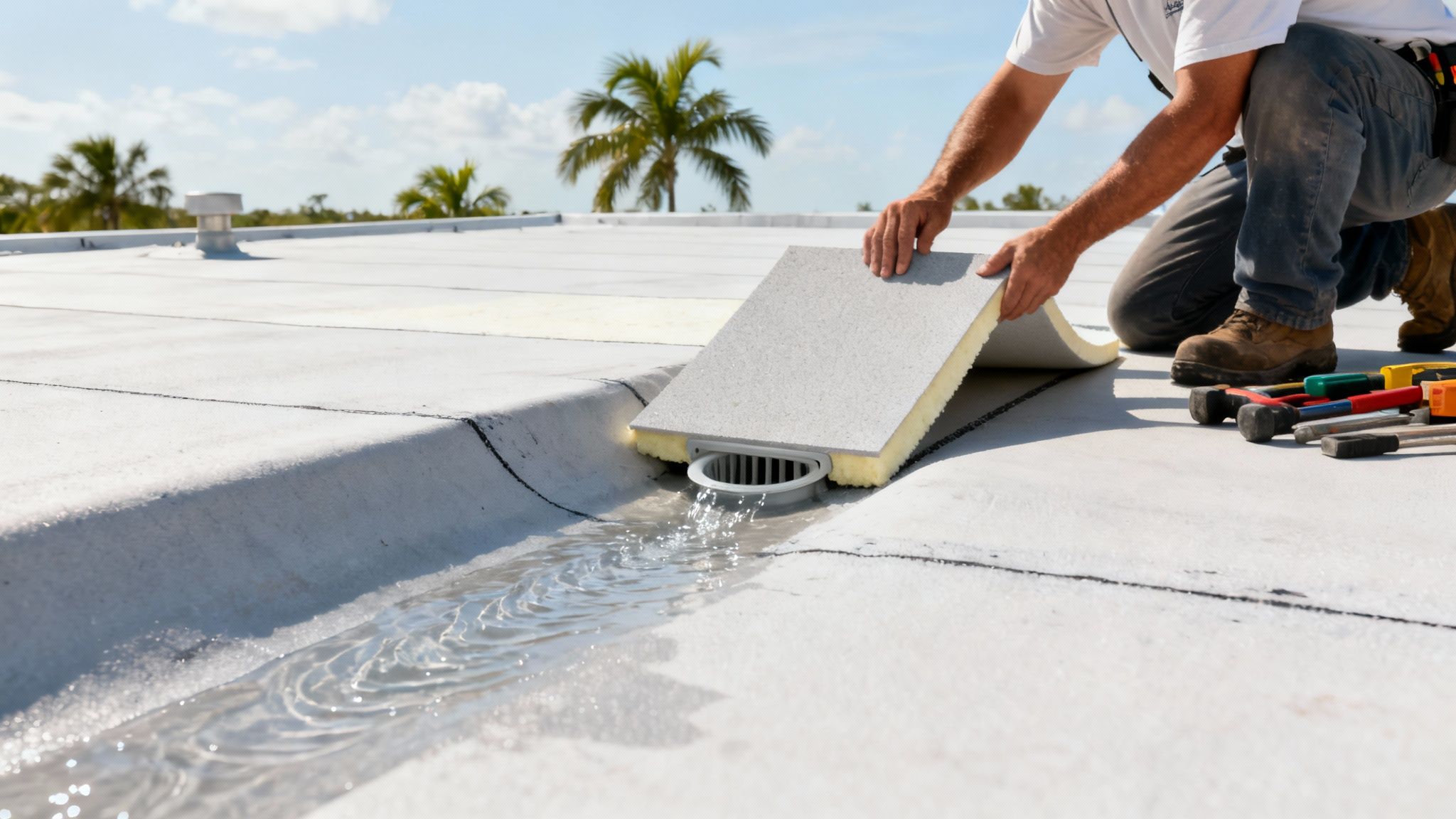
Once you've figured out why water is sticking around, it’s time to get it moving. The right fix depends entirely on what’s causing the logjam, and solutions can range from a simple cleaning to more involved structural work that gets water flowing off your roof the way it should.
The most common—and thankfully, the easiest—fix starts with your drainage system. A good, thorough cleaning of every drain, scupper, and gutter is always the first move. More often than not, just clearing out the built-up leaves, twigs, and muck can solve a ponding water on flat roof Royal Palm Beach problem overnight, especially after one of our heavy storms.
Enhancing Your Drainage Capacity
If a deep clean doesn't do the trick, the problem might be your system’s capacity. It's possible your drains just can't keep up with the intense downpours we get here in Florida. When that's the case, you need to think about upgrading the system itself.
- Installing New Drains: We often add internal roof drains right in the middle of the ponding areas. This gives the water a direct escape route and works wonders for large, low-lying sections of a roof.
- Enlarging Scuppers: Scuppers are those rectangular drains along the roof's edge. If they’re undersized, they create a bottleneck. Swapping them out for larger ones can make a massive difference in how quickly your roof sheds water.
These kinds of upgrades are especially important for older buildings, where the original drainage just wasn't designed for the volume of rain we see today.
Correcting the Slope with Tapered Insulation
Now, if your roof has an improper slope or is starting to sag, a simple drain cleaning won't cut it. You can't just patch over a low spot; you have to physically rebuild the pitch that funnels water away. This is exactly where tapered insulation comes into play.
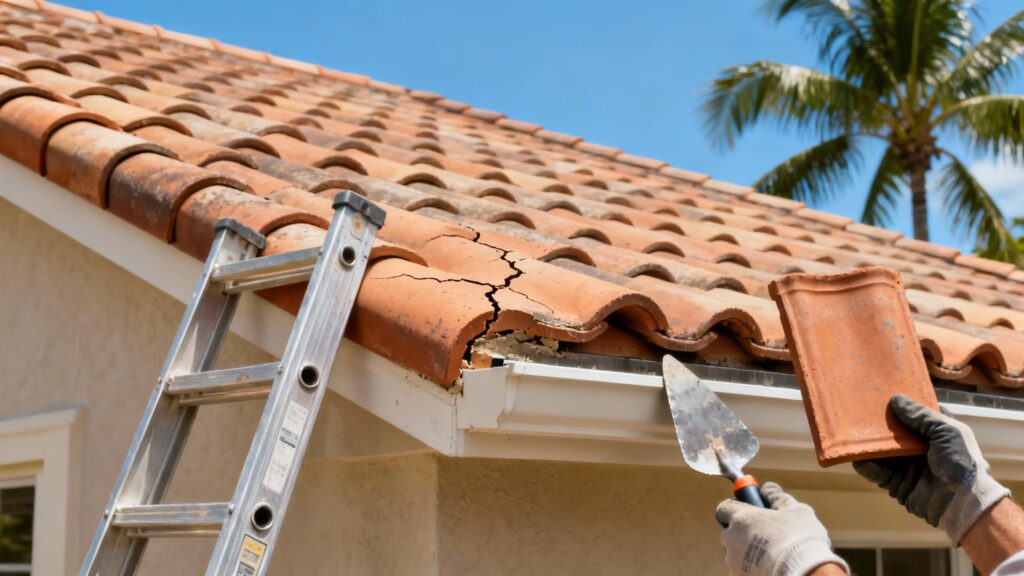
Tapered insulation is made of rigid foam panels that are cut to create a custom, gradual slope across the roof deck. A professional roofer designs a layout that essentially builds a new path, guiding water from the problem areas directly to the nearest drain or scupper. It’s a two-for-one solution: it fixes the ponding and boosts your building's R-value, making it more energy-efficient. To see what these kinds of repairs involve, you can take a look at our flat roof repair and replacement services.
The financial hit from ignoring these issues can be substantial. Local contractor data reveals the average cost to fix water ponding in Royal Palm Beach hovers between $1,500 and over $4,000. In fact, a recent survey showed 40% of local property owners have dealt with a major repair tied to ponding water in the last five years. You can learn more about these roofing repair cost trends.
Choosing the right repair method involves balancing cost, complexity, and long-term effectiveness. Here’s a quick comparison of the solutions we’ve discussed.
Comparing Ponding Water Repair Solutions
| Solution | Average Cost (Royal Palm Beach) | Best For | Complexity |
|---|---|---|---|
| Drain & Gutter Cleaning | $250 – $600 | Minor blockages from debris | Low |
| Adding New Drains | $800 – $2,000+ per drain | Large roofs with insufficient drainage | Moderate |
| Tapered Insulation | $4,000 – $10,000+ | Structural sagging or improper slope | High |
| Roof Coatings/Fillers | $1,500 – $5,000 | Very shallow, localized depressions | Moderate |
This table gives you a ballpark idea, but a professional inspection is the only way to know for sure which solution will permanently solve your ponding water problem.
Using Roof Coatings and Fillers
For very minor, localized low spots, certain specialized roof coatings can be an effective fix. We can apply elastomeric or silicone coatings in thicker layers to essentially fill in these small depressions.
These materials form a seamless, waterproof barrier that also happens to reflect UV rays, which can help trim your cooling costs. It's critical to remember, though, that coatings are a band-aid, not a cure for major structural issues or clogged drains. They work best as a final protective layer after the core drainage problem has been properly fixed, ensuring your roof stays resilient for years to come.
Choosing the Best Flat Roofing Materials for Florida
Picking the right material is your best first defense against drainage headaches down the road. Here in Royal Palm Beach, our roofs face a relentless cycle of intense sun and torrential rain. That means your material choice directly affects how well your roof can shed water and hold up to the elements. This isn't just about slapping a patch on a leak; it's about installing a system built for our climate from the ground up.
Constant moisture is a killer for roofing materials, accelerating their breakdown at an alarming rate. It's a huge issue. Studies have shown that roofs with standing water can lose 30-50% of their lifespan compared to properly drained ones. Around here, it's even more pronounced. A 2022 inspection of Royal Palm Beach properties found that 70% of flat roofs with ponding problems showed serious membrane degradation in just five years, thanks to the combination of water and our high UV index. You can get more insights on Florida’s unique flat roof challenges at AdvancedRoofing.com.
Comparing Top Flat Roof Options
When you're looking at flat roofing, three materials really own the South Florida market: TPO, PVC, and Modified Bitumen. They each have their own strengths and are a good fit for different buildings, budgets, and needs.
-
TPO (Thermoplastic Olefin): This is a single-ply membrane that has become incredibly popular, mostly for its energy efficiency. The standard white, reflective surface is fantastic for bouncing sunlight away, which can make a real difference in your cooling bills. It’s also tough against punctures and fights off bacterial growth—a big plus in our humid climate.
-
PVC (Polyvinyl Chloride): Known for being exceptionally durable, PVC is another top-tier single-ply choice. It holds up incredibly well against chemicals, fire, and wind. The real magic is in the seams, which are heat-welded together to create one continuous, waterproof sheet. That's a massive advantage for preventing the kind of small leaks that lead to ponding water on a flat roof in Royal Palm Beach.
-
Modified Bitumen: Think of this as the modern, high-tech version of old-school asphalt roofing. It’s a multi-layered system that delivers superior waterproofing and tear resistance. While it's often black and absorbs heat, it can be finished with reflective granules to boost its energy performance and stand up to the Florida sun.
When you choose a material, think of it as a long-term investment in durability, not just a quick fix. A highly reflective material like TPO or a properly coated Modified Bitumen roof can actually pay for itself over time through lower energy bills and fewer maintenance calls.
Making the Smartest Choice for Your Property
So, what's the verdict? For most commercial buildings and a growing number of homes in the Royal Palm Beach area, TPO and PVC often get the nod. Their heat-welded seams just provide a more foolproof defense against water getting in compared to systems that rely on adhesives. On top of that, their ability to reflect the sun is a huge benefit here, keeping the building cooler and reducing the thermal stress that slowly cooks and degrades roofing materials.
That said, Modified Bitumen is still a tough, cost-effective contender, especially for roofs that get a lot of foot traffic. The key is to match the material to your building's specific situation—your budget, how you use the roof, and the demands of our local climate. A professional consultation is the best way to weigh all these factors and land on a system that will keep your property dry and secure for decades.
Your Essential Flat Roof Maintenance Checklist
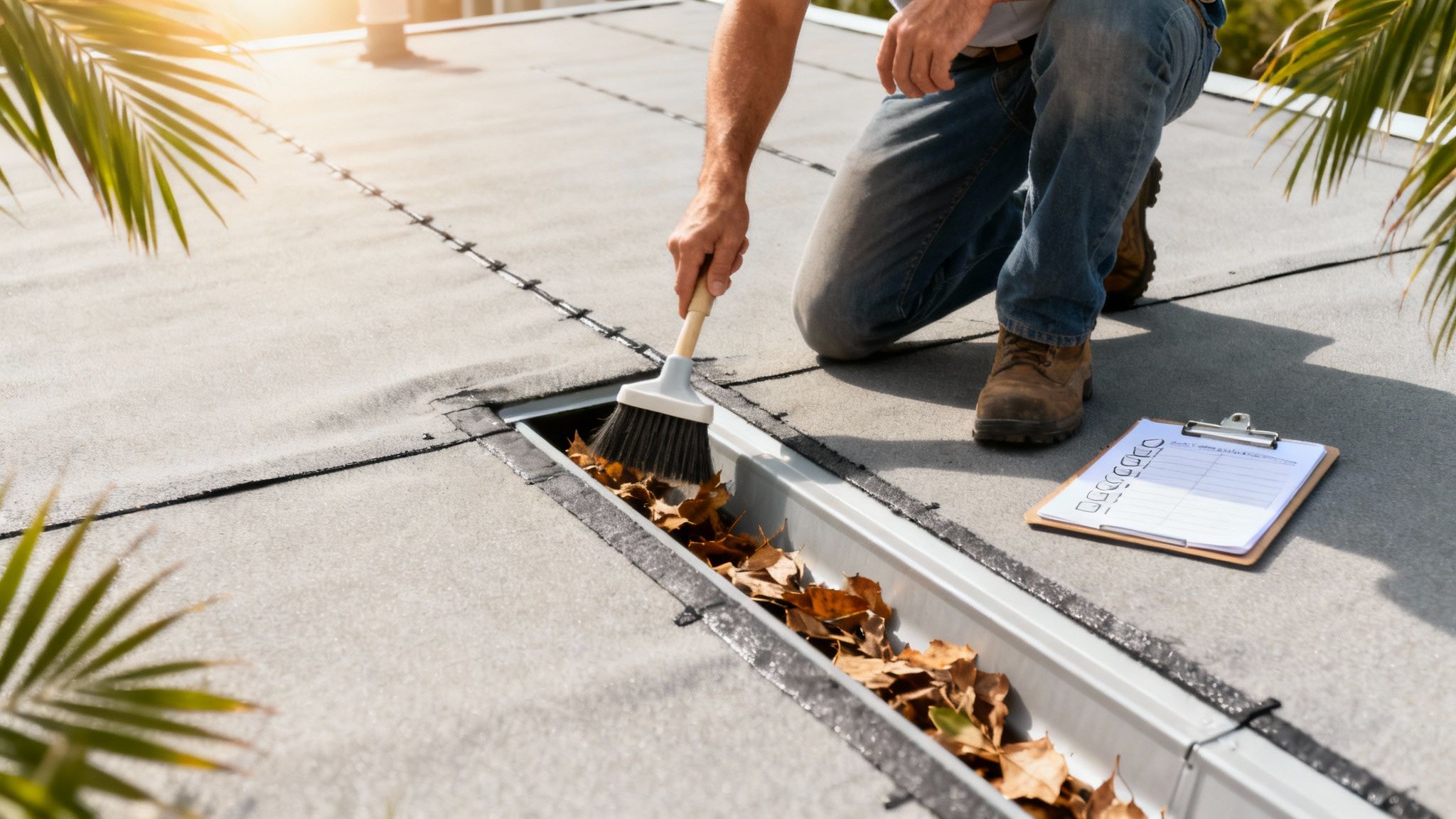
When it comes to preventing the headaches and high costs of ponding water on a flat roof here in Royal Palm Beach, proactive care is your best defense. A simple, consistent maintenance routine can be the deciding factor between a roof that lasts for decades and one that fails way too soon.
This isn't about climbing up there every weekend. It's about a straightforward game plan to keep your roof in peak condition, especially with our challenging weather.
Regular inspections are the cornerstone of any good maintenance plan. You should have a professional look at your flat roof at least once a year. But given our location, it's smart to schedule extra checks right before and right after hurricane season. This helps you catch any weak spots or new damage immediately.
Seasonal Maintenance Tasks
The main goal is simple: make sure water has a clear, easy path off your roof. A manageable approach, focusing on key tasks seasonally or after major storms, will keep you ahead of potential disasters.
- Clear All Drainage Points: You need to systematically check every single drain, scupper, and gutter. Palm fronds, leaves, and all the debris our winds kick up are notorious for creating blockages that lead directly to ponding.
- Inspect the Roof Membrane: Take a careful walk around the roof and look for any signs of wear. Pay close attention to blisters, cracks, or punctures in the roofing material itself—these are the weak spots where water loves to get in. You can see some common examples of roof damage to know what you're looking for.
- Check Seals and Flashing: Look closely at the sealant around anything that pokes through the roof. This means vents, pipes, skylights, and your HVAC unit. Make sure the flashing—those metal strips that seal the joints—is secure and free of rust or gaps.
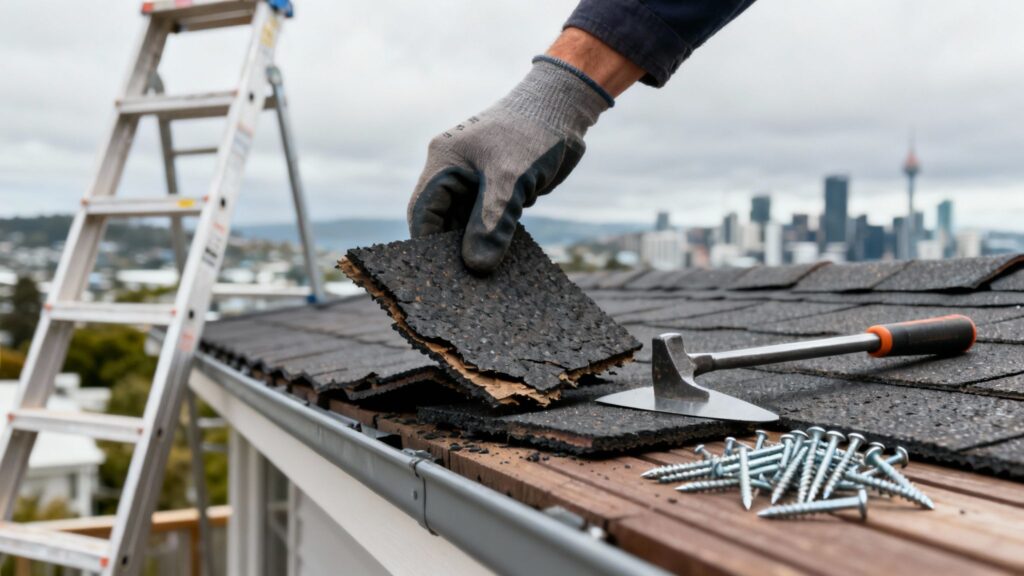
A little bit of effort now can save you a fortune later. Fixing a clogged drain or a cracked seal costs next to nothing. Ignoring it can lead to thousands in structural repairs and interior water damage.
After Every Major Storm
After a big downpour or a tropical storm passes, it's absolutely vital to do a quick visual check as soon as it's safe.
Look for any new debris that might be blocking those drainage paths. Scan for any visible damage to the membrane or flashing. This simple post-storm walkthrough is your first and best line of defense against problems getting worse. It ensures your roof stays the reliable shield it's meant to be.
Common Questions About Flat Roof Ponding
Even with a good grasp of the risks, it's totally normal to wonder what the next steps are. When it comes to ponding water on a flat roof in Royal Palm Beach, I've found that property owners tend to ask the same handful of critical questions. Getting clear, no-nonsense answers is the best way to make the right call and protect your investment.
"How Much Standing Water Is Actually a Problem?"
This is probably the number one question we get. The industry benchmark is what we call the 48-hour rule. If you still see water on your roof more than 48 hours after it stops raining, it's officially considered ponding water. That's a clear signal that your drainage system isn't working as it should, and it's time to take action.
Here in Florida's hot, humid climate, that rule is even more urgent. Persistent moisture combined with our intense sun is the perfect recipe for algae growth and rapid decay of your roofing materials. It happens much faster here than in cooler, drier parts of the country.
"Can't I Just Slap a Coating on It?"
Another common thought is to just apply a sealant or coating over the ponding area to fix it. While high-quality roof coatings are fantastic for protection and can fill in tiny depressions, they absolutely cannot fix an underlying slope or drainage issue.
Think of it like putting a waterproof case on a phone with a broken screen. The case protects the outside, but it does nothing to fix the internal damage. Tossing a coating over a sagging roof deck or a blocked drain is just a temporary bandage. The water will keep collecting, and its weight will eventually destroy the new coating and the structure underneath.
The only effective approach is to fix the root cause first—whether that's clearing drains or correcting the slope. Then, apply a coating as a final layer of protection to extend the life of the real repair.
"Is a Little Puddle Really That Big of a Deal?"
We hear this one a lot, and the answer is always a firm yes. The real danger is the compounding damage that even a small puddle causes over time.
Water is surprisingly heavy—it adds about 5.2 pounds of weight per square foot for every inch deep it gets. That puddle you think is minor can easily add hundreds of pounds of constant stress right on one spot of your roof structure. This sustained load wears out the roofing membrane, causes the roof deck to sag, and creates an even bigger basin for more water to gather. It's a destructive cycle that quickly turns a small issue into a major structural threat.
"How Often Do I Need a Professional Inspection?"
Finally, property owners want to know how often they should have their flat roof checked out by a pro. For us here in Royal Palm Beach, I always recommend a proactive schedule that accounts for our wild weather.
- Annual Check-up: Get a thorough inspection at least once a year. This is the best way to catch minor issues before they spiral out of control.
- Post-Storm Assessment: This is non-negotiable. After any major tropical storm or hurricane, you need to get an inspection, even if you can't see any damage from the ground.
This kind of routine maintenance ensures your roof is ready to handle our demanding climate, saving you from the headache and expense of emergency repairs down the road.
Don't wait for a small puddle to become a major disaster. The experts at Paletz Roofing and Inspections have over 30 years of experience diagnosing and permanently fixing flat roof ponding issues in Royal Palm Beach. Schedule your free, no-obligation inspection today by visiting https://paletzroofing.com.