
Once a storm blows over, the biggest threat to your Tamarac home is often the quiet damage it leaves behind. Hail doesn't need to be golf-ball-sized to create serious, long-term problems for your roof. In fact, even small hailstones can strip away the protective granules on your shingles, which speeds up wear and tear and leads to expensive leaks down the line.
The Hidden Threat of Hail Damage in Tamarac
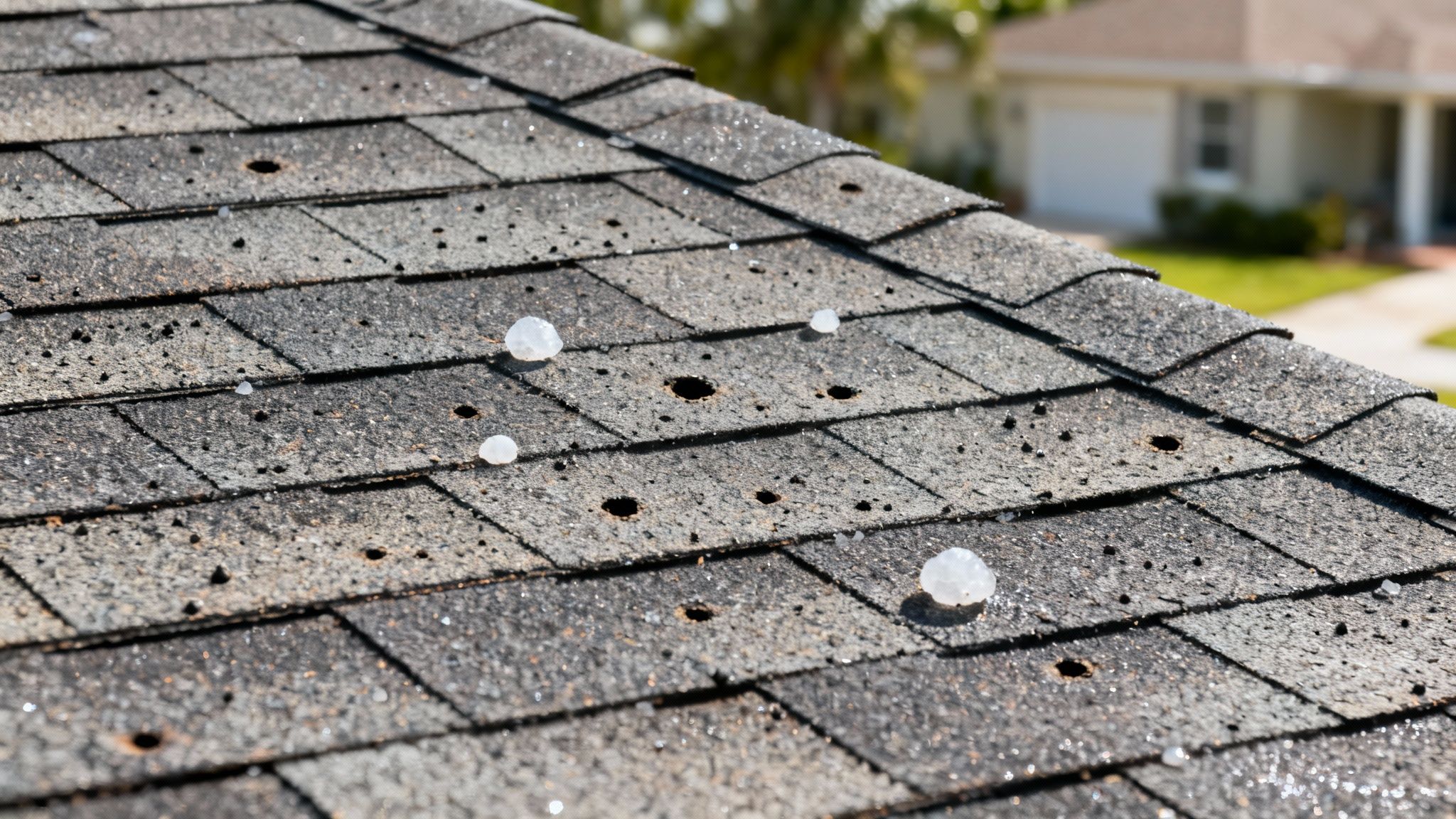
Many homeowners in South Florida underestimate just how risky hail can be. They picture dramatic, massive hailstones, but the more frequent danger comes from smaller, wind-driven hail that essentially acts like a slow-motion sandblaster on your roof. This kind of impact systematically strips away the vital protective granules from your asphalt shingles.
It helps to think of these granules as your roof's sunscreen. Without them, the asphalt underneath is left completely exposed to Florida's intense UV rays. This direct exposure makes the shingle brittle, causing it to lose its flexibility and, eventually, crack. A roof that was supposed to last 20 years might start to fail in less than 10.
Tamarac's Unique Weather Risks
While huge hail events might seem like a rarity, the potential for damaging storms is a constant reality here. In Tamarac, Florida, hail damage is a significant concern because of how often we see severe weather. The area has experienced 12 severe weather warnings in the past 12 months alone, with hailstones reaching up to 1 inch in diameter—more than enough to harm common asphalt shingles. You can dig into local hail events and find detailed storm reports on Interactive Hail Maps.
This consistent threat is exactly why proactive inspections are so important. The subtle damage from one storm can weaken your roof, leaving it much more vulnerable to the next one that rolls through.
The greatest danger from hail isn't always the immediate leak; it's the accelerated aging process that turns a minor issue into a premature roof replacement.
Understanding this hidden danger is the first step toward protecting your home's structure. Proactive roof inspections aren't just a good idea in Tamarac; they are a necessary part of responsible homeownership. Catching the signs early can be the difference between a small repair and a major financial headache. This guide will walk you through everything you need to know.
Spotting the Telltale Signs of Hail Damage
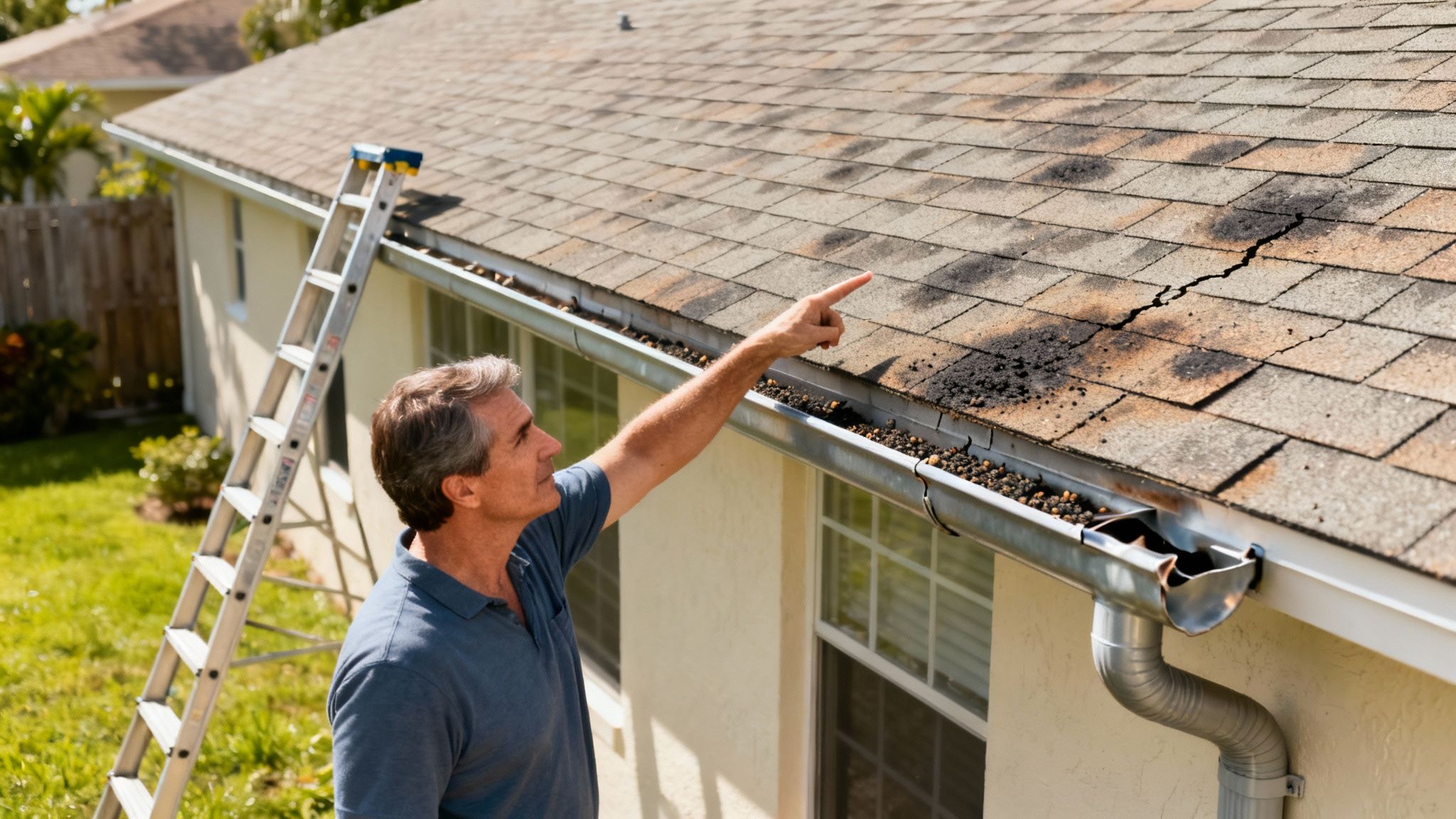
After a nasty storm rolls through Tamarac, the damage to your roof isn't always as dramatic as a gaping hole. In fact, most hail damage is subtle. It’s the kind of thing you’d easily miss from the ground, but learning to spot these early clues is the key to preventing serious leaks and structural headaches down the road.
Think of the tiny granules on your asphalt shingles like a protective layer of armor. When a hailstone smacks a shingle, it knocks that armor off, creating what we in the industry call a "bruise." This exposed spot is now defenseless against UV rays, which will quickly make the underlying asphalt brittle and prone to cracking.
The good news? You don't need a ladder to do some initial detective work. A quick walk around your property can tell you a lot about the potential for hail damage to your roof in Tamarac.
Ground-Level Clues to Look For
Before you even think about the shingles, start by looking at the other metal and plastic components on and around your home. These softer materials act as a "canary in the coal mine" for hail, showing dents and dings much more obviously than the roof itself.
- Dented Gutters and Downspouts: Your aluminum gutters and downspouts are soft targets. If you see a bunch of small, circular dents, that's a huge red flag that your roof got hit with the same force.
- Damaged Vents and Flashing: Take a look at any visible roof vents, exhaust caps, or the metal flashing around your chimney. These pieces will show dings very clearly.
- Granules in Your Downspout: This is a big one. Check where your downspouts drain and look for a pile-up of black, sand-like granules. A flood of these granules means they were just violently knocked off your shingles. You can see what this kind of hail impact damage on shingles looks like up close in inspection photos.
If you spot this kind of collateral damage, it's a strong signal that your roof needs a much closer look from a professional. The odds are extremely high that your shingles have been compromised, too.
Quick Tip: Don't be fooled by the absence of a leak right after a storm. Hail damage creates weak points that often lead to slow, hidden leaks that only show up weeks or even months later, long after the storm has passed.
Identifying Shingle Damage Specifically
Once you (or a professional) get a closer look at the shingles, the damage from hail has a very specific signature. It doesn't look like normal aging or wind damage.
Here's what to keep an eye out for using a pair of binoculars from the ground:
- Random Bruises: Hail impacts leave dark, circular spots where the granules have been blasted away, exposing the black asphalt mat underneath.
- A "Soft" Feeling: If you could touch it, the impact spot would feel soft and spongy, kind of like a bruise on an apple.
- Visible Cracks: Over time, as the sun beats down on that bruised, unprotected spot, spiderweb-like cracks will begin to form around the point of impact.
To help you get a better handle on this, here’s a quick-reference guide for identifying potential hail damage on different parts of your roof from a safe distance.
Signs of Hail Damage by Roof Component
| Roof Component | What to Look For (Signs of Damage) | Why It Matters |
|---|---|---|
| Asphalt Shingles | Dark, circular bruises; missing granules; cracked or broken shingles. | The protective granule layer is gone, exposing the shingle to UV degradation and leaks. |
| Metal Flashing | Dents, dings, and creases around chimneys, valleys, and vents. | Dented flashing can lift or crack, breaking the waterproof seal in critical areas. |
| Gutters/Downspouts | A pattern of dents and dings on the aluminum surfaces. | This is the clearest ground-level indicator that your roof sustained a hail impact. |
| Roof Vents/Caps | Dents on plastic or metal vents; cracked or broken vent covers. | Damaged vents can allow water directly into your attic or ventilation system. |
This table should give you a solid checklist for your initial walk-around. Catching these signs early is everything. It allows you to get ahead of the problem before it snowballs into a massive interior water damage issue, saving you a world of stress and money.
Conducting a Safe and Effective Roof Inspection
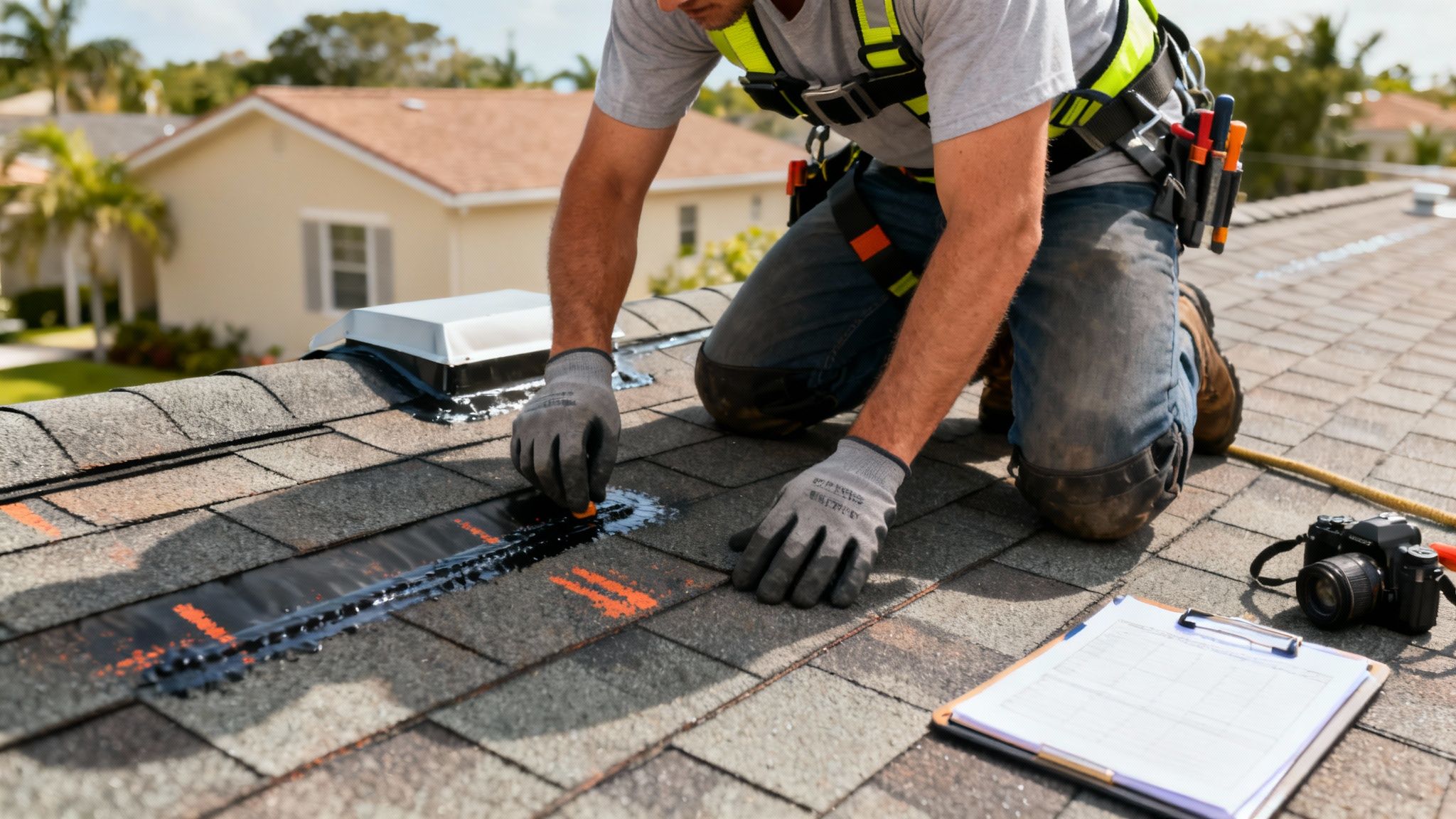
Once you've spotted those tell-tale signs of hail from the ground, the next move is a close-up, professional inspection. It’s tempting to grab a ladder and see for yourself, but the golden rule of roof safety is simple: leave the climbing to certified professionals. A roof that’s been pounded by hail can be unstable, and the risk of a fall is just never worth it.
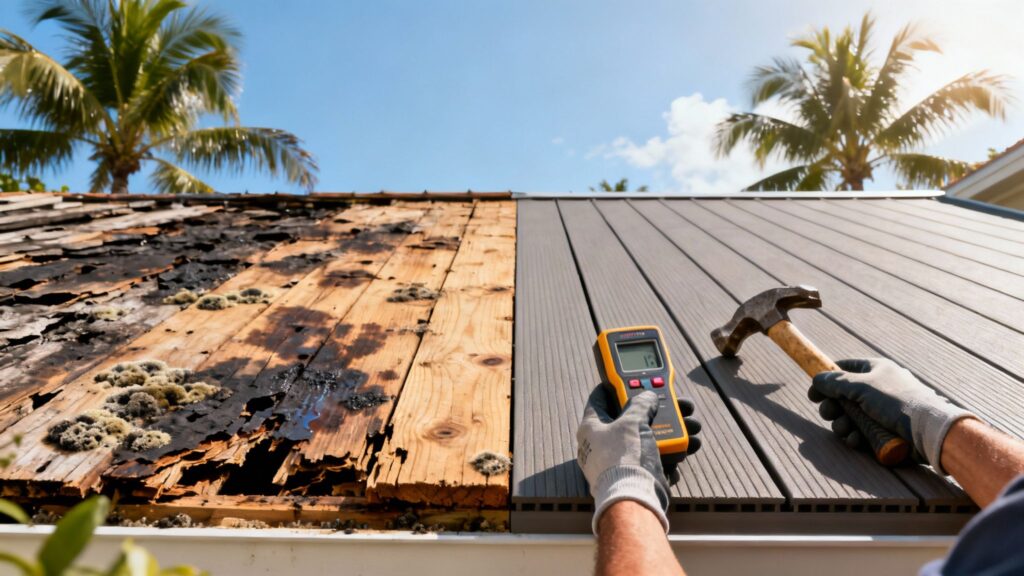
A real professional assessment for hail damage goes way beyond a quick peek. It's a methodical process where an expert documents every single piece of evidence needed to build a rock-solid insurance claim. They aren't just looking for obvious holes; they’re hunting for the subtle bruises, granule loss, and hidden fractures that prove the roofing system has been compromised.
This comprehensive approach is absolutely essential. The inspector will check individual shingles for those distinct impact marks, assess the flashing around chimneys and vents for damage, and examine every seal for potential breaches. They build a detailed record, often using chalk to circle damaged areas and taking dozens of photos to build your case. You can see examples of what this professional damage documentation looks like in their final reports.
Questions to Ask Your Roofing Contractor
Not all inspectors bring the same level of expertise, especially when insurance claims are on the line. Before anyone even thinks about getting on a ladder, it's critical to start by performing a thorough risk assessment to understand the potential dangers. When you’re vetting a contractor, asking the right questions upfront ensures you’re partnering with a credible expert who truly gets the nuances of local storm damage.
Here are the must-ask questions for any roofer before they start:
- Are you licensed and insured in Florida? This is non-negotiable. It’s your primary protection.
- Do you have experience with hail damage claims in Tamarac? Local experience is a huge advantage. They’ll know the common storm patterns and roofing materials in our area.
- How do you document damage for an insurance claim? A reputable contractor will have a clear, systematic process that includes photos, detailed notes, and sometimes even video footage.
- Will you meet with my insurance adjuster? The best contractors make a point to be there during the adjuster's visit. They can point out the damage they found and advocate for you.
Your roofing contractor should be more than just a repair person; they are your primary advocate and expert witness in the insurance claim process. Their thorough documentation is the foundation of a successful claim.
Choosing the right pro makes all the difference. It ensures that every instance of hail damage to your roof in Tamarac is properly identified and documented, giving you the undeniable proof needed to get your claim approved.
Navigating the Insurance Claim Process with Confidence
Finding hail damage on your roof is bad enough. Now comes the part that can feel even more stressful: getting your insurance company to pay for it. Filing a claim can feel like stepping into a world of confusing paperwork and unfamiliar jargon, but it doesn't have to be a nightmare. With the right game plan, you can take control of the process and make sure you get a fair payout for the hail damage to your roof in Tamarac.
Everything starts with one critical document: your homeowner's insurance policy. This is the contract you have with your insurer, and it spells out exactly what’s covered and what isn’t. Most policies cover damage from "Acts of God," which includes hailstorms. Your very first move should be to pull out that policy and get familiar with your coverage limits and, most importantly, your deductible.
Understanding Key Insurance Terms
Think of your deductible as your share of the repair bill. It’s the amount you have to pay out of your own pocket before your insurance coverage kicks in. For example, if your roof repair costs $10,000 and you have a $1,000 deductible, the insurance company will cover $9,000, and you’ll handle the first $1,000.
Another term you'll hear a lot is depreciation. This is how an insurer accounts for the age and normal wear and tear of your roof. Some policies pay out the "Actual Cash Value" (ACV), which is the replacement cost minus that depreciation. Better policies offer "Replacement Cost Value" (RCV), which pays the full price for a brand-new roof. RCV is often paid in two checks: one for the ACV upfront, and a final payment after you prove the work is finished.
Your Step-by-Step Action Plan
A smooth claims process comes down to being organized and documenting everything. These two things are your best weapons.
- Contact Your Insurer Immediately: Don't wait. Calling your insurance company right away gets the ball rolling and shows them you're on top of the situation.
- Document Everything Meticulously: From a safe spot, take tons of clear photos and videos of the damage. Get close-ups of the dings and bruises on the shingles, but also take wider shots to show the full extent of the problem.
- Keep a Detailed Communication Log: Every single time you talk to someone from the insurance company, write it down. Note the date, time, who you spoke with, and what was said. If there’s a dispute later, this log will be your best friend.
- Prepare for the Adjuster's Visit: The insurance company will send their own adjuster to inspect the roof. It's a huge advantage to have your own professional roofing contractor there with you. Your roofer knows exactly what to look for and can point out damage the adjuster might otherwise miss.
Hail damage is a massive issue for homeowners across Florida, leading to millions in property repair costs in cities like Tamarac every year. When a big storm hits, it triggers a huge spike in insurance claims. You can get a better sense of how hail damage impacts Florida property claims and see just how common this problem is.
Key Takeaway: Never feel pressured to accept the first settlement offer, especially if it feels low. You have every right to negotiate. You can support your case by getting independent estimates from other contractors to justify a higher claim amount.
When you arm yourself with knowledge and solid documentation, you stop being a passive victim and become an active, confident participant in your own claim. It’s the single best way to get the money you need to restore your roof and keep your home protected.
Deciding Between Roof Repair and a Full Replacement
Once your insurance claim for hail damage gets the green light, you’re at a crossroads. This decision is a big one, impacting your home's protection and value for years to come. Do you go for a targeted repair, or is it time to invest in a full roof replacement? The right answer really boils down to your roof's age, what it's made of, and just how bad the storm really was.
It’s all about context. A few bruised shingles on a three-year-old roof? A simple repair is almost always the most logical and budget-friendly choice. But that same damage on a 15-year-old roof tells a completely different story. At that age, it’s often a sign that the entire roofing system has become brittle and is on its last legs.
Making this call is a critical part of navigating hail damage here in Tamarac. This flowchart can help you map out those first few steps right after a storm.
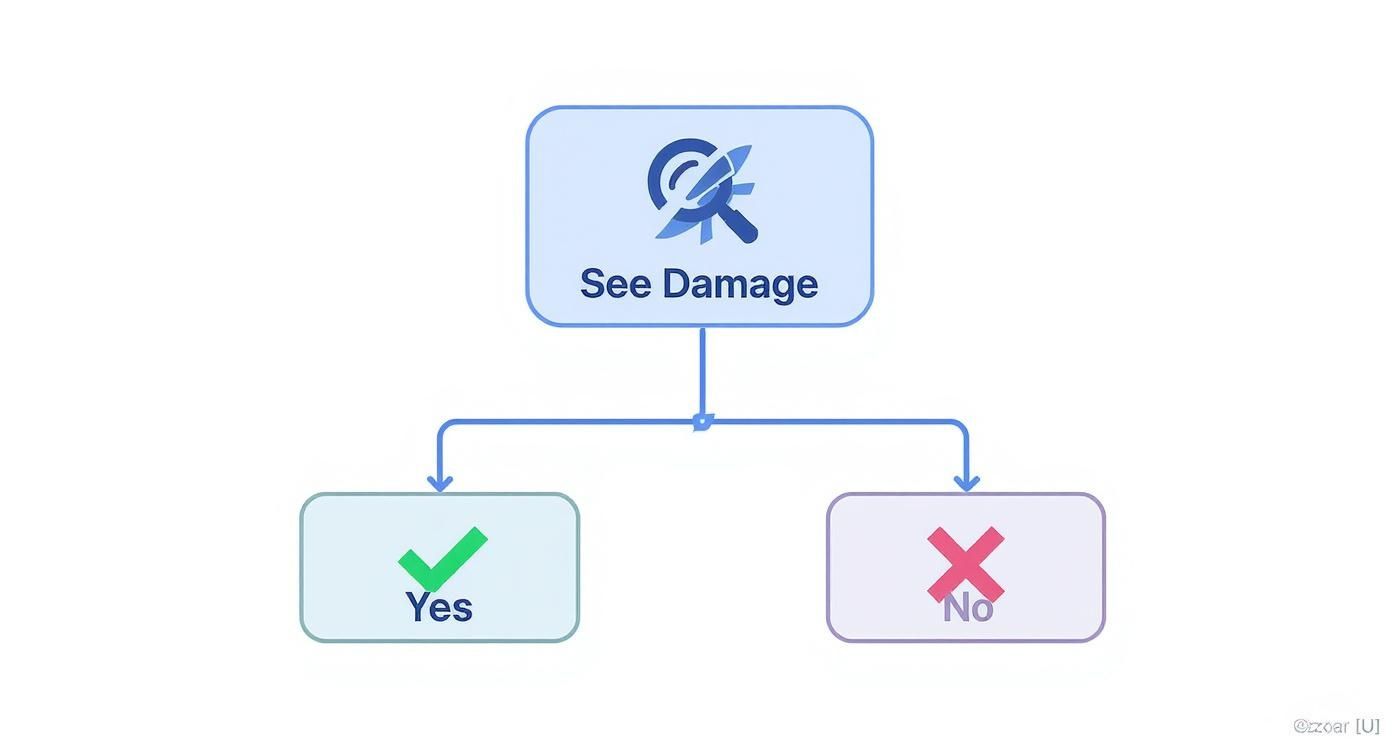
This just simplifies the initial gut check, guiding you from "I think I see damage" to getting a professional roofer on-site—which is an absolute must before you make any final moves.
When Roof Repair Makes Sense
A repair is usually your best bet when the damage is contained and your roof still has plenty of life left in it. If the hail only pummeled one side of your house or a small section, patching up that specific area can get your roof back in fighting shape without the cost of a total tear-off.
Think about repairs if:
- The damage is limited to a small, specific area.
- Your roof is less than 10 years old and is otherwise in great shape.
- You can find shingles that are a good match to keep things looking uniform. A pro can show you how a repair will blend in with your existing roof.
Why a Full Replacement Is Often Smarter
It costs more upfront, no doubt about it, but a full replacement is often the savvier long-term investment. This is especially true for older roofs or when the damage is spread out. Widespread granule loss across multiple slopes means the entire system has been compromised.
Trying to patch an old, brittle roof is like putting a Band-Aid on a bigger problem. It’s a temporary fix, at best. A full replacement gives you a clean slate with a brand new, fully warrantied system protecting your home.
A full replacement is often necessary when hail damage compromises more than 30% of your roof's total surface area. At that point, you’re looking at a systemic failure, not just a few weak spots.
The financial stakes here in Florida are serious. Severe hail and wind storms can cause hundreds of millions of dollars in losses across the state each year. In some years, these catastrophe estimates have hit a staggering $872 million, with hail as a major player. This just underscores how vulnerable our roofs are and why making a solid long-term choice is so important.
Repair vs. Replacement Decision Framework
Weighing the options can feel overwhelming. To make it easier, we've put together a simple framework to help you see which path makes the most sense for your specific situation.
| Factor | Favors Repair | Favors Replacement |
|---|---|---|
| Damage Extent | Damage is isolated to a small, contained area (less than 30% of the roof). | Damage is widespread, affecting multiple slopes or large sections. |
| Roof Age | The roof is relatively young (under 10-12 years old) and has plenty of life left. | The roof is nearing the end of its expected lifespan (15+ years old). |
| Shingle Condition | Surrounding shingles are in excellent condition—flexible and with granules intact. | Shingles are brittle, cracking, or showing significant granule loss everywhere. |
| Matching Materials | Matching shingles are readily available for a seamless, aesthetic repair. | Original shingles are discontinued or faded, making a good match impossible. |
| Long-Term Value | A cost-effective fix that restores full integrity without a major investment. | Provides a new warranty, improves home value, and offers long-term peace of mind. |
| Future Costs | A solid repair that should last for the remaining life of the roof. | A patch-up job now will likely lead to more repairs and a full replacement soon anyway. |
Ultimately, the best way to make a confident choice is to walk through these factors with a trusted roofing professional. They can give you an honest assessment that protects your Tamarac home for many years to come.
Got Questions About Tamarac Roof Hail Damage? We've Got Answers.
When a hailstorm blows through Tamarac, it often leaves a storm of questions in its wake. Homeowners are suddenly wrestling with worries about their insurance, potential repair costs, and just how bad the damage really is. Getting straight, honest answers is the only way to make smart decisions and protect your home. We'll tackle the most common questions we hear every day, giving you the practical advice you need.
Knowing your rights and options is the first step toward getting your home back in order. Let's dig into what you need to know.
How Long Do I Have to File a Hail Damage Claim in Florida?
This is one of the most time-sensitive questions we get, and the answer requires a bit of urgency. Your specific homeowner's policy will have the exact deadlines, but Florida law also has a say. The most important thing to remember is this: report the damage as soon as you find it.
If you wait too long, you're giving the insurance company an opening to push back. They might argue that a different, more recent storm caused the damage, which can complicate or even sink your claim. The best move is to get a professional inspection and file your claim right after a hailstorm hits Tamarac. This creates a crystal-clear timeline that ties the damage directly to a specific weather event and protects your rights.
Will Filing a Hail Claim Make My Insurance Premiums Go Up?
It's a common fear—filing a claim means your rates will skyrocket, right? Not exactly. Generally, a single claim for an "Act of God" event like a hailstorm will not cause your individual premium to increase. Unlike a claim where you're at fault (like a car accident), weather damage is completely out of your control, and insurers don't hold it against you personally.
Now, here's the catch. If a massive storm causes widespread damage all across Tamarac, insurers might raise rates for the entire region to offset their huge losses. This kind of regional increase can happen whether you file a claim or not. Don't let the fear of a rate hike stop you from using the coverage you've been paying for to fix legitimate hail damage to your roof in Tamarac.
Here's the bottom line: Your individual storm damage claim is unlikely to raise your rates. But a massive storm can raise everyone's rates, so you might as well get your roof fixed with the benefits you're entitled to.
Are Impact-Resistant Shingles Worth the Cost in Tamarac?
Without a doubt, yes. For a storm-prone area like Tamarac, impact-resistant (IR) shingles are one of the smartest upgrades you can make for your home. They’re engineered differently, using a rubber-like, flexible asphalt blend that allows them to absorb a hailstone's impact instead of cracking or breaking.
- Tough as Nails: They are built to handle hail and wind-blown debris far better than standard architectural shingles.
- Long-Term Savings: While they cost more upfront, they dramatically cut down on future repairs and can prevent you from needing a whole new roof too soon.
- Insurance Discounts: Many insurance companies offer some pretty hefty discounts on premiums for homes with certified Class 4 IR shingles—the highest rating you can get.
When you add up the savings on repairs and insurance discounts over the years, these advanced shingles often end up being the most cost-effective way to protect your home from South Florida's wild weather.
Can Small Pea-Sized Hail Really Damage My Roof?
Yes, and this is a big one that homeowners dangerously underestimate. It’s easy to dismiss small hail as harmless, but when it's whipped up by strong storm winds, it essentially turns into a high-speed sandblaster. This relentless pelting scours away the tiny, protective granules on your asphalt shingles.
Think of those granules as your roof’s sunscreen. They shield the asphalt underneath from brutal UV rays. Once they're gone, the intense Florida sun bakes the shingle, making it brittle, inflexible, and eventually causing it to crack.
This kind of slow-burn, cumulative damage is almost impossible to spot from the ground. Your roof might not leak right away, but its lifespan has just been cut short. This is exactly why a professional inspection after any hailstorm is so critical, even if the hail seemed tiny at the time.
When you're dealing with roof damage, you need a team you can trust for honest answers and expert work. For over 30 years, Paletz Roofing and Inspections has been helping Tamarac homeowners protect their biggest investment. If you even suspect you have hail damage, don't wait for a small problem to turn into a huge headache. Contact us today for a free, no-obligation inspection and let our certified professionals give you the peace of mind you deserve. Visit us online at https://paletzroofing.com to schedule your appointment.