
Have you ever noticed a gritty, sandy substance collecting in your gutters? That’s a classic sign of granules washing off a roof in Wilton Manors. Those tiny particles are actually the protective top layer of your asphalt shingles, and seeing them in your gutters usually means your roof is either aging naturally or taking a beating from South Florida's tough weather.
Why Your Roof Is Shedding Granules
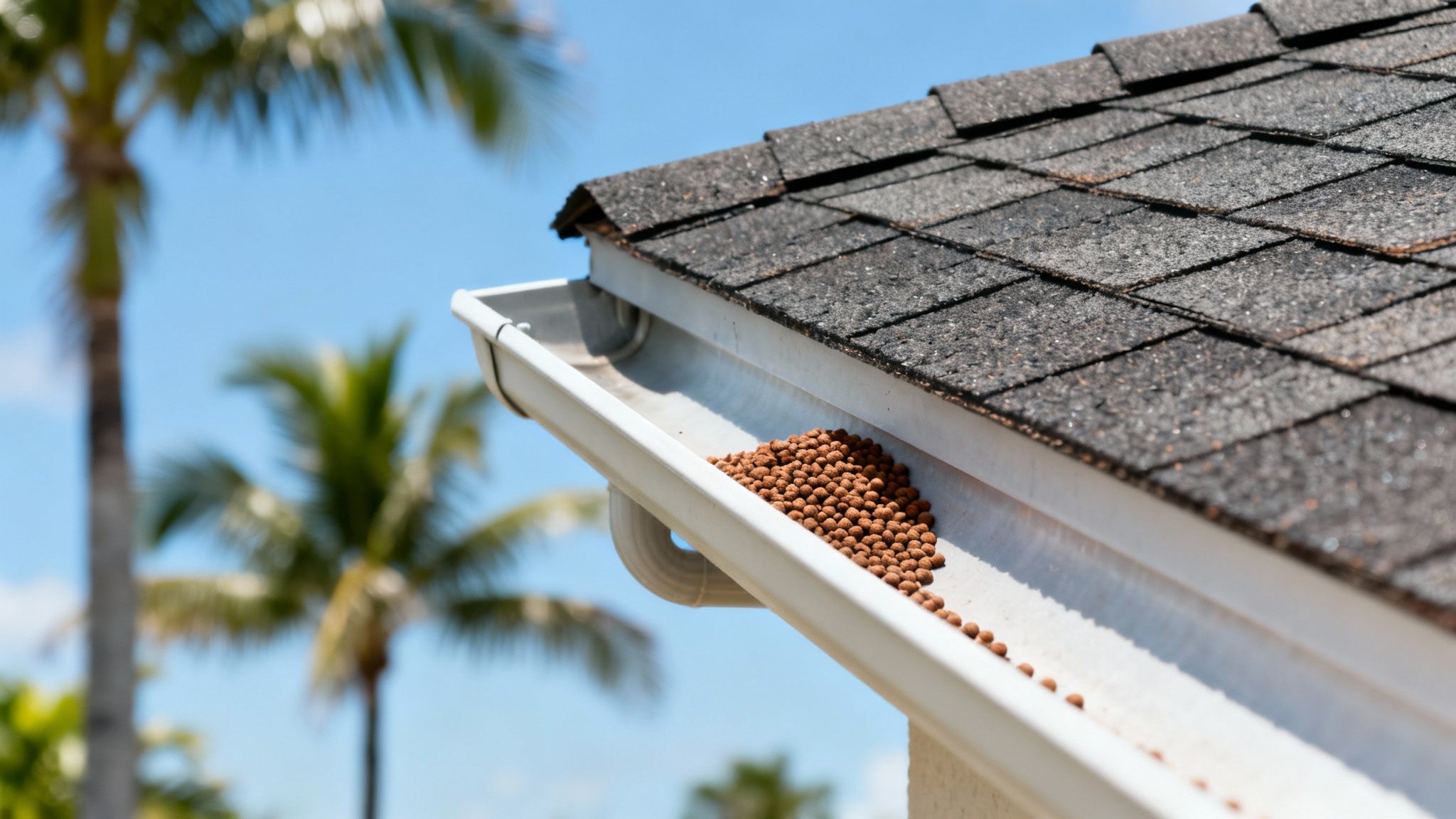
Finding a pile of shingle granules in your gutters can be alarming, but it's a very common issue for homeowners with asphalt roofs around here. Think of these granules as your roof’s built-in sunscreen—a tough shield that protects the asphalt underneath from the elements. When that layer starts to wash away, it's your roof telling you it's feeling the pressure of our unique climate.
Losing these granules isn't just a cosmetic problem; it's a clear signal that your roof's ability to protect your home is starting to decline. The process is often slow and steady, happening over many years as part of a shingle's normal lifecycle. But certain things can definitely speed it up.
Key Factors Behind Granule Loss
In Wilton Manors, the main culprits are almost always tied to our intense tropical climate. The relentless exposure to harsh UV rays and the brute force of heavy, wind-driven rain team up to weaken the adhesive that holds the granules to the shingles.
A few specific factors really contribute to the problem:
- Normal Aging: Just like anything else, a roof has an expiration date. Once shingles get past the 15 to 20-year mark, the adhesive that bonds the granules starts to break down, causing them to shed more easily.
- Storm Damage: South Florida is no stranger to severe weather. Strong winds can get under shingle edges and lift them, while hail and flying debris can literally knock the granules right off, creating weak spots in an instant.
- Intense Sun Exposure: The Florida sun is brutal. Day after day, it bakes your roof, causing the asphalt to become brittle. This constant cycle of heating up and cooling down weakens the shingles and makes it harder for them to hold onto their protective granules.
Understanding what's causing the granule loss is the first step to figuring out your roof's health. While seeing a few granules on a brand-new roof is perfectly normal, a sudden increase in shedding or the appearance of bald spots means it's time to act before more serious damage can occur.
Understanding Your Roof's Protective Granule Layer
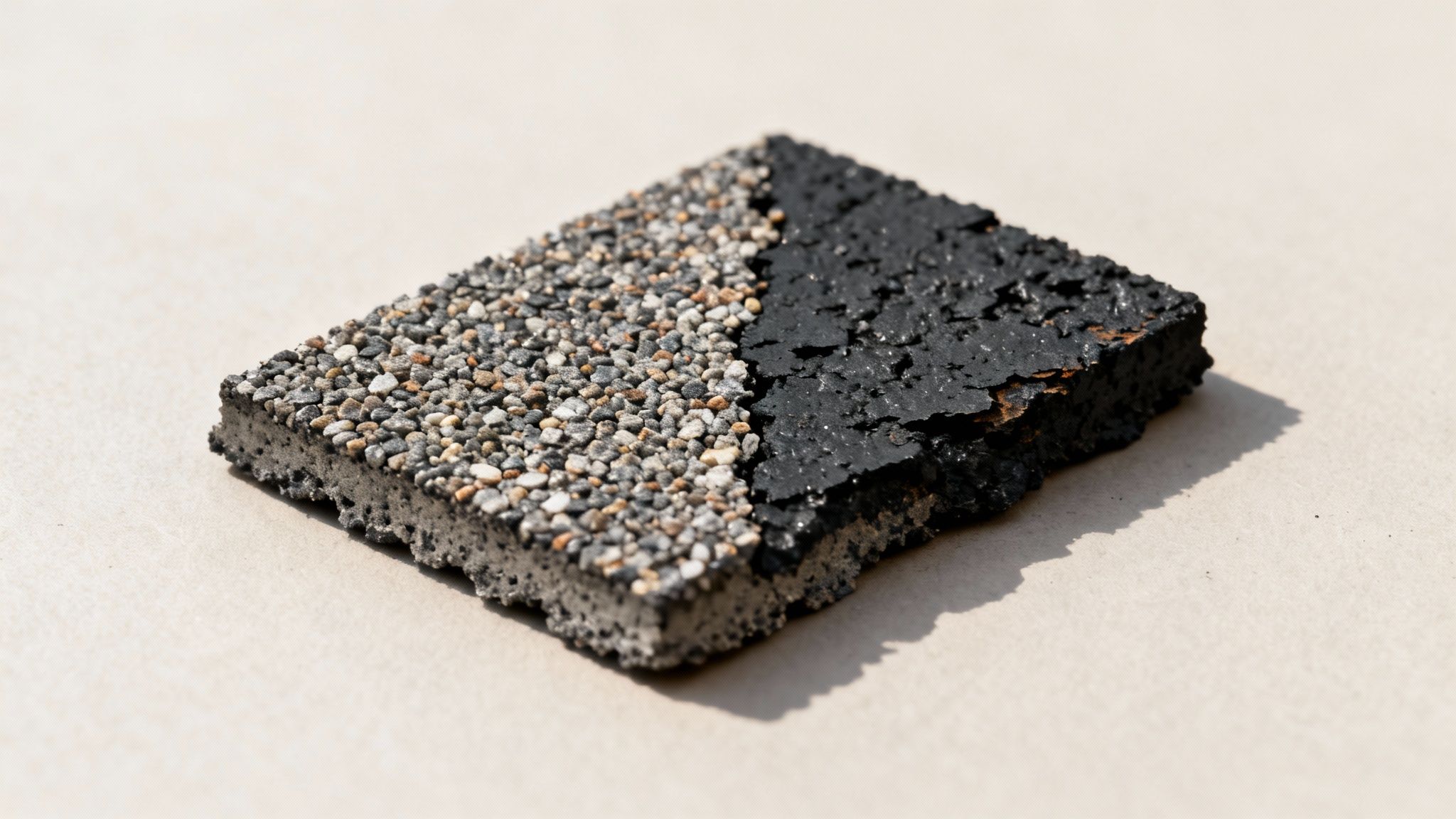
To really get why those little bits in your gutter are a big deal, you first have to understand what they do up on your roof. Think of the granules on your asphalt shingles as a custom-built suit of armor, specifically designed to protect your home from the tough Wilton Manors climate. They’re not just for looks; they have several critical jobs that are absolutely essential for your roof's health and how long it lasts.
These tiny, ceramic-coated mineral particles get pressed right into the shingle’s hot asphalt layer while it's being made. This creates a tough, textured surface that acts as the first and most important line of defense for your entire roofing system.
The Three Pillars of Protection
We can break down the job of shingle granules into three main tasks, and each one is crucial for protecting your home. When you see granules washing off a roof in Wilton Manors, it’s a sign that one or more of these protective functions are starting to fail.
- UV Ray Shielding: Just like sunscreen protects your skin, granules shield the asphalt underneath from the sun's intense UV rays. Without this layer, the brutal Florida sun would bake the asphalt, making it brittle, cracked, and causing it to fail way ahead of its time.
- Fire Resistance: The mineral makeup of these granules is what gives your shingles a Class A fire rating—the highest you can get for residential roofing. This layer is engineered to stop embers from setting the roof deck on fire, which is a massive safety feature.
- Aesthetic Appeal: Let's be honest, looks matter. Granules are what give your roof its color and texture. Manufacturers mix different colored granules to create the unique styles and shades that give your home its curb appeal.
A common misconception is that any granule loss is a sign of disaster. While seeing a lot of shedding is definitely a concern, a small amount of loss on a brand-new roof is perfectly normal. These are just the extra "hitchhiker" granules from the factory that shake loose during the first few rainstorms.
Differentiating Normal Shedding from a Real Problem
So, how can you tell the difference between normal and a problem? It all comes down to quantity and timing.
A light dusting of granules in your gutters right after a new roof installation is nothing to worry about. But if you're consistently finding handfuls of them years later, or you’re starting to see bald patches on your shingles, you're looking at accelerated wear. You can see what these bald spots look like in our roofing project gallery.
This kind of continuous granule loss leaves the vital asphalt layer exposed to the elements, starting a rapid decline in your roof’s ability to do its job. It's a clear signal that your roof's armor is thinning, leaving your home vulnerable.
The Key Reasons Shingles Lose Granules in South Florida
Your roof here in Wilton Manors is up against a completely different set of challenges than roofs in other parts of the country. When you start seeing granules washing off a roof in Wilton Manors, it’s almost never just one thing. It’s usually a tag team of our intense environment and a few man-made issues all working together to strip away that crucial protective layer on your shingles.
Think of the adhesive holding those granules in place like a really strong glue. Now, picture that glue being under constant attack. The first culprit is the relentless South Florida sun, which slowly bakes the shingles with intense UV radiation day after day. This non-stop heat makes the adhesive brittle, weakening its grip over time.
Then, you’ve got the water. Our downpours aren't gentle spring showers; they're powerful, wind-driven events that literally blast away the granules loosened by the sun. It's that classic one-two punch that every single asphalt shingle roof in our area has to endure.
Nature’s Intense Assault on Your Roof
Beyond the daily grind of sun and rain, our tropical climate throws even more serious threats into the mix, and these can speed up granule loss in a big way. Tropical storms and hurricanes are, of course, a major source of damage.
- High Winds: Fierce winds can get under the edges of your shingles, causing them to flap, bend, and flex. This stress alone is enough to crack the shingle surface and pop granules loose, even if the shingle itself doesn't tear off.
- Impact Damage: Hail isn't as common here as in other places, but when it hits, it can be devastating. Even small hailstones act like a thousand tiny hammers, battering the roof and knocking granules off on impact, creating instant bald spots.
- Flying Debris: During a storm, tree branches, palm fronds, and other debris can get scraped across your roof. This acts just like sandpaper, stripping away that protective granule surface in seconds.
The cumulative effect of South Florida's climate is a game-changer. While a standard asphalt shingle roof might last 15 to 25 years elsewhere, our severe weather can shorten that lifespan dramatically. For homes right on the water in and around Wilton Manors, the corrosive salt spray from the ocean adds another layer to the attack, speeding up the aging process even more. You can learn more about how Florida's climate impacts roof longevity.
A Quick Look at What's Attacking Your Shingles
To make it simple, the culprits behind granule loss fall into a few distinct categories. Some are unavoidable acts of nature, while others are preventable. Here's a breakdown of the common causes we see right here in Wilton Manors.
Common Causes of Granule Loss in Wilton Manors
| Cause | Description | Severity |
|---|---|---|
| UV Radiation | The intense, year-round sun bakes the shingles, making the asphalt brittle and weakening the adhesive that holds granules. | High |
| Heavy Rain & Storms | Torrential downpours and wind-driven rain physically blast loose granules off the roof surface. | High |
| High Winds | Wind lifts and flexes shingles, causing stress cracks and dislodging granules, especially during tropical storms. | High |
| Age | As a roof nears the end of its 15-20 year lifespan, the materials naturally degrade, and granule shedding is expected. | Medium |
| Impact Damage | Hailstones or flying debris from storms strike the roof, knocking granules off at the point of impact. | Medium |
| Improper Cleaning | Aggressive pressure washing can strip granules as effectively as a hailstorm, causing immediate and severe damage. | High |
| Foot Traffic | Walking on a hot roof can grind granules into the softened asphalt or scuff them off completely. | Low |
Understanding these factors helps pinpoint why your roof might be shedding granules and what steps you can take to address it.
Human Error and Natural Aging
While nature is definitely the main offender, some human actions can cause premature granule loss, too. One of the most common mistakes we see is aggressive pressure washing. Blasting shingles with a high-pressure stream of water can strip granules right off, doing as much damage as a hailstorm and often voiding the manufacturer's warranty in the process.
And finally, you have the simple, unavoidable factor of age. Even the best-built roof has a limited service life. As a roof gets into that 15 to 20-year mark, the materials have started to naturally break down. The asphalt isn’t as flexible, the adhesive bond has weakened, and shedding granules just becomes a normal part of the roof's end-of-life cycle.
How to Spot Serious Granule Loss on Your Roof
You’ve spotted that sandy grit in your gutters, and now the big question is looming: Is this just a little normal shedding, or is it a serious red flag for your roof's health? Knowing the difference is what protects your home from much bigger problems down the road. The great news is, you don’t need to be a roofer to figure it out—many of the worst warning signs are visible right from the ground.
Think of yourself as a roof detective. The first clue is always the amount of granules you’re finding. A light dusting after a big storm can be perfectly normal. But if you’re scooping out handfuls from your gutters or finding piles of grit at the bottom of your downspouts every time it rains, that’s a different story. It’s a clear sign that the granules washing off your roof in Wilton Manors is happening way too fast, leaving your shingles exposed and vulnerable.
Checking for Visual Warning Signs
What’s happening in your gutters is only half the picture. The real evidence is on the roof itself. From a safe spot on your lawn, scan the surface of your roof. You’re looking for anything that seems off—inconsistencies in color or texture that scream “weak spot.”
Here are the big giveaways to watch for:
- Dark or 'Bald' Patches: These are the most obvious signs. It’s where so many granules have washed away that the black asphalt base layer is showing through. Those patches are now completely exposed to the sun and will break down quickly.
- Curling or Cracked Shingles: Once shingles lose their protective granule layer, they get brittle and start to fail. Look for shingle edges that are starting to lift and curl up, or for visible cracks running across the surface.
- Uneven Coloration: A roof that looks patchy or mottled from the ground is often a sign of widespread granule loss. You can see what this looks like in photos of damaged roofs. For a visual reference, check out this example of what roof trouble can look like.

It’s important to remember that heavy granule loss is usually a symptom of a much bigger problem. When that protective layer is gone, shingles can’t do their job of keeping water out, which opens the door to serious damage inside your home.
Connecting Roof Issues to Interior Damage
This isn't just about how your roof looks; it’s about protecting the very structure of your home. When that granule shield is gone, water has a much easier time getting in, and that leads to the kind of moisture damage every Wilton Manors homeowner dreads.
Water stains on your ceilings and walls are the classic calling card of a failing roof. Once the granules wash away, the raw asphalt underneath is exposed, and it doesn't take long for the Florida sun and rain to break it down. If you want to learn more, you can find out how to spot these signs of roof trouble.
If you’re seeing these signs—especially if your roof is over 15 years old—it’s time to act. Ignoring them won’t make them go away. It just turns what could be a straightforward repair into a potential catastrophe.
When It's Time to Call a Professional Roofer
Okay, so you've spotted some of the warning signs of granule loss. Now comes the critical part: knowing when to switch from watching to acting. A little bit of shedding over a decade is normal—it's just part of a roof's life cycle. But a sudden downpour of granules in your gutters or visible bald spots on your shingles? That’s your roof screaming for help, and a DIY fix could turn a manageable problem into a disaster.
Knowing that tipping point is everything. If your roof is already pushing 15 years old, it's well into the age where its natural defenses are starting to fail. Factor in our intense Wilton Manors sun and rain, and heavy granule loss becomes a five-alarm fire. It’s a clear signal that your roof is nearing the end of its useful life, making a professional inspection less of a suggestion and more of a necessity.
This decision tree helps visualize how quickly a small observation can become a major red flag.
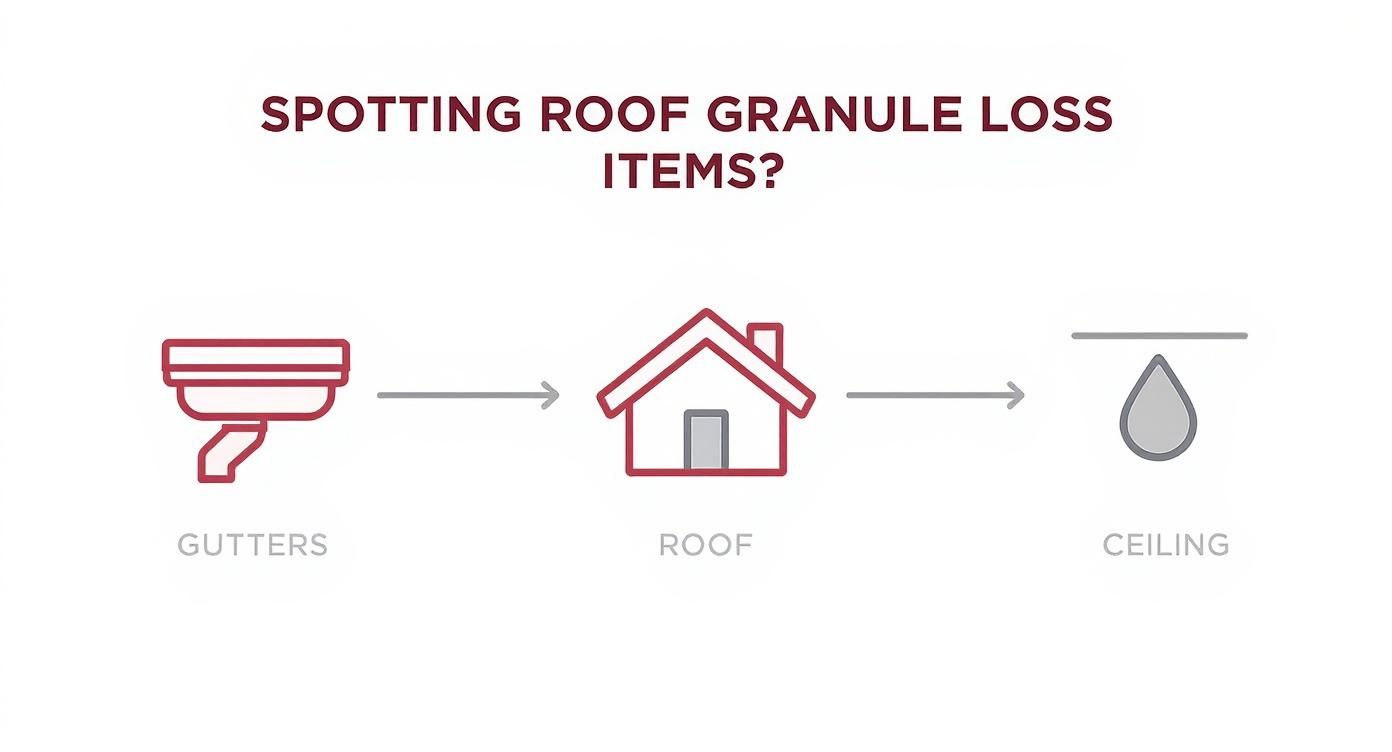
The key takeaway here is that roofing problems snowball. What starts as a few granules in your gutters can quickly lead to visible damage on the roof and, before you know it, a drip on your living room ceiling.
Critical Moments for Professional Intervention
Some situations are non-negotiable—they demand an immediate call to a trusted local roofer. Gambling with your home's integrity by delaying an inspection in these scenarios just isn't worth the risk.
- After a Major Storm: A hurricane or even a strong tropical storm can wreak havoc. High winds and flying debris can strip granules off in sheets, causing widespread damage that isn't always visible from the ground.
- Visible Damage from the Ground: If you can look up from your driveway and see shingles curling, bald patches, or shingles missing entirely, the problem has already advanced to a serious stage.
- Signs of Interior Leaks: That brownish water stain on your ceiling is the final, most urgent signal you can get. It means your roof's defenses have been completely breached.
Trying to patch up widespread granule loss on your own is a bad idea. Just walking on a compromised roof can cause more damage, and a shoddy repair can trap moisture, leading to rot that turns a simple issue into a catastrophic failure.
A professional assessment is the only way to get a true diagnosis of why granules are washing off your roof in Wilton Manors. An expert can tell you if a targeted repair will do the trick or if a full replacement is the only way to truly protect your home. Investing in a professional opinion from Paletz Roofing gives you clarity and a safe, effective path forward. You can learn more about our process by exploring our Paletz Roofing Inspection services. It's the step that keeps a small problem from becoming an expensive nightmare.

Proactive Steps to Extend Your Roof’s Lifespan

Protecting your roof is one of the smartest investments you can make in your home. Instead of just reacting when you see granules washing off a roof in Wilton Manors, you can take proactive steps to slow the process and squeeze every bit of life out of it, even in our demanding Florida climate.
The single most valuable thing you can do is schedule regular professional inspections. Think of it like a routine check-up for your home’s most critical shield. An expert eye can spot subtle signs of stress or damage long before they snowball into catastrophic failures, especially after a major storm rolls through.
Key Maintenance Strategies
Beyond professional assessments, a few key maintenance tasks can make a huge difference in your roof's service life. These practices help push back against the common issues that accelerate wear and tear in our hot, humid environment.
- Gentle Cleaning Methods: Algae and moss absolutely love South Florida, but hitting them with an aggressive pressure washer can strip granules just as fast as a hailstorm. You'll want to opt for safe, low-pressure cleaning solutions designed to kill organic growth without causing collateral damage.
- Proper Attic Ventilation: An attic without proper airflow can become an oven, literally baking your shingles from the inside out. This extreme heat breaks down the asphalt and weakens the adhesive holding the granules, causing them to shed way too early.
- Clear and Functional Gutters: Your gutters are the unsung heroes of your roof’s drainage system. When they get clogged with leaves and debris, water has nowhere to go but back up onto the roof, soaking the underlying materials and weakening the whole structure.
A well-maintained roof is a resilient roof. These preventative measures work together to reduce stress on your shingles, helping them retain their protective granule layer for as long as possible and delaying the need for costly replacements.
Regular home maintenance, like making sure your drainage systems are clear, can seriously contribute to your roof's longevity. For instance, a good guide on how to clean gutters safely can be an incredibly valuable resource. Every step you take, from inspections to cleaning, adds precious years to your roof's life.
Common Questions About Roof Granule Loss
When you first spot that gritty sand-like stuff in your gutters, a bunch of questions probably pop into your head. It's a common concern for homeowners, so let's walk through some of the most frequent ones to give you a clear picture of what's happening on your roof.
Is It Normal to See Granules After a New Roof Installation?
Yes, it absolutely is. Seeing a small flurry of granules right after a new roof is installed is perfectly normal. Think of them as "hitchhiker" granules—just some excess bits and pieces from the manufacturing and installation process that get washed off with the first few rainstorms.
This initial shedding should taper off pretty quickly. If you're still seeing a significant amount of granules washing off your roof in Wilton Manors several months down the road, it’s a good idea to give your installer a call. It's better to double-check that everything settled in correctly.
Can I Just Paint or Recoat My Shingles to Fix Granule Loss?
This is a tempting idea, but it’s one you should definitely avoid. Slapping a coat of paint or a sealant over aging shingles is a band-aid solution that often causes more harm than good. These coatings can trap moisture against the shingle, which accelerates rot. They can also cause the shingles to overheat and will almost certainly void any warranty you have from the manufacturer.
The only real fix for widespread granule loss is to figure out the root cause. A professional inspection will tell you if a few spot repairs will do the trick or if a full replacement is the smarter move. If the granule loss is severe, especially after a storm, an insurance claim might be your next step. To get a handle on that process, here are some essential hail damage roof insurance claim tips.
Tackling significant granule loss means finding the source of the problem. A professional eye can tell the difference between normal wear and tear and a roof that's failing prematurely, pointing you toward a solution that actually protects your home for the long haul.
How Much Does a Professional Roof Inspection Cost?
The cost can vary, but here's some good news: many reputable local roofers, including us at Paletz Roofing, offer initial inspections completely free of charge. This isn't a watered-down look, either.
A qualified expert will get up on your roof, safely assess its condition, pinpoint the cause of the granule loss, and give you a detailed report on what they found. You'll get an accurate estimate for any needed work without having to spend a dime upfront.
If you're worried about granule loss or anything else with your roof, don't let the problem get worse. Contact Paletz Roofing and Inspections for a complimentary, no-obligation inspection. Get expert advice you can actually trust. Visit us at https://paletzroofing.com to schedule your appointment today.