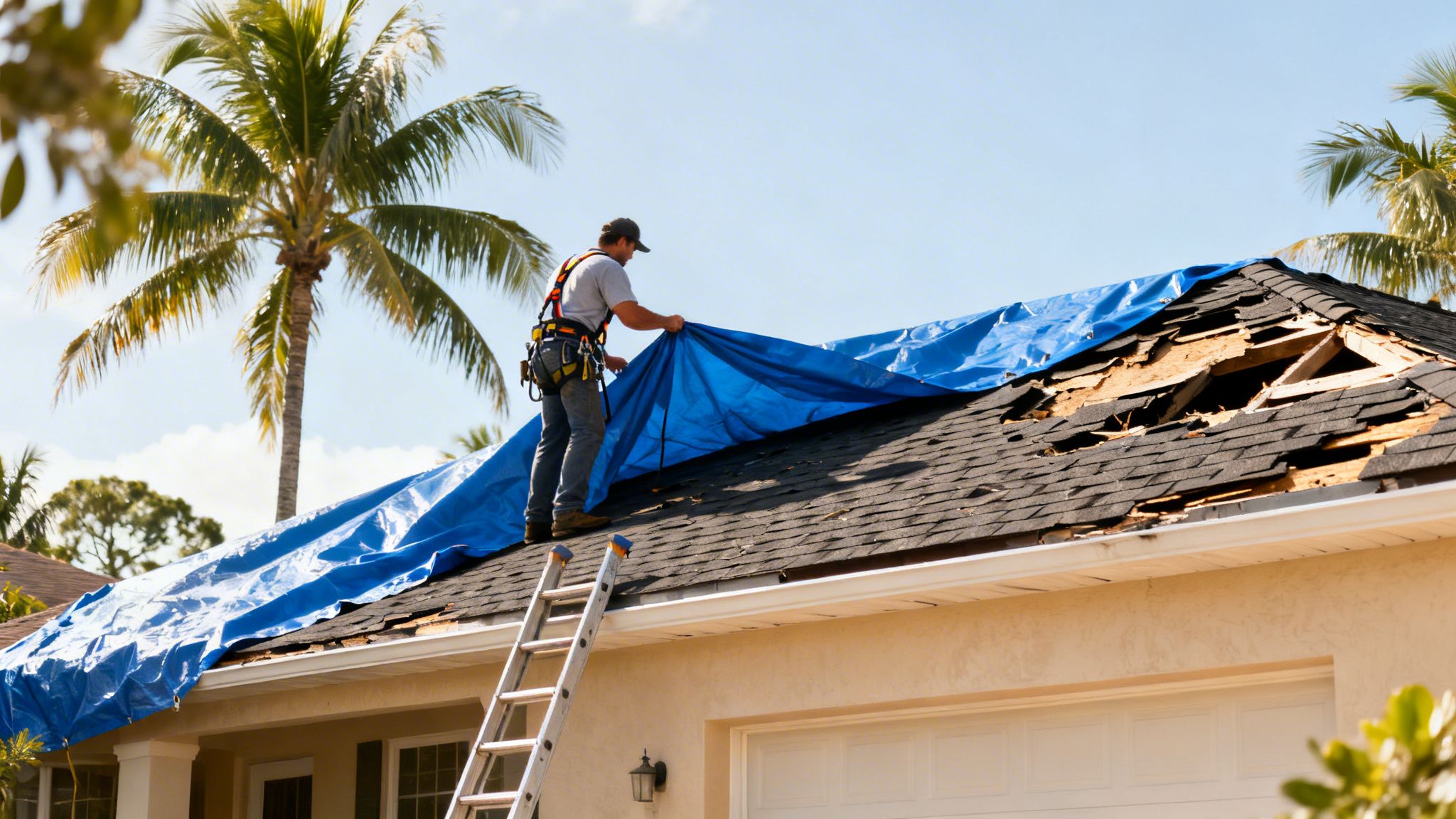
That dark water stain spreading across your ceiling is more than just an ugly blemish. It’s a bright red flag, a warning sign that your roof has a serious problem that needs immediate attention. For West Palm Beach homeowners, knowing the difference between a minor issue and a full-blown crisis is the key to getting an emergency roof repair and stopping catastrophic damage before it starts.
Recognizing a West Palm Beach Roofing Emergency
A true roofing emergency isn't always as obvious as a palm tree punching through your roof during a hurricane—though that certainly qualifies. Here in South Florida, the signs can be much sneakier. Our roofs are under constant assault from a brutal combination of intense sun, oppressive humidity, and violent storms, putting incredible stress on every shingle, tile, and seam.
That small, nagging leak you’ve been managing with a bucket? It’s almost always a symptom of a much bigger, hidden problem. While you're catching drips in the living room, water could be quietly saturating your attic insulation, rotting the wooden support beams, and creating the perfect breeding ground for toxic mold.
Obvious Signs You Need Help Now
Some warning signs are impossible to miss and demand an immediate phone call to a professional. If you see any of these, treat it like the emergency it is:
- Visible Water Intrusion: This isn't a slow drip. We're talking about active dripping from your ceiling, water streaming down interior walls, or drywall that is visibly bubbling and discolored.
- Major Punctures or Holes: If a storm has thrown debris into your roof or a tree limb has fallen, creating a clear opening, you're completely exposed.
- Missing Sections of Shingles or Tiles: After a major wind event, take a look outside. If you see large patches of exposed underlayment where shingles or tiles used to be, your home is defenseless against the next rainfall.
- Sagging Roof Deck: A noticeable dip, bow, or "swayback" look in your roofline is a massive structural red flag. This often means the underlying framework is waterlogged and compromised, posing a risk of collapse.
Less Obvious but Equally Urgent Issues
Not every emergency starts with a bang. Some of the most destructive issues begin quietly and escalate fast if you don't know what to look for.
A minor leak can saturate attic insulation, rendering it useless and fostering mold growth that compromises indoor air quality. What starts as a small drip can quietly cause thousands in damage to drywall, framing, and electrical systems.
For example, finding a pile of shingle granules in your gutters is a bad sign. It means your shingles are "balding" and have lost their primary protective layer, leaving them to be baked by the relentless Florida sun. Another subtle clue is paint that starts to peel or blister near the ceiling, which often points to a slow, hidden leak inside the wall.
The financial stakes are incredibly high. Here in West Palm Beach, a full roof replacement is a major expense, making prompt emergency intervention absolutely critical. For a standard 2,000-square-foot home, an asphalt shingle roof can run between $12,000 and $18,000. If you have premium materials like tile or metal, that figure can easily jump past $50,000.
Those costs are driven by our area's strict High-Velocity Hurricane Zone (HVHZ) building codes, which demand stronger materials and more robust installation methods. Getting a quick emergency repair can stop the damage in its tracks, buy you more time, and help you avoid a premature and very expensive full replacement. You can explore a detailed cost breakdown to get a better handle on these local expenses.
Your Immediate Actions to Secure Your Home
That sinking feeling when you see a water stain spreading across your ceiling… it’s a moment of pure panic. I’ve seen it a hundred times here in West Palm Beach. Before you even think about calling for an emergency roof repair, your first few moves are all about one thing: damage control.
What you do in the next hour can save you thousands in interior repairs and protect your family. Let’s walk through the immediate priorities.

It boils down to this: assess the situation, secure your home and valuables, and then call in the professionals.
Contain the Water and Protect Your Belongings
First things first, get a handle on the water. Grab whatever you can—buckets, trash cans, storage bins—and place them directly under the drips. If you’re dealing with more than a slow drip, a standard bucket is going to fill up fast. This is where a wet/dry vacuum is your best friend; it can pull gallons of water off your floors in minutes.
Once you’ve got the immediate flow managed, it's time to triage your belongings.
- Move Valuables: Get furniture, electronics, artwork, and any important papers out of the way immediately.
- Cover Everything Else: For heavy items you can't move, cover them with thick plastic tarps or contractor bags.
- Clear a Path: Move everything you can to a dry part of the house. This not only saves your stuff but also clears a path for the repair team when they arrive.
Safety First: If water is anywhere near electrical outlets, light fixtures, or your breaker panel, shut off the power to that section of the house. Water and electricity are a deadly mix. Don’t take a single chance.
Document Everything for Your Insurance Claim
Amid the chaos, you need to become a detective. Your insurance company will need proof—and lots of it. What you document right now will be the backbone of your claim.
Pull out your phone and start taking photos and videos. Get wide shots of the whole area, showing the water coming in and the damage below. Then get close-ups of the saturated drywall, the bubbling paint, and the puddles on the floor. Don’t just document the damage; document your efforts to mitigate it, like the buckets you've set out.
It's also smart to start a simple log. Jot down the time you found the leak and every step you take after. This narrative, paired with your visual proof, builds an undeniable case for your claim. You can even learn more about how visual documentation strengthens your case and helps ensure you get what you're owed.
The Critical Warning About DIY Tarping
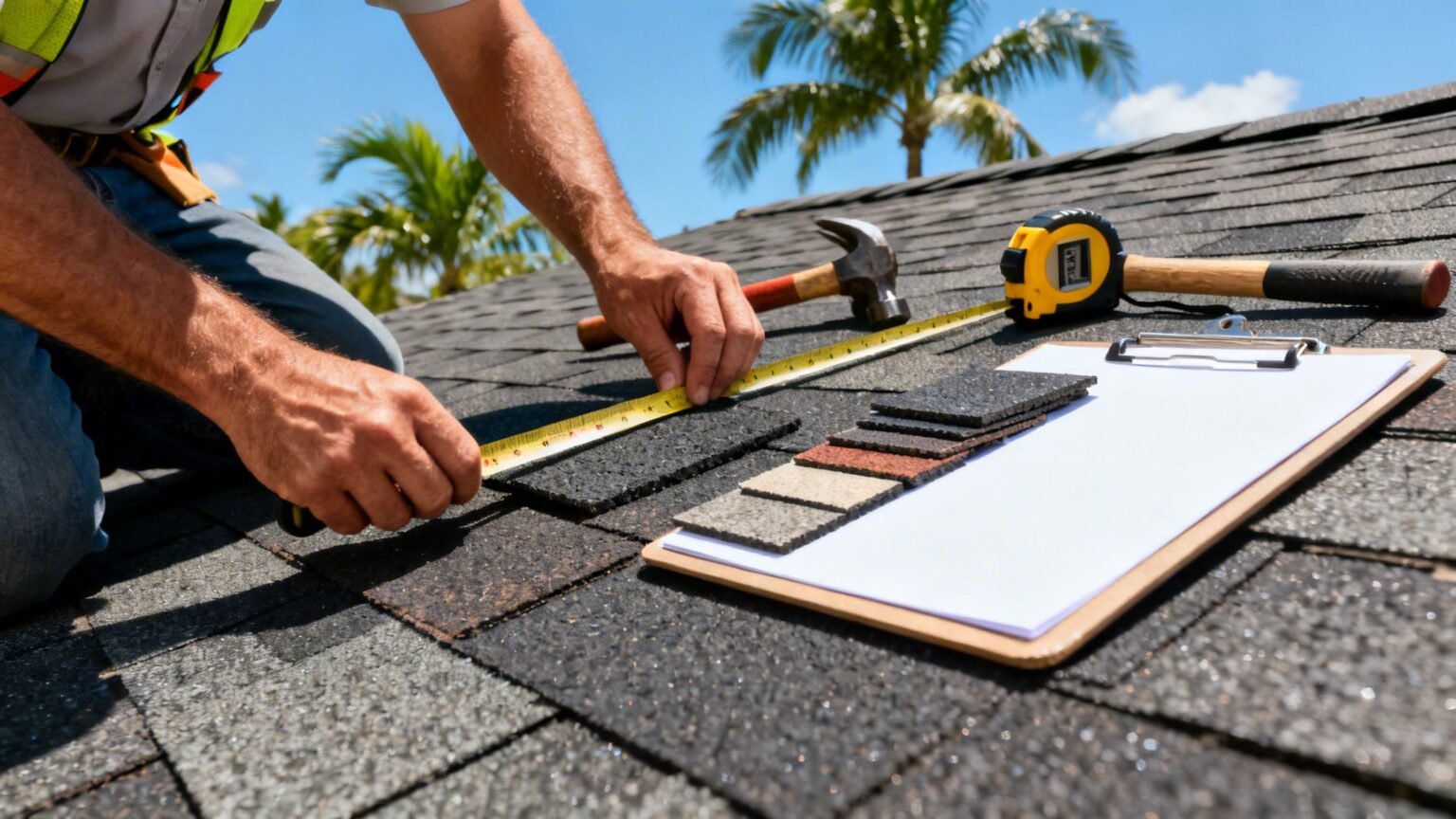
I have to be blunt here. You might feel a powerful urge to climb up on your roof and throw a tarp over the hole. Do not do this.
A storm-damaged roof is treacherous. It’s wet, it’s slippery, and the structure itself could be compromised. I’ve heard too many horror stories of homeowners getting seriously injured in a fall. It is absolutely not worth the risk.
Professional roofers have the training and specialized safety gear—harnesses, anchors, proper footwear—to get on a damaged roof without getting hurt. Emergency tarping is a job for a qualified and insured company. Period.
Your job is to manage the crisis safely from inside. By containing the water, moving your valuables, and documenting everything, you are taking the most important and effective steps possible. You're turning a moment of chaos into a managed response, buying precious time until a professional team like Paletz Roofing and Inspections can get there and take over.
Finding a Trustworthy Emergency Roofer in Palm Beach County
When water is pouring into your home, the pressure to hire the first roofer who answers the phone is immense. But in the chaos, you risk hiring the wrong person—a decision that can quickly turn a bad situation into an absolute disaster. Choosing a trustworthy partner for your emergency roof repair in West Palm Beach is the single most important call you'll make.
After a major storm, our neighborhoods are flooded with "storm chasers." These are often out-of-state crews that swoop into disaster areas, perform cheap, subpar work, collect their money, and vanish. They leave homeowners with faulty repairs that fail at the first sign of the next downpour, with no one to call to honor a warranty.

Non-Negotiable Credentials for Any Florida Roofer
Before you let anyone on your property, you have to verify two critical things: their license and their insurance. This isn't just good advice; it's essential for your financial protection and safety. A legitimate company will be upfront and provide this information without hesitation.
In Florida, you can easily verify a contractor's license through the Department of Business and Professional Regulation (DBPR) online portal. Make sure their license is "current/active" and that the name on the license matches the company you're hiring.
Just as important is proof of both general liability insurance and workers' compensation. When you're in a rush to find an emergency roofer, it’s critical to confirm they carry adequate insurance. Understanding what liability insurance for contractors entails shows you how it protects you from being held responsible for any accidents or property damage that occur during the repair.
If you hire an uninsured contractor and a worker gets injured on your property, you could be on the hook for their medical bills. It’s a devastating financial risk that is easily avoided by simply asking for a certificate of insurance upfront.
Spotting Storm Chaser Red Flags
Trustworthy local roofers and opportunistic storm chasers operate very differently. Learning to spot the red flags can save you from a massive headache down the road.
Be wary of anyone who uses high-pressure sales tactics, like claiming they have "leftover materials" from a neighbor's job to offer you a one-time-only deal. Another huge warning sign is a demand for a large upfront payment, especially in cash. Reputable companies like Paletz Roofing and Inspections have established credit with suppliers and don't need a huge deposit to get started. While a small deposit can be standard, demanding 40-50% or more before any work begins is highly suspicious.
The table below breaks down the key differences to watch for.
Choosing a Roofer in an Emergency Paletz Roofing vs Storm Chasers
| Attribute | Paletz Roofing & Inspections (Trusted Local Pro) | Storm Chaser (Avoid) |
|---|---|---|
| Local Presence | Physical office in Palm Beach County, long history here | No local address, often uses a P.O. box or hotel |
| Vehicles & Staff | Branded company trucks and uniformed employees | Unmarked personal vehicles, no uniforms |
| Estimates | Detailed, written proposals with clear scope and costs | Vague verbal quotes, "handshake deals" |
| Licensing | Readily provides Florida license & insurance proof | Evasive or unable to produce valid documentation |
| Payment Terms | Standard deposit, clear payment schedule | Demands large cash deposit (40-50% or more) upfront |
| Sales Tactics | Consultative, pressure-free approach | High-pressure, "today-only" offers |
| Community Ties | Local reviews, references, and community involvement | No local track record or verifiable references |
Ultimately, a real local pro has a reputation to protect right here in our community. A storm chaser is just passing through.
This need for reliable contractors is a big deal nationally. The U.S. roofing market is projected to hit $31.38 billion in 2026, driven largely by repair and replacement needs. Here in South Florida, that demand is magnified by storm damage, which unfortunately creates a market where shady operators try to take advantage of homeowners' desperation.
Questions to Ask a Potential Roofer
Once you've found a few potential contractors, it's time to vet them. Your goal is to gauge their experience, professionalism, and understanding of our specific local requirements. A dedicated team like the one at Paletz Roofing and Inspections will be ready to answer these questions confidently.

Before signing anything, make sure you ask:
- How long have you been in business here in Palm Beach County?
- Are you licensed and insured in Florida? Can I see your documentation?
- What experience do you have with South Florida's High-Velocity Hurricane Zone (HVHZ) building codes?
- Who will be my point of contact throughout this project?
- What warranties do you offer on your workmanship and the materials you use?
- Can you provide a list of local references I can call?
The answers you get—or don't get—will paint a clear picture of the company's reliability. A roofer who is evasive or can't provide straight answers is not someone you want managing your emergency. Taking a little extra time to vet your options ensures your home is in capable and trustworthy hands.
Navigating Your Roof Damage Insurance Claim
Once the initial shock of a roof leak wears off, a different kind of dread often creeps in: calling your insurance company. Let’s be honest, this part of the process can feel overwhelming, full of confusing jargon and the fear of the unknown. But all that detailed documentation you gathered—the photos, videos, and notes—is about to become your single most powerful tool.
Filing an insurance claim for roof damage here in West Palm Beach doesn't have to be a fight. It's a structured process, and simply understanding how it works puts you firmly in the driver's seat. Your goal is to present a clear, undeniable case that secures the coverage you need for a complete and proper repair.
Initiating Your Claim: The First Call
Your first move is to contact your insurance agent or the carrier's claims hotline to officially report the damage. Have your policy number handy and be ready to give a straightforward summary of what happened. Stick to the facts you documented: when you first noticed the leak, the cause of the damage if you know it (like a fallen tree limb), and the immediate steps you took to stop more water from getting in.
The insurance company will give you a claim number and assign an adjuster to your case. This adjuster is the person who will inspect the damage and ultimately determine the value of your claim. It's absolutely crucial to get their contact information and ask for an expected timeline for their visit.
The Adjuster's Visit and Why Your Roofer Should Be There
The adjuster’s inspection is the single most important moment in the life of your claim. They will assess the extent of the damage to figure out the scope of repairs your policy will cover. This is precisely where having a trusted professional on your side becomes a total game-changer.
We always, always advise our clients to have their roofer present during the adjuster’s inspection. Here’s why this is so critical:
- Expert Advocacy: Your roofer and the adjuster speak the same language. A roofer can immediately point out damage a general adjuster might miss, like subtle hail impacts, compromised flashing, or the specific granule loss that signals your shingles' lifespan has been drastically cut short.
- Code Compliance: A local roofer, like our team at Paletz Roofing, is an expert in Palm Beach County's stringent High-Velocity Hurricane Zone (HVHZ) codes. They can make sure the adjuster's estimate includes all code-required materials and installation methods, which can make a huge difference in the final cost.
- Accurate Scope: The roofer can discuss the repair strategy directly with the adjuster on the spot. This ensures the proposed scope of work is actually enough to fix the problem correctly and prevent it from happening again, heading off a lowball estimate that only pays for a temporary patch job.
Having your roofer on-site creates a team dynamic focused on a fair and accurate assessment. It prevents you from being caught in the middle, trying to translate technical details between your roofer and the insurance company.
Understanding Key Insurance Terms
Insurance policies can feel like they're written in another language. To make the process smoother, some general information on understanding insurance claims can be a huge help. Knowing what these key phrases mean will empower you to understand the adjuster's report and your settlement offer.
- Deductible: This is the amount you pay out-of-pocket before your insurance coverage kicks in. For example, if your deductible is $2,500 and the total approved repair cost is $10,000, your insurer will pay $7,500.
- Actual Cash Value (ACV): This is what your damaged roof is worth after accounting for depreciation due to its age and normal wear. An ACV policy often won't provide enough money to cover a full replacement, leaving you to pay the difference.
- Replacement Cost Value (RCV): This is the coverage you want to have. RCV pays to replace your damaged roof with new materials of a similar kind and quality, without a deduction for depreciation. Most RCV policies pay out in two parts: an initial ACV payment, followed by the rest of the money once you submit receipts showing the work is finished.
Trying to navigate an insurance claim after you discover you need an emergency roof repair in West Palm Beach is stressful, but you don’t have to do it alone. By documenting everything thoroughly, hiring a reputable local roofer, and having them present for the adjuster's visit, you arm yourself with the expertise needed to secure a fair settlement and get your home properly restored.
What to Expect During an Emergency Roof Repair
When a professional crew pulls up to your house for an emergency roof repair in West Palm Beach, you can finally start to breathe a little easier. The panic subsides, and you’ll see a well-oiled machine swing into action. Their process is all about securing your property, finding the real source of the problem, and putting a permanent fix in place. Knowing what they’re doing helps take the anxiety out of the equation.

The moment a crew arrives, their first job is safety. They’ll get that active leak under control with temporary measures, usually expert tarping. Then, they’ll dig in with a full inspection to see exactly what they're up against.
The Initial Damage Assessment and Scope of Work
Before a single shingle is replaced, the lead technician will perform a thorough inspection. This isn't just a quick glance at the hole in your roof. Think of it more like a forensic investigation. They’re looking for the primary point of failure, of course, but also any hidden damage that could cause you headaches down the road.
A proper inspection always includes:
- The Area of Impact: The technician will get hands-on, examining the section where the leak started. They're hunting for punctures, cracked tiles, or shingles the wind has lifted up.
- Surrounding Materials: They don’t just focus on the obvious spot. They check the health of the materials around the damaged area to make sure the problem isn't more widespread.
- Flashing and Seals: Critical failure points like vents, skylights, and chimneys get a close look. A compromised seal here is a very common culprit.
- The Attic Space: The inspection moves inside. The tech will be in your attic, checking for water-stained decking, soggy insulation, and any signs of wood rot.
With all this information, the roofer will draw up a detailed scope of work. This isn't a vague guess; it's a clear document that outlines the exact damage, the specific repairs required, the materials they'll use, and a cost breakdown. It ensures everyone is on the same page before the real work begins.
Realistic Timelines and Potential Costs
The two biggest questions we hear are always, "How long will this take, and what’s it going to cost me?" For emergency roof repairs, the answer really depends on the type and severity of the damage. Here in South Florida, things like afternoon thunderstorms and sourcing specific HVHZ-rated materials can also affect the timeline.
A professional roofer's main goal is to secure your home fast. A temporary fix, like a heavy-duty tarp, can often be done in just a few hours. This protects your home while the materials for the permanent repair are sourced.
While every job is different, this table should give you a general idea of what to expect for common emergency repairs in the West Palm Beach area.
Estimated Timelines and Costs for Common Emergency Repairs
Here’s a quick look at what some of the most frequent emergency repair jobs might involve, both in terms of time and cost.
| Type of Repair | Estimated Timeframe | Potential Cost Range |
|---|---|---|
| Emergency Tarp Installation | 2-4 hours | $300 – $700+ |
| Replacing Missing Shingles | 4-8 hours | $500 – $1,500+ |
| Repairing Damaged Flashing | 3-6 hours | $450 – $1,200+ |
| Patching a Punctured Flat Roof | 2-5 hours | $400 – $1,000+ |
| Replacing Cracked or Broken Tiles | 4-8 hours | $600 – $2,000+ |
Keep in mind, these are just estimates. The final cost will hinge on material availability, the complexity of your roof's design, and—most importantly—the extent of any underlying water damage found during the repair. It's crucial to be prepared for the possibility that some soaked decking might need to be replaced. You can see examples of what this damage looks like in our guide to common roofing issues in South Florida.
A Typical Day On-Site
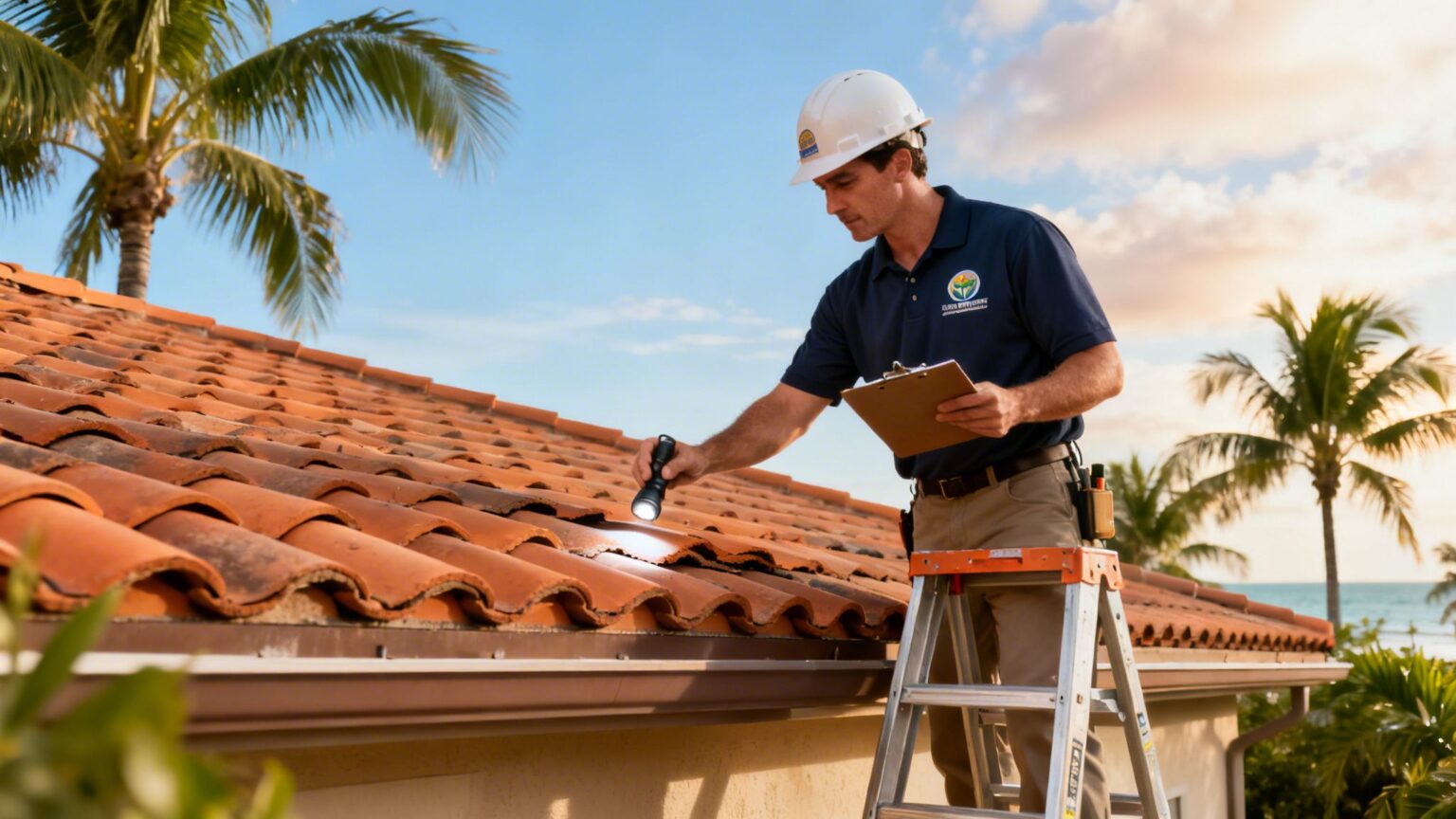
When the crew comes back to handle the permanent repair, you'll see a coordinated effort. The first thing they'll do is protect your property by laying down tarps over landscaping, siding, and windows to shield them from debris.
The repair itself is a methodical process. The crew carefully removes all the old, damaged materials and inspects the underlying roof deck one more time for any water damage. After that, new underlayment goes down, followed by the new shingles, tiles, or membrane, all of which are meticulously sealed to meet and exceed local building codes.
Finally, the job isn't done until the site is left spotless. A professional crew will do a thorough cleanup, even using magnetic sweepers to find any stray nails. They'll leave your property looking like they were never there—except for the secure, professionally repaired roof over your head.
Frequently Asked Questions About Emergency Roof Repair
When your roof is suddenly compromised, your mind starts spinning with questions. In the middle of a crisis here in West Palm Beach, you don’t have time for vague answers—you need clear, straightforward information, and you need it now.
We get it. We’ve seen it all, and we’ve answered these questions hundreds of times. Here’s the straight scoop on the most common concerns homeowners face when dealing with unexpected roof damage.
Is a Small Leak Really an Emergency?
This is a question we hear all the time, and our answer is almost always a resounding yes. That little drip you see making a spot on your ceiling is just the visible symptom of a much larger problem. Think of it as the tip of the iceberg.
Behind the scenes, that "small" leak is likely saturating your insulation, creating a perfect breeding ground for mold, and slowly causing the wooden structure of your roof deck to rot. In our humid South Florida climate, mold can take hold in as little as 24-48 hours. What could have been a simple repair can quickly spiral into a costly remediation project that involves tearing out drywall and dealing with extensive mold. Treating every single leak with urgency is the smartest way to protect both your home and your bank account.
How Long Can a Temporary Tarp Last?
A professionally installed emergency roof tarp is an excellent stop-gap measure, but it's crucial to remember it’s not a permanent fix. These are heavy-duty, industrial-grade tarps designed to seal your home off from the elements and prevent any more water from getting in while you arrange for a permanent repair.
A high-quality tarp that’s been properly secured can hold up for several weeks, sometimes even up to 90 days. But its real-world lifespan is at the mercy of the weather. Another big storm or a few days of sustained high winds can easily compromise even the most well-installed tarp.
Ultimately, the tarp's job is to buy you time. It gives you the breathing room you need to file an insurance claim, get the right materials ordered, and schedule a proper repair without the constant stress of another downpour causing more damage.
What Happens if More Damage is Found During Repairs?
It’s a scenario that plays out more often than you'd think. The repair crew starts removing the damaged shingles or tiles and discovers the plywood decking underneath is soft, dark, and completely waterlogged. When this happens, any reputable contractor will immediately stop what they're doing to show you exactly what’s going on.
A true professional will always follow this process:
- Stop and Document: The first thing they'll do is take clear pictures of the hidden rot or damage. This documentation is critical for both you and your insurance provider.
- Discuss the Solution: They will walk you through why the rotted wood must be replaced and explain the additional cost for the new materials and labor involved.
- Get Your Approval: A professional roofer will never proceed with extra work—or extra charges—without your clear approval. This is typically handled with a "change order," which is just a simple, written addendum to the original agreement.
Discovering more extensive damage is never good news, but fixing it the right way is absolutely essential for a repair that will last. Just putting new shingles over rotten wood is a disastrous shortcut that all but guarantees you'll be dealing with the same problem again, only worse. A trustworthy roofer makes sure the foundation of the repair is just as solid as the new roof going on top.
When a roofing emergency hits, you need a team you can rely on to be there fast and get the job done right. For immediate help with any roofing issue, trust the experienced crew at Paletz Roofing and Inspections to secure your home and provide a permanent, reliable solution. Contact us now for urgent service.