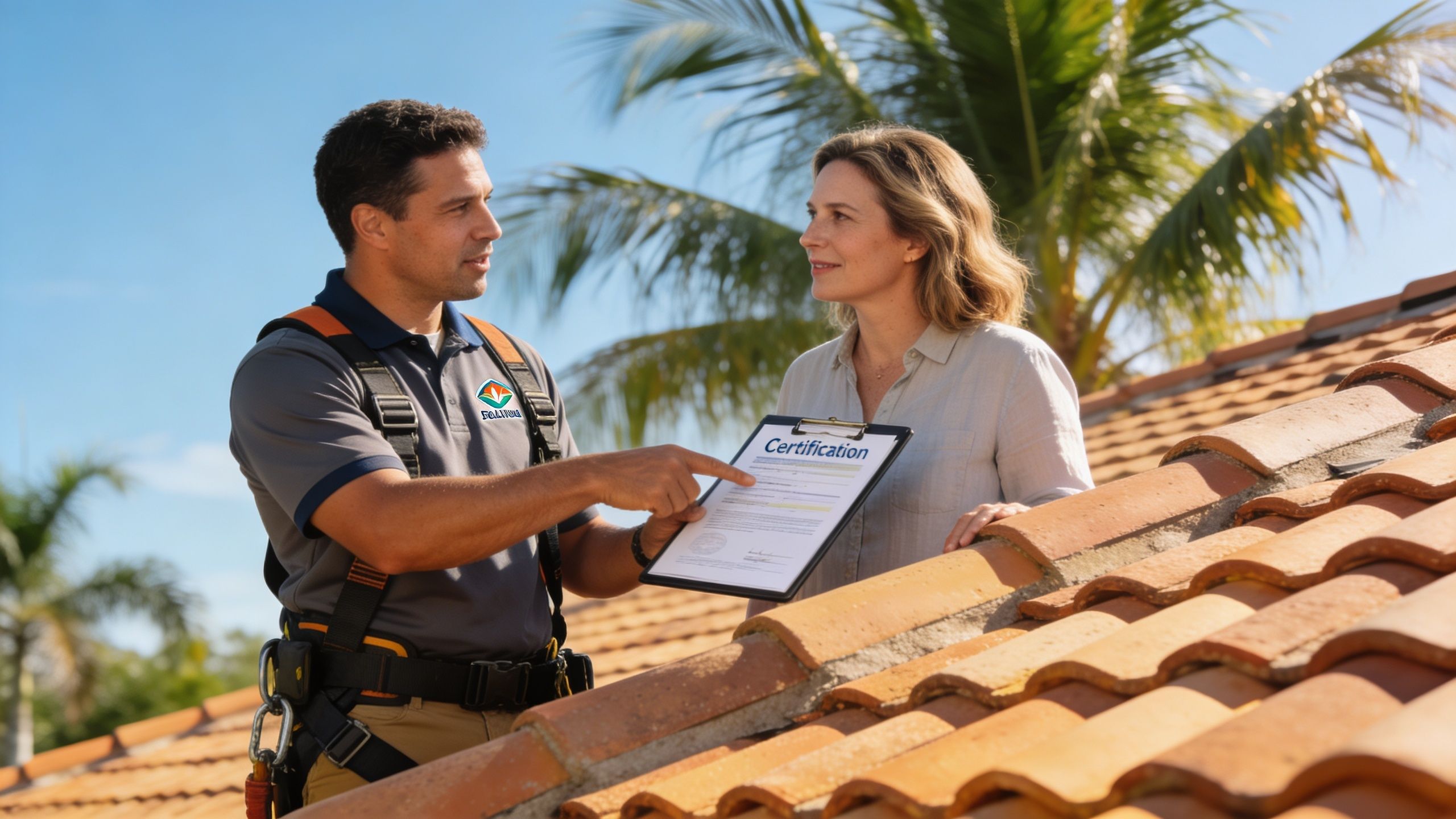
Many South Florida homeowners begin this process in a similar fashion. A stain appears on the ceiling following a heavy rain, several tiles shift after a windy weekend, or an insurance inspection transforms a roof into an urgent priority. At that point, homeowners typically react by calling roofers and comparing prices.
That's where people get into trouble.
How to choose a roofer in Broward, Miami-Dade, or Palm Beach isn't just about finding a licensed company with a decent website. In this climate, the fundamental question is whether that roofer understands your specific roof system and how it performs under wind, heat, salt exposure, pounding rain, and drainage stress. Broad consumer advice often misses that point. As noted in guidance on Florida roof considerations, most consumer content stops at checklist basics and doesn't help homeowners judge whether a roofer understands issues like wind uplift, heat aging, salt exposure, or tile-versus-metal tradeoffs.
A good roofer should be able to talk details. Not just “we do roofs.” They should be able to explain how they approach tile attachment, metal fasteners, underlayment choices, flashing details, drainage on low-slope sections, and maintenance expectations in a hurricane-prone area. If they can't explain the system, they probably shouldn't be installing it.
Table of Contents
- Your Guide to Selecting the Right South Florida Roofer
- Start with Non-Negotiable Credentials and Local Presence
- Gauge True Expertise for Your Specific Roof System
- Verify Reputation Through References and Past Work
- Deconstruct Estimates and Review Contract Details
- Understand Warranties for Long-Term Peace of Mind
- Frequently Asked Questions About Hiring a Roofer
Your Guide to Selecting the Right South Florida Roofer
South Florida roofs fail in predictable places. They fail at transitions, penetrations, edge details, old flashing, low spots that hold water, and installations done by crews who know how to move fast but not how to build for this climate. That's why a homeowner needs more than a checklist.
A smart selection process starts with a simple rule. First confirm the roofer is legitimate. Then confirm they know your roof system. Then confirm they've done that work well for other local customers. Price comes after that.
If your home has tile, you need a roofer who can talk through attachment methods, underlayment strategy, flashing work, and the details of repairing versus replacing aged sections. If you have metal, the conversation should shift to panel type, fastener placement, penetrations, edge securement, and corrosion concerns near the coast. If you have a flat or low-slope roof, drainage and waterproofing details should dominate the conversation.
Practical rule: In South Florida, generic roofing experience is not enough. Match the roofer to the roof system and the weather exposure.
There's also a difference between a good salesperson and a good roofer. A salesperson will keep the conversation broad. A real pro gets specific quickly. They'll ask about leak history, ponding areas, repairs, wind exposure, attic signs, and how long the current system has been in place. They'll also be comfortable putting their process in writing.
Use this guide the same way a veteran roofer would use it when helping a neighbor. Start by filtering out anyone who can't prove they're qualified to work on your property. Then test whether they understand the roof you have. After that, verify their track record with your own eyes.
Start with Non-Negotiable Credentials and Local Presence
The first screen is simple. Before you discuss materials, timelines, or colors, make the roofer prove they're a real business that can legally and safely work on your property.

Check paperwork before you discuss price
For South Florida property owners, that order matters. Industry guidance on choosing the right roofing contractor says a rigorous vetting process should start with license and insurance verification before any price comparison, especially where hurricane exposure makes documented workmanship, materials, and warranty clarity critical.
Ask for these items right away:
- State and local licensing proof so you can confirm they're authorized for residential roofing work where required.
- Liability insurance documentation that's current, not expired or “being renewed.”
- Workers' compensation coverage so you don't inherit risk if someone gets hurt on your property.
- A permanent office location instead of a truck, temporary yard sign, or post-storm cell number.
- A written contract process because serious roofers don't do major work on handshakes alone.
This principle applies to other trades too. If you've ever looked into hiring insured window washers in Phoenix, you've seen the same basic truth. Insurance isn't a formality. It's part of protecting the property owner when work happens at height.
One useful way to think about documents is this: if a contractor hesitates to share them before asking for a deposit, keep moving.
Why local presence matters in South Florida
A permanent local presence doesn't guarantee quality, but it does tell you a lot. It means the roofer is easier to find if there's a warranty issue, easier to reach during permit questions, and more likely to understand the weather patterns and inspection environment in your county.
Storm-chasing outfits count on urgency. They knock doors after a weather event, promise quick scheduling, and disappear when callbacks start. A local company has more to lose by doing sloppy work.
When you verify office information, also look at the company's broader identity. Check whether the business name is consistent across paperwork, website, truck branding, reviews, and proposals. If one name is on the estimate and another is on the insurance certificate, ask why. If you're reviewing business materials online, even a simple branded asset like this company image file should align with the legal business identity shown in the contract and insurance documents.

A roofer who is hard to verify before the job will be harder to hold accountable after the job.
A legitimate contractor also won't rush you past the verification stage. In my experience, the people who get defensive about paperwork are usually the same ones who get vague about supervision, permits, and cleanup once the project starts.
Gauge True Expertise for Your Specific Roof System
A license gets a roofer through the front door. It does not prove they should work on your roof.
That distinction matters more in South Florida than in many other places. A contractor might be perfectly competent on one system and shaky on another. Tile, metal, and flat roofs each punish bad technique in different ways. The weak spots aren't the same, and the repair logic isn't the same either.

Tile roofs need a different conversation
Tile roofs look tough, and they are. But they're also unforgiving when a roofer treats them like shingles. The visible tile is only part of the system. The waterproofing lives below it, and South Florida homes often run into trouble when underlayment, flashing, or attachment details are glossed over.
A roofer with real tile experience should be able to answer questions like:
- How do you inspect the underlayment condition when the visible issue is broken or slipped tile?
- What's your approach around valleys, walls, and penetrations where leaks often start?
- How do you handle matching and replacing damaged tile when older profiles are harder to source?
- What maintenance issues should I expect as this roof ages in heat and wind?
If the answers stay vague, that's your answer.
Metal and flat roofs expose weak estimators fast
Metal roofing takes precision. Flat and low-slope roofing takes discipline. Both reveal whether the roofer understands measurement, detailing, and risk control.
According to commercial roofing estimating guidance, a homeowner should ask a roofer how they measure, price, and de-risk jobs for the specific roof system, and a professional process should clearly address labor, materials, scope exclusions, and change-order handling. That same guidance notes that successful estimators need a deep understanding of material costs, installation complexity, labor requirements, and contingencies, and it gives a business benchmark of a bid-hit-win ratio of roughly 20% to 25%.
For a homeowner, the takeaway isn't that you need to judge their sales metrics. It's that real roofers have a method. They don't eyeball a complicated roof and toss out a number from the driveway.
On metal, ask about panel type, fasteners, penetrations, edge securement, and what they do differently near salt air. On flat roofs, ask where water exits, how they handle ponding areas, what they do at parapet walls or curbs, and how they sequence tear-off and dry-in if weather turns.
Modern inspection tools can help, but only if the roofer knows how to use the information. For example, some contractors use drone software for roofing businesses to document measurements and roof conditions. That can improve visibility on complex roofs, but it shouldn't replace a solid understanding of the roofing system itself.
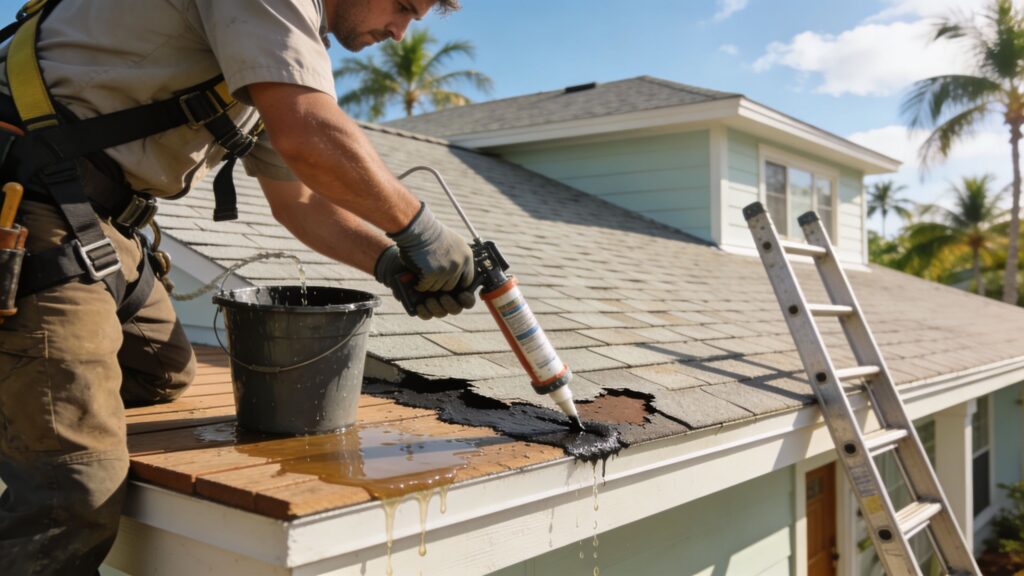
You can also learn a lot from the kind of project visuals a roofer shares. If they show examples of previous work, such as this roof project image, ask them to explain exactly what system was installed, what details were challenging, and why those details mattered.
Questions that reveal real system knowledge
Some questions force a contractor to stop selling and start thinking. Use them.
What are the failure points you watch most closely on my type of roof?
A seasoned roofer will answer quickly and specifically.How do you handle scope exclusions?
This tells you whether surprises become change orders or arguments.What assumptions are built into this estimate?
Good contractors can identify what they know, what they suspect, and what may only become visible during tear-off.What would make you recommend repair instead of replacement, or replacement instead of repair?
You want judgment, not a canned pitch.
If a roofer can't explain how your roof system works in South Florida weather, don't let them explain it with your money.
Verify Reputation Through References and Past Work
A polished estimate means very little if the finished roofs look rough, leak early, or become impossible to get serviced. Reputation should be checked the old-fashioned way. You ask for names, you make calls, and you go look at work.

Ask for recent jobs you can actually inspect
Best practice is clear here. CertainTeed's homeowner guidance on choosing a roofing contractor says you should request at least three references from projects completed within the past 12 months, and get addresses so you can physically inspect the work.
That matters because old references can hide current problems. Crews change. Supervisors leave. Standards slip. Recent jobs tell you what the company looks like right now.
Ask for references that match your job as closely as possible:
- Same roof type such as tile, metal, shingle, or flat
- Similar scope whether repair, reroof, or full replacement
- Same general area because local weather exposure and code expectations matter
- Comparable property style if details are complicated
When you call those references, skip the generic “were you happy?” question. Ask what happened when something unexpected came up. That's where the truth usually shows.
What to look for when you visit a completed roof
You don't need to be a roofer to spot signs of care.
Stand back first. Look for straight layout, consistent lines, and whether the roof looks orderly rather than patched together. Then get closer and look at edges, valleys, wall intersections, vents, and visible flashing. Clean, deliberate work has a different look than rushed work.
Here are practical things to check:
- Roof lines and patterning should look uniform, not wavy or uneven.
- Flashing transitions should look intentional and neat, not smeared with sealant as a shortcut.
- Penetrations and vent details should appear integrated into the roof, not added as an afterthought.
- Site cleanup matters too. If the contractor left nails, scraps, or damage around the property, that tells you how they run jobs.
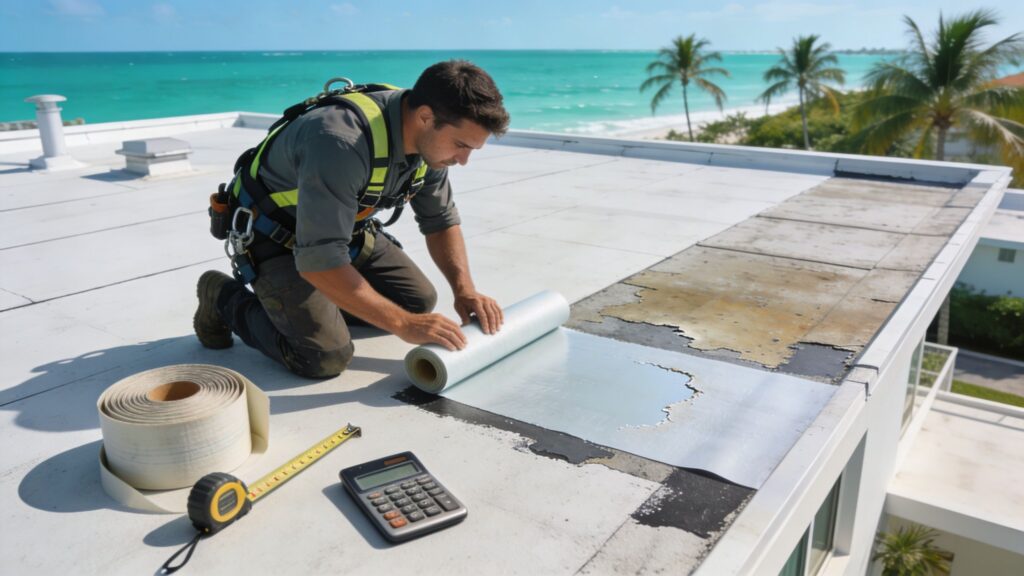
If the contractor shares online project examples, review them carefully. A photo gallery, including examples like this completed roof image, is useful when you treat it as a conversation starter rather than proof by itself.
Field check: The best reference is a recent local roof you can see with your own eyes.
How to read reviews without getting fooled
Online reviews help, but they're only one piece of the puzzle. Read them for patterns, not praise. One glowing review tells you almost nothing. Repeated comments about poor communication, scheduling confusion, unresolved punch-list items, or billing disputes tell you a lot.
Also examine the company's online presence. Do they display photos of finished projects? Do they describe the roof types they handle? Is the language on their website consistent with the information they provided in person?
A reputation check works best when you combine three things: recent references, firsthand viewing, and online pattern recognition. Any one of those by itself can mislead you. Together, they're hard to fake.
Deconstruct Estimates and Review Contract Details
A South Florida roof bid can look clean on the front page and still leave you exposed where it counts. I've seen homeowners choose the lower number, then get hit later for peel-and-stick upgrades, rotten deck replacement, permit confusion, or flashing work that should have been spelled out from day one. On tile, metal, and low-slope roofs, those omissions get expensive fast because the details are not interchangeable.

A strong estimate does more than give a price. It defines the job well enough that you can compare one contractor to another without guessing what was left out.
What a solid estimate should spell out
Start with the roof system itself. If you are replacing a tile roof, the proposal should say whether existing tile is being reset or replaced, what underlayment is going underneath, and how broken tile or discontinued profiles will be handled. For metal, look for panel type, gauge, finish, underlayment, and fastening method. For flat or low-slope roofs, the estimate should identify the membrane or coating system, insulation if applicable, seam or attachment method, and how drains, scuppers, and penetrations will be treated.
Then look at the support items that usually cause disputes later:
- Tear-off and disposal including how many layers are being removed
- Dry-in materials such as underlayment, peel-and-stick, base sheet, or membrane components
- Flashing scope at walls, curbs, valleys, edges, skylights, vents, and equipment penetrations
- Permits and inspections with the contractor named as the party responsible for pulling them
- Deck repair terms that explain how damaged wood or lightweight concrete is identified, priced, and approved
- Protection and cleanup for landscaping, pool enclosures, pavers, and magnetic nail sweep
- Payment schedule tied to real progress, not vague dates or large front-loaded collections
Upfront money deserves close attention. A reasonable deposit is one thing. A contractor demanding most of the job cost before materials are delivered or work begins is shifting the risk onto you.
Comparing Roofing Estimates, What to Look For
| Line Item | A Detailed Estimate Includes… | A Vague Estimate Omits… |
|---|---|---|
| Tear-off | What gets removed, how debris is handled, and whether disposal is included | Whether old materials stay in place or extra charges appear later |
| Waterproofing layer | The type of underlayment or membrane and where it will be installed | Any mention of what actually keeps water out |
| Flashing work | Specific areas like valleys, walls, vents, and other penetrations | The detail work most likely to leak first |
| Permits | Who is responsible for permitting and final inspection coordination | Whether the homeowner gets stuck handling compliance |
| Deck repairs | How damaged wood or substrate is identified and billed if needed | Surprise costs once the roof is opened up |
| Change orders | A written process for approval before extra work proceeds | Verbal add-ons and billing disputes |
| Payment terms | Deposit, progress payments, and final payment timing | Front-loaded payments that expose the homeowner |
The lowest estimate often wins because it leaves room to charge later. A higher bid can be the safer one if it includes the full assembly and the labor needed to install it correctly in a high-wind zone.
Contract terms that protect you from expensive surprises
The contract is what matters if the job goes sideways. Sales talk does not hold up the same way in a dispute.
Read it line by line and make sure it covers these points:
Clear scope of work
The document should identify the exact roof areas, the exact system being installed, and any excluded work.Material identification
Brand, product type, color if relevant, and key system components should be listed clearly enough that substitutions are not easy to slip in later.Code-related upgrades
In South Florida, code and permit requirements can affect dry-in, fastening, edge metal, secondary water barrier, and attachment methods. The contract should say how required upgrades are handled if the inspector or existing conditions trigger them.Change-order approval
Hidden damage happens. The contract should require written approval before extra work moves ahead, except for emergency weather protection.Payment schedule
Payments should match milestones you can verify, such as delivery, dry-in completion, or final inspection.Punch-list and closeout
Final payment should come after the work is complete, the site is cleaned, and permit closeout is addressed.
Watch the wording. Phrases like “as needed,” “where applicable,” and “industry standard” are not harmless if they replace real specifications. On a roof, vague language usually benefits the contractor, not the homeowner.
One more point matters in this climate. If a contract does not say who is responsible for temporary dry-in or weather protection at the end of each workday, ask before you sign. Afternoon rain is common here, and an unfinished roof needs a clear plan, not assumptions.
Understand Warranties for Long-Term Peace of Mind
A warranty matters most the first time water shows up where it should not. In South Florida, that often happens after a hard summer storm or the first serious blow of hurricane season. That is a bad time to learn the roofer's “full warranty” only covered the shingles, not the flashing detail that failed or the labor that caused the leak.
Roof warranties come in two separate buckets. One covers the product. The other covers the installation. Homeowners need both, especially on tile, metal, and flat roofs where many failures trace back to details at edges, penetrations, underlayment transitions, seams, and flashing.
Manufacturer coverage and workmanship coverage are not the same
Manufacturer warranties cover defects in the roofing materials. Workmanship warranties cover mistakes made during installation. Those are different risks, and on real jobs the line matters.
I have seen tile roofs where the tile itself was fine, but the underlayment tie-in at a valley was wrong. I have seen metal roofs with good panels and bad trim details at the eaves. On low-slope and flat systems, the membrane can be sound while the seam work or flashing at penetrations fails. In each case, a material warranty alone does not solve the homeowner's problem.
A contractor willing to stand behind labor in writing is taking responsibility for the part of the job they control. That tells you more than a brochure full of product names.
What to get in writing before work starts
Ask for the warranty documents before the crew shows up, not after the final payment. Read them with the same care you used on the estimate and contract.
Focus on five points:
- Who is backing each warranty. Know whether the manufacturer covers the materials and whether the roofing company covers labor, leak repairs, and related service calls.
- What parts of the system are included. On South Florida roofs, details matter. Ask whether flashing, underlayment, accessories, edge metal, sealants, and attachment components are part of the coverage.
- How long the coverage lasts, and when it starts. A ten-year workmanship warranty sounds good until you learn it starts at delivery instead of completion, or it is prorated in a way that limits what you can recover.
- What can void the warranty. Satellite mounts, solar work, foot traffic, unapproved repairs, poor drainage maintenance on flat roofs, and pressure washing on tile can all create disputes later.
- How a claim is handled. Ask who you call first, how fast they respond, and whether they inspect and repair with their own crews or send the issue elsewhere.
One more point is easy to miss. Some enhanced manufacturer warranties only apply if the roof is installed by a contractor with the right certification and with the full approved system, not a mix of substitute parts. That matters on metal and flat roofs in particular, where system compatibility is not just paperwork. It affects performance.
If a roofer gets vague here, slow down. Ask them to show you the exact language. Good contractors answer warranty questions clearly because they have had those conversations many times before.
Peace of mind does not come from hearing the word “warranty.” It comes from knowing who is responsible, what is covered, and what happens if the roof fails in real weather.
Frequently Asked Questions About Hiring a Roofer
Should I choose the cheapest estimate
Usually not. Price matters, but low price by itself is a poor selection tool. In roofing, cheap often means missing scope, weaker supervision, unclear warranty support, or corners cut where you won't see them until the next storm.
If one estimate is far below the others, ask what's missing. Don't ask why it's cheaper. Ask what the other contractors included that this one didn't.
What if I only need a repair
That's still a roofing job worth vetting carefully. Repairs can be trickier than replacements because the roofer has to diagnose the source, not just patch the symptom. A leak may show up in one place and start in another.
For repair work, ask whether the contractor has handled your roof type before and how they determine whether the issue is isolated or part of a larger system problem. A good repair roofer won't promise a permanent fix without first explaining what they found.
How many roofers should I talk to
Enough to compare competence, not just pricing. If you only talk to one company, you won't know whether the scope is realistic or whether key details were missed. If you talk to several, patterns start to appear.
That comparison only helps if you ask the same core questions each time. Ask about process, roof-system experience, exclusions, payment structure, supervision, and warranty responsibility.
When should I pay
Use a staged payment schedule tied to progress. Be careful with any contractor who wants most of the money upfront. As noted earlier in the article, payment structure can be a major warning sign.
Final payment should come after the agreed work is complete, the site is cleaned up, and you've had the chance to review the finished job and closeout paperwork.
For homeowners who want a second set of eyes before committing to repair or replacement, Paletz Roofing and Inspections provides roof inspections, repairs, replacements, and installations for tile, metal, shingle, and flat roofing systems across South Florida.
If you want help sorting through roofers, reviewing an estimate, or getting a clear inspection before making a decision, contact Paletz Roofing and Inspections. They serve Broward, Miami-Dade, and Palm Beach counties and can help you evaluate the condition of your roof, the scope of work, and whether a repair or replacement makes the most sense for your property.