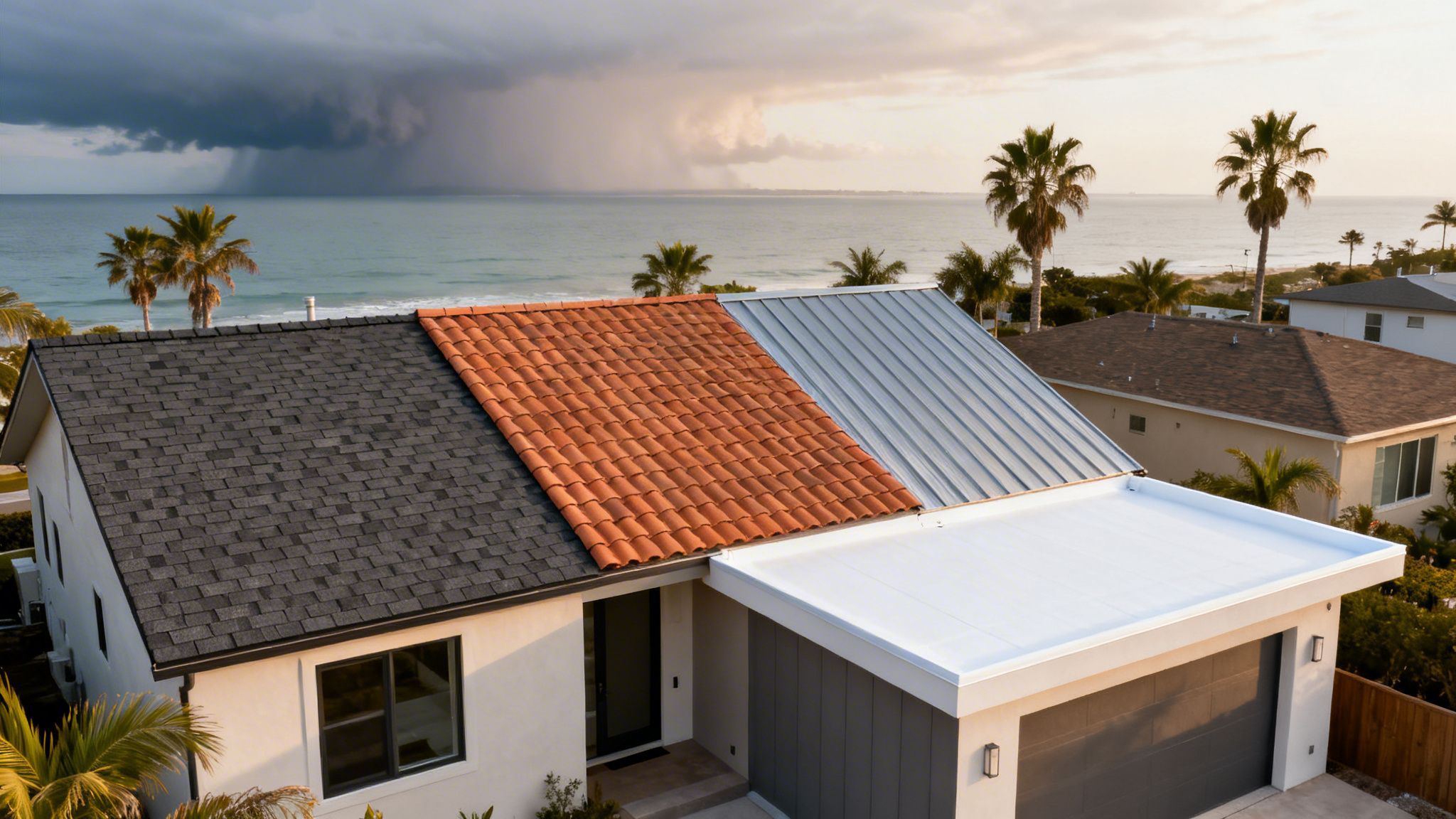
Choosing the right roofing material all comes down to your priorities. For homeowners here in South Florida, the choice usually boils down to a few top contenders: asphalt shingles for those on a tighter budget, metal roofing for the ultimate hurricane defense, and tile for its classic style and incredible longevity. Each one brings a different mix of cost, resilience, and looks to the table.
Choosing the Best Roof for Your South Florida Home

Picking a new roof in South Florida is a much bigger deal than just improving curb appeal. If you live in Broward, Miami-Dade, or Palm Beach counties, your roof has to stand up to a pretty unique set of challenges. We’re talking about intense, year-round UV radiation, corrosive salt air, and, of course, the constant threat of hurricane-force winds.
Your roof is your home’s first and most important line of defense. The material you go with will directly impact how well your home weathers a storm, how high your energy bills are, and what you’ll spend on maintenance down the road. This guide cuts through the noise and focuses on the three most practical and popular options for our area, giving you a clear-eyed analysis to help you make a smart investment.
A Quick Comparison of South Florida Roofing Materials
To give you a starting point, the table below offers a high-level look at the most common roofing materials we install. It focuses on the key factors that really matter to Florida homeowners, providing an at-a-glance reference before we get into the nitty-gritty of each option.
| Material | Upfront Cost (Per Sq. Ft.) | Typical Lifespan | Hurricane Resistance | Ideal For |
|---|---|---|---|---|
| Asphalt Shingles | $4 – $7+ | 15-30 Years | Good (up to 130 mph) | Budget-focused projects and short-term holds. |
| Metal Roofing | $9 – $16+ | 40-70+ Years | Excellent (140+ mph) | Maximum storm protection and long-term value. |
| Concrete/Clay Tile | $8 – $18+ | 50-100+ Years | Excellent (130+ mph) | Classic aesthetic, longevity, and heat resistance. |
As you can see, this really highlights the fundamental trade-offs. Asphalt shingles are the most affordable way to get a new roof, which is why they’re so common. The downside is their shorter lifespan, which means you’ll be facing that expense again sooner than you would with other materials.
Key Insight: While upfront cost is a major factor, the best roofing material is one that balances your budget with the non-negotiable need for storm resilience in a High-Velocity Hurricane Zone (HVHZ).
Understanding the Trade-Offs
It’s true that metal and tile roofs demand a much bigger investment upfront, but their performance and longevity create a compelling case for long-term value. They simply offer superior resistance to the high winds and impacts from flying debris that are our primary concerns during hurricane season. Their durability often means it's a "one-and-done" roofing solution for anyone planning to stay in their home for decades.
On top of that, these premium materials can lead to real, tangible savings over time:
- Lower Insurance Premiums: Many insurance carriers give substantial discounts for homes with certified, hurricane-rated roofs.
- Energy Savings: Lighter-colored metal and tile roofs are great at reflecting the sun's heat, which helps reduce heat absorption and can seriously lower your air conditioning costs.
- Increased Property Value: A tough, long-lasting roof is a major selling point that can boost your home’s market value.
This guide will break down how each material performs, helping you weigh the upfront costs against the long-term benefits to choose the absolute best roof for your home and your goals.
Asphalt Shingles: The Budget-Friendly Standard
Walk through any neighborhood in America, and you’ll see one roofing material more than any other: asphalt shingles. There's a simple reason for their popularity—they get the job done reliably and affordably. For most homeowners, shingles represent the go-to baseline, offering a solid roof over their head without the hefty price tag of tile or metal.
Their dominance isn't just an observation; it's a fact. Asphalt shingles command a staggering 80% market share for both new homes and reroofing projects. At just $70 to $120 per square (a "square" is a 100-square-foot area), they are easily the most accessible option. A well-maintained shingle roof will typically last 15 to 30 years, making it a familiar, trusted choice across the Southeast.
Not All Shingles Are Created Equal
When we talk about asphalt shingles, it’s critical to know there are two very different products out there.
- 3-Tab Shingles: These are your basic, entry-level shingles. They’re made from a single, flat layer with cutouts that give them the "three tab" look. They’re cheap, but they offer lower wind resistance and a shorter lifespan of around 15-20 years.
- Architectural Shingles: Also called dimensional shingles, these are a massive step up. They're built with multiple, laminated layers of asphalt, making them thicker and far more durable. This construction gives them a textured, high-definition appearance that can even mimic the look of premium materials like wood shake.
Here in South Florida, the choice is already made for you. 3-tab shingles simply can't stand up to our weather. Architectural shingles are the only sensible asphalt option, as they are engineered to meet the demanding wind resistance codes—often rated for 130 mph winds—required in our High-Velocity Hurricane Zones (HVHZ).
How Shingles Handle the South Florida Climate
While architectural shingles are tough for the price, they face a brutal opponent in South Florida’s climate. The real enemy isn't just a hurricane; it's the relentless, year-round sun. UV radiation constantly beats down on the roof, slowly breaking down the asphalt. Over time, this causes the protective granules—the sandpaper-like coating on the shingle's surface—to come loose and wash into your gutters.
You've probably seen this before. Granule loss is the classic sign of an aging shingle roof. It’s not just a cosmetic problem; as the granules disappear, the underlying asphalt mat is exposed, which speeds up cracking, brittleness, and eventually, leaks.
The Real Threat: It’s not just the wind that wears down a shingle roof in Florida; it's the tag team of intense sun and heavy rain. The sun bakes the life out of the material, and the daily downpours wash away the roof's protective layer.
On top of that, our suffocating humidity creates the perfect breeding ground for ugly black streaks caused by algae (Gloeocapsa magma). While it mostly just looks bad, it can seriously hurt your home’s curb appeal. Many of today’s shingles come with algae-resistant technology, but even the best can struggle to keep a roof perfectly clean for its entire lifespan. For homeowners set on shingles, premium options like GAF Timberline HDZ shingles are built to offer better granule adhesion and algae resistance.
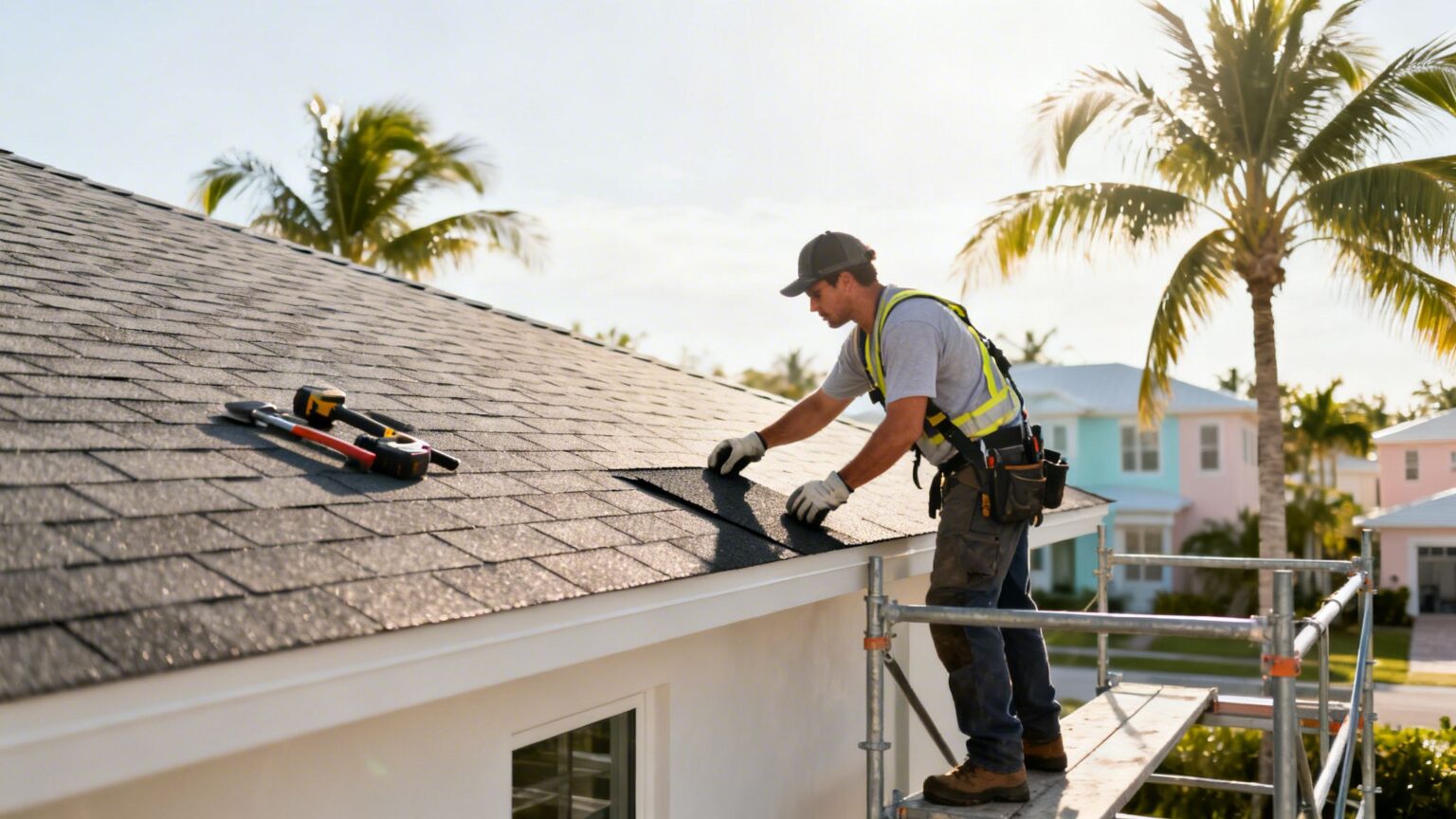
Even with these challenges, asphalt shingles remain a smart, practical choice for many. The lower upfront cost is a huge factor. And when a storm does cause damage, repairs are typically faster and far less expensive than with a tile or metal roof. This makes them a favorite for real estate investors and anyone who isn't planning to stay in their "forever home" but still needs reliable protection for the next 15 to 25 years.
Metal Roofing: The Ultimate Hurricane Defense

When your number one goal is total peace of mind during hurricane season, metal roofing has emerged as the undeniable champion for South Florida homeowners. While the upfront cost is higher than asphalt shingles, it's better to think of it as a long-term investment in serious resilience and property protection. This isn't just a roof; it's a defensive shield engineered for our extreme weather.
The massive surge in popularity for metal is no fluke. It’s become the premium alternative for a reason, especially in hurricane-prone regions like ours. Metal roofs, usually made of steel or aluminum, deliver a remarkable lifespan of 40 to 70 years—sometimes even longer. That's nearly four times the durability of many asphalt shingle products on the market.
Unmatched Durability And Storm Performance
The primary advantage of a metal roof boils down to its structural integrity. Unlike individual shingles that can be easily lifted and torn off by severe winds, metal roofing systems use interlocking panels securely fastened to the roof deck. This creates a unified, solid barrier that is far more resistant to wind uplift.
Most properly installed metal roofs are rated to withstand winds of 140 mph or higher, comfortably exceeding the requirements for a High-Velocity Hurricane Zone (HVHZ). This robust performance is absolutely critical when facing a Category 4 or 5 storm, where wind forces can peel weaker roofs apart piece by piece.
Key Differentiator: The strength of a metal roof isn't just about the material itself; it’s baked into the installation method. Interlocking panels or standing seams create a single, cohesive shield that distributes wind loads more effectively than any shingle system ever could.
This superior wind resistance also translates directly to better impact resistance. While a direct hit from heavy debris can damage any roof, metal is far less likely to be punctured or compromised by smaller projectiles compared to asphalt. The result is a roof that not only stays on your house but also keeps the water out when it matters most.
The Financial Case For Metal Roofing
At first glance, the price tag for a metal roof—ranging from $9 to $16+ per square foot—can give homeowners pause. However, a savvy homeowner looks at the total cost of ownership over the life of the property. This is where metal roofing truly pulls away from the pack.
Long-Term Value Breakdown:
- Zero Replacement Cycles: With a lifespan of 50+ years, a metal roof is often a "one and done" installation. You will likely never have to pay to replace it again, completely avoiding the recurring cost of reroofing every 15-25 years.
- Minimal Maintenance: Metal roofs are highly resistant to the algae growth, granule loss, and cracking that plague asphalt shingles in our humid climate. A simple annual inspection is usually all that’s needed.
- Insurance Discounts: Many Florida insurance carriers offer significant discounts on homeowner's policies for homes protected by a certified, hurricane-rated metal roof. These savings can add up to thousands of dollars over the years.
This financial math shifts the perspective from a high upfront cost to a strategic, value-driven investment, especially for those who plan on staying in their home long-term. You can view a high-quality metal roof installation to see what makes it such a durable option. When you combine the longevity, low maintenance, and potential insurance savings, a metal roof often becomes the most cost-effective choice in the long run.
Tile Roofing: The Classic Choice for Longevity and Style

When you picture classic South Florida architecture, from the historic estates in Palm Beach to the modern villas in Miami, a tile roof almost certainly comes to mind. But it's more than just an iconic look. Clay and concrete tiles deliver a powerful combination of timeless beauty and exceptional performance perfectly suited to our hot, coastal climate.
Unlike asphalt or even metal, tile is one of the few materials that truly thrives under the intense Florida sun. Its natural thermal properties are a massive advantage here. Clay and concrete roofs are fantastic at dispersing heat, with the air pocket under each curved tile acting as a layer of insulation. This helps distribute the sun’s energy, which can slash your cooling costs by up to 20-30% during our scorching summers. You can learn more about how tile compares by reviewing these popular roofing material insights on rapidroofing.com.
The Longevity And Resilience Of Tile
When it comes to lifespan, very few materials can go head-to-head with tile. A properly installed concrete or clay tile roof will easily last 50 years, and it’s not uncommon for high-quality installations to survive for 100 years or more. This incredible longevity makes it a true "forever roof"—an investment you make once for a lifetime of protection.
That durability carries over to storm performance, too. Individual tiles are incredibly heavy and dense. When they're correctly fastened, they offer excellent resistance to wind uplift and are often rated for wind speeds well over 130 mph. Their sheer mass also gives them superior protection against impacts from hail and wind-blown debris compared to lighter materials.
A Testament to Strength: The substantial weight of a tile roof is both its greatest strength and its primary consideration. A roof weighing thousands of pounds provides immense stability against hurricane winds, but it demands that the home’s underlying structure is strong enough to support it.
Concrete Vs. Clay: A Key Decision
While both are excellent choices, there are important differences between concrete and clay tiles that you’ll need to consider.
- Clay Tiles: This is the traditional, premium option, known for rich, color-through terracotta and reddish hues that won’t fade. They are exceptionally durable but are also more brittle and carry a higher price tag.
- Concrete Tiles: A more versatile and affordable alternative, concrete tiles can be manufactured in a vast array of profiles and colors, including styles that convincingly mimic clay or even wood shake. They offer comparable wind resistance and longevity to clay but are more porous, so they may need periodic cleaning or sealing to maintain their appearance.
The Non-Negotiable Structural Assessment
Here's the most critical factor with any tile roof installation: confirming your home can handle the load. Tile roofs can weigh anywhere from 800 to over 1,000 pounds per square (a 10×10 foot area), which is significantly more than asphalt or metal.
Before any work begins, a professional structural assessment by an engineer or a highly experienced roofing contractor is mandatory. This isn't just a suggestion; it's a requirement to ensure your home’s trusses and framing are adequate for the job.
This step is non-negotiable, and it turns a potential concern into a mark of quality craftsmanship. When you see a tile roof, you're not just looking at a beautiful material; you're seeing a home that was built—or reinforced—to a higher standard. You can explore a great example of a tile roof installation to see the level of craftsmanship involved.
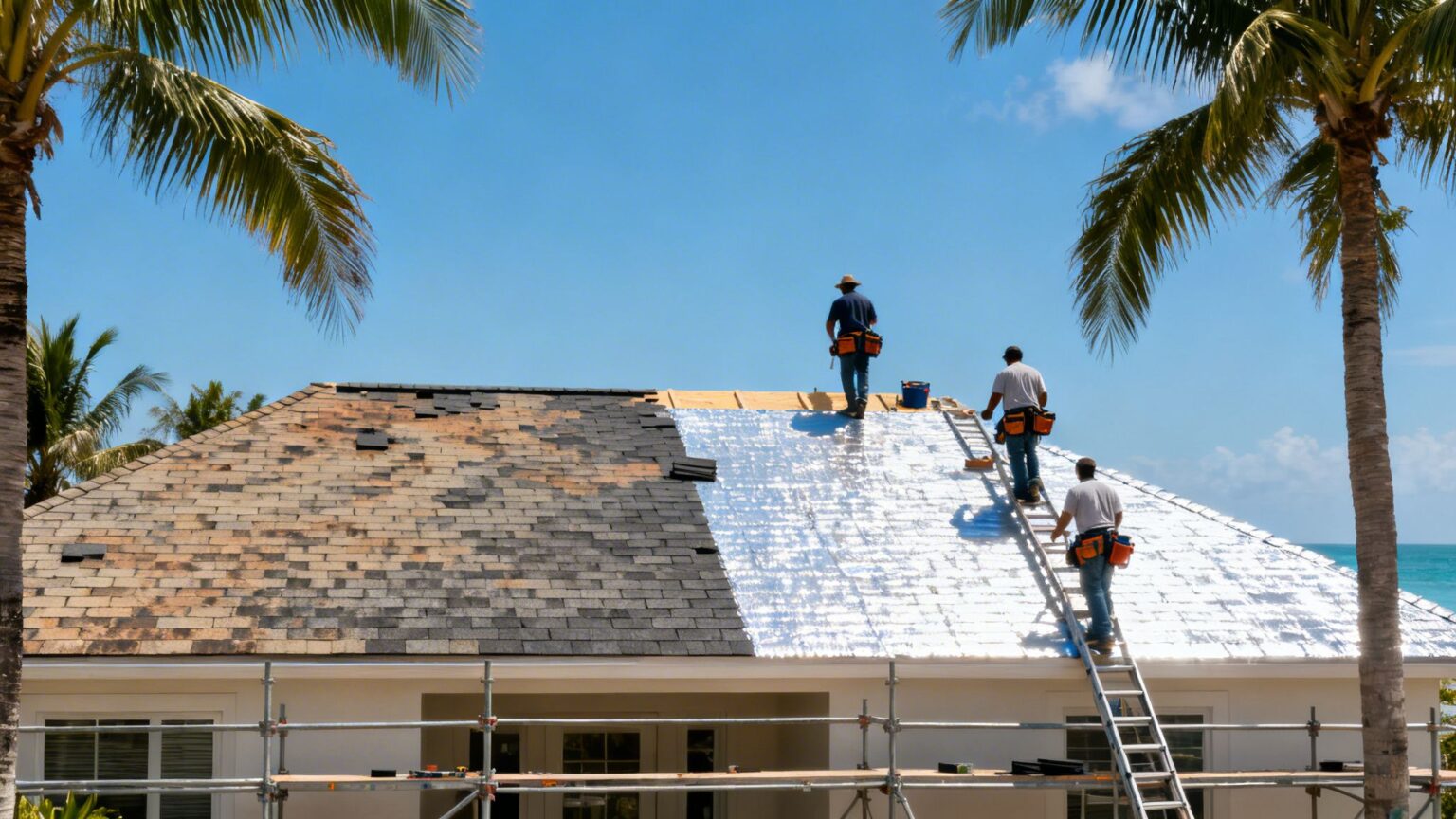
Flat Roofing Solutions for Modern Architecture
Lots of modern South Florida homes have flat or low-slope roof sections, and these demand a completely different playbook than a traditional pitched roof. These areas are magnets for pooling water and leaks, making specialized roofing systems an absolute must.
The goal here isn't just to shed water—it's to create a completely seamless, watertight barrier that can handle our intense sun and torrential rains. Unlike shingles or tiles that use gravity to their advantage, a flat roof has to act like an impenetrable basin.
The most effective and common solutions you'll find are single-ply membrane systems and modified bitumen. For anyone with a contemporary home, a new addition, or even certain commercial-style buildings, getting to know these systems is key. The main players are TPO, EPDM, and Modified Bitumen (Mod-Bit), and each brings something different to the table in the Florida climate.
Comparing Flat Roofing Membranes
Choosing between TPO, EPDM, and Mod-Bit really comes down to balancing durability, how it’s installed, and—most importantly for us—heat reflectivity.
TPO (Thermoplastic Olefin): This is a white, heat-reflective membrane that has become incredibly popular for its energy efficiency. Its brilliant white surface does an excellent job of reflecting sunlight, which can seriously reduce the workload on your AC system. The seams are heat-welded together, creating a single, monolithic sheet that is extremely resistant to leaks.
EPDM (Ethylene Propylene Diene Monomer): Think of this as a highly durable synthetic rubber sheet, which usually comes in black. While it's fantastic against weathering, hail, and UV rays, that standard black color absorbs a lot of heat. You can get white-coated EPDM to improve its solar reflectivity, but a standard TPO membrane is generally more efficient right out of the box. Its seams are bonded with a specialized sealing tape.
Key Takeaway: In South Florida, a roof's power to reflect heat is almost as vital as its ability to repel water. The white, reflective surface of a TPO roof is a massive advantage for lowering energy bills in our relentlessly sunny climate.
This simple fact often makes TPO one of the best roofing materials for homes with flat sections in hot climates. The energy savings you get from a "cool roof" can be huge over its lifespan, frequently offsetting any small differences in the initial cost of installation.
Modified Bitumen: A Time-Tested Solution
Before single-ply membranes like TPO took over, Modified Bitumen was the king of flat roofing. It's an evolution of traditional asphalt roofing, made from asphalt blended with rubber or plastic polymers and reinforced with fiberglass for strength.
Mod-Bit is usually installed in multiple layers. The most common technique is the "torch-down" method, where a roofer uses a propane torch to melt the seams together, forming a tough, waterproof seal.
While it's often a bit cheaper upfront, a standard Mod-Bit system is far less reflective than white TPO, though you can find "cool roof" granulated surfaces to help. They are known for being incredibly tough and puncture-resistant, which makes them a solid pick for roofs that see a lot of foot traffic or have heavy equipment on them.
However, the installation is more intense and demands a highly skilled crew who knows their way around a torch to ensure everything is safe and sealed tight. For most modern residential projects in South Florida, the superior heat reflection and seamless, welded nature of TPO make it the leading contender.
Making the Right Roofing Decision for Your Home
Choosing a roof isn't about picking the "best" material—it's about finding the right one for your home, your budget, and your long-term goals. We’ve broken down the technical specs of asphalt, metal, and tile, but now it’s time to translate that data into real-world decisions.
This is where the rubber meets the road. Let’s match the right roof to your specific situation, so you can make a choice with confidence.
Matching Materials to Homeowner Goals
If you’re looking for a great return on investment and might sell your home in the next 15 years, high-quality architectural shingles are an excellent value. They give you solid, code-compliant protection without the massive upfront cost of a lifetime roof, making them a smart play for a shorter ownership timeline.
On the other hand, if this is your "forever home," a metal roof is often the wisest long-term investment. Yes, the initial cost is higher, but it’s an investment in resilience. Over decades, you’ll see the return in near-zero replacement worries, lower maintenance, and serious savings on insurance premiums and cooling bills. It's the ultimate choice for peace of mind.
Situational Decision-Making: For homeowners who love classic curb appeal but still demand exceptional durability, a tile roof strikes a perfect balance. It delivers outstanding longevity and heat resistance, making it a fantastic long-term option, as long as your home’s structure is built to handle the weight.
The Impact on Insurance and Permitting
In South Florida, your roof choice has immediate financial consequences that go far beyond the installation quote. It directly impacts your homeowners insurance rates. Insurers in Broward and Miami-Dade offer significant wind mitigation discounts for certified, hurricane-rated metal and tile roofs. A new, code-compliant roof can literally save you hundreds, if not thousands, of dollars every single year.
Plus, the permitting process in our High-Velocity Hurricane Zone (HVHZ) is notoriously tough. Every single roof replacement requires a permit to prove it meets the strict Florida Building Code. Your choice of material dictates the specific installation methods, inspection schedules, and paperwork needed for legal compliance. Working with a roofer who lives and breathes these local codes is absolutely critical to avoid expensive delays.
Decision Guide for Flat Roof Sections
For homes with modern flat or low-slope areas, the decision boils down to two key factors: reflecting brutal sun and creating a seamless waterproof barrier.
The chart below offers a straightforward path for picking between the most common flat roof materials.

As you can see, TPO is often prioritized for its powerful sun-blocking efficiency, while EPDM is a go-to for its proven durability against water. For an incredibly tough, flame-sealed application, Modified Bitumen is a top contender. Your final decision will depend on your budget, energy goals, and what your specific property needs to stay dry and cool.
Here is the rewritten section, crafted to sound like a human expert in the requested style.
Your Florida Roofing Questions, Answered
Making the right roofing choice in South Florida involves more than just comparing shingles and tiles. It’s about navigating our unique climate, strict building codes, and the maze of insurance requirements. We hear the same critical questions from homeowners every day, so let's clear them up and give you the confidence to move forward.
How Will a New Roof Affect My Homeowners Insurance?
This is a big one, and the news is good. A new roof, built to the latest Florida Building Code, can absolutely lower your homeowners insurance premium. Insurers in our state offer significant wind mitigation credits for systems designed to withstand hurricane-force winds, like a properly installed metal or tile roof.
When your roof is less likely to fail in a storm, your home is a lower risk to insure. We handle all the paperwork from the installation, giving you everything you need to hand to your insurance agent. These discounts can save you a substantial amount on your yearly premium.
What’s the Best Roof Color for Our Hot Climate?
Here in Miami, the color of your roof has a real impact on your energy bill. Lighter is always better. White, light gray, tan, or beige materials have high solar reflectivity, meaning they bounce sunlight away instead of absorbing it as heat.
We call these "cool roofs," and the effect is staggering. They can lower attic temperatures by as much as 50-60 degrees Fahrenheit. That takes a massive load off your AC unit during our long, intense summers and translates directly into energy savings. It's one of the simplest, most effective choices you can make.
How Long Does a Roof Replacement Take?
For an average-sized single-family home here in South Florida, a full roof replacement is typically a 3 to 5-day job. Of course, a few things can adjust that timeline.
- Your Material: Asphalt shingles usually go on the fastest. Tile roofing takes a bit more time because of the precision and labor involved.
- Your Roof's Design: A straightforward gable roof is quicker than a complex roof full of valleys, dormers, and steep pitches.
- Weather: We have to plan around South Florida's daily afternoon showers. For safety, work has to pause during rain and lightning.
Our crew plans everything meticulously to minimize disruption. We work efficiently to keep your home protected and to coordinate with city inspectors to pass inspections without a hitch, keeping your project moving forward.
Is a Permit Really Required to Replace My Roof?
Yes, without a doubt. In Broward, Miami-Dade, and Palm Beach counties, a building permit is mandatory for any complete roof replacement. This isn't just red tape; it’s the process that ensures your new roof meets the strict High-Velocity Hurricane Zone (HVHZ) standards of the Florida Building Code.
As your licensed and insured contractor, we manage that entire process for you. From submitting the application and plans to scheduling every inspection, we make sure the final project is 100% compliant and certified. You don't have to worry about the paperwork.
Navigating these decisions is what we've done every day for over 30 years. The experts at Paletz Roofing and Inspections have helped thousands of South Florida homeowners choose and install the perfect roof. For a detailed inspection and a free, no-obligation quote, contact us today.