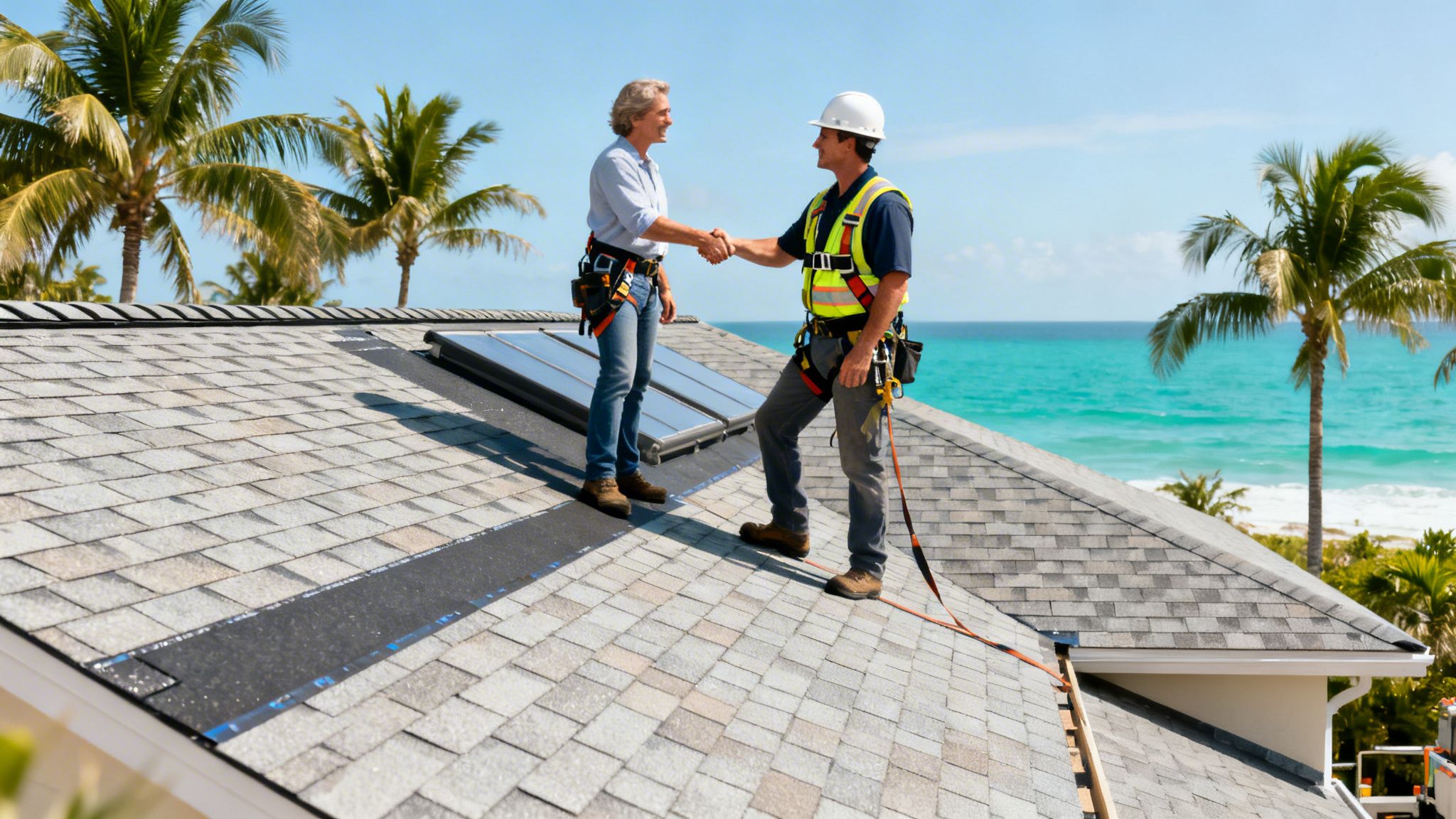
When you're facing a roof replacement in Delray Beach, you’re not just buying new shingles. You’re making a critical investment in your home's first and most important line of defense against South Florida’s uniquely brutal climate. A high-quality roof isn't a luxury here; it's an absolute necessity.
Why a New Roof Is Your Best Defense in Delray Beach

Think of your roof as a purpose-built shield, engineered to fight a constant battle on three fronts. Here in Delray Beach, that means relentless UV radiation, corrosive salt spray from the ocean air, and the ever-present threat of hurricane-force winds.
A worn-out roof is like a cracked shield. It’s only a matter of time before it fails, leading to catastrophic water damage, major structural problems, and the nightmare of emergency repairs. For over 30 years, we at Paletz Roofing and Inspections have been helping homeowners fortify their properties against these exact threats.
Understanding the Local Roofing Demand
Across Palm Beach County, the demand for durable, storm-ready roofing is soaring. Decades of intense sun and punishing seasonal storms have pushed countless aging roofs to their breaking point. This has created a boom in the local market as homeowners race to protect their investments. The demand is so high that even established contractors are expanding to keep up, like one Jupiter-based company that recently launched a dedicated division just for Delray Beach. You can read more about this trend to get a better sense of the market on Roofing Contractor.
This guide is designed to be your complete playbook, giving you the confidence and know-how to make the right decision for your home.
A new roof isn't just an expense; it's a strategic upgrade. It makes your home more resilient, boosts its market value, and delivers priceless peace of mind in a region defined by its challenging weather.
What This Guide Covers
We’ve laid this guide out to walk you through the entire process, from start to finish. We'll cover everything you need for a successful roof replacement in Delray Beach. A huge part of this is understanding the professional new roof installation process itself and what goes into it.
Here’s a quick look at what you’ll learn:
- Spotting Critical Damage: We’ll show you the tell-tale signs that mean your roof needs a full replacement, not just a patch-up job.
- Choosing the Right Materials: Discover which roofing materials actually stand up to our hurricanes, salt air, and intense sun.
- Navigating Costs and Codes: Get a realistic picture of project costs, financing options, and the local building codes you need to know. For a deeper dive, check out our guide on key roofing project details.
- Hiring a Trusted Contractor: We'll give you a simple checklist for vetting local roofers so you can find a reliable, insured, and genuinely experienced pro.
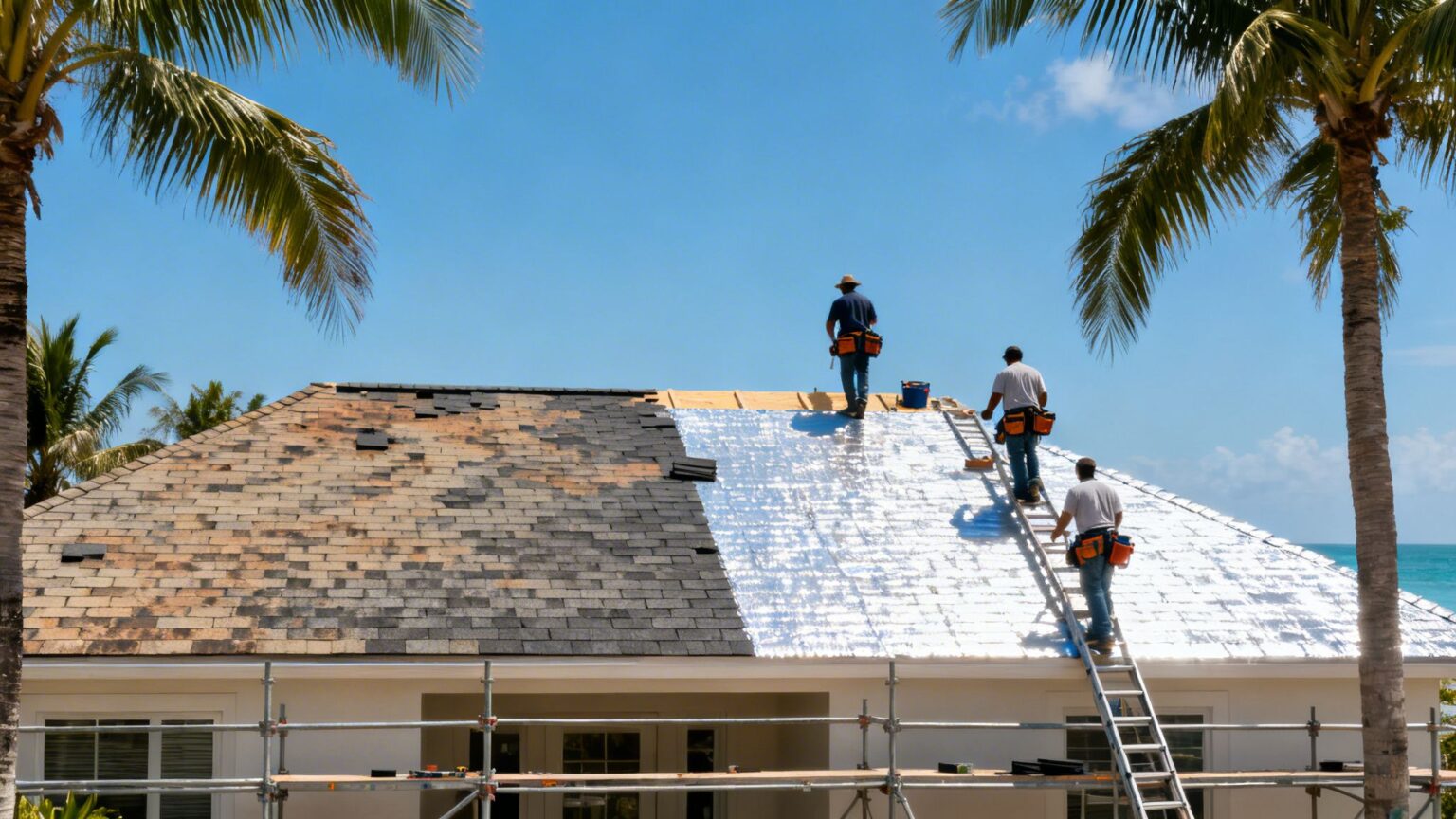
Spotting the Signs Your Roof Needs Replacement
Trying to decide between a simple repair and a full-blown roof replacement can be a tough call. It's something we see a lot of homeowners struggle with. Many put it off for too long, and what could have been a planned project quickly becomes an emergency.
Knowing the real warning signs helps you make the right decision for your home and your budget. When it comes to your roof—your home’s first line of defense—it’s always better to be proactive than reactive.
Think of your roof’s lifespan like the tread on a car's tires. Over the years, Delray Beach’s intense sun, pounding rain, and salty air take their toll. Catching the first signs of failure means you can plan for a roof replacement in Delray Beach on your own schedule, not in a panic during a hurricane.
The Story Your Shingles Are Telling
The shingles are the most visible part of your roof, and they give you the clearest clues about its health. If you know what to look for, you can learn to read the story they're telling.
- Curling and Clawing: When you see shingle edges curling up, or the middle of the shingle starts to pop up (we call this "clawing"), it’s a major red flag. This means they’re well past their prime, brittle, and can no longer keep water out effectively.
- Cracked or Missing Shingles: A couple of shingles blown off in a storm can often be repaired. But if you see widespread cracking or entire "bald spots" on your roof, you're looking at a much bigger problem. This is especially true on older roofs, where the shingles you can't see are probably just as weak.
- Dark Streaks or Moss: Those dark streaks are a type of algae, and while a little bit is just cosmetic, a lot of it is not. Heavy moss or algae growth traps moisture right against your roof, which speeds up the aging process and signals that water isn't shedding the way it should.
These are your roof’s early warning signs. If you ignore them, moisture will eventually find its way to the structure underneath, and that's where the real trouble begins.
Beyond the Shingles: What to Look For
Some of the most serious signs aren't on the shingles at all. They’re hidden in places like your gutters or attic, and they often point to problems that have been brewing for a while.
Think of the tiny granules on your asphalt shingles like the protective tread on a tire. Once that layer wears away, the shingle's core is exposed to UV rays and moisture, causing it to fail rapidly. Finding excessive granules in your gutters is a definitive sign your roof is nearing the end of its functional life.
Major granule loss is a critical sign. These little ceramic bits are your roof's main shield against the sun. If you’re finding handfuls of what looks like coarse black sand in your gutters, it means your roof’s “sunscreen” is gone.
Another undeniable sign is a sagging roof deck. If your roofline has a noticeable dip or a "swayback" look, it points to a serious structural issue. This is an advanced warning sign, meaning moisture has already compromised the underlying sheathing, and it's likely rotting. A sagging roof needs immediate professional attention, as it signals a risk of collapse. When you see this, it’s no longer a question of if you need a new roof, but how fast you can get it done.
Choosing Hurricane-Proof Roofing Materials
Choosing the right material for a roof replacement in Delray Beach is about far more than just curb appeal. It’s a strategic decision that pits your home's primary shield against hurricane-force winds, corrosive salt spray, and the relentless South Florida sun. Your final choice will be a careful balance of budget, aesthetics, and long-term resilience.
Think of it like choosing armor for your home. You wouldn’t wear plastic into a sword fight, and you shouldn't use a standard-grade roof to battle a Category 3 hurricane. The materials you select today will dictate how well your home weathers the next big storm and how much you spend on energy bills and upkeep for decades to come.
While the visual difference between roofing options is what most homeowners notice first, the real value is hidden in their performance specs.
Comparing Your Best Options
Here in South Florida, three main contenders dominate the residential roofing market: architectural shingles, metal roofing, and tile. Each one has a distinct set of pros and cons, making them better suited for different homes and priorities.
Architectural Shingles: These aren't your parents' old, flat 3-tab shingles. Modern architectural shingles are a huge leap forward, built with a laminated, multi-layered design that creates a rich, dimensional look. They offer solid wind resistance and are a cost-effective solution for many, providing an excellent balance of performance and value.
Metal Roofing: Once seen as purely industrial, metal roofing has surged in popularity as a high-end choice for its clean lines and unmatched durability. Standing seam metal roofs are exceptionally good at resisting high winds and shedding water. They’re also highly reflective, which can significantly lower your cooling costs during Delray's scorching summers.
Tile Roofing (Clay and Concrete): There's a reason tile is the iconic look of South Florida. It offers superior longevity and hurricane resistance that few other materials can match. Clay and concrete tiles are heavy, which helps them stay put in high winds, and they are impervious to rot and insect damage. Their curved shape also creates a natural air pocket, adding an extra layer of insulation.
This infographic highlights some of the most common warning signs we see in the field. Granule loss, in particular, is a major red flag that your roof's protective layer is breaking down.

As you can see, things like curling shingles and sagging are also critical, but those little granules washing into your gutters are often the first quiet signal of widespread wear.
To help you weigh the pros and cons, here’s a quick comparison of how these materials stack up for a Delray Beach home.
Roofing Material Comparison for Delray Beach
| Material | Average Cost Per Sq. Ft. | Typical Lifespan | Hurricane Wind Resistance |
|---|---|---|---|
| Architectural Shingles | $5 – $9 | 20-30 Years | Good (Up to 130 mph) |
| Metal (Standing Seam) | $10 – $18 | 40-70 Years | Excellent (140+ mph) |
| Tile (Clay & Concrete) | $12 – $25+ | 50-100+ Years | Excellent (150+ mph) |
Each material offers a trade-off between upfront cost and long-term performance. While shingles are the most budget-friendly option, tile and metal provide superior storm protection and longevity that often pays for itself over time.
The Power Of Tile In A Hurricane Zone
For homeowners who put maximum protection first, tile roofing is often considered the gold standard in coastal communities like ours. Its dominance in Florida's massive roofing industry is fueled by proven hurricane resilience and timeless curb appeal. Recent 2026 data confirms that while the upfront cost is higher, the long-term benefits are substantial.
Clay tile roofs, for example, can have lifespans of 100+ years and are rated for wind resistance up to 150 mph—a critical feature in Palm Beach County. You can explore this topic in more depth in our guide on the benefits of different roofing styles.
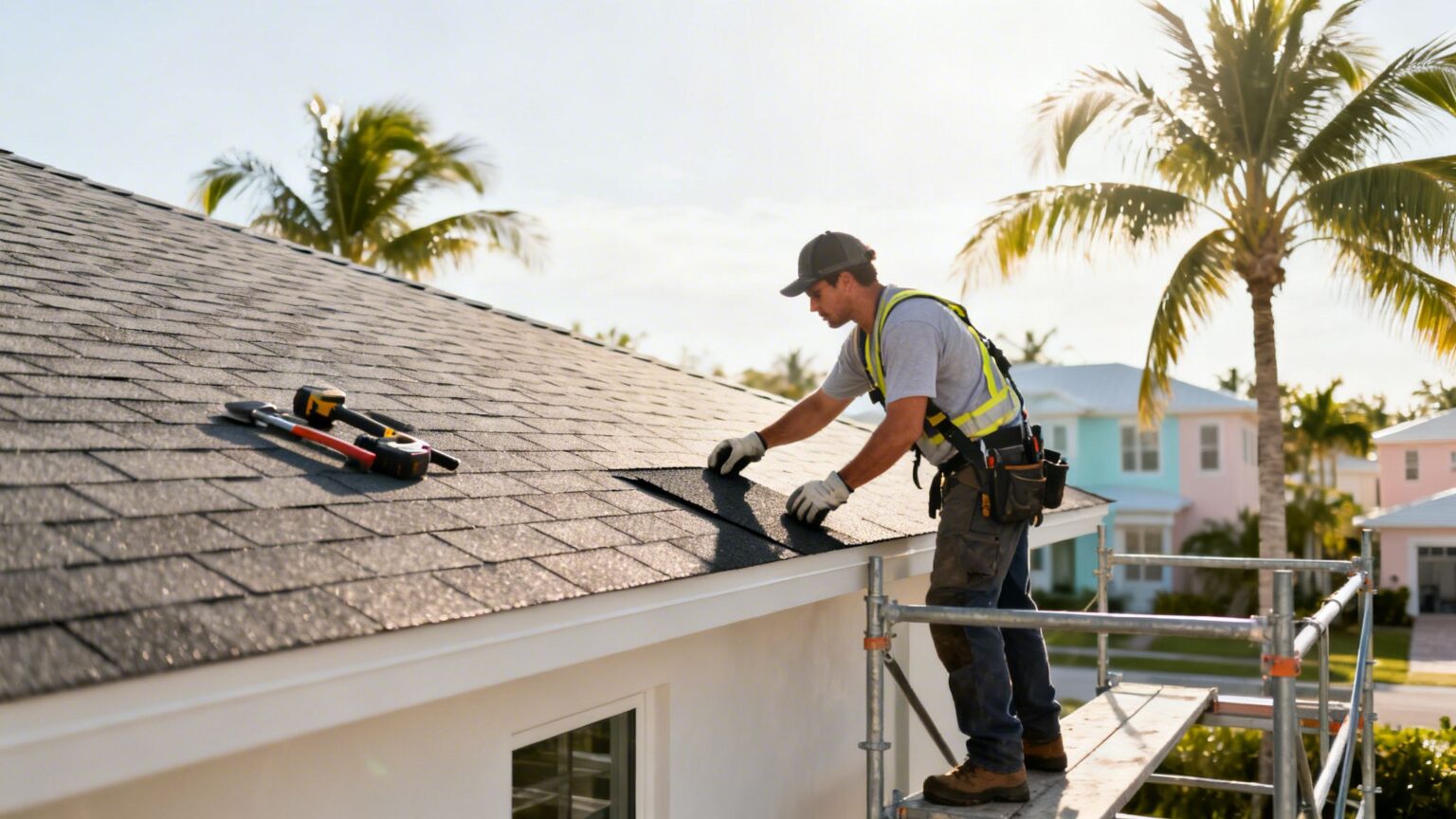
Special Considerations For Flat Roofs
Many homes in Delray Beach, especially those with modern designs or home additions, have flat or low-slope roofs. These require a completely different strategy than a traditional pitched roof. Instead of shedding water rapidly, they're designed to hold it for a short time before it drains away.
With a flat roof, the game isn't about shedding water—it's about creating a completely waterproof, seamless membrane. The slightest imperfection, seam failure, or puncture can lead to significant and immediate water intrusion.
For these structures, we rely on materials like Modified Bitumen, TPO (Thermoplastic Olefin), and EPDM (a synthetic rubber). Here, the quality of the installation is absolutely paramount. Seams have to be meticulously heat-welded or sealed to form a monolithic barrier against standing water, which makes your choice of an experienced contractor even more critical for a successful roof replacement in Delray Beach.
Calculating Roof Replacement Costs in Delray Beach
Figuring out the cost of a new roof is often the biggest question for any homeowner. A roof replacement in Delray Beach is a major investment, but breaking down what goes into the final price tag puts you in control of the process. It's best not to think of it as one big, scary number, but a combination of several clear, manageable parts.
The final quote from a contractor is always custom-tailored to your home. It’s like getting a bespoke suit; the fabric is a big part of the cost, but so are the exact measurements, the design's complexity, and any unique features. For your roof, the key factors are its total size, pitch, your chosen material, and the condition of the structure underneath.
Breaking Down the Major Cost Factors
The price for a new roof isn't arbitrary. It’s a precise calculation based on key variables that any professional roofer will evaluate. Knowing what they are will help you read an estimate and compare different quotes intelligently.
- Roof Size and Complexity: A large, steep, multi-level roof with features like dormers and skylights is more complex. It naturally requires more material and labor than a simple, low-slope roof on a single-story ranch house.
- Material Selection: This is the single biggest driver of your project's total cost. As we've discussed, the price gap between architectural shingles, metal, and tile is significant.
- Underlying Structural Condition: Sometimes, once the old roof is torn off, we find rotted wood or a damaged roof deck. This isn't something anyone can see beforehand, and Florida building codes require it to be replaced, adding to material and labor costs.
- Labor and Installation: This covers the crew’s time, their expertise, and all the necessary insurance. A reputable, insured, and experienced team will cost more than a fly-by-night crew, but it’s an essential investment in quality and safety.
Estimated Costs For Popular Roofing Types
To give you a real-world picture, let's look at the current market rates. Based on updated 2026 data, we've seen asphalt shingle prices rise by 6-10% each quarter due to climbing material and labor costs. This trend highlights a simple truth: the quote you get today is almost always better than the one you'll get tomorrow.
Here are the typical cost ranges you can expect for a standard 2,000-square-foot roof here in the Delray Beach area:
| Shingle Type | Average Cost Per Sq. Ft. | Estimated Total for 2,000 Sq. Ft. Roof |
|---|---|---|
| Architectural Shingles | $5 – $9 | $10,000 – $18,000 |
| Luxury Shingles | $8 – $17 | $16,000 – $34,000 |
These numbers offer a solid baseline. Architectural shingles give you the best all-around value, while luxury shingles offer superior durability and a premium look that can mimic natural materials like slate or wood shake.
A New Roof Is a High-Value Investment
It's easy to get hung up on the upfront cost, but a roof replacement is one of the smartest investments you can make in your property. It’s far more than just an expense; it’s a strategic move that delivers real returns, especially in South Florida's competitive real estate market.
We're seeing a boom in home updates, and a new, storm-rated roof is a massive selling point. With the Palm Beach County market shifting to favor buyers, a home with a brand-new roof instantly stands out. Early 2025 data showed homes were staying on the market longer, giving buyers the leverage to be picky. Investing in a new roof can deliver a powerful 60-70% return on investment in our area by boosting curb appeal and giving buyers peace of mind. You can find more insights on this trend and its impact on local home values at Luxe Builder Group.
A new roof isn't just a defensive measure against storms; it's an offensive move to increase your home's marketability and value. In a buyer's market, it can be the single feature that sets your property apart and accelerates a sale.
Navigating Florida Building Codes and Permits
Hearing the words “permits” and “building codes” can make any homeowner’s head spin. But for a roof replacement in Delray Beach, these aren't just bureaucratic hurdles. They are critical safety measures designed to protect you, your family, and your home.
Think of them less as red tape and more as a professional-grade recipe for building a hurricane-resistant roof. A permit is your official green light from the city of Delray Beach or Palm Beach County, verifying that your roofing project meets the strict standards of the Florida Building Code.
This process is non-negotiable for any legitimate contractor. It ensures your new roof is installed correctly and can stand up to the severe weather we know all too well. Attempting to work without one is a huge gamble that can lead to steep fines, stop-work orders, and major headaches when you try to sell your home. More importantly, it’s a giant red flag that a contractor is cutting corners, leaving your home dangerously exposed.
The Florida Building Code Explained
There's a reason the Florida Building Code is one of the toughest in the country: hurricanes. The code is a living document, constantly updated with lessons learned from every major storm that hits our state. For roofing, this translates into very specific rules about how every component is secured to your home to achieve maximum wind resistance.
These aren't just vague suggestions; they are precise, engineered requirements.
- Nail Patterns and Spacing: The code dictates exactly how many nails must be used per shingle or tile and their precise placement to prevent wind from getting underneath and lifting them off.
- Underlayment Requirements: It mandates a secondary water barrier, often a "peel-and-stick" membrane that seals the entire roof deck. This is your last line of defense, providing crucial protection if the primary roofing material is ever breached.
- Flashing and Sealing: Every vent, skylight, and chimney must be sealed using specific materials and techniques. These are the most common failure points during a storm, and the code leaves no room for error.
A seasoned, professional contractor like Paletz Roofing handles this entire process for you. We manage the permit application, coordinate all the necessary inspections with the city, and make sure every single detail of your new roof meets or exceeds these critical safety standards.
Understanding The Critical 25% Rule
One of the most important—and frequently misunderstood—regulations here in Florida is the “25% Rule.” This rule is often the deciding factor between a simple repair and a full roof replacement.
The 25% Rule states that if more than 25% of your total roof surface is damaged, the entire roofing system must be brought up to the current building code. In almost every case, this means a full roof replacement is required, even if some sections appear undamaged.
This law exists to ensure the whole roof is structurally sound, preventing a weak patchwork of old and new materials that would fail in a major weather event. For instance, if a hurricane damages 30% of your 15-year-old roof, you can’t just patch up that section. The law requires a complete replacement to ensure the entire structure is unified and meets today’s much stricter wind-mitigation codes.
This is exactly where a professional inspection becomes invaluable. An expert can accurately measure the percentage of damage and provide the clear documentation your insurance company will need, taking the guesswork out of the equation. With the right partner, navigating these essential safety rules becomes a seamless and stress-free part of a successful roof replacement in Delray Beach.
How to Hire the Right Delray Beach Roofing Contractor

Choosing the right contractor for your roof replacement in Delray Beach is the single most important decision you'll make in this entire process. A great roofer makes sure your investment is protected and your home is secure for decades. A bad one? They can turn your project into a costly, stressful nightmare.
Think of it this way: you’ve picked the best materials and sorted the budget, but your contractor is the master chef who brings it all together. Even the finest ingredients will fail if the installation is sloppy. Finding a reliable, experienced, and trustworthy local pro is your absolute key to success.
Your Contractor Vetting Checklist
Don't just leave this to chance. You need a structured approach to vet every potential contractor. Here are the absolute non-negotiables you must verify before you even think about signing a contract.
Florida Licensing and Insurance: Your contractor must hold a valid, current Florida Certified Roofing Contractor license (CCC). Just as crucial, they must carry both General Liability insurance to protect your property and Worker's Compensation insurance to cover their crew. Ask for the certificates and verify them yourself.
Local Experience and Portfolio: A portfolio of recent, verifiable projects right here in or near Delray Beach is essential. This proves they get our local codes, climate challenges, and the whole permitting dance. Ask for addresses you can drive by and for phone numbers of recent customers.
Detailed, Itemized Written Estimates: A real quote isn’t a number scribbled on a business card. It’s a professional document that breaks down every cost: materials, labor, permits, and dumpster fees. This transparency lets you compare offers fairly and tells you a lot about their professionalism.
Red Flags to Watch Out For
Knowing what to look for is only half the battle; you also need to know what to avoid. If a contractor shows any of these signs, it's time to walk away. Immediately.
An unrealistically low bid is almost always a sign that something is wrong. It often means the contractor is using substandard materials, is uninsured, or plans to cut critical corners on installation—all of which will cost you far more in the long run.
Be wary of high-pressure sales tactics, like a "today only" price that pushes you into a rushed decision. Another huge red flag is any request for a large upfront cash payment. A reputable roofer with solid finances, like Paletz Roofing, will have clear payment schedules tied to project milestones. You can get more perspective on this by reviewing a homeowner’s guide for hiring a reputable remodeling contractor in South Florida, as many of the same principles apply.
Asking the Right Questions
Once you have a shortlist, it's time for interviews. The goal here is to gauge their expertise and commitment to quality. Before you commit, you should definitely ask them about the inspection process and what it involves.

A confident, experienced contractor will be happy to answer these questions:
- Who will be the on-site project manager for my job?
- How does your team protect my landscaping and property during tear-off and installation?
- What manufacturer-specific warranties do you offer on your materials and workmanship?
Your Top Delray Beach Roofing Questions, Answered
When you're considering a new roof in Delray Beach, you've probably got a lot of questions running through your mind. That's completely normal. A roof replacement is a major home improvement project, and we believe you should feel completely clear and confident about the process from start to finish.
We've gathered the most common questions we hear from homeowners just like you. Here are the straightforward, expert answers you need.
How Long Does a Typical Roof Replacement Take?
For a typical single-family home in Delray Beach, you can expect the entire roof replacement process to take about 7 to 14 days from start to finish.
Of course, that's just a ballpark figure. A few key things can influence the timeline. A sprawling, complex roof will naturally take longer than a simple, smaller one. The materials you choose also play a big role—installing beautiful tile or a durable metal roof is a more detailed craft than putting down architectural shingles.
And this is South Florida, so we always have to keep an eye on the weather. A sudden downpour can pause work for safety and to protect your home. We always build in a little flexibility and provide you with a clear project schedule so you know what's happening every step of the way.
Will My Homeowners Insurance Pay for a New Roof?
This is the big question for many Delray homeowners, and the answer is: it depends on the reason for the replacement. If your roof was damaged by a specific event covered in your policy, like a hurricane or a severe storm, your insurance is very likely to cover the cost.
However, insurance policies almost never cover a replacement that's needed simply because the roof is old or hasn't been properly maintained. General wear and tear is considered a homeowner's responsibility.
It's also vital to understand Florida's "25% Rule." If a storm or other covered event damages more than 25% of your roof, your insurance provider may be required to pay for a full replacement to bring the entire roof up to the latest building codes.
Navigating insurance claims can be tricky. We provide the professional inspections and detailed documentation you need to build a strong case with your insurance company.
What Is a Fortified Roof and Is It Worth It?
A "fortified" roof isn't just a marketing term. It's a specific, high-performance roofing system built to standards developed by the Insurance Institute for Business & Home Safety (IBHS). It involves using superior materials and specific installation techniques proven to dramatically increase a roof's resistance to high winds, hurricanes, and hail.
So, is it worth it in Delray Beach? Absolutely. Think of it as a powerful upgrade for your home's first line of defense.
While the initial investment is higher than a standard roof, a fortified roof provides unparalleled peace of mind for your family's safety. On top of that, it can lead to significant discounts on your homeowners insurance premiums, often paying for the upgrade over the long term.
Ready to get answers tailored to your specific property? Contact Paletz Roofing and Inspections for a free, no-obligation estimate and let our experts guide you through every step. Visit us at https://paletzroofing.com to learn more.