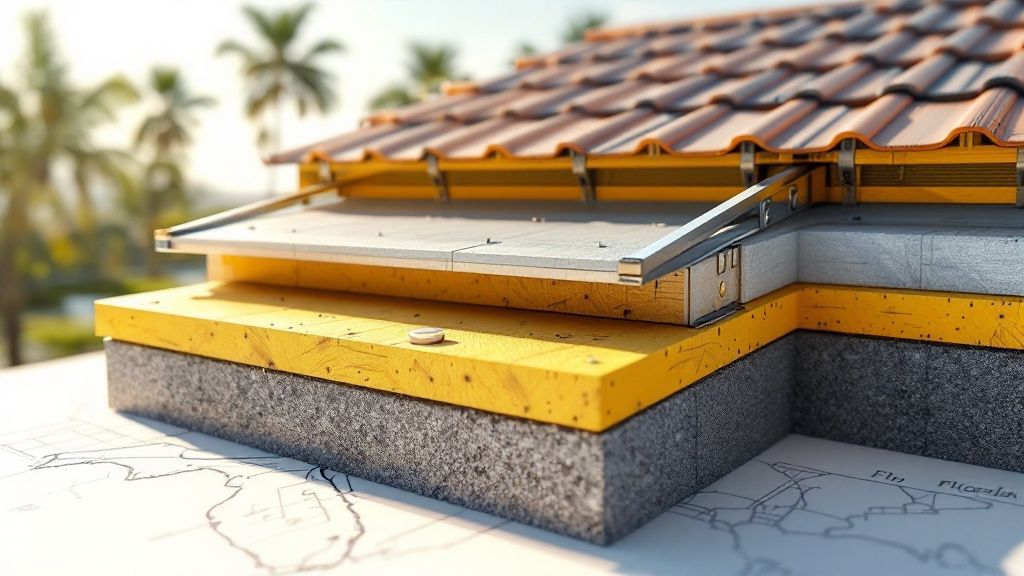
Florida's building codes for roofing are, without a doubt, some of the toughest in the country. They’re specifically designed to protect homes from the one-two punch of hurricane-force winds and relentless, driving rain. These rules aren't just there to make life difficult; they're a direct result of our state's wild weather, ensuring every roof is built to last.
Why Florida Roofing Codes Are So Strict
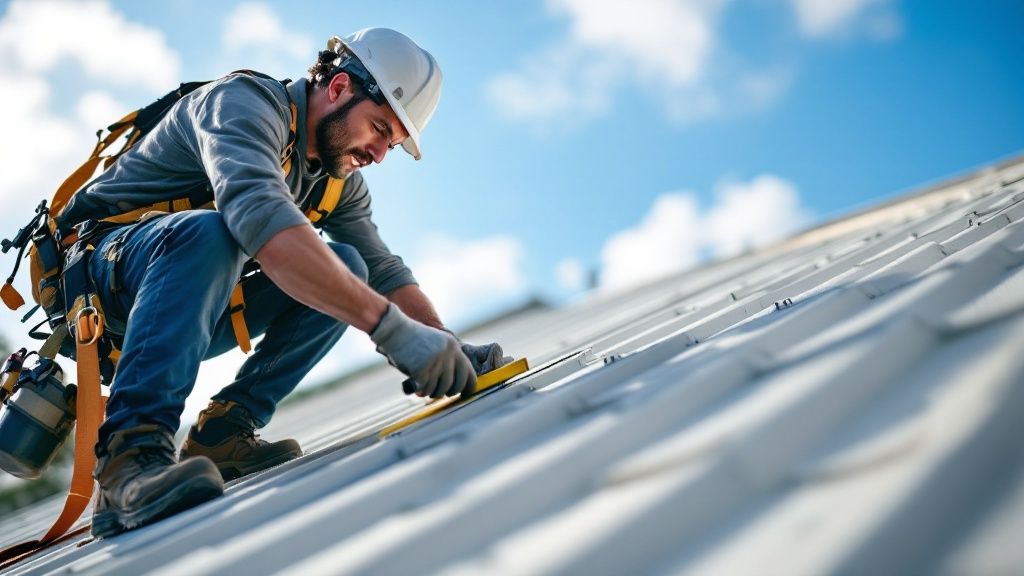
If you've ever thought getting a new roof in Florida seems overly complicated, you can thank our hurricanes. Living along these beautiful coastlines means we're also right in the path of some of the planet's most powerful storms. That’s why the florida building codes for roofing are much more than bureaucratic red tape—they're a critical line of defense for every single homeowner.
Think of the Florida Building Code (FBC) as a protective shield, one that's been forged and reforged by decades of storm experience. It exists to make sure your roof, the single most important part of your home's structure, can stand up to extreme conditions. Following these codes is non-negotiable for protecting your property, keeping its value, and frankly, being able to sleep at night.
A Code Forged by Catastrophe
The modern, super-strict era of florida building codes for roofing really kicked off after one catastrophic event. Before 2002, the state had a messy patchwork of local rules, which meant construction quality was all over the map. That vulnerability was tragically laid bare when Hurricane Andrew, a monster Category 5 storm, slammed into South Florida in 1992.
The storm didn't just cause damage; it revealed fatal flaws in how we were building roofs. Andrew destroyed around 60,000 homes, damaged over 100,000 more, and led to 65 deaths. It was a brutal wake-up call, proving that inconsistent standards were a recipe for disaster. The state finally realized a unified, high-stakes approach was the only way forward. You can learn more about how Hurricane Andrew catalyzed these changes to roofing codes.
More Than Just Rules
The FBC isn't a dusty old rulebook sitting on a shelf. It's a living document, constantly being tweaked and improved based on what we learn from each hurricane season. It gets into the nitty-gritty, dictating everything from the type of nails you must use to the precise pattern for attaching the roof deck. These aren't random details; they are proven techniques that make a roof stronger.
The core purpose of the Florida Building Code is to transform lessons from past storm damage into mandatory construction practices. Every requirement is designed to prevent a specific type of failure observed in real-world hurricane events.
At the end of the day, these tough regulations are a huge benefit to homeowners. They work to:
- Increase Safety: A code-compliant roof is far more likely to stay put during a major storm, protecting your family and everything you own.
- Protect Your Investment: A roof built the right way prevents the kind of costly water damage and structural failures that can ruin a home. Check out our guide on how to spot roof damage early on.
- Ensure Insurability: Good luck getting or keeping a homeowner's policy without proof of code compliance. For insurance companies, it's a must-have, making it a financial necessity for you.
The Evolution of Florida's Building Code
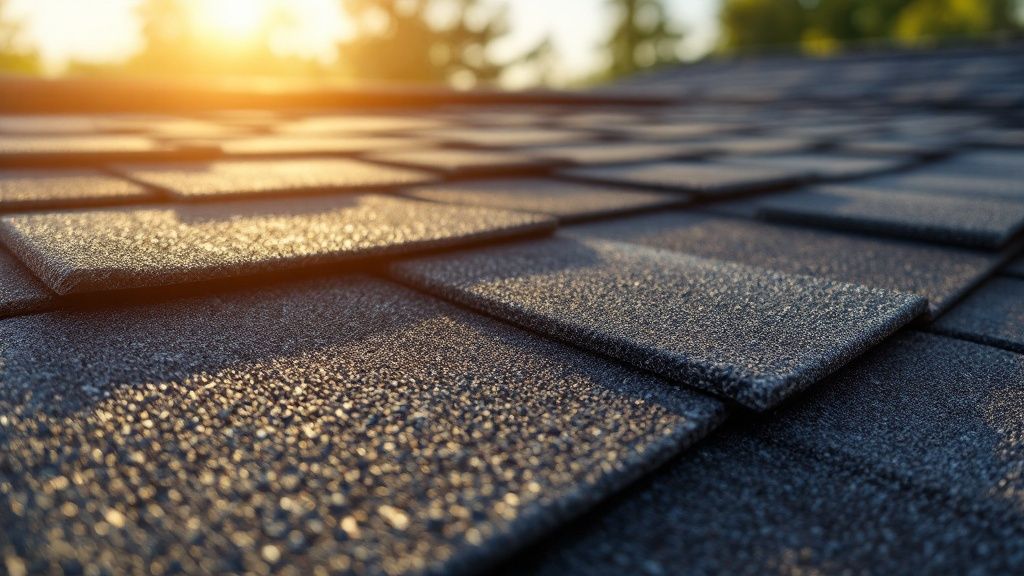
To really get why today's florida building codes for roofing are so tough, you have to know their backstory. These aren't just rules dreamed up in some quiet office; they were forged in the destructive winds of powerful hurricanes and written in the language of loss and recovery. It’s a story of moving from a dangerously inconsistent system to one of the most respected building codes in the world.
Before the modern code, Florida's approach to building safety was a total free-for-all. Imagine if every town had its own traffic laws—some strict, some lenient, and many barely enforced. That’s exactly what the construction landscape looked like for decades, turning home safety into a geographical lottery.
The Era of Patchwork Regulations
Florida’s first real attempt at standardization came in 1974 with a law that required local governments to adopt building codes. The problem? It had a massive loophole. Localities could amend the codes however they wanted, leading to a confusing and inconsistent patchwork of rules across the state's 67 counties.
This decentralized system meant a roof built in one county might be held to a completely different standard than one just a few miles away. The terrifying consequences of this fractured approach became crystal clear when Hurricane Andrew slammed into South Florida in 1992. Even Miami-Dade County, which had a reputation for stronger codes, suffered unimaginable damage, leading to $15 billion in insured losses.
Andrew proved that a chain is only as strong as its weakest link, and Florida’s regulatory chain was broken in dozens of places. You can learn more about how this storm exposed the critical flaws in the old system.
Hurricane Andrew: The Catalyst for Change
Hurricane Andrew wasn't just another storm; it was a reckoning. The sheer scale of the destruction exposed systemic failures at every level, from construction practices to the inspection process. Roofs were peeled off homes like can lids, not because of a single flaw, but due to a cascade of them—from weak sheathing attachment to poorly secured shingles.
The storm's aftermath served as an undeniable, real-world case study. As engineers and policymakers sifted through the wreckage, the evidence was overwhelming. The old way of doing things was a catastrophic failure that could not be repeated.
Hurricane Andrew taught Florida a painful but invaluable lesson: uniform, statewide building codes are not a matter of convenience, but of survival. The storm single-handedly forced the state to completely rethink its approach to construction safety.
This hard-earned realization sparked a complete overhaul of the state's regulatory framework. The goal was simple: eliminate the guesswork and create a single, high standard for every builder and roofer, from the Panhandle to the Keys.
The Birth of the Modern Florida Building Code
After years of research, debate, and analysis, the very first unified Florida Building Code (FBC) was officially implemented in 2002. This was a monumental shift. For the first time, the state had a single, legally enforceable set of rules that applied everywhere, with a special focus on high-wind roofing practices.
The creation of the FBC marked the end of the patchwork era and the beginning of Florida's reputation as a leader in resilient construction. It established mandatory practices for every aspect of roofing, including:
- Roof Deck Attachment: Specifying the exact size, type, and spacing of nails needed to secure the foundation of the roof.
- Underlayment Requirements: Mandating a secondary water barrier to protect the home even if the primary roofing material is compromised.
- Product Approvals: Creating a rigorous system to test and certify that roofing materials can actually withstand hurricane-force conditions.
But this new code wasn't a one-and-done solution. It was designed to be a living document, updated every three years to incorporate the latest engineering insights and lessons learned from subsequent storms. Each update makes the florida building codes for roofing smarter and stronger, ensuring our homes are better prepared for whatever nature throws at them.
Decoding Key Requirements for Your Roof
Trying to make sense of the florida building codes for roofing can feel like learning a new language. The technical jargon and precise measurements might seem intimidating, but the core ideas are actually pretty straightforward. Once you break down the most important requirements, you can have much clearer and more productive conversations with your roofer.
Think of these key code requirements less like red tape and more like a battle-tested recipe for a roof that can stand up to a hurricane. Each component has a specific job, and when they all work together, they create a system that's far stronger than any single part. Let's translate the three most critical elements into plain English.
Roof Deck Attachment: The Stitching That Binds
The absolute foundation of a strong roof is the roof deck—usually the plywood or OSB panels that cover your home's trusses. How this deck is attached is arguably the single most important factor in determining how your roof will hold up during a major storm.
Picture your roof deck as a giant quilt. If you only use a few stitches here and there, a powerful gust of wind could easily tear it to shreds. The Florida Building Code essentially requires a tight, incredibly strong stitching pattern. It dictates the exact type, size, and spacing of the nails used to secure the decking, ensuring it’s fastened down with immense force.
This strict nailing schedule is designed to stop the wind from getting under the panels and ripping them off, which is often the first domino to fall in a catastrophic roof collapse. For a clear idea of what this looks like in practice, you can see examples of a properly installed shingle roof. This precise “stitching” is what holds your entire roof together when hurricane-force winds are trying to pull it apart.
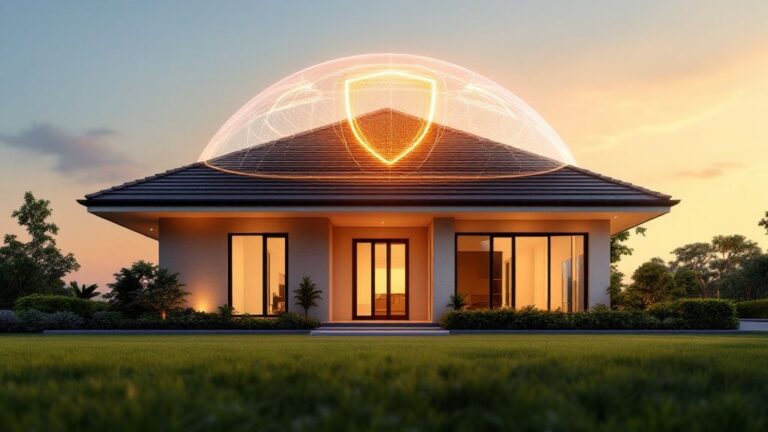
The infographic below shows how different elements like wind speed, roof pitch, and attachment methods are all connected under the Florida codes.
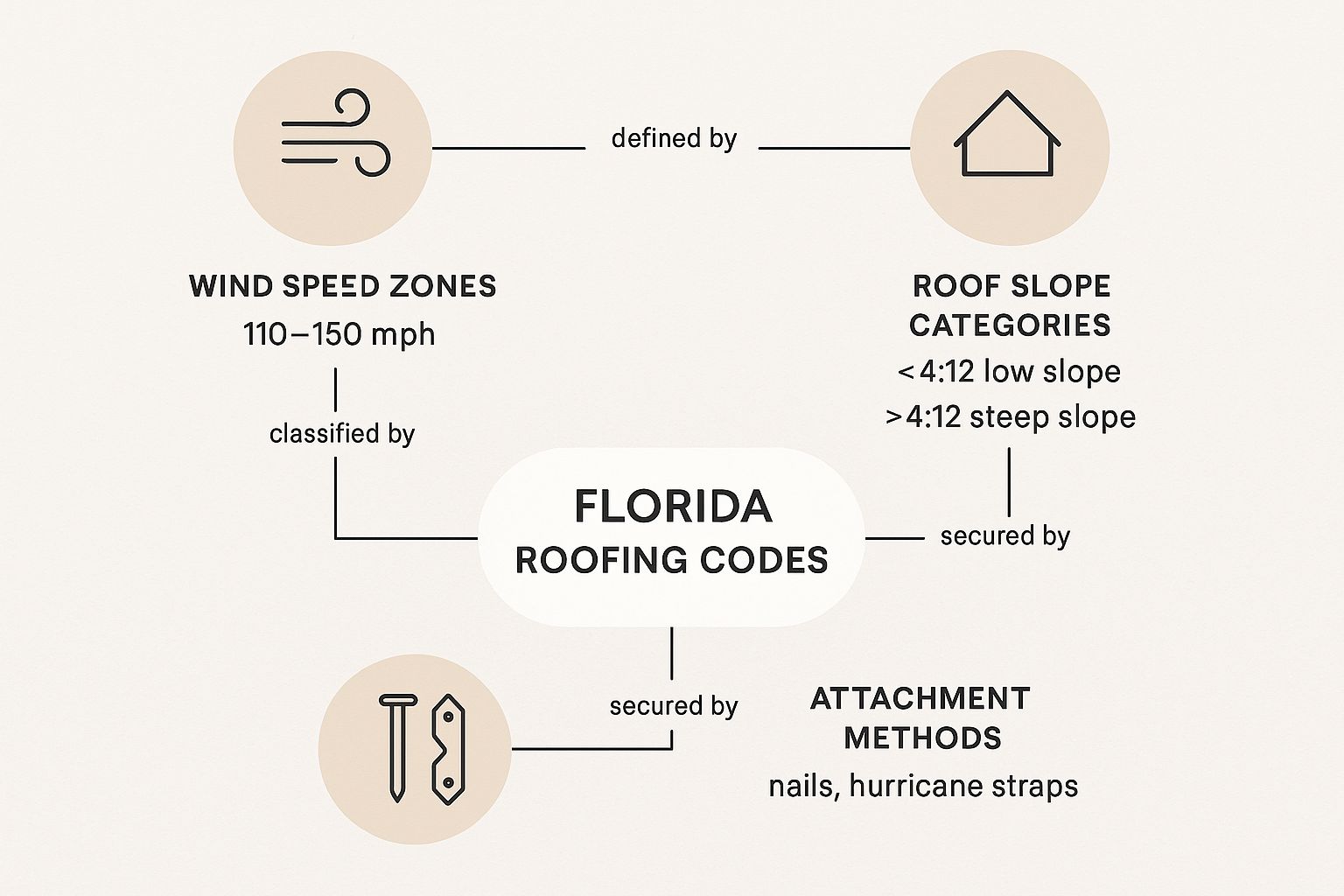
As you can see, a roofer can't just pick a random nail pattern. They have to consider the home's specific location (wind zone) and its design (slope) to determine the exact attachment methods needed to be compliant.
Secondary Water Barrier: Your Roof's Raincoat
Even the toughest shingles, tiles, or metal panels can be cracked or torn off by flying debris in a hurricane. If your primary roofing material is breached, what’s stopping water from gushing into your home? That’s the job of the secondary water barrier, and in Florida, it's absolutely non-negotiable.
Think of this barrier as a high-tech raincoat that your roof wears directly against the wood decking. It’s a self-adhering, rubberized asphalt membrane that gets applied before the main roofing material goes on, sealing the deck and creating a completely waterproof shield.
If hurricane winds rip off a section of your shingles, this secondary barrier is your last and most important line of defense against massive interior water damage. It’s what keeps a bad situation from becoming a total catastrophe.
This requirement was a direct lesson learned from past storms, where homes that were structurally sound still suffered devastating water damage. This "raincoat" ensures that even if the outer layer of your roof fails, your home's interior stays dry.
Wind Mitigation: The Seatbelts for Your Roof
Finally, let's talk about how the entire roof structure is anchored to the walls of your house. This is where wind mitigation features come in, specifically things like hurricane straps or clips. These are simply heavy-duty metal connectors that physically tie the roof trusses to the wall framing.
The best way to think about hurricane straps is as seatbelts for your roof. During a sudden, violent event—like a car crash or a hurricane—a seatbelt holds you firmly in place. Hurricane straps do the exact same thing for your roof, locking it down so it can't be lifted off.
Without these connectors, the powerful uplift forces from hurricane winds can literally peel the entire roof structure right off the walls. This is another area where the florida building codes for roofing are incredibly specific, making sure that connection is strong enough to resist thousands of pounds of pressure. Any work on your roof requires a solid grasp of these standards; for example, you can learn more about understanding building codes for roof modifications when adding features like skylights.
By seeing these three key requirements—deck attachment, water barriers, and wind mitigation—as a system of "stitching," a "raincoat," and "seatbelts," it's easy to see why each one is so vital. They work together to create a resilient roof designed not just to meet a code, but to protect your home and family when it truly matters.
To make these concepts even clearer, here’s a quick summary of the most important FBC requirements for residential roofing.
Key FBC Roofing Requirements at a Glance
| Code Requirement | What It Means for Your Roof | Primary Purpose |
|---|---|---|
| Roof Deck Attachment | The wood panels of your roof deck must be fastened with a specific nail size and a very tight spacing pattern (e.g., every 6 inches). | To prevent wind from lifting the roof deck off the trusses, which is a primary cause of roof failure in a hurricane. |
| Secondary Water Barrier | A self-adhering, waterproof membrane must be applied directly to the entire roof deck before the shingles or tiles are installed. | To stop water intrusion and massive interior damage if the primary roofing material is blown off during a storm. |
| Wind Mitigation | Metal connectors (hurricane straps or clips) must be used to securely anchor the roof trusses to the top of the home's walls. | To prevent the entire roof structure from being lifted off the house by powerful hurricane wind uplift forces. |
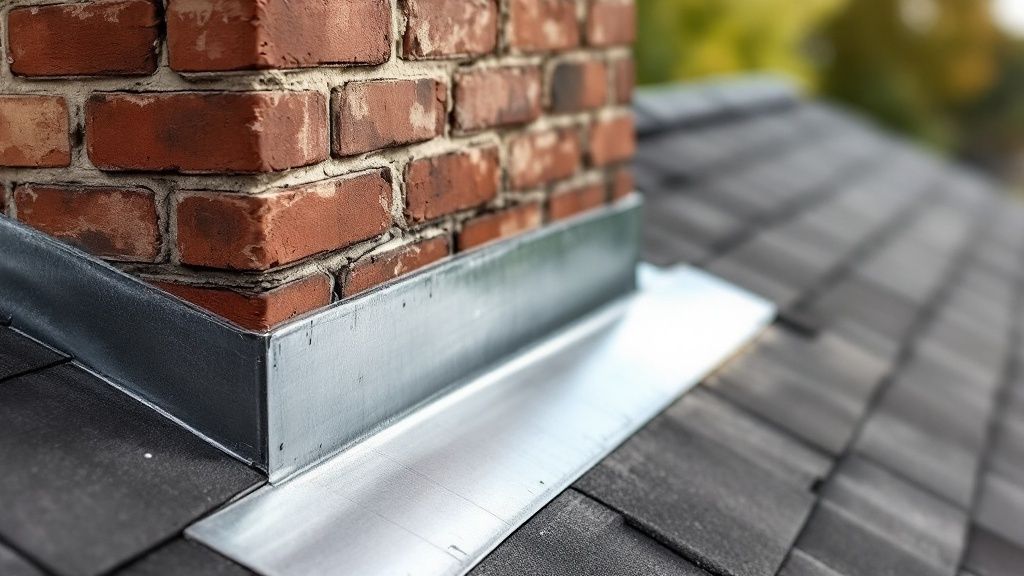
| Drip Edge Installation | A metal flashing called a drip edge must be installed at all roof eaves and rakes to direct water away from the fascia. | To protect the underlying wood from water damage and rot, and to prevent water from getting behind the gutters. |
These requirements form the backbone of a safe, resilient Florida roof. While the full codebook is complex, understanding these four pillars will empower you to ensure your roofing project is done right.
Understanding High Velocity Hurricane Zones
Not all of Florida faces the same hurricane risk, and the state's building codes reflect that harsh reality. While the entire state has tough regulations, there's a specific area where the rules become exponentially stricter. This is the High Velocity Hurricane Zone (HVHZ), a designation that represents the absolute peak of wind-resistant construction standards in the United States.
Think of the standard Florida Building Code as a well-trained soldier ready for battle. The HVHZ code, in comparison, is an elite special forces unit—equipped and trained for the most extreme conditions imaginable. It’s not just a line on a map; it's a completely different philosophy of building, born from the brutal lessons taught by Florida's most powerful storms.
This special designation applies specifically to the state’s most vulnerable coastal areas, creating a clear and necessary distinction in how roofs must be designed, built, and tested.
Where Is the HVHZ and Why Does It Exist?
The High Velocity Hurricane Zone is narrowly defined, covering only Miami-Dade and Broward counties. This wasn't an arbitrary choice. These two counties are geographically positioned in a way that makes them exceptionally susceptible to direct hits from the strongest Atlantic hurricanes, facing design wind speeds that can reach up to 160 mph.
The creation of the HVHZ was a direct response to the catastrophic failures seen during Hurricane Andrew back in 1992. The storm’s epicenter of destruction was in South Miami-Dade, where it exposed profound weaknesses in the construction practices of the day. In the aftermath, engineers and policymakers knew this high-risk corridor needed its own set of uniquely stringent rules that went far beyond even the new statewide code.
As a result, the florida building codes for roofing within the HVHZ set the ultimate benchmark for resilience. They are designed to ensure buildings can withstand the most violent wind forces, protecting lives and property in the state’s most precarious region.
The Strictest Product Approval System in the Nation
The single biggest difference between roofing in the HVHZ and the rest of Florida boils down to product testing and approval. Outside this zone, roofing materials need a Florida Product Approval. Inside the HVHZ, they need something far more rigorous: a Miami-Dade Notice of Acceptance (NOA).
An NOA is the undisputed gold standard for hurricane-rated building products. To earn this certification, every single roofing component—from a shingle to a piece of metal flashing—has to survive a battery of extreme tests that simulate hurricane conditions. These tests are incredibly specific and leave zero room for error.
A Miami-Dade NOA isn't just a stamp of approval; it is a detailed, legally binding recipe. It dictates the exact materials, fasteners, and installation methods that must be used for a specific product, without any deviation.
This system is far more restrictive than the standard Florida Product Approval. For example:
- Specificity: An NOA specifies the exact type of roof membrane, fastener, and even the deck attachment method. The statewide code is often more flexible, allowing for grouped selections of similar materials.
- No Guesswork: Most NOAs don't permit "extrapolation," a common practice where a roofer enhances a fastening pattern for higher-wind zones based on a tested lower-wind pattern. In the HVHZ, the exact pattern for every zone must be physically tested and proven to work.
This means a roofer working in Miami or Fort Lauderdale can't just pick a "good" product. They must use a product with a specific NOA and follow its installation manual to the absolute letter.
Higher Costs for Unmatched Protection
This elevated standard of testing and material specificity directly impacts the complexity and cost of roofing projects in the HVHZ. Contractors have to navigate a much more demanding regulatory landscape, and the required materials are often more expensive simply because of the intensive testing they've endured.
The fastening schedules are more robust, demanding more nails, screws, or adhesives per square foot. Every component of the system, including the edge metal, has to carry its own NOA approval. This meticulous, system-wide approach ensures every link in the chain is strong, but it also adds to both labor and material costs.
Ultimately, while the florida building codes for roofing are tough everywhere, the HVHZ represents the state's uncompromising commitment to safety in its most threatened areas. These heightened standards not only protect residents of Miami-Dade and Broward but also serve as an influential model for coastal construction practices nationwide.
The 25% Rule and Recent Code Changes
If there’s one topic that causes headaches for Florida homeowners, it’s the infamous “25% Rule.” For years, this rule was a source of massive confusion and, frankly, unexpected costs. It created a nightmare scenario where a roof with moderate damage could suddenly require a full—and very expensive—replacement.
The old rule was simple but punishing. If more than 25% of your roof’s surface area needed repairs within a 12-month window, you were forced to bring the entire roof system up to the latest Florida Building Code. A single, sizable repair job could trigger a mandatory reroof, even if the other 75% of your roof was in perfectly good shape. This was a major pain point for homeowners and insurance companies alike.
A Welcome Change with Senate Bill 4-D
Recognizing the financial strain and logistical chaos this rule was causing, the Florida legislature finally took action. The result was Senate Bill 4-D (SB4D), a game-changing piece of legislation passed in May 2022 that completely overhauled how the 25% rule works. It brought a much-needed dose of common sense back into the repair process.
This update tweaked the old regulations in a way that helps the vast majority of modern homeowners. Here’s the key change: if 25% or more of a roof is repaired or replaced, now only the repaired portion has to meet the current building code. This applies to any roof built or replaced under the 2007 FBC or later, which covers a huge number of homes across the state. You can dig into the specifics of how SB4D reformed roofing regulations on intertek.com.
For homeowners facing significant but localized roof damage, this shift is a massive relief. It stops a contained problem from snowballing into a mandatory full replacement.
This recent change allows for far more practical and affordable repairs. It makes sure the damaged sections are built to the highest modern standards without forcing homeowners into a financially crippling full reroofing project they don't actually need.
What This Means for Your Roof Repair
The real-world impact of this code update is immense. It allows for a more logical, phased approach to roof maintenance, saving homeowners a ton of time and money. Here’s what it looks like in practice:
- Before SB4D: Imagine a nasty hailstorm damages 30% of your shingle roof. Under the old rule, you would have almost certainly been on the hook for a full roof replacement to get up to code.
- After SB4D: With that same 30% damage today, your contractor can simply replace the damaged section. Only that new 30% portion has to meet the latest code requirements for things like underlayment, fasteners, and materials.
This updated rule provides critical flexibility. It ensures safety by requiring modern standards on all new work, but it avoids the outrageous cost of replacing perfectly good sections of an existing roof. Understanding this change is vital for any Florida homeowner trying to navigate the repair process after a storm.
Navigating the Permit and Inspection Process
Getting the technical side of the florida building codes for roofing right is only half the battle. The other half is navigating the permit and inspection process—a system that might seem like a bureaucratic headache but is actually your best defense against shoddy work.
Think of it as a built-in quality control system that works for you. A roofing permit isn't just a piece of paper; it's a non-negotiable legal requirement for nearly every reroofing project in the state. It creates an official record that your project is being held to the strict safety standards of the Florida Building Code. Skipping this can lead to massive fines, major headaches when you try to sell your home, and even a denied insurance claim after a storm hits.
The permit is what triggers the city or county inspectors to come to your property and verify the work is being done correctly. Without it, you're left to simply trust your contractor is doing everything by the book, with no official oversight.
The Permit and Inspection Roadmap
The process really isn't as complicated as it sounds. It follows a logical path designed to check the work at critical stages, making sure crucial elements aren't covered up before they can be verified. While the fine details can vary a bit between municipalities, the general steps are consistent across Florida.
Here’s the typical sequence of events:
- Permit Application: Your licensed roofer is responsible for submitting all the necessary documents to your local building department. This package includes detailed plans showing the specific materials and methods they'll use to comply with the FBC.
- Permit Issuance: Once the plans get the green light, the building department issues the permit. Work cannot legally start until this permit is posted somewhere visible on your property.
- In-Progress Inspections: This is where the magic happens. An inspector will visit your home at least once (sometimes more) during the project. They’ll check key code requirements, like the roof deck nailing pattern and the installation of the secondary water barrier, before the new shingles or tiles go on.
- Final Inspection: After the last nail is hammered in, the inspector returns for a final look. They check the finished work, ensuring things like flashing are installed correctly, before officially "closing out" the permit.
Your Role in the Process
As the homeowner, you're an active partner here. Your main job is to make sure your contractor is handling their side of the bargain. Before you sign any contract, confirm that the contractor will pull all the required permits. If they suggest skipping it, that's a massive red flag.
You can usually check if a permit has been pulled by looking it up on your local building department’s online portal. Don't be shy about asking your contractor for the permit number. This simple step protects your investment and proves you’re working with a pro. Professional roofers expect this and will have no problem providing the documentation—it's a standard part of any quality job. You can learn more about what to expect during a professional roof inspection to better understand the process.

A permit is your official guarantee that an independent, qualified inspector will put eyes on your project. It transforms the building code from a rulebook into a real-world enforcement mechanism that protects your home.
Ultimately, the permit and inspection process is there to safeguard your biggest asset. It ensures every nail, every seam, and every shingle is installed according to Florida's hurricane-tested standards, giving you peace of mind that your new roof is truly built to last.
Common Questions About Florida Roofing Codes
Even after you get the hang of Florida's roofing regulations, a few practical questions always seem to pop up. Homeowners often run into specific scenarios that aren't immediately clear, leaving them wondering what the right move is. This section tackles some of the most common questions we hear about florida building codes for roofing.
Getting these points straight can make all the difference, whether you're planning a full reroof, putting your house on the market, or just trying to be a responsible property owner in the Sunshine State.
Do I Need a New Roof to Sell My House?
Technically, no. There's no statewide law forcing you to install a new roof just to sell your home. But here's the reality: the roof's age and condition can make or break a deal.
Most insurance carriers won't write a new policy for a roof with less than 3-5 years of useful life left. Without insurance, a buyer can't get a mortgage. Suddenly, your old roof becomes a massive roadblock for the sale. That's why, while it isn't legally required, many sellers end up replacing an old or damaged roof to make their home marketable and insurable for the next owner.
The Florida Building Code is updated every three years. This isn't just bureaucracy at work; this cycle keeps our regulations in line with the latest building science, new materials, and hard-won lessons from recent storm seasons. It’s what keeps Florida at the forefront of resilient construction.
What Is a Secondary Water Barrier?
Think of a secondary water barrier as your roof's last line of defense. It's a self-adhering, rubbery membrane that gets applied directly to the wooden roof deck before your shingles or tiles go on.
Its entire job is to stop water from getting into your home if your primary roofing material gets damaged or blown away in a storm. It’s a waterproof seal that acts as a crucial backup. Under the FBC, this feature is a mandatory requirement for the vast majority of new and replacement roofs.
Beyond the technicalities of Florida's strict building codes, many roofers also have common questions about growing their business. To find out more about effective digital marketing for roofers, consider strategies for generating local leads.
At Paletz Roofing and Inspections, we make the Florida Building Code easy to understand. If you have questions about your roof's compliance or need a professional set of eyes on it, contact us today for a free, no-obligation quote at https://paletzroofing.com.