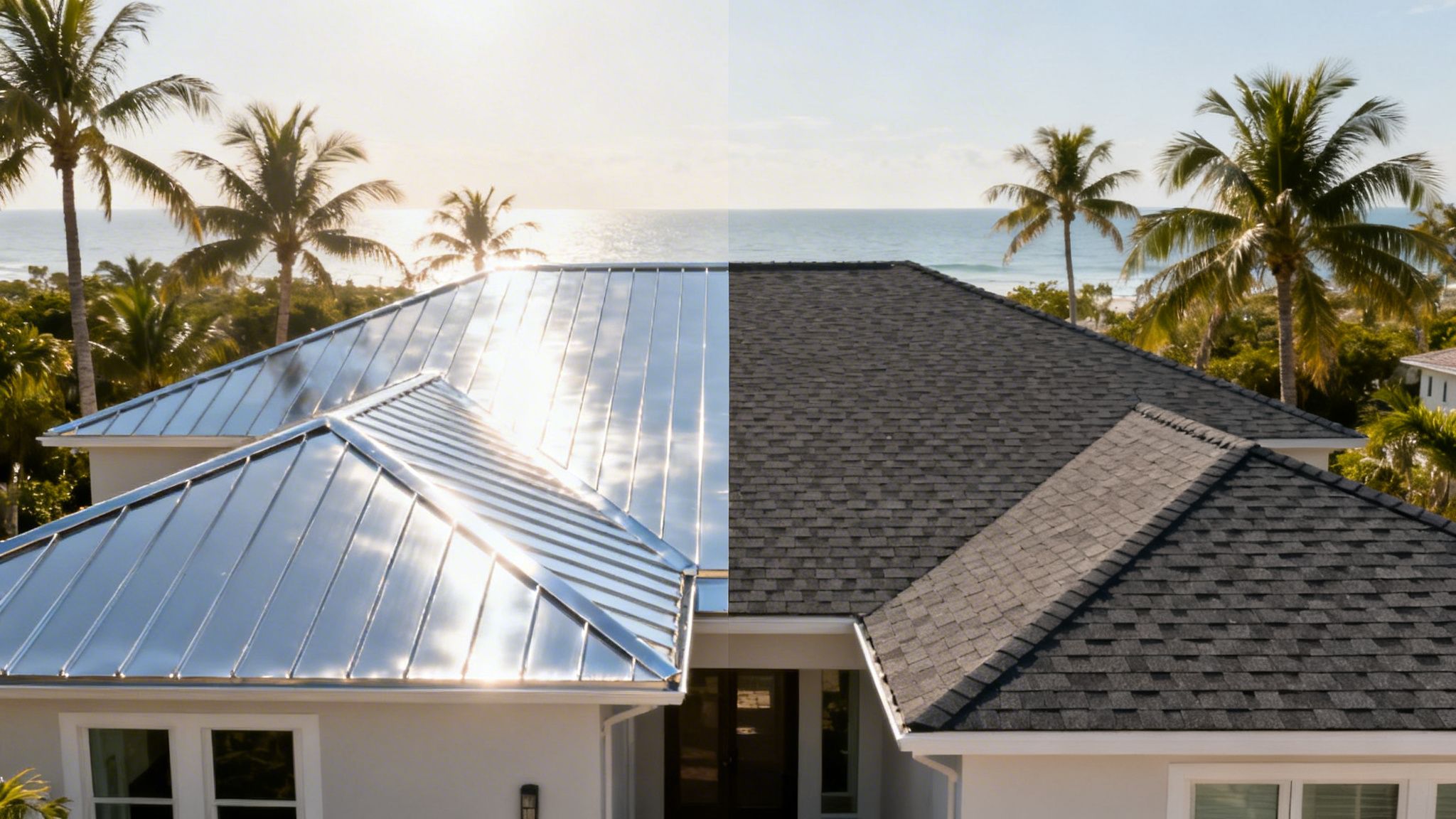
When it comes to a new roof, the decision between metal vs. shingle boils down to one fundamental question: Are you investing in long-term resilience or prioritizing immediate affordability? Your choice is a trade-off between lifetime value and storm protection versus a lower upfront cost.
The Critical Choice For Florida Homeowners
Choosing a new roof in South Florida isn’t just another home improvement project—it’s a critical decision that directly impacts your home's safety and your financial security. Here in a region defined by intense sun, high humidity, and the ever-present threat of hurricanes, your roof is your home’s first and most important line of defense.
This puts the debate between a metal roof and an asphalt shingle roof front and center for homeowners across Broward, Miami-Dade, and Palm Beach counties.

This guide is built to cut through the marketing noise and give you clear, practical comparisons. We’ll look at how Florida’s unique climate pushes both of these popular materials to their absolute limits, helping you make the right choice for your home.
Key Factors in Your Roofing Decision
This decision goes way beyond what looks best from the curb. It involves a careful balance of critical factors that have real, long-term consequences for your property and your peace of mind. As we compare these two roofing options, we'll focus on what matters most to Florida residents.
- Performance and Durability: How does each material really hold up to 140+ MPH hurricane-force winds, pounding hail, and our relentless UV exposure?
- Total Cost of Ownership: What's the true cost over 30 years when you factor in installation, potential replacements, insurance savings, and energy efficiency?
- Aesthetics and Resale Value: How will your choice impact your home's curb appeal today and its value when it’s time to sell tomorrow?
The right roof isn't just the one that looks good or fits an initial budget; it's the one that delivers security and value for decades. In South Florida, this means selecting a system engineered for resilience.
The following sections will break down the metal roof vs. shingle roof comparison with the data and context you need. We'll explore everything from maintenance demands to the specifics of local building codes, making sure you have a complete picture. You might also find it helpful to look at a visual overview of different roofing materials and styles to see these options firsthand.
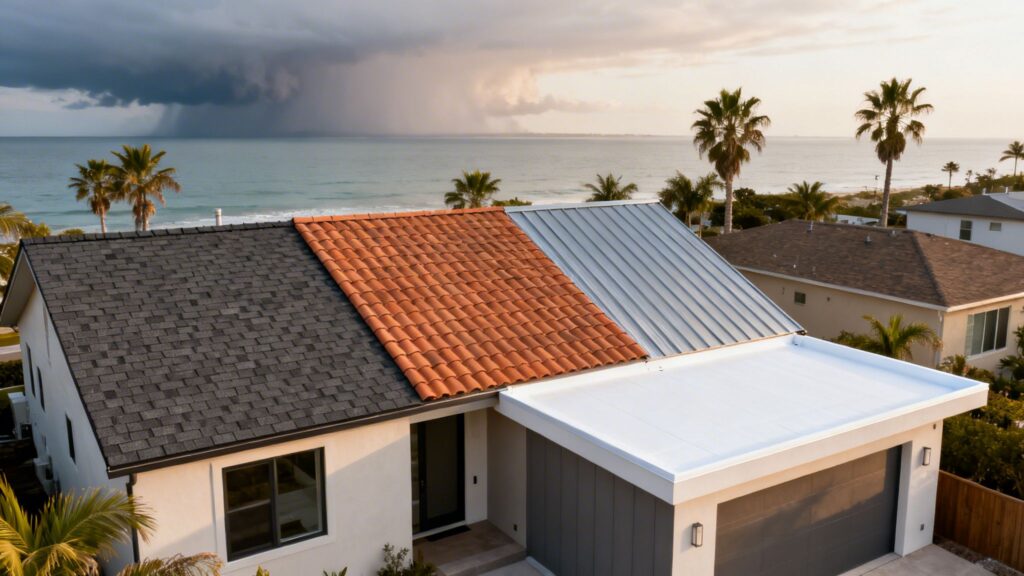
| Feature | Metal Roof | Asphalt Shingle Roof |
|---|---|---|
| Typical Lifespan | 40-70+ years | 15-25 years in Florida |
| Upfront Cost | Higher (2-3x shingles) | Lower |
| Wind Resistance | Excellent (140+ MPH) | Good (up to 110 MPH) |
| Energy Efficiency | High (Reflects heat) | Moderate (Absorbs heat) |
| Maintenance Needs | Minimal | Periodic repairs needed |
Durability and Performance In Hurricane Zones
When you’re weighing a metal roof vs. a shingle roof, durability isn't just a talking point—it's your home's first line of defense, especially here in South Florida. The moment a hurricane starts churning in the Atlantic, the theoretical performance of your roofing material becomes a harsh reality. The difference between a roof that holds on and one that peels away is nothing short of catastrophic.
This is where the two materials really show their true colors. Asphalt shingles, even the high-quality architectural ones, have an inherent weakness. Their design, with countless individual tabs and granular surfaces, gives hurricane-force winds thousands of tiny edges to grab and lift.
A standing seam metal roof, on the other hand, is designed from the ground up to be an interlocking shield. The panels run in single, unbroken lengths from the ridge to the eaves, locked together and fastened with concealed clips. This system drastically reduces seams and eliminates the exposed edges that make shingles so vulnerable to wind.
Wind Resistance: A Non-Negotiable Priority
In South Florida, a wind speed rating isn't just a number on a spec sheet; it's a direct measure of your home's ability to survive a hurricane. Most standard asphalt shingles are rated for winds up to 110 MPH. That might sound like enough, but it leaves you with a razor-thin margin of error when a Category 3 storm—or stronger—is barreling toward the coast.
By contrast, metal roofing systems are consistently engineered to withstand winds of 140 MPH or more. This isn't a small step up; it’s a completely different class of structural integrity. Because wind force increases exponentially with speed, the gap in protection between 110 MPH and 140 MPH is immense.
Key Takeaway: For a shingle roof, a major hurricane is a test it might fail. For a properly installed metal roof, it's a condition it was specifically designed to endure.
We see the real-world results of this performance gap constantly. While an average asphalt shingle roof might last 15 to 25 years elsewhere, Florida’s trifecta of relentless UV rays, heavy rain, and hurricane winds often causes them to curl, crack, and fail much sooner. Metal roofs, however, routinely last 40 to 70 years, easily outliving your mortgage.
After the brutal 2004-2005 hurricane seasons, we saw a dramatic example: over 100,000 insurance claims were filed for shingle roof damage from storms like Charley and Wilma, while most metal roofs in the same areas held firm.
Fighting Off Hail, Corrosion, and Fire
Beyond wind, your roof has to stand up to other threats. Hail, while less common than hurricanes, can pulverize an asphalt shingle roof, stripping away its protective granules and exposing the matting underneath to rapid UV decay. Steel roofing has a far greater impact resistance and is much less likely to lose its functional integrity from a hailstorm.
Fire resistance is another critical difference. While most modern shingles carry a Class A fire rating, their asphalt-based composition means they can still melt and ignite under intense heat. Metal roofs are inherently non-combustible and also carry a Class A fire rating, but they simply will not burn, providing a vital layer of protection from embers.
Finally, there’s the constant, quiet assault of salt air and humidity, a perfect recipe for corrosion and algae. Innovations from industrial coating suppliers have led to durable, high-tech coatings that give modern roofing materials an incredible advantage.
While today's shingles include algae-resistant granules, their effectiveness tends to fade over time, leading to those ugly black streaks you see everywhere. The factory-applied finishes on a metal roof create a much more robust and lasting shield against both corrosion and organic growth, keeping your roof looking good and performing well for decades. You can see how these materials hold up visually by exploring examples of new roof installations across various Florida environments.
Understanding The True Lifetime Cost Of Your Roof
When you're comparing a metal roof vs. a shingle roof, it’s all too easy to let the initial price tag drive your decision. Cost is often the first, and sometimes only, factor homeowners focus on. But to make a smart investment for your home, especially here in South Florida, you have to look at the complete financial picture, not just the upfront quote.
The initial cost difference is undeniable. A new metal roof can easily run about double the price of high-quality asphalt shingles, which is a major sticking point for many. For a typical 2,000-square-foot home, you can expect to pay between $20,000 and $36,000 for a metal roof. The same home fitted with architectural shingles would be closer to $10,000 to $16,000.
That breaks down to roughly $10 to $18 per square foot for metal versus $5 to $8 for shingles. You can dig deeper into these roofing cost breakdowns on pitchroofing.com and see how they stack up. But that initial price only tells the first chapter of the story. The real financial narrative unfolds over the next few decades.
Shifting Focus To Lifecycle Cost
A lower upfront cost feels like an immediate win, but it can quickly turn into a recurring headache. In South Florida's harsh climate, a standard asphalt shingle roof has a realistic lifespan of about 15-25 years. If you plan on staying in your home long-term, you’re almost guaranteed to face a full roof replacement at least once, if not twice.
A metal roof, on the other hand, boasts a 40 to 70-year lifespan. It’s a one-and-done investment. You install it once and will likely never have to worry about a full replacement again. This simple fact completely transforms the cost equation from a short-term expense into a long-term capital improvement.
This chart really drives home the performance differences that create long-term value when comparing a metal roof vs. a shingle roof.

It’s not just about lifespan. The superior wind resistance highlighted here directly translates to fewer repairs, less stress during hurricane season, and greater security over your roof's entire life.
To really put this into perspective, let's look at the total cost of ownership over a 50-year period for a typical South Florida home.
50-Year Cost Of Ownership Metal vs Shingle Roof
This table breaks down the estimated total cost for a typical 2,000 sq. ft. South Florida home over 50 years, factoring in initial installation, necessary replacements with inflation, and potential savings.
| Cost Factor | Asphalt Shingle Roof | Standing Seam Metal Roof |
|---|---|---|
| Initial Installation Cost | ~$13,000 | ~$28,000 |
| Replacement at Year 20 | ~$25,000 (with inflation) | $0 |
| Replacement at Year 40 | ~$40,000 (with inflation) | $0 |
| Total Outlay Over 50 Years | ~$78,000 | ~$28,000 |
As this simplified projection shows, the initially cheaper shingle roof can end up costing nearly three times as much over five decades simply due to the inevitable replacement cycles.
Unlocking Financial Benefits Beyond Durability
But the financial upside of metal roofing doesn't stop at avoiding replacements. Two other huge factors come into play, significantly reducing your total cost of ownership and making metal a much smarter financial choice over time.
- Significant Energy Savings: There’s a reason metal roofs are often called "cool roofs." Their surfaces reflect solar radiant heat away from your home instead of absorbing it like dark asphalt shingles. This simple difference can slash your cooling costs by up to 25%—a massive saving in Florida's year-round heat.
- Major Insurance Discounts: Florida insurance companies love homes that are built to withstand high winds. A properly installed metal roof offers superior wind and fire resistance, which can qualify you for homeowner's insurance premium discounts of up to 35%.
A metal roof isn't just an expense; it's an asset that starts paying you back from day one through lower energy bills and reduced insurance premiums.
When you add these ongoing savings to the fact you’ll dodge multiple costly replacements, the higher initial price of a metal roof isn’t just justified—it’s often the most economical decision you can make. The math is clear: investing more upfront can secure your home and your finances for decades.
Aesthetics, Resale Value, And Maintenance Demands
Beyond the tough questions about durability and cost, you also have to consider how a roof looks, how it impacts your home's value, and how much work it'll take to maintain. The choice you make in the metal vs. shingle debate directly affects your home’s curb appeal, its market price, and the time you’ll spend on upkeep. It all boils down to the day-to-day reality of living with your new roof.

Let's get one thing straight: the old idea that metal roofs are just for barns and industrial buildings is completely outdated. Modern metal roofing has come a long way, offering a surprisingly sophisticated range of styles that can elevate any home, from contemporary designs to classic coastal Florida architecture.
The Evolution Of Curb Appeal
Modern standing seam metal roofs deliver a clean, bold, and minimalist aesthetic that’s become a hallmark of high-end residential homes. The strong vertical lines they create add a sense of height and sharp structure. Better yet, metal roofing comes in a huge spectrum of colors, all protected by advanced paint warranties that ensure they won't fade under the relentless Florida sun.
Asphalt shingles, on the other hand, especially the architectural or dimensional styles, offer that traditional, textured appearance many homeowners love. They provide a classic look with real depth and variation. The major drawback here in South Florida's humidity is their susceptibility to ugly black streaks from algae growth, which can ruin curb appeal in just a few years.
The aesthetic choice is no longer just "industrial vs. traditional." It's about selecting a long-lasting finish that resists fading and staining versus a classic look that may require more frequent cleaning to maintain its appearance.
Resale Value: A Clear Investment Return
The type of roof you install has a direct impact on your home's resale value, which makes determining your home's value in the Florida market a critical step. A new roof is always a great selling point, but a metal roof tells potential buyers a story about durability and long-term savings.
For savvy homeowners looking at total ownership costs, this is where metal really pulls ahead. According to a 2023 Remodeling study, homeowners can expect to recoup 85-95% of a metal roof's initial cost at resale. Even better, it can add between 1% and 6% to a home’s total value—a huge advantage for anyone looking to maximize their property’s worth.
When a potential buyer sees a metal roof, they see peace of mind. They know they likely won't be facing a massive replacement bill for decades. That kind of confidence is a powerful negotiating tool that often leads to a quicker sale at a higher price, especially in a competitive market.
Comparing Maintenance Demands
The last piece of the puzzle is the long-term upkeep required to keep your roof in top shape. This is where the differences between metal and shingles become crystal clear, affecting both your wallet and your weekends for years to come.
- Asphalt Shingle Maintenance: Shingle roofs demand regular check-ups, especially after a big storm. You’ll need to keep an eye out for missing granules, curling or cracked shingles, and lifting edges—all common problems in our climate.
- Metal Roof Maintenance: A properly installed metal roof is about as low-maintenance as it gets. The main task is an occasional inspection to check that seams and flashings are still sealed and to clear off any accumulated debris.
This difference is significant. A shingle roof requires constant vigilance to catch small problems before they become big leaks. A metal roof, in contrast, offers a "set it and forget it" advantage that homeowners truly value. To see the beautiful results of a professional installation up close, you can view our gallery of completed roofing projects.
Making The Right Choice For Your Florida Property
Deciding between a metal roof and an asphalt shingle roof isn't about which one is universally "better"—it's about which one is better for you. The ideal choice comes down to your budget, your long-term plans for the property, and what you value most in a roofing system.
Instead of a simple pro-and-con list, let's frame this decision around real-world situations Florida homeowners face. A roof is one of the most significant investments you'll make in your property, and the right answer changes based on your goals.
Your Homeowner Profile
Understanding your own situation is the very first step. Are you planning to sell in a few years, or are you settling into your forever home? Your answer dramatically shifts the cost-benefit analysis in the metal vs. shingle debate.
The "Forever Home" Owner: If you plan on staying in your home for the next 15 years or more, the math almost always points to a metal roof. With a 40-70 year lifespan, it's very likely the last roof you'll ever need to install. The higher upfront cost is balanced over decades by lower energy bills, major insurance savings, and freedom from the constant worry of storm damage. For you, a metal roof isn't an expense; it’s a permanent upgrade to your home.
The Short-Term Seller (5-7 Years): If you're fixing up a property to sell within the next few years, a high-quality architectural shingle roof can be a very smart and pragmatic choice. A brand-new roof is a powerful selling point that boosts curb appeal. While you won't personally see the long-term lifecycle savings of metal, the lower initial cost of shingles lets you improve the home's marketability without over-investing in a benefit you won't enjoy.
Scenario-Specific Recommendations
Beyond your ownership timeline, other factors like your property type and immediate needs play a crucial role. A historic home in Coral Gables has very different requirements than a commercial warehouse in Doral.
Your roof should solve your specific problem. For some, the problem is budget recovery after a storm; for others, it's achieving maximum long-term durability for a business asset.
For the Budget-Conscious Homeowner Recovering from Storm Damage:
If your budget is tight, especially after dealing with unexpected storm damage, modern architectural shingles are a strong and sensible option. They provide reliable protection that meets Florida's stringent building codes and will get your home secured quickly and affordably. This allows you to restore your home's safety without the financial strain of a metal roof installation.
For the Historic Home with Strict Aesthetic Requirements:
Preserving the character of a historic property is paramount. While traditional asphalt shingles can certainly work, modern metal roofing offers surprising versatility. Metal can be shaped to perfectly mimic the look of classic slate or wood shake, but without the intense maintenance or fire risk. This allows you to maintain the home’s authentic aesthetic while gaining the superior protection and longevity of metal.
For the Commercial Property Owner:
For a commercial building, durability and minimal maintenance are king. Every day of downtime for roof repairs is a day of lost revenue. A standing seam metal roof is the clear winner here, offering unmatched resilience against wind and weather, nearly zero upkeep, and a lifespan that protects the business's physical asset for decades to come.
Your Final Decision Checklist
To help you make a truly informed choice, ask yourself these key questions. Your answers will point you toward the best roofing solution for your unique needs.
- What is my real budget horizon? Am I focused on the lowest upfront cost, or am I investing for the lowest total cost over 30+ years?
- How long do I plan to own this property? Is this a short-term residence or my long-term home?
- How critical is minimizing future maintenance and repairs? Do I want a "set it and forget it" solution, or am I comfortable with periodic inspections and potential repairs?
- What level of storm security do I require? Am I comfortable with a 110 MPH wind rating, or do I need the peace of mind that comes with a 140+ MPH rating?
Time to Schedule Your Professional Roofing Consultation
You've done the homework, comparing the hard data between metal and shingle roofing. But moving from online research to a real-world decision for your South Florida home is the most important step. Making the right choice absolutely requires a professional, on-site assessment to understand what your property truly needs.
A theoretical comparison only gets you so far. The actual condition of your current roof, your home's specific layout, and the local building codes all play a massive role in figuring out the best path forward. This is where professional expertise becomes essential, turning complex information into a clear, actionable plan.
Get Your Free, No-Obligation Quote
For over 30 years, Paletz Roofing and Inspections has been the go-to partner for homeowners across Broward, Miami-Dade, and Palm Beach counties. We don’t just sell roofs; we provide clarity and solutions built to last. Our process always starts with a free, no-obligation consultation where a certified expert will come to your home and thoroughly inspect your current roof.
A professional inspection is the bridge between considering your options and making a confident, informed investment in your home. It replaces guesswork with facts tailored specifically to your property.
During this consultation, our specialist will:
- Let you see and feel physical samples of both high-quality shingle and metal materials.
- Walk you through the specific code requirements and wind mitigation standards for your exact neighborhood.
- Give you a detailed, transparent quote along with a practical cost-benefit analysis.
We’ve built our reputation on expert installations of both shingle and metal systems, making sure every single project meets our high standards for safety and durability. Don't leave your home's primary shield against the elements to chance. Let our decades of hands-on experience guide you to the perfect roofing solution.
Contact Paletz Roofing and Inspections today to schedule your complimentary inspection. It's the final step toward securing your home with total confidence.
Frequently Asked Questions About Florida Roofs
Choosing between a metal and shingle roof is a huge decision, and even after weighing the pros and cons, most Florida homeowners have a few lingering questions. It’s a major investment, so getting straight answers is non-negotiable. Here are some of the questions we hear most often from our clients across Broward, Miami-Dade, and Palm Beach counties.
Is A Metal Roof Noisy During Rainstorms
This is probably the most common myth we have to bust. The old image of a tin shed roof rattling during a downpour simply doesn't apply to modern residential metal roofing.
Today’s metal roofs are installed over a solid roof deck, just like shingles are. They also include a layer of underlayment that deadens sound. Once you factor in your attic and insulation, the noise from rain on a professionally installed metal roof is virtually identical to that of an asphalt shingle roof. You get all the storm protection without any of the racket.
Can You Install A Metal Roof Over Existing Shingles
While you might hear about this being done in other parts of the country, putting a metal roof over old shingles—often called a “roof-over”—is a definite no-go in South Florida. Local building codes almost universally forbid it, and for good reason.
A complete tear-off is the only professional way to do the job. Here's why:
- Structural Integrity: We can't properly inspect the underlying roof deck for rot, soft spots, or storm damage if it's hidden under old shingles.
- Weight Issues: Stacking a new metal system on top of old asphalt adds significant weight, placing unnecessary stress on your home's structure.
- Warranty Compliance: Nearly every manufacturer's warranty becomes void if the roof isn't installed on a clean, properly prepared deck.
A complete tear-off ensures your new roof is anchored to a sound foundation, a non-negotiable step for guaranteeing hurricane readiness and long-term performance.
How Does A Metal Roof Impact My Home's Energy Efficiency
This is where a metal roof really shines, especially in Florida’s relentless heat. Metal roofs are a game-changer for energy efficiency, thanks to what we call the "cool roof" effect.
Unlike dark asphalt shingles that absorb and trap the sun's heat, metal panels with modern finishes have high solar reflectivity. This means the roof reflects a huge portion of solar radiation away from your home, keeping your attic from turning into an oven. Your AC unit doesn't have to work nearly as hard, which translates directly to lower monthly energy bills. The savings on cooling costs alone are often substantial over the roof's lifespan.
Ready to get answers tailored to your specific property? The experts at Paletz Roofing and Inspections have over 30 years of experience helping Florida homeowners make confident roofing decisions. Schedule your free, no-obligation inspection today by visiting https://paletzroofing.com.