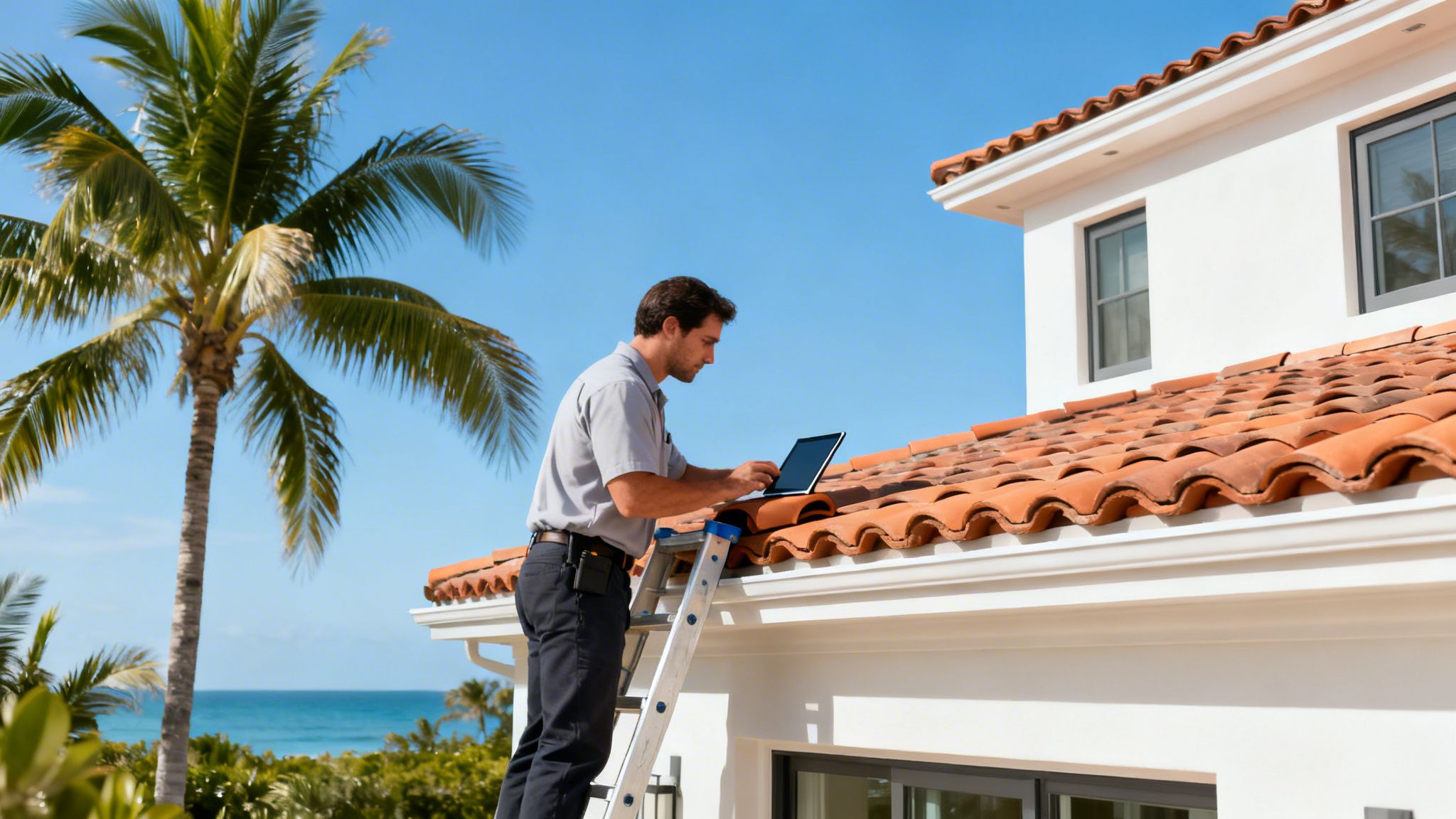
A lot of Delray Beach homeowners call for a roof inspection only after they see a ceiling stain, a drip near a vent, or a few tiles on the ground after rough weather. By then, the roof has already moved from maintenance into damage control.
That is the expensive way to learn how South Florida treats a roof.
A proper roof inspection Delray Beach homeowners can rely on is not just a quick glance from the driveway. It is a close look at the system that takes the full hit from sun, salt air, wind-driven rain, and storm season. If you own a home here, the inspection is less about curiosity and more about staying ahead of problems before they affect insurance, resale, or the interior of the house.
Why Your Delray Beach Roof Needs a Professional Eye
When a hurricane watch goes up in Palm Beach County, the houses that hold up best are usually not the ones with the newest paint or the nicest landscaping. They are the ones where the roof has already been checked, documented, and corrected before storm season put pressure on every weak point.

In Delray Beach, roofs do not age in a gentle way. They take constant UV exposure, regular humidity, salt-heavy coastal air, and the threat of tropical weather. Local guidance notes that Florida roofs require more frequent inspections than national averages due to environmental stressors like hurricanes, salt spray corrosion, and intense UV exposure, and it also points out that many local providers do not explain material-specific maintenance well enough for tropical conditions (South Florida roof inspection climate guidance).
What the climate changes
On a South Florida roof, small issues do not stay small for long.
A cracked tile can let in wind-driven rain. A rusting metal edge can loosen the seal at the perimeter. Dried, brittle sealant around a vent can fail right when hard rain starts blowing sideways.
Those are not abstract risks. They are the kinds of defects that a trained inspector looks for because the local climate tends to expose them fast.
Waiting for a leak is the wrong trigger
Many homeowners use visible interior water as the signal to act. That does not work well here.
By the time you see staining on drywall, water may already have moved through underlayment, decking, or attic spaces. The roof had a warning phase. You just did not get to see it from inside the home.
Practical takeaway: The best time to inspect a roof is before you need proof that it failed.
Why professional eyes matter
A professional does more than confirm that the roof is “good” or “bad.” A good inspector identifies where the system is vulnerable, what needs repair now, and what should be monitored.
That matters in Delray Beach because many roofs look acceptable from the ground while still having trouble at flashings, valleys, transitions, penetrations, and edge details. These are the spots that usually decide whether the roof rides out a storm or starts feeding water into the home.
Understanding the Purpose of a Roof Inspection
A roof inspection is the roofing version of a full physical. It is not just someone looking for one symptom. It is a structured evaluation of the whole system.

That distinction matters because many homeowners confuse a paid inspection with a free estimate. They are not the same service.
Inspection versus sales visit
A free estimate usually starts with a repair or replacement conversation. The roofer looks for enough evidence to price work.
A dedicated inspection starts with condition, not sales. The goal is to document what is there, how it is performing, what has failed, and what may become a problem next.
That is why an unbiased inspection often gives a homeowner better information. You are paying for judgment, documentation, and clarity.
What the inspection is trying to answer
A solid roof inspection usually answers several questions at once:
- Is the roof actively leaking or at risk of leaking
- Are the materials still serviceable
- Do the flashings, penetrations, and drainage details still do their job
- Is there visible damage that affects safety or compliance
- Is the roof likely to create issues for insurance or a sale
That last point matters more in South Florida than many new homeowners expect.
Why homeowners order inspections
Not every inspection starts with damage. In practice, most requests fall into a few real-world situations.
| Situation | What the homeowner needs to know |
|---|---|
| Storm season is approaching | Whether the roof has weak points that should be fixed before wind and heavy rain |
| The home is being bought or sold | Whether the roof condition may affect the transaction |
| Insurance is involved | Whether documentation is needed on age, condition, and remaining life |
| The roof is older or uninspected | Whether repairs, maintenance, or monitoring make the most sense |
What a good report gives you
Value is not the walk itself. It is the outcome.
You should come away with plain-language findings, photographs, and recommendations that separate urgent items from routine maintenance. A good report gives a homeowner a decision path.
Think of it this way: A useful inspection does not just tell you what is wrong. It tells you what to do next and what can wait.
Why this matters in Delray Beach
In this market, the roof often affects more than repair cost. It can shape how smoothly an insurance change goes, how confidently a buyer moves forward, and whether a permit-related project later runs cleanly through the city process.
That is why the purpose of a roof inspection Delray Beach homeowners schedule should never be reduced to “see if there’s a leak.” The purpose is to understand the condition of the roof system before that system creates a bigger problem.
A Full Delray Beach Roof Inspection Checklist
A proper inspection follows a sequence. The inspector is not wandering around looking for random defects. The roof, attic, edges, drainage points, and supporting components all tell part of the story.

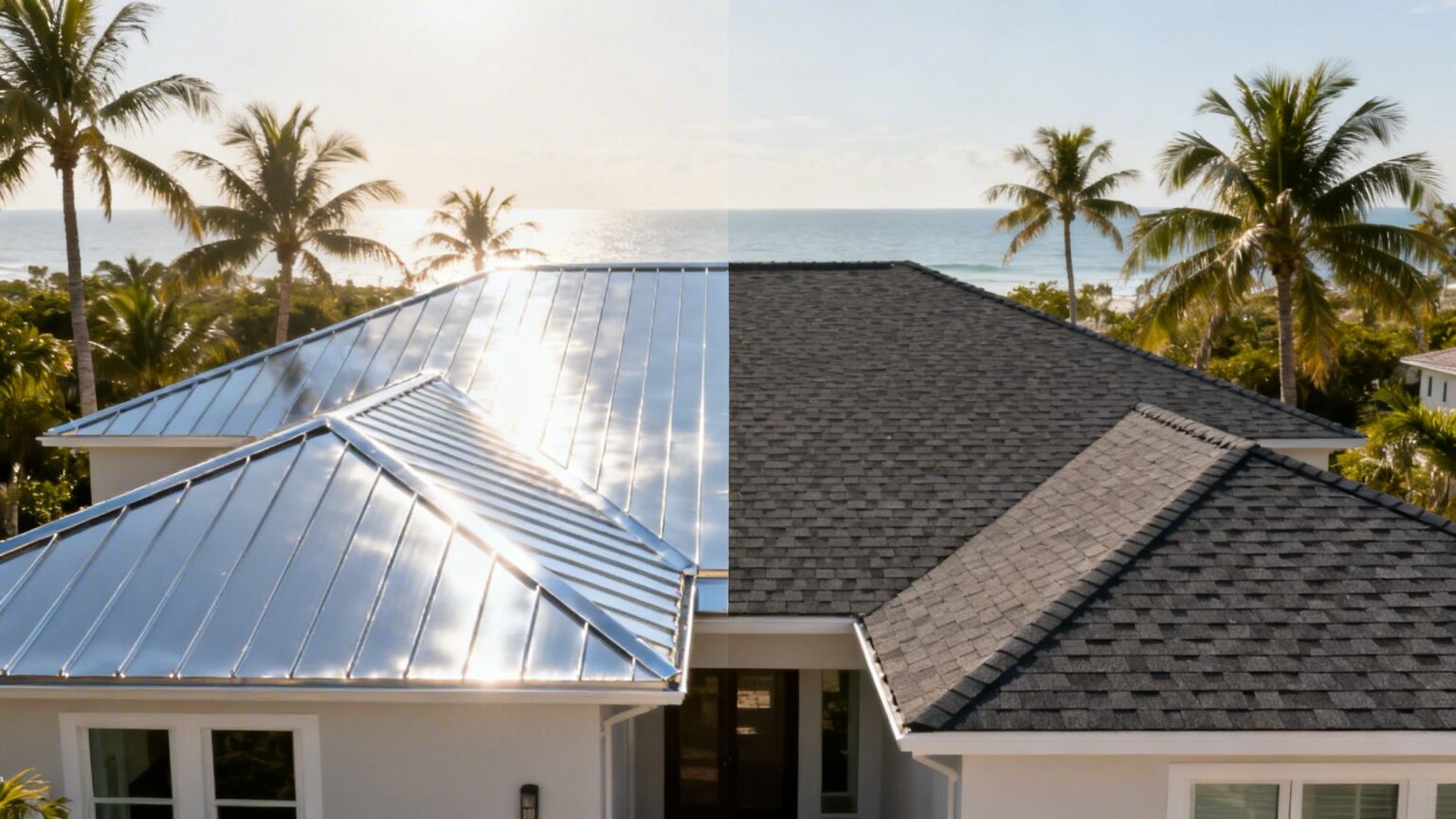
If you want a visual example of the kind of roof conditions professionals document, this inspection image reference is the kind of close-detail perspective that helps homeowners understand what an inspector evaluates.
Interior signs that tell on the roof
The inspection often starts inside, especially in the attic or top-floor ceiling areas. Water does not always enter and show up directly below the point of failure, so the inspector looks for patterns.
Key interior checks include:
- Water staining: Brown marks, damp drywall, or discoloration near ceiling transitions can point to active or past intrusion.
- Attic moisture: Damp framing, darkened sheathing, or musty odor can suggest roof leaks or poor ventilation.
- Light penetration: Visible daylight through the roof structure or around penetrations is a warning sign.
- Ventilation conditions: Heat buildup and trapped moisture can shorten the life of roofing materials and affect the underside of the system.
In Florida, attic checks matter because leaks are not the only issue. Excess moisture and poor airflow can affect the roof assembly long before a homeowner notices indoor damage.
Exterior surface checks
Once on the exterior, the inspector moves from field areas to details. The field of the roof may be what you notice first, but many failures happen at transitions.
A thorough exterior inspection looks at:
- Tile or shingle condition: Cracks, slipped pieces, missing sections, curling, wear, and looseness all matter.
- Metal condition: Rust, fastener problems, and corrosion from coastal exposure need close attention.
- Flashing details: Areas around vents, walls, skylights, and chimneys are common water entry points.
- Sealants and boots: Dried or failed sealants do not handle heavy rain well.
- Roof edges: Drip edge condition and perimeter attachment can affect wind performance.
- Valleys and low spots: These areas carry concentrated water and often reveal wear early.
Delray Beach issues that deserve extra attention
Local climate changes the checklist. In this area, a skilled inspector pays close attention to issues such as:
- Heat-related movement: Tile can crack or shift as materials expand and contract.
- Salt-air corrosion: Metal flashings, screws, and clips can deteriorate faster near the coast.
- Flat roof drainage problems: Ponding water on low-slope roofs can stress membranes and seams.
- Wind vulnerability: Loose components at edges and penetrations can become failure points during storms.
These are the details that separate a generic roof walk from a roof inspection Delray Beach homes need.
Structural checks below the surface
Not every roof problem starts with the top layer. Structural components carry the load and support attachment.
An inspector may evaluate the condition of:
- Decking: Soft spots or movement can point to hidden moisture damage.
- Fascia: Rot, separation, or deterioration at the roof edge can affect drainage and edge stability.
- Soffits: Damage here can let moisture or pests in and may indicate larger edge problems.
- Alignment: Sagging or uneven roof lines may suggest structural concerns that deserve further review.
Field lesson: A roof can have acceptable-looking materials on top and still have trouble underneath. Surface appearance alone is never enough.
Drainage and water control
Water management is part of the roof system, not a separate issue.
The inspector should check:
- Gutters and downspouts for blockage, slope issues, separation, and overflow signs
- Discharge areas to see whether water is moving away from the structure properly
- Debris buildup in valleys or behind roof features where water can back up
In South Florida rain, poor drainage gets exposed fast. A roof may be fine in dry weather and still fail under volume.
Documentation matters as much as the walk
The final part of the checklist is paperwork. A serious inspection includes photographic evidence and written notes. The homeowner should be able to understand what was found without climbing onto the roof.
That documentation should distinguish among three categories:
- Immediate repair needs
- Maintenance items to address soon
- Conditions worth monitoring
If an inspector cannot explain findings clearly or provide usable photos, the inspection is incomplete.
Navigating Delray Beach Insurance and Building Regulations
A roof in Delray Beach is not just a building component. It is also an insurance issue, a transaction issue, and sometimes a permit issue.

Homeowners usually discover this when they try to sell a property, change insurance, or start planning a re-roof. The roof inspection then becomes more than maintenance. It becomes documentation.
Roof certifications in Palm Beach County
In this area, roof certification can be mandatory in certain situations. In Broward and Palm Beach County, roof certifications are mandatory when selling a home or changing homeowner's insurance. Inspectors assess the roof's age, type, and remaining life, conduct a full property walk, check for cracked or missing tiles, and verify the attic is free of leaks to help insurers determine property risk (roof certification requirements in Delray Beach).
That requirement changes how homeowners should think about inspections. If you wait until a closing date is close or your carrier asks for paperwork, you may be forced into a rushed decision.
How insurance looks at the roof
Insurance carriers want documented condition. They are looking for enough information to understand risk.
That is why roof certification reports focus on things like visible damage, apparent service life, leak evidence, and roof type. The more complete and clear the inspection, the easier it is to address questions before they turn into underwriting problems.
4-point and wind mitigation in plain terms
Homeowners hear these terms all the time, often without a plain explanation.
A 4-point inspection is generally used to review the major systems of the home, including the roof. It is broader than a stand-alone roof inspection.
A wind mitigation inspection focuses on features tied to wind resistance. It is a different document with a different purpose.
Neither replaces a full roof condition inspection when the goal is to understand defects, maintenance needs, or leak risks. They overlap with roofing concerns, but they are not the same service.
The Florida code issue many owners miss
Florida also has a repair threshold that affects roofing decisions. The 25% damage replacement threshold means that if roof damage exceeds that level within a twelve-month period, full replacement may be required rather than partial repair, as described in the same certification guidance above.
That matters because homeowners sometimes assume they can patch sections indefinitely. In reality, code can force a different path once damage reaches the threshold.
Tip for owners planning repairs: Get the roof documented before authorizing scattered fixes. Good records help you understand whether you are dealing with isolated defects or a code-triggering larger problem.
Re-roof permits in Delray Beach
If the roof moves from inspection to replacement, paperwork matters immediately. The City of Delray Beach uses an express permitting system for re-roofing, but only when documentation is complete. Required items include a detailed scope of work with cost breakdowns, product approval documents, and, for some pre-March 2002 properties over the stated improvement value threshold, added mitigation and value documentation (Delray Beach re-roof permitting requirements).
Inspection requests for permitted work go through the city eServices process, and supporting items such as re-nailing affidavits and roof uplift tests must be attached where required.
Why the inspection report should anticipate compliance
A roof report should not read like vague commentary. In this market, it needs enough substance to support decisions that involve insurers, buyers, sellers, and future permitting.
That means good photos, specific findings, and clear identification of roof type, visible condition, and problem locations. Generic language helps no one when a transaction or permit review starts asking hard questions.
The Inspection Process From Start to Finish
A typical call in Delray Beach starts the same way. The owner sees a ceiling stain after a hard rain, or spots a few slipped tiles after a windy week, and wants to know whether this is a small repair or the start of a larger problem.
A good inspection answers that question in an organized way. On a South Florida roof, the order matters because wind damage, salt exposure, UV wear, and drainage issues often overlap.
Step one starts before anyone climbs the roof
The scheduling call sets the scope. Say why you need the inspection. Leak tracing, storm follow-up, annual condition review, real estate documentation, and insurance support can involve different photos, different testing, and different reporting detail.
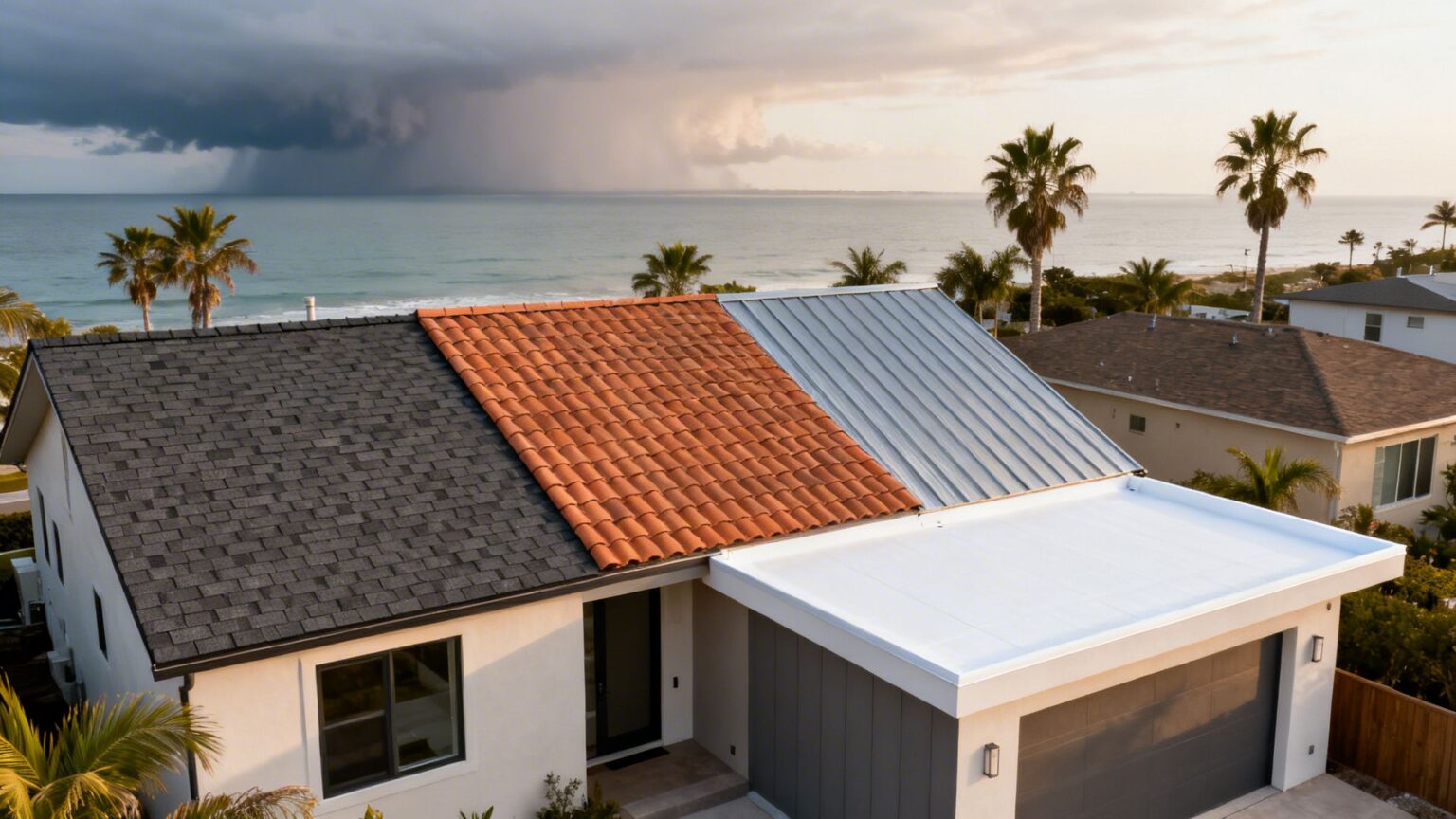
It also helps to name the roof system up front. Tile, shingle, metal, and low-slope roofs fail in different places. A concrete tile roof near the coast may show underlayment aging long before the field tiles look bad from the street. A flat roof may hold up fine in dry weather and still fail around drains or seams during a summer downpour.
Mention any ceiling stains, attic moisture, ponding water, past repairs, or areas where debris collects. That gives the inspector a head start and helps target the parts of the roof that usually break down first in this climate.
What happens when the inspector arrives
The visit usually begins from the ground, not on the roof.
From there, the inspector looks at the roof lines, sagging, edge metal, gutter discharge, soffits, fascia, and any visible signs that water is getting where it should not. In Delray Beach, I also want to see how the roof sits against nearby trees, salt air exposure, and whether equipment like condensers or satellite mounts may be contributing to wear.
Roof access comes next if conditions are safe. Wet tile, brittle shingles, steep slopes, and high winds can change how the inspection is performed. A careful inspector does not force access just to say the roof was walked. The goal is usable findings, not unnecessary breakage or risk.
Once on the roof, the inspection gets more specific. Flashings, penetrations, valleys, transitions, ridge and hip areas, attachment points, sealants, and drainage paths all get checked closely. On coastal homes, those details matter because they are usually where wind-driven rain enters first.
If the home has an attic or an accessible interior area below the leak path, that gets checked too. Water rarely shows up directly below the entry point. It can travel along decking, underlayment, framing, or mechanical penetrations before it stains a ceiling.
For a visual example of the kind of roof condition that often triggers closer review, see this roof condition reference image.
What the inspector is trying to determine
A useful inspection does more than list defects.
It should sort findings into three buckets. Active problems that need repair now. Conditions that are aging but still serviceable. Conditions that suggest the roof system is reaching the point where repairs may stop making financial sense.
That distinction matters in Delray Beach. A small flashing defect can be an isolated repair. Widespread fastener corrosion, failing underlayment under tile, repeated ponding on a low-slope section, or brittle shingles with storm-related creasing point to a broader service-life issue. Homeowners need that difference explained plainly.
What the report should include
The finished report should be specific enough that a homeowner, buyer, insurer, or contractor can all understand the same roof without guessing.
Look for:
- Photos of each problem area and general roof conditions
- Written observations tied to exact locations on the roof
- Notes on roof material and visible age-related wear
- A clear separation between immediate repair items and monitor items
- Recommended next steps, such as repair, maintenance, further invasive testing, or replacement evaluation
Good reports also explain limits. If an area could not be walked safely, if an attic was blocked, or if staining was visible but the entry point could not be confirmed without water testing, that should be stated clearly.
What a homeowner should get out of the process
By the end, you should know where the roof is vulnerable, why those areas matter in South Florida weather, and whether the next step is maintenance, repair, or planning for replacement.
That is the standard. Clear findings. Clear photos. Clear priorities.
How to Choose a Licensed Roof Inspector in South Florida
The Delray Beach market gives homeowners plenty of choices. That is not always a benefit.
With 12,246 building permits issued and 32,102 inspections conducted in Delray Beach, and 669 BBB-listed roofing services in the area, the field is crowded, which is exactly why owners need to choose a certified and insured inspector who understands local code and compliance (Delray Beach permit and inspection utilization data).
What to verify before you book
Do not hire based on price alone. Verify the basics first.
Look for:
- Florida licensing: The company should hold the proper state credentials for the work it performs.
- Insurance coverage: Ask for proof of general liability and workers' compensation.
- South Florida experience: Local weather and local code expectations matter.
- Inspection documentation: Ask whether you will receive photos and a written report.
- Roof type familiarity: Tile, flat, shingle, and metal systems fail differently.
Questions worth asking on the phone
A short phone call can reveal a lot.
Ask how they handle attic review, whether they physically access the roof when safe, what kind of report they provide, and whether they do insurance-related documentation. If the answers stay vague, the inspection probably will too.
Red flags that usually lead to trouble
Some warning signs come up again and again:
- Door-to-door pressure after storms
- Prices that sound far below the market
- A push to sign a repair contract before the inspection is complete
- No clear proof of license or insurance
- No discussion of reports, photos, or documentation
An inspection should reduce pressure, not increase it.
Choose judgment, not just availability
A capable inspector does more than find defects. They know which cracked tile matters, which sealant issue needs action now, and which wear pattern should be monitored.
That judgment is what protects homeowners from two costly mistakes. Missing real issues, and paying to fix problems that are not urgent.
The Paletz Roofing and Inspections Advantage
A Delray Beach roof can look serviceable from the driveway and still have problems that matter. Salt air speeds up metal corrosion. Wind-driven rain finds weak flashing details. Heat and humidity shorten the life of sealants and expose ventilation mistakes. The value in a local inspection company is knowing which of those conditions needs action now, and which one can be watched without pushing a homeowner into premature work.
Why that local judgment matters
Paletz Roofing and Inspections has long worked on South Florida roofs, and that shows up in the inspection itself. Coastal tile roofs, low-slope systems, aging shingles, and metal panels do not fail the same way here they do inland. A cracked field tile may be isolated, or it may point to underlayment wear and fastening stress after years of heat and storm exposure. The same goes for small rust at flashing or fasteners. Near the coast, minor corrosion can turn into leak paths faster than many homeowners expect.
Inspection judgment also matters after the report is written. Findings often affect repair scope, maintenance timing, insurance documentation, and permit decisions. An inspector who works in this market should understand that connection and explain it in plain language.
What a good local inspection company should deliver
Whether you hire Paletz or another qualified South Florida firm, the standard should be clear. Homeowners should get a real roof evaluation with photos, written findings, and specific recommendations tied to the roof type and the home's exposure.
You should also expect clear company identification, such as the Paletz Roofing and Inspections company logo, along with straightforward communication about what was checked, what was found, and what needs follow-up.

That means:
- Photos that show the actual conditions
- Written notes that separate active problems from watch items
- Comments that reflect South Florida weather, not a generic checklist
- Recommendations that fit the roof system instead of pushing one answer for every home
- Documentation a homeowner can keep for maintenance, repairs, or insurance records
The primary advantage
The strongest inspection is the one that helps a homeowner make the next decision with confidence.
That may mean a small repair before summer storms, planned maintenance on a flat roof with drainage wear, or a fuller discussion about age, remaining service life, and code-related upgrades if replacement is getting close. In Delray Beach, that kind of guidance matters more than a long checklist, because the climate punishes small roof defects quickly.
Frequently Asked Questions About Roof Inspections
How often should a roof be inspected in Florida
Florida guidance in the verified local material recommends at least yearly roof inspections, with added checks in storm-prone areas and before hurricane season in late spring or early summer. In practice, annual inspection plus an additional check after major storms is a sound habit for South Florida homes.
Can I inspect my own roof
You can do a basic visual check from the ground. You can look for missing materials, debris buildup, sagging areas, overflowing gutters, and interior ceiling stains.
That does not replace a professional inspection. Homeowners usually cannot safely evaluate flashings, attachment points, attic leak paths, or subtle material failure from ground level.
What is the difference between a roof inspection and a wind mitigation inspection
A general roof inspection looks at condition, defects, leak risk, and maintenance needs. A wind mitigation inspection focuses on wind-resistant features that may matter for insurance documentation.
They can relate to each other, but they serve different purposes.
How long does a roof inspection take
Local Delray Beach guidance states that a standard physical inspection usually takes a few hours. Larger roofs, difficult access, or more specialized inspection methods can affect the time required.
When should I schedule one
Schedule it before storm season, when buying or selling a property, when changing insurance, or as soon as you notice signs like stains, missing materials, or visible edge damage. Earlier is almost always cheaper than later.
If you need a clear, documented assessment of your roof in Delray Beach or anywhere in Broward, Miami-Dade, or Palm Beach County, contact Paletz Roofing and Inspections. A thorough inspection can help you understand your roof’s current condition, prepare for insurance or real estate requirements, and address problems before they turn into interior damage.