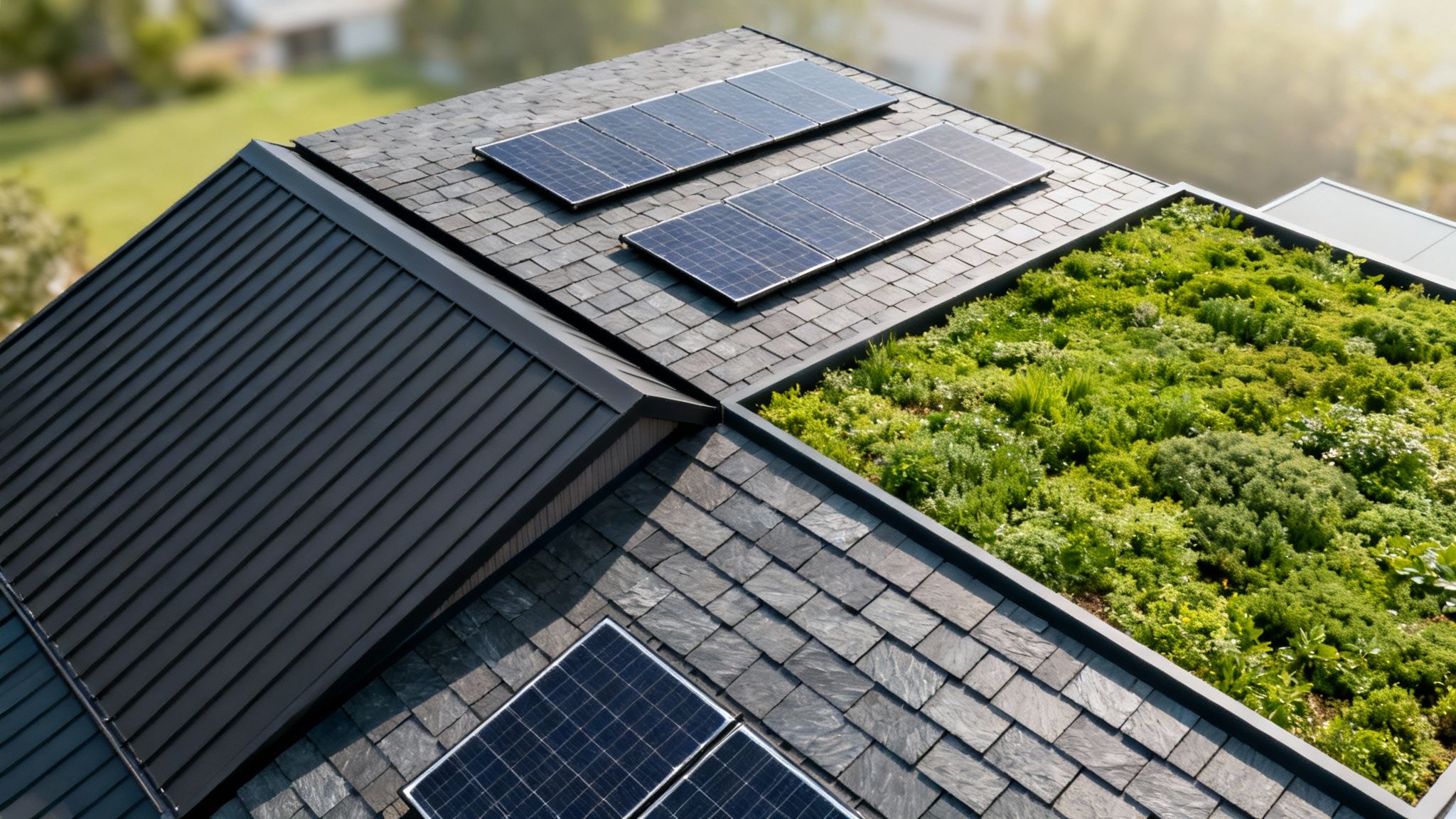
Gone are the days when a roof was just a simple covering. Today's roofing materials are complete engineered systems designed for durability, energy efficiency, and sustainability in ways traditional options never could be. They've moved far beyond providing basic shelter, now acting as a home's first line of defense with advanced features like solar reflection and serious weather resistance. It’s a major shift toward long-term value and smart home integration.
Why Your Roof Is More Than Just Shingles
When you picture a roof, what comes to mind? For most people, it’s probably asphalt shingles. For decades, they were the default choice, and for good reason. But today’s roofing is about so much more than a simple, passive layer of protection. It’s better to think of your roof as your home's high-performance shield—one that actively works to protect, insulate, and even power your property.
This evolution isn’t just about new styles; it's a fundamental change in how we think about roofing. We're seeing a wave of progress driven by some very real, modern-day needs: greater energy efficiency to fight rising utility costs, better resilience against increasingly severe weather, and a much-needed focus on environmental sustainability. This guide will take you beyond the traditional options to explore how modern roofing materials and new technologies are redefining what a roof can do for your home.
The Driving Forces Behind Roofing Innovation
Several key factors are pushing the industry forward, encouraging the development of smarter, more robust roofing solutions. Homeowners are no longer settling for the bare minimum; they want a roof that provides tangible, lasting benefits.
- Energy Efficiency: Materials with reflective coatings can slash attic temperatures by up to 30%. That takes a huge load off your HVAC system and directly cuts down your energy bills.
- Weather Resilience: In areas prone to hurricanes or nasty hailstorms, materials like metal and synthetic composites offer superior impact resistance and wind protection that far exceeds older options.
- Sustainability: From composite shingles made with recycled content to living green roofs that manage stormwater, eco-friendly choices are becoming more practical and accessible than ever.
- Aesthetic Versatility: Modern manufacturing allows materials like metal and synthetics to perfectly mimic the classic look of slate, wood, or tile. You can get that high-end appeal without the constant maintenance headaches.
Your roof is an integrated system, not just a single product. The choice of material impacts everything from your monthly energy expenses to your home's overall market value and curb appeal.
The global demand for these advanced solutions is taking off. The roofing materials market is projected to hit USD 209.38 billion by 2034, a huge jump driven by a clear trend toward materials that offer greater durability and environmental perks. You can dig into more of these market trends from Precedence Research. Of course, ensuring your roof's longevity also means proper maintenance and the occasional inspection, which is where reliable and safe roof access tools come in handy.
Metal Roofing: The Sleek and Durable Champion
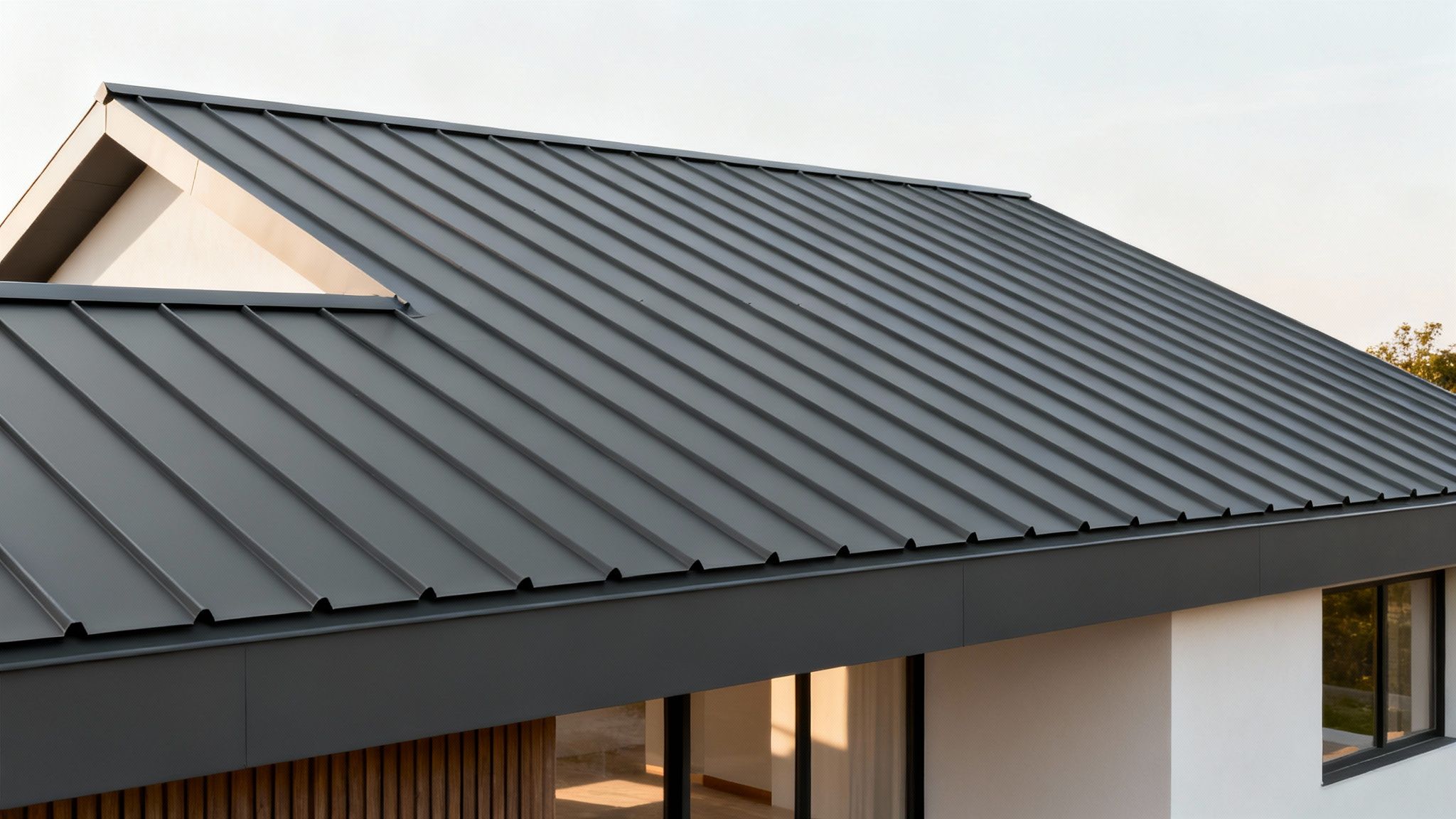
Among all the modern roofing materials out there, metal has really carved out its place as the champion of both durability and clean, modern aesthetics. You used to see it mostly on commercial buildings, but its popularity for homes has absolutely surged. Homeowners now see it for what it is: a smart, long-term investment that blends high performance with a truly striking look.
Think of a metal roof as a suit of armor for your house. The way its panels interlock creates an almost impenetrable shield against whatever the weather throws at it. It's a level of protection that many traditional materials just can't match, which is a huge reason metal has become the go-to choice, especially where extreme weather is a real concern.
Unpacking the Types of Metal Roofing
When people say "metal roofing," they're actually talking about a whole family of different materials. Each one has its own personality, and figuring out the differences is key to picking the right one for your home and your budget.
- Steel: This is the workhorse of the group—the most common and cost-effective option you'll find. Steel roofing is almost always galvanized (coated with zinc) or galvalume (coated with an aluminum-zinc alloy) to fight off corrosion. It hits that sweet spot of strength, longevity, and value.
- Aluminum: Lighter than steel, aluminum is the perfect pick for coastal areas. Why? Because it's naturally resistant to the rust and corrosion that comes with salty air. That lighter weight also means less structural load on your home.
- Copper: Here's the premium choice, the one prized for its one-of-a-kind appearance. Over time, copper develops a gorgeous blue-green patina and can last for over 100 years. Yes, the initial cost is higher, but with a lifespan like that, it's a true "once-in-a-lifetime" roof.
These metals can be formed into different styles, too. You've got the iconic vertical lines of standing seam panels, but you can also get shingles that do an amazing job of mimicking the look of old-school slate or wood shakes. This flexibility means a metal roof can complement just about any home, from ultra-modern to classic colonial.
The Overwhelming Benefits of Metal
Beyond its tough-as-nails exterior, metal roofing comes with a ton of practical perks that add up to incredible long-term value. We're talking about things that hit on the biggest concerns for homeowners: energy bills, maintenance, and how long the thing will actually last.
First off, longevity. A well-installed metal roof can easily last 50 to 70 years, and sometimes even longer. That's two to three times the lifespan of a standard asphalt shingle roof. For most people, that means you’ll likely never have to worry about a massive roof replacement project again.
One of the most significant yet often overlooked benefits of metal is its energy efficiency. Many metal roofing products are considered 'cool roofs' because they reflect solar radiant heat, which can reduce cooling costs by up to 25%.
On top of that, metal roofs are incredibly low-maintenance. They won't crack, warp, or rot, and they're highly resistant to pests like termites and rodents. A quick inspection once a year to check for any debris is usually all it takes to keep it in prime shape.
Addressing Common Myths About Metal Roofs
Even with their proven track record, a few stubborn myths about metal roofs still make the rounds. Let's clear the air.
- Noise: Everyone worries about a loud, tinny roof during a downpour. The reality is that modern installation methods, which use a solid sheathing substrate and proper insulation, make a metal roof just as quiet as any other roofing material. The days of the noisy tin barn roof are long gone.
- Denting: Could a massive hailstorm dent a roof? Sure, it could dent any roof. But today’s metal roofing systems are engineered for high impact resistance. Plus, textured finishes are great at hiding any minor cosmetic dings that might happen over its very long life.
- Lightning: This is a big one, but it's completely false. Metal roofs do not attract lightning. In the very unlikely event of a strike, a metal roof is actually safer. It's non-combustible and will disperse the energy safely through the structure of the house.
Composite Materials: The High-Tech Impersonators
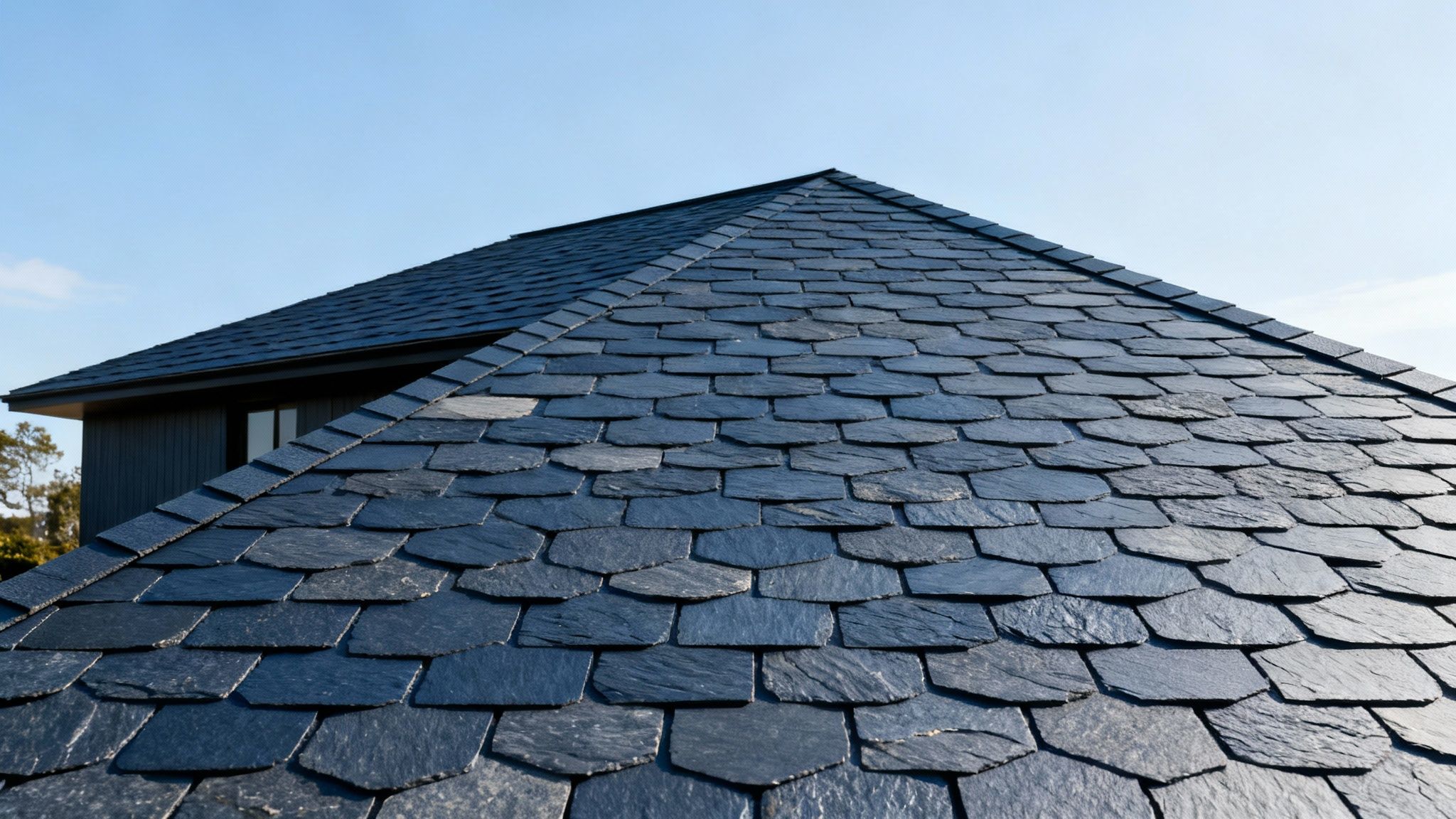
What if you could get the timeless, sophisticated look of natural slate or cedar shakes without the massive price tag and constant maintenance headaches? That’s exactly what composite roofing delivers, making it one of the most versatile modern roofing materials on the market today. These aren't just shingles; they're high-tech impersonators, engineered down to the last detail.
Think of it like a master chef creating a new recipe. Manufacturers blend a precise mix of polymers, recycled plastics, and rubber, then mold them under intense heat and pressure. The result is a roofing tile that looks astonishingly like its natural cousin but performs on a whole different level. This process creates a material that’s not just beautiful but also incredibly tough, lightweight, and ready for whatever the weather throws at it.
Engineered for Superior Performance
The real magic behind composite roofing is how it overcomes the inherent flaws of natural materials. A real cedar shake roof looks fantastic, but it's vulnerable to rot, mold, and insects. A synthetic cedar shake, on the other hand, is completely immune to these problems. It won't absorb water, curl, or split, keeping its pristine look for decades.
This engineered resilience is a game-changer when it comes to severe weather. Composite roofing materials consistently earn some of the highest performance ratings in the industry:
- Class A Fire Rating: This is the best fire resistance a roofing material can get, offering top-tier protection against fire threats.
- Class 4 Impact Resistance: Many composite products are tough enough to withstand the impact of a 2-inch steel ball dropped from 20 feet, making them exceptionally resistant to even large hail.
- High Wind Resistance: These materials are often rated to handle winds of 110 mph or higher, giving you serious peace of mind during intense storms.
The core advantage of composite materials is consistency. Unlike natural slate which can have hidden fissures, or wood that varies in density, every single composite shingle is manufactured to the exact same high standard of durability and performance.
And the technology keeps getting better. We're seeing advanced composite shingles with even greater durability hit the market. At the same time, the industry is moving toward smart roofing systems that have built-in sensors for leak detection and energy monitoring, a trend you can explore further in this insightful article on roofing market trends.
Natural vs. Synthetic Roofing: A Head-to-Head Comparison
To really grasp the value of composite roofing, it helps to put it side-by-side with the natural materials it so perfectly mimics. While nothing can truly replace the authentic charm of quarried slate, the practical advantages of its synthetic counterpart are tough to ignore.
Let's see how they stack up across the factors that matter most to homeowners.
| Feature | Natural Slate or Cedar | Synthetic Composite |
|---|---|---|
| Weight | Extremely heavy (800-1,500 lbs per square) | Lightweight (200-400 lbs per square) |
| Cost | Very high initial cost for material & specialized labor | Significantly lower initial cost |
| Installation | Requires highly specialized, expert installers | Can be installed by most qualified roofing contractors |
| Durability | Can be brittle and crack upon impact | Highly impact-resistant and flexible |
| Maintenance | Requires periodic replacement of cracked tiles | Virtually maintenance-free |
Just look at that weight difference—it’s a massive factor. Because composite roofing is so much lighter, you can often skip the expensive structural reinforcement a heavy slate roof would demand, saving you thousands on the total project. This makes the high-end look of materials like slate accessible to a much wider range of homes, boosting curb appeal without breaking the bank or your home's framing.
Solar Roofs: Your Home's Personal Power Plant
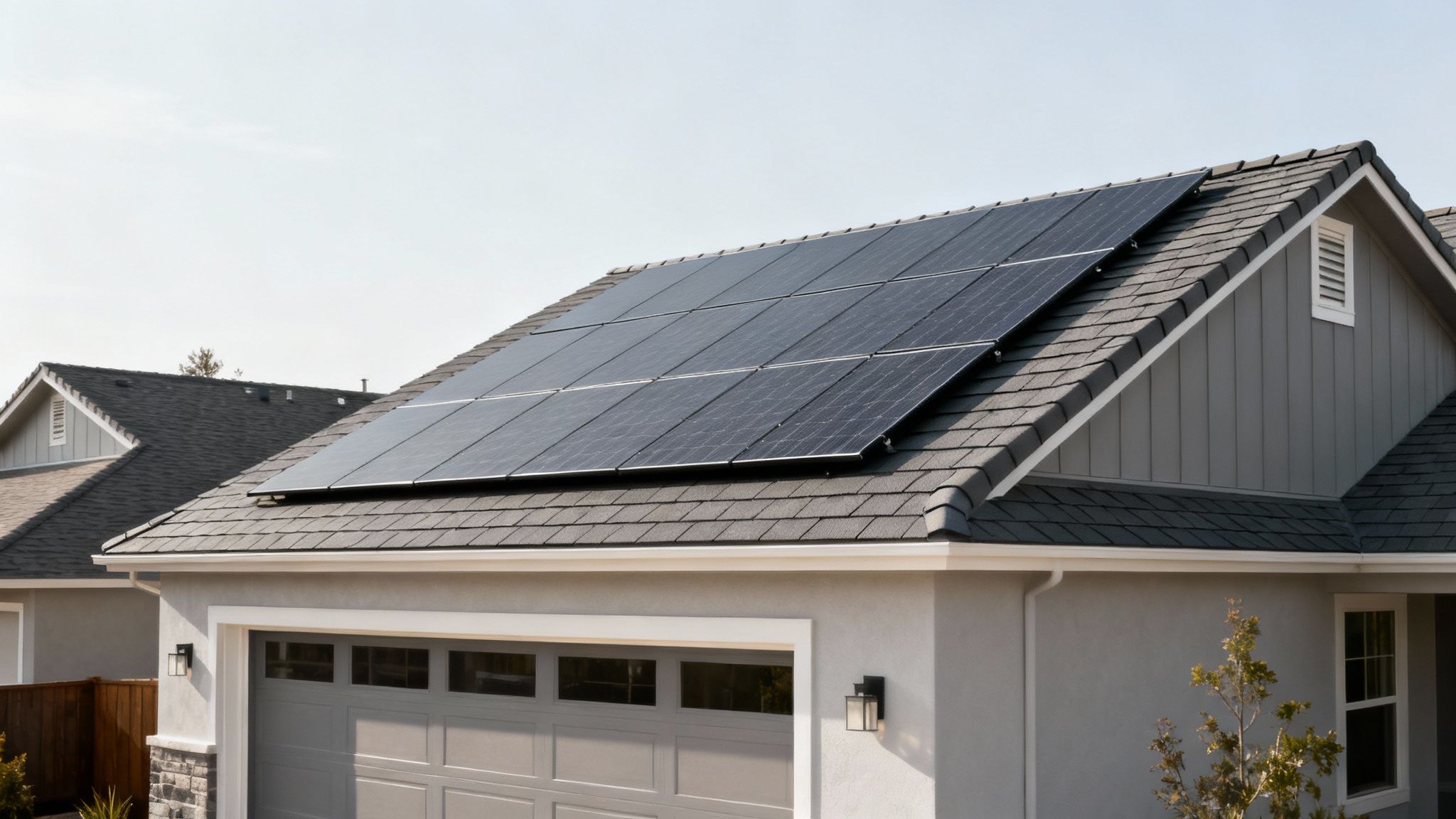
Solar roofing is where protection meets production. It turns what is usually the most passive part of your home into an active energy generator. We're not just talking about bolting traditional solar panels onto your existing shingles. This is a whole different ballgame: fully integrated solar shingles or tiles that do two jobs at once. They are the roof, and they are the power plant.
At the core of this tech is the photovoltaic (PV) effect, which is just a fancy way of saying a material converts sunlight directly into electricity. Modern solar roofs have brilliantly woven this science into building materials that look and act just like high-end roofing—think elegant glass tiles or sleek shingles. The final product is a seamless, powerful system that shields your home while generating clean energy, potentially shrinking or even wiping out your electricity bills.
This double payoff is what makes solar roofs so compelling. You get a durable, weather-resistant shield protecting your biggest investment, and at the same exact time, it's actively working to lower your monthly bills and reduce your carbon footprint.
Understanding Integrated vs. Traditional Solar
It’s really important to know the difference between the two main ways to get solar power for your home. While both use the sun, their design, look, and how they're installed are worlds apart.
- Traditional Solar Panels: These are the ones you see everywhere—rectangular panels mounted on a rack system that sits right on top of your existing roof. They are an addition, a separate component bolted onto the roof structure.
- Integrated Solar Roofs: These are the actual roofing materials themselves, like shingles or tiles, with the PV technology built right in. They completely replace your old roof, creating a single, unified system.
The biggest win for an integrated solar roof is its clean, cohesive appearance. Products like Tesla’s Solar Roof are designed to be almost indistinguishable from a premium, non-solar roof, which is a huge plus for preserving your home’s curb appeal. For anyone ready to take the plunge, a detailed professional's guide to installing solar panels on rooftops offers the critical steps for turning your home into its own power station.
Key Factors for Your Solar Investment
Getting a solar roof is a major decision, and it involves a lot more than just the upfront price tag. To figure out if it's the right move for you, you need to weigh a few key factors that will affect both its performance and your return on investment (ROI).
First off, think about your home’s location and orientation. A south-facing roof that gets plenty of sun with minimal shade from trees or nearby buildings is the ideal setup for capturing the most sunlight and maximizing energy production. The amount of "peak sun hours" your area gets will directly impact how much power your roof can generate over a year.
Next up is the financial piece. The initial investment for a solar roof is definitely higher than for many other modern roofing materials, but federal tax credits and local incentives can take a serious bite out of that net cost. You'll want to calculate your potential ROI by estimating how much you'll save on electricity bills over the roof's 25- to 30-year lifespan. Many homeowners find the system more than pays for itself over time.
A solar roof isn't just a home improvement; it's an energy investment. The upfront cost is offset by decades of reduced or eliminated electricity bills, effectively locking in your energy costs for the future.
Finally, consider energy storage. Pairing your solar roof with a home battery system lets you store the excess energy your roof generates during the day. You can then use that stored power at night or, even better, during a power outage. This is how you achieve true energy independence. The push for green roofing is getting stronger, with more homeowners choosing solar-integrated roofs and a greater focus on using recycled materials, signaling a real shift toward more sustainable building practices.
Green Roofs: A Living Layer of Protection
What if your roof could be more than just a static covering? Imagine it as a living, breathing ecosystem. That's the idea behind a green roof, one of the most interesting developments in modern roofing materials. Instead of shingles or metal panels, a green roof is a specially engineered system designed to support a layer of vegetation, effectively turning your home's top surface into a garden in the sky.
This isn't just for looks—it’s a highly functional system built for sustainability. A green roof acts as a living shield, delivering benefits that conventional materials just can't offer. From providing powerful natural insulation to managing stormwater, it’s a dynamic solution that works in harmony with its environment.
Understanding Extensive vs. Intensive Green Roofs
Not all green roofs are created equal. They generally fall into two categories, which are distinguished by the depth of their soil and the kinds of plants they can support. Your choice between them will hinge on your building's structural capacity, your budget, and how much maintenance you're willing to take on.
- Extensive Systems: Think of these as the low-maintenance, set-it-and-forget-it option. They use a shallow growing medium, usually just 2-6 inches deep, and host tough, drought-tolerant plants like sedums and succulents. They are lightweight, relatively inexpensive, and require very little upkeep once they're established.
- Intensive Systems: These are essentially full-blown rooftop gardens. With a much deeper soil base (8 inches or more), they can support a huge variety of plants, including shrubs, grasses, and even small trees. Intensive roofs offer bigger environmental perks but are much heavier, more expensive, and demand the same kind of ongoing maintenance as a traditional garden.
The structural integrity of your home is the single most important factor here. An extensive system adds about 15-50 pounds per square foot, which many homes can handle. But an intensive system can tack on 80-150 pounds per square foot or more. You must have a structural engineer sign off on the project to ensure your home can handle the extra load.
The Layers of a Living Roof
A green roof is far more than just dirt and plants. It’s a carefully engineered stack of layers, all working together to protect your home while nurturing the vegetation growing above. Each piece of the puzzle plays a vital role.
- Waterproof Membrane: This is the foundation. A high-quality, root-repellent waterproof membrane is laid directly onto the roof deck to keep every drop of moisture out of your home's structure.
- Drainage Layer: Sitting right on top of the membrane, this layer handles any excess water, allowing it to drain away while still holding onto enough moisture for the plants.
- Filter Fabric: Next comes a permeable fabric, which is placed over the drainage layer to stop soil and other sediment from clogging up the system.
- Growing Medium: This isn't your average garden soil. It's a special lightweight mix engineered to provide nutrients and support plant life without adding too much weight.
- Vegetation: The final, visible layer is made up of the plants themselves, all specifically chosen for their ability to thrive in the unique conditions found on a rooftop.
One of a green roof's most powerful benefits is its ability to manage stormwater. It can absorb up to 75% of rainfall, which dramatically reduces the runoff that overwhelms city sewer systems and pollutes our local waterways.
This natural absorption and insulation also have a direct impact on your energy bills. The combination of soil and plants creates an incredible thermal barrier, keeping your home cooler in the summer and warmer in the winter. Over time, this can noticeably reduce your annual energy costs for heating and cooling, making a green roof a smart long-term investment in both sustainability and savings.
How to Choose the Right Modern Roof for Your Home
Picking the right modern roofing material can feel like a huge task, but it really just comes down to getting your priorities straight. Don't think of it as one massive decision. Instead, see it as a balancing act between four key things: your local climate, your home's style, your budget over the long haul, and your personal take on sustainability. Each of these helps narrow down the options, guiding you to a roof that’s a perfect match.
For example, a metal roof is a no-brainer for a house in a hurricane-prone area. In a sunny spot with high energy costs, a solar roof offers incredible value. The trick is to figure out your specific needs first, which turns a complicated choice into a straightforward process.
Matching Materials to Your Climate and Architecture
Where you live plays a massive role in figuring out which modern roofing materials will hold up best. If your home is in a hot, sunny climate like South Florida, you'll want something with excellent solar reflectivity to keep those cooling costs in check. Light-colored metal or composite materials are strong contenders here. On the flip side, if you live somewhere with heavy snowfall, you need a roof that can handle serious weight and fight off ice dams.
Your home’s architectural style is just as important. The clean, vertical lines of a standing seam metal roof are a beautiful fit for a modern or contemporary home. Meanwhile, synthetic slate gives you that classic, distinguished look that's perfect for a traditional Colonial or Tudor-style house. The goal is to create harmony between how the roof performs and how it looks, ensuring it protects your home while boosting its curb appeal.
Selecting a roof is about finding the sweet spot where performance meets aesthetics. The best material for your neighbor might not be the best for you, especially if your homes have different architectural designs or sun exposure.
Balancing Upfront Cost with Lifetime Value
The initial price tag is a big deal, but it only tells you part of the story. A smart decision weighs the upfront installation cost against the roof's expected lifespan, how much maintenance it'll need, and any potential energy savings. This is what we call lifetime value.
For instance, a composite roof might have a higher initial cost than basic asphalt shingles. But its 50-year lifespan and minimal upkeep often make it the more economical choice in the long run. In the same way, a solar roof's hefty upfront investment is designed to be balanced out by decades of lower or non-existent electricity bills, offering a powerful return.
This decision-making map can help you see how your main priority—whether it’s style, budget, or performance—can point you toward the right modern roofing material.
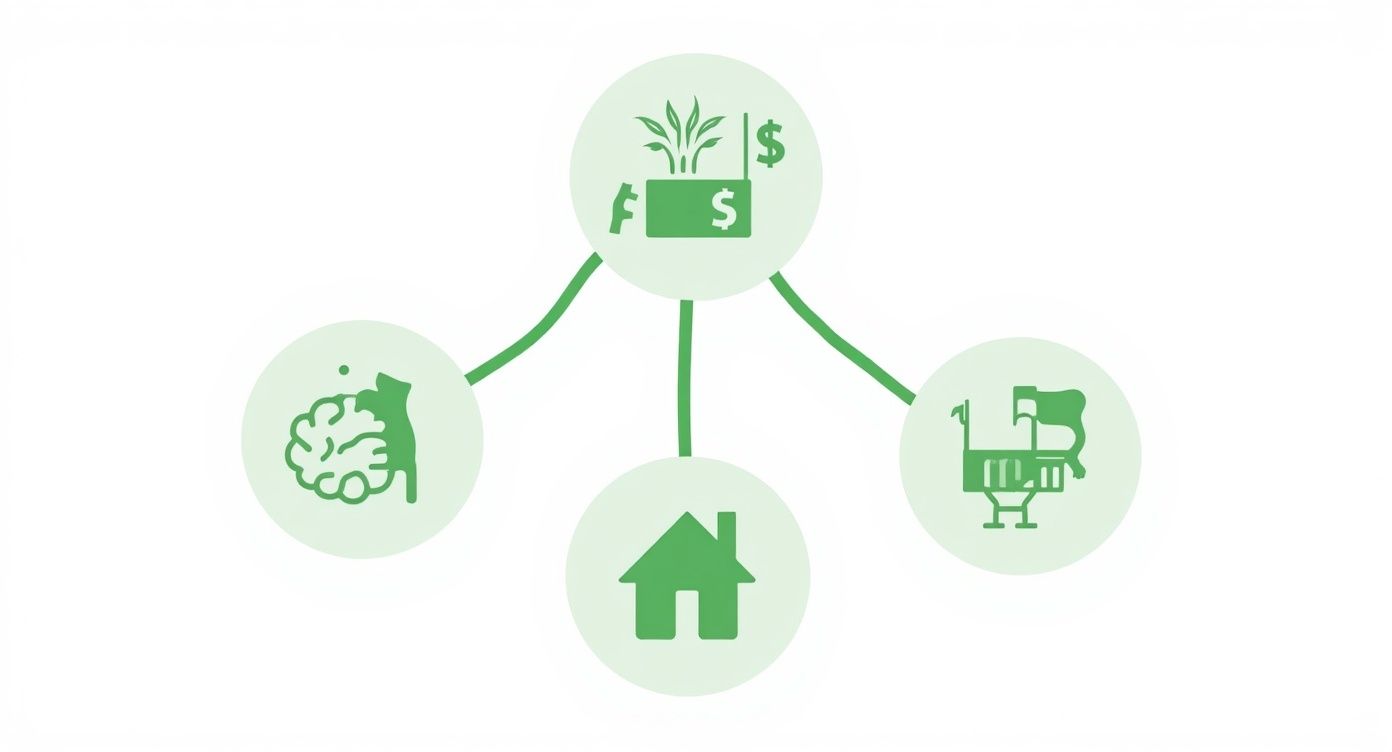
This visual guide shows how putting a priority on things like long-term performance might lead you to materials like metal or solar, while a focus on a specific look could point you toward composite slate.
To make things even clearer, let's break down the most common modern roofing options in a simple comparison table. This should give you a quick, at-a-glance overview to help simplify your choice.
Modern Roofing Materials At a Glance
| Material | Average Lifespan | Initial Cost | Maintenance | Key Benefit |
|---|---|---|---|---|
| Metal | 50-70 years | High | Low | Extreme durability & weather resistance |
| Composite | 50+ years | High | Low | Authentic look of natural materials |
| Solar Tiles/Shingles | 25-30 years | Very High | Low | Energy generation & long-term savings |
| Green Roof | 40-50 years | Very High | Moderate | Unmatched insulation & eco-benefits |
Ultimately, this table helps frame the trade-offs. You might pay more upfront for a material like metal or composite, but you'll get a longer lifespan and less maintenance in return, which is a key part of calculating that lifetime value we talked about.
Considering Sustainability and Regional Trends
Your personal commitment to sustainability can also be a big factor in your choice. A green roof offers amazing benefits for managing stormwater and supporting local biodiversity. A roof made from recycled composite materials is another great option that helps cut down on landfill waste. These eco-conscious choices are becoming more practical and popular every year.
Here in North America, harsh winters and frequent storms have created a strong demand for durable, resilient roofing. This has pushed the industry to adopt advanced, eco-friendly technologies designed to stand up to extreme weather while also improving energy efficiency. You can learn more about these regional roofing market trends to see where the industry is heading.
By understanding all these factors, you can walk into conversations with contractors feeling confident and informed, ready to choose a roof that will protect your investment for decades.
Frequently Asked Questions About Modern Roofing
Choosing a new roof brings up a lot of questions. From figuring out how long these newer materials actually hold up to worrying if they’ll even match your home’s style, getting straight answers is key. We’ve put together some of the most common questions homeowners ask about modern roofing materials to help you move forward with confidence.
Ultimately, every material has its own strengths, and the right choice always comes down to your specific home, budget, and goals.
How Long Do Modern Roofs Actually Last?
One of the biggest wins when upgrading to a modern roof is the massive jump in lifespan compared to old-school asphalt. A standard asphalt shingle roof might get you 15-20 years, but today's options offer far more durability, making them a much better long-term investment.
Here’s a quick look at what you can expect:
- Metal Roofing: Known for being incredibly tough, a quality metal roof can easily last 50 to 70 years or even longer.
- Composite Shingles: These high-tech shingles are engineered for resilience and often come with a lifespan of 50+ years.
- Solar Roofs: The integrated photovoltaic tiles are built for the long haul, generally offering a warranty and lifespan of 25 to 30 years.
- Green Roofs: As long as the waterproof membrane is installed correctly, a living roof system can protect your home for 40 to 50 years.
Can Modern Materials Match My Home's Style?
Absolutely. It's a common myth that modern roofing is only for contemporary, minimalist houses. In reality, manufacturers have gotten incredibly good at creating materials that perfectly mimic traditional looks while delivering all the benefits of modern performance.
The versatility of modern roofing is one of its greatest strengths. You no longer have to choose between the classic look you love and the high-performance durability you need.
For instance, composite shingles are often molded from real slate tiles and cedar shakes, which allows them to capture the authentic textures and subtle color changes with stunning accuracy. Metal roofing is another great example—it’s not just available in sleek standing-seam panels. You can also get it in shingle and tile profiles that look just like classic materials, giving you total design freedom.
Are Modern Roofing Materials Worth the Higher Cost?
While it’s true that materials like metal, composite, or solar have a higher initial price tag than standard asphalt, it's really important to look at the lifetime value. The upfront cost is only one piece of the puzzle.
A roof that lasts three times longer and needs very little maintenance is going to save you a tremendous amount of money over the decades. You’re avoiding the cost and hassle of two or three full roof replacements.
On top of that, other factors like the improved energy efficiency from cool-roof coatings or the power generated by a solar roof translate directly into lower monthly utility bills. When you add up the extended lifespan, reduced maintenance, and energy savings, modern roofing materials often come out as the smarter, more economical choice in the long run.
Ready to explore the best modern roofing options for your South Florida home? The experts at Paletz Roofing and Inspections have over 30 years of experience installing and inspecting high-performance roofing systems. Contact us for a free, no-obligation quote and let our certified professionals help you protect your investment for decades to come. Learn more and schedule your consultation at https://paletzroofing.com.