
Picking the right color for your roof tiles is a huge decision. It doesn't just affect your home's curb appeal and resale value; it can even play a role in your energy bills. The best colors often come down to your home’s architectural style and the local climate. Around here, you’ll see a lot of light grays and tans on homes in warmer spots, while dark charcoals and browns are a popular pick in cooler areas.
How to Find Your Perfect Roof Tile Color
Choosing a roof tile color is about so much more than just picking a shade you like from a catalog. This decision permanently shapes your home's personality, so it needs to be a thoughtful balance between aesthetics and real-world practicalities. Think of it as the crown for your home's exterior—it has to work in harmony with everything from the siding and trim to the landscaping.
This guide will give you a clear framework for landing on a color you'll love for decades. The process isn't just about personal taste; it's about a careful analysis of a few key factors that all need to work together.
We'll walk through:
- Architectural Harmony: How to match the color to your home's specific design, whether you have a modern farmhouse or a classic Mediterranean villa.
- Climate and Efficiency: Understanding the real impact of light versus dark colors on your home's internal temperature and energy bills.
- Neighborhood Context: Making sure your choice fits in with local aesthetics and, importantly, any HOA (Homeowners Association) rules.
- Material Considerations: Recognizing how the roofing material itself—be it clay, concrete, or composite—influences your color options and how they'll look over time.
Before you get your heart set on a specific color, it's also a smart move to understand the materials themselves. Each type offers a unique texture and performance profile. For a deeper look, it’s worth exploring the 4 popular materials for roof replacements to see how your options can change.
The infographic below breaks down the core decision-making process into three essential areas.
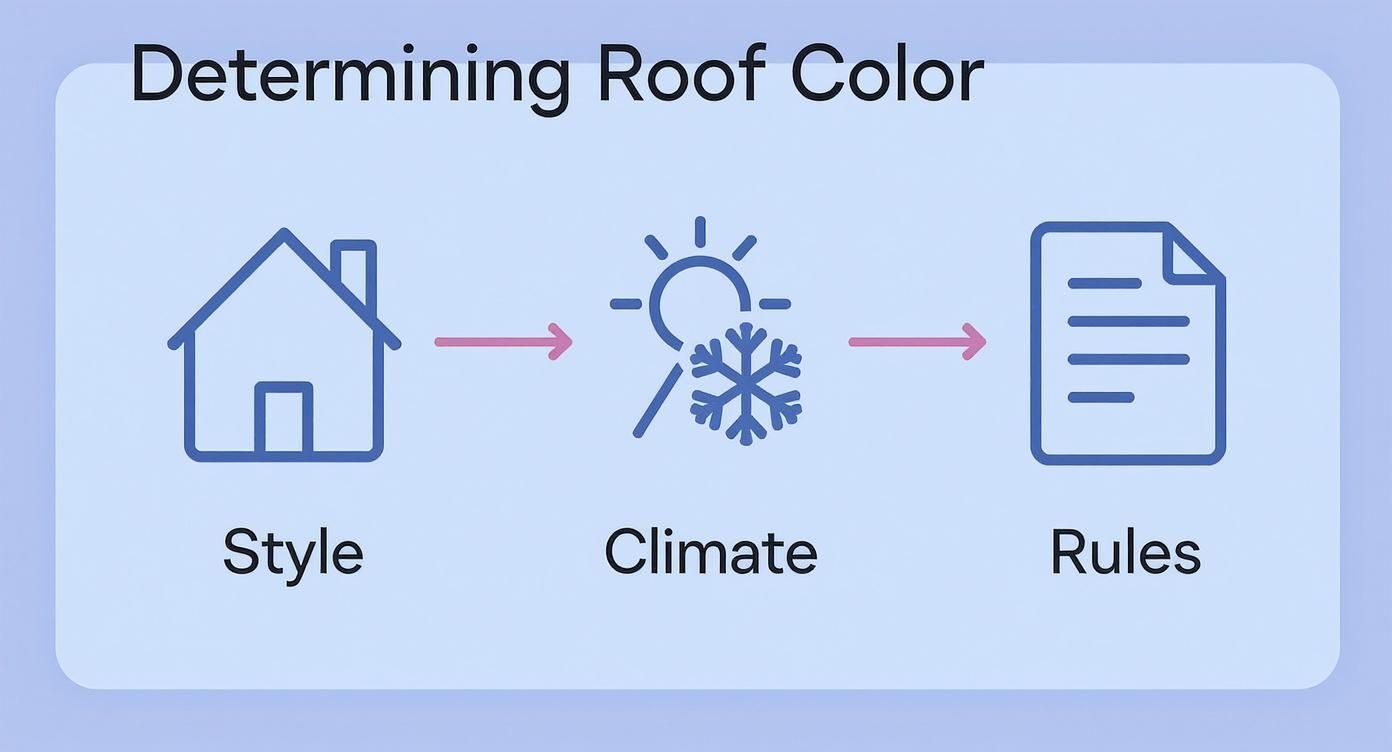
As you can see, the sweet spot for a successful color choice is where your home's style, your region's climate, and any community guidelines overlap. By taking this structured approach, you can cut through the overwhelming number of choices and confidently pick a roof that's both beautiful and functional.
For a little extra inspiration, you might want to check out a gallery of completed roofing projects to see how different colors look on real homes in the wild.
Harmonizing Roof Color with Home Architecture
Think of your roof as more than just a shield against the weather. It's a huge visual component—one of the first things people see—and it has the power to either complete or completely clash with your home's entire look. When you're picking a roof tile color, the goal is to create a cohesive, intentional aesthetic where everything feels like it belongs. You want a shade that doesn't just sit on top of your house, but one that truly integrates with its architectural DNA.
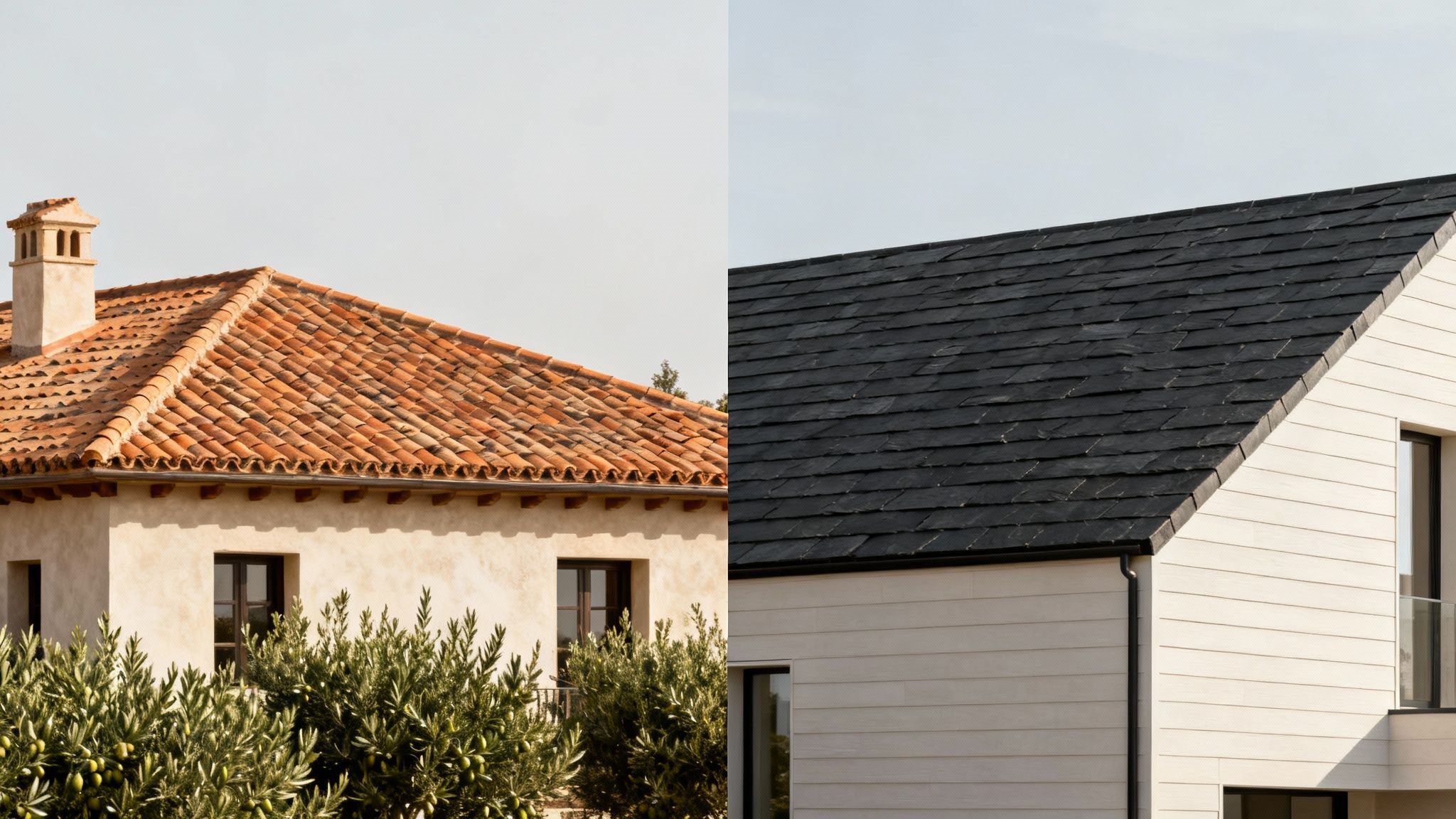
The secret is treating your roof as a key piece of your home's color palette from the start, not as an afterthought. A mismatched roof can make even a beautifully designed house feel disjointed and awkward. For example, a sleek, dark gray concrete tile roof looks incredible with the clean lines of a modern home. On the other hand, the warm, earthy reds and oranges of traditional clay tiles are a perfect, timeless match for Spanish or Mediterranean villas.
Aligning Colors with Architectural Styles
Different home styles have established color palettes that have stood the test of time for a good reason—they just work. Leaning into these proven combinations is often the surest path to a fantastic result. Let your home's character be your guide.
Here are a few classic pairings I've seen work time and time again:
- Modern and Contemporary Homes: These styles are all about simplicity, sharp lines, and contrast. Bold charcoals, deep blacks, and sleek grays create a sophisticated look that makes those geometric features pop.
- Ranch or Craftsman Homes: Known for their connection to nature, these homes look their best with grounded, earthy tones. Think weathered grays, muted greens, and rich, varied browns that feel organic and inviting.
- Colonial or Traditional Homes: For these timeless and elegant homes, you can't go wrong with classic roof colors. Dark grays, slate tones, and deep blacks provide a stately, historic feel that enhances their traditional charm.
The key is to create visual balance. If your home's siding is a light, neutral color like white or beige, a darker roof provides a beautiful, grounding contrast. On the flip side, a house with dark siding can be balanced with a slightly lighter gray or brown roof to keep it from looking too heavy or monolithic.
Working with Existing Exterior Materials
Your home’s other materials—like brick, stone, siding, and trim—are the fixed elements in your color scheme. The perfect roof tile color will tie everything together by complementing the undertones you find in these materials. Don't just look at the main color; get up close and really examine the subtle flecks and variations.
Take a home with red brick, for instance. Most red brick has specks of brown, gray, or even black mixed in. Choosing a roof with one of those undertones, like a charcoal gray or a deep brown, creates an instant, natural connection that makes the entire exterior feel cohesive. Or if your home features multi-tonal stonework, look for a roof tile that features a blend of similar shades. This echoes the stone's natural variety beautifully. You can see great examples of how different tile materials influence this harmony in various architectural settings.
As homeowners get more creative, the demand for a wider variety of tile colors is growing right alongside the market. The global roofing tiles market, valued at USD 20.85 billion in 2025, is projected to hit USD 34.95 billion by 2035. This boom reflects a rising interest in building materials that are both durable and aesthetically pleasing. You can find more insights on the growing global roofing tiles market and what it means for homeowners, but the bottom line is good news: you have more choices than ever to find that perfect shade.
Choosing a Roof Color for Your Climate
It might seem like a purely aesthetic choice, but the color of your roof tiles has a real, measurable impact on your home's temperature. And that, of course, trickles down to your energy bills. This isn’t a small detail; it’s a strategic decision that can make your home significantly more comfortable and efficient.
The science is simple: light colors reflect sunlight, while dark colors soak it up.
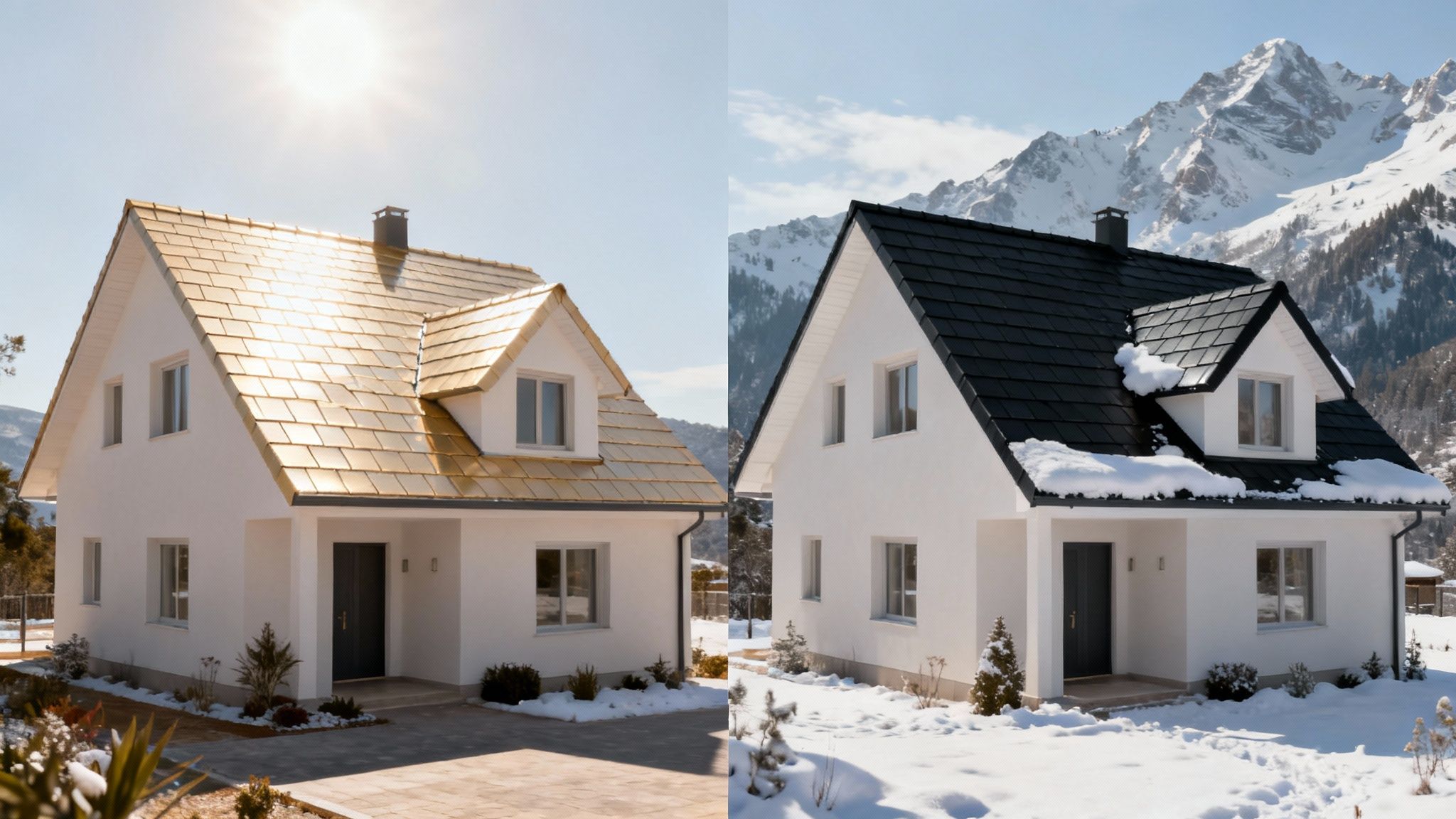
This basic principle is the foundation of what the industry calls "cool roofs." These roofing systems are designed from the ground up to reflect more sunlight and absorb less heat than a standard roof. In a warm, sunny climate like we have here in South Florida, a cool roof can be an absolute game-changer.
Lighter Colors for Hot Climates
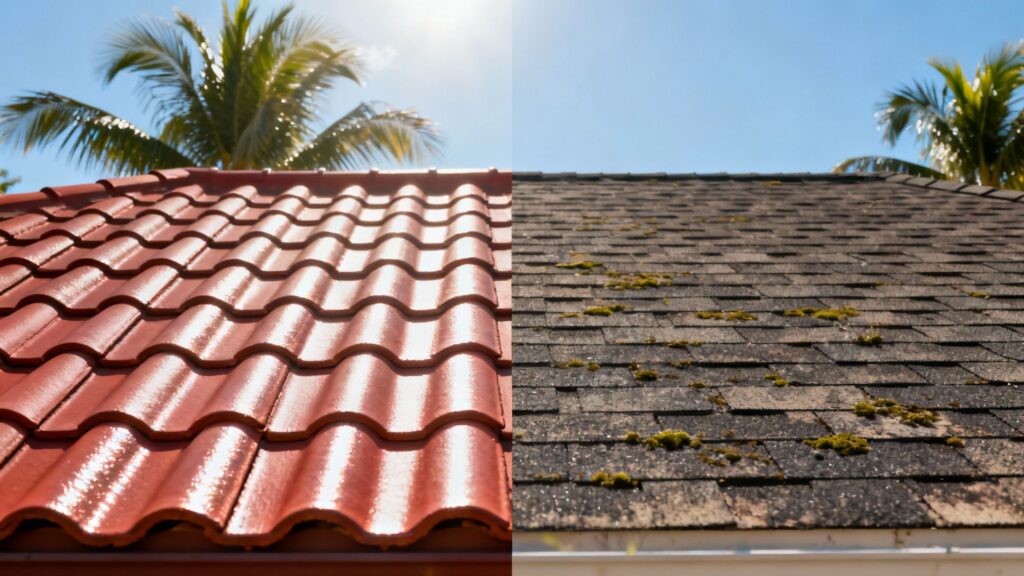
For homeowners in regions with intense sun and high year-round temperatures, lighter roof tile colors are the undisputed champion. Think shades like white, light gray, beige, and tan. These colors act like a mirror, bouncing solar radiation back into the atmosphere instead of letting it bake into your home.
This simple act of reflection has a few powerful benefits:
- Lower Indoor Temperatures: By slashing heat absorption, a light-colored roof can dramatically lower the temperature in your attic and, by extension, your main living spaces.
- Reduced Cooling Costs: A cooler home means your air conditioning system doesn't have to fight nearly as hard. That translates directly into noticeable savings on your monthly energy bills.
- Increased Comfort: The overall ambient temperature of your home stays more stable and comfortable, even during the peak heat of the day.
Darker Colors for Cold Climates
On the flip side, if you live in a colder climate with long, harsh winters, darker roof tiles can offer a slight advantage. Shades like charcoal, deep brown, or black are excellent at absorbing the sun's energy.
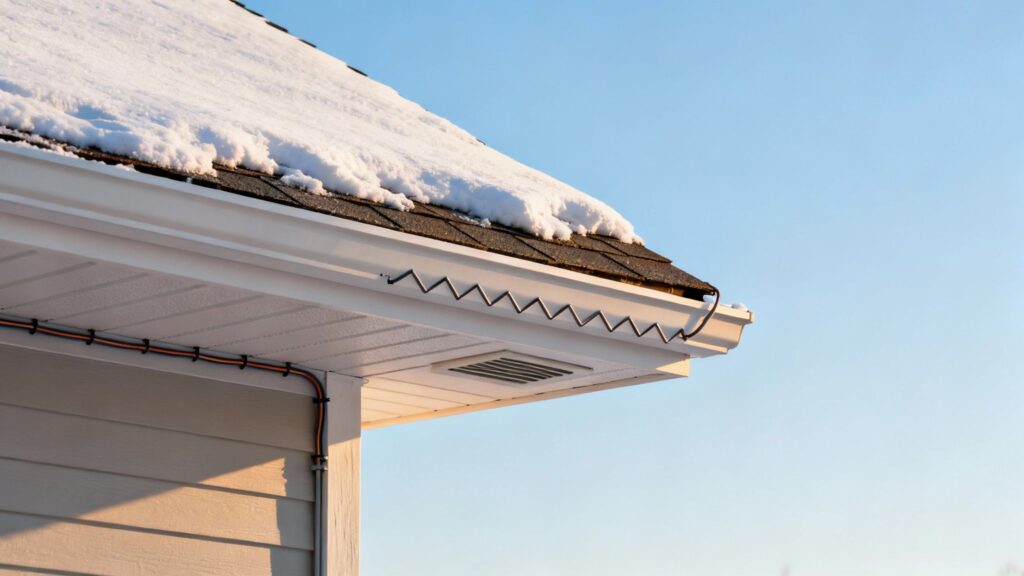
On those precious sunny winter days, this absorbed heat can help warm your home, which can take a little bit of the load off your heating system. Another practical benefit is that a darker roof can help melt snow and ice more quickly, reducing the risk of destructive ice dams forming at the edges of your roof.
To help you visualize the impact, here's a quick breakdown of how different color families perform in different climate zones.
Roof Tile Color Impact by Climate Zone
| Color Family | Performance in Warm Climates | Performance in Cool Climates | Primary Benefit |
|---|---|---|---|
| Whites & Beiges | Excellent. Reflects the most solar radiation, keeping homes cooler. | Poor. Does not absorb solar heat to help warm the home. | Maximum energy savings in hot areas. |
| Light Grays & Tans | Very Good. Offers significant solar reflectance and comfort. | Fair. Limited heat absorption on sunny winter days. | Balanced aesthetics and efficiency. |
| Medium Tones | Fair. Absorbs a moderate amount of heat, increasing A/C load. | Good. Absorbs some solar heat, which can aid in warming. | Versatile appearance for all seasons. |
| Dark Browns & Grays | Poor. Absorbs substantial heat, raising indoor temperatures. | Very Good. Maximizes heat absorption from winter sun. | Improved warmth in cold regions. |
| Blacks | Very Poor. Absorbs the maximum amount of solar heat. | Excellent. Best option for absorbing heat and melting snow. | Optimal heat gain in winter. |
This table makes it clear just how much of a role your local climate should play in your decision. It's not just about what looks good; it's about what works best for where you live.
Pro Tip: Look for the Solar Reflectance Index (SRI) value when choosing your tiles. SRI is a measure of a roof's ability to reject solar heat, combining both reflectance and emittance. A higher SRI value (closer to 100) means a cooler roof, making it the perfect choice for hot climates.
Choosing an energy-efficient roof is a fantastic first step toward a greener home. In addition to picking the right tile color, exploring other eco-friendly home upgrades can boost your home's sustainability and shrink your environmental footprint even further. Making a climate-conscious choice for your roof tile color is a smart investment that pays you back in both daily comfort and long-term savings.
Thinking About Your Neighborhood and Resale Value
Your home doesn't exist in a vacuum. The tile color you choose has a ripple effect, influencing not just how your house looks, but how it fits into the street and the wider community. It's a balancing act—picking a color you love that also feels like it belongs there, rather than sticking out for all the wrong reasons.
Before you get your heart set on a specific shade, take a walk and really look at your surroundings. If your home is tucked away in a heavily wooded area with mature trees, earthy tones are a natural fit. Deep browns, muted greens, or varied grays can create a beautiful, organic connection to the landscape. On the other hand, in a newer subdivision filled with modern architecture, a bold charcoal or a sleek, dark slate might feel perfectly at home and add a touch of contemporary class.
Finding the Right Community Fit
Harmonizing with your neighborhood isn’t about copying your neighbors. It’s about respecting the established aesthetic while still letting your own style shine through. The goal is a color that complements, rather than competes with, the homes around you. A jarringly bright or unconventional color can actually bring down the collective curb appeal of the entire street.
Think about these common scenarios:
- Historic Districts: These areas almost always call for classic, timeless colors. You can't go wrong with dark grays, blacks, and traditional slate tones that honor the architectural heritage.
- Coastal Communities: The vibe here is light and airy. Light grays, sandy tans, and even soft blues reflect that breezy, sun-drenched atmosphere perfectly.
- Suburban Subdivisions: Take a look around—you'll likely see a palette of popular neutrals. Observing the common choices, usually shades of brown, gray, and black, gives you a safe and effective starting point.
Protecting Your Investment with Smart Color Choices
Beyond just looking good, your roof color has a very real impact on your home's long-term financial value. That unique, personality-driven color might be tempting, but it's critical to think about how a potential buyer will see it down the road. When it comes time to sell, broad appeal is your best friend.
A recent study found that 91% of real estate professionals agree that a color-coordinated exterior, roof included, directly boosts a home's value. A cohesive look tells buyers the home is well-maintained and thoughtfully designed.
Neutral and widely accepted roof tile colors are a much safer bet for protecting your investment. Shades like gray, black, and brown are consistently popular for a reason—they're incredibly versatile. They work with a huge range of siding colors and architectural styles, making it easy for a new owner to imagine themselves living there without budgeting for a costly roof replacement. Choosing one of these classic shades is a smart, strategic move that gives you a beautiful home now while safeguarding its marketability for the future.
Don’t Skip the Paperwork: Navigating HOA Rules and Building Codes
Before you fall in love with a specific roof tile color, there’s some crucial homework that can save you a world of frustration and money. The reality is, many of us live in communities governed by a Homeowners Association (HOA), and these organizations often have surprisingly detailed rules about your home’s exterior—especially the roof.
Trust me, you don’t want to ignore these guidelines. Doing so could lead to hefty fines or, in a worst-case scenario, being forced to tear off and replace a brand-new roof. Local building codes are just as important. These regulations exist for safety and community standards, and they can dictate everything from fire resistance ratings to how much sunlight your roof needs to reflect.
First Stop: Your HOA’s Rulebook
Your first move should be to track down your HOA’s architectural guidelines, often called the Covenants, Conditions, and Restrictions (CC&Rs). This is the official rulebook for your neighborhood. If you don’t have a copy handy, you can almost always find it on the HOA’s website or by asking the management company.
Once you’ve got the document, scan for sections covering:
- Approved Materials: Some HOAs might limit you to specific roofing types, which automatically narrows down your color choices.
- Pre-Approved Color Palettes: It's common for associations to have a pre-selected list of roof tile colors. This helps maintain a cohesive look throughout the neighborhood.
- The Submission Process: Pay close attention here. The guidelines will tell you exactly how to submit your choice for approval, which usually means filling out an application and providing a physical tile sample.
A word of caution from experience: Don't assume that because your neighbor has a certain roof color, it's fair game for you. Rules change over time, and a previous approval doesn't guarantee a new one. Always go through the official channels for your own project.
Getting the Green Light: Approval Workflows and Building Codes
Once you've picked a color that aligns with the HOA rules, you need to submit it for formal approval. Do not order a single tile or schedule your installers until you have that approval in writing. This one simple step can prevent massive headaches and potential disputes down the road.
At the same time, you or your roofing contractor need to pull the local municipal building codes. This is non-negotiable. Some cities, especially those in warmer climates, have energy codes that set a minimum Solar Reflectance Index (SRI) for roofing materials. It’s a strategy to combat the urban heat island effect, and a good contractor should be completely up to speed on these local requirements.
The roofing industry is constantly evolving to meet these demands. The global roofing materials market hit a staggering USD 129.62 billion in 2023 and is projected to keep growing. This growth is fueled by renovations and the demand for durable, efficient solutions that look great while satisfying strict regulations. You can learn more about the growth of the roofing materials market and see how it’s making more compliant and attractive tile colors available. Taking the time to navigate the rules ensures your new roof is not just beautiful, but 100% compliant.
Making Your Final Decision with Confidence
You’ve done the hard work. You've analyzed your home's architecture, considered the Florida climate, and navigated the maze of local rules. Now comes the moment of truth: locking in your choice.
If I can offer one piece of advice from my years in this business, it’s this: never make a final decision based on a website photo or a small swatch you saw in a showroom. You absolutely must get physical, full-sized samples of your top two or three roof tile colors.
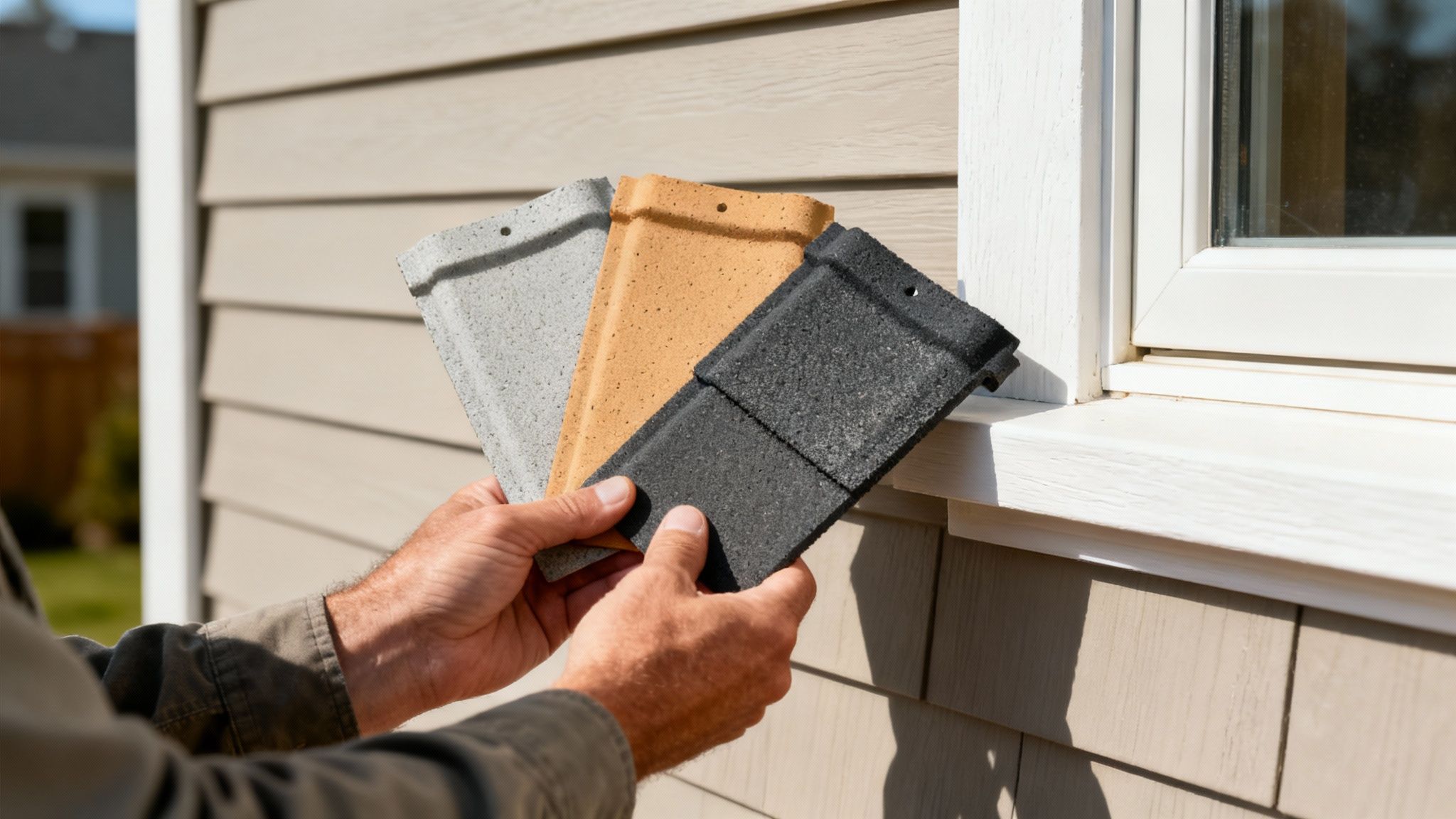
This step is completely non-negotiable. Take these samples home and place them directly against your home’s siding, brick, or stucco. This is the only way to see how the colors truly interact with your existing exterior.
The Litmus Test of Natural Light
Here’s where you separate a good choice from a great one. You need to view the samples at different times of the day. A color that looks perfect in the bright, direct morning sun might look washed out or take on a completely different hue in the soft, warm light of the late afternoon.
This simple daylight test is your final insurance policy against any post-installation surprises or regrets. It’s what gives you total confidence in your decision.
Your final checklist before signing on the dotted line should look something like this:
- Architectural Harmony: Does the color genuinely complement my home's style?
- Climate Suitability: Is it optimized for energy efficiency in our region?
- HOA Approval: Do I have written confirmation in hand?
- Daylight Test: Have I personally viewed physical samples outside in morning, noon, and evening light?
Running through these final checks ensures you're choosing a color with absolute certainty. If you still have lingering questions, a professional inspection can offer that last bit of valuable peace of mind. You can get more information on what a Paletz Roofing inspection covers to make sure you're fully prepared.

Your Top Questions About Roof Tile Colors Answered
Even after narrowing down your choices, a few questions always seem to surface right before you pull the trigger. We get it—it's a big decision. Here are some of the most common questions we hear from homeowners, with straightforward answers from our years of experience.
Do Darker Roofs Really Make a House Hotter?
Yes, they absolutely do. Think about wearing a black shirt on a sunny day—the same principle applies to your roof. Dark colors like charcoal, deep brown, and black are fantastic at absorbing the sun's rays, which unfortunately translates into a hotter attic.
Here in South Florida, that extra heat means your air conditioning has to work that much harder to keep your home comfortable. This can lead to noticeably higher energy bills, especially during our long, hot summers. For this reason alone, lighter colors are almost always the more energy-efficient choice in warm climates.
What’s the Most Popular Roof Tile Color Right Now?
Trends come and go, but the classics stick around for a reason. Neutral colors are consistently the most popular choice, year after year. Shades of gray, brown, and black are timeless and have the incredible ability to complement almost any home exterior.
They're also a smart move if you're thinking about resale value down the road. These colors have broad appeal, making them a safe and attractive bet for future buyers.
In fact, a recent industry study found that 91% of real estate professionals believe a home with a well-coordinated exterior—roof included—sees a real boost in its market value.
Can My Roof Be Lighter Than My Siding?
Of course! A lighter roof over dark siding can create a beautiful, striking contrast that keeps the home from looking too heavy or uniform. The trick is making sure the undertones play well together.
For example, if you have dark siding with warm, earthy undertones, pairing it with a warm gray or a rich tan roof tile will look intentional and polished. It’s all about creating a balanced, pleasing look.
Should I Try to Match My Roof to My Neighbors’ Roofs?
You definitely don't need to be twins, but aiming for harmony is always a good idea. Take a walk down your street and get a feel for the neighborhood's overall color palette. The goal is to choose a color that fits in with the general aesthetic without being a carbon copy.
A roof that clashes badly with the homes around it can stick out for all the wrong reasons, impacting not just your curb appeal but potentially the feel of the whole street. Look for a color that complements the existing vibe while still feeling like your choice.
Ready to find the perfect, long-lasting color for your roof? The experts at Paletz Roofing and Inspections have over 30 years of experience helping South Florida homeowners make the right choice. Contact us today for a free quote at https://paletzroofing.com.