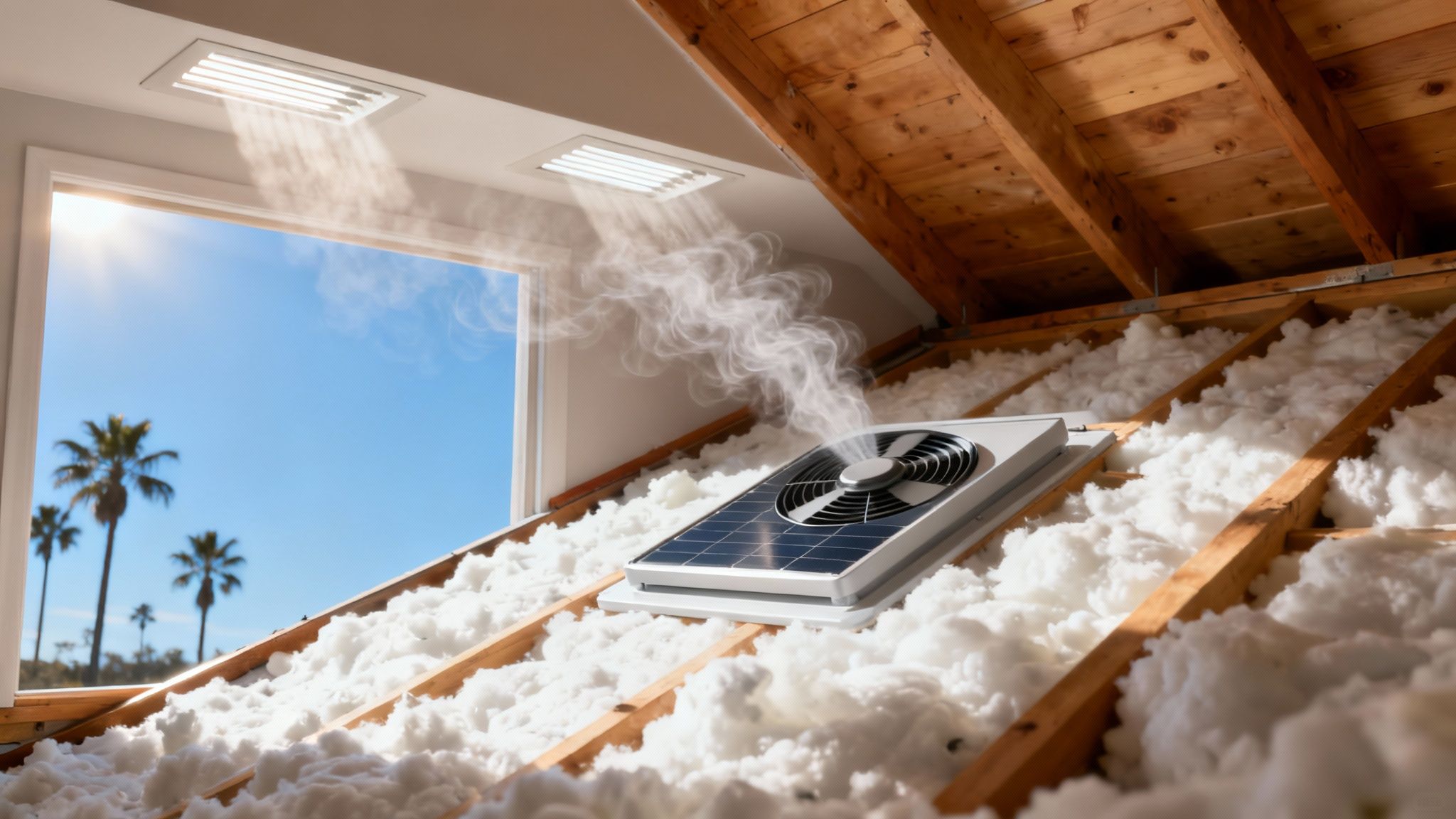
Here in Palm Beach Gardens, where the heat and humidity are a year-round reality, proper attic ventilation isn't just a nice feature—it's essential for your home's survival. When you're dealing with poor attic ventilation, you're inviting trapped moisture that can lead to mold, structural damage, and energy bills that just keep climbing.
Why Your Attic Is the Key to a Healthy Home
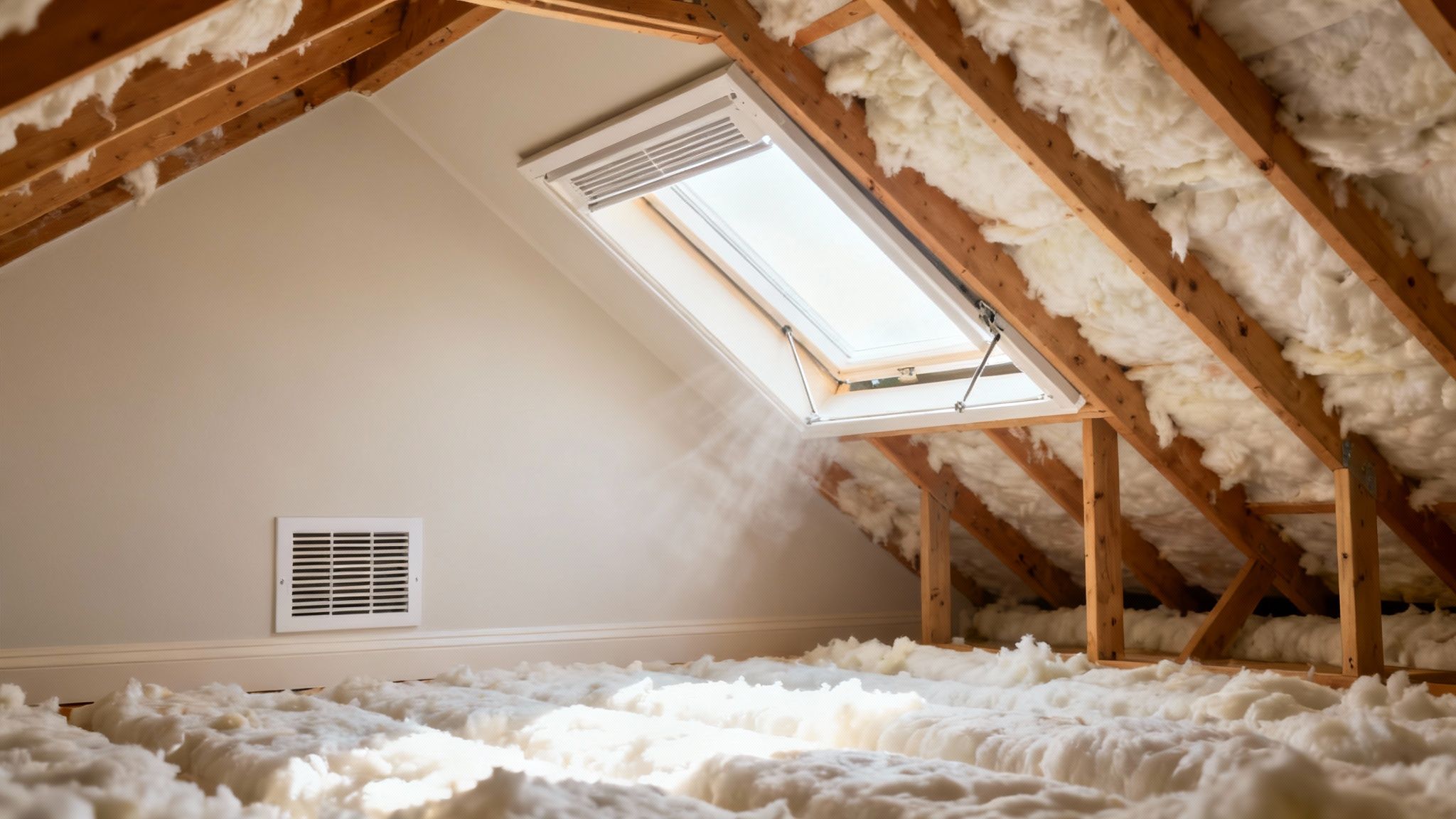
It helps to think of your attic as your home's lungs. It needs to breathe in fresh, cool air from outside and push out all the hot, damp air that builds up. When that natural cycle gets blocked, the fallout can be serious, especially in our relentless South Florida climate.
An unhealthy attic silently wages war on your home, starting from the top down. That trapped heat radiates straight into your living spaces, forcing your air conditioner to run nonstop just to keep up. This constant strain not only drives up your utility costs but can also slash the lifespan of your expensive HVAC unit, leading to a replacement bill you weren't ready for.
The Hidden Dangers of a Stifled Attic
The financial hit is just the beginning. The real enemy here is moisture. As all that humid air gets trapped and then cools overnight, condensation beads up on every wood surface. This creates the perfect breeding ground for mold and mildew, which don't just cause musty smells—they can release harmful spores right into your home's air supply.
A poorly ventilated attic doesn't just make your home uncomfortable; it actively works against your family's health and your home's structural integrity. Addressing these issues is a crucial step in proactive home maintenance.
Eventually, this trapped moisture can cause wood rot in your roof decking and rafters, literally compromising the structural bones of your home. Just like our bodies need to breathe, maintaining your home's ventilation system is fundamental to keeping your family comfortable and healthy.
This guide will walk you through clear, actionable solutions for identifying and fixing poor attic ventilation in Palm Beach Gardens.
We’ll cover everything you need to know, including:
- Understanding our unique climate challenges and why they demand specific solutions.
- Spotting the key warning signs that your attic is struggling to breathe.
- Exploring effective ventilation options tailored for South Florida homes.
Why Our Climate Creates a Perfect Storm for Attic Problems
Living in a place like Palm Beach Gardens is incredible, but that beautiful coastal environment is exactly what makes our homes so vulnerable to attic issues. It’s not just the heat we deal with—it’s the relentless, heavy humidity that defines South Florida living. This combination creates a perfect storm where even a small ventilation mistake can spiral into major damage.
Think of your attic as constantly breathing in the thick, moist air that rolls in from the Atlantic. All day, every day, your attic space is just soaking up this humidity. That’s where the real trouble starts, and it’s a unique challenge for homes in our area.
The Nighttime Condensation Cycle
When the sun goes down and the temperature drops, all the surfaces inside your attic—the wood rafters, the underside of your roof deck—start to cool off quickly. The warm, moist air that's been trapped up there all day hits these cooler surfaces and turns back into water. It’s the exact same thing you see when water beads up on the outside of a cold drink on a hot day.
This daily cycle of getting saturated with moisture and then condensing at night turns your attic into an ideal breeding ground for mold and mildew. Over time, this constant dampness starts to weaken the wood, leading to rot and seriously compromising your roof's integrity. It's a quiet, slow-moving threat that most homeowners don't even notice until the damage is already done.
Because of South Florida's persistent subtropical climate, our attics almost never get a chance to completely dry out. This constant state of dampness just speeds up deterioration, making effective ventilation an absolute non-negotiable part of home maintenance here.
A Local Phenomenon: The Paston Effect
This damaging cycle is so common in our region that building science experts actually have a name for it. Poor attic ventilation in Palm Beach Gardens is often made worse by what’s known as the Paston Effect, or Cold Attic Syndrome. This is one of the most expensive moisture-related problems a South Florida homeowner can face because our climate creates the perfect conditions for condensation and mold. If you want to dive into the science, a local field study on sealed attics breaks it all down.
On top of that, our modern, tightly sealed homes can ironically make the situation even worse. While great for keeping your living spaces energy-efficient, this tight construction can trap humid air inside the attic with no way to escape. Add in our constant offshore winds, which literally force more humid air into any little opening, and you have a system that’s always under pressure. Your basic passive vents are often completely overwhelmed, simply unable to keep up with the sheer volume of moisture being pushed inside, making poor attic ventilation Palm Beach Gardens a critical issue you have to address.
Spotting the Warning Signs of an Unhealthy Attic
An unhealthy attic rarely keeps its problems a secret for long. Your home will start sending out distress signals, and learning to read them is the first step toward fixing the issue before it spirals into expensive, structural repairs.
Fortunately, these clues often appear well before the damage becomes catastrophic, giving you a chance to act. Many of the most obvious signs involve your senses—if you can smell or see the problem, it’s time to pay attention.
A persistent musty or mildew-like odor inside your home, especially on the upper floor, is a huge red flag. That smell is a direct result of mold and mildew growth, which only thrives in the damp, stagnant environment a poorly ventilated attic creates.
Visual Clues Inside Your Attic
If you can safely pop your head into the attic for a quick look, there are several visual cues that scream "trouble."
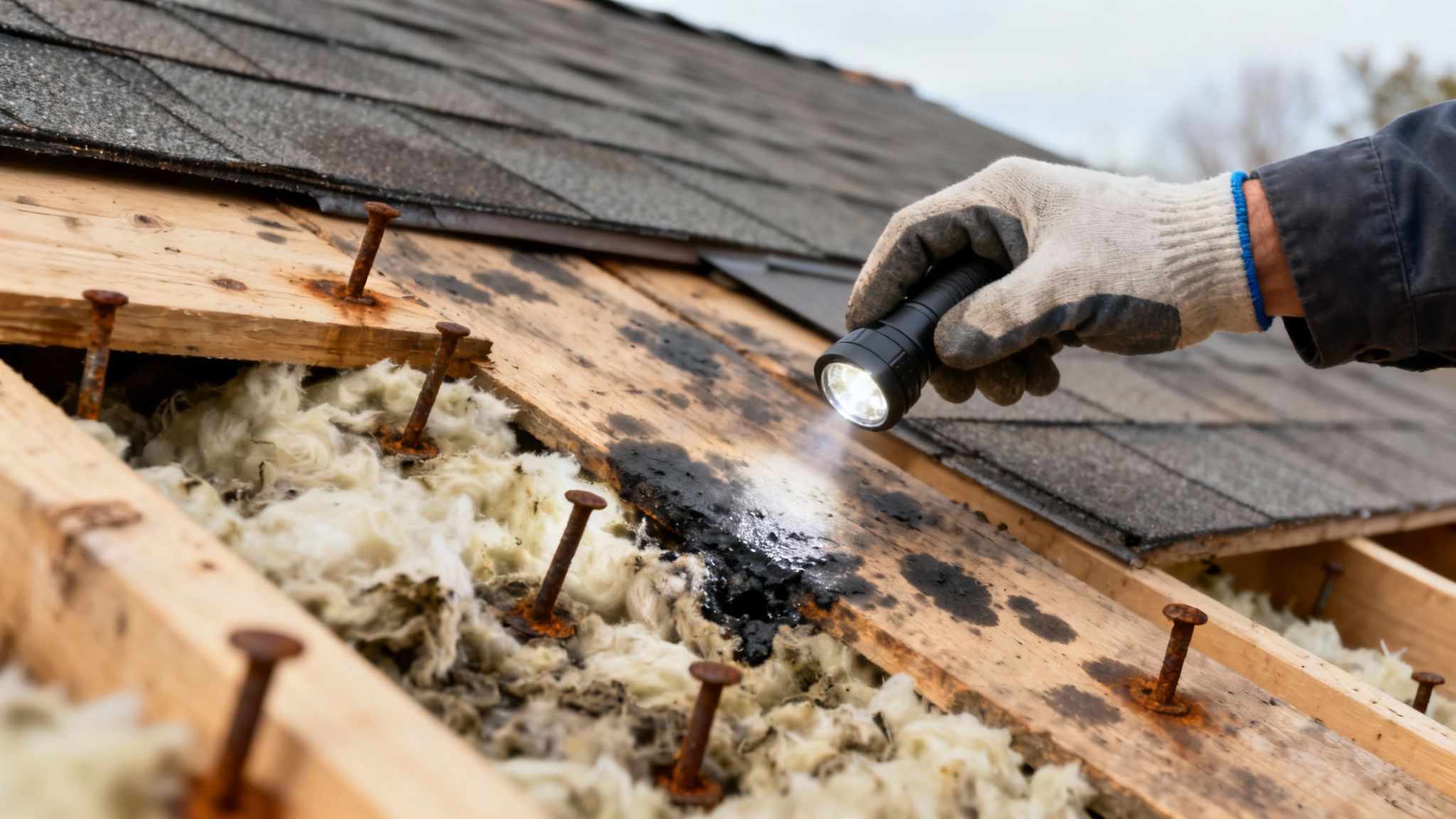
One of the most telling signs is the condition of your insulation. Healthy insulation should be light, fluffy, and completely dry. If it looks matted down, damp, or compacted, it has almost certainly absorbed moisture. This not only signals a major humidity problem but also means your insulation is no longer doing its job.
Next, run your eyes over the wooden structures like rafters and the underside of the roof deck. Are there dark stains, patches of discoloration, or visible fuzzy mold? These are classic signs that condensation is forming and settling on the wood. Another subtle but critical clue is rust on any metal components. Check the roofing nails poking through the roof deck, metal brackets, or HVAC parts. Rust only forms with consistent exposure to moisture.
A healthy attic should feel dry and smell relatively neutral. If you see obvious signs of moisture—like damp insulation, stained wood, or rusted nails—it's a definitive signal that your attic's ventilation system is failing to push humid air out.
To help you connect the dots, here's a quick reference table for identifying the most common symptoms you might find in your Palm Beach Gardens home.
Attic Ventilation Distress Signals
| Symptom | What to Look For | What It Means |
|---|---|---|
| Damp Insulation | Insulation that is flat, clumpy, or feels wet to the touch. | Moisture is being absorbed from the air, ruining the insulation's R-value and indicating high humidity. |
| Dark Wood Stains | Black or gray stains on rafters, trusses, or the roof sheathing. | Condensation is forming and dripping onto the wood, leading to rot and mold. |
| Musty Odors | A persistent smell of mildew or dampness, especially on the top floor. | Mold and mildew are actively growing in the trapped, moist attic air. |
| Frost on Roof Deck | A layer of ice or frost on the underside of the roof sheathing in winter. | Warm, moist air from inside the house is hitting the cold roof deck and freezing. |
| Rusted Metal | Rust forming on roofing nails, metal gusset plates, or HVAC equipment. | The air in the attic has enough moisture to cause metal corrosion over time. |
Recognizing these signs early is key to preventing small ventilation issues from becoming major structural problems.
Telltale Signs Outside Your Home
The effects of poor attic ventilation aren't just confined to the attic itself; they often show up on the exterior of your home, too.
A superheated attic can literally bake your roof's shingles from the inside out. This leads to them curling, cracking, and aging prematurely, drastically shortening the life of your roof. During our cooler winter months, you might even see thick frost on the underside of your roof sheathing, which eventually melts and soaks the wood.
Trapped heat and moisture will also push their way out, causing the paint on your home's exterior—especially on siding near the roofline or under the eaves—to peel and blister. Understanding how all these exterior parts work together is something a professional roofing inspection team excels at. By catching these external warnings, you can diagnose a ventilation problem in your Palm Beach Gardens home before it gets worse.

How Poor Ventilation Hits Your Home, Health, and Wallet
When your attic can't breathe, it starts a chain reaction that hits everything from your home's structure to your family's health and even your bank account. The trouble with poor attic ventilation in Palm Beach Gardens isn't just about a stuffy top floor; it's a silent threat that slowly undermines your entire property from the roof down.
All that trapped heat and moisture team up to become a surprisingly destructive force. This nasty combination doesn't just hang out in the attic. It works its way into the very bones of your house, causing damage that's often a nightmare to fix once it really takes hold. In our humid South Florida climate, ignoring it is a bet you're almost certain to lose.
Structural Damage and a Rotting Roof
The first and most direct victim of poor ventilation is your roof's structure. The wood that holds everything together—the rafters, joists, and especially the roof deck that your shingles or tiles are nailed to—is under constant assault from moisture.
Every night, as the humid air trapped inside cools, it condenses, soaking into the wood. This creates the perfect recipe for rot, which literally eats away at the wood fibers, weakening them day by day. A rotting roof deck can't grip the nails and fasteners holding your shingles down, leaving your home dangerously exposed to wind damage during the next big storm.
Think of a poorly ventilated attic as an internal pressure cooker. It’s slowly baking your shingles from the underside while simultaneously rotting the wood structure that supports them. This one-two punch can slash years off your roof's lifespan.
The Hidden Health Risks of Mold and Mildew
It's not just about the house; your family's health is on the line, too. A dark, damp, stagnant attic is practically an invitation for mold and mildew to move in and thrive. As these fungi spread across moist wood and insulation, they pump microscopic spores into the air.
Those spores don't stay put. They easily find their way into your living space through tiny gaps, light fixtures, and even your HVAC system. For anyone with allergies, asthma, or respiratory issues, breathing in mold spores can trigger anything from nagging coughs and sneezes to more serious breathing difficulties.
Your Energy Bills Will Go Through the Roof
Finally, a hot attic is a direct drain on your wallet. On a typical Palm Beach Gardens summer day, the temperature inside a poorly ventilated attic can skyrocket to over 150°F. This superheated air pocket acts like a giant radiator parked on top of your house, constantly beaming heat down through the ceilings.
Your air conditioner is then forced to run nonstop just to fight back against this relentless heat, working much harder and longer than it should. This constant battle leads to two big problems:
- Painfully high energy bills: Your HVAC system is guzzling electricity just to keep the house comfortable.
- A shorter HVAC lifespan: The constant stress wears out the compressor and other critical parts, leading to premature breakdowns and expensive replacements.
Tackling poor attic ventilation in Palm Beach Gardens is more than a simple home improvement. It's a crucial step to protect your home's structure, safeguard your family's health, and keep your hard-earned money in your pocket.
Effective Ventilation Solutions for South Florida
If you want to solve poor attic ventilation in Palm Beach Gardens, a generic, off-the-shelf fix just won't cut it. Our intense heat and humidity demand a strategy tailored specifically for South Florida. The entire game plan boils down to one core principle: creating a balanced ventilation system.
Think of your attic like a chimney. Hot air naturally wants to rise and escape, but it needs a clear path out. At the same time, cooler, fresh air has to be pulled in from below to replace it. If you only have one side of that equation—intake without exhaust, or exhaust without intake—the whole system falls apart.
This balanced approach is what creates a continuous cycle of airflow that actively pushes out that superheated, moisture-laden air before it can cause real damage. One side simply can’t do its job without the other.
This decision tree gives you a stark visual of the difference between a well-ventilated attic and one that's just suffering in silence.
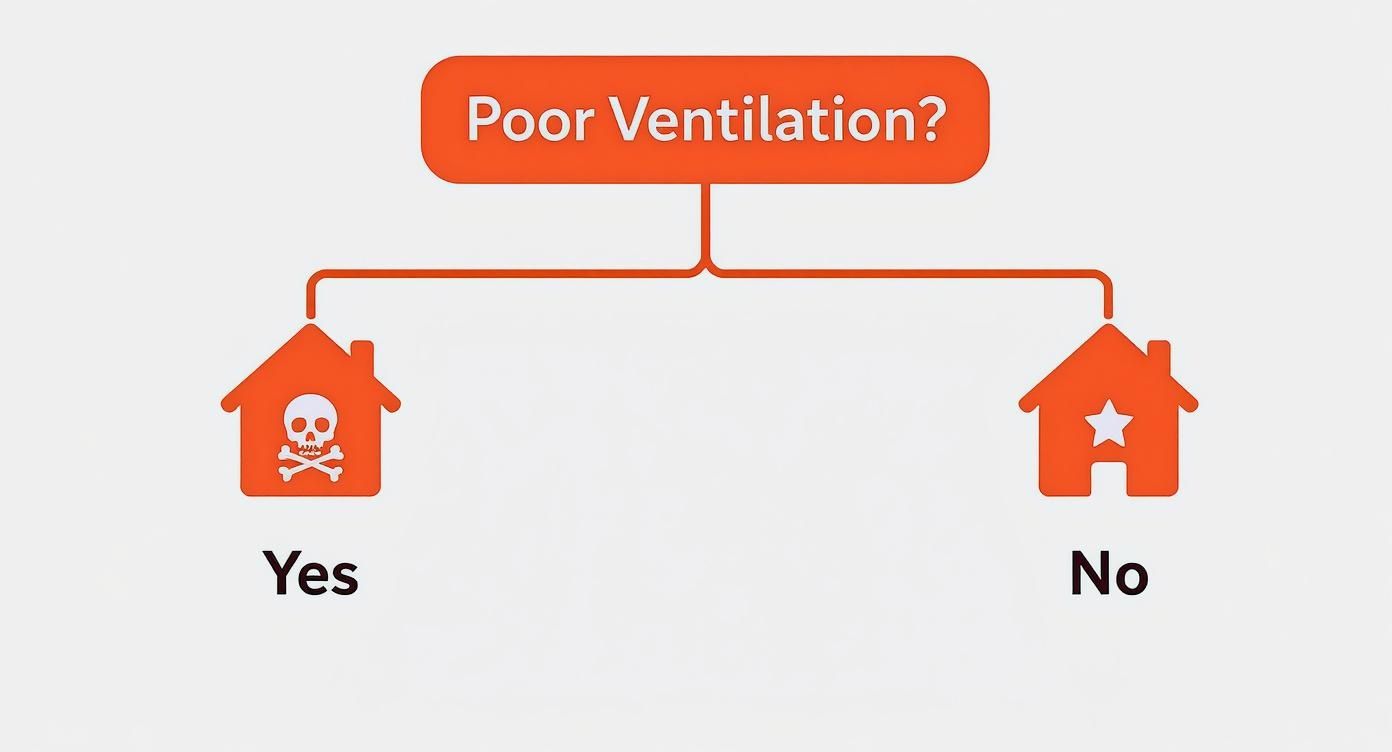
As you can see, tackling your ventilation isn’t just another home improvement project. It's a critical choice that directly impacts your home’s health and structural integrity for years to come.
Choosing the Right Vents for Your Home
Every effective system is built on two essential components: intake vents to let fresh air in, and exhaust vents to let hot air out.
-
Intake Vents (Inflow): These are almost always soffit vents, located under the eaves of your roof. They are the lungs of the system, responsible for breathing in cooler, drier outside air. Without enough intake, your exhaust vents can actually start working against you, creating negative pressure that pulls expensive conditioned air right out of your living space and into the attic.
-
Exhaust Vents (Outflow): Placed at or near your roof’s peak, these vents are the escape hatch for hot air. You'll commonly see ridge vents, which run along the entire peak, or turbine vents that use wind to spin and actively pull air out.
The problem? In South Florida's often still and humid conditions, these passive systems sometimes just can't generate enough airflow on their own. That's when you have to bring in the heavy hitters: active solutions.
The Power of Active Ventilation
For homes in our climate, powered attic fans (whether electric or solar) are frequently the best tool for the job. Unlike passive vents that sit around waiting for wind or natural convection, these fans actively suck hot, humid air out of the attic. This forces the system to draw fresh air in through the soffits, creating consistent airflow.
They’re especially crucial on those sweltering, stagnant summer days when passive systems are at their absolute weakest.
A solar attic fan is a particularly smart investment for a Palm Beach Gardens home. It works hardest when the sun is strongest—precisely when your attic needs the most help—without adding a single dollar to your electricity bill.
But getting this balance right is a science. You can't just throw more vents at the problem and hope for the best. In fact, one study found that increasing the vent area from a 1:300 to a 1:150 ratio actually increased attic humidity under certain conditions.
Ultimately, the perfect solution depends on your home’s specific design, its roof pitch, and what you already have in place. To really get it right, you have to think about how ventilation works with broader energy efficiency and smart home technologies. The only surefire way to get a perfectly tailored system is to consult with a roofing professional who understands the unique demands of our climate.
Your Attic Ventilation Questions Answered
Even after understanding the risks, most homeowners still have specific questions about how to tackle poor attic ventilation, especially here in Palm Beach Gardens. Let’s get straight to the point with answers to the most common questions we hear, so you can make confident decisions for your home.
This isn't generic advice; these are practical answers tailored for our unique South Florida climate.
How Much Attic Ventilation Does My Home Need?
The old rule of thumb is the 1/300 rule, which calls for one square foot of vent space for every 300 square feet of attic floor. That total vent area is then split evenly between intake vents (down at the soffits) and exhaust vents (up at the ridge or fans).
But in South Florida, that's often not enough. Given our relentless humidity, many local pros, including our team, now lean toward a more aggressive 1/150 ratio. This extra airflow is simply better at fighting the heavy moisture we deal with year-round. A qualified contractor can run the numbers for your specific roof design to make sure your system is perfectly optimized.
Are Solar Attic Fans a Good Investment Here?
Absolutely. Solar attic fans are a fantastic solution for our area because they work their hardest when the problem is at its worst—when the sun is beating down on your roof. They actively yank that superheated, damp air right out of your attic, and they do it without adding a penny to your FPL bill.
This is a huge advantage on those still, humid summer days when passive vents just can't keep up. By getting that heat out, they take a massive load off your AC system and are your best defense against moisture buildup. Just make sure you choose a model with a hurricane rating; it's a non-negotiable feature for our coastal homes.
An unbalanced system is a bigger risk than "too much" ventilation. The most common error is installing powerful exhaust fans without adding enough intake at the soffits. This can create negative pressure, pulling cool, conditioned air from your living areas up into the attic and wasting energy.
Can My Attic Have Too Much Ventilation?
It’s less about "too much" and more about having an unbalanced system. This is where things can go wrong. A classic mistake is when someone installs powerful exhaust fans but doesn't add enough intake ventilation down at the soffits to keep up.
This imbalance creates negative pressure. Your attic fan starts looking for air wherever it can find it. Instead of pulling fresh air from outside, it begins sucking the cool, conditioned air you paid for right out of your living space through tiny gaps around light fixtures and ceiling fans. You end up wasting energy and pulling indoor humidity up into the attic, which is the exact problem you were trying to solve.
Does Better Ventilation Help During a Hurricane?
While its main job is fighting daily heat and moisture, a properly ventilated roof system does offer some secondary benefits during a storm. Vents that are correctly installed can help relieve the powerful upward pressure that high winds put on a roof, which can lower the risk of it being peeled back or lifted off.
Even more important is the day-to-day benefit. By keeping your attic dry all year, you prevent the slow, silent wood rot that weakens your roof's entire structure. A strong, dry roof deck is always going to be more resilient against hurricane-force winds than one that’s been compromised by years of trapped moisture.
If you've spotted any of these warning signs or just have questions about your own home, don't wait for a small issue to spiral into a major headache. The team at Paletz Roofing and Inspections brings over 30 years of experience to designing and installing ventilation systems built for the unique demands of Palm Beach Gardens. Protect your home and your investment by making sure your attic can breathe. Contact us today for a comprehensive inspection and a free, no-obligation quote.