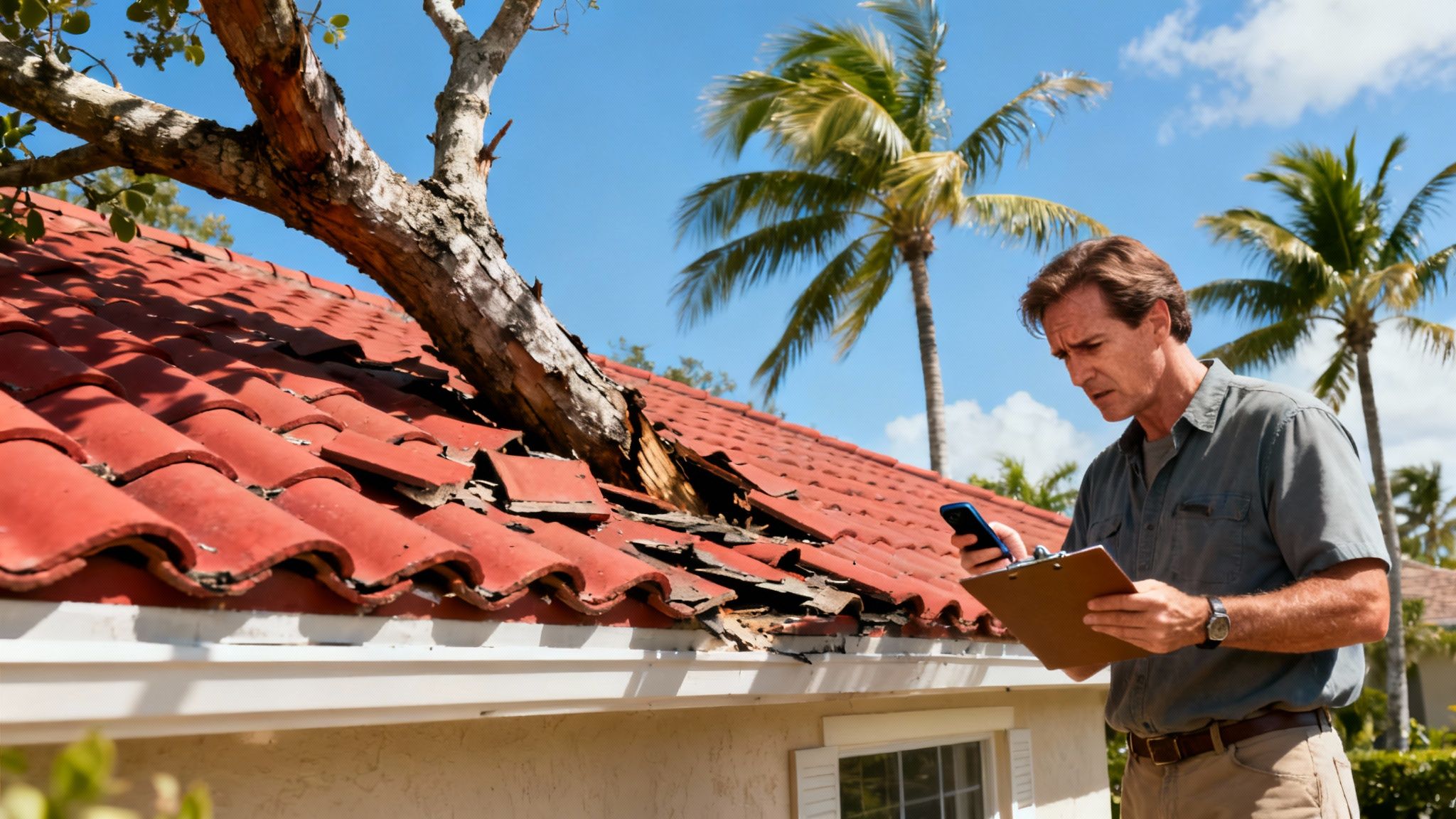
The sound of a tree branch crashing onto your roof is terrifying. It's one of those moments that sends adrenaline coursing through you, and it's easy to feel overwhelmed. But what you do in these first few hours is absolutely critical. A clear head and a quick plan can be the difference between a manageable repair and a catastrophic cascade of problems, especially with Delray Beach's famously unpredictable weather.
When a tree branch lands on your roof, your first thoughts must be safety and stopping any further damage. That means checking for immediate hazards like downed power lines, making sure the house is still structurally sound, and then getting a professional roofer on the phone for emergency tarping to prevent water from pouring in.
Your First Moves When a Tree Branch Hits Your Roof
In that moment, panic is a completely normal reaction, but it’s not your friend. Your actions right after the impact are what will protect your family and your property from more harm. Let's walk through the immediate steps you need to take.
Prioritize Safety Above All Else
Before you even glance at the roof, your focus has to be on safety. Are there any downed power lines near the branch or touching your house? If you see any chance of an electrical hazard, stay clear of the area—and I mean far away. Your first call should be to Florida Power & Light (FPL). Don't go outside, and don't touch anything metal.
If the impact was severe—a loud boom that shook the house—or if you hear any creaking or groaning sounds from the structure, it’s time to get everyone out. It's always better to be overly cautious and wait outside until a professional can give you the all-clear on your home's stability.
Key Takeaway: Whatever you do, do not climb on the roof yourself. A damaged roof is an unstable one. The risk of falling is incredibly high, and it's a job that should only be handled by trained, insured professionals who do this every day.
This quick decision tree can help you visualize the most important safety checks to run through.
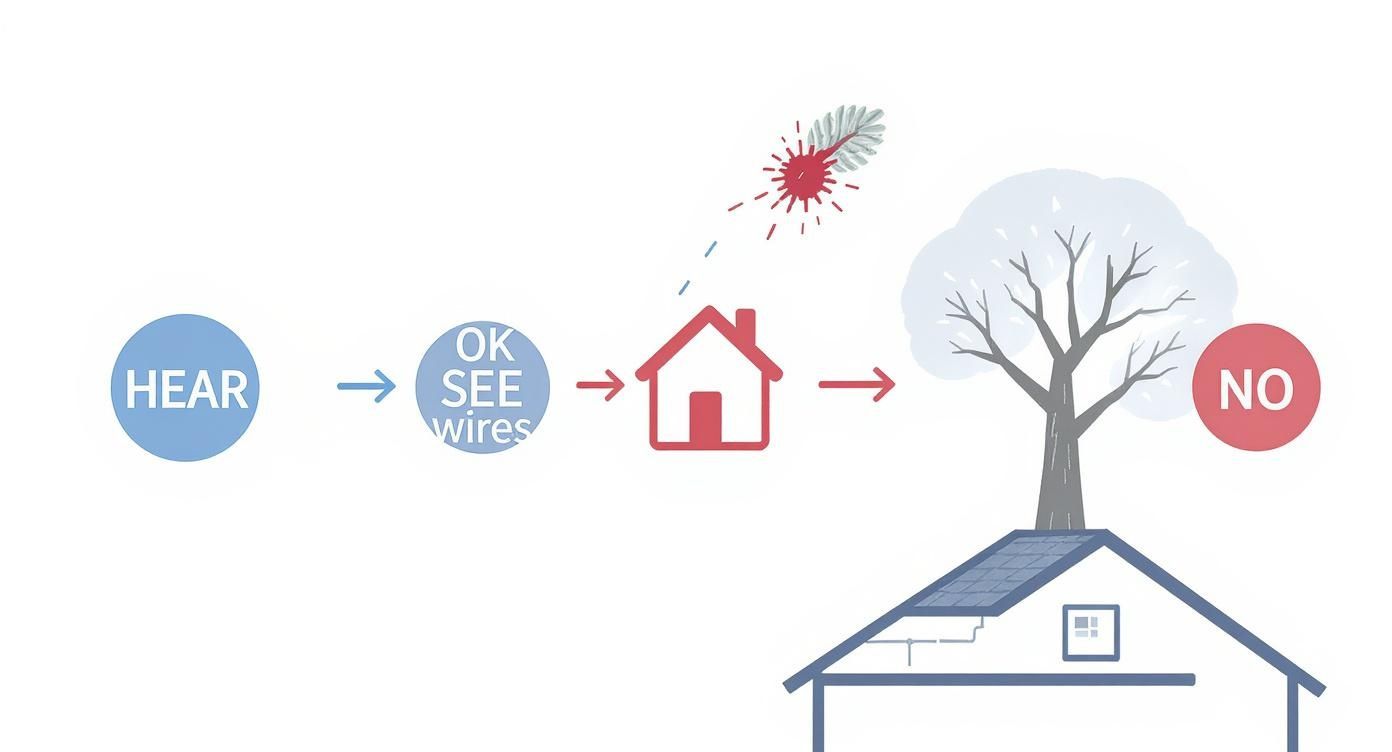
As the infographic shows, the very first thing to look for is an electrical hazard. That single observation determines whether it’s even safe to be near your home.
When a tree strikes, the clock starts ticking. Here’s a quick-reference checklist to guide you through that first critical hour.
Immediate Safety & Action Checklist
This table breaks down your immediate priorities into actionable steps.
| Priority | Action Item | Key Consideration |
|---|---|---|
| Highest | Check for Downed Power Lines | If seen, evacuate the area immediately and call FPL. Do not approach. |
| High | Assess Structural Stability | Listen for creaking or groaning. If you have any doubts, get everyone out. |
| Medium | Document from the Ground | Take photos of the branch and visible damage from a safe distance. |
| Medium | Inspect the Attic (If Safe) | Look for daylight, debris, or signs of moisture from inside the house. |
| Urgent | Call for Emergency Tarping | Contact a 24/7 roofer to prevent water damage from potential rain. |
Following these steps in order helps you manage the chaos and focus on what truly matters: safety first, then damage control.
Document and Mitigate the Damage
Once you've established that the area is safe, your next role is part-investigator, part-protector. You need to document everything for your insurance claim and, most importantly, stop water from getting inside.
- Take Photos from the Ground: Use your smartphone and be thorough. Get wide shots showing the entire branch on the house, then zoom in on any visible damage you can spot from a safe distance on the ground. Don't forget to check for damage to gutters, siding, or windows that might have been in the path of the falling limb.
- Check the Attic: If it feels safe to go upstairs, your attic is the best place to spot a problem. Carefully look for any slivers of daylight punching through the roof decking. Scan for moisture, water drips, or small bits of shingle and wood debris. This is often the first place a new leak will reveal itself.
- Call for Emergency Tarping: This is your most urgent task. Getting that hole covered is non-negotiable. Find a reputable local roofer who offers 24/7 emergency services and get them out to place a tarp over the damaged section. I can't stress this enough: this one action can save you from thousands of dollars in interior water damage. We saw this play out across Florida after Hurricane Ian, when falling branches shattered roof tiles and the homes that got tarped quickly fared much better.
Solid documentation from the very beginning will make your insurance claim process infinitely smoother. For a clear visual of what this kind of impact can look like, you can see an example of tree impact on our page about roof damage. Your goal is to create a complete "before" snapshot before any of the tree is removed or any repairs are started.
How to Assess Roof Damage from the Ground
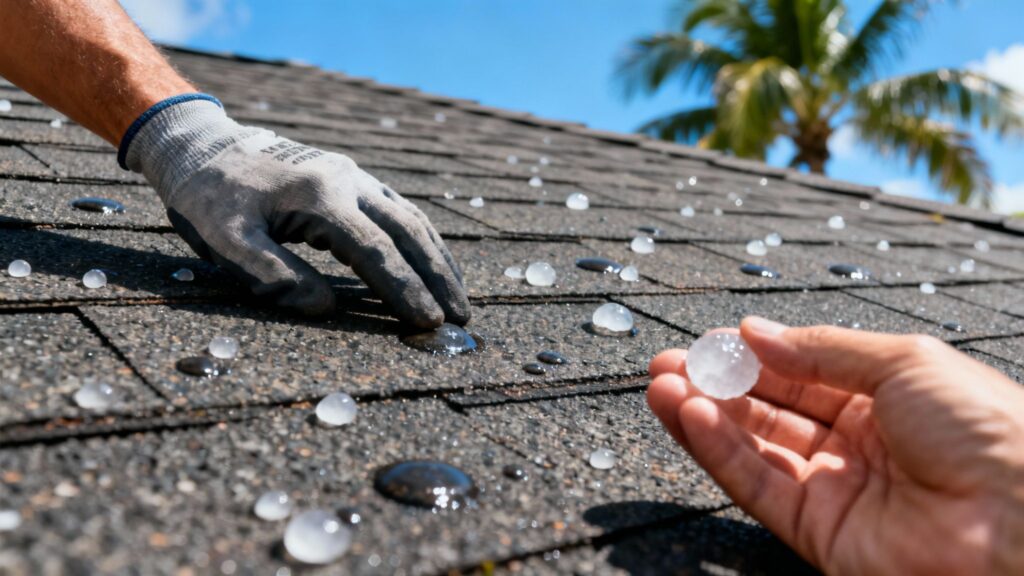
Once the initial shock of a tree branch crashing onto your Delray Beach roof wears off, your first instinct is to figure out just how bad the damage is. But before you do anything else, remember that your safety is the absolute priority. Resist any and all temptation to grab a ladder. You can get a solid, safe assessment of the situation right from the ground.
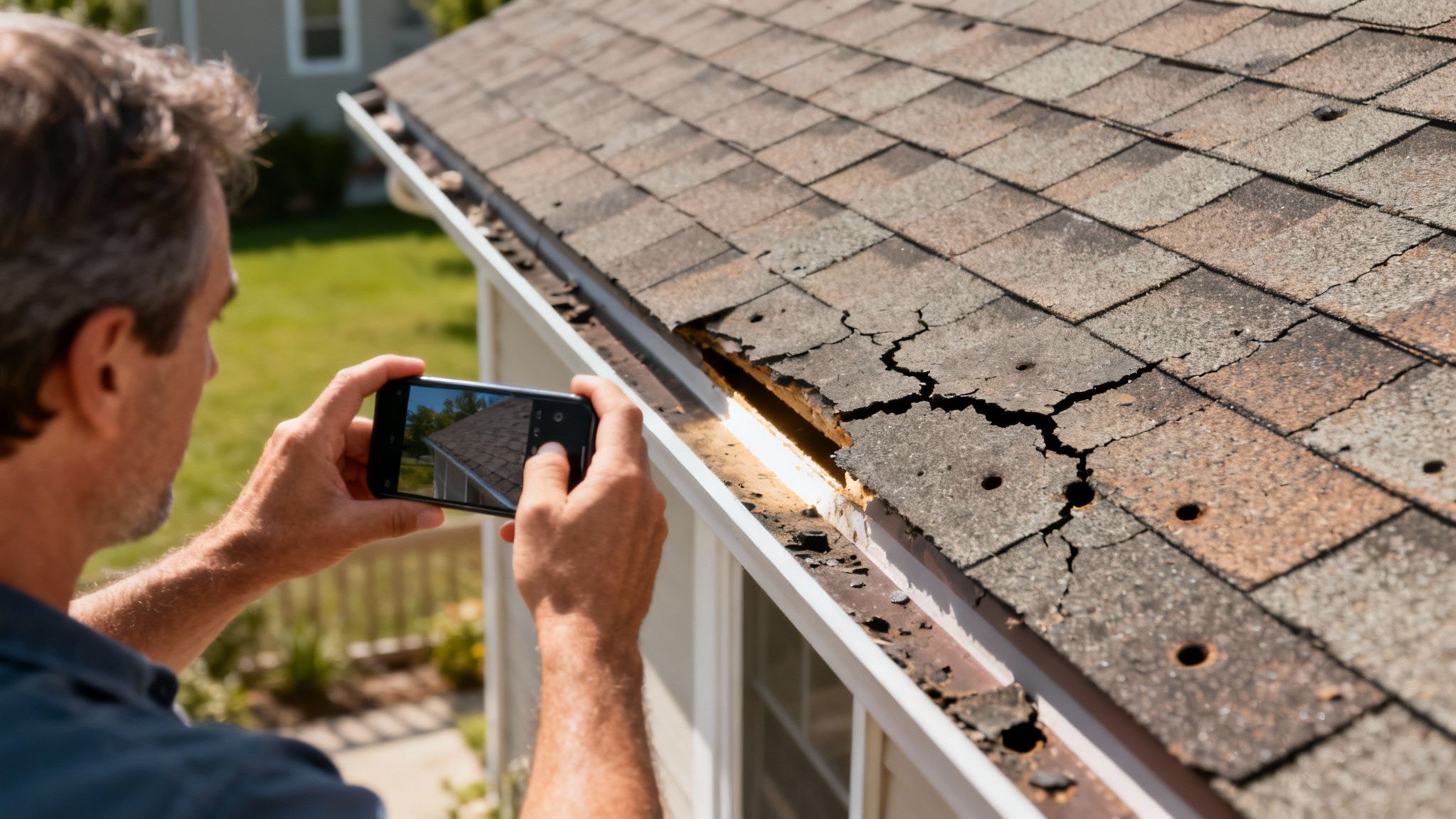
Start by doing a slow walk around the perimeter of your house. From a safe distance, use your phone to take plenty of wide-angle photos and videos of the whole scene. After you’ve captured the big picture, start zooming in on the specific points where the branch made contact. You're essentially building a visual diary for your insurance claim, and when it comes to documentation, more is always better.
What to Look for Outside
Try to be methodical with your inspection. It’s easy to get fixated on the gaping hole where the branch landed, but the damage often spreads out like a spiderweb. Secondary issues are incredibly common and just as serious.
Be on the lookout for these specific signs of trouble:
- Cracked or Missing Shingles: Shingles near the point of impact, even if they weren't directly hit, can easily fracture or get knocked loose from the force.
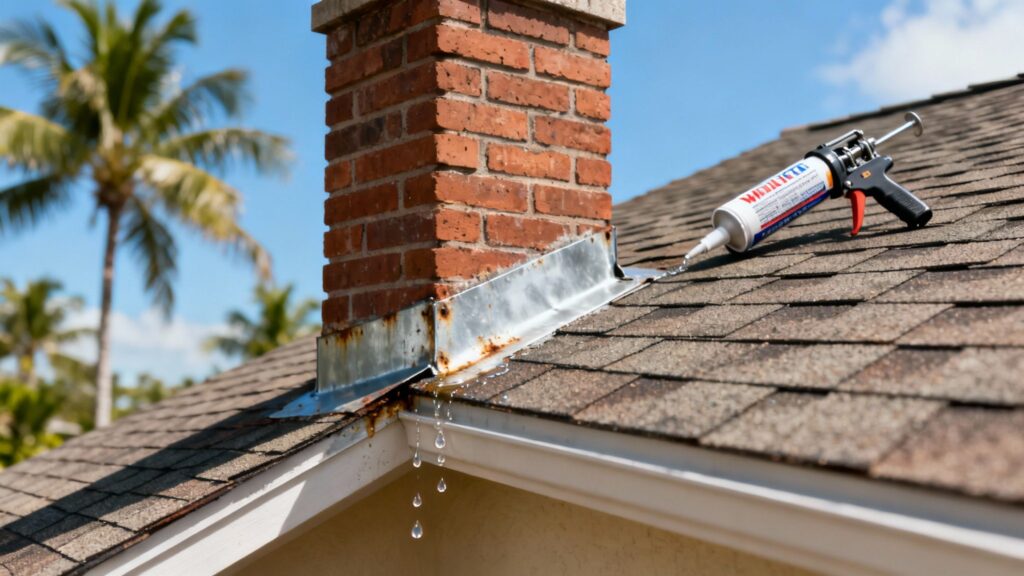
- Damaged Flashing: Take a close look at the metal strips around your chimney, vents, and any skylights. If you see dents or gaps, you're looking at a VIP invitation for water to come right in.
- Dented or Clogged Gutters: The branch might have crushed a section of your gutter system, which will cause all sorts of drainage headaches later. Also, check for an unusual amount of shingle granules in the gutters—heavy granule loss is a tell-tale sign of major shingle damage.
- Siding and Window Damage: Don't stop at the roofline. Branches often scrape down the side of the house or even break windows on their journey down.
Pro Tip: A simple pair of binoculars can be your best friend for a ground-level inspection. They let you get a surprisingly clear view of your shingles and flashing without your feet ever leaving the safety of your yard.
Checking for Damage Inside Your Home
Often, the most serious damage isn't what you can see from your lawn. The next step is to head inside and check the rooms and attic space directly below where the branch hit. Your attic is the most important place to look.
If it's safe to go up there, take a powerful flashlight with you. Once you're in the attic, turn your flashlight off and just look up. Can you see any slivers of daylight peeking through? Even a pinhole of light means you have a direct path for water to pour into your home.
Now, turn the flashlight back on and carefully scan the wooden rafters and the underside of the roof deck. You’re searching for:
- Dark, tell-tale water stains
- Any active drips or signs of moisture
- Small piles of wood splinters or other debris
Even if you don't see daylight, any wet spots are a dead giveaway that the protective underlayment of your roof has been torn or punctured. Finally, check the ceilings in the rooms directly below the attic. Any discoloration, bubbling paint, or sagging drywall is a huge red flag that water has already started to work its way down. Documenting this interior damage is every bit as critical as capturing the exterior problems. To get a better idea of what you're looking for, you can view examples of roof damage and compare them to what you're seeing in your own home.
Navigating Your Homeowners Insurance Claim
Dealing with the insurance company after a tree branch smashes into your roof can feel like a storm of its own. Suddenly you're drowning in paperwork and unfamiliar jargon. It’s intimidating, I get it. But with a little know-how, you can steer the process in your favor.
The second you’ve secured the area and have emergency tarping on the way, your very next call should be to your insurance agent or carrier. Don't wait. Most policies have a "prompt notification" clause, and dragging your feet can seriously complicate things down the road. Just have your policy number handy and be ready to explain what happened, plain and simple.
Getting a Grip on the Insurance Lingo
You're about to hear a bunch of terms that are critical to your claim. Understanding what they actually mean will help you talk confidently with your adjuster and make smart decisions when a settlement offer lands on your table.
- Deductible: This is your share of the cost. It's the amount you have to pay out-of-pocket before your insurance kicks in. If you have $10,000 in damage and a $2,500 deductible, your insurer will cover $7,500.
- Actual Cash Value (ACV): An ACV policy pays to replace your damaged roof, minus depreciation. Since roofs lose value over time from normal wear and tear, an ACV payout almost never covers the full cost of a brand-new roof.
- Replacement Cost Value (RCV): This is the policy you want to have. RCV covers the full cost to replace your damaged roof with new, similar-quality materials. It doesn't subtract for depreciation, which makes a huge difference.
Crucial Insight: Find out immediately if your policy is ACV or RCV. This one detail will dramatically change the settlement you can expect and is absolutely essential when you start looking at repair estimates.
Working with the Insurance Adjuster
Your insurance company will send out an adjuster to inspect the damage. Their role is to figure out the extent of the loss and calculate a payout based on your specific policy. Make their job easier—and your claim stronger—by giving them all the documentation you’ve collected. That means your photos, videos, and any receipts for that emergency tarping you paid for.
The aftermath of a big storm is pure chaos. I remember a nasty tornado that tore through Delray Beach in September 2022. It snapped massive tree limbs like twigs, sending them crashing onto homes and even causing some roofs to collapse. Events like that put a massive strain on the insurance system, which is why having your own clear, thorough documentation is so vital.
Try to be there when the adjuster shows up. Walk them around the property and point out every bit of damage you've found, both outside on the roof and inside your home. Don't be shy about asking questions about what happens next and how long it might take. After the inspection, they'll send you a detailed report with a settlement offer. Go over that document with a fine-tooth comb. Make sure it accounts for all the damage and that the proposed scope of work is complete.
When You Might Need a Public Adjuster
Sometimes, the insurance company's offer just feels wrong. It might seem way too low, or maybe the whole process has become a battle. This is when you might want to bring in a public adjuster.
Unlike the company adjuster who works for the insurer, a public adjuster works for you. They become your advocate, fighting on your behalf to get you a fair settlement. They typically get paid a percentage of the final claim amount. It’s a solid option if the damage is severe, the claim is getting complicated, or you just feel like you're not being heard. For a deeper dive into the fine print, a solid understanding homeowners insurance policies can be a game-changer.
Finding a Trustworthy Delray Beach Roofing Contractor
After a tree branch falls on your roof in Delray Beach, something predictable happens—especially after a big storm. You'll start getting knocks on your door. While some are legitimate local roofers, many are "storm chasers," out-of-town outfits that swoop in, do cheap, fast work, and disappear before the first leak appears.
Choosing a reputable, local professional is the single most important decision you'll make in this entire repair process. It’s the difference between a lasting repair and a recurring nightmare.
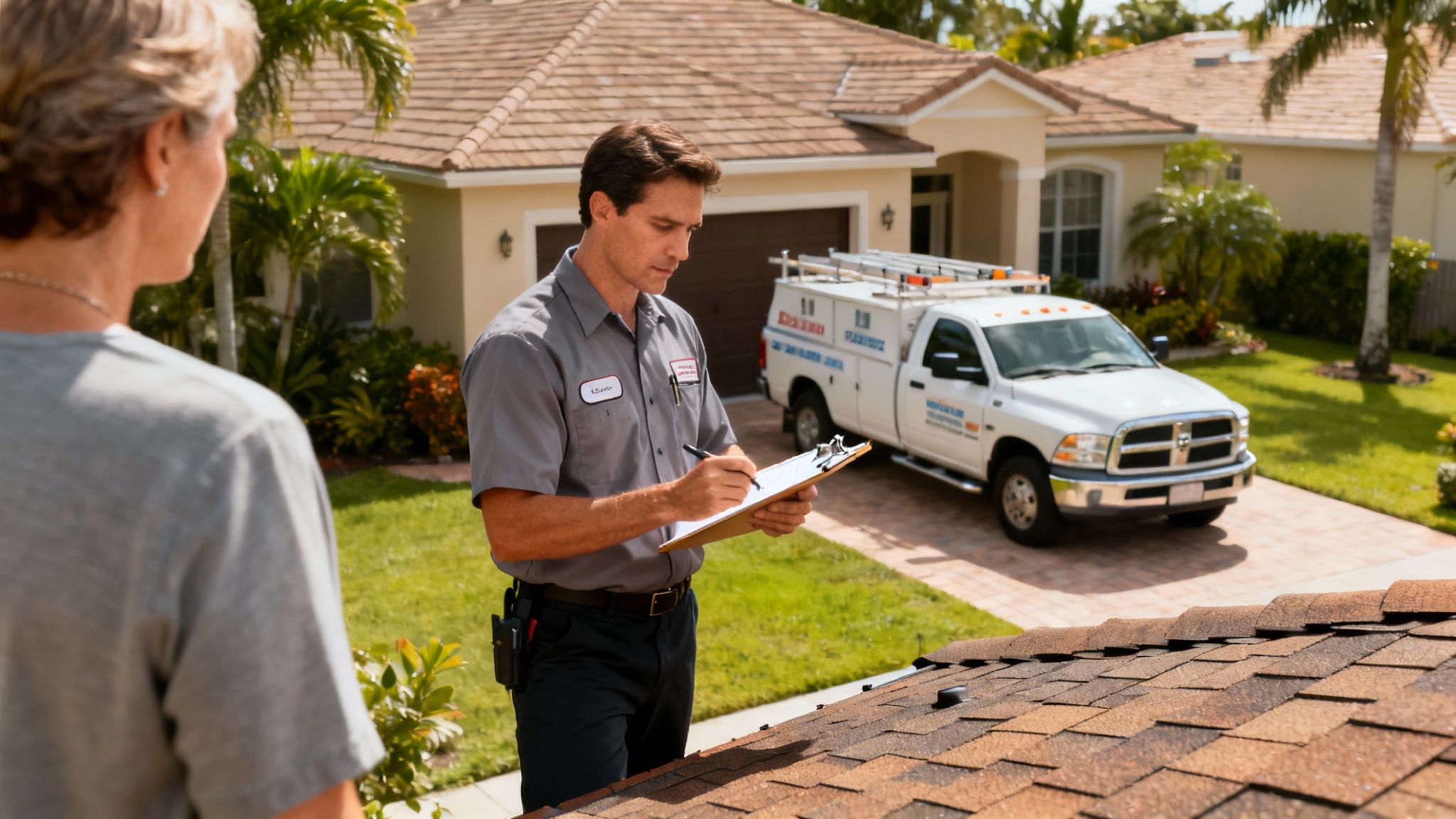
Your first step? Verify their credentials. Florida requires roofing contractors to be licensed and insured, and this is completely non-negotiable. Always ask for their state license number and a certificate of insurance showing both general liability and workers' compensation.
You can verify a Florida license in seconds online through the Department of Business and Professional Regulation. Don't just take their word for it. Check.
Vetting Your Potential Roofer
Beyond the legal basics, you need to look for signs of a stable, professional operation. A contractor with a physical office in the Delray Beach area and a long history of local work is always a safer bet than someone operating out of a pickup truck with an out-of-state plate.
Here are the key questions I always tell homeowners to ask every potential contractor:
- Can you provide local references? Ask for names and addresses of recent jobs in or near Delray Beach. Then, actually drive by and look at their work.
- What is your workmanship warranty? This is totally separate from the material warranty from the shingle manufacturer. A good contractor will stand behind their own work for a significant period.
- Who will be on the job site? Is it their own dedicated crew, or will they be using subcontractors? Consistency and accountability are what you're looking for here.
Red Flag Warning: Be extremely wary of any roofer who uses high-pressure sales tactics, demands a large cash deposit upfront, or offers to "waive" your insurance deductible. These are classic signs of a scam that could leave you with shoddy work and major legal trouble.
Why a Detailed Estimate Matters
Never, ever accept a verbal quote or a one-line estimate scribbled on a business card. A professional estimate is a detailed, itemized document that breaks down the entire scope of the project. This protects both you and the contractor, ensuring there are no nasty surprises down the road.
Your estimate should clearly outline:
- Scope of Work: A complete description of the repair, from removing the damaged sections to replacing underlayment and shingles.
- Materials: The specific type and brand of shingles, flashing, and other materials they plan to use.
- Labor Costs: A clear breakdown of the cost for the crew to perform the work.
- Permit Fees: Any costs associated with pulling the required local permits.
This document is what you'll use to compare different bids and to submit to your insurance company. It ensures everyone is on the same page about what work will be done and for what price.
To see what a professional approach looks like from the very beginning, you can learn more about our Paletz Roofing inspection process, which is the first step toward getting a detailed and accurate estimate.

Comparing Delray Beach Roofing Contractor Bids
Once you have at least three itemized estimates, it's time to compare them side-by-side. Don't just jump at the lowest price; a cheap bid often signals cut corners or low-quality materials. Use a simple chart like this to keep everything organized and make an informed decision based on value, not just cost.
| Evaluation Criteria | Contractor A | Contractor B | Contractor C |
|---|---|---|---|
| Total Cost | |||
| Detailed Scope of Work | |||
| Specified Materials (Brand/Type) | |||
| Workmanship Warranty (Years) | |||
| Material Warranty | |||
| License & Insurance Verified? | |||
| Local References Provided? | |||
| Project Timeline | |||
| Gut Feeling / Professionalism |
By laying out the bids this way, you can easily spot discrepancies. Does one contractor have a much shorter warranty? Is another using generic, unnamed materials? This structured comparison helps you move beyond the price tag and focus on which company offers the best long-term solution for your home.
How to Prevent This From Happening Again
After dealing with the headache of a fallen tree branch on your roof, the last thing you want is a repeat performance. The good news is that you can dramatically reduce that risk with some proactive tree management.
This isn't just about hacking away at a few branches. It’s about building a smart, defensive strategy for your Delray Beach home, especially with hurricane season on our minds every year.
The cornerstone of this strategy is bringing in a professional arborist for regular check-ups. An experienced pro does more than just trim; they assess the overall health and structural integrity of your trees, spotting problems long before they become emergencies.
Spotting High-Risk Trees and Branches
Not all trees are created equal when it comes to risk. The key is learning to see potential trouble before it lands on your roof.
You can start by familiarizing yourself with identifying signs of a problematic tree. A certified arborist will look for specific warning signs, but you can learn to spot many of them from the ground, too.
- Dead or Dying Branches: These are the most obvious culprits. They often look brittle, have no leaves (when they should), and are just waiting for a strong gust of wind to snap.
- Signs of Disease: Keep an eye out for fungus growing on the trunk, weird discoloration on the leaves, or deep cracks running through the bark.
- Weak Structure: Trees with a tight "V-shaped" split where large branches meet are structurally weak. You want to see a stronger, more stable "U-shape."
- Overhanging Limbs: This one is simple. Any major branch hanging directly over your house is a calculated risk you probably don't want to take.
Here in Florida, tree branches are a constant threat to roofs. It's not just the direct impact from a storm. Our high humidity means overhanging limbs can trap moisture on your shingles, which speeds up decay and can seriously shorten your roof's lifespan.
Choosing the Right Trees for Your Yard
If you’re thinking about planting new trees or replacing ones that had to be removed, a little foresight goes a long way. Some species are simply built better to handle Florida's wild weather.
Expert Insight: When landscaping, always consider a tree's mature size and root system. Planting a huge tree too close to your home is a recipe for disaster, not just for your roof but for your foundation, too.
Look for species known for their wind resistance, like live oaks, sable palms, or cypress trees.
On the flip side, some popular trees are notoriously weak. Species like laurel oaks, water oaks, and queen palms are much more likely to break apart in high winds, making them a poor choice for planting anywhere near your house.
A certified arborist can give you recommendations tailored to your specific property and soil, helping you create a landscape that’s both beautiful and safe.
Answering Your Questions About Roof Damage in Delray Beach
When a tree branch comes crashing down on your roof in Delray Beach, it’s completely normal for your mind to start racing with questions. It’s a stressful situation that often goes beyond just your own property, bringing up concerns about neighbors, repair costs, and what this will do to your insurance rates.
Let's walk through some of the most pressing questions we hear from homeowners.
Whose Insurance Pays if My Neighbor's Tree Falls on My Roof?
This is easily one of the most common—and misunderstood—scenarios we encounter. Here in Florida, the rule of thumb is that your own homeowner's insurance policy is responsible for covering the damage to your property. It generally doesn't matter where the tree came from; it's considered an "act of God."
The big exception to this rule is proven negligence. If you can show that your neighbor knew their tree was dead, diseased, or a clear hazard and did nothing about it, their insurance might be on the hook. Proving this isn't a walk in the park. It requires solid documentation, so if you're worried about a neighbor's tree, your best move is to communicate those concerns formally with a certified letter. This creates a paper trail that could be indispensable down the road.
What Does Roof Repair Cost After a Tree Hits It?
There’s no one-size-fits-all answer here, as the costs in Delray Beach can swing wildly depending on the damage. A minor issue, like a few cracked asphalt shingles, might only set you back a few hundred dollars.
But if that branch was heavy enough to damage the underlying wooden trusses or decking, the project gets a lot more involved. We're talking about a repair that could easily run into the tens of thousands.
Several things will influence the final price tag:
- The extent of structural damage to the roof's internal framework.
- Your specific roofing material—tile and metal are just more expensive to repair than shingles.
- The complexity of your roof's design and how difficult it is to get to the damaged section.
The only way to get a real, reliable number is to have at least three licensed local roofing contractors come out and give you detailed, itemized estimates.
Key Insight: Don't get fixated on the visible hole. A heavy impact can cause unseen damage to the roof's structure. A truly thorough inspection is critical to understanding the real scope and cost of the repairs you'll need.
Will My Insurance Premium Go Up After This Claim?
That's a valid worry, and the honest answer is: it's a real possibility. Florida's insurance regulations can sometimes prevent immediate rate hikes after a single claim from a widespread event like a hurricane.
However, insurance companies are all about assessing risk. A history of multiple claims in a short time is a major red flag and can lead to a steep premium increase or even the non-renewal of your policy.
If the estimated repair cost is just a bit over your deductible, it’s often smarter to pay for it out-of-pocket. Always have a frank conversation with your insurance agent about the potential fallout before you officially file the claim.
When you're dealing with roof damage, you need a team you can count on for honest answers and expert repairs. For a complete inspection and a free, no-pressure quote in the Delray Beach area, get in touch with Paletz Roofing and Inspections at https://paletzroofing.com.