
You’re probably reading this because hurricane season is getting closer, you’ve noticed a stain on a ceiling, or your insurance company asked for documentation and you’re not sure what a roof inspection Boynton Beach service should include.
That’s a fair concern. In Boynton Beach, roofs don’t fail the same way they do in drier inland markets. Salt air works on metal components. Humidity gets into attic spaces. Wind tests every edge, flashing detail, vent, and tile. A roof can look acceptable from the driveway and still have weak points that show up the minute a storm pushes water sideways.
A proper inspection isn’t a quick glance and a sales pitch. It’s a methodical review of the roof covering, the drainage path, the attic, the penetrations, and the installation details that either hold up in South Florida or don’t.
Why Proactive Roof Inspections Are Essential in Boynton Beach
A lot of Boynton Beach homeowners call after the first hard rain. They hear a drip over the living room, notice a stain near an air vent, or find damp drywall around a window line and assume the roof just started leaking. In many cases, the roof started failing months earlier at a vent boot, valley, flashing joint, or underlayment seam, and the storm exposed it.
That timing matters in South Florida.
Heat dries and ages sealants. Humidity keeps hidden moisture in place. Salt air works on metal flashings, fasteners, and rooftop accessories. Then summer storms and hurricanes put pressure on every weak point at once. A roof that still looks decent from the yard can already be one storm away from active leakage.

Boynton Beach roofs need closer monitoring than many homeowners expect
Regular roof inspections in this market are preventive maintenance. They are also a way to catch the problems a basic visual check misses. I have seen plenty of roofs that looked fine from the driveway but showed lifted edges, cracked sealant, small tile movement, early rust, or wet insulation once we inspected them properly.
That is where better inspection tools make a real difference. A drone helps document slope conditions, flashing lines, and hard-to-see areas without relying only on what is visible from one ladder position. Thermal imaging helps identify trapped moisture and heat patterns that often point to leaks before staining becomes obvious inside the house. In Boynton Beach, with our humidity and wind-driven rain, that extra accuracy is worth having.
Wind ratings also get misunderstood. A roof system may be designed for high wind exposure, but that does not protect a roof with aging underlayment, loose fasteners, deteriorated sealant, or a penetration detail that was never flashed correctly in the first place. The failure usually starts at the weakest detail, not across the whole roof field.
Practical rule: Never judge a South Florida roof by appearance alone. The leak source is often at an edge, transition, valley, or penetration, and sometimes it shows up first on a thermal scan before it is visible to the eye.
Minor defects turn into expensive repairs fast
Small problems do not stay small here. A cracked pipe boot can let in enough water to soak decking around the opening. A little tile displacement can expose underlayment to UV and wind. Corrosion around metal flashings can spread until water gets behind the wall or into the soffit system.
I tell homeowners to schedule inspections before storm season and again after any significant weather event. Before storm season, the goal is to find weak points while the repair is still straightforward. After a major storm, the goal is to document lifted materials, impact damage, shifted flashing, and moisture intrusion that may not show as an interior leak for weeks.
Homes with solar need even closer attention around attachments and penetrations. If your system is already installed, or you are planning one, Solar And Roof: Your Guide To Florida Installations is useful background. The roof and the solar system have to work together, especially in a hurricane-prone coastal market.
Inspections help with insurance, records, and repair decisions
Leaks are only part of the story. A well-documented inspection also helps homeowners keep a clear record of roof condition, prior repairs, and storm-related changes. That matters when insurance carriers ask questions, when a wind mitigation discussion comes up, or when you need to decide whether a problem calls for a simple repair, a permitted repair, or a larger corrective scope.
Older roofs benefit the most from regular documentation. Catching a failing detail early can mean replacing flashing, resealing penetrations, or repairing a limited section of underlayment. Waiting usually means wet insulation, damaged ceilings, deteriorated decking, and a much more expensive repair after the next heavy rain.
What a Thorough Roof Inspection Covers
A proper roof inspection in Boynton Beach follows water, heat, and wind paths, not just the visible roof surface. On a South Florida home, that means checking how the covering, flashing, penetrations, drainage, attic conditions, and repair history all work together under salt air, high humidity, and hurricane exposure.

The goal is simple. Determine whether the roof is still shedding water, resisting wind uplift, drying properly after rain, and holding up at the details where South Florida roofs usually start to fail first.
Exterior review of the roof system
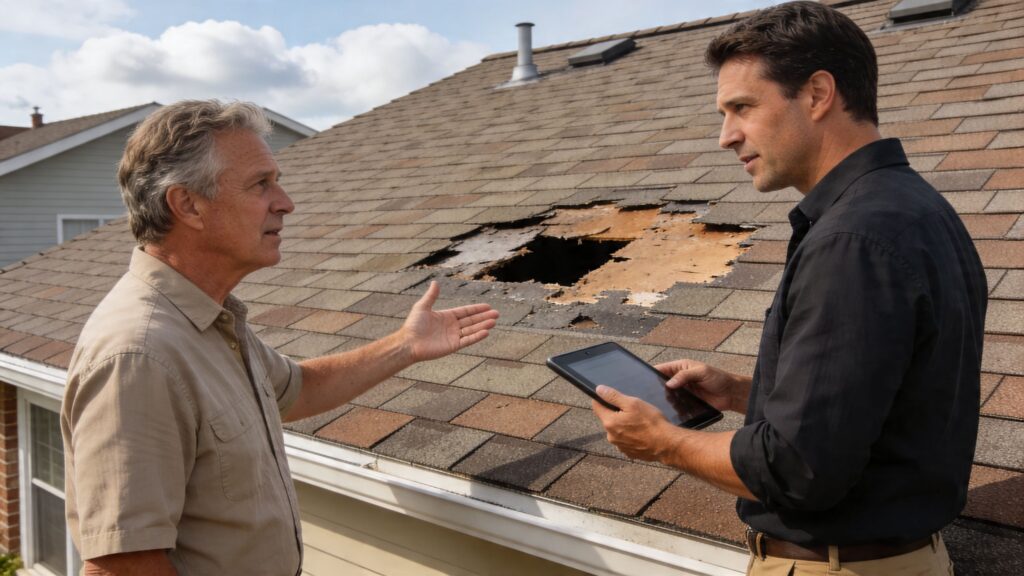
The inspection starts from the ground, but it cannot stop there. Ground-level views help spot sagging ridgelines, uneven roof planes, displaced tiles, missing shingle tabs, staining at soffits, gutter overflow patterns, and drainage problems that suggest ponding or repeated runoff in the wrong places.
Close inspection on the roof adds the detail that homeowners usually never get from a quick walk-around. Field materials are checked for wear, movement, exposure, fastening problems, and patchwork. Valleys, ridges, wall flashings, drip edge, skylight curbs, vent pipes, satellite mounts, and plumbing penetrations get special attention because those areas fail before the main field in many leak calls I see. A useful inspector identifies the exact defect, its location, and the likely consequence if it stays uncorrected through another rainy season or tropical system.
On larger homes, steep roofs, and fragile tile systems, drone imaging helps document conditions without causing foot-traffic damage. It also gives clean overhead views of transitions and drainage patterns that are hard to judge from one ladder position. In Boynton Beach, that matters after wind events, where a few lifted edges or shifted tiles can be easy to miss from the ground but obvious in aerial roof inspection imagery.
Attic and interior review
The attic is where hidden roof problems show up early. A roof can look decent from outside and still be pulling in moisture around a vent, flashing edge, or old repair seam.
Inspectors should check for water staining on decking and framing, damp or compressed insulation, rusted fasteners, mold growth, and daylight at joints or penetrations. Ventilation gets checked too, because trapped heat and moisture shorten the service life of underlayment, sheathing, sealants, and fasteners. In our climate, humid attic air is not a small side issue. It often explains why one section ages faster than the rest.
Thermal imaging adds another layer that standard visual inspections miss. Used correctly, it helps identify temperature differences that can point to trapped moisture below the surface, especially after recent rain or around low-slope areas, penetrations, and flashing transitions. It is not a substitute for hands-on inspection, but it is a strong tool for finding hidden wet areas before they stain a ceiling.
For homeowners planning solar, roof condition needs to be verified before any panel mounts go in. Solar And Roof: Your Guide To Florida Installations is useful background because it explains how roof age, penetrations, and attachment points affect rooftop solar work in Florida.
Code details and installation details
Inspection quality shows up in the small parts of the roof system. Boots, vent heights, fastener placement, underlayment laps, flashing terminations, and wall transitions are the details that separate a roof that survives our weather from one that keeps showing up on leak calls.
That kind of defect rarely looks dramatic from the driveway. It shows up later as attic moisture, stained decking, soft wood around penetrations, and interior damage after repeated summer rains.
What a useful report should include
A roof inspection report should be clear enough to make a repair decision from. At minimum, it should include:
- Photos of each finding with enough detail to show the condition clearly.
- Exact location references by slope, section, room area, or penetration type.
- Notes that separate active failure from age-related wear so you know what needs repair and what needs monitoring.
- Repair recommendations tied to the observed condition, not vague language like “roof has issues.”
- Supporting images from drone or thermal scans when those tools were used so hidden moisture or limited-access defects are documented properly.
If a report only says the roof looks good or has damage, it does not give a homeowner much to work with. A solid inspection should show what is failing, where it is failing, and how urgent the correction is.
Common Issues Found on South Florida Roof Types
The material on your roof changes what inspectors look for first. A shingle roof in Boynton Beach fails differently than a tile roof. Metal has its own trouble spots. Flat roofs are a separate category altogether because water movement is less forgiving.
Homeowners often hear “your roof has some wear” and don’t know what that means. The better question is, wear where, and on what material?
What shows up on shingle roofs
Asphalt shingle roofs in South Florida usually show their age in the protective surface before they show it in structure. Granule loss is one of the first things inspectors look for because once that protective layer wears down, the shingle body becomes more vulnerable to sun and weather.
Common trouble areas include curling edges, loose or creased tabs after wind events, exposed nail heads, and failing pipe boots. On roofs with patch history, mismatched repair zones often tell you where recurring problems have already started.
What inspectors watch on tile roofs
Tile roofs are durable, but they can fool homeowners because the field tile may still look solid while the waterproofing below has aged. Cracked tiles, broken corners, slipped pieces, and movement at ridges are the visible items. Underlayment deterioration is often the hidden one.
The internal guidance used in local code review is especially relevant here. It notes that inspections on clay and concrete tile roofs target cracked tiles, broken corners, and deteriorated underlayment, and ties tile failure in South Florida’s temperature swings to a large share of post-storm leaks. That’s why a tile inspection can’t stop at “a few cracked tiles.”
Metal and flat roof failure points
Metal roofs hold up well in coastal conditions when installed correctly, but the fasteners, seams, flashings, and dissimilar metal connections deserve close attention. In Boynton Beach, salt exposure makes corrosion review part of the inspection, not an afterthought.
Flat and low-slope systems are less forgiving about drainage. Standing water, membrane splits, open laps, soft spots, and edge termination problems are common concerns. A flat roof may not show dramatic damage from the ground, but water can travel far from the visible entry point before it appears inside.
Roof inspection checklist by material type
| Roof Type | Primary Concerns | Secondary Checks |
|---|---|---|
| Shingle | Granule loss, lifted tabs, missing shingles, boot failure | Valleys, ridge caps, flashing seals, attic moisture signs |
| Tile | Cracked or slipped tiles, broken corners, underlayment wear | Ridge condition, debris buildup, flashing at walls and penetrations |
| Metal | Corrosion, loose fasteners, seam issues, flashing separation | Panel movement, sealant aging, transitions, edge details |
| Flat | Ponding water, membrane wear, open seams, edge failures | Drain flow, penetrations, soft decking signs, interior staining |
A visual reference can help homeowners understand how defects look in the field. This roof condition image example is the kind of close-up view that makes inspection notes easier to follow.
Tile, metal, shingle, and flat roofs all leak differently. The inspection has to match the system, not use one generic checklist for every house.
Understanding Costs, Insurance, and Boynton Beach Permits
A homeowner in Boynton Beach usually gets concerned about cost after the first ceiling stain shows up or after an insurer asks for updated roof information before renewal. At that point, the inspection needs to answer three practical questions fast. What will this cost, what type of report does insurance need, and does the repair require a permit?
Those answers depend on the purpose of the inspection.

What inspections usually cost
In this market, inspection pricing varies based on roof size, access, pitch, attic entry, report detail, and whether the inspector uses tools like drone photography or thermal imaging. A quick look from the ground costs less than a documented inspection with moisture tracing, attic review, marked photos, and written repair priorities.
That difference matters.
Free inspections are often tied to a repair or replacement proposal. Paid inspections usually provide a cleaner paper trail, which helps when you need records for insurance, a home sale, or a second opinion before authorizing work. On older South Florida roofs, I strongly prefer a documented report because hidden moisture and storm-related damage do not always show up in plain sight.
If you want to see the kind of branded inspection documentation homeowners often receive, this roof inspection report branding example shows the type of company identification commonly attached to photos and written findings.

Insurance inspections serve a different purpose
A roof condition inspection is not the same as an insurance inspection. Homeowners mix those up all the time, and it causes delays.
A 4-point inspection is generally used by insurers to review the age and condition of major systems. A wind mitigation inspection focuses on features that can improve storm resistance ratings, such as roof deck attachment, secondary water resistance, and opening protection. In Boynton Beach, where hurricane exposure is part of normal life, the wind mitigation side can affect premium discounts, but only if the form is completed correctly and supported by visible evidence.
This is also where better tools earn their keep. Drone images help document steep slopes, upper ridges, and fragile tile areas without unnecessary foot traffic. Thermal imaging can help flag trapped moisture that has not stained the ceiling yet, especially after wind-driven rain. Standard visual inspections still matter, but on coastal roofs, advanced imaging often catches the issues that turn into claim disputes later.
Permits in Boynton Beach are not a guessing game
Once an inspection finds real damage, the next decision is scope. Small maintenance items may stay in the service category. Larger repairs can cross into permit-required work quickly, especially if the job affects underlayment, decking, drainage details, or a significant percentage of the roof area.
For commercial properties, local guidance often points contractors back to repair limits and Building Division approval. Residential owners should treat that as a warning sign too. If the repair grows beyond a small isolated fix, confirm the permit path before work starts. That protects you during reinspections, insurance questions, and future resale.
A practical rule of thumb:
- Minor maintenance: Small sealant repairs or a limited replacement of easily accessible components may be handled as service work.
- Larger roof repairs: Widespread storm damage, underlayment failure, deck replacement, or large tile or shingle sections usually require closer code review.
- Unclear scope: Ask the inspector to define the repair area in writing, then verify requirements with the local building department.
Homeowners who are also comparing bids can benefit from this checklist on what to ask a contractor before hiring. It helps separate a real inspection process from a quick sales appointment.
Unpermitted roof work has a long tail. The leak may stop, but the paperwork problem shows up later.
How to Choose a Top Boynton Beach Roofing Inspector
A Boynton Beach homeowner usually calls for an inspection after a ceiling stain shows up, a storm passes through, or the insurance company asks for documentation. By that point, the wrong inspector can cost you twice. First in missed damage, then in bad repair decisions.
Choose someone who understands how South Florida roofs fail. Salt air shortens the life of exposed metal. Wind-driven rain gets under tile and flashing in places a quick walkover will miss. Humid attics can make a roof problem look like an interior moisture problem, or the other way around. A useful inspector knows the difference and documents it clearly enough that you can act on it.
Questions that separate real inspectors from quick estimators
Start by asking how the inspection is performed, not how fast they can quote repairs. A real inspector should explain roof access, attic review, drainage checks, flashing evaluation, moisture detection, and how findings are reported.
Ask these questions:
- Do you inspect the attic along with the roof surface? If they skip the attic, they may miss underside staining, wet decking, poor ventilation, and hidden leak paths.
- How do you inspect steep sections, upper transitions, and fragile tile areas? The answer should include a safe method for hard-to-reach areas, not guesswork from the ground.
- Do you provide a written report with labeled photos? Homeowners need more than a verbal opinion, especially for insurance, resale, or comparing repair bids.
- How do you check for moisture that is not visible yet? In Boynton Beach, hidden moisture is often the problem that turns a small repair into deck replacement.
If you want a broader screening tool for service providers, what to ask a contractor before hiring is a useful companion.
Why drone and thermal imaging matter in Boynton Beach
Standard visual inspections still matter, but they are not enough on every home. I have seen plenty of roofs that looked serviceable from the eave and told a different story at a valley transition, chimney cricket, or second-story wall flashing.
Advanced tools close that gap.
As MM Roof Repair notes on its Boynton Beach page, thermal imaging can detect 30 to 50% more moisture intrusion than visual-only inspections in Florida’s humid climate, and drone inspections average $200 to $400 while helping prevent over $5,000 in repairs from undetected damage, particularly from salt-induced corrosion on coastal properties. Those numbers fit what inspectors see in the field. Drones reduce foot traffic on brittle tile and let the inspector capture upper details safely. Thermal imaging helps flag trapped moisture below the surface before stains show up indoors.
That matters most on coastal homes, older roofs with patchwork repairs, and houses where solar panels, height, or complex geometry block a clean visual line.
What modern reporting should look like
A proper report should show the whole roof, not just a few close-ups of obvious trouble spots. Homeowners should expect overview photos, detail photos, attic evidence when accessible, and notes that connect each symptom to a likely cause and recommended next step.
One local example of a provider that includes roof inspections among its services is Paletz Roofing and Inspections service identification. The important point is the format, not the logo. The report should make it easy to separate immediate repair items from conditions that should be monitored, and it should clearly show areas that could not be fully accessed.
Ask one final question before booking. “How do you handle hidden moisture and inaccessible areas?” An experienced Boynton Beach roofing inspector should have a clear answer, because those are the spots where expensive mistakes usually start.
Your Pre-Inspection Checklist for a Smooth Process
Homeowners can make a roof inspection faster and more accurate with a little prep. You don’t need to do technical work. You just need to remove the obstacles that keep the inspector from seeing the full picture.
What to do before the inspector arrives
- Clear attic access: Move stored items away from the attic hatch so the inspector can get in safely and see the framing and sheathing.
- Gather paperwork: Keep past repair invoices, warranty papers, permit records, and any insurance correspondence in one place.
- List known issues: Write down when you first noticed stains, drips, musty smells, or higher humidity in certain rooms.
- Open access around the home: Open gates and move vehicles if they block ladder setup areas.
- Trim light vegetation if possible: Overhanging branches and heavy leaf buildup can hide roof edge conditions.
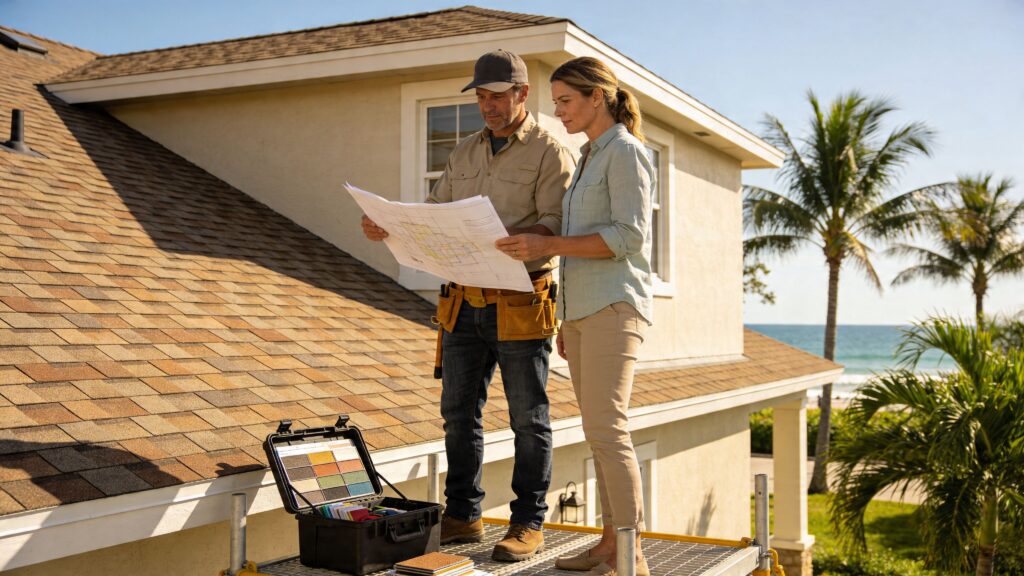
A simple visual example of roof-related problem areas can help you think through what to mention before the appointment. This inspection prep image reference is useful for spotting the kinds of visible conditions homeowners often forget to report.
What not to do
Don’t pressure wash the roof right before the inspection. Don’t apply roof cement or caulk over suspected leak areas to “help.” And don’t assume an old stain is irrelevant just because it’s dry now.
Those shortcuts can hide clues the inspector needs. The more original the conditions are, the easier it is to diagnose the source correctly.
Frequently Asked Questions About Roof Inspections
What happens if the inspector finds major damage
The next step depends on what kind of damage it is. Some issues can be addressed with targeted repairs. Others point to system failure, code-related concerns, or damage that needs permit review before work starts.
A good report should separate immediate concerns from watch-list items. That lets you prioritize safety and water entry first, then schedule secondary corrections in a sensible order.
Can a roof inspection help lower homeowners insurance
It can, if the inspection supports a wind mitigation review or documents features your insurer wants verified. The inspection itself doesn’t create a discount automatically. The value is in the documentation and whether the roof and related components meet the insurer’s criteria.
How long does a typical inspection take
It depends on roof size, complexity, accessibility, roof type, attic conditions, and whether advanced tools are used. A straightforward single-family home moves faster than a large home with multiple roof sections, tile details, and limited attic access.
If the inspector is thorough, that’s time well spent. Rushed inspections miss the details that become expensive later.
Is a free roof inspection trustworthy
Sometimes yes, sometimes no. A free inspection can be perfectly useful if the contractor is transparent and the purpose is to identify repairs or quote work. It becomes less useful when it’s only a sales conversation with little documentation.
Ask what you’ll receive at the end. If the answer is vague, expect a vague result.
Should I schedule an inspection if I don’t see a leak
Yes, especially in Boynton Beach. Many roof problems start subtly. Moisture can move through underlayment, decking, and attic spaces before it ever marks a ceiling. By the time you see water indoors, the repair is often larger than it would have been earlier.
Are drone and thermal inspections worth it
On many South Florida homes, yes. They’re especially useful for steep roofs, fragile tile systems, coastal corrosion review, and homes where hidden moisture is suspected but not yet visible inside. They aren’t a gimmick when used correctly. They’re diagnostic tools.
If you want a documented roof inspection Boynton Beach homeowners can use for maintenance planning, storm prep, or follow-up repairs, Paletz Roofing and Inspections provides residential and commercial roofing inspections across Palm Beach County and South Florida.