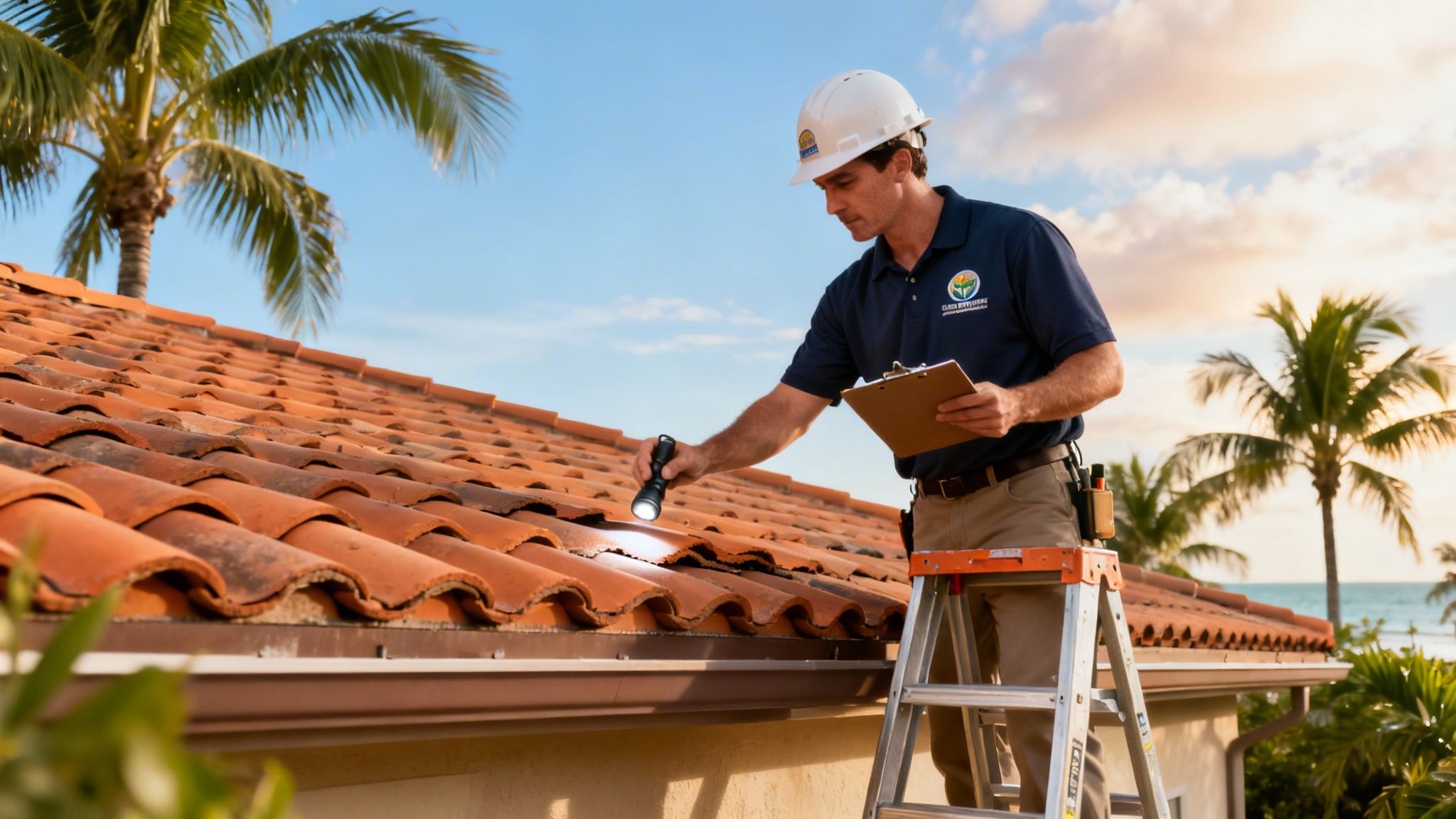
In West Palm Beach, getting a professional roof inspection is the single most important preventative step you can take to protect your home. Think of it as an essential health check-up for your property, designed to catch small issues before they spiral into catastrophic failures—especially with hurricane season always on the horizon.
Why a Roof Inspection Is Your Best Defense in West Palm Beach

Your roof is your home’s primary shield against South Florida’s beautiful but incredibly harsh environment. It’s in a constant battle with a trio of aggressive elements that can silently chip away at its integrity. A proactive roof inspection in West Palm Beach isn’t just a quick look from the driveway; it’s a thorough assessment meant to fortify that shield.
This one move is your best defense against the sticker shock of unexpected, massive repair bills. By finding vulnerabilities early, you get to fix them on your own schedule—not in a frantic, post-storm emergency.
The Unforgiving Florida Climate
Living in paradise has its trade-offs, and your roof pays the price every single day. The weather here is relentless, creating a perfect storm of potential damage that makes regular inspections a necessity, not a choice. The main threats include:
- Intense UV Radiation: That year-round sunshine is brutal on roofing materials. It makes them brittle, causes cracks, and strips away protective granules, aging your roof much faster than in milder climates.
- Corrosive Salt Air: Being near the coast means a constant mist of salt-laden air. This moisture is incredibly corrosive, causing rust on metal parts like flashing, fasteners, and gutters, which creates perfect entry points for water.
- Hurricane Threats: From June through November, the danger of high-velocity winds and torrential, driving rain is a constant worry. A minor, pre-existing weak spot can be torn open by a storm, leading to devastating damage.
A proactive roof inspection is the smartest investment a homeowner can make. It transforms roof care from a reactive, expensive emergency into a planned, affordable maintenance task. It’s the difference between a $500 repair and a $25,000 replacement.
More Than Just a Look
A professional inspection gives you more than a simple list of problems; it delivers peace of mind and actionable intelligence about your home's condition. It’s all about making sure your home is prepared, compliant, and secure. For a visual example of what our inspectors are looking for, you can learn more about the common signs of roof damage that we frequently identify.
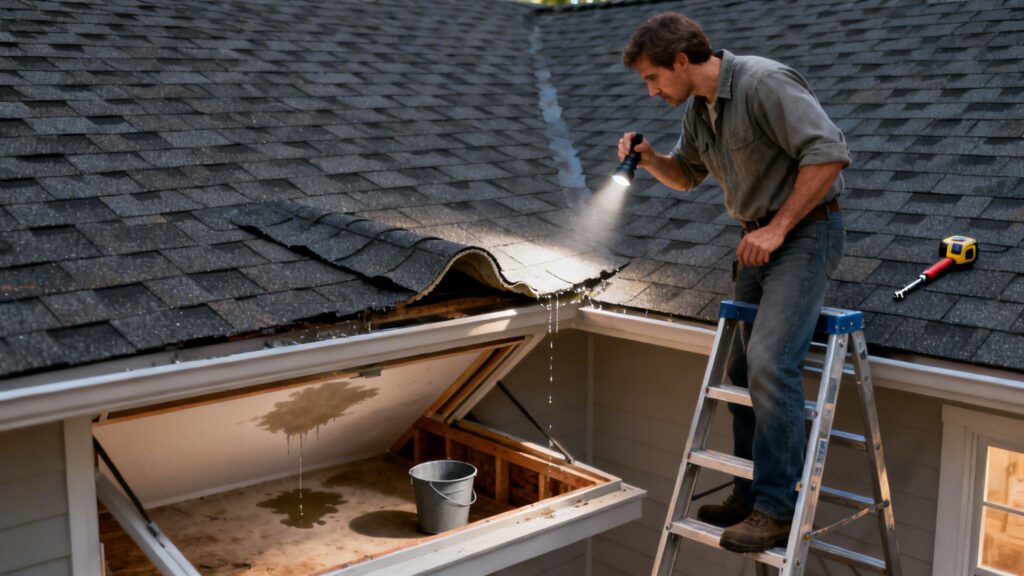
This detailed evaluation confirms that your roof is truly ready for storm season and meets the strict Palm Beach County building codes. Ultimately, a thorough roof inspection West Palm Beach homeowners can rely on is an investment in stability, ensuring your home stays a safe haven, no matter what the weather throws at it.
Understanding the Costs of Protecting Your Home
Putting a little money into a professional roof inspection is easily one of the smartest financial moves a West Palm Beach homeowner can make. Think of it this way: you can spend a little now, on your own terms, or spend a lot later during a crisis. The price of a thorough, expert assessment is just a tiny fraction of what an emergency roof replacement costs after a hurricane exposes a weakness you never knew you had.
Of course, the price for a roof inspection in West Palm Beach isn't one-size-fits-all. The final cost will shift based on your roof's size, its material—whether tile, shingle, or metal—and how complex the design is. A roof with multiple levels or a steep pitch will naturally require more time to inspect. Still, this preventative service is a genuinely affordable line item in any home maintenance budget.
That modest expense is your ticket to dodging a five-figure financial headache. A detailed inspection report gives you the power to plan for future repairs or a replacement on your schedule, not in the middle of a high-stress, post-storm scramble.
The Financial Chasm Between Inspection and Replacement
The gap between paying for a proactive inspection and reacting to a failed roof is massive. One is a planned investment in your home's health, while the other is an unplanned catastrophe that demolishes budgets and throws your life into chaos.
To put this into perspective, let's look at the real numbers homeowners are facing. The roof replacement market in West Palm Beach has seen considerable investment in 2026 as residents rightly prioritize protecting their property. For a typical 1,500 to 2,000-square-foot home, a full roof replacement can run anywhere from $12,000 to over $40,000, all depending on the materials you end up choosing. You can learn more about these local roof replacement costs and material lifespans in West Palm Beach.
A few hundred dollars for an inspection hands you the critical information needed to sidestep that massive outlay. It's the single most effective way to safeguard both your budget and your home.
A Breakdown of Roof Replacement Costs
When an inspection does reveal that a roof is at the end of its life, knowing your replacement options is key. When thinking about the long-term protection of your home, it's crucial to understand the financial side of maintenance and potential repairs. This involves looking into options for dependable and Affordable Roofing Contractors who can provide the services you need.
Here’s a quick look at what a replacement might cost, broken down by material, which varies widely in price and durability:
- Asphalt Shingles: This is the most common budget-friendly option, typically costing $12,000 to $18,000 and giving you a lifespan of 15-25 years.
- Standing Seam Metal: A far more durable, storm-resistant choice that runs from $16,000 to $36,000. It's an investment that can last 40-70 years.
- Concrete or Clay Tiles: The premium choice for both looks and longevity, costing anywhere from $20,000 to $50,000+ but lasting well over 50 years.
These numbers really drive home why extending the life of your current roof through regular inspections is so valuable. An inspector can spot and fix minor issues like a few loose tiles, failing flashing, or small leaks, effectively pushing that major replacement expense much further down the road.
Investing in an annual roof inspection is like paying a small insurance premium. You're guarding against the much larger financial hit of a premature roof failure, ensuring your home remains protected for years to come.
Ultimately, the cost of a roof inspection West Palm Beach residents pay isn't just an expense—it's an investment in financial security. It gives you the knowledge to manage your home’s biggest asset effectively, empowering you to make smart, cost-saving decisions that protect your property and your wallet.
What Happens During a Professional Roof Inspection
So, what actually happens when a professional shows up to inspect your roof? It’s far more than just a quick look from the driveway. Think of it less like a simple check-up and more like a forensic investigation. A true professional is a detective, meticulously searching for clues about your roof's health before a small issue becomes a catastrophe.
The process isn't just about climbing a ladder. It starts with a conversation. We’ll ask you about your roof's age, any leaks you’ve noticed, or specific worries you might have. This groundwork gives us crucial context, guiding our eyes to potential trouble spots. A thorough, step-by-step inspection is the only way to uncover the hidden problems a casual glance will always miss.
The Exterior Ground-Level Review
Believe it or not, the inspection begins with both feet planted firmly on the ground. Your inspector will walk the entire perimeter of your home, scanning for tell-tale signs of trouble visible from below. This is a critical first step that paints a picture of the roof’s overall system and flags areas that need a closer look.
During this walk-around, we’re zeroed in on a few key things:
- Fascia and Soffits: We’re looking for rot, stains, or even damage from pests, which often point to drainage failures or unwelcome critters making a home where they shouldn't be.
- Gutters and Downspouts: Are they sagging, blocked, or pulling away from the house? Any of these can cause water to back up and seep right under your shingles.
- Siding and Windows: Water stains running down the siding are a dead giveaway that something is wrong with the flashing or that your gutters are overflowing.
This initial survey gives us a holistic view of how your roof is performing as part of a larger system. It’s all about context before we get to the main event.
The Detailed On-Roof Evaluation
This is where the real detective work happens. Once safely on the roof, the inspector performs a hands-on, methodical examination of every single component. We move across the entire roof surface, taking detailed notes and photos to document exactly what we find.
Here are the key areas of focus during this part of the roof inspection in West Palm Beach:
- Roofing Material Condition: For shingles, this means checking for any curling, cracking, missing tabs, or significant granule loss. With tile roofs, we’re hunting for cracks, chips, or any tiles that have slipped out of place. On metal, it's all about rust, corrosion, and loose panels.
- Flashing and Seals: These are the usual suspects for leaks. We pay extremely close attention to the flashing around chimneys, vents, and skylights to make sure those seals are watertight.
- Drainage Systems: The valleys on your roof must be clear of debris to handle Florida’s torrential downpours. We ensure the entire drainage path is unobstructed.
- Structural Integrity: An experienced inspector can feel problems under their feet. We’ll gently walk the roof to detect any soft spots, which are a serious red flag for underlying rot in the roof deck.
This process is designed to catch problems early, which is the key to saving you money down the road.

As you can see, a small investment in a thorough inspection is your best defense against the massive expense of a full, premature roof replacement.
A comprehensive inspection doesn't just look at one or two things; it's about evaluating how all the different parts of your roof work together. Here's a quick breakdown of what a professional is really looking for.
What a Professional Roof Inspection Covers
| Inspection Area | What We Look For | Why It's Critical in West Palm Beach |
|---|---|---|
| Roofing Materials | Cracks, granule loss, curling (shingles); slipped or broken tiles; rust or loose panels (metal). | Intense UV rays and heat bake materials, causing them to become brittle and fail much faster. |
| Flashing & Seals | Gaps, rust, or deterioration around chimneys, vents, and skylights. | These penetration points are the #1 source of leaks during our heavy rain seasons and tropical storms. |
| Structural Decking | Soft spots, sagging, or visible rot (checked from roof surface and attic). | High humidity can trap moisture, leading to wood rot that compromises your roof's entire structure. |
| Drainage System | Clogged gutters, blocked valleys, and improper water flow. | A blocked drainage system during a downpour can force water under your roof in minutes. |
| Attic & Ventilation | Moisture, mold, poor airflow, and signs of daylight. | Poor ventilation traps super-heated, moist air, which cooks shingles from below and fosters mold growth. |
This multi-point check ensures we see the complete picture, not just the surface-level symptoms. It's the only way to provide an accurate diagnosis of your roof's health.
The Final Interior and Attic Check
The last, and arguably one of the most important, pieces of the puzzle is found inside your home—specifically, in the attic. This is where the earliest signs of a leak often appear, long before you ever see a stain on your living room ceiling.
An attic inspection is non-negotiable. It's where the most subtle signs of roof failure show up first. We’re talking about minor leaks, poor ventilation, and moisture buildup that can quietly lead to a major mold problem.
Up in the attic, we’re hunting for:
- Water Stains or Drips: Checking the underside of the roof deck for dark spots, discoloration, or active moisture.
- Inadequate Ventilation: We make sure intake and exhaust vents are clear. If air can’t flow, your attic will bake your roof from the inside out.
- Daylight Penetration: If you can see daylight shining through the roof deck, you have a hole. It's as simple and as serious as that.
This final interior check confirms what we found on the outside and gives us a complete, 360-degree view of your roof's condition. For a better idea of what we often uncover, take a look at our visual guide to common types of roof damage. This three-part process is the only way to be certain your home is secure.
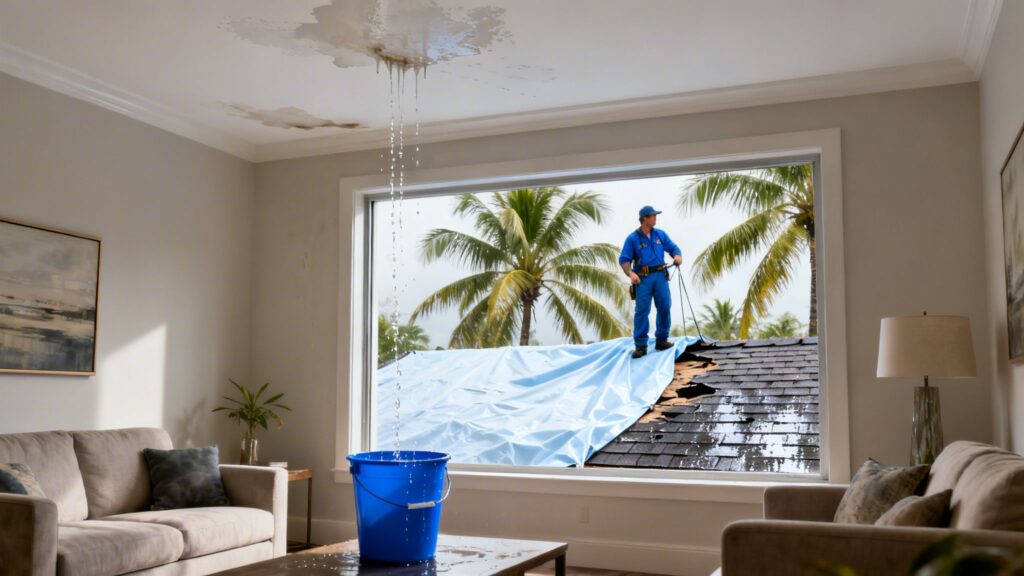
Common Roof Problems Found in West Palm Beach

A roof in West Palm Beach weathers a storm of threats that homeowners in other parts of the country never have to consider. Forget generic advice. Your roof is in a constant battle with hurricane-force winds, corrosive salt air, blistering UV radiation, and suffocating humidity. These aren't just minor annoyances; they create very specific kinds of damage that only a local expert can spot.
Knowing what you’re up against is the first step toward protecting your home. A professional roof inspection in West Palm Beach isn't just a quick look for leaks. It’s a specialized assessment designed to catch the early warning signs of failure caused by our unique South Florida climate, giving you time to act before a small issue turns into a full-blown disaster.
The Hurricane and High-Wind Threat
Living in a hurricane-prone area means your roof is built to endure incredible forces. Hurricane winds don't just skim over your roof; they generate a powerful uplift pressure that actively tries to rip it right off your home. It’s one of the most common and destructive problems we encounter during post-storm inspections.
This wind uplift is the culprit behind several major issues:
- Lifted Shingles and Broken Seals: Wind worms its way under the edges of asphalt shingles, breaking the tar seal that glues them down. Once a shingle is lifted, it’s only a matter of time before it’s torn off completely.
- Cracked or Dislodged Tiles: Tile roofs are tough, but they aren't invincible. Extreme winds can make tiles rattle and smash against each other, causing cracks. In severe cases, the wind can lift them right out of position, exposing the vulnerable underlayment beneath.
- Damaged Underlayment: When shingles or tiles go missing, the critical waterproof barrier underneath is left exposed. It's now susceptible to direct hits from wind and rain, which often leads to immediate leaks inside your home.
The integrity of your roof after a storm is only as good as its weakest point before the storm hit. A single loose shingle or cracked tile is an open invitation for wind and water to get inside.
The Silent Damage from Salt and Sun
Even on a calm, sunny day, your roof is under assault. The combination of intense solar radiation and airborne salt from the nearby Atlantic creates an environment that slowly but surely corrodes and degrades your roof. This silent damage is just as destructive as any hurricane, it just works on a longer timeline.
A detailed inspection can pick up on the subtle signs of this accelerated aging.
- UV Degradation: The sun’s rays are absolutely brutal on roofing materials. They bake asphalt shingles, turning them brittle and stripping them of their protective granules. If you see a collection of these tiny granules in your gutters, it’s a red flag that your shingles are aging far too quickly.
- Salt Air Corrosion: Metal components are particularly at risk. The salty moisture carried in the air aggressively rusts everything from flashing and fasteners to nails and entire metal roof panels. A single rusted fastener can fail, letting a tile or panel come loose and creating a new entry point for water. You can see more examples in our visual guide to common roof damage types.
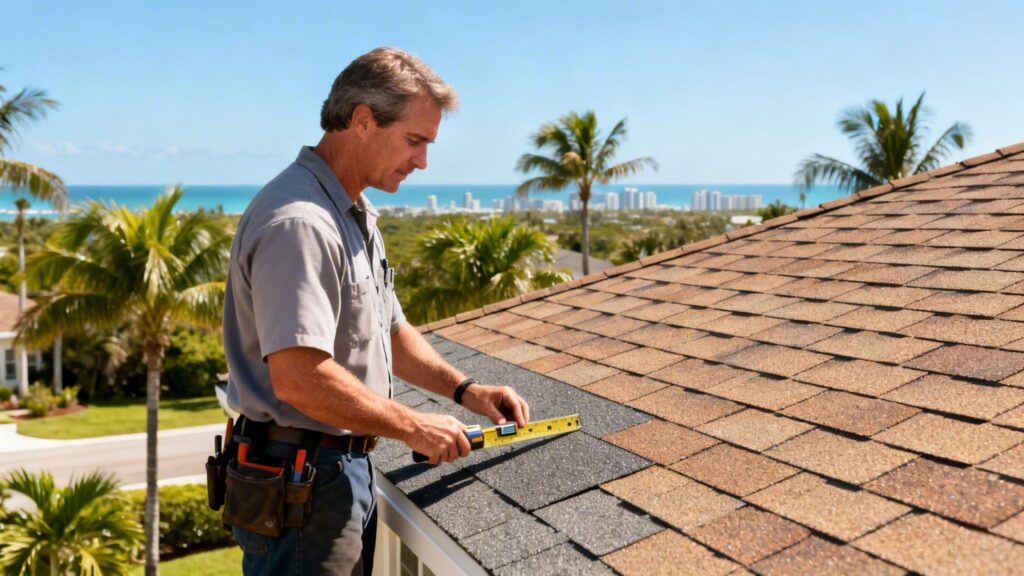
Humidity's Role in Mold and Algae Growth
South Florida’s legendary humidity is the final piece of this destructive puzzle. It creates the perfect breeding ground for organic growth that goes beyond cosmetic ugliness—it can actively harm your roof.
The constant moisture in the air fuels the growth of algae and mold, especially on the shaded or north-facing parts of a roof. Those ugly black streaks you see on so many roofs around here? That's an algae called Gloeocapsa magma. It might look harmless, but it actually feeds on the limestone filler used in asphalt shingles, slowly eating away at them and shortening their lifespan.
A thorough roof inspection will identify not only the presence of this growth but, more importantly, the underlying moisture problems that are feeding it. If you let it go, this growth can lead to rot in the actual roof decking—a much more serious and expensive problem to fix. All these local issues underscore why a specialized roof inspection West Palm Beach homeowners can trust is so much more valuable than any generic checklist.
Navigating Insurance and Palm Beach County Building Codes
After a professional roof inspection in West Palm Beach, the report you get is far more than just a repair checklist. It’s a powerful document that can unlock insurance coverage, trigger significant savings, and give you real peace of mind knowing your home is up to code with strict local regulations. For any homeowner in South Florida, the health of your roof, your insurance policy, and local building codes are all tied together.
Think of your roof inspector as your personal guide through this complicated red tape. Their job is to make sure your roof is not only physically sound but also checks every box for insurance carriers and the Palm Beach County Building Division. A quality inspection report delivers the official proof you need to satisfy both.
Insurance Inspections Versus Maintenance Inspections
It’s important to know that not all roof inspections are created equal. A general maintenance check gives you a solid overview of your roof's condition, but when an insurance company gets involved, they demand specific, standardized reports. Understanding the difference is the key to getting the coverage you need without any hassles.
- 4-Point Inspection: This is a common requirement for older homes, especially when you’re trying to get a new policy or renew an existing one. It zeroes in on the four major systems: the roof, electrical, plumbing, and HVAC. For the roof part, insurers want to confirm its age, material, and how much useful life it has left.
- Wind Mitigation Inspection: This is an absolute game-changer for Florida homeowners. This inspection officially documents your roof's features that make it resistant to storms—things like its shape, how the trusses are connected to the walls, and whether you have a secondary water barrier. A good wind mitigation report can earn you serious discounts on your insurance premiums.
A thorough roof inspection in West Palm Beach from a qualified professional will give you all the documentation you need for both types of insurance reports, putting you in the best position for better coverage and lower costs.
What Insurers Are Looking For
When an insurance underwriter looks at your roof inspection report, they’re doing a risk assessment, plain and simple. They are hunting for specific red flags that point to a higher chance of future claims, particularly after a big storm rolls through.
An insurance carrier sees an aging or damaged roof as a ticking financial time bomb. A clean inspection report proves your roof is a safe bet, making it easier to secure or maintain coverage at a reasonable rate.
Insurers focus heavily on the estimated remaining lifespan of your roof. Many carriers will flat-out refuse to insure a shingle roof over 20 years old or a tile roof over 25 years old unless you have concrete proof of its excellent condition. The photos and detailed notes from a professional inspection provide exactly that.
Adhering to Strict Palm Beach County Building Codes
Palm Beach County sits in a High-Velocity Hurricane Zone (HVHZ), which means we have some of the toughest building codes in the entire country. These codes aren't just suggestions; they are mandatory rules designed to make sure every home can stand up to severe weather. A proper roof inspection is your way of verifying that your roof is fully compliant.
The roofing industry's positive outlook for 2026 points to steady market growth, which is great news for homeowners looking for competitive pricing and more service options. This growth is overseen by the Palm Beach County Building Division, which has its main office at 2300 N. Jog Road in West Palm Beach and a South County office in Delray Beach to ensure permitting and compliance support is always accessible. With field inspectors available daily, projects stay on the right track.
An experienced inspector knows these local codes like the back of their hand. They’ll ensure that any repair or replacement work meets every single requirement, from the type of nails used to the specific pattern of the underlayment. This protects you from fines, the nightmare of having to tear off non-compliant work, and major roadblocks when you try to sell your home. A compliant roof is a safe, insurable, and valuable roof.
Frequently Asked Questions About Roof Inspections
Even after breaking down the inspection process, it's natural to have a few more questions. Homeowners often ask us about the practical side of getting a roof inspection in West Palm Beach, and we believe in giving straight, honest answers.
This section tackles the most common queries we hear. We’ll cover inspection frequency, how to get your home ready, and what to do if we find any issues, so you can move forward with total confidence.
How Often Should I Get My Roof Inspected?
For any homeowner in West Palm Beach, a proactive approach is your best defense. We strongly recommend having your roof professionally inspected twice a year to catch small issues before they become expensive disasters. The ideal timing is strategic:
- Late Spring (May/June): Think of this as your pre-hurricane season check-up. We identify and fix any weak spots before the storms roll in, making sure your roof is ready for high winds and torrential rain.
- Late Fall (November/December): A post-season inspection is just as vital. It lets us assess for any subtle damage that might have occurred, even if your roof looks fine from the ground.
You should also book an inspection immediately after any major weather event, like a named storm or a significant hailstorm. Don't wait for a leak to appear.
It’s a lot like a pre-season check-up for a sports team. You want to make sure your players are ready for the big game, and afterward, you review their performance to plan for the next season. The same principle applies to protecting your roof.
How Do I Prepare My Home for an Inspection?
Getting your home ready for an inspection is simple and helps the entire process run smoothly. The main thing is to give our inspector safe and clear access to the key areas of your property, both outside and in.
Here’s a quick checklist to help out:
- Clear the Perimeter: Please move any items like patio furniture, grills, potted plants, or toys away from your home’s foundation. This creates a safe path for our inspector to walk and set up ladders.
- Ensure Attic Access: The attic is a critical inspection point. Please make sure the access hatch isn't blocked. If it's inside a closet, just clearing a small area can make a huge difference.
- Secure Any Pets: For everyone's safety—your pets' included—please keep them secured inside or in a fenced-off part of the yard while the inspection is underway.
Do I Need to Be Present for the Inspection?
You don't have to be home for the exterior inspection, but we absolutely recommend being there for the start and the finish. Showing up at the beginning lets you point out any specific concerns you have, like a leak you've noticed or an odd sound you've heard during a storm.
More importantly, being there at the end lets our inspector walk you through the findings right away. They can show you photos on the spot, explain any areas of concern, and answer your questions directly. This immediate feedback is the best way to understand your roof’s health and make smart decisions.
What Happens if Problems Are Found?
If our inspection turns up any issues—whether it’s a few minor repairs or signs that a full replacement is on the horizon—we don't just drop a report in your lap. We take the time to give you a clear, easy-to-follow explanation of the problems, how severe they are, and what we recommend.
Everything will be documented with photos, and we’ll provide a detailed, no-pressure estimate for any necessary work. Our first job is to give you the knowledge you need. We’ll lay out all your options, discuss the pros and cons of each, and help you find the right solution for your budget and timeline.
Don't leave your home’s safety to chance. Paletz Roofing and Inspections provides the expert, detailed assessments you need to ensure your roof is ready for anything South Florida can throw at it. Schedule your roof inspection in West Palm Beach today!