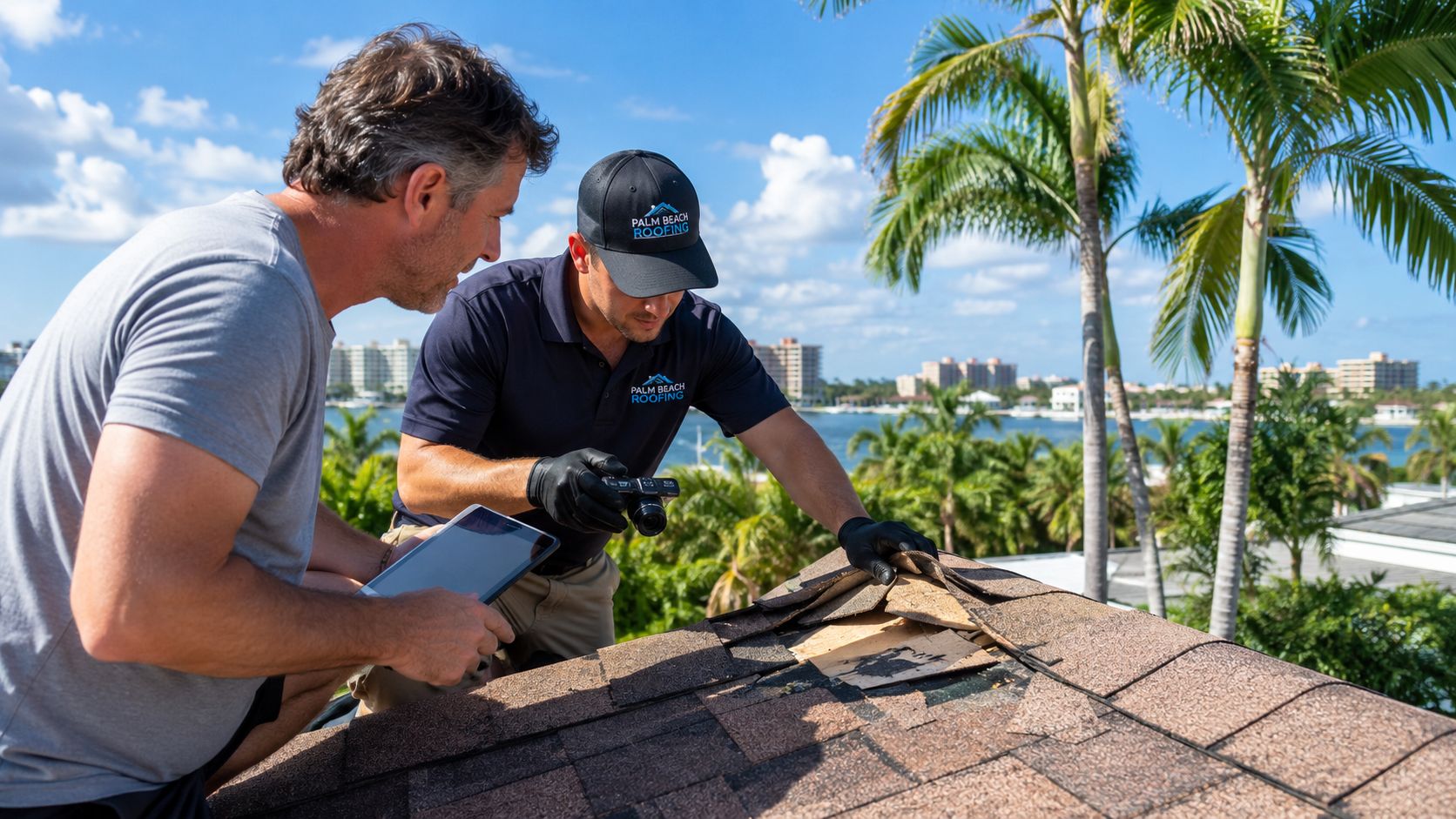
You just spotted shingles in the yard after a hard West Palm Beach squall, or maybe you're looking at a brown stain spreading across the ceiling and wondering whether you're already behind. Don't wait for the next rain band to make the decision for you. Roof insurance claim assistance in West Palm Beach only works when you move fast, document hard, and keep the claim inside Florida's deadlines instead of hoping the carrier will be generous.
Table of Contents
- Why West Palm Beach Roof Claims Get Complicated
- First 48 Hours After Roof Damage
- Florida Deadlines and Rules That Decide Your Claim
- Building a Documentation File the Adjuster Cannot Ignore
- Working With Your Roofer and the Insurance Adjuster
- Why Roof Claims Get Underpaid Even After Obvious Damage
- Your West Palm Beach Roof Claim Action Plan
Why West Palm Beach Roof Claims Get Complicated
A homeowner in West Palm Beach gets home after a summer squall and finds shingles in the driveway, a lifted ridge cap, and a damp spot in the hallway ceiling. That's not a simple “call and file” problem. It's a causation fight, a documentation race, and a deadline trap all at once.
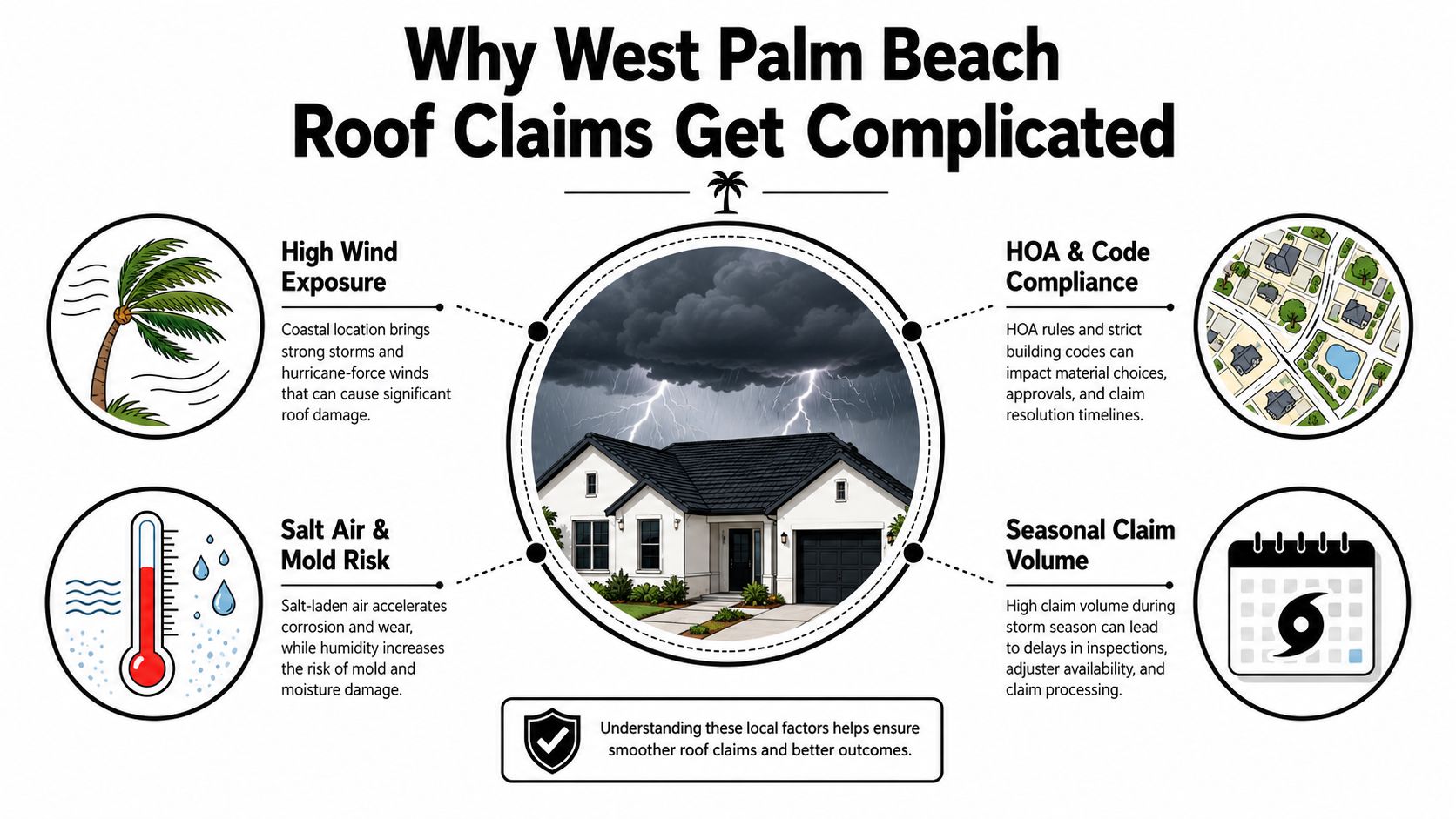
Palm Beach County is a heavy insurance-claims market for roof damage because about 25,258 county properties were insured by Citizens Property Insurance as of 2026-05-31, and the county ranked #3 of 67 Florida counties by Citizens policy count (Palm Beach County Citizens policy data). That concentration matters because Citizens exposure tends to rise where private insurers have pulled back or tightened underwriting, which usually means more scrutiny, more inspections, and more homeowners trying to prove that wind, not age, caused the loss.
What the local housing stock means in practice
The county's median owner-occupied home is valued near $447,300, the median home dates to about 1986, and 59.8% of the housing stock was built before 2000 (Palm Beach County housing profile). Older roofs are harder to claim because wear, age, prior repairs, and storm damage overlap. An adjuster can point to granule loss, brittle shingles, or old flashing and argue the roof was failing before the storm ever hit.
That's why generic filing advice falls apart here. You need a decision framework that starts with preserving rights under Florida's one-year reporting window and ends with a scope that includes what the code and the damage require. Even basic maintenance matters in that setting, and a resource like benefits of clean gutters in storms is useful because water management around the roof can affect how fast minor damage becomes a claim problem.
Practical rule: In this market, the roof is only half the fight. The other half is proving what happened, when it happened, and why it's covered.
First 48 Hours After Roof Damage
The first mistake homeowners make is cleaning too fast. They scoop up shingles, run a fan, toss the evidence, and then try to reconstruct the loss from memory. That destroys the claim file before the carrier ever sees it.
Document before you disturb anything
Take timestamped photos and video of the roof, the yard, gutters, flashing, ceilings, attic stains, and any puddling inside the home before you clean up. Use wide shots first, then move in closer to the broken area, then capture the interior stain or leak path. Keep the footage boring and complete, because boring wins claims.
A leak that shows up inside the house often starts with damage you can't see from the ground. For a useful primer on how a ceiling leak presents, see EZ Plumbing's leak guidance, then compare it to what you're seeing in your own attic or living room. If water is entering, treat it as active damage until you prove otherwise.
Mitigate, but don't over-repair
Make only emergency mitigation repairs. That means tarping an opening, stopping a leak, or extracting standing water so the loss doesn't expand. Keep every receipt for materials, labor, pump-out work, and temporary protection, because those costs are often reimbursable when the claim is covered (Florida roof leak claim workflow).
Don't make permanent repairs before the insurer has a chance to inspect. Once the evidence is gone, the dispute gets much easier for the carrier and much harder for you.
Notify the insurer as soon as you've documented the damage. Save every text, email, claim number, and phone note from the first contact forward. If the file gets challenged later, that paper trail matters as much as the roof photos.
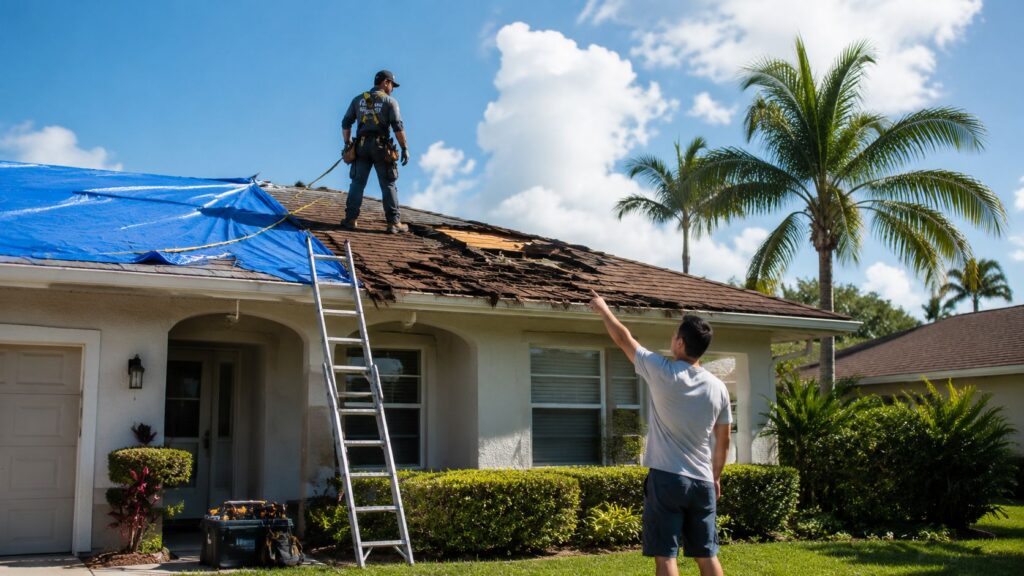
For a roof that already has visible breakage, an internal reference like this hurricane roof inspection image is a good reminder of what a properly documented inspection sequence should look like, roof first, cleanup second.
Florida Deadlines and Rules That Decide Your Claim
The calendar controls the claim, not the other way around. Florida law gives most claimants a strict initial notice window of 1 year from the date of loss, and that's the deadline that can save or kill a roof claim if you wait too long (Palm Beach County legal and claims guidance). If the notice window closes, the carrier has a strong procedural defense before anyone argues about shingles or flashing.
The deadlines that shape the file
Florida-focused West Palm Beach guidance also references a 1-year reporting window for new or reopened claims and a 90-day deadline for insurers to make a coverage decision after receiving proof of loss (West Palm Beach roof claim guidance). That means you can't drag your feet on the inspection, the estimate, or the paperwork. Every week of delay makes it easier for the carrier to say the damage aged out, spread, or became impossible to attribute cleanly.
The 15-year roof issue and code pressure
West Palm Beach guidance also says that if a roof is older than 15 years, a homeowner may still preserve coverage by getting a certified inspection showing at least five years of remaining useful life (West Palm Beach roof age guidance). That makes a professional roof assessment more than a maintenance opinion. It becomes evidence that can keep the claim alive.
Florida Building Code also matters. When repair of a building exceeds 25% of the value of the structure or substantial structural damage is met, the affected portion has to come into compliance with the current code (Florida 25% roof replacement rule). In roof claims, that rule often determines whether the carrier pays for patchwork or a code-driven reroof. If the scope crosses that threshold, the conversation changes.
The cleanest claim files are built around dates, not feelings. If your timeline is sloppy, your leverage is weak.
Building a Documentation File the Adjuster Cannot Ignore
A roof claim lives or dies on what you can prove before the adjuster narrows the scope. Get the file right, and you force the carrier to argue the evidence. Get it wrong, and you're stuck arguing memory.
Build the photo set like a contractor would
Start with a wide shot of the whole roof from the street or driveway, then a mid-range shot that shows where the damage sits on the slope, then close-ups of cracked shingles, lifted tabs, exposed substrate, broken tiles, penetrations, and flashing details. Add attic photos if you see dark staining, damp insulation, or secondary water intrusion. The point is to show both the source and the path.
An adjuster walking from the ladder may miss damage that only shows from the roof plane, especially around vents, valleys, penetrations, and flashing transitions. A contractor on the roof can catch lifted shingles, soft decking, and water pathways that don't show up from ground level. That's why a contractor-present inspection is not a luxury, it's smart claim management (insurance claim inspection workflow).
Add records that support the scope
Your file should also include a copy of the policy declarations page, receipts for emergency repairs, and a communication log with dates, times, and names. If the insurer later says a cost was never mentioned, your paperwork answers that.
For documentation structure, keep an eye on the internal organization of the file, not just the photos. A useful visual reference is this flat roof repair image, because it shows the kind of roof detail that often disappears in a weak claim packet.
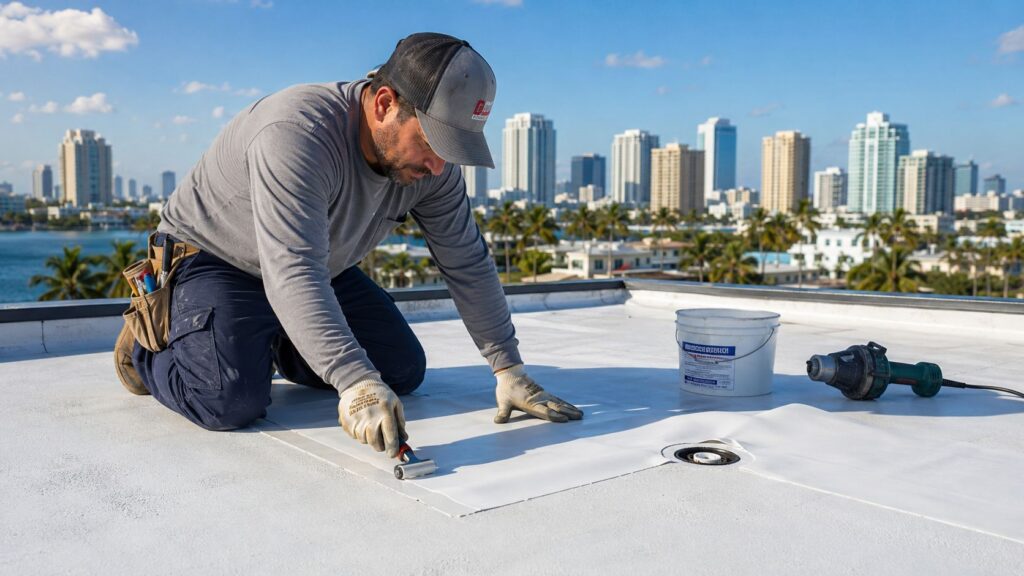
Good file, better leverage: The carrier should see a roof claim that already has location, cause, extent, and mitigation documented before the adjuster's report gets written.
Working With Your Roofer and the Insurance Adjuster
If you're serious about getting the scope right, don't send the adjuster up there alone and hope for the best. A licensed local roofing contractor changes the inspection dynamic because the roofer knows where storm damage hides, and the adjuster usually has a short window to catch it.
What to do during the inspection
Share the contractor's written damage report before or during the visit. Point the adjuster to the exact slopes, penetrations, flashing transitions, and interior stains that matter. Stay factual. Don't argue about every line item in the driveway, just make sure the evidence is in front of the person writing the estimate.
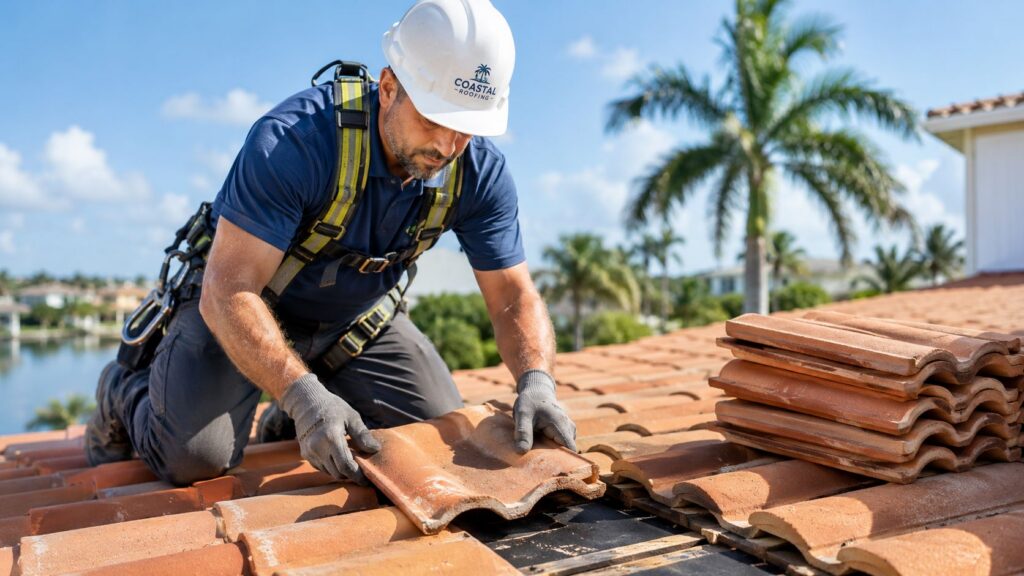
A contractor should be ready to explain the roof condition in plain language, then back it up with photos and notes. A good visual cue is this tile roof replacement image, because tile systems often reveal the same truth as shingle systems, the scope is determined by evidence, not by a quick glance.
Don't sign away leverage too early
If the insurer pushes a signed Authorization to Repair before the file is properly scoped, slow down. Once you hand over repair authority too early, you can make it easier for the carrier to lock in a limited estimate. If the proposed scope also strips out code-related items, matching concerns, or other covered components, decline politely and get the file reviewed first.
I'd rather have a homeowner wait on a signature than accept a narrowed scope that turns into a bad repair. The best workflow is simple. Contractor inspects. Photos get organized. Report gets shared. Adjuster visits. Then the scope gets compared line by line.
Paletz Roofing and Inspections fits that model because a local contractor who photographs damage, prepares written damage reports, and coordinates with the insurer keeps the claim moving without letting the paperwork drift. That's how roof insurance claim assistance in West Palm Beach should work when it's done right.
Why Roof Claims Get Underpaid Even After Obvious Damage
The roof can be obviously damaged and still be underpaid. That's because the fight shifts from “Is there damage?” to “How much of this damage counts, and what caused it?” Insurers usually lean on four pressure points.
The four places the scope gets cut
First, they argue wear and tear. Second, they leave out matching when only one slope is priced and the other slopes no longer blend. Third, they omit code-upgrade costs that should come in once a reroof or structural threshold is triggered. Fourth, they under-map moisture, which makes the interior loss look smaller than it is. Those are not minor errors. They're the usual levers used to reduce payment.
Decision rule: If the first estimate ignores code, matching, or water intrusion, treat it as an opening offer, not a final answer.
Palm Beach County's high storm volume makes this worse because delays weaken attribution. The longer a roof sits with unresolved damage, the easier it is for the carrier to say age, exposure, or later weather contributed to the loss (Palm Beach County storm-claim context). That's why slow claims often get squeezed into a smaller scope than the actual damage supports.
When to push and when to escalate
If the gap is small and the missing items are mainly documentation problems, a stronger photo set and contractor report may close it. If the gap is rooted in code issues, matching disputes, or a flat refusal to recognize the actual roof conditions, the file needs stronger escalation. A public adjuster can be worth the fee when the carrier has already narrowed the claim and the evidence needs a separate advocate.
Don't hire help just because you're frustrated. Hire help because the claim math is bad and the scope needs a professional fight. That's a different decision, and it should be based on the file, not the mood.
Your West Palm Beach Roof Claim Action Plan
Move in this order. First, document the roof and the interior before cleanup. Second, make only emergency mitigation repairs and keep every receipt. Third, report the loss inside Florida's deadline window and preserve every communication record. Fourth, get a licensed roofing contractor to inspect before the carrier closes the scope.
Then check the two dates that matter most. You've got the 1-year initial notice window and the insurer's 90-day decision window after proof of loss. If the roof is older, make sure the file includes the certified inspection angle for remaining useful life, and if the damage is substantial, push the code question hard.
Your next three calls should be simple. Call a local licensed roofing contractor, call your insurance carrier, and call a public adjuster if the damage is significant or the first estimate comes in low. Don't let the carrier set the pace alone. In West Palm Beach, the homeowner who controls the record usually controls the outcome.
Paletz Roofing and Inspections helps homeowners handle roof damage the right way, with inspections, damage documentation, and repair guidance that fits the claim process instead of fighting it. If you've got storm damage and need a straight answer on scope, timing, and next steps, visit Paletz Roofing and Inspections and get your roof looked at before the deadline pressure gets worse.