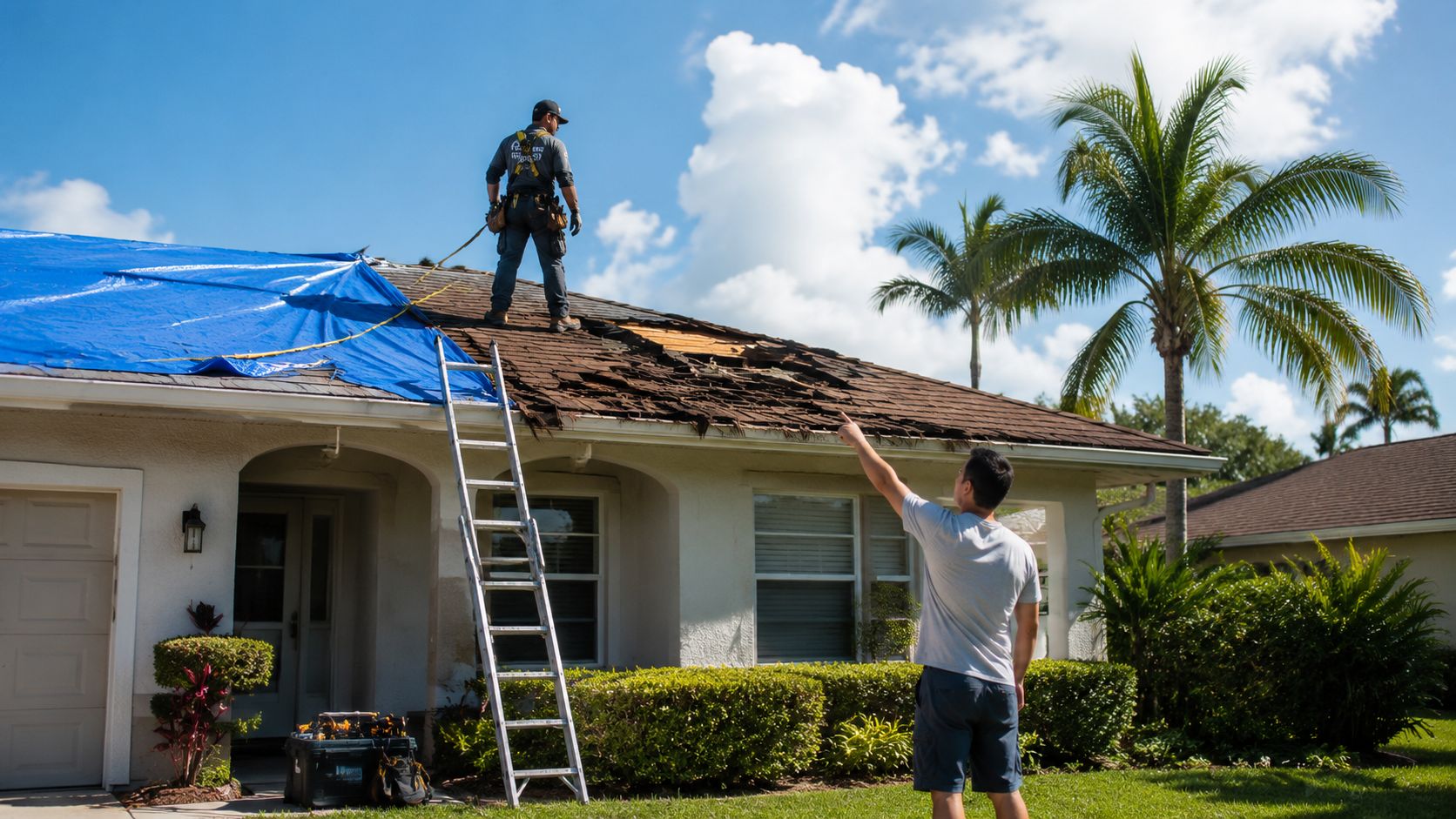
The roof looks fine from the driveway, but the ceiling stain in the hallway says otherwise. After a Miami hurricane, that gap between what you can see and what's happening under the shingles is where most homeowners get hurt, because water, code rules, and insurance deadlines all start moving at the same time. If you're dealing with roof repair after hurricane Miami, the first mistake is rushing into permanent work before the roof is stabilized, documented, and checked against the rules that govern the claim.
Table of Contents
- Securing Your Property in the First 72 Hours
- Navigating Insurance Claims and Documentation Deadlines
- Inspecting Roof Damage by Material Type
- Understanding the 25 Percent Rule and Code Triggers
- Selecting a Licensed Contractor and Managing Permits
- Recovery Timelines and Future Storm Preparedness
Securing Your Property in the First 72 Hours
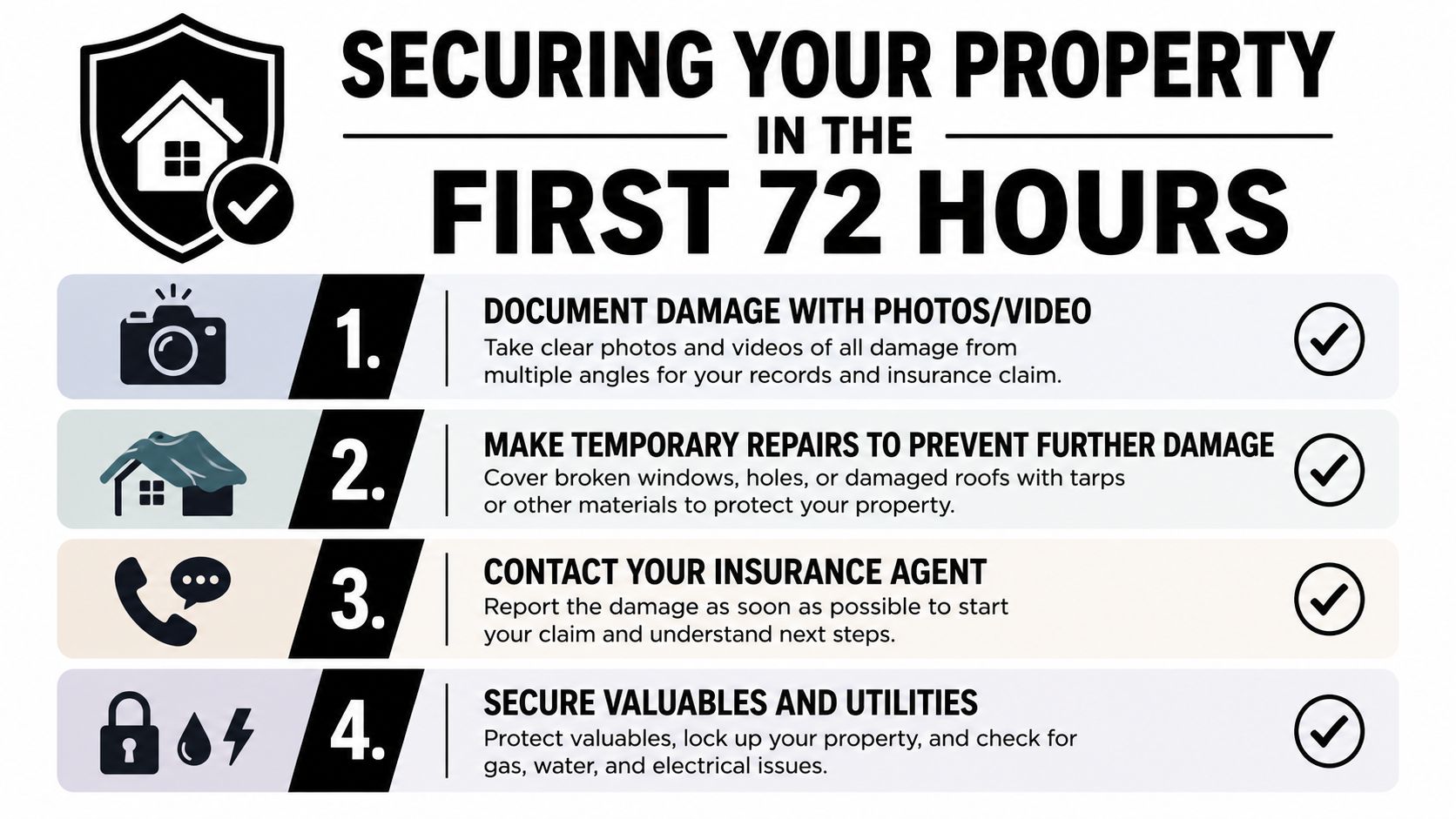
The first thing I tell homeowners after a storm is simple, stay off the roof until the property is made safe. Fallen limbs, wet sheathing, loose tiles, and hidden electrical hazards can turn a roof check into an injury fast, so the order matters, safety first, paperwork second, repairs last. A technically sound response starts with life-safety isolation, then damage documentation, then temporary weatherproofing, because emergency stabilization is the first restoration phase and should include verified utility shutoff, structural hazard assessment, roof tarping, and first-notice-of-loss documentation before any permanent work begins, as described in Miami restoration guidance from Miami Restoration Authority.
What to do before you touch the roof
Start inside the home if you see water intrusion. If the ceiling is sagging, the attic smells damp, or outlets near the leak look compromised, shut off power to affected areas and don't assume the roof is the only problem. Verified utility shutdown matters because the roof may be damaged, but the electrical system and interior finishes can be damaged too.
Then document everything. Use your phone to record wide shots of the exterior, close-ups of missing or lifted materials, and interior damage by room. Moisture mapping, thermal imaging, and moisture meter readings become important later for scope, but the first package should already show the roof section, the time stamp, and the path of water entry.
Practical rule: if you can't explain the damage to an adjuster with photos, a short video, and a room-by-room list, you're making the claim harder than it needs to be.
When tarping helps and when it hurts
Temporary tarping is appropriate when it stops further water intrusion without creating a new problem. A loose tarp tossed over a roof in high wind can worsen punctures or trap water, so the covering has to be secured correctly and used as a short-term measure, not a substitute for a real repair.
Miami-Dade also has a temporary roof-covering program that matters if the storm was severe enough to strain the normal repair process. The structure must have less than 50% structural damage, and the roof must retain more than 50% of its framing intact to support plastic sheeting, with the program generally aimed at primary residences or permanently occupied rentals and standard shingle roofs, while slate, asbestos, or clay tile roofs are generally excluded as too difficult to cover temporarily, according to Miami-Dade temporary roof covering eligibility. That makes the early hours after a hurricane a screening test, not just a cleanup window.
Short version: stabilize the property, document the loss, and preserve the roof for the insurer and inspector. Permanent patching comes later.
Navigating Insurance Claims and Documentation Deadlines
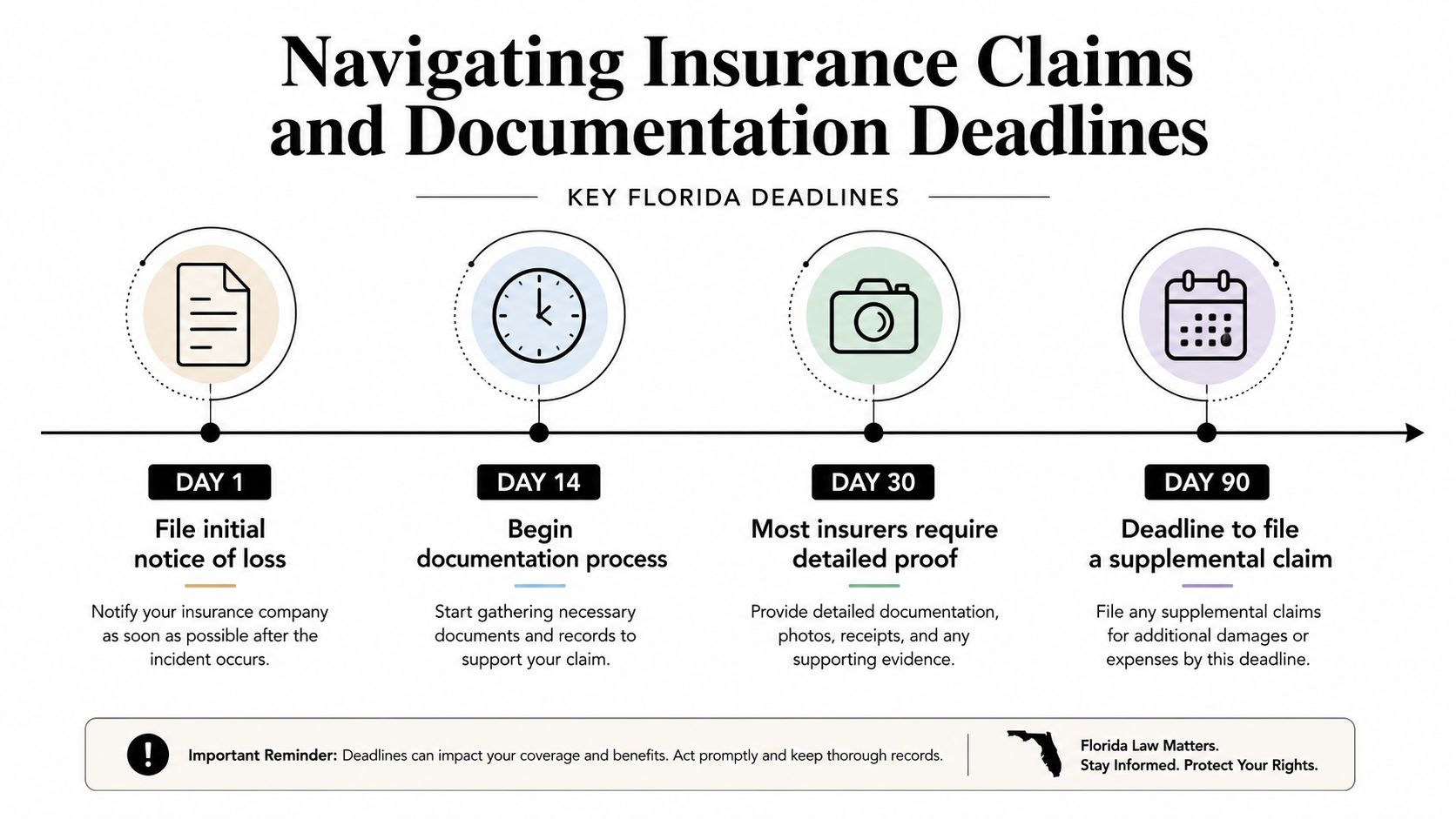
The insurance claim clock is one of the most expensive things homeowners overlook. Florida Statute §627.70132 gives a 1-year deadline for filing new hurricane damage claims and a 3-year deadline for reopened claims for storms on or after January 1, 2023, as noted in Miami Contractor Authority's contractor services guidance. That's not just paperwork trivia, because once the claim window closes, the repair cost can move from the insurer's responsibility to yours.
What the insurer needs to see
The strongest claim files are organized, not just abundant. I want timestamped photos, a short written loss summary, roof-section labels, and proof of mitigation, because adjusters look for a clean chain from storm event to visible damage to temporary protection. Hidden moisture matters too, since drywall can look fine while the insulation behind it is already wet.
A useful first-notice-of-loss package usually includes:
- Exterior and interior photos by area, so the adjuster can connect the leak path to a specific roof section.
- Moisture logs and thermal images, which help show where water migrated after wind and rain entered the assembly.
- Temporary repair receipts and notes, because mitigation shows you didn't let the loss spread.
- A short timeline, stating when the storm hit, when you discovered the issue, and when you notified the carrier.
If you want a clean explanation of policy language before you speak with the carrier, Florida All Risk Insurance policy tips is a useful place to review how homeowners policies are usually organized. Read it before you rely on anyone's verbal summary of your coverage.
Why timing changes the claim outcome
Permanent work before the insurer or building department finishes review creates problems. If the visible patch is done too fast, the carrier may say it can't verify the original loss footprint, and that can lead to disputes over scope and timing. That's why emergency stabilization is different from reconstruction.
Don't let anyone turn a temporary leak stop into a permanent roof solution before the paperwork is solid.
The practical sequence is still the same, notify the insurer, preserve evidence, then scope the repair. A rushed reroof can be harder to defend than a damaged one if the claim file is thin.
Inspecting Roof Damage by Material Type
Not every hurricane roof injury looks dramatic from the ground. The inspection method changes with the roof system, and that's where homeowners get misled by a “looks okay” comment after a quick walk-around. The surface can hide an expensive problem underneath, especially when wind has lifted materials without removing them.
Asphalt shingles, tile, metal, and flat roofs behave differently
Shingle roofs usually show wind uplift first. Look for lifted tabs, creased shingles, exposed nail heads, and granule loss concentrated on slopes that took the worst wind. Those are not cosmetic issues if the mat has been stressed, because they often show the roof has already lost part of its weather barrier.
Tile roofs need a different approach. Cracked barrels, displaced fasteners, and hidden underlayment damage matter more than a chipped surface edge, because the visible tile may still be doing its job while the waterproof layer beneath it has failed. For homeowners comparing repair options, the visual layout in this tile roof replacement example shows why the assembly under the tile matters just as much as the tile itself.

Standing seam metal roofs should be checked for seam separation, panel deformation, and fastener back-out. A panel can still look straight from the driveway while a compromised seam is letting water move under uplift pressure. On flat roofs, the inspection is below the surface, because ponding, trapped moisture, and punctures may not be obvious without moisture meter readings or core sampling.
How to separate cosmetic damage from structural damage
A cosmetic ding isn't the same as a failed roof section. The question is whether the roof still sheds water and retains the fastening and underlayment performance it had before the storm. Once wind has loosened flashing, displaced underlayment, or opened a seam, the issue has moved beyond appearance.
Field rule: if you need to lift adjoining materials just to understand the edge of the damage, you're no longer looking at a simple surface repair.
A contractor who only photographs the top layer is leaving out the part that matters in Miami's weather. That's why material-specific inspection is worth more than a quick “seal and go” patch.
Understanding the 25 Percent Rule and Code Triggers
A lot of Miami homeowners expect repair scope to follow visible damage only. Florida doesn't work that way. Under the Florida Building Code, if more than 25% of a roof area or roof section is repaired, replaced, or recovered within any 12-month period, the roof or section must be brought into code compliance, and that can turn a partial repair into a full reroof if the threshold is crossed, as explained in Florida's 25 percent replacement rule guidance.
Why the threshold changes the job
Once the 25 percent line is crossed, the project is no longer a simple patch. Updated materials, wind-rated fastening, and fuller documentation of underlayment and flashing conditions can become part of the scope. That's why a roof that looks salvageable to a homeowner may still need replacement once the damaged area is measured correctly.
The same source also places Miami's storm context in perspective, noting that Hurricane Irma was estimated by NOAA to have caused about $50 billion in damage and to have become the fifth-costliest U.S. hurricane on record. In a market like this, code triggers aren't theoretical. They're the reason one leak can become a larger reconstruction job.
Miami-Dade also uses the federal 50% substantial-damage threshold. If repair cost is equal to or greater than 50% of the structure's pre-damage market value, the floodplain process can trigger full National Flood Insurance Program compliance in Special Flood Hazard Areas, according to Miami-Dade restoration code guidance. That threshold doesn't replace the 25 percent roof rule, it sits beside it, and both can affect the same property after the same event.
What to verify before signing a scope
The safest move is to ask for two written scopes, one from a licensed Florida roofer and one from an independent inspector or public adjuster. The estimate should account for damaged shingle counts, penetrations, flashing, and underlayment, not just the obvious tear or missing tile.
If the numbers aren't tied to the actual roof section, you don't really have a scope, you have a guess.
That's where homeowners get surprised, because the code conversation starts after the damage count is done, not before.
Selecting a Licensed Contractor and Managing Permits
Storm season brings a flood of visitors who want roof work fast. Fast isn't the same as compliant, and in Miami-Dade that distinction matters because the permit process and the substantial damage review affect whether permanent repair can even start. Local post-storm guidance says temporary measures, including temporary tarping of roofs and temporary shoring, are often allowed without a permit, but it also says a permit will not be issued until the Substantial Damage Determination is finalized, as stated by the City of Miami in its post-storm permitting plan.
What to check before you hire
Ask for a Florida license, proof of insurance, and a written repair scope that says who pulls the permit. If the contractor can't explain how the permit sequence works after a hurricane, keep looking. The wrong hire can leave you with unpermitted work that complicates future sales, renewals, or claim supplements.
A good agreement should identify who handles:
- Permit responsibility, so there's no argument about who submits the application.
- Inspection scheduling, because final inspection is part of closing the job.
- Material specifications, including wind-rated fastening and the right underlayment.
- Documentation delivery, including photos, invoices, and completion records.
For homeowners who want a visual example of how a documented inspection workflow looks in practice, this commercial roof inspection example shows the kind of evidence trail that helps support a permit-ready repair file.

Why sequencing matters more than speed
Temporary tarping can buy time. Permanent roof work without the right review can create a compliance problem that costs more later. In storm recovery, the property owner is responsible for making sure the work moves in the correct order, not just the fastest one.
Paletz Roofing and Inspections is one option for homeowners who want a licensed team to inspect damage, document the roof condition, and handle repair or replacement work within that permit framework. That's the kind of coordination that reduces avoidable back-and-forth with the city and the insurer.
A clean permit trail often matters as much as the repair itself.
Recovery Timelines and Future Storm Preparedness
After a major hurricane, roof recovery is usually measured in months, not weeks. A BuildFax analysis of 11 major hurricanes from 2000 to 2018 found an average recovery time of 10.7 months, and a separate Hurricane Michael study found repairs took 18 months on average overall, with 22.45 months for severely damaged homes and 20.5 months for completely destroyed homes, while 90% of respondents had moderate damage or greater, according to Roofing Contractor's report on hurricanes Irma and Michael. That's the baseline, especially when labor, insurance, and material demand all surge at once.
Building a realistic schedule
The longest delays usually come from three places, permit review, material lead times, and contractor availability. Once the storm hits a whole metro area, every job competes for the same inspections, the same crews, and the same supply chain. A homeowner who expects a same-season finish is usually fighting the market rather than working with it.
That's why the best recovery plan starts with documentation discipline and ends with prevention. Keep repair records, photos of before-and-after conditions, and copies of permits in one folder so the next claim starts with a cleaner file. If you need a contractor who can handle storm-damage assessment and the resulting repair sequence, a certified storm damage contractor is the right kind of professional to look for when the roof has already been compromised.
How to reduce the next storm's impact
Future preparedness is mostly about maintenance and details. Check flashing, sealant, and fasteners before hurricane season, not after. If a roof system is already near the end of its service life, a planned replacement is often easier to manage than an emergency scramble under code pressure.
For homeowners comparing repair styles on low-slope systems, this flat roof repair reference is a useful reminder that flat roofs need different inspection habits than pitched systems. The same is true for documentation, the better your records now, the easier the next claim becomes.
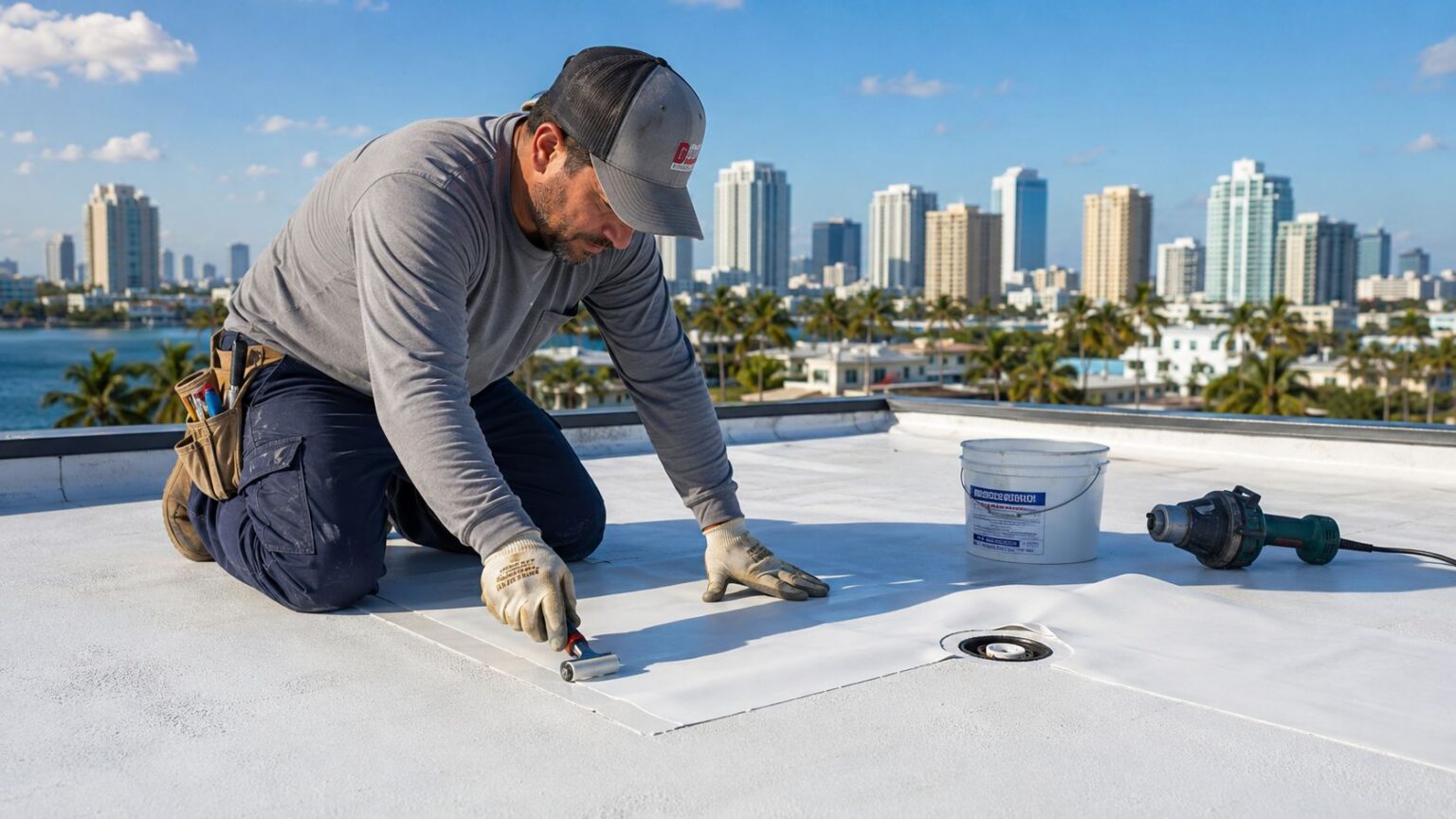
Keep the photos, keep the receipts, and keep the permit paperwork. Those three habits save time when the next storm rolls through.
If your roof took a hit and you're trying to figure out whether you need a repair, a full replacement, or just a permit-safe emergency fix, Paletz Roofing and Inspections can inspect the damage, document the scope, and handle the work with Miami-Dade rules in mind. Visit Paletz Roofing and Inspections to schedule an inspection and get a clear path forward before small roof damage turns into a larger claim problem.