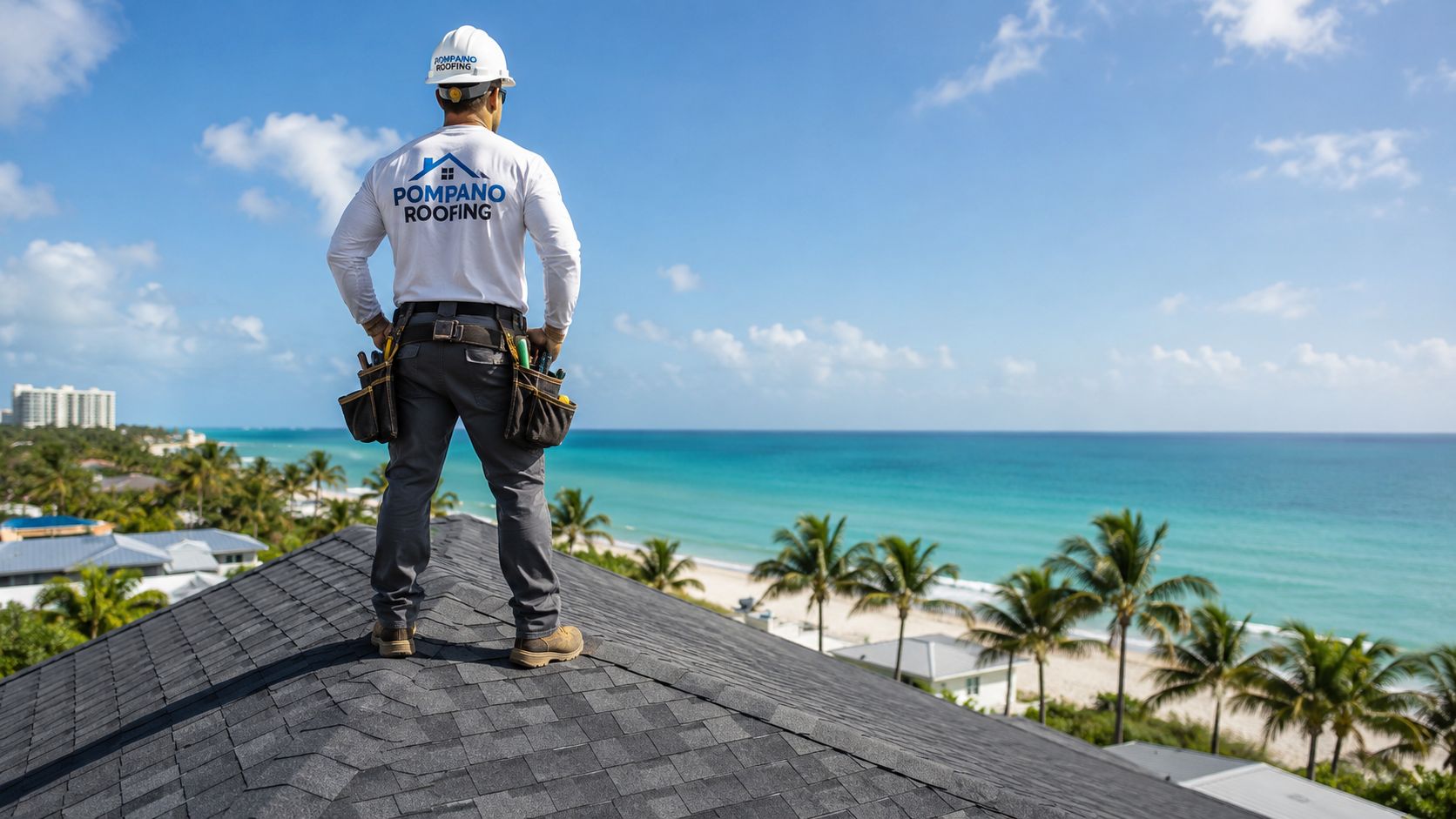
A roof problem in Pompano Beach usually starts the same way. You notice a ceiling stain after heavy rain, a few tiles on the ground after a windy night, or a repair that keeps coming back because the original cause was never fixed. In South Florida, small roofing issues rarely stay small for long.
Property owners here need more than a quick patch. They need a roofing company in Pompano Beach that understands hurricane exposure, coastal corrosion, permit requirements, and the difference between a cosmetic fix and a lasting repair. That's where process matters. Material choice matters. Local code knowledge matters.
Table of Contents
- Your Trusted Pompano Beach Roofing Partner Since 1990
- A Full Spectrum of Roofing Services in South Florida
- Our Proven Process From Inspection to Installation
- Choosing The Right Roofing Materials for Pompano Beach
- 24/7 Emergency Response and Insurance Claim Assistance
- Licensed Insured and Guaranteed for Your Peace of Mind
- Get Your Free Pompano Beach Roofing Estimate Today
Your Trusted Pompano Beach Roofing Partner Since 1990
If you've owned property in Broward County for any length of time, you know the roof takes the first hit. Sun bakes the surface all year. Salt air works on exposed components. Storm season tests every fastener, flashing edge, and underlayment seam.
That's why long-term local experience isn't a marketing line. It's a practical advantage. Paletz Roofing and Inspections has maintained licensure and insurance since 1990, establishing a continuous operational history of over 30 years in the volatile South Florida construction sector, covering numerous hurricane seasons and evolving building code requirements, as noted by DownToBid's Fort Lauderdale contractor listing.
What that experience means on real jobs
A seasoned roofer doesn't just look at the leak location. They check the valley above it, the wall transition nearby, the underlayment condition, and whether earlier repairs trapped water instead of shedding it. In Pompano Beach, that kind of troubleshooting matters because visible symptoms often show up far from the actual failure point.
Older homes and commercial buildings also bring layered roofing histories. A property may have had emergency patchwork, partial replacements, or material transitions done years apart. Without local experience, those details get missed.
Practical rule: A roof should be evaluated as a system, not as a single damaged spot.
Deep roots in the tri-county market
South Florida property owners want stability. They want to know the company inspecting the roof today will still be reachable when questions come up later. That's one reason continuous operation matters.
The Florida roofing market itself reflects steady demand. The state's roofing contractors industry is projected at $9.0 billion in 2026 and grew at an average annual rate of 3.0% from 2021 through 2026, according to IBISWorld's Florida roofing contractors industry report. In a market that active, homeowners are smart to look for established operators rather than choosing on price alone.
For readers who want to confirm the company identity visually, the Paletz Roofing logo file matches the branding used across its public materials.

A Full Spectrum of Roofing Services in South Florida
Roofing work in South Florida rarely fits into one simple category. Some jobs are straightforward repairs. Others involve reroofing, code-triggered updates, drainage corrections, or system selection for a new build. A capable roofing company in Pompano Beach has to handle all of it without forcing the owner to coordinate multiple trades for one roofing problem.
Residential roofing
For homes, the work usually starts with one of four needs.
- Leak repair: This is the right path when the system is still serviceable and the failure is isolated. Good repair work targets the source, not just the interior stain.
- Roof replacement: This makes sense when repeated repairs no longer solve the underlying wear, or when storm exposure has compromised multiple parts of the system.
- New installation: On additions or new construction, layout, ventilation, flashing details, and material compatibility all need to be planned correctly from day one.
- Inspections: A careful inspection helps owners decide whether they're dealing with a maintenance issue, a repair issue, or a full replacement decision.
Residential systems in this market commonly include shingle, tile, metal, and flat or low-slope sections over patios, additions, and modern home designs. Each one behaves differently under coastal conditions.
Commercial roofing
Commercial properties have a different set of priorities. Water intrusion can interrupt tenants, inventory, equipment, and operations long before structural damage is visible. Facility managers also need clean documentation, clear scopes, and crews who understand staging and site coordination.
Paletz Roofing and Inspections is certified by GAF as a Commercial Roofer, specializing in both Asphaltic and Single-Ply roofing technologies for commercial installations, confirming adherence to rigorous manufacturer standards for flat roofing, tile, shingle, and metal systems, according to GAF's contractor profile.
That matters most on systems where details decide performance, such as:
| Service area | What good practice looks like |
|---|---|
| Flat roof repair | Locating membrane failures, seam issues, and drainage trouble before water spreads |
| Reroofing | Matching the replacement approach to the existing deck, slope, and penetrations |
| Preventive maintenance | Checking flashings, drains, terminations, and traffic-worn areas before rainy season |
| New commercial roofing | Choosing a system that fits building use, exposure, and maintenance expectations |
A useful visual example of the kind of field condition often seen on repair work appears in this roof leak repair project image.
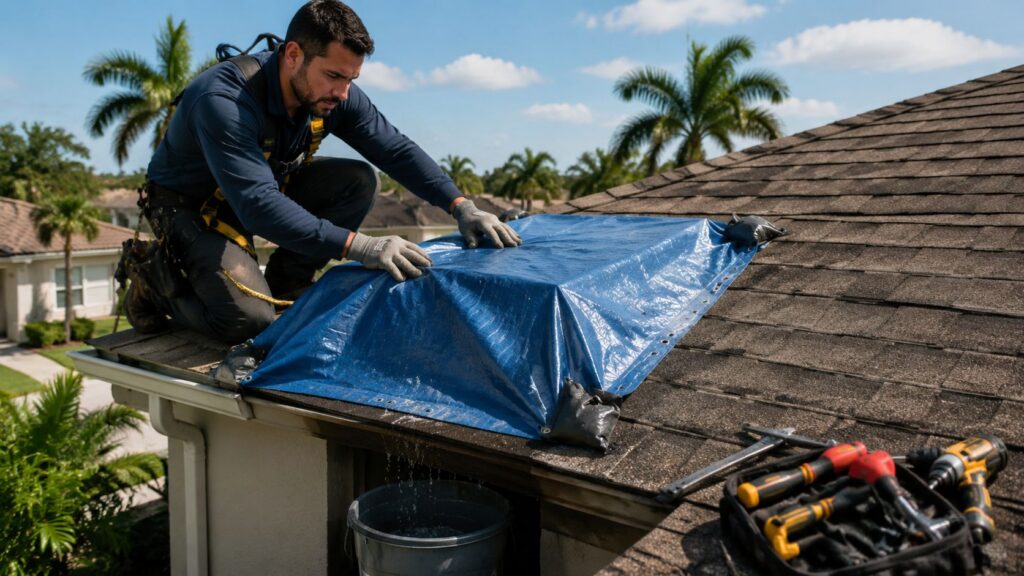
The right service isn't the biggest job. It's the one that actually solves the roof's current condition without creating a larger bill later.
Our Proven Process From Inspection to Installation
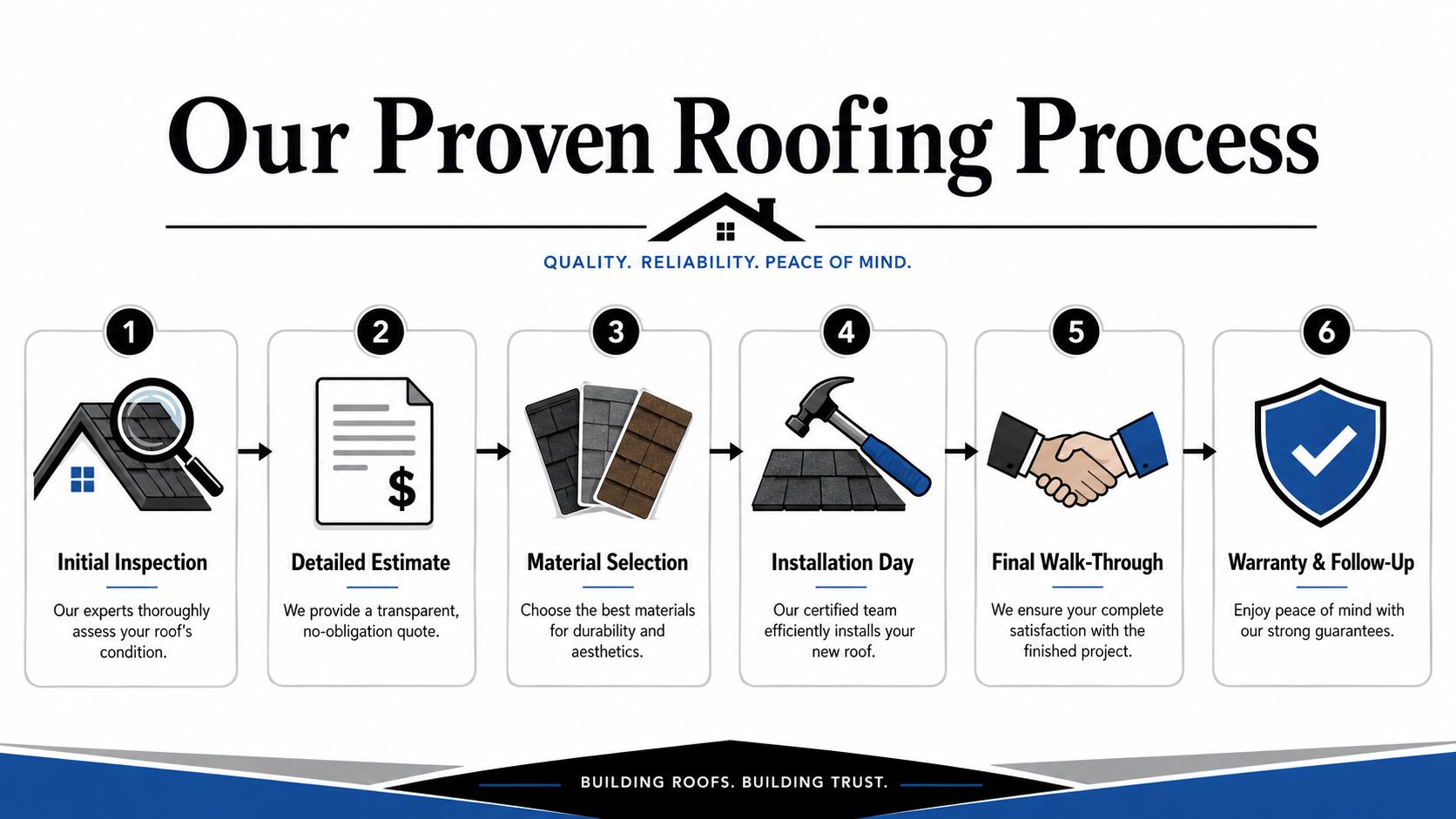
A roof problem in Pompano Beach rarely starts at a convenient time. A ceiling stain shows up after a hard afternoon storm, or a manager notices loose tile after a windy weekend. At that point, property owners need more than a price. They need a process that explains what failed, what code may require, how long the building will be exposed, and what happens next.
What happens first
At Paletz Roofing, the job starts with inspection work that answers real questions. We check the roof surface, penetrations, flashing transitions, drainage patterns, signs of movement, and the spots where South Florida roofs usually begin to fail. On leak calls, interior staining, attic moisture, and ceiling damage often help narrow down whether the water is entering at the field of the roof, a wall transition, or a flashing detail.
Then we put the findings into a written scope. That document should tell the owner whether repair makes sense, whether replacement is the safer investment, or whether more exploratory work is needed before anyone commits to a larger project. Good scopes also translate roofing terms into plain language. Owners should understand what failed, what code issues may be triggered, and what the repair or reroof will include.
For landlords and rental property owners trying to build a maintenance routine between emergencies, VerticalRent's roof maintenance guide is a useful outside resource because it helps frame inspections as part of asset protection, not just emergency response.
How permits and installation are handled
Permit work matters here because Pompano Beach roofing is tied to Florida code, local review, and High Velocity Hurricane Zone requirements. A small-looking issue can turn into a larger scope once the existing roof is opened and the deck, fastening pattern, or secondary water protection has to meet current standards. Owners should hear that before materials are ordered, not after tear-off begins.
That is one of the biggest trade-offs in roofing. A limited repair may cost less up front, but if the roof condition, age, or code exposure points to broader failure, pushing for the smallest possible scope can waste money. The right contractor explains where repair is reasonable and where replacement is the cleaner long-term decision.
Installation should follow a controlled sequence that keeps the property protected at the end of each workday:
- Site preparation and protection for landscaping, access routes, equipment staging, and debris control.
- Tear-off or selective removal based on the approved scope and existing roof condition.
- Deck inspection and correction if damaged substrate or deteriorated attachment is found.
- Underlayment, dry-in, and flashing installation because water control depends on these details.
- Roof system installation using the approved material, fastening method, and layout for the structure.
- Final cleanup and closeout so the owner receives a clear review of completed work, open permit status, and warranty documentation.
A representative project image showing the inspection stage can be seen in this roof replacement and inspection photo.
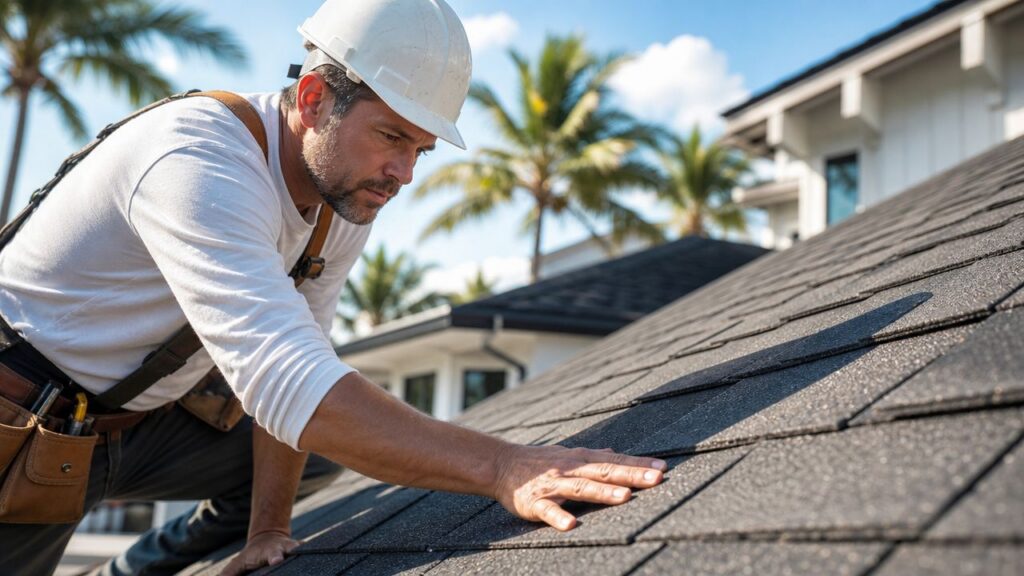
For many Broward owners, the value of an experienced local roofer is process control. Paletz Roofing and Inspections has spent more than 30 years handling the full chain of work in South Florida, from inspection findings and scope development to permit coordination, installation sequencing, and final closeout. That reduces surprises and helps owners make decisions based on roof condition, code requirements, and the building's actual risk.
Choosing The Right Roofing Materials for Pompano Beach
Material selection in coastal Broward County isn't only about appearance. The right roof has to match wind exposure, salt-air conditions, building style, maintenance tolerance, and how long the owner plans to hold the property.
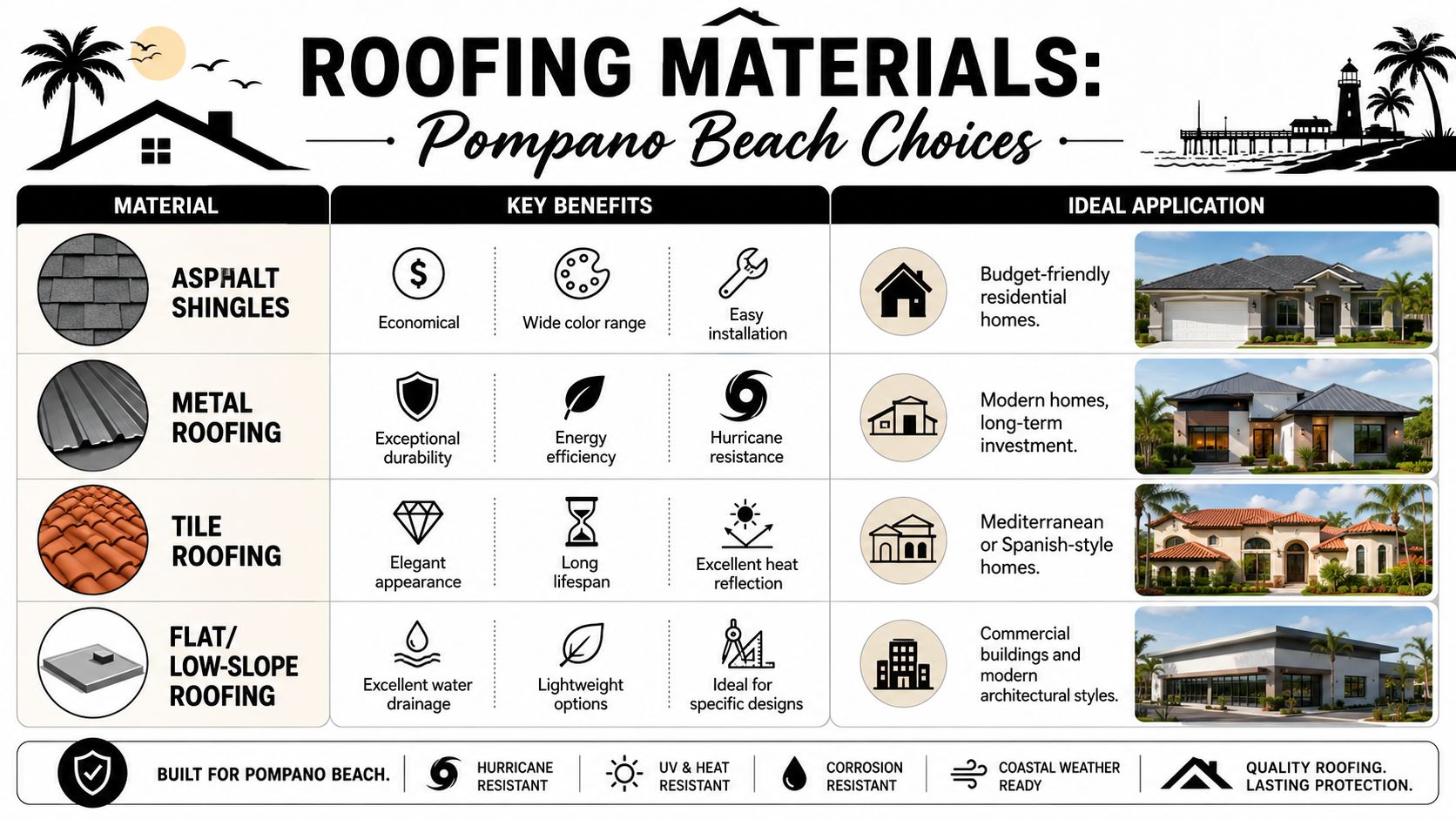
How each material performs
Asphalt shingles remain a common choice for residential homes because they're familiar, versatile, and relatively easy to install and repair. They can work well when the roof design is straightforward and the owner wants a practical replacement path. The trade-off is that shingles are less compelling on highly exposed coastal properties where salt, wind, and long-term durability are the main concerns.
Tile roofing fits South Florida architecture naturally, especially on Mediterranean and Spanish-style homes. In Pompano Beach, this option comes with strict code implications. Tile roofing systems must adhere to High-Velocity Hurricane Zone standards and require installation methods that can withstand 150 mph gusts. Properly installed, these tile roofs can last over 50 years and resist salt-air corrosion, according to the City of Pompano Beach roofing submittal checklist.
That sounds attractive, and it often is, but tile only performs that way when the fastening pattern, underlayment, and edge details are done correctly. The tile itself doesn't protect the home if the assembly underneath is wrong.
Tile is durable, but tile is also unforgiving. Installation shortcuts usually don't show up until the first major wind event.
Metal roofing makes a strong technical case near the coast. The verified market guidance available for Pompano Beach notes a 40–80 year lifespan, compared with a 20-year lifespan for asphalt shingles, and also notes that some metal systems can support up to a 25% reduction in cooling loads when designed appropriately, as described in this Pompano Beach metal roofing overview. Metal's strengths are longevity, clean water shedding, and strong resistance to corrosive air when the system uses suitable protective coatings and proper detailing. The trade-off is that installer skill matters a lot. Expansion, fastening, and ventilation details can't be improvised.
Flat and low-slope roofing is common on commercial buildings and some modern residential designs. These roofs need a different mindset. The key issue usually isn't the field membrane alone. It's drainage, penetrations, curbs, edge securement, and foot-traffic management.
A practical selection framework
Choose roofing material based on the property, not just the sample board.
- For coastal exposure: Metal and properly specified tile deserve serious consideration because salt air changes the long-term equation.
- For architectural fit: Tile often suits established South Florida residential styles better than other options.
- For budget-conscious residential replacements: Shingles may still be the practical choice when the roof geometry is simple and the owner understands the maintenance cycle.
- For commercial buildings and low-slope areas: Membrane-based systems are usually the correct category, but drainage design has to be reviewed carefully.
A short decision table helps simplify the choice:
| Material | Strong fit | Main caution |
|---|---|---|
| Shingle | Standard residential roofs | Shorter service life in harsh coastal conditions |
| Tile | Style-driven homes needing longevity | HVHZ compliance and installation quality are critical |
| Metal | Coastal homes and long-term owners | Detailing errors can shorten performance |
| Flat or low-slope | Commercial and modern designs | Drainage failures create recurring leak patterns |
24/7 Emergency Response and Insurance Claim Assistance
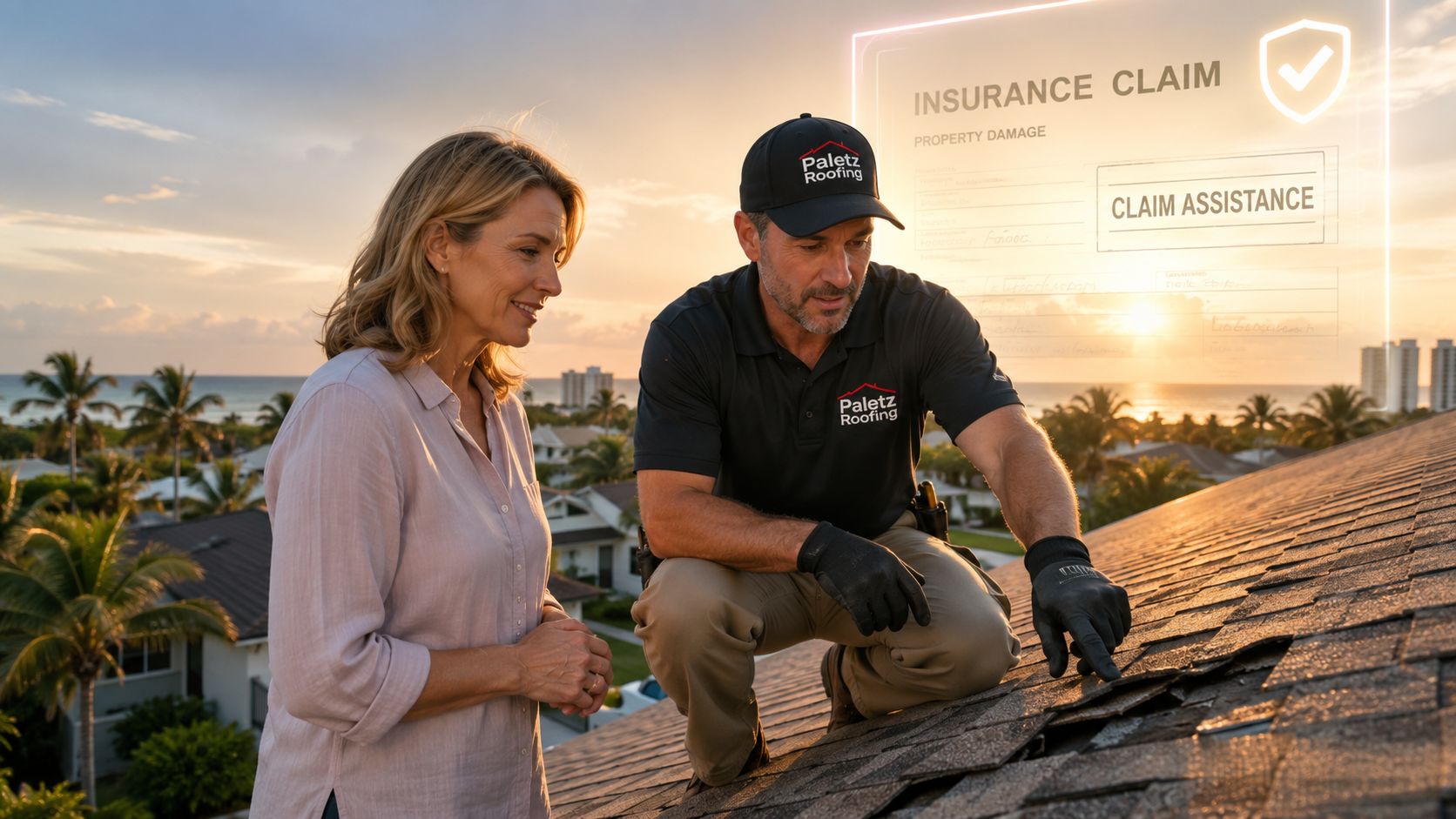
Storm damage creates two problems at once. The roof needs immediate attention, and the paperwork starts almost as fast as the leak. Owners who try to handle both alone often lose time in the first critical days.
What to do right after roof damage
The first priority is protecting the building envelope. That may mean emergency dry-in work, temporary waterproofing, or immediate removal of loose materials that could worsen damage. Waiting to see whether the leak stops on its own is usually what turns a limited roof problem into interior damage, insulation damage, or mold concerns.
Document what you can safely see. Note where interior staining appears, when it started, and whether it lines up with visible exterior loss. Don't climb onto a storm-damaged roof unless it can be done safely and professionally.
A practical response checklist:
- Protect the interior: Move valuables and contain active water entry if possible.
- Record visible conditions: Photos from the ground and inside the building help establish timing and progression.
- Avoid temporary shortcuts: Tarps and patches need to be placed in a way that doesn't create additional uplift risk.
- Request a roof assessment quickly: The sooner the roof is stabilized, the fewer secondary issues usually follow.
How claim support helps
Insurance carriers need documentation, a clear damage narrative, and a repair or replacement scope that reflects actual roof conditions. Owners often know something is wrong, but they may not know how to describe the failure in construction terms. That gap slows claims.
A contractor who understands claim support helps organize the file. That usually includes site photos, notes on damaged components, moisture pathways, and a scope tied to what's physically present on the roof. It also helps when the contractor can explain why a partial fix won't restore system integrity if surrounding components were affected.
Field advice: Insurance conversations go more smoothly when the roof condition is documented before debris is removed and before emergency repairs hide the original damage pattern.
The goal isn't to complicate a claim. It's to make the roof condition legible to the people reviewing it.
Licensed Insured and Guaranteed for Your Peace of Mind
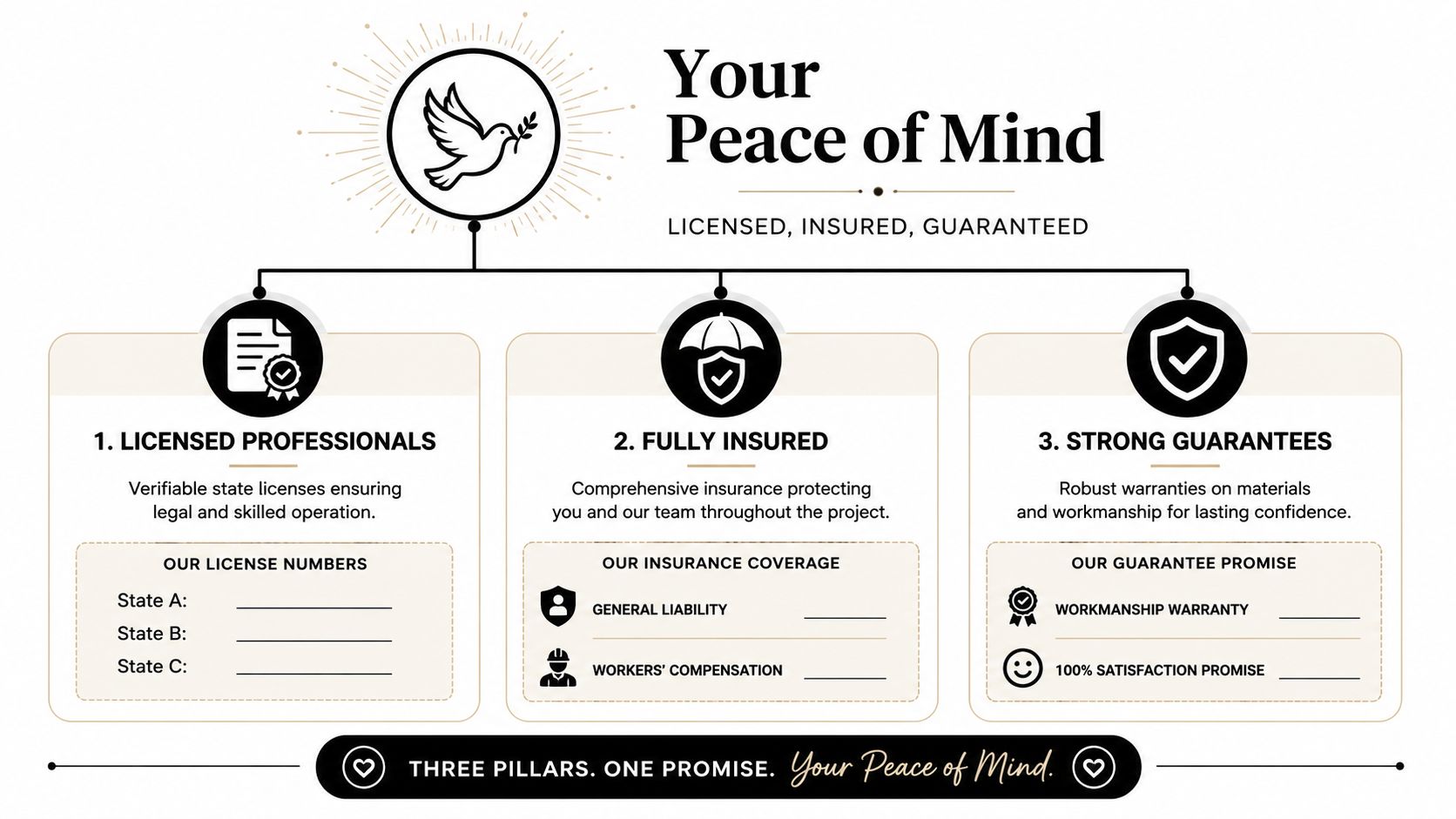
A roofing contract puts workers on your property, materials on your structure, and liability into motion from the first day of work. That's why licensing, insurance, and verified third-party standing matter long before the first shingle, tile, panel, or membrane goes down.
Why credentials matter on a live roof project
A valid state roofing license tells you the contractor is operating inside Florida's regulatory framework. Verified insurance matters because roofs are active construction sites with crew movement, tear-off debris, ladders, tools, and weather exposure. If a contractor is vague about either one, that's not a small warning sign.
Publicly available records show Paletz Roofing and Inspections has held its State of Florida Certified Roofing Contractor license, License #CCC045532, continuously since 1990, according to the company's Delray Beach roofing company page. The business is also listed by the BBB profile for the Davie office as an accredited business with a physical office at 10428 W State Rd 84 Unit 7, Davie, FL 33324 and business hours of 9:00 AM to 5:00 PM Monday through Friday.
What verified standing tells you
Third-party contractor databases can add another layer of reassurance when you're comparing companies. With a BuildZoom score of 111, Paletz Roofing and Inspections Inc ranks in the top 4% of all 191,428 licensed contractors in Florida, according to BuildZoom's contractor profile.
That kind of verified standing matters because it points to a record of compliance and project execution, not just advertising copy.
Use this quick screen before signing any roofing agreement:
- Verify the license: Make sure the license is active and matches the company name on the contract.
- Confirm insurance status: Ask for current proof, not verbal assurance.
- Check physical business details: A real address and published office hours support accountability.
- Review outside profiles: Independent listings can show whether the company's standing is consistent across platforms.
Get Your Free Pompano Beach Roofing Estimate Today
A small ceiling stain in July can turn into active dripping after one hard South Florida storm. By the time water shows up inside, the roof problem is often larger than the spot you can see from the living room or office floor.
The right estimate should do more than put a price on shingles or tile. It should clarify whether the issue is isolated, whether the roof system has broader wear, and whether code or permit requirements could affect the scope. In Pompano Beach, those details matter. Material choice, attachment methods, and repair limits can change what makes sense for your property.
At Paletz Roofing, we treat the estimate as the first working step in the job, not a sales visit. Owners should leave with a clearer understanding of condition, options, and trade-offs.
When to schedule an estimate
Schedule an estimate if you have noticed any of the following:
- Recurring interior stains: Repeat leaks usually point to an unresolved entry point or water traveling from a different area of the roof.
- Loose or displaced roofing materials: Missing shingles, lifted tile, or exposed edges often signal a larger fastening or underlayment problem.
- Age-related concerns: An older roof may still be repairable, but only a site inspection can tell you whether a repair is money well spent.
- Pending sale or insurance deadlines: Clear findings and documentation help keep decisions from dragging out.
What to have ready
You do not need to prepare like a contractor. A few basics help us give you a more useful assessment.
- Roof history: Past repairs, leak locations, and storm events help establish patterns.
- Photos: Interior stains and exterior damage can help narrow down timing and likely causes.
- Your priorities: Some owners want the lowest short-term cost. Others want a longer service life or a material that holds up better in coastal conditions.
- Warranty questions: If you want a plain-English explanation of workmanship coverage, this gutter installation warranty guide does a good job explaining how workmanship warranties differ from manufacturer material coverage.
A good estimate should answer three basic questions. What is failing. What it will take to correct it. Whether the proposed work fits the actual condition of the roof.
If you are ready for a practical next step, contact Paletz Roofing and Inspections to request a free Pompano Beach roofing estimate. We can review repair and replacement options, explain permit-related factors, and help you make a sound decision before the next storm tests the roof again.