
Think of a proactive roof maintenance plan as a scheduled health check-up for your most important asset. It's a structured routine of inspections and preventative fixes designed to catch small issues before they spiral into catastrophic, wallet-draining failures. For any South Florida property owner, this is the single best way to maximize your roof’s lifespan and sidestep the outrageous costs of emergency repairs.
Why Proactive Roof Maintenance Is Non-Negotiable
Waiting for a water stain to appear on your ceiling is a losing game, especially here in South Florida. Our climate is brutal on roofs—the cycle of blistering sun, torrential downpours, and hurricane-force winds is relentless. A reactive approach means you're always playing defense, scrambling to fix problems only after they've already caused damage. We're not just talking about patching a leak; we're talking about tearing out ruined drywall, replacing soggy insulation, and fighting off dangerous mold.
A proactive plan completely flips the script. It puts you in the driver's seat, turning roof care from a high-stress, high-cost emergency into a predictable, manageable line item. You stop reacting to disasters and start preventing them. This isn't just a matter of preference; it's a smart financial strategy that protects your property's value and gives you something priceless: peace of mind.
This forward-thinking approach is becoming the industry standard for a reason. The global roof maintenance services market, currently valued at around $12.5 billion, is on a steady growth trajectory as more property owners wise up to the long-term savings. This trend signals a major shift away from costly, chaotic repairs toward smarter, preventative care. You can read more about this market evolution and what it means for property owners on Verified Market Reports.
The Real Cost of Neglect
Let's look at two real-world scenarios I see all the time. First, you have a business owner who ignores their roof until a team member points out water dripping onto ceiling tiles after a storm. The emergency call means premium rates for after-hours service, disruptions to business operations, and a final bill that covers not just the roof patch but also extensive interior water damage repair.
Now, consider a homeowner with a roof maintenance plan. A roofer inspects their roof twice a year. During one of these routine visits, the roofer finds a deteriorating pipe collar and reseals it—a minor, affordable fix. When that same storm rolls through, nothing happens. The homeowner avoided thousands in damages and a massive headache for the small cost of a scheduled visit.
A well-executed roof maintenance plan doesn't just save you money on repairs; it buys you certainty in an uncertain climate. You are investing in predictability and the continued structural integrity of your entire home or business.
It’s one thing to talk about savings, but seeing the numbers side-by-side makes the benefit crystal clear. A proactive plan involves small, predictable costs, while a reactive approach leads to large, unexpected, and often bundled expenses.
Reactive Repair vs. Proactive Maintenance Costs
| Expense Type | Reactive Repair (No Plan) | Proactive Maintenance (With Plan) |
|---|---|---|
| Inspection Fees | $0 (until a problem occurs) | $150 – $400 (annually) |
| Minor Repair Costs | Bundled into larger emergency bills | $75 – $300 (per issue, as needed) |
| Emergency Service Fee | $200 – $500 (premium for urgent calls) | $0 |
| Interior Damage Repair | $1,000 – $7,500+ (drywall, insulation, etc.) | $0 |
| Business Interruption | Potential loss of revenue | $0 |
| Total Potential Cost | $1,200 – $8,000+ (per incident) | $225 – $700 (per year) |
As the table shows, the financial argument is overwhelming. The cost of a single reactive event can easily exceed a decade's worth of proactive maintenance fees. By investing a small amount each year, you're essentially buying insurance against a massive, stressful, and entirely avoidable financial hit.
Key Components of an Effective Plan
A real plan is more than just a sticky note on the fridge that says "check the roof." It’s a structured system built on a few core pillars that work together to protect your property.
An effective plan should always include:
- Regular Inspections: You need professional eyes on your roof at least twice a year, ideally in the spring and fall, to catch any damage from the previous season.
- Detailed Documentation: A logbook—complete with photos, notes on repairs, and inspection dates—creates an invaluable history of care. This is gold if you ever need to file an insurance claim or sell the property.
- Debris Removal: Keeping the roof surface and gutters clear of leaves, branches, and other junk is non-negotiable. This simple act prevents water from damming up, which leads to rot and leaks.
- Minor Repairs: Addressing the small stuff—like a popped nail, a cracked sealant bead, or a loose piece of flashing—immediately stops a minor issue from becoming a major one.
When you integrate these elements, your maintenance plan becomes your property's best defense against the demanding South Florida weather, preserving its health and value for years.
Your Custom Roof Inspection Checklist

A solid roof maintenance plan really boils down to knowing what to look for. This isn't about just climbing a ladder and hoping to spot "problems." It's a systematic process, a way of seeing the subtle, specific signs of wear that are so common in South Florida's punishing environment. When you know what to look for, you become the most important line of defense for your property.
Think of your roof as a complete system. It has many different parts, and each one is vulnerable in its own way. A good inspection needs to be methodical, covering every component from the main field of shingles or tiles to the smallest vent pipe. We’ll break this down into a practical checklist you can use from the ground and, if you're safe and comfortable, from a closer view. This is how you spot trouble long before it turns into a midnight emergency call.
What You Can Spot From The Ground
It's amazing how much you can tell about your roof's health without ever leaving your yard. Just a slow walk around your home, maybe with a pair of binoculars, can reveal big issues that are otherwise easy to miss.
Start with the big picture. Look at the roofline itself. Does any part of it look like it's sagging or bowing? This is a huge red flag. It points to potential structural trouble that needs a professional roofer's attention immediately.
Now, zoom in on your roofing material.
- For Asphalt Shingles: Scan for any shingles that are curling up at the edges, look cracked, or are flat-out missing. Also keep an eye out for dark patches, which could be algae or a sign that moisture is trapped underneath.
- For Tile Roofs: Your targets are cracked, chipped, or slipped tiles. It only takes one broken tile to create a direct path for rainwater to get in.
- For Metal Roofs: Look for any hint of rust, dents from hail or debris, or panels that seem to be lifting or loose. Pay special attention to the screws and fasteners; are they secure?
One of the biggest clues for shingle roofs is actually in your gutters. If you see a lot of what looks like coarse, black sand, those are the granules from your shingles. A little bit over time is normal, but a sudden increase means the sun's intense UV rays are rapidly breaking down your roof's protective layer.
The Up-Close Inspection Points
If you can safely get on your roof or use a securely placed ladder, a closer look gives you even more insight. This is where you can find the more subtle damage that almost always comes before a major leak.
The most vulnerable spots on any roof are the penetrations—the places where something like a vent, pipe, or chimney pokes through. This is where over 90% of all roof leaks occur, making them the most critical areas to check.
Look very closely at the flashing. These are the metal or plastic pieces that seal the joints around chimneys, vents, and skylights. You want to see flashing that is lying flat, free of rust or cracks, and has its sealant fully intact. In our climate, sealant dries out and cracks in a hurry, creating tiny gaps that water will eventually find.
Don't forget to check the valleys, which are the channels where two roof planes meet. Debris loves to pile up here, trapping moisture right against the shingles. This leads to rot and premature aging. Just keeping these valleys clear is a simple but vital maintenance task.
Identifying South Florida's Unique Climate Issues
South Florida’s climate brings its own set of roofing challenges. The mix of brutal heat, high humidity, and powerful storms puts unique stress on roofing materials that you need to be able to spot.
One of the most common sights is algae growth, which shows up as those ugly, dark streaks on shingles. While it’s mostly a cosmetic issue at first, it can trap moisture and speed up shingle decay over the long run. Also, look for signs of heat stress, like blistering on asphalt shingles or warping on other materials. This is a clear sign the material is struggling with the extreme temperatures.
Wind uplift is another major worry. After any big storm, check for shingles that look lifted or loose. This subtle damage can break the adhesive seal on the underside of the shingle, making it an easy target to be ripped off by the next strong gust.
For a more detailed, high-tech view—especially on larger or more complex roofs—a drone inspection gives you an incredible level of detail, all while you stay safely on the ground. To document everything with precision, you might even consider specialized drone roofing inspection software. This tech creates a complete visual record, making it much easier to track changes over time and show a roofer exactly where the problems are.
Assembling Your Roof Maintenance Toolkit
Confidence in your roof maintenance plan really starts with having the right equipment ready to go. Trying to handle even small tasks without the proper gear isn't just a pain—it’s flat-out dangerous. Putting together a dedicated toolkit means you can perform your routine checks and small fixes safely, nipping problems in the bud before they spiral out of control.
You don't need a professional roofer's entire truck, but a solid set of reliable tools is non-negotiable. This is about more than just owning a hammer; it's about having the right gear that makes the job safer and gets you better results.
Essential Gear For Every Homeowner
Think of these items as the absolute foundation of your maintenance kit. Honestly, trying to do even the most basic inspections or repairs without them is nearly impossible. These are your workhorses for most common upkeep jobs.
- A Sturdy Extension Ladder: This is your most critical investment. Make sure it’s tall enough to safely reach your roofline and always place it on solid, level ground. Look for one with non-slip feet and stabilizer arms—it’s a huge safety upgrade.
- Reinforced Work Gloves: Your hands need protection from sharp flashing edges, rough shingle surfaces, and other abrasive materials. I recommend gloves that offer both puncture resistance and good dexterity.
- High-Grip Footwear: Your everyday sneakers won't cut it here. You need boots or shoes with soft, high-traction rubber soles that can grip roofing surfaces, which get surprisingly slippery.
- A Reliable Caulk Gun and Sealant: A good caulk gun gives you the precision you need to apply roofing-grade sealant. This will be your go-to for sealing small gaps around flashing, vents, and any exposed nail heads.
These essentials form the backbone of any successful roof maintenance plan. Their importance is echoed across the entire roofing industry, a market valued at over $51.3 billion in the U.S. alone. That industry thrives on extending roof life through exactly these kinds of routine checks and minor fixes.
A Quick Word on Safety: This isn't just a suggestion; it's a prerequisite. Always put your well-being first. If you feel the slightest bit unsure or the conditions are unsafe (think steep pitch, high winds, or wet surfaces), just don't do it.
Good-To-Have Tools For Deeper Maintenance
Once you’ve got the basics covered, a few more items can really expand what you’re able to do. These tools let you handle more specific tasks and frankly, do a better job.
You might also want to add:
- A Utility Knife and Trowel: Perfect for cutting away old, failed sealant and then applying the new stuff smoothly.
- A Pry Bar: A small, flat pry bar is invaluable. You can use it to gently lift shingles to inspect underneath or to pop out a damaged one without wrecking the shingles next to it.
- A Leaf Blower or Soft-Bristled Brush: This is key for clearing debris from your roof surface and gutters without damaging delicate shingles or tiles.
Of course, having the right tool is only half the battle; knowing the right technique for your specific situation is just as important. For example, learning how to safely and effectively clean an RV roof requires a completely different approach than a residential shingle roof. It's all about protecting your investment.
Scheduling and Documenting Your Maintenance
A detailed checklist and the right tools are a great start, but a roof maintenance plan is only as good as its execution. This is where so many good intentions fall flat. To make sure your plan actually protects your home, you need to get organized with scheduling and documentation. This transforms roof care from a nagging chore into a strategic, long-term asset management process.
So, how often should you really be inspecting your roof? It's a common question, and for South Florida's uniquely brutal climate, there’s a clear professional consensus. We strongly recommend a biannual inspection schedule. This means getting up there (or having a pro do it) for a thorough look twice a year.
The timing is strategic: once in the spring to prep for hurricane season, and again in the fall to address any summer storm damage before the drier months.
Of course, there's one massive exception to this rule: always inspect your roof immediately after a major storm. Hurricanes, tropical storms, or even just a nasty thunderstorm with high winds can cause instant, serious damage. A post-storm check isn't optional—it's your first line of defense against new leaks.
Creating Your Roof Logbook
Your most powerful tool for documentation is what I call a "Roof Logbook." This can be a simple three-ring binder or a dedicated folder on your computer. The goal is to create a single, comprehensive history of your roof’s entire life.
Think of it as your roof's personal medical chart. It tracks every "check-up" and "procedure," giving you a crystal-clear picture of its health over time. This becomes priceless when you're trying to diagnose a recurring leak or explain an issue to a contractor.
Your Roof Logbook should track:
- Inspection Dates: Log every single time you or a pro looks at the roof.
- Findings and Observations: Get specific. Note any algae growth, where granules are collecting in gutters, or cracked sealant.
- Photographic Evidence: Pictures are non-negotiable! A photo of a small crack last year compared to one today tells a powerful story about how fast a problem is getting worse.
- Repairs Performed: Document all work, whether it was a quick DIY sealant job or a professional patch. Note the date, who did it, and what products were used.
- Contractor Information: Keep all invoices, warranties, and contact info in one place.
A detailed Roof Logbook does more than just help with maintenance. It’s rock-solid evidence for insurance claims and a huge selling point for potential buyers, proving you've diligently cared for the property.
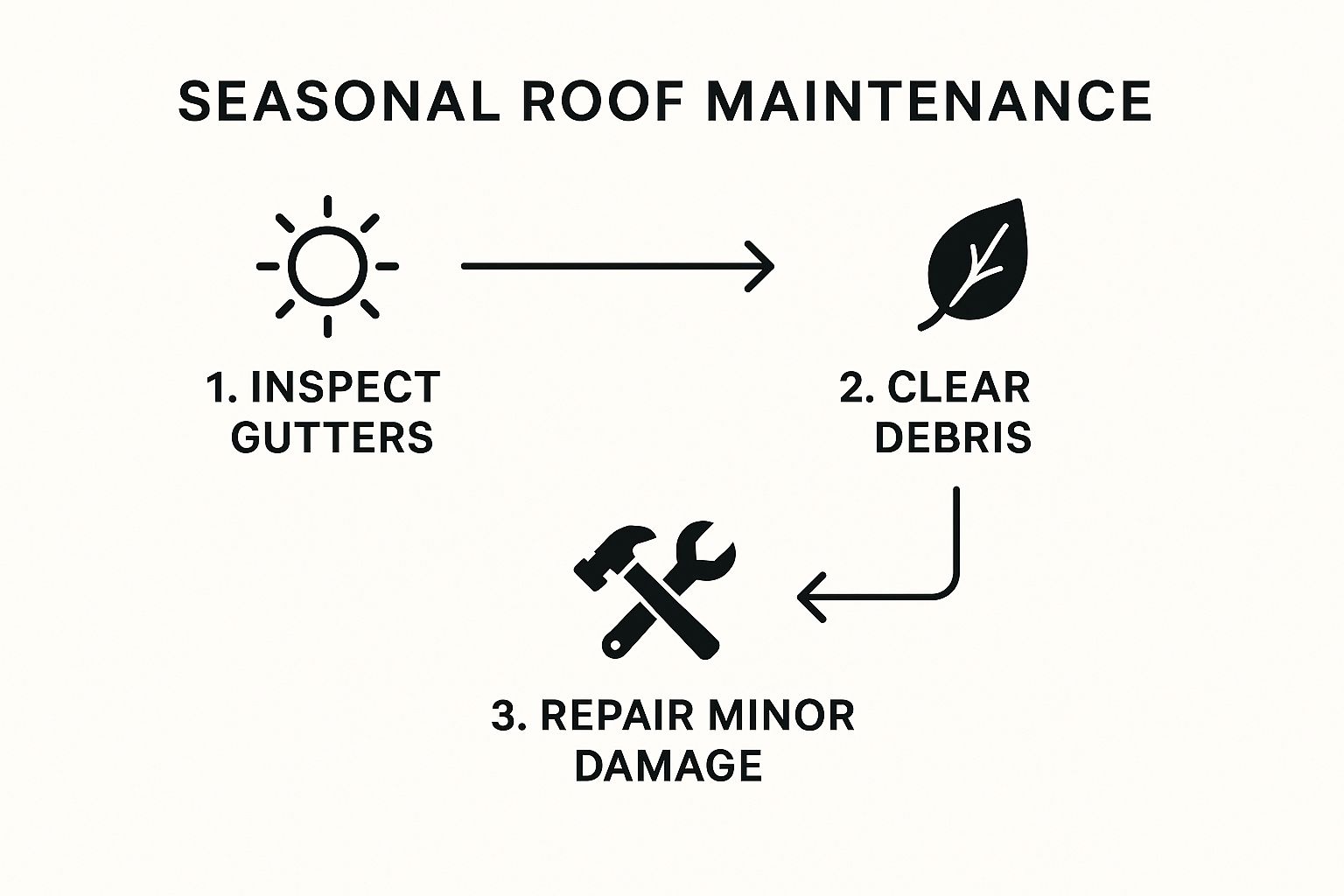
This simple cycle—inspecting gutters, clearing debris, and making minor repairs—is the core rhythm of proactive care. It’s what stops the most common causes of leaks and premature roof failure right in their tracks.
An Annual Maintenance Calendar Example
To make scheduling even more straightforward, map your tasks onto a yearly calendar. Here’s a sample schedule that accounts for South Florida’s unique weather patterns, especially our hurricane season.
Here’s a practical timeline that we often recommend to local homeowners and business owners:
Annual Roof Maintenance Calendar for South Florida
| Time of Year | Key Tasks | Primary Focus |
|---|---|---|
| April/May | Full inspection, gutter cleaning, check flashings. | Prepare for the upcoming rainy and hurricane season. |
| June – October | Post-storm spot-checks. | Immediate damage assessment after severe weather. |
| Nov/Dec | Full inspection, clear all accumulated debris. | Address summer storm damage and prep for the dry season. |
| Jan – March | Monitor for any new issues. | A quieter period, perfect for planning any larger repairs. |
This calendar provides a solid framework for your roof maintenance plan.
But beyond just having a schedule, making sure it gets followed consistently year after year is key. For true long-term success, consider the principles of creating effective Standard Operating Procedures (SOPs). Applying these concepts can turn your logbook and checklist into a bulletproof system that anyone could follow, protecting your investment for years to come.
When You Need to Call a Professional Roofer

The single most important part of any roof maintenance plan is knowing your own limits. While DIY inspections and fixing a loose shingle here or there are great for protecting your investment, there are some red flags that need a pro—and fast.
Trying to tackle major roof problems yourself isn't just a safety risk. It’s a great way to turn a straightforward repair into a full-blown, wallet-draining replacement. Your goal isn't to become a roofer; it's to be a smart property owner who knows exactly when to pick up the phone.
Obvious Signs You Need an Expert
Some problems are just too big or too dangerous for a DIY approach. If you spot any of these during your routine check, it's time to call in a professional. These aren't suggestions—they are blaring alarms signaling potential roof failure.
- A Sagging Roof Deck: If you notice a droop, curve, or "saddleback" in your roofline, you're looking at a structural emergency. This often points to saturated decking, rotted framing, or even bigger foundation problems. This is never a DIY job.
- Widespread Shingle Damage: We’re not talking about one or two missing shingles. If you see large patches of shingles that are cracked, curled, or have lost most of their granules, the system is likely at the end of its life.
- Significant Attic Leaks: A tiny drip is a concern, but if you find soaked insulation, water stains running down the rafters, or can see daylight through the roof boards, the leak is already serious. A pro can trace it to the source far more effectively than you can.
- Major Flashing Failure: The metal flashing around your chimney, vents, and skylights is critical. If it's visibly detached, rusted through, or badly bent, it’s a wide-open invitation for water damage that requires a skilled hand to fix.
Jobs like these are a big reason the roofing industry is such a major economic driver. The global roofing market is on track to hit $280 billion, and North America makes up about 31% of that. That growth comes from property owners investing in professional work to protect their biggest assets. You can dig into more roofing industry trends over at ServiceTitan.com.
Vetting a Trustworthy South Florida Roofer
Once you’ve decided to call for backup, the next challenge is finding a reliable contractor in the crowded South Florida market. Picking the wrong roofer can be just as damaging as the leak itself.
Your vetting process is your best defense against shoddy work and the fly-by-night operators that pop up after a storm. A few key questions will tell you everything you need to know about a company's professionalism.
Start by asking the right questions. Any reputable, licensed roofer will have no problem giving you clear answers.
Essential Questions for Any Contractor:
- Are you licensed and insured to work in Florida? (Don't be shy—ask for their license number and proof of insurance.)
- Can you provide a list of recent, local references I can actually call?
- Do you offer a warranty on both the materials and your workmanship?
- Will you provide a detailed, itemized quote in writing?
- Who is my point of contact or project supervisor, and how do I reach them?
Be very cautious of anyone offering a price that sounds too good to be true, pressuring you for a quick decision, or demanding the full payment upfront. These are classic warning signs. A true partner in your roof maintenance plan will be transparent, patient, and professional from the very first call.
Of course. Here is the rewritten section, crafted to sound like an experienced human expert, following all the provided style and formatting guidelines.
Answering Your Final Questions About Roof Maintenance Plans
Even with the best guide, a few questions always pop up when you're getting ready to implement a real-world roof maintenance plan. That’s completely normal. I want to use this last section to tackle those common uncertainties I hear from South Florida property owners all the time.
Let’s think of this as our final chat to make sure you have everything you need to move forward and protect your home or business with confidence.
How Much Should I Actually Budget for Minor Repairs?
This is one of the most practical questions, and honestly, the answer comes down to your roof's age and current condition. For a fairly new roof—say, under 10 years old and in good shape—setting aside $200 to $500 annually is a solid starting point. This should easily cover small things like resealing a pipe collar or replacing a handful of shingles that a storm kicked up.
Now, if you're working with an older roof (15+ years), it's smart to earmark more. I’d suggest something in the $500 to $1,200 per year range. As roofs age, they're just more susceptible to issues like failing flashing or widespread sealant decay. Having a healthier budget means you won't be caught off guard when these predictable repairs pop up.
Keep in mind, this budget is strictly for minor, proactive repairs—the kind you find during scheduled inspections. It’s separate from the inspection cost itself and is designed to stop small problems from snowballing into big, expensive emergencies.
The whole point of this fund is to make saying "yes" to a small fix an easy financial decision. That simple habit is the cornerstone of any successful maintenance plan.
Will a Maintenance Plan Really Affect My Homeowners Insurance?
Yes, absolutely—and almost always for the better. While you might not see an immediate drop in your premium (though you should always ask your agent!), a documented roof maintenance plan becomes an incredibly valuable tool if you ever need to file a claim.
Picture this: a major hurricane tears through South Florida, and you have to file a claim for roof damage. The first thing your insurance adjuster will try to determine is whether the damage was caused by the storm or by pre-existing neglect.
This is where your plan becomes your best friend:
- Proof of Condition: Your logbook, filled with photos and inspection reports, proves your roof was in good shape before the storm hit. This shuts down any argument that your own lack of maintenance contributed to the failure.
- Establishes Credibility: It signals to the insurance company that you're a responsible property owner who actively takes care of your assets. This simple fact can make the entire claims process smoother and far less adversarial.
- Prevents Claim Denials: Most insurance policies include clauses that can void coverage if the damage is a result of long-term wear and tear or neglect. Your maintenance plan is your number one defense against that kind of denial.
Frankly, a well-documented plan can be the one thing that separates a fully approved claim from a frustrating, costly denial.
Can My DIY Plan Replace a Professional One?
A DIY plan is a fantastic and crucial first step. Performing your own ground-level checks and keeping debris cleared are essential tasks every single homeowner should be doing. But a DIY plan should complement professional involvement, not replace it.
A professional roofer brings a level of expertise that an untrained eye just can't replicate. We're trained to spot the subtle signs of blistering, wind uplift, or structural stress that a homeowner would almost certainly miss. Plus, we have the safety training and equipment to get up on steep or complex roofs without risking life and limb.
The ideal approach is a partnership:
- Your Role (Monthly/Quarterly): You handle the visual ground inspections, keep those gutters clear, and watch for obvious red flags like missing shingles.
- Professional's Role (Annually/Biannually): We get up on the roof for a comprehensive, hands-on inspection of the entire system—flashing, underlayment, structural points—and take care of any repairs needed.
This two-pronged strategy ensures nothing gets missed, giving you the ultimate peace of mind. Your proactive efforts, combined with an expert eye, create a truly bulletproof maintenance strategy.
Your roof is the first and most important line of defense for your property. A proactive roof maintenance plan is the single best investment you can make in its longevity and performance. If you're ready to partner with certified experts who have protected South Florida homes and businesses for over 30 years, Paletz Roofing and Inspections is here to help. From detailed inspections to emergency repairs, we provide the peace of mind that comes from knowing your property is in the best hands.