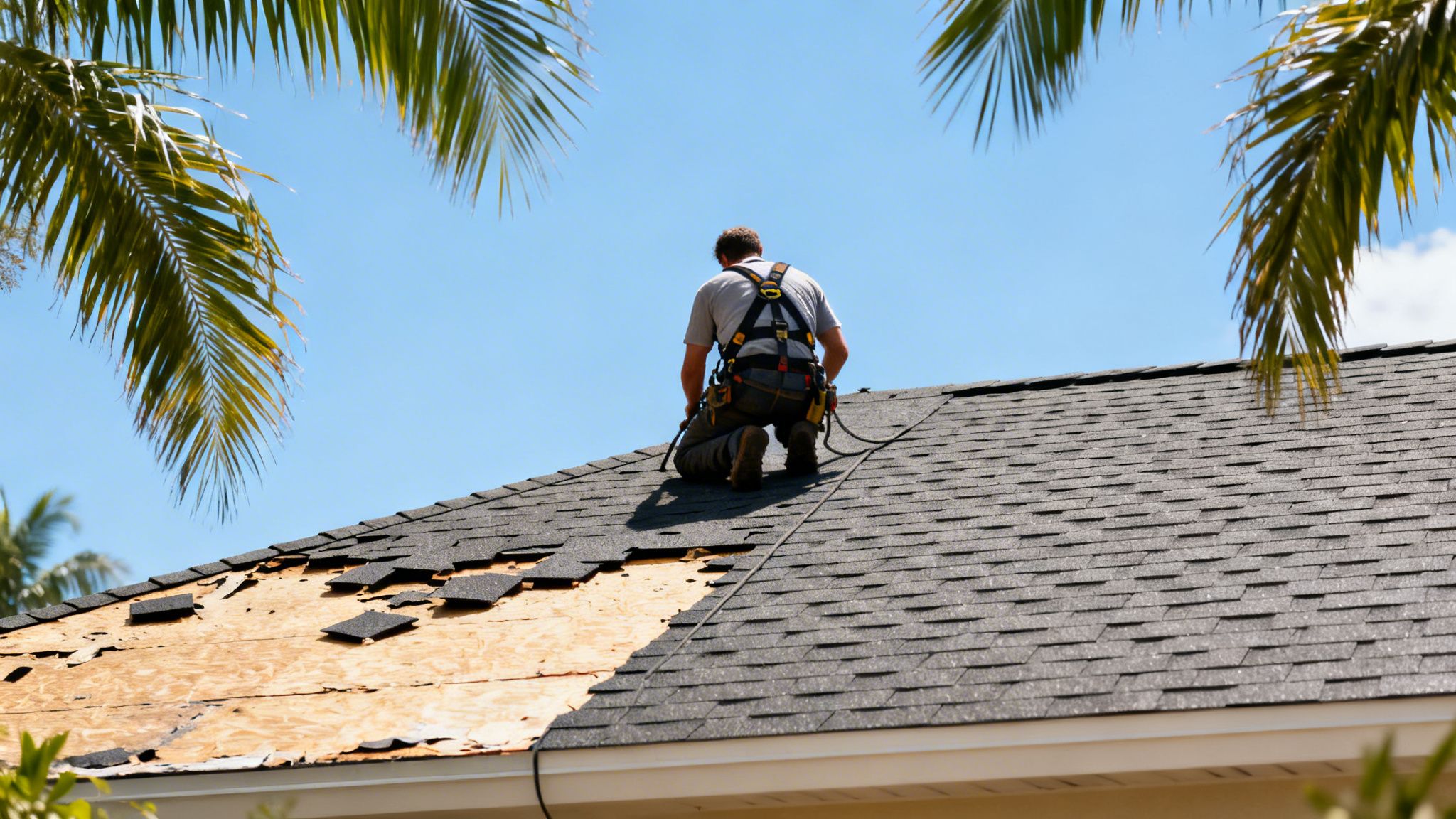
For any West Palm Beach homeowner, knowing the basics of roof repair is your first line of defense in protecting your property. Let's be honest: our beautiful, sunny climate, combined with seasonal hurricanes and torrential rain, puts a unique and relentless strain on every roof. This makes prompt, professional repairs a necessity, not a luxury.
A Homeowner's Guide to West Palm Beach Roof Repair

Owning a home in West Palm Beach is incredible, but it comes with the serious responsibility of defending it against our region's aggressive weather. Your roof is the primary shield protecting your home, and the local climate is its constant adversary. Think of your roof less as a static cover and more as a component under a continuous, multi-front assault.
The intense, year-round sun relentlessly beats down, causing materials to expand and contract. This daily cycle slowly degrades everything from shingles to tiles and underlayment, making them brittle and prone to cracking. Then, the rainy season arrives, and those downpours test every single seal and piece of flashing, searching for the smallest weakness.
The Urgency of Timely Repairs
What might be a minor issue in a calmer climate is a ticking clock here in South Florida. A single cracked tile or a handful of missing shingles can seem like no big deal. But those small openings are direct invitations for water to get in, especially during a tropical storm or hurricane.
In South Florida, a small roof leak is never just a small leak. It's an open door for widespread water damage, dangerous mold growth, and structural rot that can silently compromise your entire home until it becomes a full-blown crisis.
Addressing the need for roof repair in West Palm Beach right away isn't just about fixing a problem—it's about preventing a catastrophe. Ignoring those early warning signs can quickly turn a simple, affordable fix into a complex and extremely expensive full reroofing project.
To help you quickly assess potential problems, here’s a quick-reference guide for common issues we see in the West Palm Beach area. This table breaks down what to look for, what likely caused it, and how urgently you need to act.
Common Roof Issues in West Palm Beach and Their Urgency
| Roofing Issue | Common Local Cause | Recommended Action and Urgency |
|---|---|---|
| Cracked or Slipped Tiles | Thermal stress from intense sun; high winds | High: Exposes the underlayment to rain. You should schedule an inspection immediately. |
| Missing Shingles | Hurricane-force wind gusts; adhesive failure from heat | Critical: Leaves the roof deck completely vulnerable. This requires an emergency patch or repair. |
| Ponding Water (Flat Roofs) | Clogged drains from storm debris; improper roof slope | Medium: Can lead to leaks and structural strain over time. Address it within a few weeks. |
| Dark Stains on Ceilings | A slow leak from a compromised flashing or seal | High: This indicates ongoing water intrusion. The source must be found before mold begins to grow. |
This table shows why local knowledge is so important. An issue that's a "medium" priority in a dry climate can become "high" or "critical" here with our frequent, heavy rains.
Navigating Local Roofing Challenges
An experienced local contractor like Paletz Roofing understands this environment inside and out. A proper repair in our area involves far more than just patching a hole. It demands deep knowledge of which materials can withstand extreme UV exposure and a mastery of techniques that comply with Florida's stringent building codes, specifically designed for High-Velocity Hurricane Zones (HVHZ).
Choosing a roofer who can navigate these specific challenges is absolutely critical. A true professional can identify not just the obvious damage, but also the subtle, underlying weaknesses that could fail during the next big storm. That's the only way to ensure your home remains safe, secure, and protected, no matter what the weather throws at it.
How to Spot Roof Damage Before It's a Disaster
Think of your roof's health like your own—early detection is almost always the key to stopping a small problem from spiraling into a full-blown crisis. Too many West Palm Beach homeowners only think about their roof when water is already dripping into the living room. By then, the damage is done. The real warning signs, the critical ones, often show up long before that.
Learning to spot these subtle clues, both inside and outside your home, can save you thousands in repairs and a world of headaches.
Start with an Interior Walkthrough
The most important checkup you can do doesn't require a ladder. In fact, it starts right inside your house, where the first red flags of a roof problem often appear.
Look up. The most obvious sign of a leak is a discolored stain on your ceiling. It might look like a faint, yellowish-brown circle or maybe a sprawling, map-like pattern. Don't make the mistake of ignoring it just because it’s dry. Many roof leaks are intermittent and only make an appearance after a heavy, wind-driven rain.
Next, take a look at your walls, paying close attention to where they meet the ceiling. Peeling, bubbling, or cracking paint is a textbook symptom of moisture seeping in from above. As water gets behind the paint, it causes it to lose its grip. This is especially common in the corners of rooms on the top floor.
A faint water stain on your ceiling is your roof's version of a check engine light. It's a direct signal that something is compromised, and you need a professional inspection to find the source before the damage gets worse.
While you're inside, trust your nose. Do you notice any musty or moldy odors, especially in your attic or the closets on your top floor? A persistent damp smell you can't trace to anything else often points to a slow, hidden leak that’s encouraging mold and mildew to grow in your insulation or drywall.
Conducting a Safe Exterior Ground Inspection
Once you’ve checked things out indoors, you can learn a whole lot just by walking around the outside of your home. You don’t need to get on the roof to spot major problems. Just keep your feet safely on the ground and look for these common signs of trouble.
For shingle roofs, be on the lookout for any shingles that are cracked, curled at the edges, or just plain missing. Each shingle is like a scale on a suit of armor; when even one is gone, it leaves the vulnerable underlayment exposed to Florida's brutal sun and torrential rain. While you're at it, check your gutters for an excessive amount of black, gritty granules. These granules are what protect your shingles from UV rays, and when they wash away, it means the shingles are getting old and brittle.
If you have a tile roof, scan for cracked, chipped, or slipped tiles. A single cracked tile might not seem like a big deal, but it breaks the interlocking seal designed to keep water out. High winds or even the foot traffic of an inexperienced repair person can easily cause this kind of damage. If you spot tiles that have slid down, that’s a huge red flag that the fasteners have failed and a serious leak is either happening or about to. You can see more examples of what this looks like in our roofing gallery.
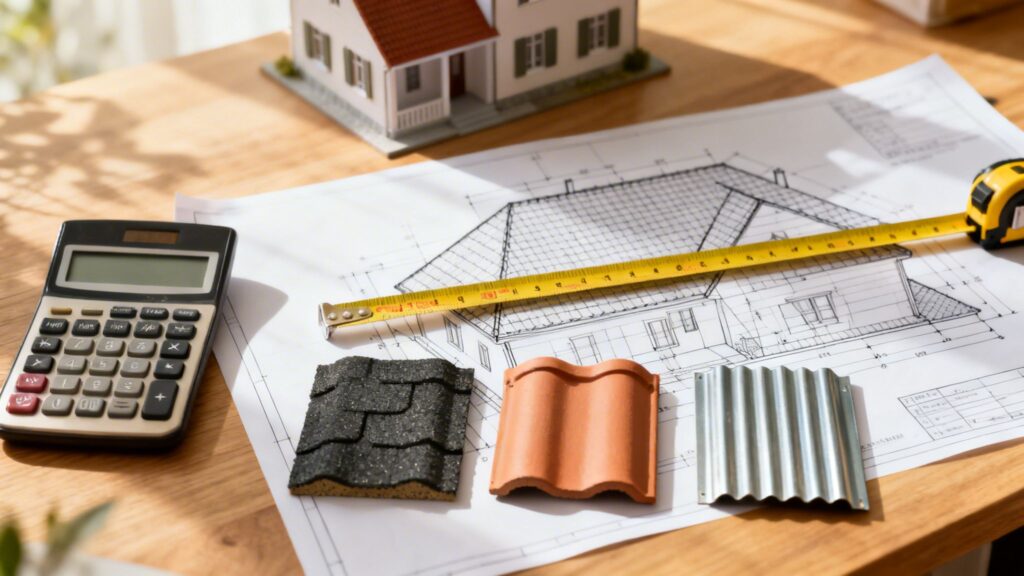
On flat or low-slope roofs, which are common on many Florida homes and commercial buildings, the number one enemy is ponding water. After it rains, check to see if large puddles are still sitting on the roof surface more than 48 hours later. This is a clear sign of a drainage problem, which will rapidly break down the roofing membrane and inevitably cause leaks.
By performing these quick interior and exterior checks regularly, especially after a major storm, you give yourself the power to act fast. Spotting these signs early is the best way to protect your property and make sure that a call for roof repair in West Palm Beach is a proactive step, not a panicked reaction to a disaster.
Understanding Repair Methods for Local Roof Types
Not all roofs are created equal, and in West Palm Beach, neither are their repairs. The fix that works perfectly for one type of roof could be completely wrong—and even damaging—for another. Our intense sun, torrential downpours, and hurricane-force winds demand that every repair uses materials and techniques specifically designed for the roofing system in question.
To give you a better idea of what a professional roof repair in West Palm Beach actually involves, we'll walk through the process for the most common roof types you'll see around town. Knowing these differences helps you set realistic expectations and spot a quality job when you see one.
Repairing Asphalt Shingle Roofs
Fixing a shingle roof might seem straightforward, but a professional repair is much more than just nailing on a new shingle. A proper fix involves a careful, multi-step process to ensure the roof's integrity.
First, a roofer has to carefully remove the damaged, cracked, or missing shingles without harming the surrounding ones, which can become brittle from years of sun exposure. Once the damaged area is clear, the real work begins. The roofer will inspect the exposed underlayment and the roof decking underneath for any soft spots, rot, or other signs of water intrusion. This step is critical; just covering up damaged decking is a surefire way to guarantee the problem comes right back.
If the decking is solid, any compromised underlayment gets patched before new shingles go on. The new shingles must be meticulously woven into the existing ones and sealed with roofing cement to create a watertight bond that can stand up to serious wind uplift.
This diagram shows you the two main places—inside and outside your home—where you can start looking for damage yourself.

As you can see, checking for roof damage requires a two-pronged approach, looking for signs both inside and outside your property.
The Nuances of Tile Roof Repair
Repairing a tile roof is far more complex than it looks. The tiles are just the outer armor; the real waterproof shield is the underlayment hidden beneath them.
A common mistake is simply swapping out a broken tile. A true professional repair focuses on the underlayment first. If the underlayment is torn or compromised, replacing the tile is pointless because water will still find its way in.
A qualified roofer will follow a strict process:
- Remove the Broken Tile: This involves carefully lifting the surrounding tiles to get to the damaged one without causing a chain reaction of more breakage.
- Inspect the Underlayment: This is the most important part of the job. The roofer will meticulously check the underlayment for any tears, holes, or degradation from UV exposure that has crept through the tile gaps.
- Repair the Underlayment: Any damaged sections of underlayment are patched with new material and sealed to restore the waterproof barrier.
- Replace the Tile: A new tile is set in place with the right roofing adhesive and secured, making sure it's properly interlocked with the surrounding tiles.
This methodical approach ensures the repair fixes the root cause of the leak, not just the cosmetic symptom you can see.
Fixing Standing Seam Metal Roofs
Metal roofs are famous for their toughness, but even they can take a hit from a severe storm or falling tree limbs. Repairs generally fall into two categories.
For minor punctures or deep scratches, a pro can often apply a specialized sealant and a color-matched coating. This restores the protective layer and, most importantly, prevents rust from taking hold. For more significant damage, like a dented or lifted panel, the entire panel may need to be replaced. This involves carefully unseaming the damaged panel from its neighbors, removing it, and installing a new, mechanically seamed panel in its place. Because standing seam systems hide their fasteners, this process maintains the roof’s clean, seamless look and its superior wind resistance.
Addressing Flat Roof Issues
Flat roofs, which are common on commercial buildings and many modern homes here in West Palm Beach, come with their own unique set of challenges. Their primary enemies are ponding water, membrane punctures, and seam failure.
A small puncture in the membrane can often be fixed with a patch. This involves thoroughly cleaning the area around the hole, applying a primer, and then heat-welding or adhering a patch of compatible membrane material over the damage. However, if the seams are failing, a simple patch won't cut it. The entire seam might need to be cleaned and resealed with a high-grade sealant or reinforced with flashing tape.
For widespread issues or persistent ponding water, a more robust solution like a restorative silicone coating might be necessary. This involves applying a new, seamless waterproof layer over the entire roof surface. You can see detailed examples of these intricate roof repair projects in our gallery.
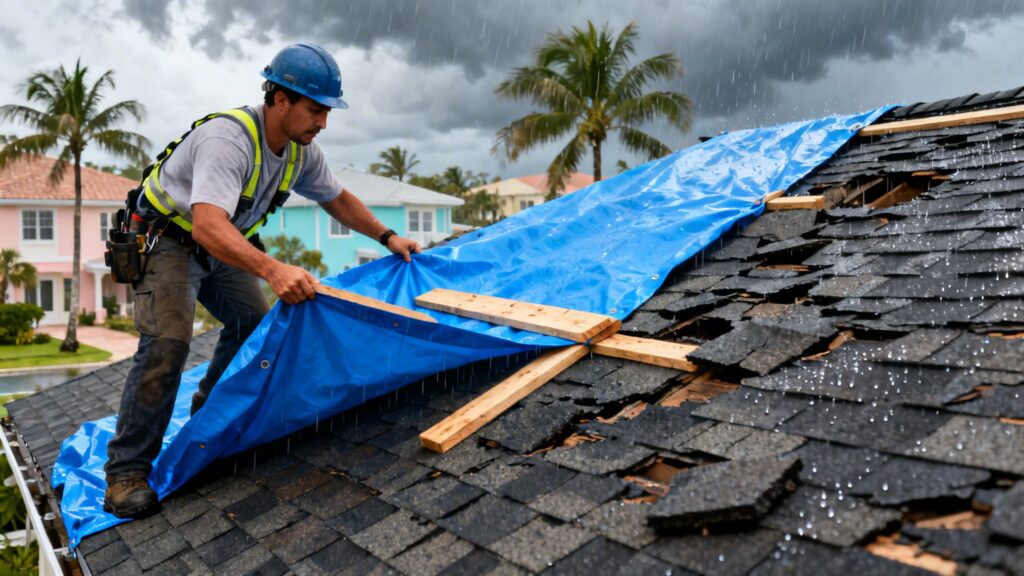
No matter your roof type, a lasting repair is always about more than a quick fix. It takes a thorough diagnosis, the right materials for our climate, and precise techniques that truly restore your roof’s integrity.
Why Florida Weather and Building Codes Matter
A roof repair in West Palm Beach is a completely different ballgame than one in almost any other part of the country. Around here, a repair isn't just about plugging a hole; it's about fortifying your home against a brutal combination of extreme weather and some of the toughest building regulations in the nation. Getting either of those wrong is asking for trouble.
Think of your roof as your home’s first line of defense. In South Florida, that defense is constantly under attack from hurricane-force winds, walls of tropical rain, and relentless, year-round UV radiation. A quick patch might stop a drip today, but only a code-compliant repair ensures your roof will still be there after the next big storm.
The Impact of Hurricane-Force Winds
The single biggest factor that shapes roofing in our area is the wind. West Palm Beach sits squarely inside Florida’s High-Velocity Hurricane Zone (HVHZ), a designation that changes everything. This means any roof repair, big or small, has to be engineered to handle wind speeds that can peel a weaker roof system right off a house.
This isn't a friendly suggestion—it’s the law, spelled out in the Florida Building Code. Every single nail, every piece of flashing, and every shingle or tile must follow specific installation patterns designed to maximize wind uplift resistance. A contractor who doesn't live and breathe these hyperlocal rules is putting your entire property in jeopardy.
A non-compliant roof repair is more than just a code violation—it’s a critical failure point waiting for the next hurricane. It can also lead to denied insurance claims, leaving you financially responsible for catastrophic damage.
This constant focus on hurricane-readiness has completely shaped the local roofing industry. In fact, Florida leads the nation with 25,190 roofers and has the highest concentration of roofing jobs in the country. It’s a direct reflection of the intense need for pros who truly get what it takes to build a roof that can survive South Florida.
Navigating Strict Building Codes and Permitting
Because we're in the HVHZ, almost every significant roof repair in West palm beach requires a permit. This process is your best friend, as it ensures the work gets inspected and verified to meet the latest Florida Building Code. A licensed contractor takes care of this for you, submitting detailed plans that outline the exact materials and methods they'll use.
This mandatory oversight is what protects you as the homeowner. It’s a guarantee that your repair is a real structural upgrade, not just a cosmetic fix, bringing your roof up to current safety standards. Key details governed by the code include:
- Underlayment Requirements: The code is incredibly specific about the type of waterproof barrier under your shingles or tiles and exactly how it must be installed.
- Fastener Schedules: It dictates the precise number and nailing pattern for every component to fight wind uplift.
- Flashing Details: Every vent, pipe, and chimney must be sealed using specific, wind-driven-rain-proof flashing techniques.
An experienced local contractor knows these codes backward and forward. They understand that a successful repair in Palm Beach County has to satisfy both the homeowner and the building inspector. As you weigh your options, it's also smart to look into long-term resilient choices like sustainable building materials for Florida renovations, which align perfectly with our code's focus on durability.
This is precisely why you can’t trust your roof to a general handyman. Only a licensed and insured roofing professional has the specific training and qualifications to perform a repair that is both safe and legal. It’s the only way to be certain your home, your investment, and your family are properly protected.
How to Choose the Right West Palm Beach Roofer

Choosing a contractor for your roof repair in West Palm Beach feels like a high-stakes decision for a good reason—it is. Your roof is the single most important shield protecting your home and family, so this isn't a decision to take lightly. A great roofer safeguards your investment for years, while a bad one can turn a simple leak into a costly disaster.
We're going to move beyond the generic advice and give you an actionable checklist to help you confidently vet and hire a truly qualified professional right here in the West Palm Beach area.
Verify License and Insurance First
Before you even start looking at estimates or reading reviews, your first move is to verify a contractor's credentials. In Florida, this is a hard-and-fast rule with zero exceptions. Any roofer you consider must provide two critical documents: a state-issued license and comprehensive insurance.
- Florida State License: This is your proof that they’ve met the state’s tough requirements for experience and testing. You can—and should—verify their license number instantly online through the Florida Department of Business and Professional Regulation (DBPR) portal.
- Proof of Insurance: Always ask for their Certificate of Insurance (COI). Don't just glance at it; call the listed insurance agency to confirm that both their general liability and workers' compensation policies are active. This is what protects you from being held liable if a worker gets injured on your property.
If a contractor hesitates, gives you excuses, or can't produce these documents on the spot, cross them off your list. It's the quickest way to separate the real pros from the real risks.
Scrutinize Local Reviews and Past Work
Once you've confirmed a contractor is properly licensed and insured, it's time to dig into their reputation. Don't just skim the star ratings on Google, Yelp, or Angi—read the actual reviews.
Look for patterns in what people are saying. Are there repeated mentions of their crew being punctual, keeping the job site clean, and communicating clearly? Those are the hallmarks of a well-managed company. A reputable roofer will also have a proven track record, and it's worthwhile to understand the strategies for generating high-quality leads for roofers that successful companies use to build their client base.
A roofer’s portfolio is their resume. Don’t just take their word for it—ask to see photos of recent, local projects similar to yours. A company proud of their work will be eager to show it off.
Pay close attention to galleries that feature homes right here in West Palm Beach. Do the finished roofs look clean, with straight lines and professional details? Seeing is believing, and a strong local portfolio proves they have the hands-on skill to handle our area’s specific needs.
Demand a Detailed, Line-Item Estimate
Never, ever accept a vague quote scribbled on a piece of paper or a price given over the phone. A professional estimate is a detailed, multi-page document that breaks down every single component of the job. This is your shield against surprise charges and your guarantee that you know exactly what you’re paying for.
At a minimum, your estimate must clearly spell out:
- The total cost of the project.
- A detailed scope of work, outlining the specific repair or replacement methods.
- The exact materials to be used (including brand and type of shingle, tile, etc.).
- A breakdown of costs for labor, materials, and permit fees.
- Clear information on both material and labor warranties.
A transparent, itemized estimate is the mark of an honest contractor. It sets clear expectations and becomes the foundation of your contract, giving you confidence that there won't be any hidden costs later on. To see an example of the detailed information a professional provides, check out the resources offered through our roofing inspection services.

Frequently Asked Questions About Local Roof Repairs
After walking through the nuts and bolts of the roof repair process, you're bound to have some practical questions. We get it. Dealing with a damaged roof brings up a lot of concerns, especially around cost, time, and dealing with insurance.
We hear these questions all the time from West Palm Beach homeowners just like you. Here are some straight-up, honest answers from our team to help you know what to expect.
How Much Should a Roof Repair Cost?
This is always the first question, and the honest-to-goodness answer is: it really depends on what we find up there. A minor, straightforward fix—like swapping out a few asphalt shingles that a storm ripped off or resealing a leaky pipe boot—might only run a few hundred dollars. These jobs are quick and don't require a mountain of materials.
On the other hand, a more serious problem is a different story. If we’re tracking down a stubborn leak on a tile roof and discover rotted decking underneath, that repair becomes much more involved. Jobs like that can easily cost several thousand dollars because of the labor and materials needed.
The final price tag for any roof repair in West Palm Beach really comes down to a few key things:
- Type of Roof: As a rule, tile and metal repairs demand more time, skill, and money than shingle repairs.
- Extent of Damage: A small patch is one thing. When the damage goes deeper into the underlayment and decking, the cost naturally goes up.
- Accessibility: A super steep roof or one that’s hard to get to can add to labor costs. Safety and setup take more time.
- Permitting: Some larger-scale repairs require a permit from the city, which has a small administrative fee.
The only way to get a real number is to have a professional get their eyes on it. An inspection will lead to a detailed, itemized estimate you can actually count on.
How Long Does a Typical Repair Take?
Just like cost, the timeline is all about the scope of the work. A simple fix, like sealing a flashing or replacing a handful of shingles, is often done in just a few hours. Our repair crews can usually knock those out in a single trip, getting your life back to normal fast.
Bigger, more complex jobs will, of course, take more time. For example, if a storm has caused significant water damage and we need to tear out and replace plywood decking and underlayment before the new roofing goes on, that project could take anywhere from one to three days.
Most professional roofers can wrap up standard repairs within 1 to 2 business days. The main things that can stretch out a timeline are finding unexpected structural issues once we open up the roof or, you guessed it, bad weather.
A good contractor will always give you a realistic schedule from the start and keep you in the loop if any surprises pop up that could cause delays.
Do I Need a Permit for a Roof Repair?
This is a huge question in our area, and the answer is tied directly to Florida's tough building codes. For tiny repairs—usually defined as anything under one "square" of roofing (a 100-square-foot area)—you might not need a permit. But the rules can be tricky.
For almost any significant repair, especially if it involves replacing decking or a large section of your roof, you absolutely will need a permit. This is non-negotiable here in the High-Velocity Hurricane Zone (HVHZ) that covers West Palm Beach.
The good news? Working with a licensed and insured contractor like Paletz Roofing takes this headache completely off your plate. We manage the entire permitting process, making sure all the paperwork is filed correctly and the final repair is 100% compliant with local and state codes. It's your best assurance that the job is done right and by the book.
How Do I Handle a Roof Repair Insurance Claim?
Tackling an insurance claim can feel like a full-time job, but breaking it down into steps makes it much easier to handle. Your absolute first priority is to stop the problem from getting worse. That means calling a roofer to get a temporary tarp or emergency patch in place to keep more water from invading your home.
From there, it's all about documentation. Grab your phone and take plenty of clear photos and videos of the damage, both inside your home (like water stains and drips) and on the roof itself (missing shingles, cracked tiles, etc.).
Here’s a simple game plan for the insurance process:
- Contact a Roofer First: Get a professional to assess the damage and write up a detailed estimate. This document is critical ammunition for your claim.
- Review Your Policy: Get familiar with your deductible and what your policy actually covers. Most cover storm damage from wind or hail but will deny claims based on old age or lack of maintenance.
- File the Claim: Call your insurance company to get the ball rolling. They will assign an adjuster to your case.
- Meet the Adjuster: We strongly recommend having your roofer present when the insurance adjuster comes to inspect the damage. Your roofer can point out damage the adjuster might overlook and make sure the scope of work they approve actually matches what’s needed to fix your roof correctly.
Having a seasoned pro in your corner can be the difference-maker in getting your claim approved for the full amount required to properly restore your roof.
Ready to get a clear, honest answer about your roof's condition? The expert team at Paletz Roofing and Inspections provides thorough inspections and detailed estimates to give you the peace of mind you deserve. Contact us today to schedule your free consultation at https://paletzroofing.com.