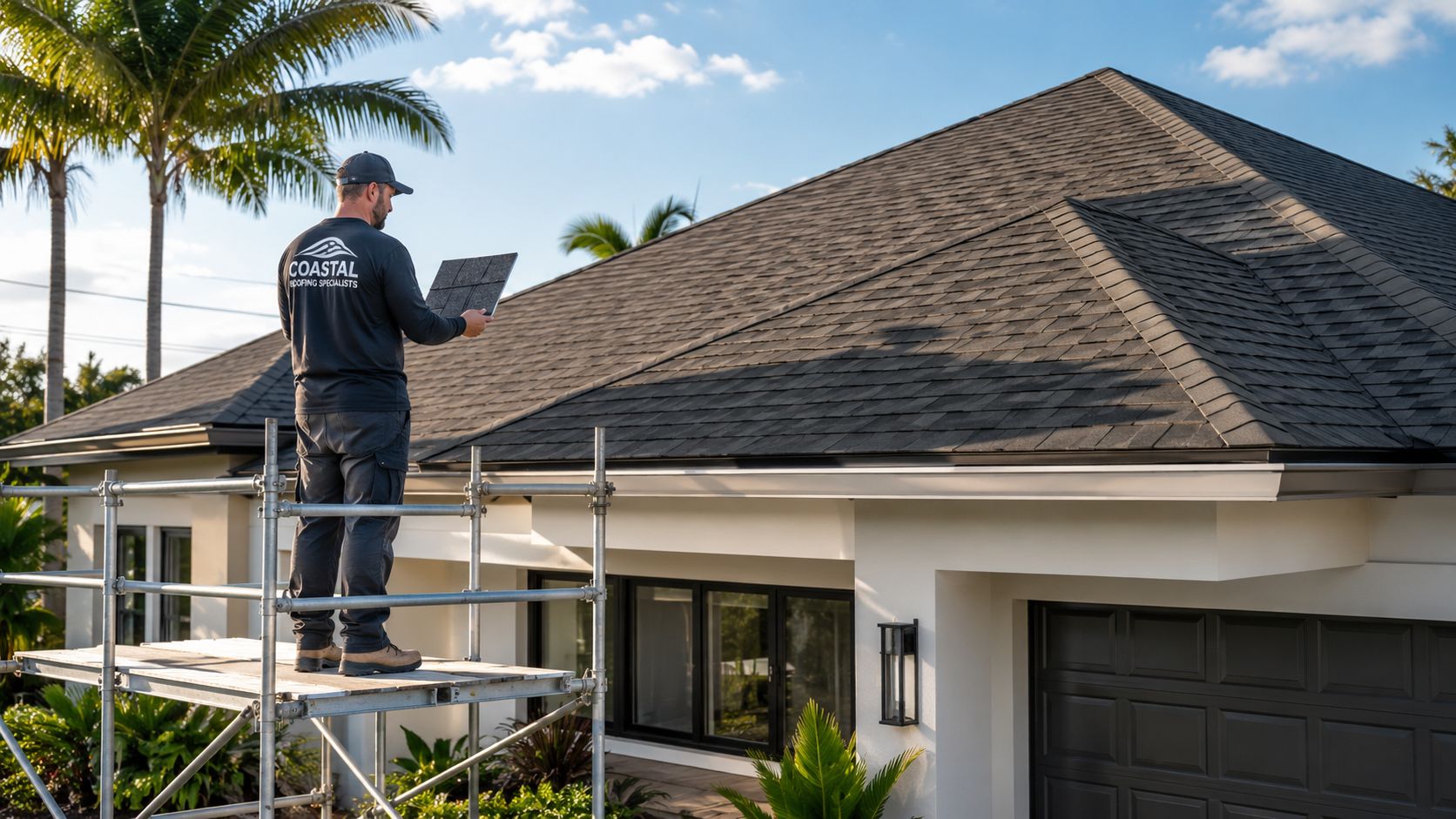
A new roof in Coconut Creek isn't just a line item on a home improvement list. It can also change your long-term ownership costs. In Broward County, newer tile or metal roofs can qualify for 15% to 25% reductions in windstorm insurance premiums, a detail many cost guides skip when they focus only on installation price (JR Roofing and Masonry on net roof replacement cost and insurance offsets).
That matters because the upfront price of a roof replacement in Coconut Creek can feel steep at first glance. But once you factor in hurricane code compliance, lifespan, resale value, cooling performance, and possible insurance savings, the smarter question isn't just "What does it cost?" It's "What will this roof cost me over the years I own the house?"
Table of Contents
- Is It Time for a New Roof in Coconut Creek
- Decoding Roof Replacement Costs and Financing in Coconut Creek
- Choosing Your Roofing Material for the Florida Climate
- Navigating Broward County Permits and Building Codes
- Hurricane Proofing Your New Roof Beyond the Shingles
- Your Roof Replacement Project Timeline Step by Step
- Choosing a Licensed Coconut Creek Roofer You Can Trust
Is It Time for a New Roof in Coconut Creek
Your roof is a protection system first. In Coconut Creek, that system takes a beating from heat, UV exposure, rain, and wind long before a major hurricane ever shows up. If the roof is failing, the warning signs usually appear before the first ceiling stain.
On shingle roofs, homeowners often notice granule loss, curling edges, bare spots, or shingles that don't sit flat after windy weather. On tile roofs, the clues look different. You may see cracked tiles, slipped tiles, or mortar and flashing details that no longer look tight. On any roof type, dark streaks near valleys, damp spots in the attic, and water marks around penetrations usually mean the system isn't shedding water the way it should.
Common field signs homeowners can spot
- Shingle wear from sun exposure: South Florida heat can dry out asphalt and make older shingles brittle.
- Tile cracks from expansion and contraction: Repeated heating and cooling can stress individual tiles and the underlayment below them.
- Wind uplift clues: Lifted edges, displaced ridge pieces, or sections that look slightly uneven after storms deserve a close look.
- Leak pathways near roof details: Chimneys, vents, wall intersections, and skylight areas often fail before the big open field of the roof does.
Practical rule: If you can see visible roof damage from the ground, the roof usually has more going on that you can't see from the driveway.
A lot of homeowners wait until a leak reaches the living room. That's late. Water often enters long before it becomes obvious indoors, and by then you may also be dealing with damaged decking, insulation, or interior finishes.
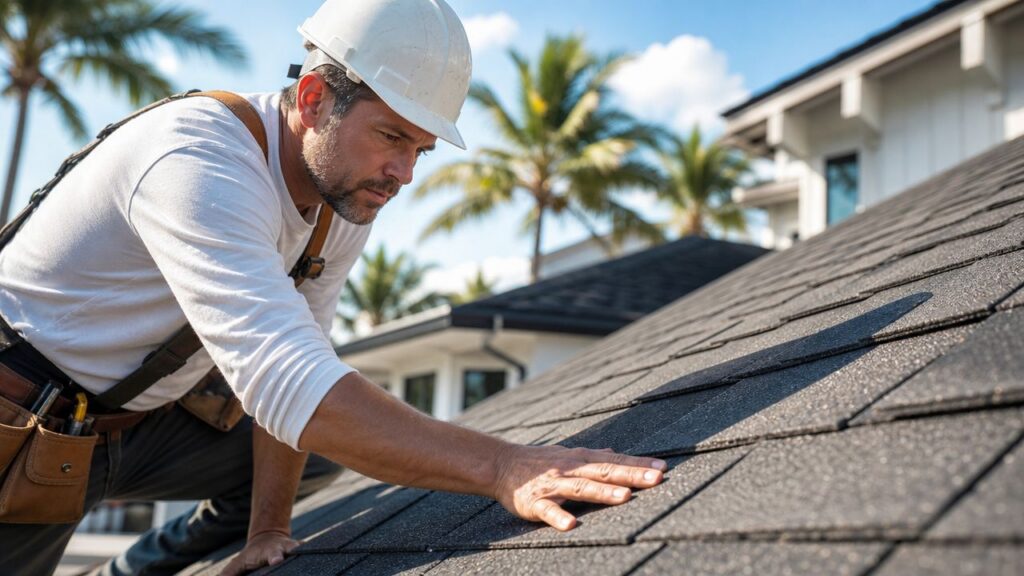
If you're comparing your roof to other homes in the neighborhood, it helps to know what a professional inspection is looking for. A visual example like this roof inspection reference photo shows the kind of close-up problem areas roofers examine before recommending repair or full replacement.
Decoding Roof Replacement Costs and Financing in Coconut Creek
A roof quote can swing by many thousands of dollars in Coconut Creek, even on homes that look similar from the street. The reason is simple. You are not buying shingles alone. You are paying for tear-off labor, deck repairs if needed, underlayment, flashing, ventilation details, permit work, and a roof assembly that has to stand up to South Florida wind.
What homeowners usually pay
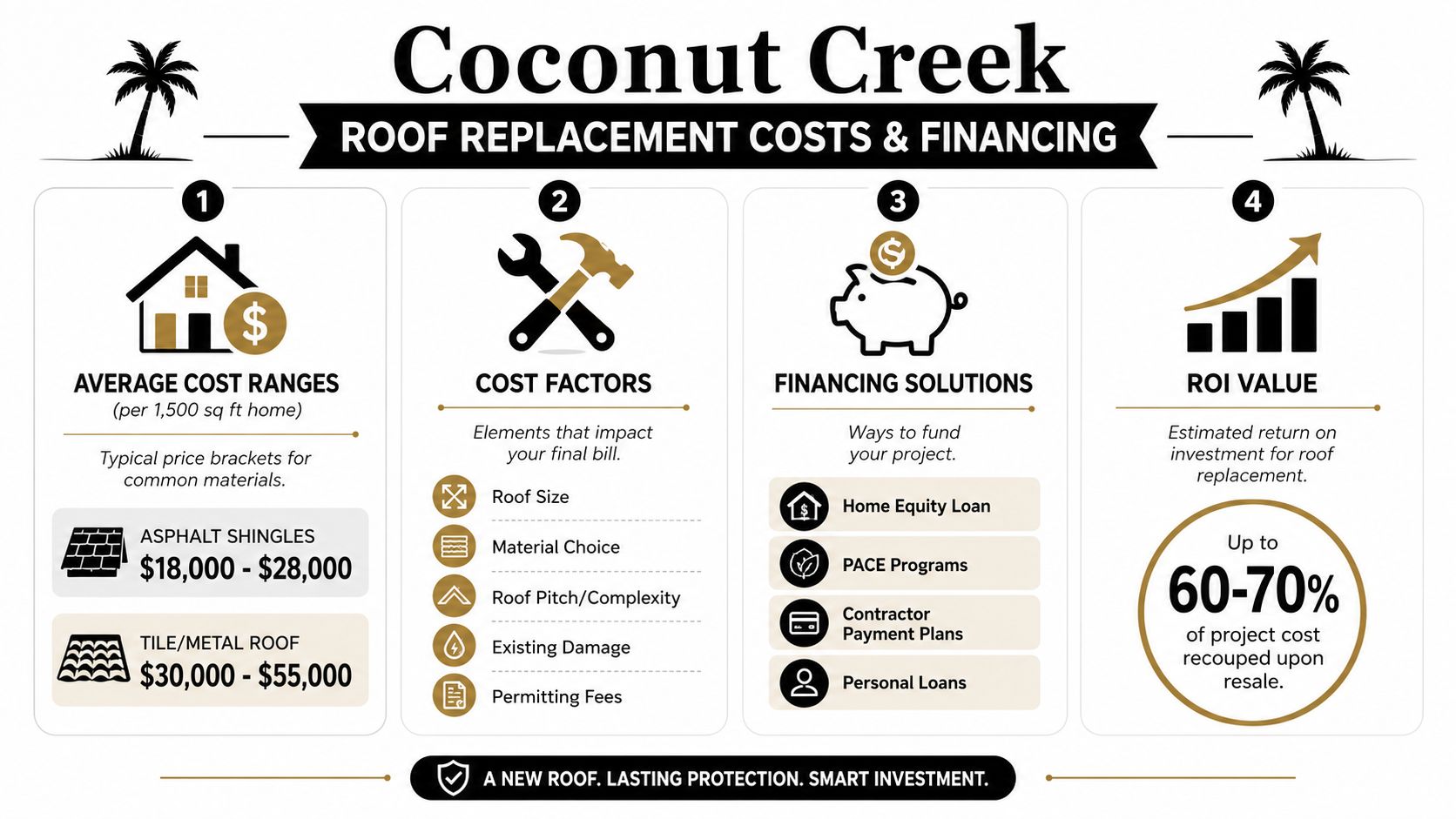
For a standard home in Coconut Creek, asphalt shingle replacements often fall between $5,000 and $10,500, while metal roof replacements can range from $8,000 to $30,000, according to HomeGuide's Coconut Creek roofing cost overview. That same source places many 1,800- to 2,400-square-foot single-family homes around $12,000 to $20,000 installed for architectural shingles and $18,000 to $35,000 for concrete or clay tile.
A separate Broward County pricing snapshot puts average residential replacement near $13,500, with asphalt shingles at $9,000 to $14,000, concrete tile at $14,000 to $20,000, flat or TPO roofing at $6,000 to $12,000, and clay tile at $18,000 to $28,000 (Broward Roofing Pros projected 2026 price ranges).
If you like to compare by square footage, one Coconut Creek estimator places single-family home replacements at $10,000 to $25,000, with a 1,700-square-foot roof at $12,500 to $29,000. The same estimator lists metal roofing at $8 to $12 per square foot and concrete tile at $9 to $19 per square foot (Florida roofing cost estimator for Coconut Creek).
Those ranges can feel wide. That is normal. Two houses with the same footprint can price very differently if one needs plywood replacement, upgraded underlayment, more flashing work around penetrations, or a more complex roof shape with hips, valleys, and steep sections.
Why net cost matters more than bid price
The lowest proposal is not always the lowest-cost roof to own.
A roof works like a long-term mechanical system. The install price is the ticket to get in. The complete financial picture shows up over 15 to 40 years through repairs, storm performance, maintenance, service life, and insurance costs. In Broward County, that last piece gets missed in a lot of roofing guides.
HomeGuide notes that a new roof can add $5,000 to $15,000 in home value and return about 60% to 70% at resale, as noted earlier. That helps, but resale is only one part of the equation. For many Coconut Creek homeowners, the more immediate question is whether a stronger roof assembly can improve eligibility for insurance credits after a wind mitigation inspection.
That is where hurricane-rated materials and installation details matter. A roof system with better wind resistance can sometimes lower windstorm-related insurance costs, depending on the insurer, the age of the prior roof, and whether the full assembly meets the standards your inspector is documenting. The practical takeaway is straightforward. Ask your roofer and your insurance agent the same question before you sign anything: which roof option gives me the best chance of premium savings in Broward County after inspection?
Here is a simple way to compare options:
| Roof decision factor | Lower upfront choice | Higher upfront choice |
|---|---|---|
| Initial install cost | Usually shingles | Usually tile or metal |
| Expected service life | Shorter | Longer |
| Repair frequency over time | Often higher | Often lower |
| Wind-resistance potential | Good if properly rated and installed | Often stronger in premium systems |
| Insurance credit potential | Depends on rating and installation details | Often better if the full system qualifies |
| Long-term ownership cost | Can rise with earlier replacement cycles | Can improve if lifespan and insurance savings offset the higher bid |
A cheap roof can be like buying inexpensive tires for a truck you drive every day in summer storms. You save at the counter, then pay back the difference through shorter life and weaker performance under stress.
A simple way to think about financing
Few homeowners replace a roof because the timing is ideal. Usually the roof is old, the inspection is not good, or the next rainy season is getting too close. Financing is often less about convenience and more about controlling a bigger loss before water reaches drywall, insulation, or roof decking.
Common routes include:
- Home equity borrowing: Often used for major capital work when the owner wants fixed repayment over a longer term.
- PACE-style programs or home improvement financing: Sometimes considered when the project includes resilience or energy-related upgrades. Read the terms closely because repayment structure matters.
- Contractor payment plans or personal loans: Useful when the roof needs to be replaced soon and a longer loan process is not practical.
The monthly payment is only part of the math. Compare that payment against what you are getting in return: a roof that meets current code, a reset on roof age, a better chance at insurance credits if the system qualifies, and fewer surprise repair bills during storm season.
Before you choose a financing option, ask for the full project scope in writing. That means tear-off, disposal, permit costs, underlayment type, flashing replacement, ventilation work, cleanup, warranty terms, and how hidden deck damage will be priced if it shows up after the old roof comes off. That written scope is what lets you compare bids fairly, instead of guessing based on one big number.
Choosing Your Roofing Material for the Florida Climate
Roof material choice in Coconut Creek shapes three costs at once. You pay for installation now, maintenance over time, and insurance risk every storm season. That last part gets missed in a lot of roofing guides. In Broward County, a roof system with stronger wind ratings and code-compliant attachments can help support better insurance treatment than an older or weaker system, so the cheapest bid is not always the lowest long-term cost.
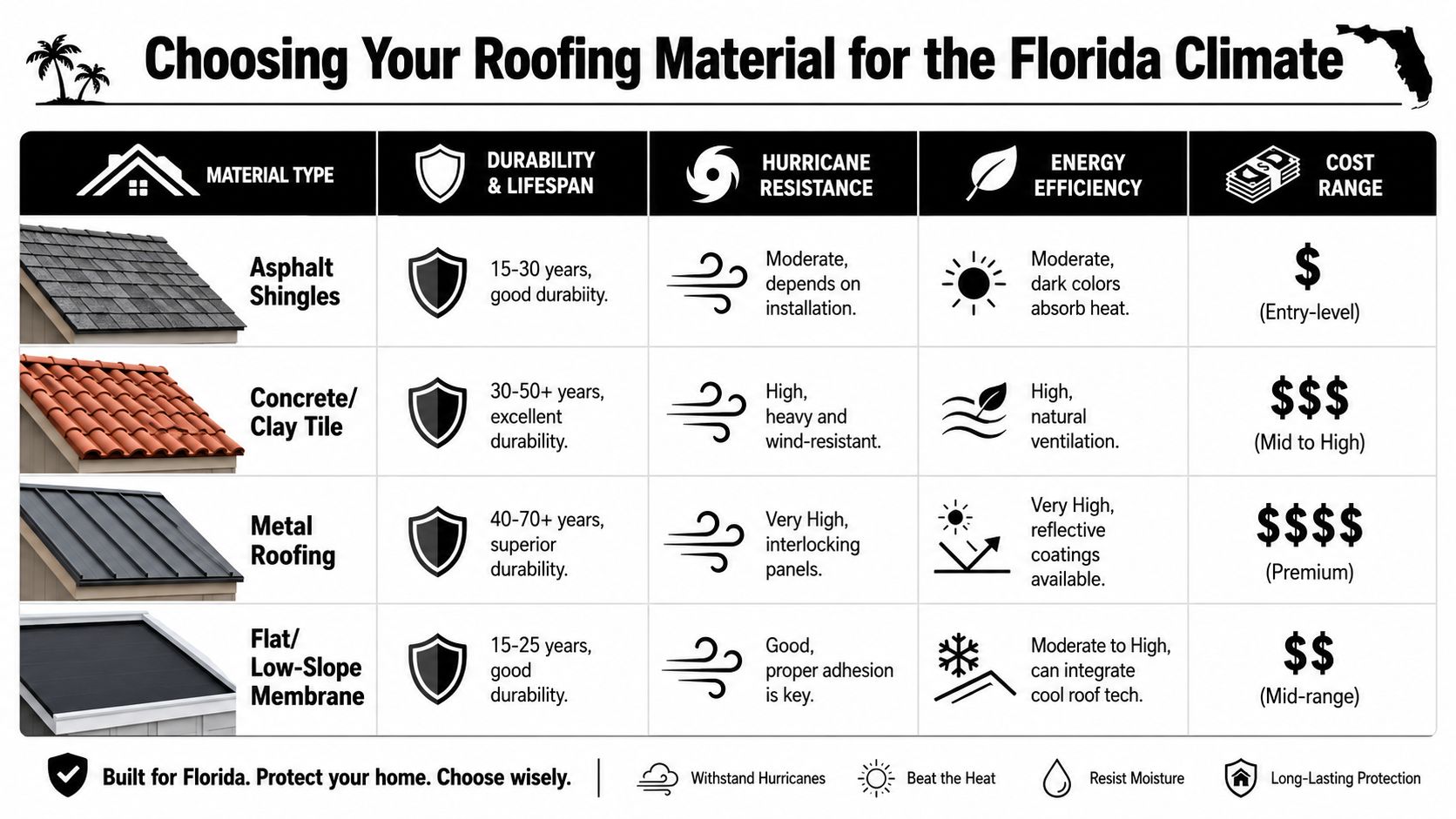
For many single-family homes here, asphalt shingles usually cost less upfront, while tile costs more at installation but can last longer and handle heat better. One local Coconut Creek material guide places a CertainTeed Landmark asphalt shingle replacement around $12,000 to $20,000 installed, while a West Lake concrete or clay tile system runs about $18,000 to $35,000. That same guide says tile can reduce cooling loads by 10% to 15% and often lasts 40 to 50 years, compared with 15 to 25 years for asphalt shingles in similar South Florida exposure (Premier Impact Windows and Roofing on Coconut Creek roofing materials).
A simple way to compare materials is to treat the roof like a pickup truck you plan to keep for years. The sticker price matters, but fuel use, repair frequency, and how it performs in bad weather matter too. Roofing works the same way in Coconut Creek.
Asphalt shingles
Asphalt shingles are the usual starting point for homeowners who need a practical replacement without stretching the budget. They fit many neighborhood styles, they are widely available, and crews can install them faster than heavier systems.
Their main advantage is straightforward. Lower upfront cost.
But Florida exposes the tradeoff fast. Constant UV, attic heat, heavy rain, and wind-driven storms wear shingles harder here than in milder parts of the country. The product matters, but installation matters just as much. A good shingle installed poorly is still a weak roof.
Shingles often make sense if you may sell in the medium term or if the house was designed around a lighter roofing system. If you expect to stay for decades, the lower purchase price can be offset by a shorter replacement cycle and less favorable insurance value compared with some hurricane-rated alternatives.
Concrete and clay tile
Concrete and clay tile fit South Florida for good reason. They handle sun well, they usually age slower than shingles, and many Coconut Creek homes were built with tile in mind from the start.
Tile works like a thicker outer shell on the house. It helps slow heat transfer, which is why homeowners often notice a comfort difference under a properly built tile roof. That does not mean every tile roof is cheap to own. Broken tiles, underlayment aging, and the weight of the system all need to be considered before you commit.
The long-term math is where tile gets interesting. If the structure can support it and the installation is done correctly, a tile roof can spread its cost over many more years of service. For Broward homeowners who plan to stay put, that longer lifespan can pair with potential insurance advantages when the full assembly meets current wind-resistance standards.
Metal roofing
Metal usually sits in the middle ground between shingles and tile in the decision process. The upfront price is higher than shingles, but many homeowners choose it for service life, lighter weight than tile, and strong wind performance when the panel system and attachment method are rated for Florida conditions.
Metal also reflects heat well, especially in lighter colors and reflective finishes. A reflective metal roof works like a light shirt in August. It does not stop the heat outside, but it absorbs less of it.
The insurance angle matters here too. Some Broward County homeowners find that a newer metal roof with documented wind ratings, proper attachment, and current permit records supports better conversations with insurers than an older roof system. Savings vary by carrier and by the rest of the home's protection features, so ask your roofer what product approvals and paperwork you will have when the job is complete. You will also want the permit details for your Florida project organized because documentation affects resale, inspections, and insurance reviews.
Flat and low-slope systems
Some Coconut Creek homes have additions, lanais, porch sections, or modern rooflines that use low-slope or flat assemblies. These roofs need a different mindset. Water sheds slowly, so small errors in seams, flashing, or drainage become leak points much faster than on a steep roof.
Florida code requires modified bitumen membrane roofs to maintain a minimum design slope of 1/4 unit vertical per 12 units horizontal, or 2% slope, for positive drainage, though reroofing projects that already provide positive drainage are exempt from that slope requirement under the code exception. In high-velocity hurricane zones that include Coconut Creek, reroofing must also follow enhanced fastening and membrane anchoring requirements under the cited code sections to prevent wind-scour failure during tropical storm conditions (Florida Building Code roofing analysis on slope and HVHZ anchoring).
Here is the practical takeaway. Flat roofs are less forgiving. If your house has one, judge bids by membrane type, taper and drainage plan, flashing details, and fastening method, not by price alone.
For many Coconut Creek homeowners, the best material choice comes down to ownership horizon. Shingles usually win on entry cost. Tile and metal often win on lifespan, storm resilience, and the chance to lower long-term ownership cost through fewer replacements and possible insurance benefits.
Navigating Broward County Permits and Building Codes
A roof permit can feel like a delay. In Broward County, it is closer to a safety checkpoint before the house goes back into the storm lane. The permit process forces a review of the materials, fastening pattern, and approvals tied to your roof system, and that matters in Coconut Creek where wind resistance affects both performance and insurability.
The 25% rule in plain English
Florida's 25% rule trips up a lot of homeowners. Under Florida Building Code Section 706.1.1, if work affects more than 25% of the total roof covering area during a 12 month period, the job usually has to be treated as a full roof replacement instead of a patchwork repair (Alan's Roofing explanation of Florida's 25% roof replacement rule).
The reason is practical. A roof works as one weather barrier. If one large section is upgraded to current standards and the rest stays older, weaker, or differently attached, the assembly can perform unevenly in a storm. That uneven performance can also create headaches with insurance documentation after a claim.
For homeowners, the simplest way to read the rule is this. Once repairs get large enough, the county wants one code-compliant system, not a quilt of old and new materials.
What the permit process is actually checking
The county is not only looking at shingles or tile color. Reviewers and inspectors are checking the parts that determine whether the roof can hold together under South Florida conditions. That usually includes product approvals, underlayment type, fastening details, flashing, and the scope of tear-off versus replacement.
If you want a plain-language overview of the paperwork side, this guide to permit details for your Florida project gives useful context before you sign a contract.
A good contractor should be able to explain three things without hedging:
- Who is pulling the permit. It should be the licensed roofing contractor, and it should be stated in writing.
- Which product approvals are being submitted. In Broward County, those approvals matter because the roof covering and accessories must match tested wind-rated assemblies.
- How inspections and permit closure will be handled. An open permit can complicate a future sale, refinancing, or insurance paperwork.
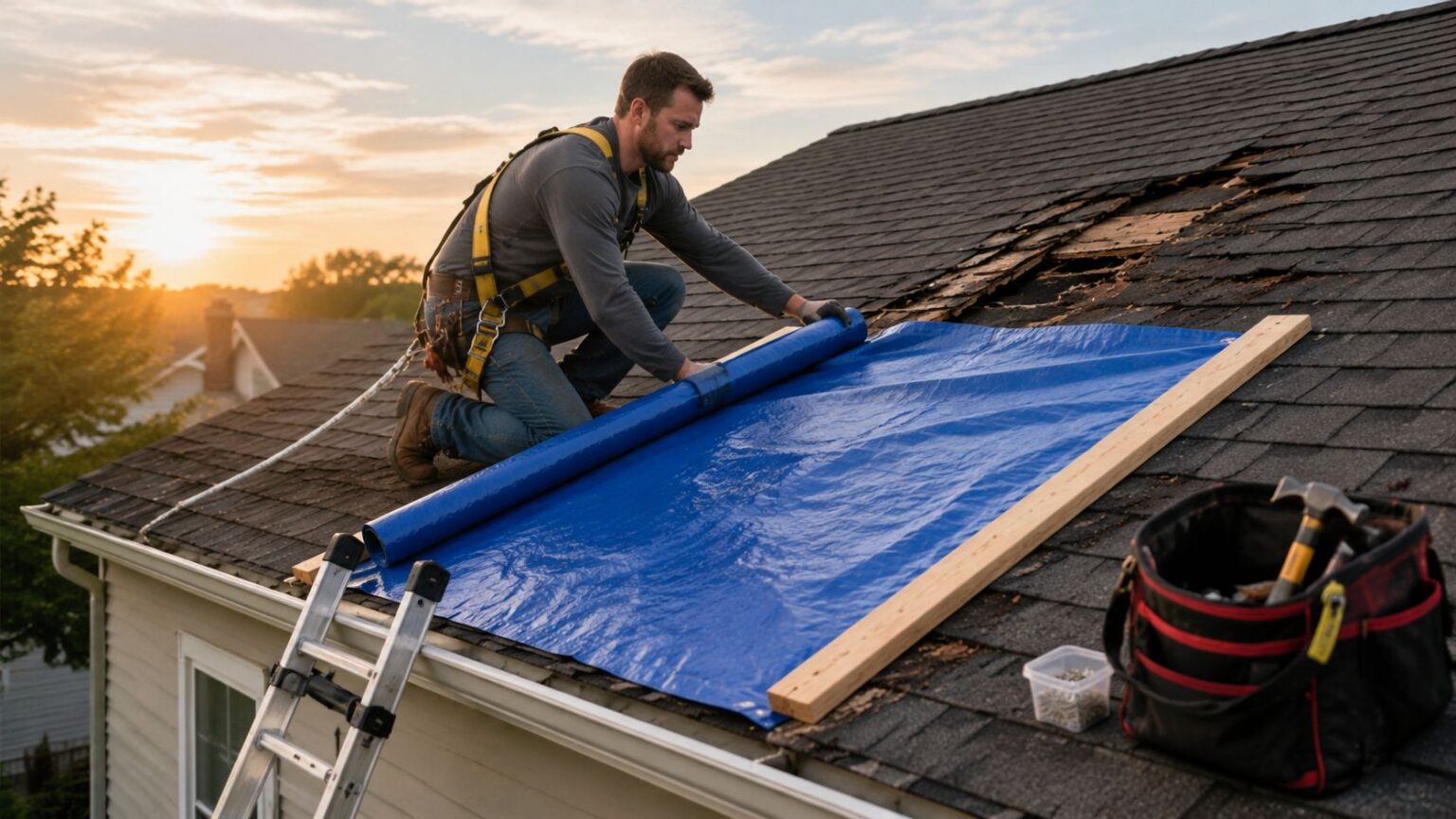
One photo example helps here. A roof only counts as finished when the paperwork catches up with the physical work, much like a final inspection on a room addition. Even emergency roof tarping after storm damage can lead into permit questions if temporary protection turns into a larger replacement job.
Why code compliance affects long-term cost
This part gets overlooked. In Broward County, a permit-approved roof built with hurricane-rated materials can do more than reduce storm risk. It can also strengthen your file when you ask your insurer about wind-mitigation credits or better premium treatment after replacement.
That does not mean every new roof produces the same savings. The details matter. A code-compliant installation with the right approvals, documented attachments, and closed permit gives your insurer more to work with than a vague invoice for "new roof."
Ask for copies of the permit, inspection record, product approvals, and final completion documents. Those papers are not busywork. They are part of the total cost of ownership, because a roof that is easier to insure and defend on paper can cost less over time than a cheaper roof with weak documentation.
Hurricane Proofing Your New Roof Beyond the Shingles
A new shingle roof can still fail in a Broward wind event if the metal, sealants, and attachment points underneath are weak. In Coconut Creek, storm performance is built from the roof edges inward, not from the color or brand of shingle alone.
Where storms usually start pulling
Wind pressure hits the perimeter first. Corners, eaves, ridges, and roof-to-wall connections take the hardest stress. If one area lifts, the roof system can open like a loose sheet of plywood in the back of a pickup. Once that opening forms, rain gets a path inside.
Roof-to-wall connectors matter for that reason. Hurricane straps work like the hardware that keeps a door attached to its frame during repeated slamming. The shingles may still be lying flat, but a poor structural connection can let uplift transfer into the deck and framing in the wrong way. As noted earlier in the Thomas Roofing guide on flashing and hurricane straps, the fastening pattern and connector placement have to match the approved assembly, not just look tidy from the yard.
Water control depends on small metal details
Flashing is the quiet part of the roof system, but it often decides whether wind damage turns into an interior leak. Around walls, pipes, chimneys, and valleys, water needs a defined path out. If flashing is cut short, bent poorly, or buried under too much sealant, the roof can trap water instead of shedding it.
That confuses a lot of homeowners because more caulk sounds safer. On a roof, that is not always true. Some lower edges need to stay open so gravity can do its job and let water drain instead of wick backward.
Drip edge matters too. In South Florida storms, roof edges take repeated uplift and blowing rain. A properly installed drip edge helps keep wind from getting under the first course of roofing and helps direct water into the gutter line instead of behind the fascia.
The part many guides miss: long-term ownership cost
Hurricane proofing is not only about preventing a leak next season. It also affects what the roof costs you over the next several years.
In Broward County, homeowners often focus on the replacement price and overlook insurance math. A roof built with documented, hurricane-rated components may put you in a better position when you apply for wind-mitigation credits or ask your carrier to re-evaluate the home after replacement. That does not guarantee a lower premium, and savings vary by carrier and house details, but stronger attachments, approved materials, and clear documentation can improve the insurance conversation.
That is why the cheapest proposal on day one is not always the lowest-cost roof over time. If one bid cuts edge metal quality, underlayment rating, or attachment details, you may save upfront and give that money back later through higher storm risk, shorter service life, or weaker insurance savings.
What to ask your roofer before the job starts
Ask a plain question. What parts of this system are rated for high wind, and how will you document them for my records?
A solid answer should cover the underlayment, edge metal, flashing, fastening pattern, and roof-to-wall connection details where accessible. It should also explain what will be photographed or listed on completion paperwork. Those records matter if a storm hits, if an insurer asks questions, or if damage happens before the full replacement begins and you need short-term protection such as this emergency roof tarping example.
For storm season prep between now and replacement, keep a simple checklist for Florida homeowners handy. It helps you reduce loose-item hazards and catch preventable problems before the next heavy wind and rain event.
Your Roof Replacement Project Timeline Step by Step
Most roofing anxiety comes from not knowing what happens next. The process feels loud, messy, and disruptive if nobody explains the sequence ahead of time.
From first visit to final cleanup
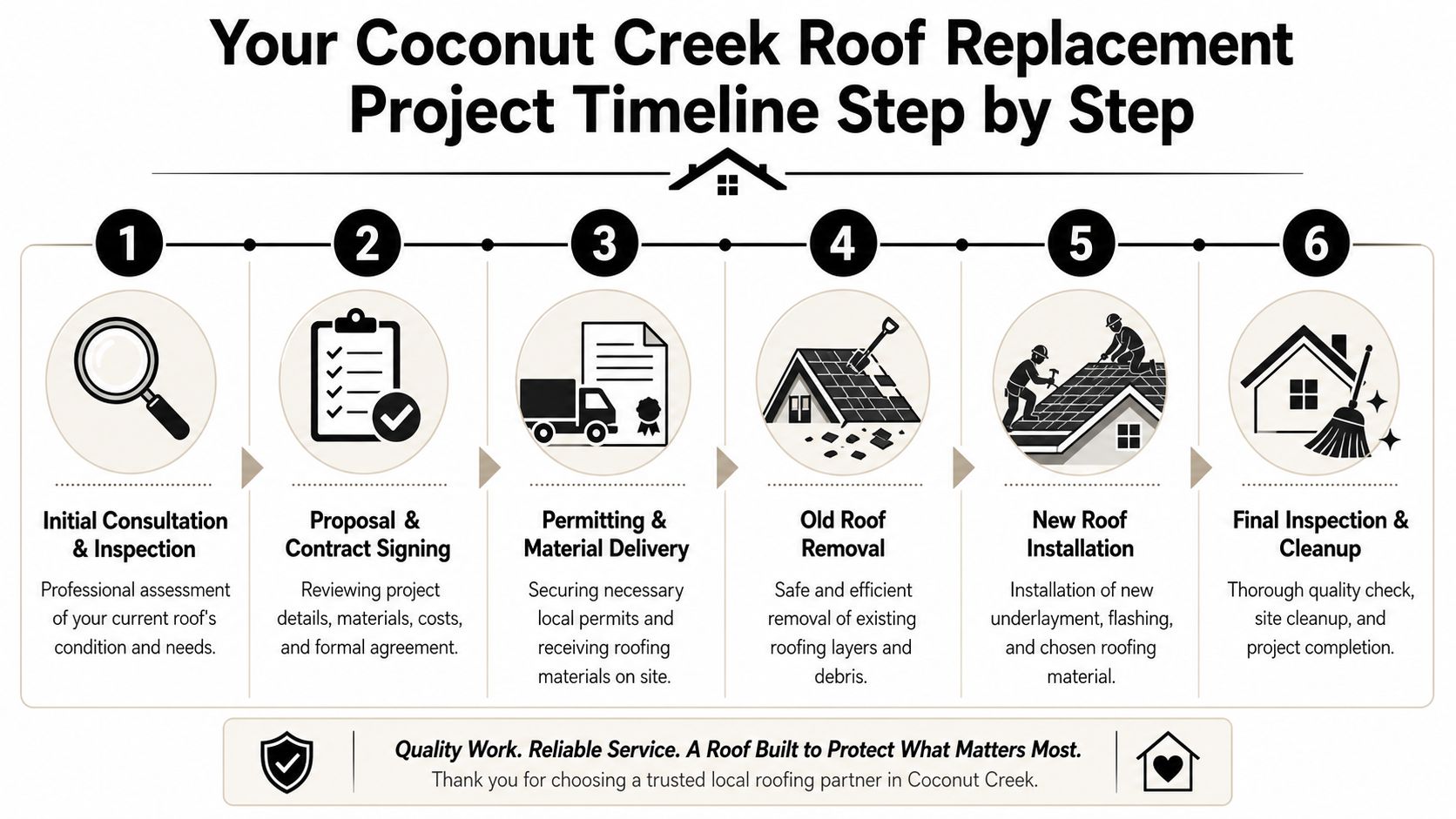
A typical roof replacement Coconut Creek homeowner experiences starts with an inspection and a written proposal. The roofer measures the roof, checks visible problem areas, identifies the roof type, and explains whether repair is still realistic or full replacement makes more sense.
After contract signing, the administrative phase begins. Permits get submitted, materials are ordered, and delivery is scheduled. This part can feel slow because there isn't much visible activity at the house yet, but it's where the job gets organized.
Then the main action begins:
Old roof removal
Crews tear off the existing covering and expose the deck. This is the noisiest part of the job. It's also the moment hidden damage may show up.Deck inspection and prep
The contractor checks the wood deck for weak or damaged sections, then prepares the surface for the new system.Underlayment, flashing, and roof covering installation
The roof begins to look finished again at this point, but the visible material is only part of the work. The water barrier and flashing details matter just as much.Cleanup and final inspection
Crews remove debris, run magnets for nails, and prepare for municipal or final quality checks.
Homeowners are often surprised by how much of a roof replacement is hidden once the job is complete. The parts you can't see are what usually determine whether the roof stays dry in the next major storm.
During the project, keep vehicles clear of the driveway if possible, protect fragile items on walls and shelves inside the home, and expect steady noise during tear-off. Good communication from the contractor makes a huge difference here.
Choosing a Licensed Coconut Creek Roofer You Can Trust
A roofing contract should be easy to compare and hard to misunderstand. If a bid looks vague, that's a problem. If licensing, insurance, permit responsibility, and product details aren't clear, keep asking questions.
A dependable hiring checklist should include:
- State licensing and insurance verification
- Experience with Broward County code expectations
- Clear written scope of work
- Recent local project history
- A realistic explanation of inspections and cleanup
For homeowners who want a local option, Paletz Roofing and Inspections provides residential and commercial reroofing, repairs, inspections, and replacements across South Florida, with more than 30 years of industry experience described in the company background information. That kind of history matters because long-term roofing work in this area depends on knowing local weather, permitting, and installation standards.

If you're checking company identity details while comparing estimates, this Paletz Roofing and Inspections logo file can help you confirm you're reviewing the right local business materials.

If you're weighing a roof replacement in Coconut Creek and want straight answers about cost, material options, hurricane code requirements, and long-term ownership value, Paletz Roofing and Inspections is a practical place to start. They handle inspections, replacements, and reroofing for South Florida properties, and a detailed quote can help you compare the total cost of ownership instead of just the install price.