Figuring out when to replace your roof really boils down to three things: its age, its visible condition, and any recent damage it's taken. Being proactive about this isn't just smart—it's what prevents a minor issue from becoming a catastrophic failure, like a major leak that ruins your ceiling or causes structural rot. This guide will walk you through the warning signs so you know exactly what to look for.
Reading the Signs Your Roof Is Failing
Think of your roof like the tires on your car. You don't wait for a complete blowout on the highway to replace them; you keep an eye on the tread wear and their age. Your roof gives you the same kind of signals when it's getting tired and nearing the end of its useful life.
Ignoring these warnings is a gamble. It can turn a manageable, planned project into a frantic emergency repair, often accompanied by serious interior water damage. When you know what to look for, you can plan for a replacement on your terms and timeline, not in a panic during a heavy storm. A timely replacement is an investment that protects your home's structure, maintains its value, and gives you incredible peace of mind.
Key Factors in Your Decision
Several clues come together to paint a clear picture of your roof's health. Paying attention to them helps you budget and schedule the work before a small problem spirals into a huge headache.
This is especially true for homeowners planning other big upgrades. For example, if you're thinking about a residential solar panel installation, it's almost always a good idea to coordinate the roof replacement first. You want a solid, long-lasting foundation for that new equipment.
Here are the main indicators that a replacement is on the horizon:
- Roof Age: Most asphalt shingle roofs have a lifespan of 15 to 30 years. If your roof is getting close to that range—or has already passed it—it’s time for a professional inspection, even if it looks fine from the street.
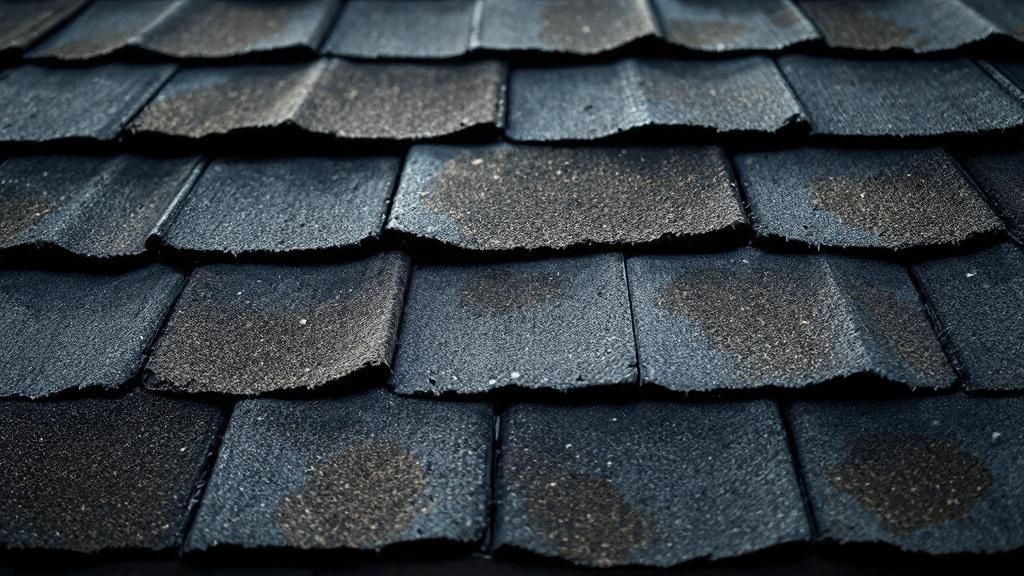
- Visible Shingle Damage: Take a close look at the shingles. Are they curling at the edges, cracking, or buckling up? Another huge red flag is widespread granule loss, which shows up as dark, patchy spots where the protective top layer has worn away.
- Leaks and Water Stains: This one’s the most obvious. An active leak is a clear cry for help. The earlier signs show up in your attic, so check for water stains on the wood, damp insulation, or even little slivers of light coming through the roof boards. By the time stains appear on your ceilings, the problem is already well advanced.
A proactive approach to roof maintenance not only prevents costly damage but also extends the lifespan of your entire home. It's an investment in the long-term safety and security of your property.
To make it even clearer, here’s a quick-reference table that breaks down the most common warning signs and how urgently you should treat them.
Key Indicators for Roof Replacement
The table below summarizes the primary signs that suggest a roof replacement is needed. Use it to gauge the urgency of your situation based on what you observe.
| Warning Sign | What to Look For | Urgency Level |
|---|---|---|
| Old Age | Roof is 15-30+ years old (for asphalt shingles). | Medium |
| Curling Shingles | Edges of shingles are turning upward or curling. | Medium to High |
| Cracked Shingles | Widespread, random cracking across many shingles. | High |
| Granule Loss | Bald spots on shingles; excessive granules in gutters. | Medium to High |
| Active Leaks | Water stains on ceilings or walls; drips during rain. | Immediate |
| Sagging Roof Deck | A visible dip or "sway" in the roofline. | Immediate |
| Moss/Algae Growth | Dark streaks or fuzzy green growth, especially in shaded areas. | Low to Medium |
Remember, seeing one of these signs might just call for a repair, but if you're noticing several of them, it’s a strong signal that your roof's overall system is failing and a full replacement is the smartest move.
Understanding Your Roof's Age and Lifespan
Of all the things that tell you it's time to replace your roof, its age is often the most straightforward signal. Think of your roof's lifespan like the "best by" date on a carton of milk; it's an estimated service life based on the materials and the normal wear and tear they're expected to handle. Once your roof gets close to that date, its ability to keep your home safe and dry starts to drop off, sometimes quickly.
Knowing how old your roof is gives you a crucial starting point. If you don't have the original installation records, don't worry. A professional roofer can usually give you a pretty accurate estimate just by looking at the condition of the materials. When you compare that age to its expected lifespan, you get a clear window for when you should start planning for a replacement.
Lifespan by Roofing Material
Not all roofs are built the same. The materials used to build your roof have a massive impact on how long you can expect it to last. This is why a brand-new roof on one house might be good for 50 years, while the one next door could need replacing in just 20.
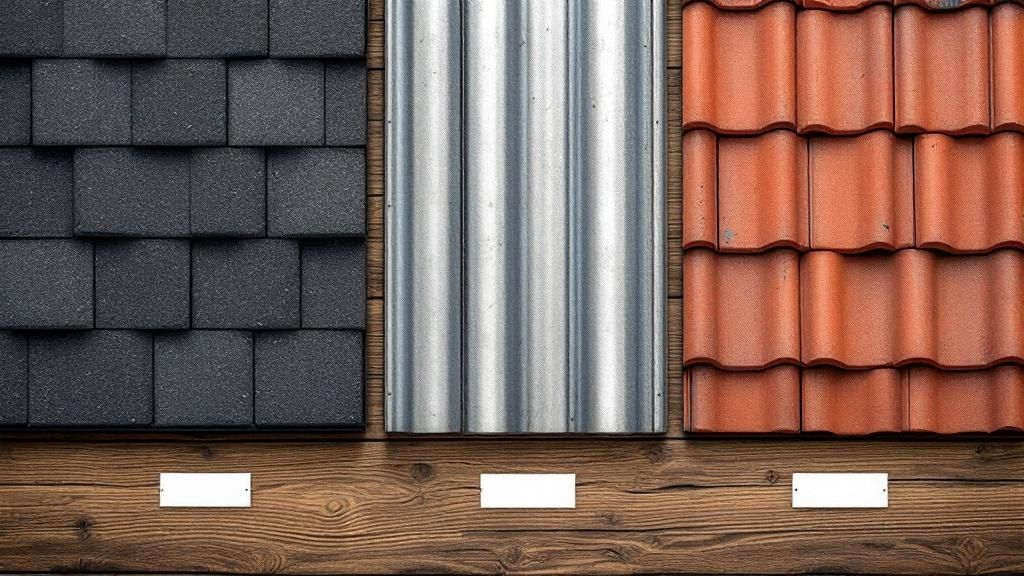
The lifespan is a fundamental piece of the puzzle, and different materials have completely different durability profiles. Take asphalt shingles, for instance. They're the most common material in North America, covering about 75% of homes, and they typically last between 15 to 30 years. On the other hand, a metal roof can last a whole lot longer, often pushing past 70 years. This huge difference is critical for homeowners, and you can dive into more roofing industry statistics to see these trends in action.
Here's a quick look at the typical lifespans for common roofing systems:
- Asphalt Shingles: The go-to choice for most homes, these usually last 15 to 30 years. Climate and how well you maintain them play a big role here.
- Architectural Shingles: Think of these as a heavy-duty version of asphalt shingles. They're thicker, more durable, and can last 25 to 40 years.
- Metal Roofs: Known for being tough as nails, metal roofs (like steel, aluminum, or copper) can last 50 to 70+ years.
- Clay or Concrete Tiles: These are incredibly resilient but also very heavy. Tile roofs often last for 50 to 100 years, though you might need to replace a cracked tile here and there.
Your roof's material isn't just about looks—it's a long-term investment in your home's protection. Getting a handle on its specific lifespan is the first real step toward being a proactive, responsible homeowner.
Why Age Matters More Than Appearance
Here's something most people don't realize: a roof can look perfectly fine from your lawn while secretly being on its last legs. Over the years, roofing materials break down in ways you can't always see. Asphalt shingles, for example, slowly lose the little protective granules that shield them from the sun's UV rays. This makes them brittle and less flexible, leaving them wide open to cracking during temperature swings or getting lifted by a strong wind.
This slow, silent decay is precisely why age is such a critical factor. If you wait until you see missing shingles or an obvious leak in your ceiling, you're just reacting to a problem that's already taken hold. Knowing your roof's age lets you get ahead of the game, helping you plan for a replacement before it becomes an emergency.
Warning Signs You Can Spot from the Ground
You don’t always need to climb a ladder to figure out if your roof is in trouble. In fact, many of the biggest red flags are perfectly visible from your own yard. This gives you a huge advantage in catching problems early before they turn into major leaks or structural nightmares.
Think of it like a quick health check for your home’s first line of defense. A simple walk around your property can reveal some obvious symptoms that your roof is getting close to retirement. Spotting these signs is the first step.
Damaged and Deteriorating Shingles
The most obvious clues are the shingles themselves. After years of baking in the sun and getting hammered by rain, they start to break down in very predictable ways. Keep an eye out for these specific issues:
- Curling or Clawing Shingles: When you see the edges of your shingles starting to curl up, or the middle begins to pop, that’s a classic sign of heat damage and old age. These warped shingles are prime targets for wind to grab and rip off, leaving you wide open to leaks.
- Cracked Shingles: Random cracks spreading across your shingles mean they’ve become brittle. They’ve lost their flexibility to expand and contract with temperature swings, making them much more likely to break apart.
- Missing Shingles: Big bald spots are an emergency signal. Every single missing shingle is a direct invitation for water to seep into your home, bypassing all the layers of protection.
Finding one or two bad shingles might just mean you need a quick repair. But if you're seeing widespread curling, cracking, or missing shingles across different areas of your roof, that’s a pretty clear sign the whole system is on its last legs.
Granules in Gutters and Downspouts
Another telltale sign isn’t actually on your roof—it’s in your gutters. Those asphalt shingles are covered with a layer of tiny, sandpaper-like granules. Think of it as sunscreen for your shingles; it protects them from damaging UV rays and adds a bit of fire resistance.
As a roof gets older, these granules start to break loose and wash down into the gutters. While seeing a few is normal for a brand-new roof, finding large piles of granules in your downspouts is a serious warning. It means your shingles are losing their protective coating and becoming weak and exposed.
Streaks and Unwanted Growth
Finally, take a look at any discoloration or strange growth on your roof. These visual cues almost always point to trapped moisture, which is a major accelerator of rot and decay.
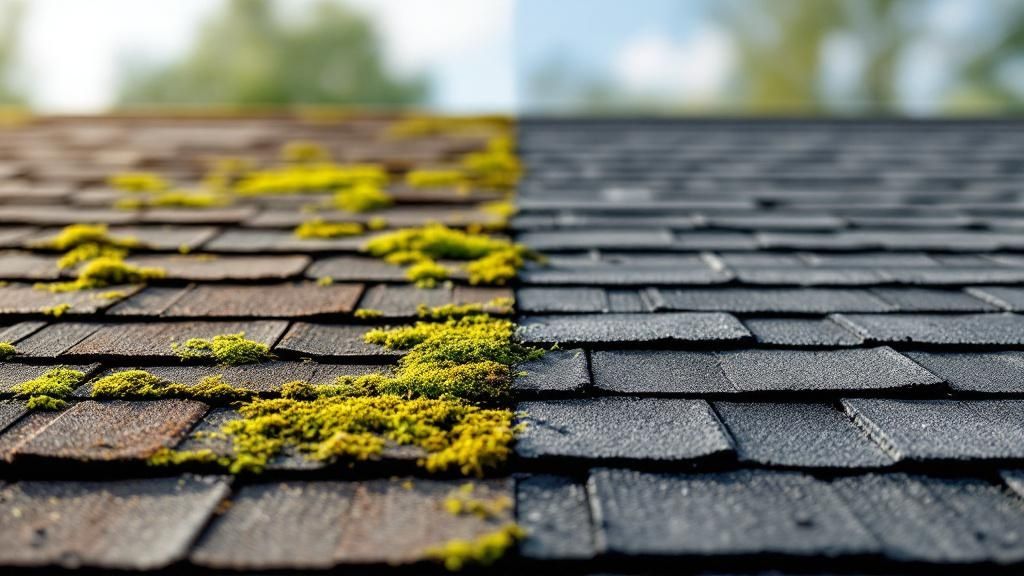
Look for dark, algae-like streaks, especially on the parts of your roof that don't get much sun. While this is often just a cosmetic problem, it can hold moisture against the shingles. What’s more concerning is seeing actual moss. Moss acts like a sponge, trapping water and keeping your shingles constantly damp, which can lead to them rotting right through over time.
What to Look For Inside Your Attic
While the view from your yard tells part of the story, some of the most damning evidence of roof failure is hiding right above your head. Your attic acts as a fantastic early warning system, revealing problems long before they turn into ugly stains on your living room ceiling. Climbing up for a quick look is one of the smartest moves you can make to know when it's time for a replacement.
Your best friend for this job is a good flashlight. The goal here is to get a clear picture of your roof's underside and catch small issues before they snowball into big, expensive ones.
Spotting Leaks and Water Damage
The most obvious signs of trouble are almost always related to moisture. Water is relentless—it finds the path of least resistance, and the evidence it leaves behind is usually unmistakable. Be on the lookout for dark stains, streaks, or any discoloration on the wooden rafters and roof decking. These are tell-tale signs that water has breached your roofing system.
Pay extra close attention to the areas around vents, chimneys, and anything else that pokes through the roof, as these penetrations are common weak spots. You’ll also want to check for any damp, compressed, or moldy insulation. That’s a red flag for a persistent leak that's already hurting your home's energy efficiency and air quality.
Think of your attic as the diagnostic center for your roof. Catching a small stain on a rafter today can save you from repairing a collapsed, waterlogged ceiling tomorrow.
Checking for Light and Structural Issues
Next up, turn off your flashlight and just look. Do you see any daylight peeking through the roof boards? Even the tiniest sliver of light is a direct invitation for rain, snow, and pests to come on in. Any visible light means you have a hole that needs immediate attention, period.
While you're up there, scan the roofline from the inside. The decking should look straight and solid. Any signs of sagging, bowing, or drooping between the rafters point to a serious structural problem. This usually means the wood is waterlogged, has lost its integrity, and can no longer support the weight of your shingles—a critical indicator that a full replacement is in your near future.
The Hidden Threat of Poor Ventilation
Finally, just take a moment and notice the attic's atmosphere. Does it feel like a sauna? An attic that traps extreme heat and moisture creates a hostile environment for your roof, essentially cooking it from the inside out.
Poor ventilation can trigger a whole cascade of problems:
- Moisture Buildup: All that trapped humid air condenses on the underside of the roof deck, which is a perfect recipe for wood rot and mildew.
- Shingle Damage: In the summer, that intense heat can literally bake your shingles from below, drastically cutting their lifespan short.
- Ice Dams: For those in colder climates, a warm attic melts snow on the roof. That water then runs down and refreezes at the eaves, creating destructive ice dams that can tear off gutters and shingles.
Deciding Between a Repair and a Full Replacement
Knowing when to replace your roof versus simply patching it up can feel like a high-stakes guessing game. The choice often boils down to a few key things: the extent of the damage, the age of your roof, and a bit of financial common sense.
A simple repair is often the perfect solution for small, isolated issues on a relatively young roof. Think of it like this: if one or two shingles blow off in a storm but the rest of your roof is in great shape, a targeted repair makes perfect sense. It’s a quick, cost-effective fix.
However, when you start seeing recurring leaks in different spots or widespread damage, you're no longer dealing with an isolated problem. You’re seeing symptoms of a system that is beginning to fail.
The following visual guide offers a simple decision tree to help you figure out whether a repair or a full replacement is the more logical next step.
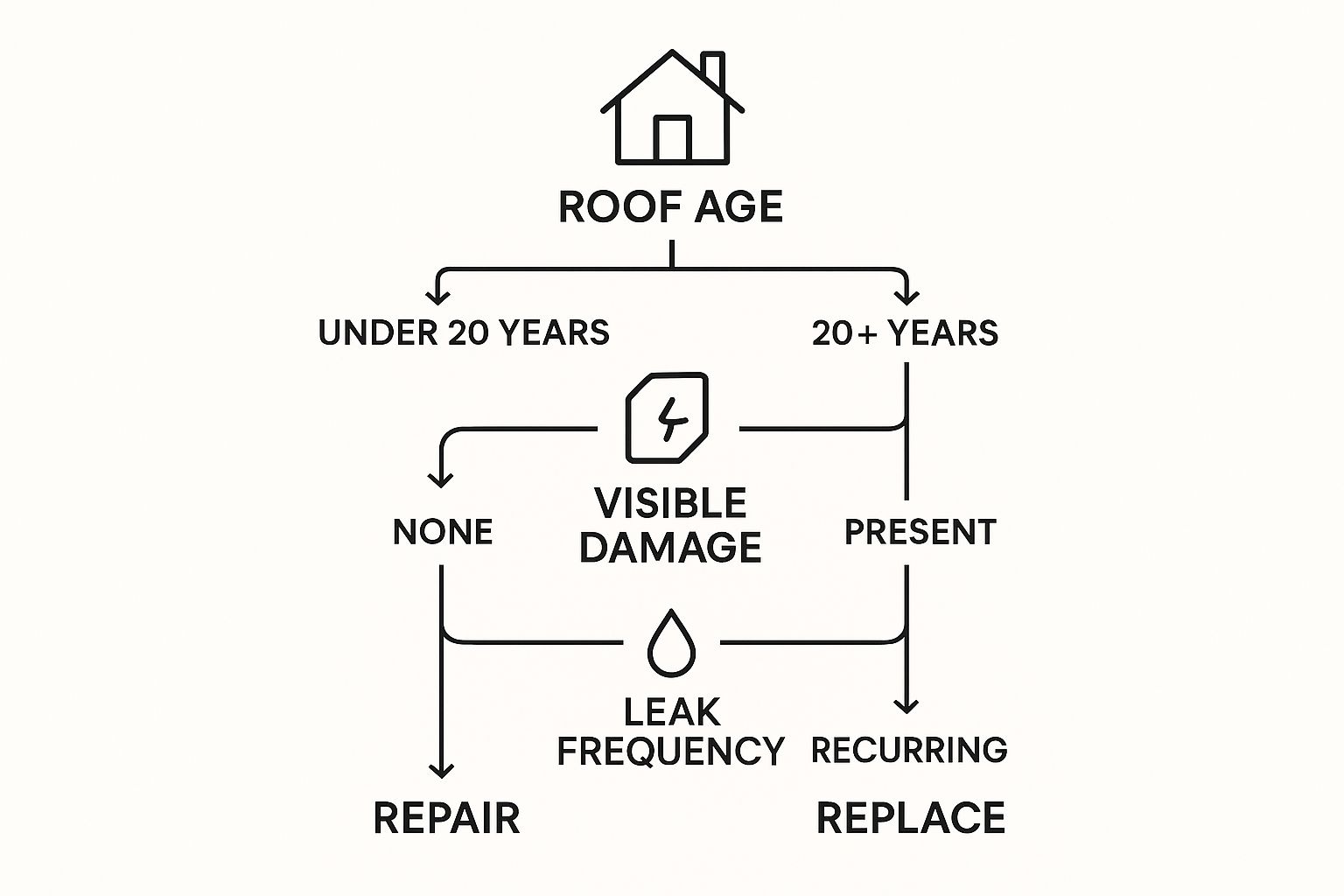
As you can see, the combination of your roof's age and how often you're dealing with problems are critical factors in making the right call.
The Financial Tipping Point
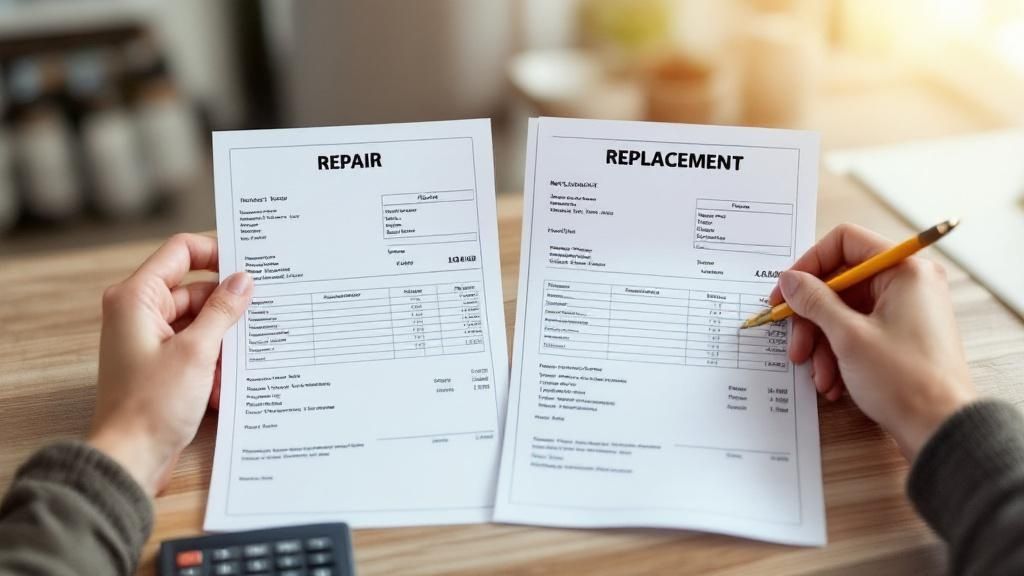
Often, the final decision really hinges on the cost. If you find yourself looking at a major repair bill that's nearly half the cost of a brand-new roof, replacement becomes the smarter long-term investment.
Continuing to pour money into repairs on an aging system is a lot like trying to keep an old, unreliable car on the road. At some point, it's just wiser to invest in something new that you can depend on.
The numbers really put things in perspective. While the average roof repair in the U.S. is around $985, those costs can climb quickly depending on the problem. When you start stacking up those repair bills, you have to weigh them against the average roof replacement cost of $11,500.
A great rule of thumb we use in the industry is the 30% rule. If more than 30% of your roof's surface is showing signs of damage—like widespread granule loss, cracking, or curling shingles—a full replacement is almost always the more economical and safer choice.
When Replacement Is the Only Answer
Sometimes, the decision is pretty much made for you. Certain situations make a simple repair impractical or even impossible, leaving a full replacement as the only real option. Understanding these scenarios can save you from wasting money on a temporary fix when what you really need is a permanent solution.
These are the non-negotiable situations where a replacement is a must:
- Advanced Age: If your asphalt shingle roof is over 20-25 years old, it has simply reached the end of its effective lifespan. Any repairs at this stage are just kicking the can down the road.
- Widespread Water Damage: If an inspection uncovers rot in the underlying roof deck or saturated insulation in the attic, a full tear-off is necessary to fix the core structural issues. You can't just shingle over that kind of problem.
- Poor Initial Installation: A roof that was installed improperly from the start will always have issues. Layering new shingles over a bad job won't fix the foundational flaws hiding underneath.
When making such a significant financial decision, it's also crucial to understand the necessity of homeowners insurance, as it can play a vital role in covering costs related to storm damage or other catastrophic failures.
How Local Climate Affects Your Roof
Your roof’s lifespan isn't some fixed number pulled from a hat. Think of a manufacturer's warranty as a perfect-world scenario—a performance in a controlled lab. Your local climate, on the other hand, is the real-world test track where your roof has to prove itself every single day. The conditions it endures can either help it reach its maximum potential or drastically shorten its service life.
In hot, sunny regions like we have here in South Florida, the relentless UV radiation is enemy number one. That intense sun literally bakes asphalt shingles, causing the protective granules to break down while the shingle itself becomes brittle and prone to cracking. This constant thermal stress accelerates aging in a big way, meaning a 20-year shingle might only give you 15 good years.
Regional Roofing Challenges
Now, flip the script to colder climates, and you've got a whole different set of problems. The freeze-thaw cycle is particularly nasty. Water seeps into tiny cracks, freezes and expands overnight, and then thaws, forcing the cracks just a little wider. Over time, this process acts like a wedge, slowly prying your roofing materials apart and leading to some serious damage.
Every region has its own unique brand of punishment for a roof:
- Coastal Regions: Salt-laden air is incredibly corrosive, especially to metal components like flashing, gutters, and fasteners. This corrosion creates weak points where water can easily get in.
- High-Wind Areas: Frequent strong winds can lift and tear off shingles, leaving your roof’s underlayment exposed to the elements. This is a common issue that can force your hand on a roof replacement sooner than you'd planned.
- Hail-Prone Zones: Hail is one of the most destructive forces out there, causing immediate and severe impact damage that can crack tiles and put massive dents in metal panels.
Your geographic location acts as a constant stress test on your roofing materials. Understanding these local pressures is key to predicting its true lifespan and planning for a timely replacement.
The broader trend of urbanization also plays a part, as city roofs face their own unique challenges. The roofing market, valued at $92.9 billion in 2020, is projected to nearly double by 2027, driven largely by these environmental factors and infrastructure growth.
Getting a handle on how your specific climate degrades roofing is crucial for proper timing. In the same way, learning about how weather affects different parts of your home, such as windows, can give you a much broader insight into keeping your entire home durable.
A Few Common Questions About Roof Replacement
Getting a new roof is a big project, and it naturally brings up a lot of questions. Getting clear answers ahead of time makes the whole process feel less overwhelming and helps you sidestep some common headaches homeowners run into. Here are the straightforward answers to some of the questions we hear most often.
Can I Just Install New Shingles Over My Old Ones?
It might seem like a clever way to save some money, but layering new shingles on top of an old, worn-out layer—a practice sometimes called a "re-roof"—is almost never a good idea. A complete tear-off is the right way to do it.
Tearing off the old roof is the only way for a contractor to get a good look at the wood decking underneath. This is where they’ll spot any hidden rot, soft spots, or water damage that needs to be fixed. Simply covering it up can trap heat and moisture, which dramatically shortens the life of your brand-new roof.
Many shingle warranties are instantly voided if they’re installed over an existing layer of shingles. On top of that, most building codes limit roofs to just two layers, and all that extra weight puts a serious strain on your home’s structure.
How Long Does a Roof Replacement Actually Take?
For a typical single-family home, a professional crew can usually tear off the old roof and install a new asphalt shingle roof in just 1 to 3 days. The goal is always to get your home sealed up and protected from the elements as quickly as possible.
Of course, a few things can stretch that timeline out a bit:
- Weather Conditions: Rain, high winds, or even extreme heat can create delays. Safety and quality come first.
- Roof Complexity: A steep pitch, lots of different levels, or multiple skylights and chimneys will naturally add more time to the job.
- Material Choice: Heavier materials like tile or metal take longer to install correctly compared to standard asphalt shingles.
- Structural Repairs: If the crew pulls off the old shingles and finds rotten decking, those repairs have to be made before any new materials go on.
Any good contractor will give you a clear, realistic timeline before they start any work.
How Do I Choose a Good Roofing Contractor?
This is easily the single most important decision you'll make in the entire process. The quality of the installation is every bit as critical as the quality of the materials you choose.
Start by looking for a licensed and insured local company that has a solid track record and positive online reviews from people in your community. A strong local reputation is almost always a sign of consistent, quality work. You'll want to get at least three detailed, written estimates that break down all the costs—materials, labor, permits, and cleanup. A contractor you can trust will provide a clear contract and offer strong warranties on both their workmanship and the materials they use, giving you real peace of mind for years to come.
At Paletz Roofing and Inspections, we bring over 30 years of hands-on experience to every project, making sure your roof is installed with the precision and care it deserves. If you're ready for a reliable, professional assessment of your roof's condition, contact us today for a free quote.