
That musty attic smell isn't just an annoyance—it's your wallet screaming for help. For homeowners in Aventura wrestling with damp attic insulation, the problem is quietly draining your bank account through sky-high energy bills, structural decay, and potential health hazards long before you spot a single water stain.
The True Cost of Damp Attic Insulation in Aventura
A damp attic is far more than a simple nuisance; it's an active threat to your home's financial and structural well-being. Aventura's humid climate creates the perfect storm where moisture compromises your home's most important thermal barrier, kicking off a cascade of expensive problems.
Once insulation gets wet, its protective qualities collapse. Instead of trapping air to keep your home cool, it becomes a dense, soggy mat that actually conducts heat. Your air conditioning system is forced to run longer and harder just to keep up, fighting a losing battle against the heat pouring in from your compromised attic. This isn't just a theory—it's a reality that shows up right on your monthly FPL bill.
Hidden Financial Burdens
The first and most obvious hit is to your energy consumption. Damp insulation loses its thermal resistance, or R-value, making it almost useless. This is a massive issue in humid climates, and the data is clear: when insulation’s performance drops, homeowners spend a lot more on cooling.
The U.S. Department of Energy estimates that moisture-damaged insulation can jack up annual energy bills by $200 to $400 per household. It's a silent tax on your comfort. You can learn more about how modern 2025 insulation trends are impacting energy efficiency.
But the high utility bills are just the beginning. The costs multiply in other, more destructive ways:
- Structural Damage: Persistent moisture is the enemy of wood. It will eventually rot the critical components of your attic, including rafters, joists, and the roof decking itself. Repairing this kind of structural damage is infinitely more complex and expensive than just replacing insulation.
- Interior Repairs: Those ugly water stains on your ceilings and walls are a classic sign of trouble upstairs. Fixing them involves more than a quick coat of paint; you're often looking at replacing drywall, re-texturing, and painting entire rooms to get a perfect match.
- Reduced Property Value: A home with known moisture issues or a history of mold is a giant red flag for potential buyers. It can seriously lower your home's market value and make it much harder to sell when the time comes.
The Unseen Health and Safety Risks
The financial toll is only half the story. A damp, dark attic is the perfect breeding ground for mold and mildew. These fungi don't stay put; they release spores into the air that can easily circulate through your HVAC system and into the rooms where you live and breathe.
For family members with allergies, asthma, or compromised immune systems, airborne mold spores can trigger respiratory issues, persistent coughing, and other chronic health problems. What starts as a simple leak can evolve into a significant indoor air quality crisis.
On top of that, the same moisture that attracts mold also invites pests. Termites, carpenter ants, and rodents are all drawn to damp wood and soft, compromised insulation for nesting. An unchecked moisture problem can quickly snowball into a secondary pest infestation, adding another layer of damage and expense to your plate.
Simply put, ignoring damp insulation in your attic isn't saving money. It's just delaying a much, much larger bill.
To help you catch these issues early, here’s a quick guide to what you should be looking for. Catching these symptoms early can save you thousands in repairs down the road.
Early Warning Signs of Damp Attic Insulation
| Symptom | What It Looks Like | Why It's a Concern |
|---|---|---|
| Musty or Earthy Odors | A persistent damp, mildew-like smell, especially noticeable on the top floor or near attic access points. | This is the classic signature of mold or mildew growth, indicating an active moisture problem. |
| Visible Water Stains | Yellow, brown, or dark discoloration on ceilings, interior walls, or attic wood structures. | A clear sign that water has penetrated your home's defenses and is soaking into structural materials. |
| Compacted or Clumped Insulation | Insulation that looks matted down, flat, or separated into wet-looking clumps instead of being light and fluffy. | Wet insulation loses its R-value and can no longer effectively insulate, leading to higher energy bills. |
| Frost or Condensation on Rafters | In cooler weather, you might see frost or visible water droplets on the underside of the roof deck or on wooden beams. | This points to poor ventilation, where warm, moist air from your home is condensing in the cold attic space. |
| Mold or Mildew Growth | Black, green, or white speckled growth on insulation, wood surfaces, or stored items in the attic. | Active fungal growth poses a direct health risk and signals a long-term moisture issue that needs immediate attention. |
Seeing any of these signs is a clear call to action. Don't wait for a small problem to become a major headache. Investigating the source of the moisture right away is the smartest financial move you can make.
Pinpointing the Source of Your Attic Moisture
Finding damp insulation in your attic is a dead giveaway that something's wrong. But here’s the thing: that soggy material isn't the real problem—it’s just a symptom. To actually fix it for good, you’ve got to put on your detective hat and trace that moisture back to where it started.
If you just replace the insulation without finding the source, you’re just bailing water from a boat with a hole in it. You'll be right back where you started after the next Aventura rainstorm.
The hunt usually begins with the most obvious culprit: a roof leak. More often than not, this is exactly where the problem lies. When your roof is compromised, water finds its way in. That's why understanding roof repair and replacement options is so crucial—it's often the first and most important step. After a good downpour, safely pop your head into the attic and look for active drips or fresh water stains on the underside of the roof deck.
Beyond the Obvious Roof Leak
But a leaky roof isn't the only potential villain here. In South Florida's humid climate, condensation and ventilation issues are just as common, if not more so. All the systems in your home can generate a surprising amount of moisture, and if it's not vented properly, it’s going to end up saturating your insulation.
Here are the top three culprits to investigate that aren't a straightforward roof leak:
- Improperly Vented Fans: Bathroom and kitchen fans are supposed to push humid air outside. I’ve seen countless setups where the ducts just terminate inside the attic. This essentially pumps warm, moist air directly into a cooler space, where it condenses and rains down on your insulation.
- HVAC Condensation: Your air conditioner, especially if the air handler is in the attic, is a condensation machine. Look for drips from uninsulated ducts, a clogged condensate drain line, or a cracked drain pan. These slow, steady drips can cause massive damage over time without you even noticing.
- Air Leaks from Living Spaces: Warm, humid air from your living area naturally rises. Gaps around light fixtures, plumbing stacks, and even the attic hatch itself create a direct pathway. This "stack effect" can lead to a ton of condensation on attic surfaces when the weather conditions are just right.
A telltale sign you’re dealing with a ventilation or condensation issue is widespread dampness rather than a single, concentrated wet spot. If the insulation feels clammy across a large area—especially near ducts or vents—that's a huge clue you're fighting airborne moisture, not a localized leak.
The consequences of ignoring this sneak up on you fast, hitting both your wallet and your home's health. It’s a chain reaction: a little dampness leads to much bigger problems.
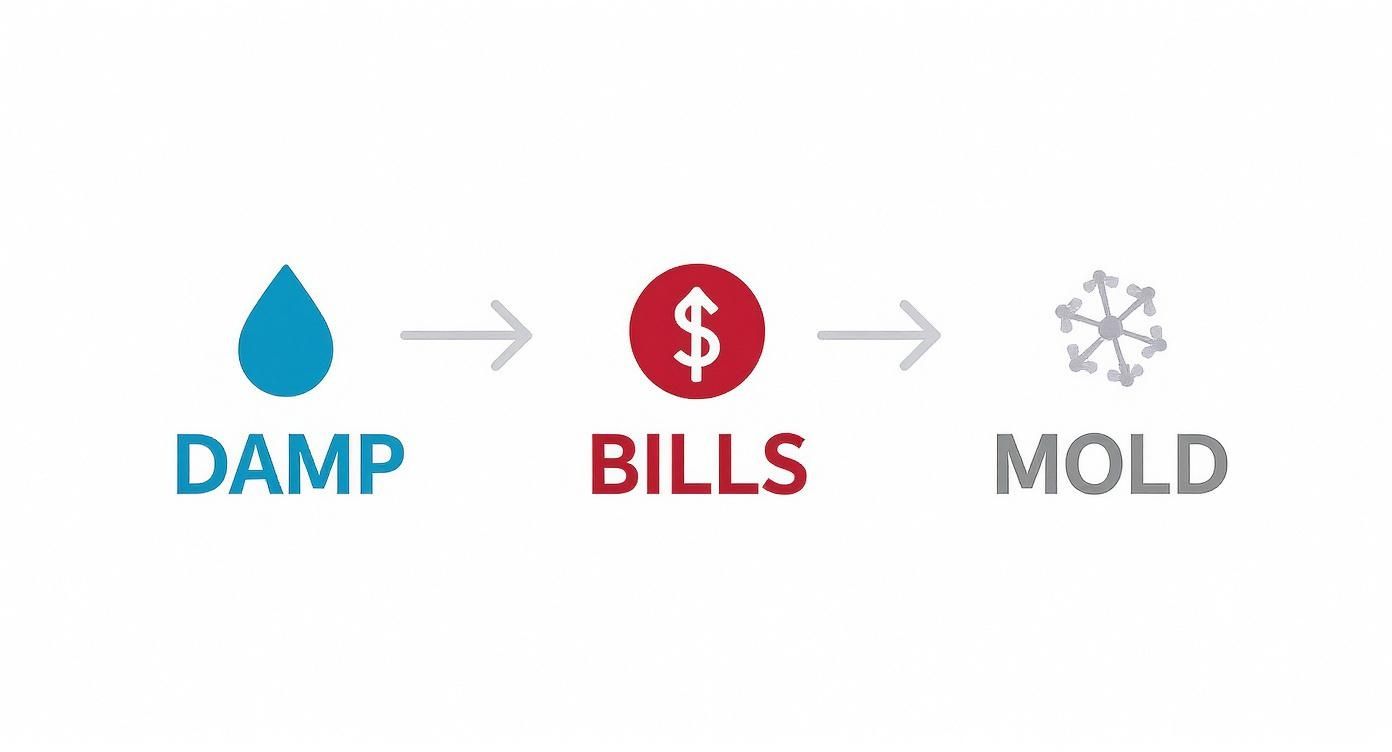
This visual sums it up perfectly. Unchecked moisture makes your insulation useless, driving up energy bills. Worse, it creates the perfect breeding ground for mold.
Clues Written in the Attic
To really nail down the source, you need to look for the physical evidence. These little details tell the story of where the water has been and confirm your suspicions.
- Dark Stains on Wood: Look for blackened or dark gray wood around vents, pipes, or anything penetrating the roof. This is a sign of long-term moisture exposure.
- Rusted Metal: Check the roofing nails poking through the deck, any metal strapping, or electrical junction boxes. Rust doesn’t lie—it only shows up where there's consistent moisture.
- Matted Insulation: If your fluffy insulation now looks flat, clumpy, or compressed, that's a definitive sign it has been soaked repeatedly.
A methodical inspection is everything. If you aren't sure what you're looking for or just aren't comfortable climbing around up there, getting a professional opinion is the smart move. A trusted team like Paletz Roofing can perform a detailed roofing inspection to definitively rule out—or confirm—any issues with your roof. By carefully checking every potential source, you can be confident that you're fixing the real problem with your Aventura attic.

Safely Removing and Replacing Damaged Insulation
Okay, you've found the leak and stopped the water. That's the first win. Now comes the messy part: dealing with all that damp, compacted insulation. This isn't just a cleanup job; it's a critical step that requires a healthy dose of caution, especially here in Aventura where a damp attic can quickly become a hazardous one.
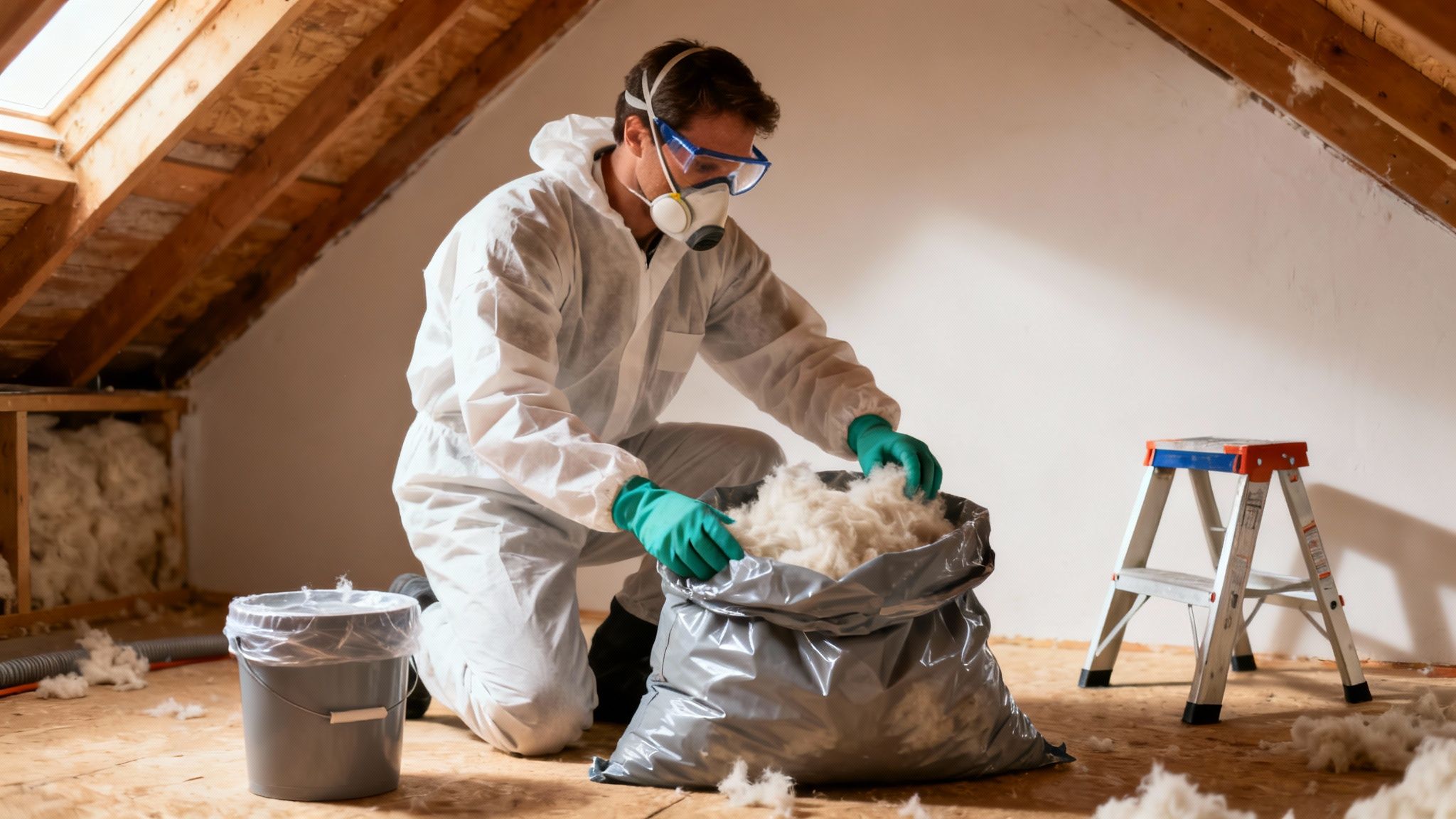
Before you even think about pulling down the first soggy piece, you need to gear up properly. We're talking about full personal protective equipment (PPE). This is non-negotiable. Airborne fiberglass fibers and potential mold spores are no joke for your respiratory system.
Here’s your essential safety checklist:
- An N95 Respirator Mask: This is your first line of defense against inhaling fine particulates and nasty mold spores.
- Goggles: Protect your eyes. Insulation fibers and attic dust have a way of finding them.
- Gloves: Go for heavy-duty gloves to protect your hands from itchy fiberglass and whatever else is lurking up there.
- Long-Sleeved Clothing or a Disposable Suit: You want to minimize skin contact with fiberglass. Trust me, it causes irritation you'll regret later.
Assessing the Scope of Removal
How you tackle the removal really depends on the type of insulation you have. If you’re dealing with fiberglass batts—those pink or yellow rolls—you can often roll them up and carefully place them into heavy-duty contractor bags. The key is to be gentle; ripping them apart just sends more fibers flying.
Blown-in insulation, whether it's cellulose or loose-fill fiberglass, is a different beast entirely. It's messy and a real challenge to contain. For this, you pretty much need a specialized, high-powered vacuum with a long hose to suck it out of every nook and cranny. You can rent these, but this is the point where most DIY jobs turn into a call to the pros.
This work isn't cheap. Across the U.S., homeowners can expect to pay between $1,500 and $3,000 for attic insulation repair caused by moisture. What's more, insurance claims for attic water damage have jumped by 15% in the last five years, which tells you just how common this problem is in humid places like Aventura. You can dig deeper into insulation repair statistics and costs to get a better sense of the numbers. It’s a serious financial decision.
When to Call a Professional
If you're looking at a small, contained patch of damp insulation, you might be able to handle it yourself. But if the damage is widespread, you spot significant mold, or you're dealing with the chaos of blown-in insulation, it's far safer and more effective to bring in a professional remediation company.
Preparing for a Fresh Start
Once all the compromised material is gone, resist the urge to immediately throw in new insulation. This is your golden opportunity to get the attic completely dry and clean. Set up some fans and a dehumidifier to pull every last bit of moisture out of the wood framing and roof decking. Having a visual of a clean and prepped attic space can be a great reference for what you're aiming for.

When everything is bone-dry, I always recommend treating the area with a mold-inhibiting primer. Pay special attention to any wood that had water stains. It’s an extra step, but it provides another crucial layer of protection.
By taking the time to properly remove the old stuff and meticulously prep the space, you aren't just replacing insulation—you're resetting your attic's defenses and building a much stronger barrier against future moisture problems.
Choosing Moisture-Resistant Insulation for Florida Homes
Once you've cleared out the compromised materials, the next step is a serious investment in your home's long-term health. Here in Aventura, humidity isn't just a weather report—it's a constant battle. That means choosing the right insulation isn't just about R-value; it's about picking a material that actively fights off moisture.
Let me be blunt: not all insulation is created equal for our climate. Make the wrong choice, and you’ll find yourself dealing with the same damp, moldy mess all over again in a few years.
The whole point is to find a product that is either completely waterproof or, at the very least, doesn’t absorb and hold onto moisture. I’ve seen too many attics where traditional materials like old-school paper-faced fiberglass or standard cellulose acted like a sponge, creating the perfect breeding ground for mold and rot. For any home in South Florida, how an insulation performs in damp conditions is the most important metric.
Top Contenders for Humid Climates
When you're facing down the potential for damp insulation in an attic in Aventura, you need materials built for the job. In my experience, three options consistently outperform everything else in our climate.
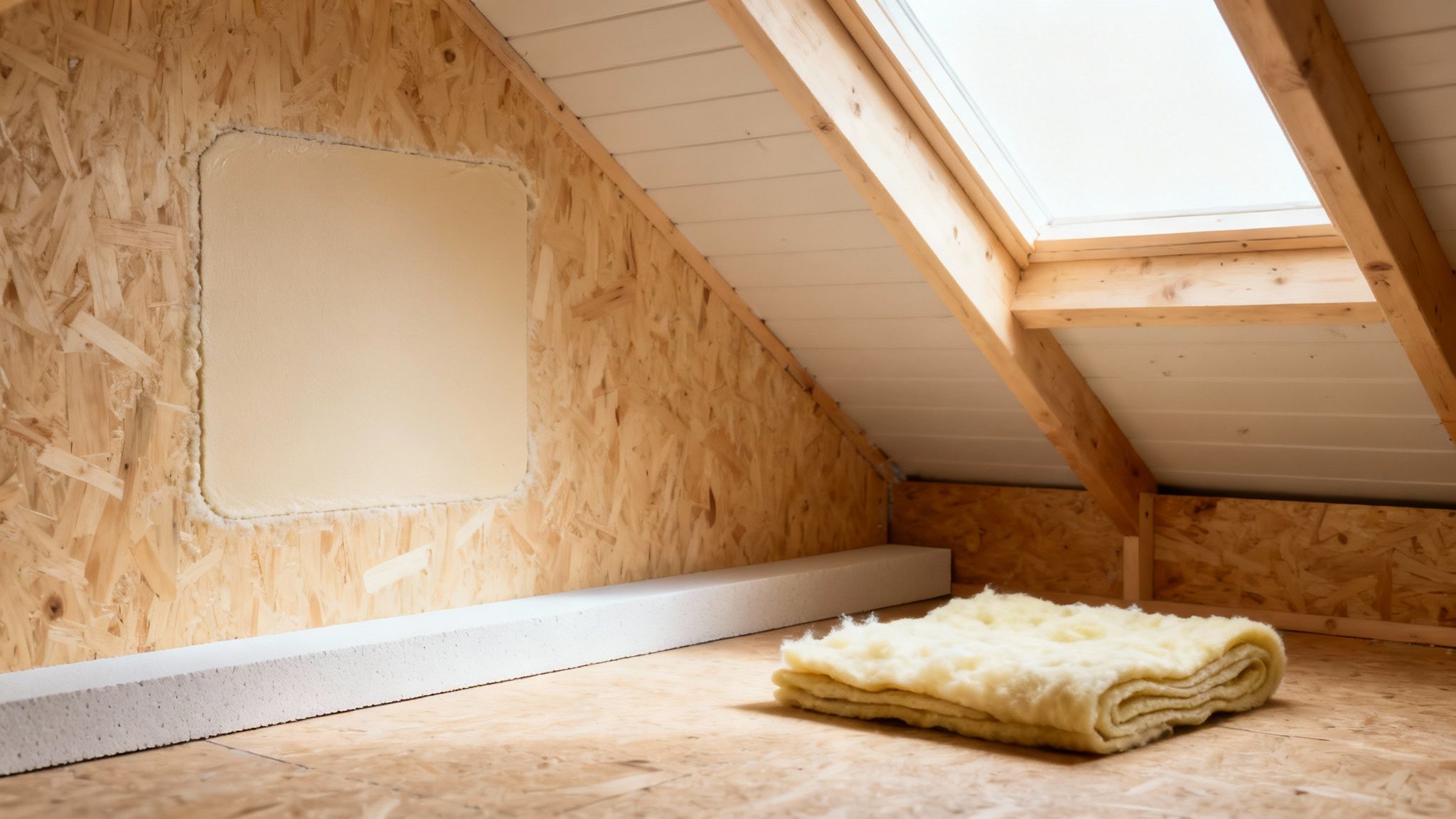
- Closed-Cell Spray Foam: This is the top-tier choice for moisture resistance, hands down. When it's applied, it creates a hard, dense barrier that is completely impermeable to both air and water. It essentially seals the attic deck, preventing moisture from ever getting a foothold.
- Rigid Foam Board (XPS/Polyiso): These boards are also a fantastic, non-porous option that simply won't absorb water. They're great for lining the attic floor or the roof deck, giving you a solid, unbroken layer of protection. Plus, their R-value doesn't degrade when the humidity spikes.
- Mold-Resistant Fiberglass: Now, this isn't your grandpa's fiberglass. Modern versions are a huge improvement. Many products now come treated with mold inhibitors and are "unfaced," which means they don't have that paper backing that loves to soak up moisture and feed mold.
The key takeaway is this: you are not just insulating against temperature; you are building a defense against water vapor. Materials that cannot absorb moisture are inherently going to be more durable and effective in a coastal city like Aventura.
Comparing Insulation Types for Humid Climates
Choosing the right material often comes down to balancing performance, your attic's specific layout, and your budget. One option might offer unbeatable moisture blocking, but another could be a more practical fit. To make it easier, I've put together a quick comparison of the best options for our humid climate.
| Insulation Type | Moisture Resistance | Typical R-Value (per inch) | Best For |
|---|---|---|---|
| Closed-Cell Spray Foam | Excellent (Waterproof) | R-6 to R-7 | Sealing the entire attic envelope for maximum protection against air leaks and moisture intrusion. |
| Rigid Foam Board | Excellent (Waterproof) | R-5 to R-6.5 | Creating a continuous thermal break on the attic floor or under the roof deck, especially in accessible spaces. |
| Mold-Resistant Fiberglass | Good (Hydrophobic) | R-3 to R-4 | A cost-effective upgrade in well-ventilated attics where the primary moisture source has been fully resolved. |
Ultimately, selecting one of these materials is a proactive move. By choosing an option engineered to handle Florida's humidity, you ensure the damp insulation in your attic is a one-time fix, not a recurring nightmare. It's a smart decision that protects your home's structure, boosts your energy efficiency, and gives you lasting peace of mind.
Keeping Your Attic Dry for the Long Haul
Once you've done the hard work of tearing out damaged insulation and putting in a moisture-resistant fix, the game shifts. It's time to move from reactive repairs to proactive prevention. A long-term strategy is the only way to make sure you never have to deal with damp insulation in your attic in Aventura again. This isn't just about a weekend maintenance checklist; it's about building a solid, three-part defense for your home.
I’ve seen it time and time again: a truly dry and healthy attic stands on three pillars. You need a sealed roof, balanced ventilation, and an airtight seal from the living space below. If you neglect even one of these, you’re just inviting moisture right back in and undoing all your hard work.
The Three Pillars of a Dry Attic
Your roof is always the first line of defense. Get in the habit of doing regular inspections, especially after a big storm rolls through. Catching a small issue like a cracked tile or some failed flashing early is the difference between a quick fix and a major leak. Even a tiny breach can slowly soak your insulation over months, creating a hidden disaster. A well-maintained roof is the absolute foundation of a dry attic.
Next up is ventilation. An attic has to breathe, particularly in our humid Florida climate. This means you need a constant, steady flow of air moving from your soffit vents (down low by the eaves) up to your ridge or gable vents (at the peak). A classic mistake I see all the time is when new insulation gets blown in and accidentally blocks the soffit vents. That chokes off the airflow and traps all that humid air right where you don't want it.
Finally, you have to seal up any air leaks coming from your living space. Think about it—all the warm, moist air from cooking, showering, and even just breathing is constantly rising. It's lighter than the cooler air in the attic, so it will find every little gap to escape upwards and condense.
Creating a truly resilient attic isn't about a single fix. It’s about establishing an environment where moisture simply doesn’t have a chance to accumulate, protecting your investment and bringing you lasting peace of mind.
Actionable Prevention Strategies
Putting this strategy into practice comes down to a few simple, but incredibly effective, tasks. By regularly checking these key areas, you can stay way ahead of potential problems and keep your attic healthy and dry for the long haul.
- Seal Penetrations: Get up in the attic and look for any gaps around plumbing pipes, electrical wires, and the housings for exhaust fans that poke through your ceiling. A can of foam sealant is your best friend here—use it to close off these little moisture highways.
- Inspect Vent Ducts: This is a big one. Make sure your bathroom and kitchen exhaust fans are actually ducted all the way to the outside of your home. I've lost count of how many fans I've seen that just dump all that steamy air directly into the attic. That's a recipe for disaster.
- Clear Soffit Vents: When you're doing your inspections, take a peek from the outside and make sure your soffit vents are clear. They can easily get clogged with insulation, leaves, or even paint from a sloppy exterior paint job. This is essential for letting your ventilation system do its job. A great visual guide shows a clean and well-maintained attic, highlighting just how important that clear airflow really is.

To really nail this down, it helps to understand proper ventilation practices for mould prevention. The same principles that keep a bathroom dry apply directly to keeping your attic in top shape.
Common Questions About Attic Moisture in Aventura
After walking homeowners through leak repairs and insulation replacement, I find they often have some lingering questions. It's totally understandable—you want to make sure this problem never comes back. Let's tackle some of the most common questions we hear from Aventura residents to help you keep your attic healthy for the long haul.
How Often Should I Check My Attic for Moisture?
Living in our humid South Florida climate means being proactive is the name of the game. I always tell homeowners to aim for a biannual check as a smart baseline. The best times are right before the rainy season starts in late spring and then again once it’s over in the fall.
Beyond those routine checks, you should absolutely take a quick peek after any major weather event. A big tropical storm or hurricane can easily create small issues. Catching a little leak or some wind-driven rain right away can be the difference between a quick fix and a massive project dealing with damp insulation in your attic in Aventura.
Can I Just Dry Out Damp Insulation, or Do I Have to Replace It?
This is probably the number one question I get, and my answer is almost always a firm "no." Trying to salvage wet insulation, especially common types like fiberglass or cellulose, is just not a good idea.
Think of it this way: once those materials get soaked, they clump together and compress. That process crushes all the tiny air pockets that actually do the work of insulating. Even when the insulation feels bone dry, its ability to resist heat (its R-value) is permanently shot. It’s just not going to do its job anymore.
The bigger issue, though, is what starts growing inside. Damp insulation is a perfect home for mold and mildew, which can take hold in as little as 24 to 48 hours. For your home's efficiency and your family's health, pulling it all out and replacing it is the only real solution.
Are Attic Fans a Good Way to Fight Moisture in Florida?
It sounds logical, right? More airflow should equal less moisture. But here in Florida, a powerful attic fan can actually backfire and make things worse.
Here’s what happens: those strong fans create negative pressure in the attic. This can literally suck the cool, conditioned (and humid) air from your living space right up into the attic through tiny gaps around light fixtures or vents. When that humid, conditioned air meets the scorching hot underside of your roof, you get condensation. A lot of it.
For the vast majority of homes in Aventura, a well-designed passive ventilation system is a much smarter and more effective approach. This system uses natural airflow—cool air comes in through soffit vents near the eaves and hot, moist air escapes through a ridge vent at the top. It creates a steady, balanced flow without the risk of causing more problems.
If you're dealing with damp insulation or you're worried about your roof's condition, don't put it off. The problem will only get worse. Our team at Paletz Roofing and Inspections brings over 30 years of experience to protecting South Florida homes just like yours. Schedule a professional inspection today and get the peace of mind you deserve.