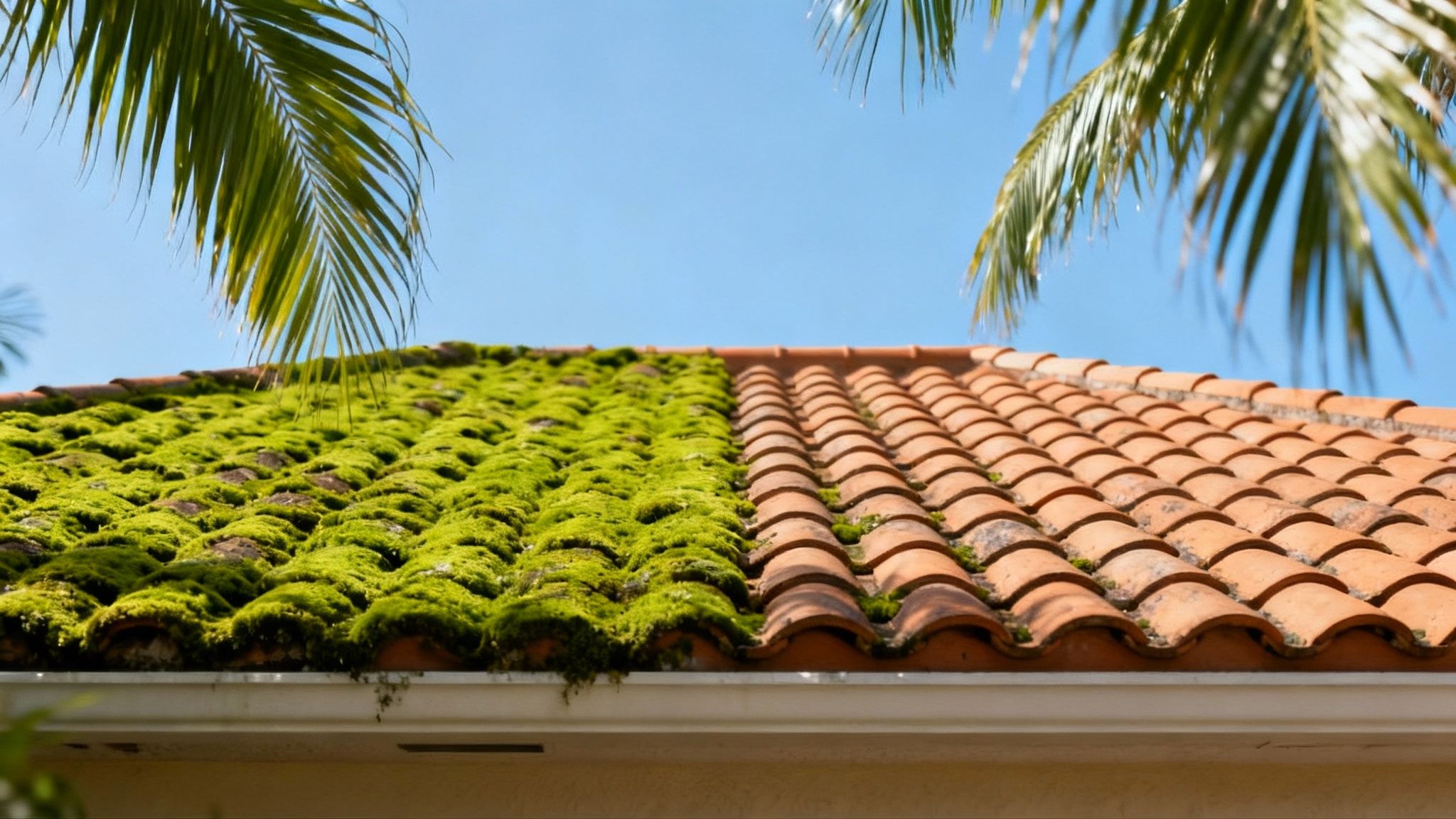
Dealing with moss on a Boca Raton roof is a familiar battle for homeowners. It’s not your imagination—our local climate is the perfect incubator for that green, fuzzy blanket. The mix of high humidity, steady rain, and shade from our beautiful trees gives moss everything it needs to thrive. But this isn't just about looks; if you let it go, moss can cause some serious damage to your roof.
Why Moss Thrives on Boca Raton Roofs
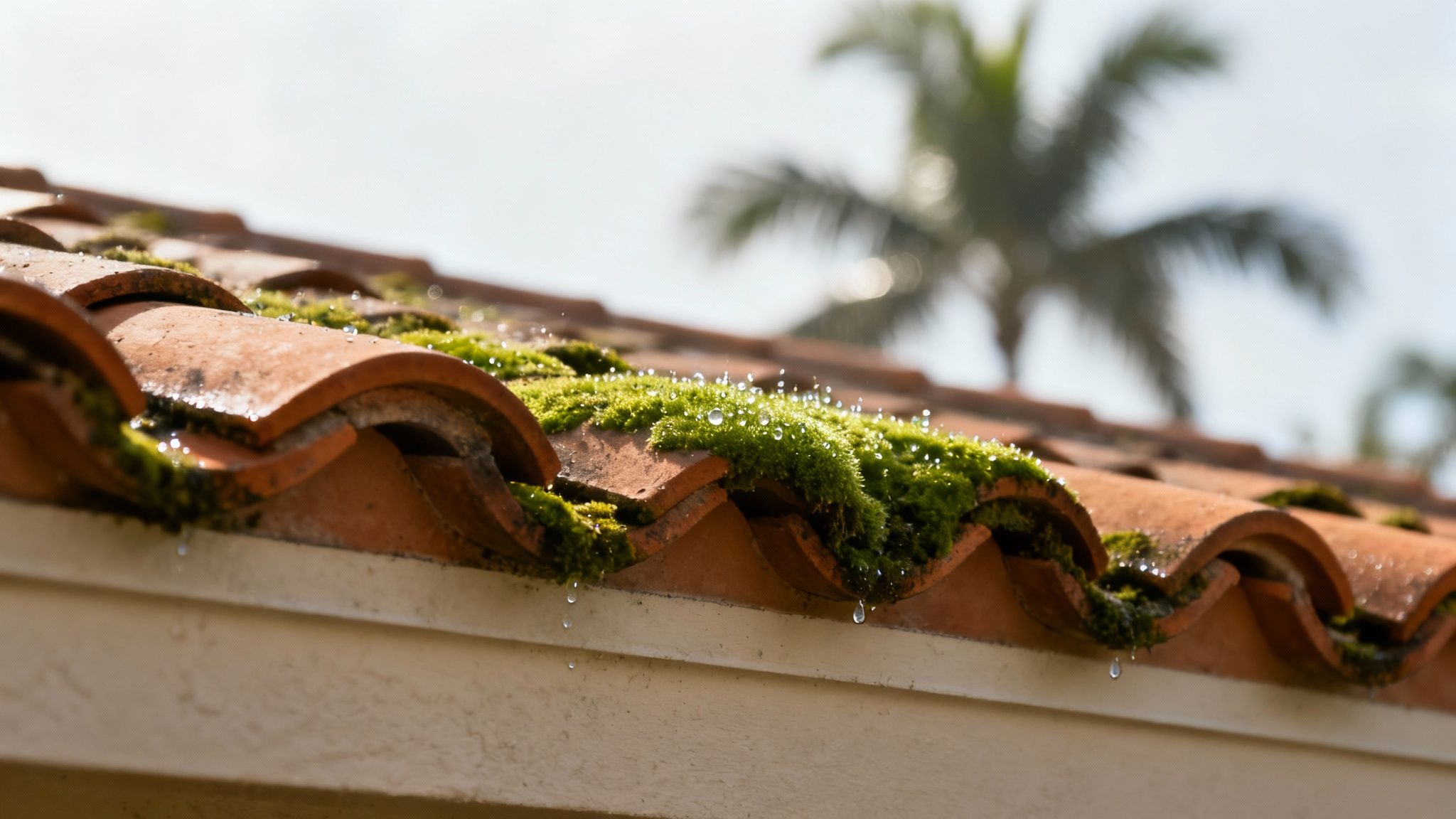
Ever glance up at your roof and wonder how that velvety green moss got so comfortable? It's no accident. Boca Raton's unique environmental cocktail essentially rolls out the red carpet for moss, creating a five-star resort where it can settle in and spread.
This isn't just a random problem that pops up now and then. The persistent moss growth on roof Boca Raton homeowners deal with is a direct consequence of our environment. Figuring out why it loves our homes so much is the first real step to getting rid of it for good.
The Perfect Storm of a Climate
Boca Raton's weather is the number one reason moss runs rampant here. Unlike drier or cooler parts of the country, South Florida is a year-round paradise for these simple plants. Moss just needs three things to be happy: moisture, shade, and something to eat. We have all three in spades.
Moisture is the big one. Here in Boca, our environment is set up for accelerated moss growth. The city gets about 61 inches of annual rainfall, which is way above the national average of 38 inches. Add in humidity levels that consistently hover above 70%, and you have roofs that almost never get a chance to dry out completely. Find out more about the advantages of professional roof cleaning at urbansplatter.com.
Moss is interesting because it doesn't have roots like a normal plant. It uses tiny, thread-like anchors called rhizoids to cling to surfaces and soaks up water directly through its leaves. That's why a constantly damp roof is its dream home.
How Our Beautiful Trees Make it Worse
It's a classic Boca Raton irony: the same lush landscaping that makes our neighborhoods so beautiful is often a roof's worst enemy. Those gorgeous, mature trees providing us with much-needed shade are also helping the moss problem.
- Constant Shade: Moss loves cool, damp, shady spots. A huge oak or a cluster of palms hanging over your roof blocks the sun, trapping moisture. The north-facing side of a roof is almost always the first to show signs of moss since it gets the least direct sunlight.
- Organic Debris: All year long, trees drop leaves, twigs, and pollen that pile up on the roof and clog gutters. As this stuff breaks down, it turns into a rich, organic meal for moss spores. A small pile of damp leaves is basically a starter home for a new moss colony.
Why Your Roofing Material Matters
While no roof is completely safe from moss in our climate, some materials are definitely more inviting than others. The texture of your roof plays a huge role in how easily moss can grab hold.
Asphalt shingles, which are on countless homes here, are especially vulnerable. Their gritty, granular surface is full of tiny nooks and crannies that are perfect for moss spores to lodge in and start growing. Before long, the moss's rhizoids creep under the shingles, lifting them up and breaking the roof's seal.
It's the same story for the beautiful barrel tiles you see all over South Florida. The curved shape creates protected channels where water and debris get trapped. These spots become prime real estate for moss, algae, and mildew, leading to those ugly black streaks and eventually thick green patches that can compromise the entire roof. Understanding this connection between our local environment and our homes is key for any homeowner looking to protect their property.
How to Spot Moss and Early Signs of Roof Damage
Spotting the first signs of trouble on your roof can feel like a guessing game, but it doesn't have to be. For homeowners wrestling with potential moss growth on roof Boca Raton issues, learning how to do a safe, ground-level inspection is the most powerful first step you can take. Catching problems early really does save you from costly future repairs and protects your home.
You don’t need to be up on a ladder to become a skilled observer. Many of the earliest and most telling signs of moss and algae are visible right from your own yard. It’s all about knowing what to look for beyond the obvious green carpets.
Beyond the Obvious Green Patches
Sure, the most aggressive moss colonies are easy to see—they look like thick, green mats. But by the time they get to that stage, they've been setting up camp for a while. The real trick is to catch the more subtle, early-stage indicators of a problem.
Start by looking for the areas that get the least amount of sunlight, as these spots are prime real estate for moss. In South Florida, this is almost always the north-facing slope of your roof. You should also pay close attention to sections shaded by large trees or even an adjacent two-story home. These areas stay damp far longer after it rains, creating the perfect microclimate for growth.
Here’s what to train your eyes to see:
- A Faint Green Haze: Long before thick moss forms, you might notice a subtle, almost dusty green tint on your shingles or tiles. This is often the very first stage of algae or fledgling moss spores beginning to take hold.
- Dark Black Streaks: Many people mistake these long, dark streaks for simple dirt or staining. They are actually a type of blue-green algae called Gloeocapsa magma. This algae absolutely thrives in humid climates like ours and often precedes moss growth, creating a nutrient-rich base for other organisms.
- Clumps in Valleys and Crevices: Roof valleys—where two slopes meet—are natural collection points for water and debris. Look for small clumps of green starting to form in these channels or around flashing, vents, and chimneys.
Identifying the Damage Moss Leaves Behind
Once moss gets a foothold, it doesn’t just sit there looking green. It actively works to degrade your roofing materials, and the evidence of this damage is often easier to spot than the moss itself. This is where your inspection becomes crucial for preventing minor issues from turning into major leaks.
A key thing to remember is that moss acts like a tiny sponge. It holds onto water, keeping your shingles or tiles perpetually damp. This constant moisture is the root cause of most moss-related roof damage, accelerating rot and deterioration.
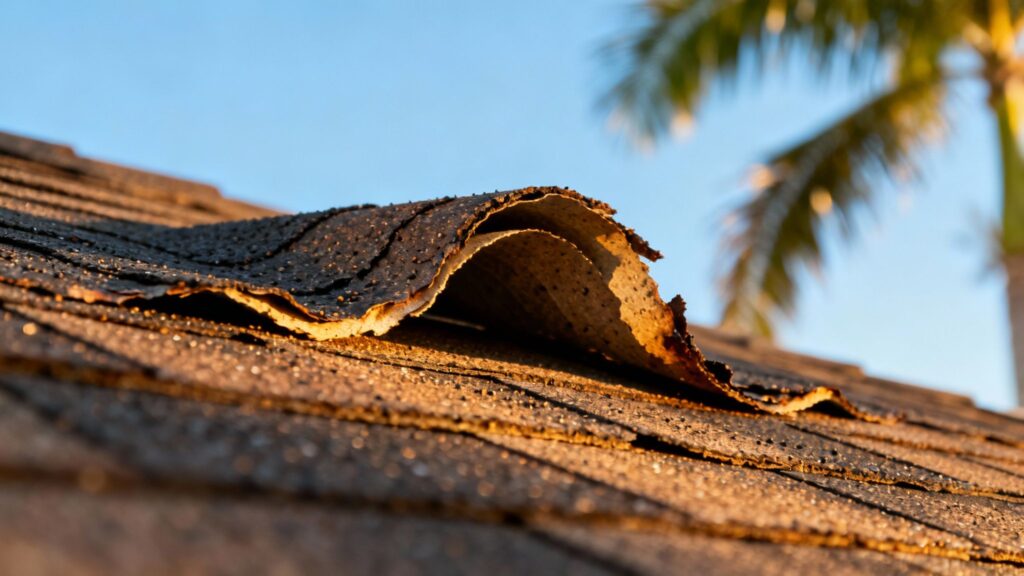
The most direct way moss damages your roof is by lifting the edges of your shingles. Its tiny root-like structures, called rhizoids, burrow underneath the shingle for stability. As the moss thickens, it slowly pushes the shingle upward, breaking the watertight seal that’s meant to protect your home. For a visual reference, you can see how lifted shingles create vulnerabilities on a typical roof.
What to Look For in Your Gutters and Downspouts
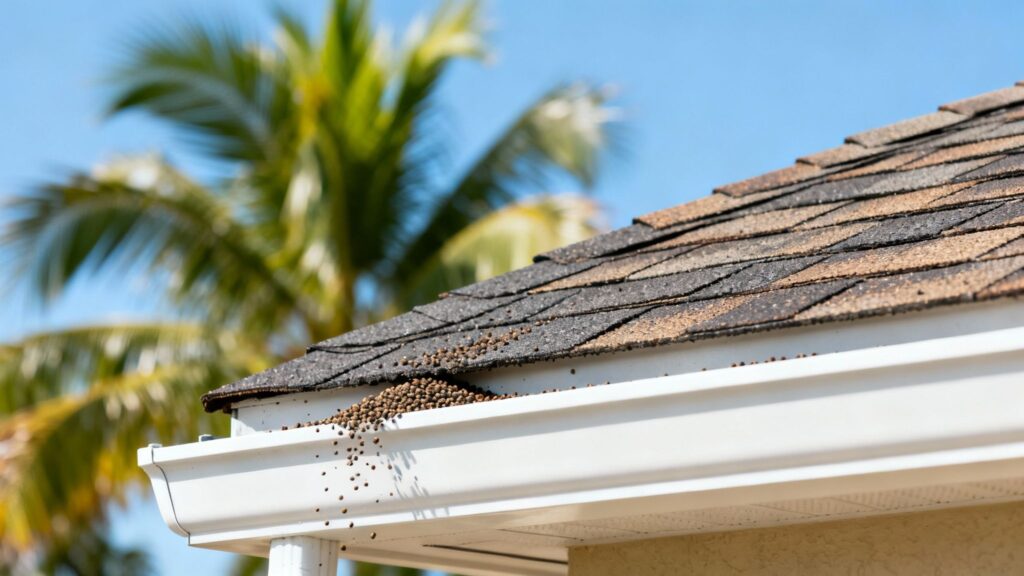
Your gutters can tell you a lot about what’s happening on your roof. After a heavy rain, take a quick look at what’s been washed out. This simple check can reveal hidden damage that isn't yet visible from the ground.
One of the most significant warning signs is an accumulation of shingle granules. These are the small, sand-like particles that give asphalt shingles their color and, more importantly, their protection against harsh UV rays. When you see a large amount of these granules in your gutters, it’s a clear sign that the shingles are aging and deteriorating—a process sped up significantly by moisture-trapping moss.
This loss of granules exposes the underlying asphalt to the sun, making the shingles brittle and prone to cracking. Catching this early can mean the difference between a simple, affordable cleaning and a full, expensive roof replacement.
Your Guide to Safe and Effective Moss Removal
So, you've spotted moss on your roof. The next question is always, "How do I get rid of it?" When it comes to tackling moss growth on roof Boca Raton homes, it’s not about just scraping it off. The real goal is to choose a method that solves the problem for good without creating new, more expensive ones. This decision usually leads you down one of two paths: doing it yourself or calling in the pros.
For a lot of homeowners, the DIY route seems like the obvious first choice. It can definitely save you some money upfront and gives you that satisfying feeling of a job well done. But it's a job that comes with some serious risks—not just to your own safety, but to the actual structure of your roof.
The DIY Approach: What You Need to Know
If you're committed to giving it a shot yourself, your success hinges on preparation and using the right tools. The keyword here is gentle. Your roof is a lot more delicate than it looks, and going too aggressive can easily void your warranty or, worse, create a leak.
The biggest mistake I see homeowners make is reaching for a pressure washer. It feels like a quick and powerful fix, but high-pressure water is a disaster for roofing materials. It can strip the protective granules right off asphalt shingles, crack tiles, and force water up underneath everything. That’s a fast track to wood rot in the underlying roof deck.
A much safer approach involves a few key things:
- Gentle Scraping Tools: Find a long-handled brush with soft bristles. You should never, ever use a metal rake, a stiff-bristled scrub brush, or anything sharp that could gouge your shingles.
- Roof-Safe Cleaning Solutions: You can find commercial-grade roof moss removers at most hardware stores. If you prefer a homemade option, a simple mix of equal parts distilled white vinegar and water can work on light growth, as can a solution of dish soap and water.
- Patience and Low Pressure: Use a basic garden sprayer to apply your cleaning solution. Let it sit for a bit to loosen the moss's grip, then gently scrub or rinse it away with a standard garden hose—no fancy high-pressure nozzles needed.
The Professional Advantage: Why It’s Often Worth It
Hiring a professional roof cleaning service in Boca Raton is often the smarter, safer, and, in the long run, more effective choice. These folks have the right equipment, proper safety training, and the hands-on experience to do the job right without causing damage. They know the ins and outs of the different roofing materials we see all over our area, from classic barrel tile to modern architectural shingles.
The real difference is in their methods. Most reputable companies use a technique called soft washing. To see how professionals get great results without damage, you can look into soft wash house cleaning techniques. This approach uses low-pressure water paired with specialized, biodegradable cleaning agents that don't just remove the moss you see—they kill the algae and lichen at the root.
This infographic does a great job of showing how moss goes from a minor nuisance to a major threat.
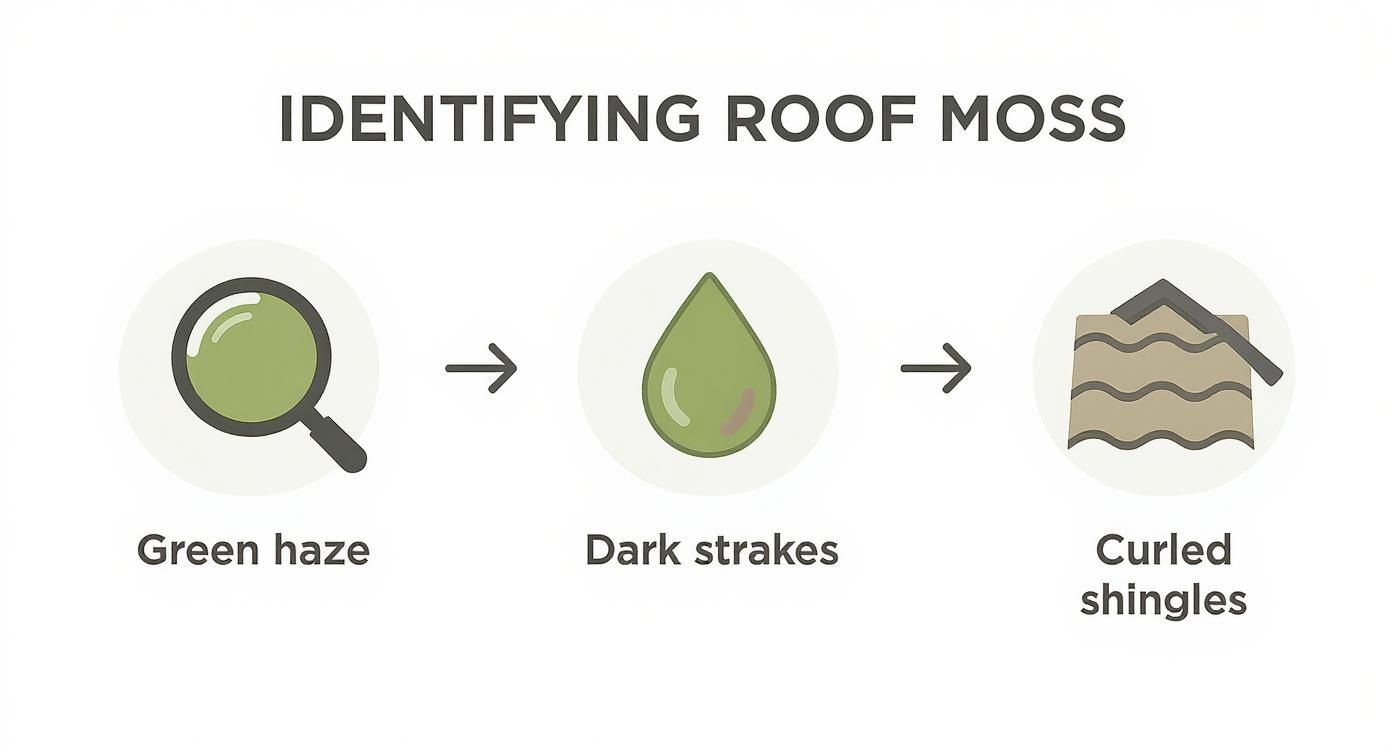
You can see the progression from a simple green haze to shingles that are physically curling up. It's a clear visual of how quickly a small issue can turn into real structural damage.
Comparing Moss Removal Methods
To make the decision a bit easier, I've put together a straightforward comparison of the two main approaches for dealing with moss on your Boca Raton roof. This table breaks down the pros and cons of going it alone versus hiring a professional service.
| Method | Effectiveness | Risk of Roof Damage | Typical Cost | Best For |
|---|---|---|---|---|
| DIY Manual Removal | Moderate | High (if done improperly) | Low ($50-$150 for supplies) | Very small, accessible patches of new moss on a single-story home. |
| Professional Soft Wash | High | Very Low (when done by experts) | Medium ($400-$900+) | Extensive moss growth, multi-story homes, or delicate roofing materials. |
While a DIY approach can work for a tiny spot you can safely reach, the risk of causing hidden, costly damage is pretty high. A professional service not only gets rid of the moss but does it in a way that actually protects your roof's lifespan.
When you start looking for professional help, it’s crucial to ask the right questions. Don’t be shy about vetting any company you're considering. A good contractor will be totally transparent about their process and credentials. If you want to get an idea of what quality work looks like, you can view examples of professional roofing work to set your expectations.
Before you hire anyone, make sure you ask these four questions:
- Are you licensed and insured in Florida? Always ask for proof of both general liability insurance and worker's compensation. This protects you.
- What cleaning method do you use? If their first answer is "pressure washing," that’s a huge red flag. You want to hear them talk about "soft washing" or "low-pressure chemical cleaning."
- Are your cleaning solutions safe for my roof, pets, and landscaping? They should be able to clearly explain the products they use and the steps they take to protect your property.
- Can you provide local references? An experienced, confident company will have no problem sharing contact information for past clients right here in the Boca Raton area.
Keeping Moss from Coming Back to Your Roof
Getting all that moss off your roof feels great, but I've got to be honest: that was only half the battle. Here in Boca Raton, moss spores are a constant presence in the air, just looking for a damp, shady spot to call home. This means you have to get proactive to keep it from coming right back.
The trick is to shift your mindset from cleaning up a mess to preventing one in the first place. You need to make your roof an unwelcoming place for moss before it gets a foothold. A few smart habits and a couple of simple upgrades can make all the difference.
Control the Environmental Factors
Moss really only needs two things to thrive, and our area has them in spades: shade and moisture. Your first job is to cut back on both as much as you can. Don't worry, this doesn't mean a massive project—just some targeted yard work.
Think back to where the moss was worst on your roof. Was it under that big live oak? Or maybe on the north side of the house that never seems to get any sun? Those are your trouble zones.
Letting the sun do its job is one of the best, most natural ways to fight moss growth on roof Boca Raton homes.
- Trim Overhanging Branches: Get a pole saw or call a pro and carefully prune back any tree limbs casting a shadow over your roof. This simple step lets in more sunlight, helping your roof dry out much faster after one of our daily downpours.
- Keep Your Gutters Clear: Clogged gutters are a moss-growing machine. When they get backed up, water just spills over the sides, keeping your shingles constantly damp. You've got to clean them out at least twice a year.
Install Preventative Metal Strips
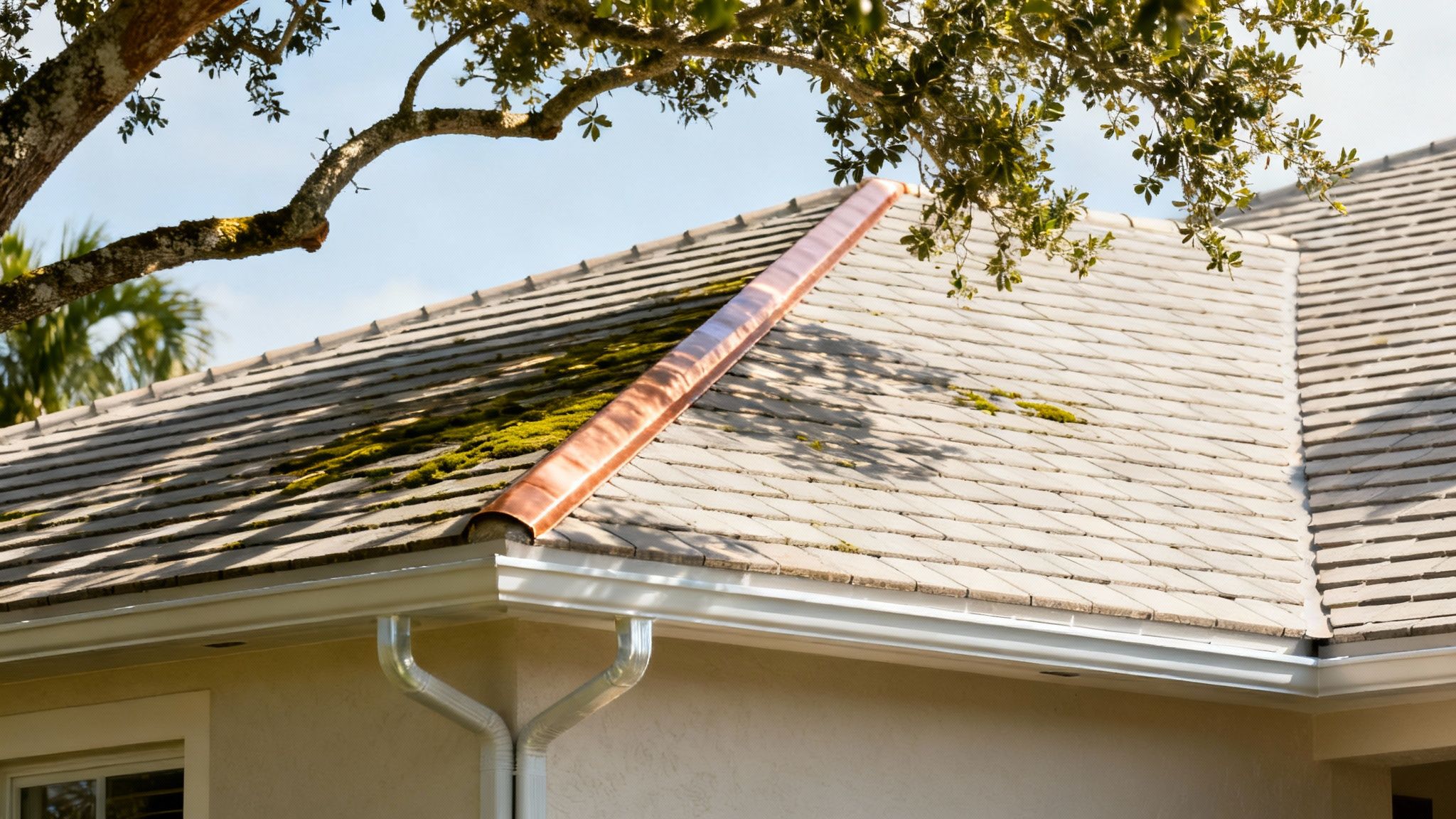
For a more permanent, long-term fix, you can use a little bit of chemistry to your advantage. By installing thin strips of zinc or copper along the peak of your roof, you create a powerful, hands-off prevention system that works around the clock for years.
The science here is pretty simple. Every time it rains, water washes over the metal strips and picks up microscopic metal ions. This rainwater, now infused with these ions, flows down your roof and creates an environment where moss, algae, and mildew just can't survive.
It’s like creating an invisible shield for your roof. The rain itself becomes the treatment, automatically applying a moss-killer every time it pours. This is a true set-it-and-forget-it solution that protects your investment for years to come.
Both zinc and copper get the job done, but there are a few differences. Zinc strips are usually the more affordable option and work great. Copper is a bit more of an upfront investment, but it lasts even longer and develops a classic greenish patina over time that some people really like.
The Reality of Moss Regrowth in Our Climate
Even if you do everything right, the fight against moss in South Florida is never truly over. The relentless humidity and falling organic debris create the perfect breeding ground for it to come back. Data shows that moss can reappear on a professionally cleaned roof in as little as three years, though the average is closer to five or six. Down here in Boca, that timeline can feel even shorter. To really understand how our local climate speeds things up, you can learn more about how local conditions accelerate the regrowth cycle at beyondcleanfl.com.
This just goes to show why a multi-layered defense is so important. You can't just rely on one trick; you need a combination of regular upkeep and smart preventative measures to keep your roof looking its best.
Creating a Sustainable Maintenance Schedule
The final piece of this puzzle is just being consistent. A great plan doesn't do any good if you don't stick to it. Instead of waiting until you see green again, get a simple, recurring schedule on your calendar.
Here’s a practical checklist that I give to my clients:
- Quarterly Ground Check: Every three months, just do a quick walk around your house. Look up at the roof and check for any dark streaks starting or new piles of leaves in the valleys.
- Semi-Annual Gutter Cleaning: Once in the late spring and again in the late fall, make a point to clear out those gutters.
- Annual Tree Trimming: At least once a year, look at the trees near your house and trim back any new growth that's starting to hang over the roofline.
- Biennial Pro Inspection: Every couple of years, it's a good idea to have a professional roofer take a look. We can spot subtle issues you might miss and suggest small, targeted treatments to head off bigger problems.
By adopting these habits, you turn your roof from a passive surface into a well-defended part of your home. This proactive strategy doesn't just keep your home looking sharp—it protects the very structure of your roof, safeguarding your biggest investment for the long haul.
When It’s Time to Call a Boca Raton Pro
There’s a certain satisfaction that comes with a good DIY job, no doubt about it. But one of the most important parts of homeownership is knowing your limits. When it comes to your roof, a single misstep can lead to thousands in damages or a serious injury. Recognizing the red flags that signal a job is too big, too complex, or just too dangerous is the key to protecting your home and yourself.
Tackling extensive moss growth on roof Boca Raton properties isn't always a simple weekend project. Some situations absolutely demand the expertise, equipment, and insurance of a professional roofing contractor.
Recognizing Unsafe Conditions
Your safety is priority number one. Period. Certain roof characteristics immediately escalate the risk of a DIY project from manageable to hazardous, making a professional call the only sensible choice.
The most obvious factor is the pitch of your roof. Many modern and Mediterranean-style homes in Boca Raton feature steep slopes that are incredibly difficult and dangerous to navigate without proper safety harnesses and training. A fall from even a single-story roof can be catastrophic.
Next, consider the roof's structural integrity. If you've ever felt a soft spot while up there (which we don't recommend) or seen significant sagging from the ground, stay off. These are classic signs of underlying rot in the roof deck, meaning the structure might not even support your weight.
When the Moss Problem Is Overwhelming
Sometimes, the sheer scale of the moss infestation is the deciding factor. A small, isolated patch of new growth is one thing. A deeply entrenched, widespread colony is a whole different ballgame.
Here are a few scenarios where you really need to bring in the pros:
- Thick, Caked-On Mats: If the moss has formed dense, carpet-like layers, its rhizoids are probably dug in deep beneath your shingles or tiles. Trying to rip this off with brute force is an easy way to tear up shingles or crack expensive tiles.
- Widespread Coverage: When more than a third of your roof is covered, a professional team can get the job done far more efficiently. They have specialized equipment that beats a garden hose and a weekend of your time, hands down.
- Visible Underlying Damage: Can you already see severely curled, cracked, or missing shingles under the moss? If so, the problem has graduated from a simple cleaning job to a potential repair situation. A pro can assess if you just need a cleaning or something more serious.
Calling a professional isn't admitting defeat; it's making a smart executive decision to protect your largest asset. An expert can diagnose and treat the root cause of the problem, not just the visible symptoms.
Vetting Your Boca Raton Roofing Professional
Once you decide to hire help, the next challenge is finding the right help. Not all "roof cleaners" are created equal. When thinking about calling a pro, many homeowners look for providers of comprehensive professional exterior maintenance services that can handle a range of outdoor cleaning needs safely and effectively.
Your goal should be to find a licensed and insured roofing contractor, not just a handyman with a pressure washer. A true professional will protect your roof's warranty and ensure the job is done right the first time.
Start by checking their credentials. Any contractor you consider should be able to quickly provide proof of their Florida license and—this is critical—both general liability insurance and worker's compensation. That worker's comp is non-negotiable. It protects you from being on the hook if one of their employees gets injured on your property. For a trusted local option, you can learn more about what to expect from a

.
Before you sign any contract, come prepared with a checklist of questions:
- What specific method will you use to remove the moss? (You want to hear "soft washing" or "low-pressure chemical treatment.")
- Are the cleaning solutions you use safe for my tile or asphalt shingle roof?
- What steps do you take to protect my landscaping and property during the process?
- Can you provide a list of local references from recent jobs in the Boca Raton area?
A reputable professional will welcome these questions and give you clear, confident answers. Making that call not only gets rid of the moss but also ensures your roof stays in top shape for years to come.
Common Questions About Roof Moss in Boca Raton
Even after you've got a game plan for tackling roof moss, a few questions always seem to pop up, especially for homeowners here in Boca Raton. We get these all the time. Here are some straightforward answers to the most common concerns we hear from our neighbors.
How Does Hurricane Season Affect a Mossy Roof?
This is probably the most critical question anyone in South Florida can ask. The short answer is: a mossy roof is a dangerously vulnerable roof during a hurricane. It’s a major liability.
Moss works its way under the edges of your shingles and tiles, breaking that crucial watertight seal. When a tropical storm or hurricane rolls in with winds hitting 130 mph or more, those lifted edges become tiny sails. The wind gets underneath and can peel back entire sections of your roof, exposing your home to torrential rain. A clean, properly sealed roof gives the wind a solid, unified surface to blow over.
Think of it this way: A roof with moss is like a fortress with a thousand tiny, unlocked doors. During a hurricane, those doors are blown wide open, allowing the storm to rush inside. Getting rid of moss isn't just about looks; it's a vital part of your hurricane prep.
Can I Use a Pressure Washer on My Tile Roof?
While it's tempting to blast away the green, using a high-pressure washer on a tile roof is a huge mistake. We've seen the expensive damage it can cause. The intense force can easily crack tiles, dislodge them completely, or shatter the mortar holding them in place.
Worse yet, that high-pressure stream can force water deep into your roof's underlayment. You end up with hidden leaks that cause rot and mold for months before you even notice a problem.
That's why any reputable professional in Boca Raton will use a soft wash technique. This method uses low-pressure water paired with specialized, roof-safe cleaning solutions. It effectively kills the moss, algae, and lichen at the root without the brute force that damages your roof. For the barrel and flat tile roofs all over our area, soft washing is the only safe and effective way to go.
Does Homeowners Insurance Cover Moss Damage?
This is a tricky one, and the answer usually comes as an unpleasant surprise. In almost every case, homeowners insurance policies specifically exclude damage that results from a lack of routine maintenance. Moss growth falls squarely into that category—it's seen as a preventable problem.
So, if moss lifts your shingles and a typical Boca thunderstorm causes a major leak, your insurer has every right to deny the claim because of that pre-existing condition. This makes keeping up with moss growth on roof Boca Raton homes more than just a cosmetic chore. It's a critical step in protecting your investment and making sure your home stays insurable.
How Often Should I Clean My Roof Here?
With our constant humidity and about 61 inches of annual rainfall, roofs in Boca Raton just need more attention than they do in drier climates. There's no escaping it. The right schedule really depends on your roof type and your specific property.
- Asphalt Shingle Roofs: You should plan on a professional cleaning every 2-3 years to keep moss and those ugly black algae streaks from getting a foothold.
- Tile Roofs: Because their shape creates so many nooks and crannies for moisture and leaves to collect, tile roofs often need to be cleaned every 1-2 years.
Keep in mind, if your house is tucked under big shady oak trees or you live closer to the Intracoastal where the air is saltier and stickier, you might need to get on an annual inspection schedule just to stay ahead of the game.
Don't let something as treatable as moss compromise your home's most important defense. For a professional eye and a roof that’s truly ready for the South Florida climate, trust the experts at Paletz Roofing and Inspections. Schedule your free, no-obligation roof inspection today!