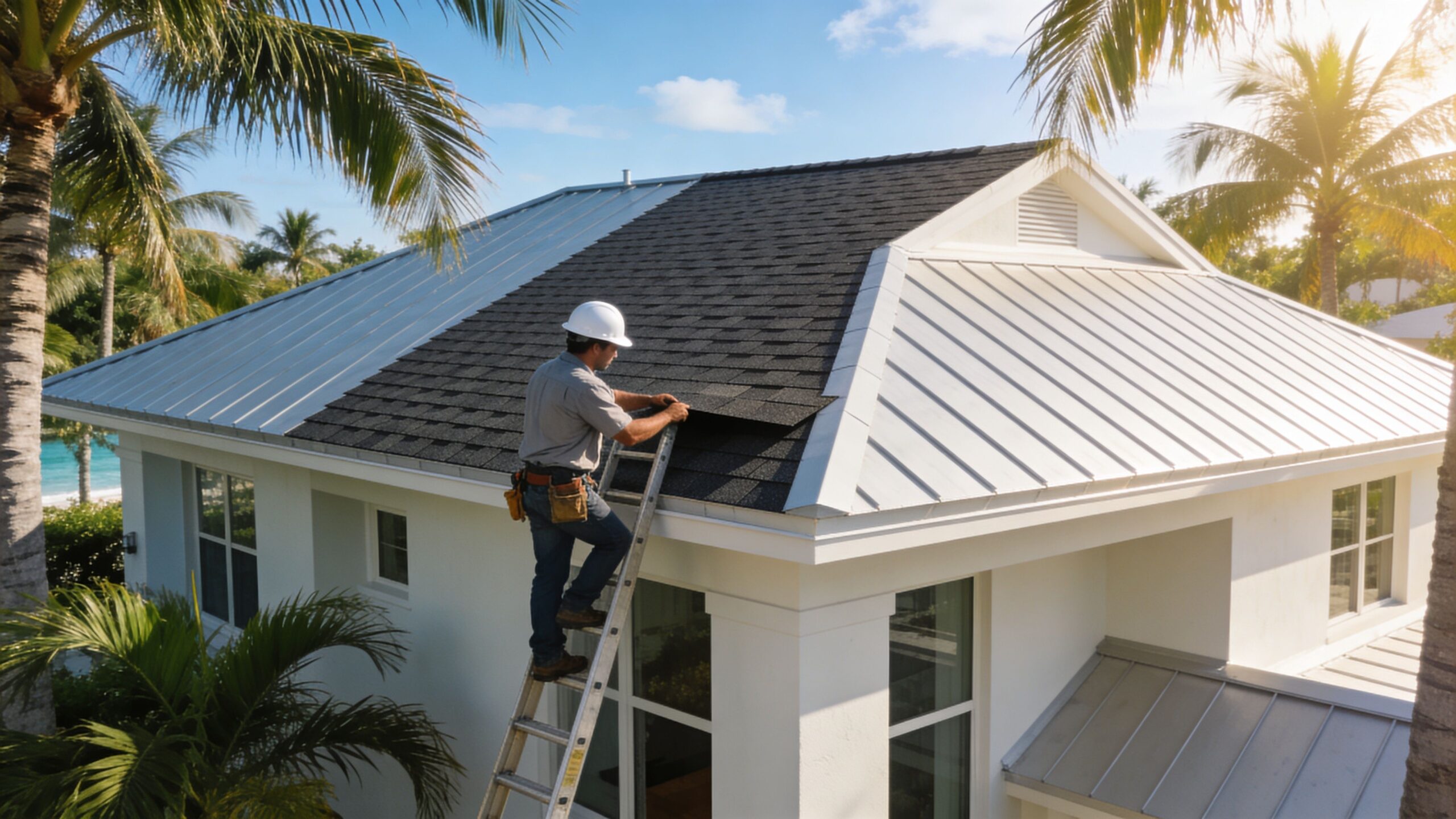
A roof replacement in Fort Lauderdale typically costs $30,000 to $37,000, compared with a national average of $21,050 to $30,680 in 2025. That gap exists for one reason above all others: in South Florida, your roof isn’t just a finish material, it’s a code-driven storm system built for a High-Velocity Hurricane Zone.
That reality changes every part of the job. It affects what materials you can use, how the deck gets fastened, what paperwork the city requires, and what your insurer will accept after a storm. It also changes how you should think about value. The cheapest roof on day one often becomes the most expensive roof over time if it fails inspection, struggles in wind, or drives up cooling and maintenance costs.
Homeowners usually come into this process focused on one question: “What will my new roof cost?” That matters, but in Fort Lauderdale the better question is, “What roof system gives me the strongest code compliance, the cleanest insurance path, and the best long-term return for this house?” That’s the difference between a routine reroof and an expensive problem.
Your Guide to Roof Replacement in Fort Lauderdale
Fort Lauderdale homeowners often find that a new roof costs far more than they expected, and the reason is simple. In this city, the job is tied to hurricane code, insurance documentation, and long-term weather performance, not just the surface material you see from the street.
That changes the financial math from day one.
Heat, humidity, salt air, and storm exposure wear roofs out differently here than they do in most of the country. I have seen plenty of roofs that looked serviceable from the driveway but were already failing at flashing, penetrations, edge metal, and fastener lines. Once water gets into those weak points, the repair bill grows fast and the insurance file usually gets harder to support.
The two questions that matter most are not just what the roof costs now, but how well the claim is handled and whether the material choice will pay you back over time. A lower bid can still be the expensive option if the system struggles in salt air, holds heat, needs frequent maintenance, or creates problems during permit and inspection.
Fort Lauderdale homeowners who need a roof replacement usually need clear answers on four issues:
- Code compliance: Whether the roof can still be repaired or whether the scope of damage pushes the home into full replacement under current rules.
- System selection: Which material fits the home’s slope, exposure, budget, and ownership timeline without creating avoidable maintenance problems.
- Claim support: How to document storm damage, prior condition, and product requirements so the carrier sees a file that is organized and defensible.
- Contractor vetting: Whether the roofer is licensed, insured, experienced with local permitting, and able to install an HVHZ-compliant system correctly.
Get those four right and the project usually stays on track. Get them wrong and the trouble shows up later, in inspections, claim disputes, callbacks, and shortened roof life.
Decoding Fort Lauderdale Roofing Costs and Codes
A roof replacement in Fort Lauderdale often lands well into the five figures, and the reason is simple. You are paying for a code-compliant hurricane roof system, permit work, inspections, and skilled labor that can pass in Broward County.

What HVHZ actually means
HVHZ stands for High-Velocity Hurricane Zone. In Fort Lauderdale, that affects nearly every part of a reroof. The system has to use approved products, approved attachment methods, and installation details that match the product approval and permit documents.
That is why local pricing can look high to a homeowner comparing bids from outside South Florida. A proper Fort Lauderdale quote usually includes the paperwork, fastening patterns, underlayment requirements, flashing details, and inspection prep needed to satisfy local code. A cheap quote often leaves some of that out. The savings disappear fast if the job stalls at inspection or needs corrective work after dry-in.
The code threshold that can turn a repair into a replacement
One of the biggest financial turning points is Florida’s rule on roof replacement thresholds, as noted earlier. If damage reaches the level where the roof can no longer be legally patched under current code, the conversation changes from a repair budget to a full replacement budget.
That matters most in insurance claims. I have seen homeowners focus on one visible slope while the primary issue was scattered damage across multiple sections. If the full scope is not documented correctly, the carrier may treat it like a small repair file when the property is moving toward a code-driven replacement.
The money question is not only what the new roof costs. It is whether the claim file proves why replacement is required under current rules.
Why labor drives so much of the price
Labor is a large part of reroofing cost in Fort Lauderdale because this is detail-heavy work. Crews are not just tearing off old material and installing new material. They are protecting landscaping, removing debris safely, exposing and checking the deck, correcting weak areas, installing underlayment to code, replacing flashing and edge metal, and keeping the job ready for inspection.
Low bids usually break down. If a contractor prices the job too aggressively, one of two things happens. Corners get cut, or change orders show up once the roof is open.
Neither helps the homeowner.
What code compliance looks like on the roof
Code compliance shows up in the parts of the roof you rarely see from the ground. Deck attachment is one of them. Older homes sometimes have fastening patterns that do not meet current uplift standards, so the deck may need to be re-nailed with ring shank fasteners before the new roof system goes on.
Flashing is another. Wall transitions, valleys, penetrations, and perimeter edges are common failure points in South Florida storms. If those areas are handled poorly, the roof can leak long before the field material wears out.
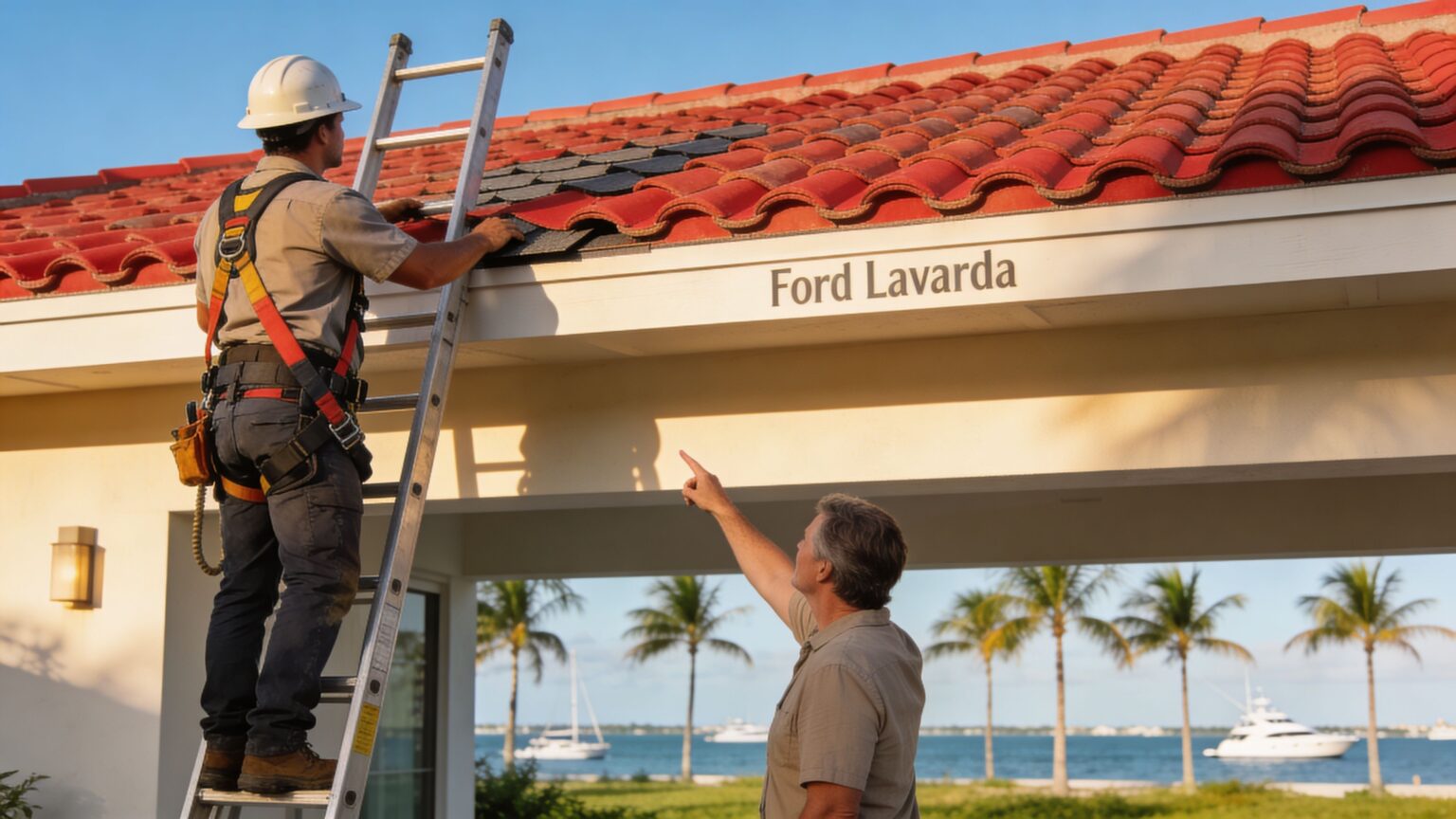
Approved products matter too. Underlayment, shingles, tile components, metal panels, adhesives, and fastening accessories have to match the system being permitted. Mixing products that do not belong together can create inspection problems, warranty problems, and insurance problems. Homeowners looking at roof attachment and permit detail examples usually understand quickly why a serious estimate includes more than surface material.
Permits and inspections are part of the actual job cost
A legal reroof in Broward County is a permit job from day one. That means permit application, product approvals, inspection scheduling, and documentation that matches the roof being installed. If the deck has damage, if structural questions come up, or if the system changes from what was originally specified, the paperwork can get more involved.
Tile roofs usually require even tighter sequencing. Underlayment, valley metal, fastening, mortar or mechanical attachment methods, and ridge details all have to be installed in the right order. Metal and low-slope systems have their own inspection-sensitive details. The point is the same across all of them. You are not buying shingles, tile, or metal by itself. You are buying a system that has to pass inspection and hold up through storm seasons.
The cost question that saves homeowners money
Homeowners usually do better when they judge a proposal on scope, not just price. Ask what is included for deck re-nailing, underlayment, flashing replacement, ventilation adjustments where applicable, permit handling, cleanup, and inspection corrections if needed. Ask how the contractor handles claim documentation when storm damage and code upgrades overlap.
That is where the long-term return shows up. A roof that is installed correctly, documented properly for insurance, and built with Fort Lauderdale exposure in mind usually costs less over time than a lower bid that creates claim disputes, failed inspections, or early repairs.
Choosing Your Roof System for South Florida's Climate
A roof in Fort Lauderdale is not just a finish material. It is a financial decision tied directly to storm exposure, insurance paperwork, heat gain, maintenance, and how long you plan to keep the house. The wrong system can look fine on day one and still cost more over the next 10 to 20 years through repairs, higher cooling load, or claim disputes after a storm.

The four systems homeowners compare most
In this market, the short list is usually impact-rated asphalt shingles, tile, metal, or a membrane roof such as TPO, PVC, EPDM, or modified bitumen on low-slope areas. All four can work in South Florida. The better choice depends on the house, the budget, the insurer, and whether the owner is trying to minimize the invoice now or reduce total ownership cost over time.
Shingles usually start the conversation because the upfront cost is lower. Tile stays popular because it fits a lot of Fort Lauderdale architecture. Metal gets more attention from owners who plan to hold the property and want stronger long-term return. Flat-roof systems rise or fall on detail work at seams, penetrations, drains, and wall transitions.
South Florida Roof Material Comparison
| Material | Estimated Cost (per sq ft) | Typical Lifespan | Hurricane Resistance | Pros & Cons for FL |
|---|---|---|---|---|
| Impact-resistant asphalt shingles | Qualitatively lower upfront than tile or metal, but Fort Lauderdale impact-rated versions can cost much more than standard national shingle pricing | Shorter-term option compared with metal or tile | Good when installed with approved components | Pros: familiar look, broad color options, easier spot repair. Cons: heat and storm wear catch up faster, and lower-grade systems can become a false economy. |
| Concrete or clay tile | Higher upfront investment | Long service life when maintained | Strong, but depends heavily on underlayment and attachment | Pros: classic South Florida appearance, durable surface. Cons: heavier system, more complex underlayment package, broken tiles and flashing issues can turn into leaks if neglected. |
| Standing seam metal | Higher upfront cost than basic shingle systems | Often the strongest long-term value choice | Excellent when properly engineered and attached | Pros: high wind performance, reflective options, lower maintenance profile. Cons: requires experienced fabrication and installation, details around transitions and edges matter a lot. |
| Flat roof systems such as TPO, PVC, EPDM, modified bitumen | Depends on membrane type and roof condition | Varies by system and maintenance quality | Can perform well, but detail-sensitive | Pros: good fit for low-slope sections, repairable in sections. Cons: ponding, seam failure, and wet insulation become expensive when ignored. |
For a visual comparison of how different roof systems change a home's profile and appearance, this roofing material image reference gives a useful side-by-side view.
Asphalt shingles work, but only as a full Fort Lauderdale system
Shingles can still be a reasonable choice here. They just need to be judged by South Florida standards, not by what works in lower-wind inland markets.
The homeowner should be looking at the full assembly. That includes impact-rated shingles, the underlayment package, starter, ridge, flashing, attachment pattern, and the product approvals that satisfy local requirements. A cheap shingle proposal often gets expensive later if it leaves out the parts that matter for wind performance or creates problems during an insurance claim.
Shingles make the most sense for owners who need tighter budget control, expect to sell in a shorter time frame, or have a roof design that does not justify the premium for tile or metal. They make less sense when the goal is the lowest lifetime cost.
Tile still makes sense on many homes
Tile remains a strong option in Fort Lauderdale because it suits the architecture and holds up well when the waterproofing package underneath is done right. That last part matters more than many homeowners realize.
On tile roofs, the visible tile is not the primary water barrier. The underlayment, flashing, valleys, wall details, and penetrations do that work. I have seen plenty of tile roofs that still looked respectable from the street while the underlayment below was already at the end of its service life.
That is why tile needs an owner with the right expectations. The surface can last a long time, but repairs, matching broken tiles, and maintaining the system underneath can become more involved than many people budget for.
A tile roof earns its value only when the underlayment and flashing package below it is treated as the real roof system.
Metal offers the strongest long-term argument
For many Fort Lauderdale homeowners, metal is the cleanest investment decision if the upfront cost fits the budget. It usually costs more at installation, but it gives back value in the areas that matter most here. Lower heat gain, lower maintenance demand, strong wind performance, and a service life that often makes replacement less frequent.
That long-term return matters even more in South Florida because insurers and buyers both pay attention to roof age, material, and documented condition. A roof that holds up better and stays easier to insure can protect value beyond utility savings alone. This is the core ROI argument. You are not only buying panels. You are buying a longer ownership cycle, fewer recurring repair issues, and in many cases a stronger position when insurance questions come up after a storm.
Metal is not forgiving of sloppy work. Fastener selection, edge securement, panel layout, underlayment, dissimilar-metal contact, and corrosion resistance all need to be right, especially near the coast. Good metal work costs more because the details matter more.
Flat roofs need a different kind of discipline
Low-slope roofs should be judged by how they handle water, not by how clean they look from the ground. Seams, drains, penetrations, equipment curbs, parapet transitions, and ponding areas decide how these roofs perform.
A membrane roof can be a smart choice on the right structure, especially where the slope leaves no practical alternative. But this category punishes shortcuts fast. Wet insulation, slow drainage, or weak flashing details can turn a localized issue into a much larger tear-out if water keeps traveling under the membrane.
As noted by Salomon Roofing’s South Florida flat-roof service guidance, moisture surveys and infrared mapping can catch saturated insulation early. That matters because partial patching on a wet low-slope roof often delays the actual repair instead of solving it.
What usually works best
The practical answer is usually straightforward:
- Choose impact-rated shingles if you need the lower entry cost and you understand they are usually a shorter-hold option in this climate.
- Choose tile if the house is designed for it and you are prepared to maintain the underlayment and accessory details, not just the tiles you can see.
- Choose metal if you want the strongest long-term financial case, better heat performance, and a roof system that often makes more sense over a longer ownership window.
- Choose a membrane roof where the slope requires it and the contractor has real experience with drainage, seam work, and moisture management.
The best roof for Fort Lauderdale is rarely the cheapest proposal. It is the system that fits the house, satisfies local requirements, stands up to storm seasons, and gives the owner the best return after insurance, maintenance, and replacement timing are all factored in.
The Roof Replacement Timeline from Start to Finish
Fort Lauderdale reroofs rarely fail on installation day. They fail because the planning, dry-in, or inspection work was handled loosely before the finished roof ever had to face its first tropical system.

A roof replacement starts well before tear-off. The complete sequence is inspection, scope review, product approval checks, permit coordination, delivery timing, tear-off, dry-in, installation, and final signoff. Homeowners who understand that sequence usually make better decisions on both cost and insurance paperwork, especially in an HVHZ market where the details on paper need to match the work on the roof.
Step one is inspection, documentation, and scope control
A proper reroof begins with a close inspection of the roof covering, flashing, penetrations, transitions, drainage, and any signs that the deck may be compromised below the surface. Tile and low-slope roofs often hide the expensive problems. A roof can look tired from the street and still have a usable deck, or it can look decent on top while the substrate and attachment below are already failing.
This early stage is where change orders are either controlled or allowed to get out of hand.
Homeowners should ask direct questions before signing. What happens if rotten decking shows up after tear-off? How is replacement wood priced? What products are being submitted for approval? Is the timeline based on actual permit and inspection conditions in Fort Lauderdale, or just a sales estimate? A clear answer here protects the budget and gives you cleaner support later if the insurance carrier asks why part of the scope changed.
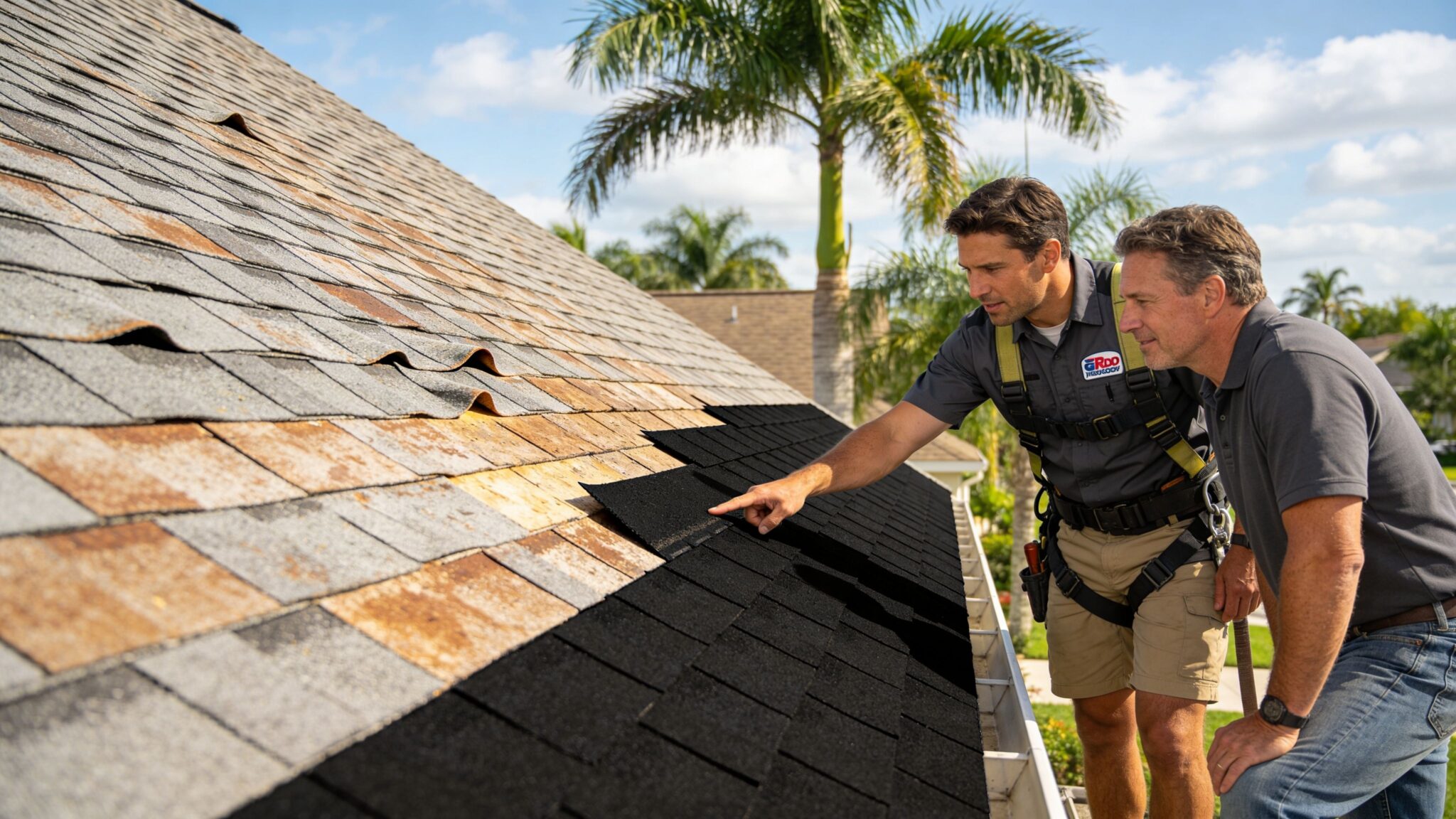
A visual reference helps set expectations for staging, tear-off, and installation flow. This roof replacement process image shows the kind of active jobsite setup homeowners should expect.
Tear-off exposes the real condition of the roof
Once permits are in place and materials are on hand, the crew removes the old system. This is the loudest part of the project, and it is also the point where hidden costs can surface fast.
If the decking is solid and the attachment is acceptable, the job stays on schedule. If the crew finds deteriorated wood, damaged nailers, failed transitions, or previous shortcuts around valleys and walls, those items need to be corrected before the new roof goes on. Covering weak substrate to save a day or two usually costs the homeowner much more later, either in leaks, failed inspections, or shortened roof life.
South Florida weather also affects this phase. During rainy season, a good contractor watches the forecast closely, tears off in manageable sections, and keeps dry-in materials ready. An exposed deck with afternoon storms in the forecast is not a minor scheduling issue. It is a water intrusion risk.
Dry-in work determines whether the new roof actually protects the house
I tell homeowners this all the time. The roof covering gets the attention, but the dry-in work is what often saves the house when wind-driven rain starts pushing at every joint and transition.
Once the deck is repaired and re-nailed as needed, the underlayment and flashing system go on. The exact assembly depends on the approved roof system, the slope, and local code requirements, but the principle stays the same. Water has to be managed before the finished material is installed. In Fort Lauderdale, that matters for both storm performance and insurance support because a carrier reviewing a loss will look closely at whether the roof was replaced with approved materials and proper attachment.
Installation changes by roof type
Shingle roofs move quickly, but speed should not come at the expense of layout, starter placement, flashing integration, and ridge detailing. Tile roofs take longer and require more handling, more alignment work, and more attention at hips, ridges, and penetrations. Metal roofs demand precise panel layout and edge treatment. Low-slope systems depend heavily on clean seams, proper termination details, and drainage.
The timeline also changes with the material you choose. A straightforward shingle reroof may move faster than tile or metal, but the shorter schedule is not the only cost issue that matters. In Fort Lauderdale, homeowners should weigh how long they plan to keep the property, what their insurer expects, and whether paying more now reduces repair frequency and replacement pressure later.
That is where return on investment gets real. A cheaper roof that needs earlier replacement or gives the insurer more reasons to question storm damage is not always the lower-cost choice.
Final inspection, closeout, and payment should be handled carefully
The last phase includes detail work, site cleanup, magnetic nail sweeps, punch-list corrections, and municipal inspection. Flashings, vents, skylights, wall transitions, drip edge, and drainage points need a final check because those are the places where callbacks usually start.
Before final payment, homeowners should receive a clear closeout package covering:
- What was replaced: roof covering, underlayment, flashing, vents, accessories, and any decking that was changed
- What products were installed: including approved components used for code compliance
- What warranties apply: manufacturer coverage and contractor workmanship terms
- What inspection status applies: permit record and final approval
- What financing plan remains: if part of the project was funded through a lender or by using your home equity
Do not treat final signoff like paperwork only. In this market, that documentation can matter later if you sell the house, file a storm claim, or need to prove the roof was replaced to current Fort Lauderdale and HVHZ standards.
Navigating Insurance Claims and Project Financing
Insurance is where a lot of Fort Lauderdale roof replacements get delayed, underpaid, or pushed into dispute. In this market, the problem is usually not whether the roof has damage. The problem is whether the homeowner can prove storm damage, code-triggered work, and the exact HVHZ system required to put the house back in compliant condition.

Why claims break down
A weak claim file can sink a valid roof claim. I see it happen when homeowners wait to document the damage, patch the obvious problem before it is photographed properly, or rely on a generic estimate that says little more than “replace roof.”
In Fort Lauderdale, that is not enough. Carriers want to see what was damaged, how it was damaged, and why the replacement scope has to meet current HVHZ requirements instead of older standards or piecemeal repair logic.
What insurers usually need
The strongest claim packages are built like job files, not casual complaint letters. They usually include:
- Clear photos and notes: exterior damage, active leaks, ceiling stains, and the reported date of loss
- A defined replacement scope: the damaged areas, the proposed system, and the reason repair may not be adequate
- Code-related support: documentation showing why current Fort Lauderdale and HVHZ rules affect the replacement scope
- Product approvals: especially for components tied to wind resistance and local acceptance requirements
- Contractor input during adjustment: someone who can answer technical questions on underlayment, attachment, flashing, and approved assemblies
Homeowners usually lose their advantage when they start the claim casually and try to build the file later. Good documentation starts on day one.
The order matters
Start with the policy. Check storm coverage, exclusions, deductibles, depreciation, and any wording that affects matching or repair limits.
Then get the roof inspected before conditions change. Wind-lifted materials, creased membranes, broken tiles, displaced flashings, and water entry points are easier to defend when they are documented early and tied to a specific event.
File the claim after that, with photos, notes, and the contractor’s findings organized before the adjuster visit. During that meeting, the contractor should be able to explain the damage pattern, identify code issues, and show why the proposed system fits current requirements. That keeps the discussion focused on evidence instead of opinion.
HVHZ claims require a different level of detail
This is the part homeowners often miss. A standard insurance conversation about “roof damage” is not the same as an HVHZ reroof discussion.
If the carrier approves part of the loss but the approved scope ignores attachment standards, underlayment requirements, or Miami-Dade accepted components, the homeowner can still end up short. An important financial question is not just whether a claim gets approved. It is whether the approved amount covers a legal, insurable replacement in Fort Lauderdale.
That gap is where homeowners get hurt. A low settlement can leave them paying the difference out of pocket for code-compliant work.
Financing should be decided early
Insurance proceeds do not always cover the full project cost. Some claims are partial. Some are denied. Some roofs need replacement because age, repeated repairs, or code thresholds make another patch a bad investment.
Homeowners should sort out funding before the contract stage, not after materials are selected. If you are comparing cash, lender financing, or using your home equity, look at monthly payment, interest cost, and how long you expect to stay in the home.
That decision should also reflect roof system choice. A lower-priced option can reduce the immediate bill, but it may not give the same wind performance, service life, or insurance acceptance as a better-documented system built for South Florida exposure. Upfront savings are only part of the math.
Mistakes that get expensive fast
A few patterns show up again and again:
- Waiting too long to report damage: evidence fades, temporary repairs change the roof, and the carrier has more room to question the claim
- Using a contractor who cannot document HVHZ requirements: vague scopes often miss code items that matter during adjustment
- Accepting an insurance scope without checking compliance: an approved number is not the same as a complete replacement budget
- Choosing the cheapest material before funding is clear: that can lock the project into a shorter-term decision with weaker long-term return
In Fort Lauderdale, insurance strategy and financing strategy are tied together. Homeowners who handle both early usually make better material choices, protect more of their own money, and avoid getting trapped between an underfunded claim and a roof that still has to meet code.
How to Choose and Vet Your Fort Lauderdale Roofer
Fort Lauderdale gives homeowners plenty of roofers to call. The hard part is finding one who can replace a roof to HVHZ standards, document the job properly for insurance, and give you a scope that holds up after permit review. A polished sales pitch does not tell you that.
Start with the paperwork.
A contractor should provide an active Florida license, general liability insurance, and workers’ compensation coverage before you talk seriously about price. Roofing crews work at height, and if the company cuts corners on insurance, you are exposed to a problem that has nothing to do with shingles, tile, or metal. Ask for current certificates. Read the business name on every document and make sure it matches the company on the proposal.
Then read the estimate like a permit reviewer would. In Fort Lauderdale, a reroof proposal should identify the roof system, underlayment, flashing scope, attachment method where applicable, permit responsibility, inspection process, and what happens if damaged decking turns up after tear-off. If the bid is vague, the change orders usually are not.
I tell homeowners to watch for four things in writing:
- Clear scope: tear-off, disposal, dry-in, flashing replacement, deck inspection, and cleanup should be spelled out
- Specific materials: brand, product line, and key components should be listed clearly enough that you know what is being installed
- Code awareness: the roofer should explain compliance as part of the job, not as an extra they may discover later
- Decking and wood replacement terms: if the contract is silent here, expect disputes once the old roof is off
Low bids deserve extra scrutiny. In this market, the missing money usually shows up somewhere. It may be permit handling, secondary water barrier details, flashing replacement, or the labor needed to bring problem areas up to code. A cheap number can turn into the most expensive contract on your table once the exclusions surface.
Pressure is another warning sign. If someone wants a same-day signature, avoids technical questions, or keeps redirecting the conversation back to monthly payment, slow the process down. A good roofer can explain the system, the sequence, and the likely problem areas on your house without getting irritated.
Online research helps, but use it correctly. Search visibility shows who invested in marketing. It does not prove field quality. Still, a contractor with a real website, local project history, and identifiable branding is easier to verify than one with almost no trace online. If you want to understand why some companies show up more consistently in search, this guide on effective local SEO for home services gives useful context.
Reviews matter most when they mention the parts homeowners usually miss at the start. Look for comments about permit close-out, jobsite cleanup, communication during wood replacement, inspection issues, and warranty callbacks. Those are the details that separate a competent roofer from a strong salesperson.
It also helps to confirm the company operates where it says it does. A visible local brand presence, such as the Paletz Roofing and Inspections company logo, is a small point, but it is part of verifying that the business is real, established, and easy to identify across documents and online listings.

My short list is simple. Hire the roofer who can prove they are licensed, insured, specific in writing, and fluent in Fort Lauderdale reroof work. If they can also explain how their scope supports a cleaner insurance file and a roof system with better long-term return in this climate, you are talking to the right kind of contractor.
Why Choose Paletz Roofing and Inspections
Roof replacement in Fort Lauderdale goes wrong when the contractor treats it like a simple tear-off and reroof. It isn’t. The work sits at the intersection of HVHZ code, storm durability, insurance documentation, and practical material selection for heat, salt air, and heavy rain.
That’s where experience matters. Paletz Roofing and Inspections has been licensed and insured since 1990 and brings over 30 years of roofing experience across Broward, Miami-Dade, and Palm Beach counties, as described in the publisher background and supported by the company’s service profile. For homeowners, that matters most in the parts of the job that aren’t obvious from the street: inspection judgment, scope accuracy, documentation quality, and system selection that fits the property rather than a sales script.
A qualified local roofer should be able to handle shingle, tile, metal, and flat systems, understand what triggers full replacement, and communicate clearly about what the city and insurer will require. Paletz Roofing and Inspections is one option homeowners can consider for residential and commercial reroofing, inspections, repairs, and replacement planning in this market. You can identify the company through this Paletz Roofing and Inspections logo reference.
The practical value is straightforward:
- Local code familiarity: especially with Fort Lauderdale and broader Broward permit expectations.
- System range: support for shingle, tile, metal, and flat roof applications.
- Claim support: documentation that helps homeowners organize storm-related replacement files.
- Safety and accountability: work performed by licensed and insured professionals in a high-risk trade.
If your roof is aging, leaking, or showing storm damage, the smartest next step is not to guess. It’s to get the roof inspected, the condition documented, and the options laid out clearly so you can make a decision based on real conditions instead of assumptions.
If you need a clear assessment for a residential or commercial reroof, contact Paletz Roofing and Inspections for an inspection and quote. A good roof decision in Fort Lauderdale starts with knowing whether you’re dealing with a repair, a code-triggered replacement, or a full system upgrade that needs to be planned the right way.